

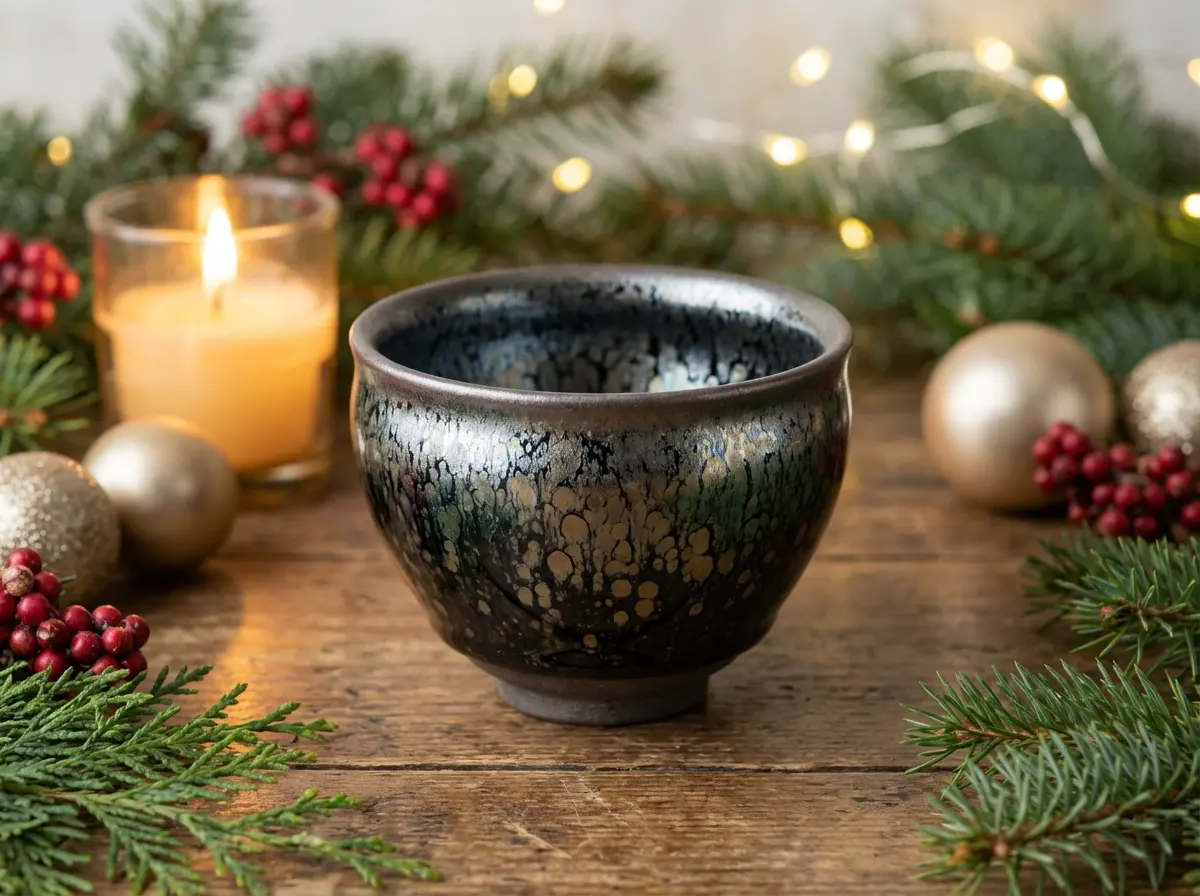
This Christmas, give more than a gift—give a thousand-year legacy handcrafted in fire and iron with authentic Tenmoku tea cups. These stunning ceramic masterpieces blend Song Dynasty heritage with modern artisan craftsmanship, creating the perfect present for tea lovers, art collectors, and anyone who values meaningful gifts over mass-produced items.
At ZenTeaCup, we understand that the best Christmas gifts tell a story. While others settle for generic presents, you can offer something extraordinary: a handcrafted Tenmoku tea cup that transforms daily tea rituals into mindful ceremonies and serves as both functional art and conversation piece.
Contents
- What Are Tenmoku Tea Cups? Ancient Art Meets Modern Elegance
- The Artisan Craftsmanship Behind Every Cup
- Mesmerizing Glaze Patterns: Hare’s Fur, Oil Spot & Beyond
- Why Tenmoku Tea Cups Make Perfect Christmas Gifts
- Who Should Receive a Tenmoku Tea Cup This Christmas?
- How Tenmoku Tea Cups Enhance Your Tea-Drinking Experience
- Choosing Your Perfect Tenmoku Tea Cup: A Buyer’s Guide
- Caring for Your Tenmoku Tea Cup: Simple Steps for Longevity
- The Cultural Gift: More Than Just a Cup
- Price Guide: Tenmoku Tea Cups for Every Budget
- Complete Gift Sets: Beyond Single Cups
- ❓ Frequently Asked Questions
- Are Tenmoku tea cups safe for daily use?
- How can I tell if a Tenmoku cup is authentic?
- Can Tenmoku cups be used in the microwave or dishwasher?
- What’s the difference between Jian Zhan and Tenmoku?
- Why do Tenmoku tea cups have different patterns?
- How long will a Tenmoku tea cup last?
- What makes Tenmoku cups better than regular tea cups?
- Make This Christmas Unforgettable
- ❓ How do I know if my tenmoku cup is authentic?
- ❓ Can I put my tenmoku cup in the dishwasher?
- ❓ What tea tastes best in a tenmoku cup?
- 📚 References
What Are Tenmoku Tea Cups? Ancient Art Meets Modern Elegance
Tenmoku tea cups, known as Jian Zhan (建盏) in Chinese, are handcrafted ceramic masterpieces originating from China’s Song Dynasty over 1,000 years ago. These aren’t ordinary tea cups—they’re vessels that once served tea to Chinese emperors and Zen Buddhist monks.
The name “Tenmoku” comes from Tianmu Mountain (meaning “Heaven’s Eye”), where Japanese monks first encountered these remarkable tea bowls during the 12th and 13th centuries. They brought the tradition back to Japan, where Tenmoku cups became essential to the Japanese tea ceremony.
In summary, Tenmoku represents the fusion of Chinese pottery innovation and Japanese aesthetic refinement. Each cup features a thick, dense stoneware body glazed with iron-rich mineral compounds that create mesmerizing patterns when fired at 1300°C (2370°F).
| Attribute | Specification |
|---|---|
| Origin | Jianyang, Fujian Province, China |
| Historical Period | Song Dynasty (960-1279 AD) |
| Firing Temperature | 1300°C (2370°F) |
| Production Time | 72+ hours per cup |
| Typical Capacity | 80-150ml (3-5 oz) |
The Artisan Craftsmanship Behind Every Cup
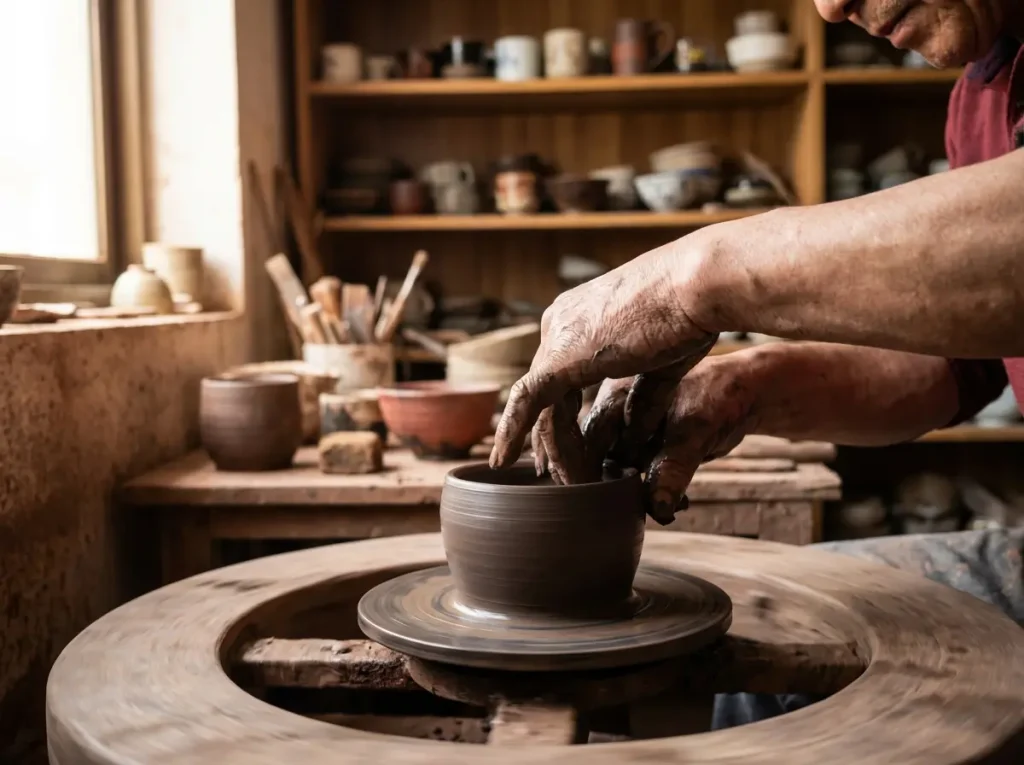
Each handcrafted Tenmoku tea cup requires over 72 hours of meticulous work. Master artisans spend years perfecting their craft, transforming iron-rich clay into unique works of art through an intensive process passed down through generations.
Here’s what makes the craftsmanship so special:
- Clay Selection: Artisans source clay with high iron content from specific regions, essential for authentic glaze effects.
- Wheel Throwing: Each cup is hand-pulled on a potter’s wheel, creating the distinctive bowl shape with wide brim.
- Glaze Application: A mixture of iron ore and plant ash is carefully applied—this ancient formula hasn’t changed in centuries.
- Kiln Firing: Cups enter wood-fired kilns where temperatures reach 1300°C for several hours.
- Kiln Transformation: The magic happens during cooling when iron crystallizes, creating unpredictable, one-of-a-kind patterns.
- Quality Control: Only flawless pieces pass inspection—cups with cracks or flaws are respectfully discarded.
The key takeaway is this: the extreme heat forces iron from the glaze to crystallize on the surface, creating patterns that cannot be replicated or controlled. This is why no two Tenmoku cups are ever identical—each is genuinely unique.
Mesmerizing Glaze Patterns: Hare’s Fur, Oil Spot & Beyond
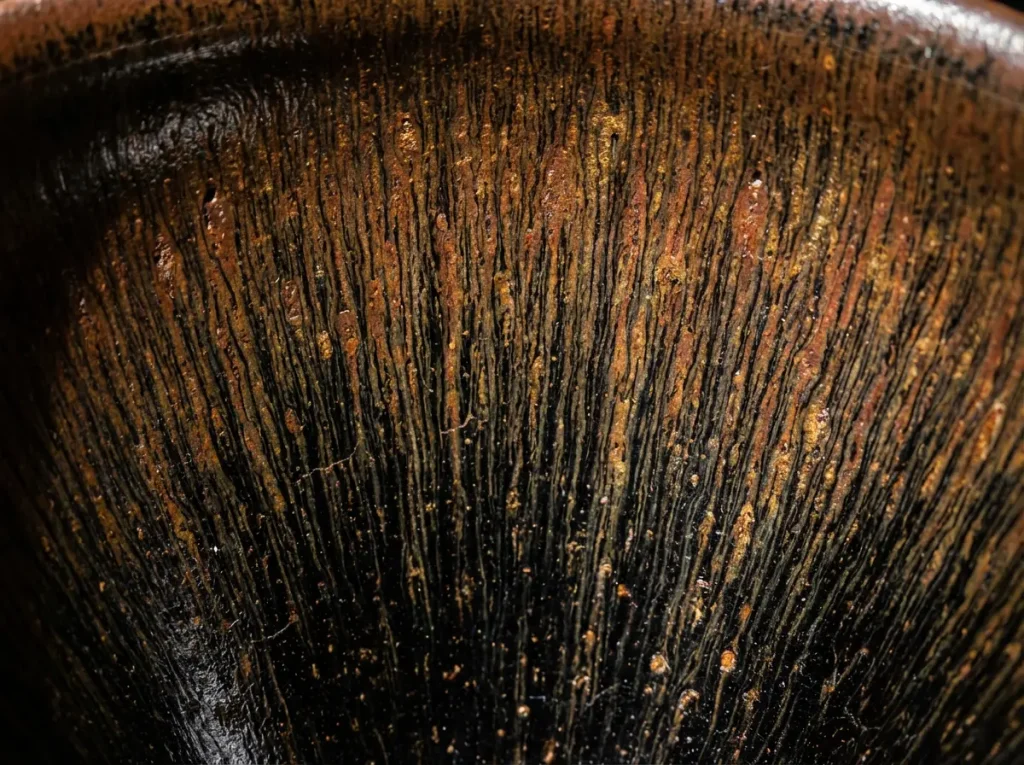
The magic of Tenmoku tea cups lies in their unpredictable glaze patterns. During the intense 1300°C firing, iron compounds separate from the glaze and crystallize, creating natural artworks that range from subtle to spectacular.
Hare’s Fur (兔毫) features fine vertical streaks in gold, silver, or brown that resemble rabbit fur. This classic pattern was most prized during the Song Dynasty and remains highly sought after today.
Oil Spot (油滴) displays metallic droplets scattered across the dark glaze like silver raindrops on a midnight pond. These spots form when iron-rich compounds pool during cooling, creating blue, silver, or gold iridescent spots.
Partridge Feather patterns show delicate feather-like marks, while modern artisans have also achieved stunning Galaxy and Rainbow effects with shimmering, multi-color iridescence.
| Pattern Type | Visual Characteristic | Color Range |
|---|---|---|
| Hare’s Fur | Vertical streaks | Gold, silver, brown |
| Oil Spot | Metallic droplets | Silver, gold, blue |
| Partridge Feather | Feather-like marks | Mixed earth tones |
| Galaxy/Rainbow | Cosmic shimmer | Multi-color iridescence |
Bottom line: These patterns aren’t painted or designed—they’re born from fire, making each cup a natural work of art that even the artisan cannot predict.
Why Tenmoku Tea Cups Make Perfect Christmas Gifts
Tenmoku tea cups transcend ordinary gift-giving by offering a piece of ancient artistry that arrives in luxury packaging with artist certification. Here’s why they’re unforgettable Christmas presents:
Luxury Presentation: Quality Tenmoku cups come in elegant gift boxes with silk or velvet lining. Many include an artist’s certificate documenting authenticity, making recipients feel they’re receiving something truly special.
Cultural Storytelling: These cups carry 1,000+ years of heritage. Gifting one means sharing the story of Song Dynasty emperors, Zen monks, and the revival of ancient craftsmanship in modern times.
Meaningful Uniqueness: Unlike mass-produced gifts, each cup is genuinely one-of-a-kind. The recipient will own something that has never existed before and will never exist again.
Heirloom Quality: Fired at 1300°C, these cups are built to last generations. They’re not just gifts for this Christmas—they’re potential family heirlooms.
The most important thing to remember is that Tenmoku cups occupy a sweet spot in gift pricing. You can find authentic pieces from $30 to $200+, offering options for various budgets while maintaining the “luxury gift” perception.
Who Should Receive a Tenmoku Tea Cup This Christmas?
From tea ceremony devotees to art collectors and wellness enthusiasts, Tenmoku tea cups delight recipients who appreciate craftsmanship, cultural heritage, and functional beauty.
Tea Lovers & Ceremony Practitioners: Those who already have a tea ritual will elevate their practice with cups that enhance flavor and heat retention for 3+ hours. Classic hare’s fur patterns appeal to traditional tea enthusiasts.
Art & Pottery Collectors: Collectors prize Tenmoku for its Song Dynasty provenance and the impossibility of replication. Rare oil spot patterns are particularly coveted.
Culture & History Enthusiasts: Anyone fascinated by Eastern philosophy, Zen Buddhism, or Chinese history will appreciate the cultural depth these cups represent.
Wellness & Mindfulness Seekers: The act of tea-drinking from a Tenmoku cup encourages slowing down and being present—perfect for those practicing meditation or mindful living.
The “Impossible to Shop For” Person: You know the one—they have everything they need. A genuine handcrafted Tenmoku cup with a galaxy pattern will surprise and delight even the most particular recipient.
| Recipient Type | Why They’ll Love It | Recommended Pattern |
|---|---|---|
| Tea Enthusiast | Enhances flavor & ritual | Classic hare’s fur |
| Art Collector | Museum-quality craftsmanship | Rare oil spot |
| Culture Lover | 1,000 years of heritage | Traditional patterns |
| Minimalist | Simple functional beauty | Monochrome glazes |
| Wellness Seeker | Mindful tea ceremony | Natural earth tones |
How Tenmoku Tea Cups Enhance Your Tea-Drinking Experience
Beyond their stunning appearance, Tenmoku tea cups chemically enhance your tea’s flavor through iron-rich glaze that improves water alkalinity while their dense ceramic construction keeps beverages hot for over three hours.
Superior Heat Retention: The thick walls and dense stoneware body retain heat far better than regular ceramics or glass. Your tea stays hot for 3+ hours versus the typical 30-45 minutes in standard cups.
Flavor Enhancement: The high iron content in the glaze releases trace minerals during use. This improves water alkalinity, which softens the taste of your tea, reducing bitterness and enhancing natural sweetness.
Tea Preservation: The unique porous clay structure with microscopic air pores helps tea maintain its freshness longer. If you cover your cup, tea stays closer to its original flavor profile for 12+ hours versus becoming stale in regular porcelain.
To put it simply: Serve the same tea in a Tenmoku cup and a glass cup, wait 2 minutes, then taste. The Tenmoku version will be smoother, slightly sweeter, and noticeably warmer.
“The chemical composition of the Tenmoku glaze improves the alkalinity of your tea liquor, making the texture softer and smoother while the flavor becomes more sweet.” — Traditional Tea Masters
Choosing Your Perfect Tenmoku Tea Cup: A Buyer’s Guide
Selecting the perfect Tenmoku cup requires considering capacity (80-150ml for personal use), pattern preference, and authenticity markers like artist certification and high-temperature firing proof.
Size Matters: Most Tenmoku cups hold 80-150ml (3-5 oz). Smaller cups (80-100ml) suit concentrated teas like oolong or pu-erh. Larger cups (120-150ml) work well for green tea or casual drinking.
Pattern Selection: Choose based on recipient personality. Hare’s fur suits traditionalists, oil spot appeals to collectors, while galaxy patterns delight those who love bold, modern aesthetics.
Authenticity Indicators:
- Artist signature or stamp on the cup base
- Certificate of authenticity included with purchase
- High-temperature firing marks visible on unglazed areas
- Natural pattern irregularities (perfect symmetry indicates printing, not firing)
- Substantial weight from thick, dense ceramic (not lightweight)
Food Safety Check: Authentic Tenmoku glazes are 100% food-safe because 1300°C firing makes the glaze unleachable. Test by pouring lemon juice or vinegar in the cup overnight—if the color changes, the glaze isn’t properly fired.
Price Reality Check: Authentic pieces rarely cost less than $30. If you see “Tenmoku” cups for $10-15, they’re likely mass-produced imitations with painted patterns rather than kiln-fired crystallization.
Caring for Your Tenmoku Tea Cup: Simple Steps for Longevity
To preserve your Tenmoku tea cup’s beauty for generations, hand wash with mild soap, avoid thermal shocks, and store at room temperature—these simple steps maintain both aesthetic patina and tea-enhancing properties.
Daily Cleaning: Rinse with warm water after each use. For deeper cleaning, use mild dish soap and a soft cloth. The cup develops a beautiful tea patina over time that enhances its character.
What to Avoid: Dishwashers are generally not recommended as harsh detergents can affect the glaze’s natural luster over time. Skip abrasive scrubbers or harsh chemicals that might damage the surface.
Thermal Shock Prevention: Don’t pour boiling water into a cold cup. Pre-warm it with hot tap water first. This prevents potential cracking from rapid temperature changes.
Storage: Keep at room temperature in a dry place. Many collectors display their Tenmoku cups on special stands as decorative art between uses.
The Patina Effect: Over months and years, tea oils naturally season the interior, creating a subtle sheen. This is desirable—it’s the cup’s history visible to the eye.
The Cultural Gift: More Than Just a Cup
Gifting a Tenmoku tea cup conveys respect for heritage and mindfulness—these vessels carried tea for Song Dynasty emperors and Zen Buddhist monks, symbolizing the gift of tradition, wellness, and cultural appreciation.
During the Song Dynasty (960-1279 AD), these cups were used in imperial tea ceremonies. The dark glaze provided perfect contrast for viewing the white froth of whisked tea—a practice that influenced Japanese matcha ceremonies.
Zen Buddhist monks brought Tenmoku cups to Japan in the 12th century, where they became central to the tea ceremony philosophy. The cups embody wabi-sabi—finding beauty in imperfection and transience.
By the Yuan Dynasty, Tenmoku production declined as tea preparation methods changed. The craft nearly died out, but in the 1990s, Chinese ceramic artists revived the tradition, studying fragments and historical records to recreate authentic techniques.
In summary: When you gift a Tenmoku cup, you’re supporting this revival. You’re helping preserve a thousand-year-old art form that UNESCO-level artisans are working to keep alive.
Price Guide: Tenmoku Tea Cups for Every Budget
Authentic Tenmoku tea cups range from $30 for quality entry pieces to $200+ for master artisan creations, with mid-range $50-100 options offering the best balance of craftsmanship and giftability.
| Price Range | What You Get | Best For |
|---|---|---|
| $30-$50 | Authentic entry-level pieces, basic patterns, gift box | First-time buyers, thoughtful stocking stuffers |
| $50-$100 | Mid-range craftsmanship, artist certificate, premium patterns | Personal gifts for tea lovers, co-workers, friends |
| $100-$200 | Premium patterns, known artisan work, luxury packaging | Serious collectors, milestone celebrations, VIP clients |
| $200+ | Master artisan pieces, rare patterns, museum quality | Heirloom gifts, investment collections, connoisseurs |
What Affects Pricing: Pattern rarity (oil spot costs more than basic hare’s fur), artisan reputation, cup size, and whether it’s a matched set versus individual piece.
Christmas Sale Opportunity: Many Tenmoku retailers offer 15-30% discounts during the holiday season. At ZenTeaCup, we provide special Christmas bundles pairing cups with premium loose-leaf teas.
Complete Gift Sets: Beyond Single Cups
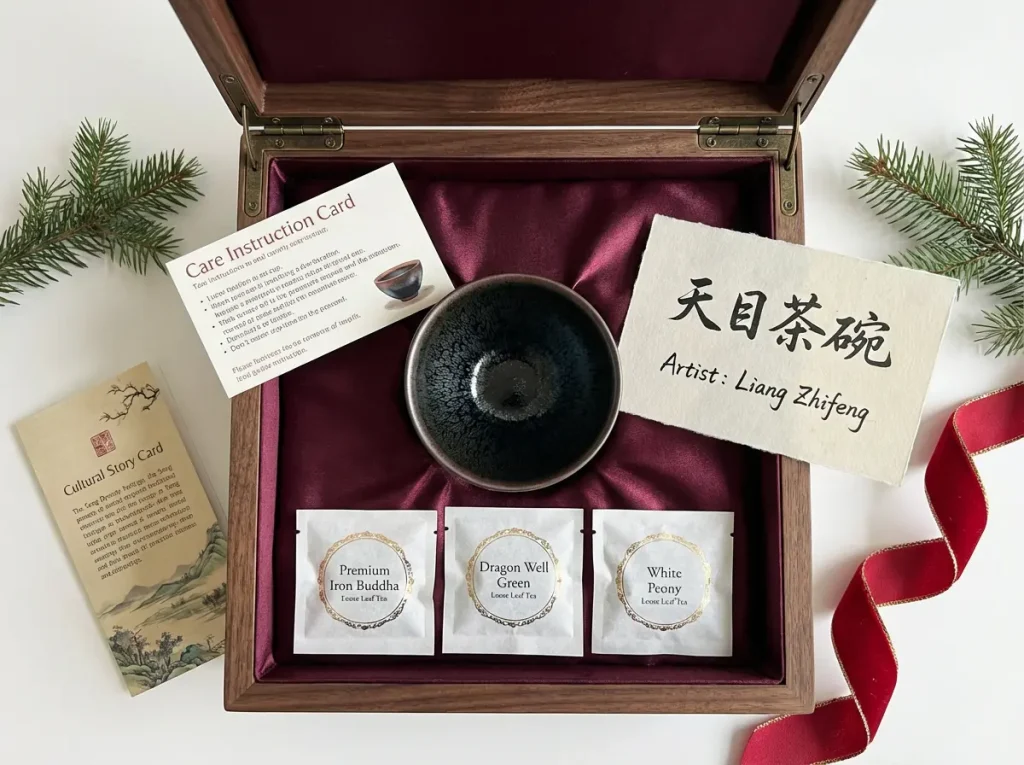
Elevate your gift with complete Tenmoku sets that pair handcrafted cups with premium loose-leaf teas, matching teapots, or curated multi-piece collections in luxurious presentation boxes.
Starter Set ($40-$70): One Tenmoku cup plus a sampler of premium teas (oolong, pu-erh, green tea). Perfect for introducing someone to elevated tea drinking.
Couple’s Set ($80-$150): Two coordinating cups in complementary patterns with shared theme. Ideal for couples, newlyweds, or hosts who love entertaining.
Ceremony Set ($150-$300): Includes Tenmoku cup, matching teapot, tea scoop, and presentation tray. For serious tea enthusiasts ready to create their own ceremony ritual.
Collector’s Bundle ($200-$500): Four or more cups showcasing different glaze patterns, housed in museum-quality presentation box with individual certificates.
Pro tip: Paired sets save 10-20% versus buying pieces separately, making them smart value for impressive gifts.
❓ Frequently Asked Questions
Are Tenmoku tea cups safe for daily use?
Yes, authentic Tenmoku tea cups are 100% food-safe. The iron-rich glaze is fired at 1300°C, making it completely unleachable and non-toxic. Quality pieces come with safety certifications. You can verify safety by leaving lemon juice in the cup overnight—if the color doesn’t change, the glaze is properly fired and safe.
How can I tell if a Tenmoku cup is authentic?
Authentic Tenmoku cups feature: (1) artist signature or stamp on the base, (2) certificate of authenticity, (3) visible high-temperature firing marks, (4) natural pattern irregularities from kiln crystallization—not printed designs, and (5) substantial weight from thick, dense ceramic. Prices below $30 are often red flags for imitations.
Can Tenmoku cups be used in the microwave or dishwasher?
Most Tenmoku cups are microwave-safe due to high-temperature firing. However, hand washing is strongly recommended to preserve the glaze’s natural patina that develops over time. Dishwashers won’t damage the cup but may gradually affect the aesthetic finish. Always verify product-specific care instructions.
What’s the difference between Jian Zhan and Tenmoku?
Jian Zhan (建盏) is the Chinese term for these tea cups originating from Jianyang during the Song Dynasty. Tenmoku (天目) is the Japanese name adopted when monks brought the tradition to Japan from Tianmu Mountain. Today, both terms describe the same style of iron-glazed, high-fired ceramic tea bowls.
Why do Tenmoku tea cups have different patterns?
Patterns like hare’s fur, oil spot, and partridge feather form naturally during kiln firing when iron in the glaze crystallizes under extreme heat (1300°C). Temperature variations, kiln atmosphere, and cooling rates create unpredictable, unique patterns. This means no two cups are ever identical—each is genuinely one-of-a-kind.
How long will a Tenmoku tea cup last?
With proper care, Tenmoku tea cups are heirloom-quality pieces designed to last generations. Their dense, high-fired ceramic construction resists chips and cracks far better than standard pottery. Song Dynasty examples have survived 1,000+ years, and modern pieces using traditional methods offer similar durability when maintained properly.
What makes Tenmoku cups better than regular tea cups?
Tenmoku cups offer three key advantages: (1) superior heat retention keeping tea hot for 3+ hours, (2) flavor enhancement through iron-rich glaze that improves water alkalinity, making tea smoother and sweeter, and (3) tea preservation that maintains freshness longer than regular ceramics. Plus, each cup is a unique work of art.
Make This Christmas Unforgettable
This Christmas, transcend conventional gift-giving with handcrafted Tenmoku tea cups—thousand-year legacies of fire, iron, and artisan mastery that transform daily tea rituals into mindful ceremonies.
Whether you choose a $40 starter set with premium tea samples or a $200 master artisan piece with rare oil spot glaze, you’re giving more than a cup. You’re offering a connection to Song Dynasty emperors, Zen Buddhist monks, and the timeless art of tea.
Each Tenmoku tea cup arrives ready to gift in elegant packaging with artist certification and cultural story cards. Your recipient unwraps not just pottery, but 1,000 years of heritage, countless hours of craftsmanship, and a genuinely one-of-a-kind treasure they’ll cherish for decades.
At ZenTeaCup, we curate only authentic Tenmoku pieces from master artisans who honor traditional techniques. Browse our Christmas collection today and discover why these ancient tea cups make the most meaningful modern gifts.
The most important thing to remember is this: in a world of mass production and fleeting trends, a handcrafted Tenmoku tea cup offers something increasingly rare—authenticity, beauty, and a daily reminder to slow down and savor the moment.
Give the gift of mindfulness this Christmas. Give Tenmoku.
❓ How do I know if my tenmoku cup is authentic?
Look for an unglazed foot ring showing dark, iron-rich clay, metallic luster under light that shifts with viewing angle, and subtle asymmetry indicating hand-forming. See the handmade tenmoku identification guide for detailed authentication steps.
❓ Can I put my tenmoku cup in the dishwasher?
No. Always hand-wash with warm water only. Dishwasher detergent and high-pressure water can damage the glaze patina and may cause micro-cracking. The new tenmoku owner guide provides complete care instructions.
❓ What tea tastes best in a tenmoku cup?
Oolong and aged pu-erh are the classic pairings. The iron-rich glaze softens tannins and enhances aroma. Read the oolong-tenmoku pairing guide for the science behind this.
📚 References
- Song Dynasty Tea Culture & Ceramics: Comprehensive educational resource on Song Dynasty tea bowls with oil spot glaze and the cultural context of tea ceremonies in imperial China. Smithsonian’s National Museum of Asian Art – Technology and Tea Culture
- Jian Ware Tea Bowls: Detailed examination of Southern Song dynasty tea bowl construction, glaze techniques, and their significance in Chinese tea culture and Buddhist monasteries. Smarthistory – Art in the Song Dynasty China
- Chinese Ceramics History: Encyclopedia overview of Chinese pottery development including stoneware tea bowls, Jian ware characteristics, and Song dynasty innovations in ceramic glazing techniques. Britannica – Song Dynasty Pottery
- Museum Collection – Song Dynasty Tea Bowls: Authentic Song dynasty tea bowl specimens with detailed provenance, materials analysis, and historical context from a leading art museum. The Metropolitan Museum of Art – Tea Bowl Collection
- Song Dynasty Celadon & Glazes: In-depth exploration of the Five Great Kilns of the Song Dynasty, including Jian ware production methods and the development of iron-rich glazes. Red Blossom Tea Company – Song Dynasty Celadon
Ready to elevate your tea ritual? Explore these cups for handcrafted tenmoku cups shipped across the US.


