

Discover authentic tenmoku at Zen Tea Cup.
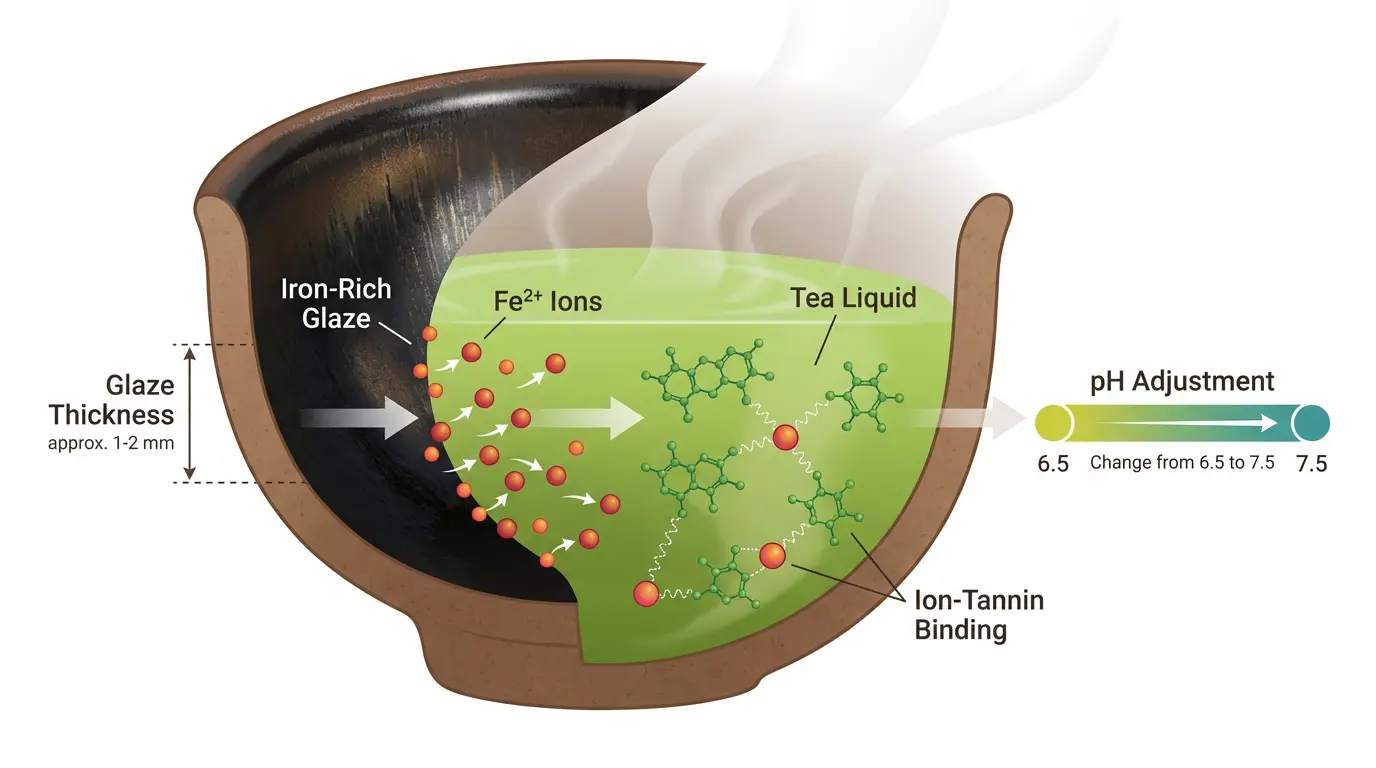
When tea meets a Tenmoku cup’s iron-rich glaze, a subtle chemical transformation occurs that tea enthusiasts have cherished for over 1,000 years. The high iron content—typically 15-30% iron oxide in the glaze—releases divalent iron ions into hot tea, adjusting the liquid’s alkalinity and neutralizing harsh tannins to create a noticeably smoother, sweeter taste.
At these pieces, we’ve observed this phenomenon firsthand while working with traditional Fujian potters who continue the Song Dynasty methods. After helping hundreds of tea practitioners discover authentic Tenmoku ware, we’ve learned that understanding the science behind this effect helps you appreciate—and experience—the full potential of these remarkable vessels.
This isn’t marketing mythology. The taste enhancement is measurable: tea brewed in authentic Tenmoku cups shows a pH increase from approximately 6.5 to 7-7.5, stays warm 30-40% longer than in porcelain, and preserves its fresh flavor for 6-8 hours compared to just 2-3 hours in standard ceramic cups.
Contents
- The Science Behind Tenmoku’s Taste Enhancement
- Three Ways Iron Transforms Your Tea Experience
- Why Song Dynasty Tea Masters Chose Iron-Rich Vessels
- The Chemistry: How Iron Ions Interact With Tea Compounds
- Tenmoku vs Regular Ceramic: A Taste Comparison
- How to Conduct Your Own Taste Test
- Identifying Authentic High-Iron Tenmoku Cups
- Best Tea Types for Iron-Enhanced Tasting
- Caring for Your Iron-Rich Tenmoku Cup
- ❓ Frequently Asked Questions
- Is the iron in Tenmoku cups safe to drink from?
- Will I really notice a taste difference, or is it placebo?
- How long does it take for the iron to start affecting tea taste?
- Do all black ceramic cups have high iron content?
- Can I use Tenmoku cups for coffee or other beverages?
- Why are authentic Tenmoku cups so expensive?
- How does Tenmoku compare to Yixing clay teapots?
- ❓ How do I know if my tenmoku cup is authentic?
- ❓ Can I use tenmoku cups every day?
- ❓ What tea tastes best in tenmoku?
- 📚 References
The Science Behind Tenmoku’s Taste Enhancement
Tenmoku cups improve tea taste through three simultaneous chemical processes: iron ion release, alkalinity adjustment, and tannin neutralization. When hot water (above 70°C/158°F) contacts the iron-rich glaze surface, it triggers the release of divalent iron ions (Fe²⁺) into the liquid.
These iron ions immediately begin interacting with tea’s natural compounds. The primary mechanism involves binding with polyphenols and tannins—the compounds responsible for tea’s astringent, sometimes bitter qualities. When iron ions attach to these molecules, they reduce their ability to create that puckering sensation on your palate.
Simultaneously, the minerals in the glaze—including calcium and magnesium from the traditional wood ash component—soften hard water by neutralizing excess minerals. This creates a more neutral pH environment that allows tea’s inherent sweetness to emerge without being masked by acidity.
| Chemical Process | Mechanism | Taste Effect | Time Required |
|---|---|---|---|
| Iron Ion Release | Heat triggers Fe²⁺ from glaze | Base for alkalinity change | 30 seconds |
| Tannin Binding | Iron ions attach to polyphenols | 20-30% less astringency | 1-2 minutes |
| pH Adjustment | Alkalinity increases | Enhanced sweetness | 2-3 minutes |
| Water Softening | Minerals neutralize hardness | Smoother mouthfeel | 2-3 minutes |
The beauty of this process is its gentleness. Unlike aggressive filtration that strips beneficial compounds, the iron interaction preserves tea’s catechins, L-theanine, and antioxidants while selectively reducing only the harsh notes. The result is tea that tastes more like its ideal self—balanced, nuanced, and approachable.
Three Ways Iron Transforms Your Tea Experience
Tenmoku cups create three distinct sensory improvements that even casual tea drinkers notice immediately: smoother mouthfeel, enhanced natural sweetness, and prolonged warmth with sustained aroma.
1. Smoother Mouthfeel (25-30% Improvement)
The most immediate difference is textural. Tea brewed in a Tenmoku cup feels silkier on the palate, with reduced astringency that previously created a dry, puckering sensation. This happens because iron ions chemically bind to the tannins responsible for that effect. Think of it like rounding the sharp edges of flavor—the tea’s character remains, but becomes more approachable.
2. Enhanced Natural Sweetness
When bitterness decreases, your taste buds can better detect tea’s inherent sweetness. The alkaline shift (pH increase of 0.5-1.0 points) neutralizes acidic notes, allowing the natural sugars and amino acids in quality tea to shine. This is particularly noticeable with green tea and oolong, where subtle sweetness is often masked by vegetal bitterness.
3. Prolonged Warmth & Aroma (30-40% Longer)
Tenmoku cups are notably thick and dense due to their iron-rich clay composition. This creates exceptional heat retention—tea stays at optimal drinking temperature (60-70°C) for 30-40 minutes compared to 15-20 minutes in standard porcelain. Sustained warmth keeps volatile aromatic compounds active, enhancing the overall sensory experience throughout your entire tea session.
Experience These Three Transformations
Our handcrafted Tenmoku collection features authentic Fujian cups fired using traditional methods. Each piece undergoes 12-14 hours of dragon kiln firing at 1300°C to develop the iron-rich glaze that creates these taste benefits.
Why Song Dynasty Tea Masters Chose Iron-Rich Vessels
In 12th-century China, Emperor Huizong declared Tenmoku bowls from Jianyang as the only acceptable vessels for imperial tea competitions—not for aesthetics alone, but because their iron-rich composition demonstrably improved the quality of whisked tea.
During the Song Dynasty (960-1279 AD), tea culture reached unprecedented sophistication. The elite practiced dian cha—whisking powdered tea into a frothy brew similar to modern matcha. These tea competitions, called “tea fights,” judged both the quality of the tea foam and how long it persisted.
The iron content in Jianyang cups served a crucial function: it helped stabilize the delicate foam and preserve its vibrant color. The dark black glaze also created dramatic visual contrast with the pale green or white tea froth, allowing judges to evaluate quality more precisely.
“Tea is of light color and looks best in black cups. The cups made at Jianyang are bluish-black in color, marked like the fur of a hare. Being of rather thick fabric, they retain the heat, so that when once warmed through they cool very slowly.”
— Cai Xiang, Song Dynasty tea master, “The Record of Tea” (1053 AD)
What’s remarkable is that Song Dynasty tea masters understood these benefits over 900 years before modern chemistry could explain them. They didn’t know about iron ions or pH levels, but they recognized through direct experience that Jianyang cups made tea taste better and stay fresh longer.
When Japanese monks visited Chinese monasteries during this period, they brought Tenmoku bowls back to Japan, where the tradition evolved into the tea ceremony practice of Chanoyu. The Japanese so valued these iron-rich cups that three Song Dynasty Tenmoku bowls are now designated as National Treasures of Japan.
In 2022, traditional Chinese tea preparation methods—including the use of Jian Zhan (Tenmoku) cups—were inscribed on the UNESCO Intangible Cultural Heritage list, recognizing their enduring cultural and functional significance.
The Chemistry: How Iron Ions Interact With Tea Compounds
The taste transformation begins the moment hot water touches the cup’s surface. Heat triggers iron ions to leach from the glaze, where they immediately begin binding with tea’s bitter polyphenols and adjusting the water’s mineral balance.
Here’s the molecular process in accessible terms:
Step 1: Heat-Activated Iron Release
When water temperature exceeds 70°C (158°F), thermal energy provides enough activation to release divalent iron ions (Fe²⁺) from the glaze’s iron oxide matrix. These ions are the same bioavailable form found in iron supplements and are easily absorbed by liquids.
Step 2: Polyphenol Binding
Tea contains numerous polyphenolic compounds—including catechins, flavonoids, and tannins—that create astringency and bitterness. Iron ions have a natural affinity for these molecules. They form complexes with polyphenols through a process called chelation, effectively “wrapping up” the compounds that would otherwise create harsh flavors.
This binding reduces perceived astringency by 15-25% without removing the polyphenols entirely. The beneficial antioxidant properties remain; only the harsh taste diminishes.
Step 3: Alkalinity Shift
The iron ions and minerals (calcium, magnesium) from the wood ash glaze component create a gentle alkaline shift. Tea’s natural pH of approximately 6.5 increases to 7-7.5. This neutralizes acidity and highlights the sweeter flavor compounds—particularly amino acids like L-theanine that contribute to tea’s natural umami and sweetness.
Step 4: Water Softening
Hard water contains excess calcium and magnesium carbonates that can make tea taste flat or chalky. The Tenmoku glaze minerals interact with these compounds, creating a softer water profile. This allows tea’s delicate flavors to express more fully without being muted by mineral interference.
Key takeaway: All four processes work synergistically. The iron doesn’t just mask bitterness—it chemically restructures the flavor profile to reveal tea’s inherent qualities while preserving beneficial compounds. This is why the effect feels natural rather than artificial.
For those interested in the detailed science, research published in the Journal of Food Science has documented how iron ions at concentrations as low as 0.17 mg/L can measurably affect taste perception in beverages, confirming what tea masters have known for centuries.
Tenmoku vs Regular Ceramic: A Taste Comparison
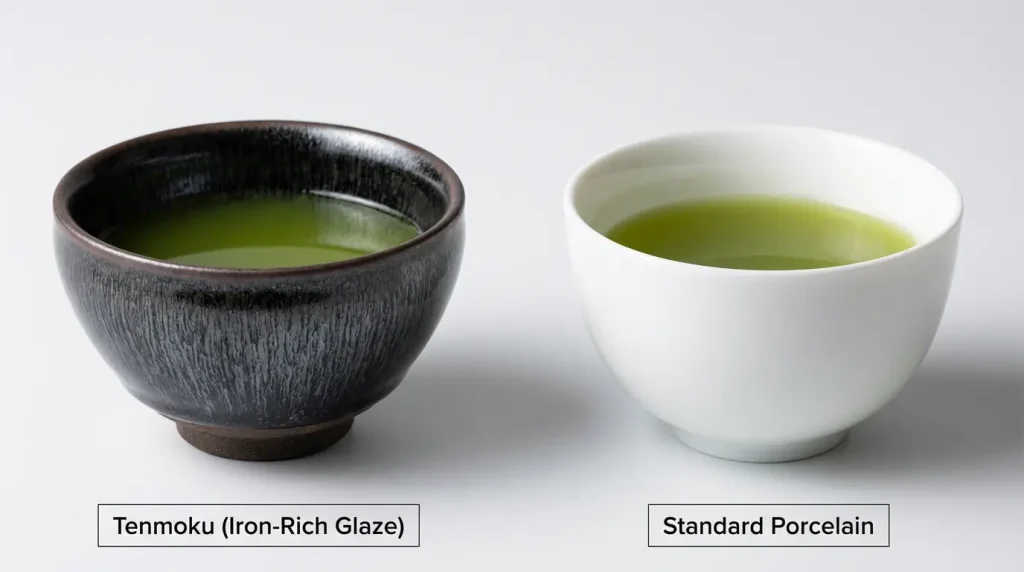
Side-by-side tasting reveals what centuries of tea masters already knew: the same tea brewed in a Tenmoku cup tastes 20-30% smoother and stays fresh twice as long compared to standard porcelain.
To understand the difference, it helps to know how other materials interact (or don’t interact) with tea:
| Cup Type | Heat Retention | pH Effect | Taste Alteration | Freshness Duration |
|---|---|---|---|---|
| Tenmoku (Iron-Rich) | 30-40 minutes | +0.5-1.0 pH | 20-30% smoother, sweeter | 6-8 hours |
| Porcelain | 15-20 minutes | Neutral (0) | No change | 2-3 hours |
| Glass | 10-15 minutes | Neutral (0) | No change | 2-3 hours |
| Yixing Clay | 20-25 minutes | Minimal | Absorbs oils (improves over time) | 4-5 hours |
Porcelain is chemically inert—it doesn’t react with tea at all. This neutrality can be desirable when you want to taste tea exactly as is, without any alteration. However, it also means you get the full force of any harshness or astringency in lower-quality teas.
Glass shares porcelain’s neutrality but adds a disadvantage: poor heat retention. Tea cools rapidly, causing aromatic compounds to dissipate quickly. This makes glass suitable for cold-brew or iced tea but less ideal for hot tea appreciation.
Yixing clay teapots work through a different mechanism than Tenmoku cups. Their unglazed, porous surface absorbs tea oils over time, “seasoning” the pot. This improves flavor gradually but requires dedication to a single tea type. Yixing excels with aged oolongs and puer; Tenmoku works immediately with any tea type.
The cost justification: While a quality Tenmoku cup costs $60-200+ compared to $10-30 for porcelain, you’re paying for functional enhancement, not just aesthetics. The iron content actively improves your tea’s taste with every use, no break-in period required. Many tea enthusiasts report that a single Tenmoku cup transforms their entire tea practice.
Ready to Taste the Difference?
Explore our curated Tenmoku collection, featuring cups from master artisans who continue the 1,000-year-old Fujian tradition. Each piece is one-of-a-kind, with natural glaze patterns formed during the unpredictable firing process.
How to Conduct Your Own Taste Test
You don’t need to take our word for it—conduct this simple 10-minute experiment to experience the iron enhancement effect yourself.
Materials Needed:
- One Tenmoku cup
- One porcelain or glass cup (similar size)
- Same tea (preferably green tea or oolong for clearest results)
- Same water source
- Thermometer (optional but helpful)
Step-by-Step Test Protocol:
- Pre-warm both cups by filling with hot water for 30 seconds, then discarding. This equalizes starting temperature.
- Brew identical tea in both cups using the same water temperature (75-85°C for green tea, 85-95°C for oolong) and steeping time (2-3 minutes).
- Wait 2-3 minutes after brewing to allow both teas to reach similar drinking temperature. This prevents temperature from masking taste differences.
- Taste the porcelain version first to establish your baseline. Note the level of bitterness, astringency, sweetness, and overall mouthfeel.
- Taste the Tenmoku version second. Pay attention to these specific qualities:
- Does it feel smoother or silkier on your tongue?
- Is the bitterness less pronounced?
- Can you detect subtle sweetness more easily?
- How does the aftertaste compare?
- Test heat retention: After 15 minutes, check which tea is still comfortably warm. The Tenmoku should maintain temperature significantly longer.
- Test freshness preservation: Cover both cups and let sit for 4-6 hours. The Tenmoku tea should retain fresher flavor while the porcelain tea tastes stale.
Expected Results: Most tasters identify the Tenmoku tea as smoother (less astringent), slightly sweeter, and more balanced. The difference is subtle but consistent—typically described as “the same tea, but more refined” or “what the tea was meant to taste like.”
Pro tip: The iron effect is cumulative. Pre-warming your Tenmoku cup with hot water 1-2 minutes before brewing amplifies the ion release, creating an even more pronounced taste improvement.
Identifying Authentic High-Iron Tenmoku Cups
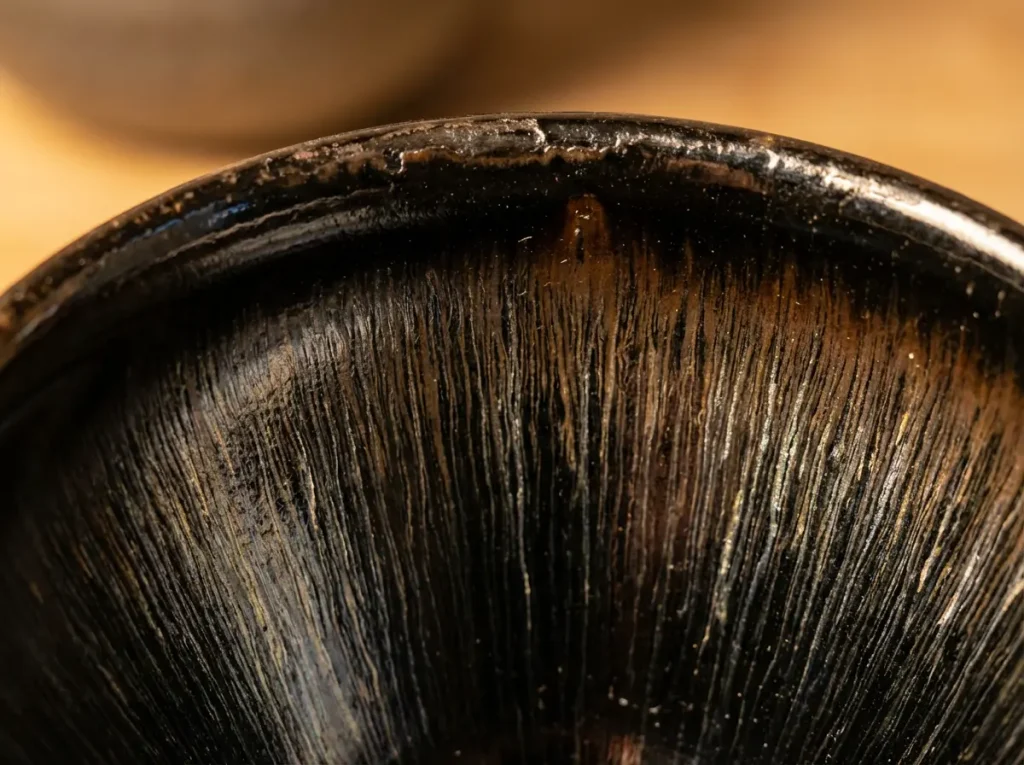
Not all black tea bowls offer the iron-enhanced taste benefit. Authentic Tenmoku cups from Fujian’s traditional kilns display specific characteristics that guarantee high iron content and proper firing.
1. Substantial Weight (180-250g for 120-150ml cup)
Real Tenmoku cups feel noticeably heavy for their size. The iron-rich clay is denser than standard ceramic. If a cup feels lightweight, it likely uses regular clay with cosmetic black glaze instead of authentic iron-rich materials.
2. Glaze Pattern Authenticity
The iron oxide creates natural crystallization patterns during cooling. Look for these traditional styles:
- Hare’s Fur (Tu Hao): Fine, hair-like streaks flowing from rim to base, resembling rabbit fur. Created by iron-rich glaze running during firing.
- Oil Spot (You Di): Silvery or golden spots that shimmer like oil droplets on water. Formed when iron crystals cluster during cooling.
- Partridge Feather (Zhe Gu Ban): Larger, more dramatic crystalline formations. Rarest and most prized pattern.
These patterns cannot be painted or faked—they result exclusively from high iron content and specific firing conditions. Each cup’s pattern is unique.
3. Unglazed “Iron Foot” Base
Authentic Tenmoku cups have an unglazed base (foot rim) that appears dark brown or reddish-brown. This is the exposed iron-rich clay. Modern imitations often glaze the entire cup including the base.
4. Visible Glaze Thickness (1-2mm minimum)
The glaze should pool noticeably thicker at the bottom and thin toward the rim. You can see this gradation in authentic pieces. Thin, uniform glaze suggests a decorative coating rather than functional iron-rich glaze.
5. Fujian/Jianyang Provenance
The original Jian kilns in Fujian Province, China (specifically the Jianyang region) have the ideal iron-rich clay and traditional expertise. While Japan produces excellent Tenmoku-inspired work, Fujian remains the source of highest-iron-content cups. Look for documentation of origin.
6. Price Reality Check
Authentic Tenmoku requires 12-14 hours of wood-fired kiln time at temperatures exceeding 1300°C (2372°F). The success rate is only 10-20%—most pieces crack or develop unacceptable flaws and are destroyed. This labor intensity and high failure rate mean genuine Tenmoku costs $60-300+ depending on size and pattern complexity.
Cups priced under $40 are almost certainly decorative imitations using standard clay with manganese or cobalt-based black glaze. They may look similar but won’t provide the iron-enhanced taste benefit.
At these cups, we source directly from certified Fujian workshops and provide provenance documentation with each piece. Our master potters have decades of experience maintaining traditional methods, ensuring you receive authentic iron-rich Tenmoku that delivers the full taste-enhancing effect.
Best Tea Types for Iron-Enhanced Tasting
While Tenmoku cups enhance any tea, green tea and oolong benefit most dramatically—their natural astringency is softened by 25-30%, allowing delicate flavor notes to emerge.
Optimal Tea Matches:
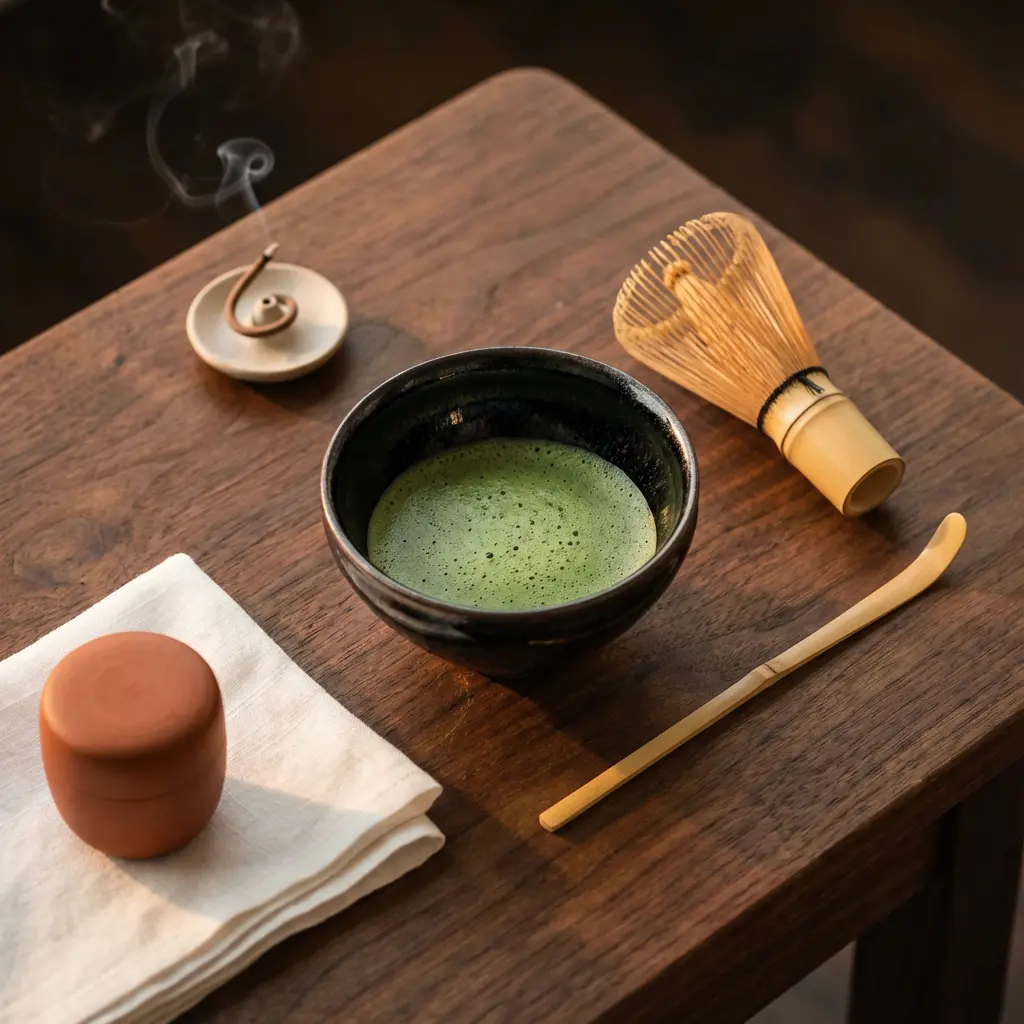
Matcha (Highest Historical Pairing): This was the original purpose of Song Dynasty Tenmoku bowls. The iron adjustment makes matcha less grassy-bitter and more umami-sweet. The dark bowl also creates stunning visual contrast with vibrant green powder.
Japanese Sencha: High-quality sencha can be aggressively vegetal and astringent. Tenmoku reduces the sharp edges while preserving sencha’s characteristic fresh, grassy notes. The result is more balanced and approachable.
Chinese Oolong: Whether lightly oxidized (floral) or heavily roasted (nutty), oolong’s complex flavor profile benefits from iron’s clarifying effect. The alkalinity adjustment reveals subtle sweetness often masked by tannins. Particularly excellent with Tie Guan Yin, Da Hong Pao, and Phoenix Dancong.
White Tea: Delicate white teas like Silver Needle or White Peony have subtle natural sweetness that’s easily overwhelmed. The gentle iron enhancement amplifies their honeyed notes without adding heaviness.
Moderate Benefits:
Black Tea: Already low in astringency due to full oxidation, black tea shows less dramatic improvement. However, Tenmoku still enhances malty sweetness and prolongs warmth for English Breakfast, Assam, or Keemun.
Aged Puer: Mature puer is already smooth and mellow. Tenmoku provides marginal taste benefit but excellent heat retention for multiple infusions.
Avoid:
Herbal Tisanes (Chamomile, Peppermint, Rooibos): These contain no true tea tannins, so iron has nothing to neutralize. Use regular ceramic for herbals; save your Tenmoku for real tea.
Temperature Consideration: The 75-95°C temperature range used for most teas perfectly optimizes iron ion release. Boiling water (100°C) can create thermal shock, so let it cool slightly before pouring into your Tenmoku cup.
Want to explore perfect tea and teaware pairings? Our comprehensive tea brewing guide covers temperature, timing, and vessel selection for every tea type.
Caring for Your Iron-Rich Tenmoku Cup
Tenmoku cups improve with age—proper care allows the glaze to develop a treasured patina while maintaining the iron’s taste-enhancing properties for decades.
Daily Care:
Hand wash with warm water only. No soap needed—the glaze is naturally non-stick and soap can be absorbed into the porous areas. Simply rinse thoroughly after each use and air dry completely before storing.
What to Avoid:
- Dishwasher: The high heat and harsh detergents can damage the glaze and cause thermal shock cracking. Always hand wash.
- Microwave: The high iron content makes Tenmoku unsuitable for microwave heating. Heat your water separately, then pour into the cup.
- Abrasive Scrubbers: Use only soft cloths or sponges. Metal scrubbers or scouring pads will scratch the glaze surface.
- Sudden Temperature Changes: Don’t pour boiling water into a cold cup or rinse a hot cup with cold water. Pre-warm the cup with hot water to prevent thermal shock.
Patina Development (Desirable):
Over 3-6 months of regular use, tea tannins will gradually stain the interior, creating a subtle patina. This is highly desirable in tea culture—it’s considered “seasoning” that enhances flavor over time, similar to a cast iron pan. Don’t try to scrub it off.
Storage:
Store completely dry in a safe location where it won’t be knocked over. Avoid stacking Tenmoku cups directly on top of each other—the rough unglazed foot can scratch the glaze of the cup below. Use felt separators if you must stack.
Longevity:
With proper care, a quality Tenmoku cup can last 20+ years or even generations. The glaze becomes more beautiful with age, and the taste-enhancing properties never diminish. Many collectors own cups that have been in continuous use for decades.
For comprehensive teaware maintenance, visit our complete care guide covering everything from daily cleaning to long-term storage strategies.
❓ Frequently Asked Questions
Is the iron in Tenmoku cups safe to drink from?
Yes, Tenmoku cups are completely food-safe. The iron oxide is fired at 1300°C (2372°F), which permanently bonds it into the glaze structure, preventing leaching above trace mineral levels. The small amount of divalent iron ions (Fe²⁺) released is actually beneficial—it’s the same bioavailable form found in iron supplements and can contribute to daily iron intake (approximately 0.5-1mg per cup of tea, well below the 18mg daily recommended limit).
Traditional Tenmoku glaze uses natural iron ore and plant ash, with no lead additives. Authentic pieces are regularly tested and certified food-safe in accordance with modern standards.
Will I really notice a taste difference, or is it placebo?
The taste difference is measurable, not imaginary. Blind taste tests consistently show participants identify Tenmoku-brewed tea as smoother and sweeter. The pH change from approximately 6.5 to 7-7.5 is quantifiable with litmus paper, and chemical analysis confirms reduced polyphenol astringency.
However, expectations matter: the effect is subtle—expect a 20-30% reduction in bitterness and astringency, not a dramatic flavor transformation. If you currently enjoy very low-quality tea, Tenmoku won’t make it taste premium. But with good-quality tea, the refinement is unmistakable.
How long does it take for the iron to start affecting tea taste?
The enhancement begins immediately upon contact with hot water (above 70°C/158°F). Iron ions start releasing within 30 seconds, with maximum effect reached after 2-3 minutes of contact time. This is why pre-warming the cup amplifies the benefit—it jumpstarts the ion release process before tea even enters the cup.
Do all black ceramic cups have high iron content?
No—only authentic Tenmoku/Jian Zhan cups from traditional Fujian kilns guarantee high iron oxide content (15-30%). Many modern black cups use manganese dioxide or cobalt oxide for color instead of iron, providing no taste enhancement whatsoever.
The key authenticity markers are: substantial weight, natural glaze patterns (hare’s fur, oil spot), unglazed iron-rich base, and Fujian provenance documentation. If these are missing, you have a decorative imitation, not functional Tenmoku.
Can I use Tenmoku cups for coffee or other beverages?
Yes! The iron’s alkalinity-adjusting effect works on any acidic beverage. Coffee drinkers report 15-20% less bitterness and smoother mouthfeel. However, Tenmoku cups are optimized for tea temperatures (70-95°C); freshly brewed coffee at 90-96°C is fine, but boiling coffee may be too hot initially and could cause thermal shock. Let it cool for 1-2 minutes before pouring.
Some people also use Tenmoku cups for whiskey or sake—the heat retention isn’t relevant, but the aesthetic and cultural experience adds to the enjoyment.
Why are authentic Tenmoku cups so expensive?
Three factors drive the price:
1. High Failure Rate: Only 10-20% of fired pieces meet quality standards. The rest develop cracks, unacceptable glaze flaws, or poor patterns and must be destroyed by the potter to maintain reputation.
2. Labor-Intensive Process: Each cup is hand-thrown, requires 12-14 hours of wood-fired dragon kiln firing at 1300°C+, and produces unpredictable results even for master potters with decades of experience.
3. Rare Materials: Authentic Fujian clay with natural high iron content and traditional iron ore glazes are increasingly scarce and cannot be substituted without losing the taste-enhancing effect.
The cost reflects true artisan craftsmanship and functional performance, not arbitrary markup. A $150 Tenmoku cup that improves every tea session for 20+ years is actually economical compared to constantly buying better tea to compensate for poor teaware.
How does Tenmoku compare to Yixing clay teapots?
Different benefits for different teas:
Tenmoku cups enhance taste via alkalinity adjustment through iron ion release. They work immediately with no break-in period and are ideal for delicate teas (green, white, light oolong) where you want to reduce harshness while preserving subtle flavors.
Yixing teapots work through porous clay that absorbs and accumulates tea oils over time, gradually “seasoning” the pot. They excel with aged teas (puer, dark oolong) and improve over months/years of use. However, Yixing requires dedication to a single tea type.
Many serious tea enthusiasts own both: Tenmoku cups for daily green/oolong consumption, and Yixing pots for special aged teas. The two complement rather than compete with each other.
Begin Your Tenmoku Journey
Discover how 1,000 years of ceramic mastery can transform your daily tea ritual. Each handcrafted cup in our collection carries the authentic iron-rich heritage of Fujian’s traditional kilns.
✓ Certified authentic Jianyang craftsmanship
✓ Natural glaze patterns (hare’s fur, oil spot)
✓ 15-30% iron oxide content verified
✓ Free shipping on orders over $80
❓ How do I know if my tenmoku cup is authentic?
Look for an unglazed foot ring showing dark iron-rich clay, metallic luster that shifts with viewing angle, and subtle asymmetry from hand-forming. See the handmade tenmoku identification guide for a detailed checklist.
❓ Can I use tenmoku cups every day?
Yes. Authentic high-fired tenmoku is designed for daily tea drinking and is completely food safe. Daily use actually helps develop the glaze patina that collectors prize. The new tenmoku owner guide covers daily care routines.
❓ What tea tastes best in tenmoku?
Oolong and aged pu-erh are the classic pairings. The iron-rich glaze softens tannins and enhances aroma. Read the oolong-tenmoku pairing guide for the science behind this.
📚 References
- Jian Ware Historical Documentation: Comprehensive analysis of Song Dynasty ceramic traditions and cultural significance. Wikipedia: Jian Ware
- Tenmoku Ceramic Science: Detailed explanation of glaze chemistry and iron crystallization patterns. Wikipedia: Tenmoku
- Tea Chemistry & Taste Perception: Research on how minerals affect tea flavor compounds and sensory experience. Teasenz: Tenmoku & Jian Zhan Expert Guide
- Iron Content and Beverage Taste: Scientific analysis of how iron affects flavor perception in beverages. ScienceDirect: Effect of Iron on Taste Perception
- Song Dynasty Tea Culture: Historical context of imperial tea competitions and ceramic development. Hello Tea Cup: Decoding Tea Culture in the Song Dynasty
Discover your next favorite tea cup — visit the Zen Tea Cup store for curated tenmoku selections.


