

Your Jian Zhan tea cup is more than just a vessel for tea—it’s a piece of living art that transforms with every use. Proper Jian Zhan care preserves its unique iron-rich glaze while allowing its beauty to evolve naturally over time. At ZenTeaCup, we’ve guided thousands of tea enthusiasts through the art of maintaining these Song Dynasty treasures, and we’re here to share what actually works.
This comprehensive guide covers everything from the quick 60-second daily cleaning routine to deep maintenance, seasoning techniques, and common mistakes to avoid. Whether you just received your first Jian Zhan or want to better care for a cherished piece, you’ll learn the authentic methods that preserve both function and beauty.
Contents
- What is a Jian Zhan Tea Cup? (Understanding Your Treasure)
- Essential Tools for Jian Zhan Care
- Preparing Your New Jian Zhan (First-Time Setup)
- Daily Cleaning Routine (The 60-Second Method)
- Deep Cleaning (Weekly/Monthly Maintenance)
- Understanding Jian Zhan Seasoning (Yang Zhan 养盏)
- Caring for Different Glaze Types
- Proper Storage and Display
- Common Mistakes to Avoid
- ❓ Frequently Asked Questions
- Can I use my Jian Zhan for coffee or other beverages?
- How long does it take to see kaipian (crackles)?
- Can I use Jian Zhan in the microwave?
- Is the tea patina safe? Should I remove it?
- Final Thoughts: Caring for Your Living Art
- ❓ How do I know if my tenmoku cup is authentic?
- ❓ Can I use tenmoku cups every day?
- ❓ What tea tastes best in tenmoku?
- 📚 References
What is a Jian Zhan Tea Cup? (Understanding Your Treasure)
A Jian Zhan tea cup, also known as Tenmoku in Japan, is a handcrafted Chinese ceramic vessel made from iron-rich clay and fired at extreme temperatures (up to 2372°F or 1300°C), creating a unique crystalline glaze that requires specialized care to preserve its beauty.
These remarkable cups originated in Jianyang, Fujian province during the Song Dynasty (960-1279 AD), when tea culture reached its golden age. The high iron content in both the clay (7-15% iron oxide) and glaze creates mesmerizing patterns—from Oil Spot and Hare’s Fur to the rare Partridge Feather glazes—each cup truly one-of-a-kind.
What makes Jian Zhan special is the vitrification process. At extreme firing temperatures, the clay becomes glass-like and non-porous, which means it won’t absorb flavors or odors like some traditional teaware. However, this same quality demands gentle, soap-free cleaning methods to preserve the delicate crystal formations in the glaze.
Understanding your cup’s unique characteristics helps you care for it properly. The thick walls retain heat exceptionally well—keeping tea warm 30% longer than regular porcelain—while the iron-rich composition subtly enhances tea’s alkalinity, creating a smoother, sweeter taste.
Essential Tools for Jian Zhan Care
Caring for your Jian Zhan requires minimal tools: soft cotton tea towels, warm water (100-120°F), and for occasional deep cleaning, non-abrasive toothpaste—no harsh detergents or scrubbers needed.
What you’ll need:
- Soft cotton tea towel — 100% cotton, lint-free material protects the delicate glaze surface
- Warm water source — Temperature range of 100-120°F (38-49°C) for daily rinsing
- Non-abrasive toothpaste — For weekly or monthly deep cleaning (not gel-based)
- Soft-bristle brush — Optional, for stubborn tea stains during deep cleaning
- Wooden or cloth display base — For proper storage when not in use
What to avoid:
- Dish soap or detergents (leave chemical residue that affects tea flavor)
- Abrasive sponges or steel wool (scratch the glaze surface)
- Dishwasher (extreme thermal shock can crack the cup)
- Harsh chemicals or bleach-based cleaners
Using a dedicated tea towel preserves your cup’s glaze and prevents lint transfer. At ZenTeaCup, we recommend keeping your Jian Zhan tools separate from regular dishware to maintain the purity of your tea-drinking ritual. Shop premium tea towels designed specifically for delicate teaware.
Preparing Your New Jian Zhan (First-Time Setup)
Before first use, prepare your new Jian Zhan in 3 simple steps: rinse with warm water to remove dust, boil for 3-5 minutes to sterilize, and let cool naturally—avoid extended boiling which can stress the glaze.
- Initial rinse — Rinse the cup inside and out with warm water for 1-2 minutes to remove manufacturing dust and mineral particles from the firing process.
- Boil for sterilization — Place your cup in a pot of water and bring to a gentle boil. Maintain a low boil for 3-5 minutes. This sterilizes the cup and reduces any earthy smell from the clay.
- Cool naturally — Turn off heat and let the cup cool in the water for 15-20 minutes. Never shock the cup with cold water, as rapid temperature changes can damage the glaze.
- Final rinse — Remove from water, rinse once more with warm water, and dry with a soft tea towel.
Optional tea seasoning: Some traditionalists boil the cup with tea leaves for an additional 5-10 minutes to “season” it. This is not necessary for modern Jian Zhan cups, but if you choose to do so, use inexpensive tea (not your premium leaves) and be aware it may slightly darken the glaze.
Important: Never boil for longer than 10 minutes total, as excessive heat exposure can affect the glaze’s crystal structure. Brief sterilization is all that’s needed for safe use.
Daily Cleaning Routine (The 60-Second Method)
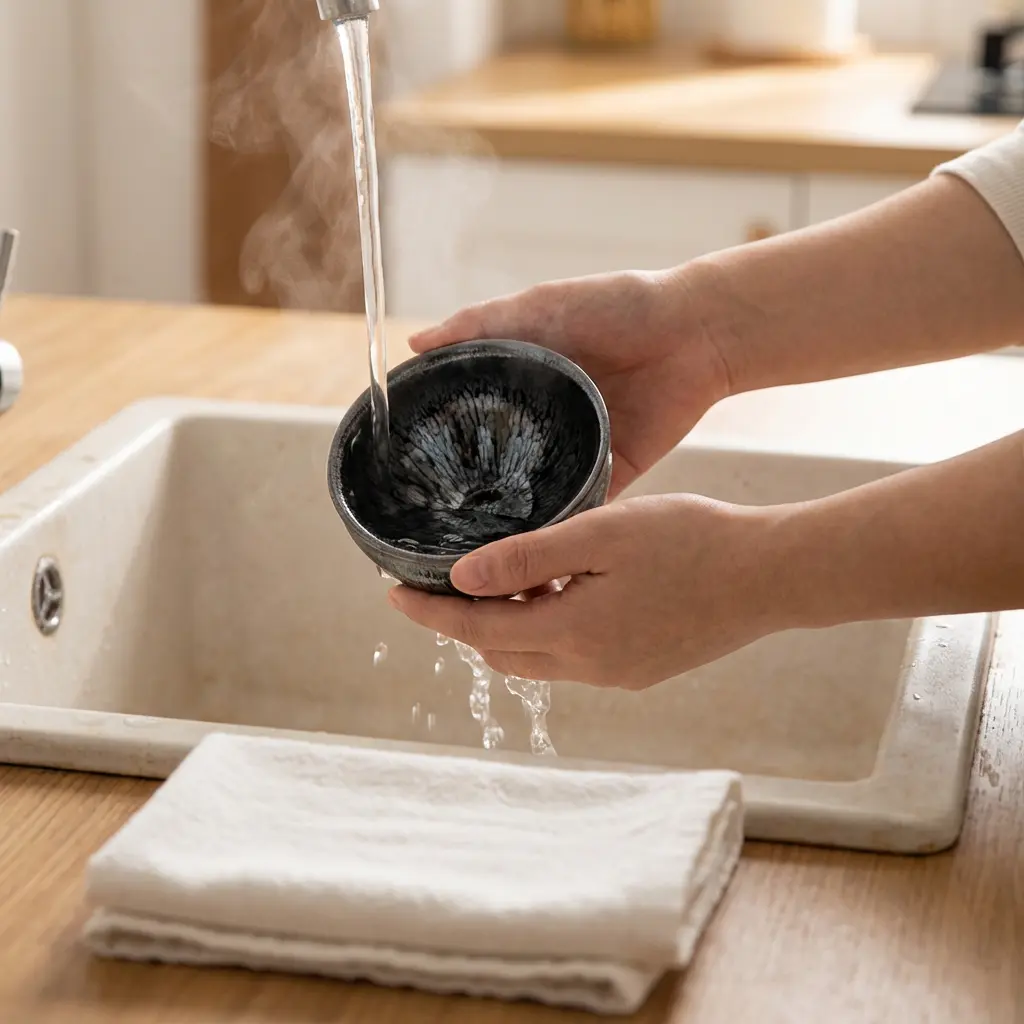
Daily cleaning takes just 60 seconds: rinse with warm water (100-120°F) for 30-60 seconds, gently wipe with a soft tea towel, and air dry for 2-3 hours in a ventilated area—no soap needed.
- Rinse immediately after use — As soon as you finish your tea, rinse the cup with warm water (100-120°F) for 30-60 seconds. This prevents tea stain buildup, especially important after drinking strongly colored teas like pu-erh or black tea.
- Use warm water only — Not boiling hot (which can cause thermal shock if the cup has cooled) and not cold (which is less effective at removing tea oils). Warm water is the sweet spot.
- Gentle wipe with soft cloth — Using your dedicated tea towel, gently wipe the interior and exterior to remove surface tea oils. No scrubbing needed—just soft circular motions.
- Air dry completely — Place the cup upside-down or tilted in a well-ventilated area. Allow 2-3 hours for complete drying before storage. This prevents moisture buildup that can affect the glaze over time.
Why no soap? Dish soap and detergents leave microscopic chemical residue on the cup’s surface. Even after rinsing, traces remain that can affect your next cup of tea’s flavor. More importantly, soap interferes with the natural yang zhan (seasoning) process, preventing the development of the prized tea patina and colorful luster.
The vitrified glaze of Jian Zhan is non-porous, meaning it doesn’t absorb flavors like Yixing clay teapots. This allows you to use the same cup for different types of tea without flavor transfer—as long as you rinse properly after each use.
| Tea Type | Rinse Time | Special Notes |
|---|---|---|
| Green/White Tea | 30 seconds | Light color, minimal residue |
| Oolong Tea | 45 seconds | Medium oils, moderate staining |
| Black/Pu-erh Tea | 60 seconds | Strong color, more tea oils |
| Milk Tea/Sweetened | Avoid | Use different vessel |
Deep Cleaning (Weekly/Monthly Maintenance)
Deep clean your Jian Zhan once per week (daily use) or monthly (occasional use) using the gentle toothpaste method: apply non-abrasive toothpaste, let sit for 3-5 minutes, scrub gently with a soft brush, and rinse thoroughly.
When to deep clean: You’ll know it’s time when you notice a dull film on the glaze, accumulated tea stains that daily rinsing doesn’t remove, or reduced luster on the cup’s surface.
The toothpaste method (step-by-step):
- Rinse first — Start with a warm water rinse to remove loose tea residue.
- Apply toothpaste — Squeeze a small amount (about pea-sized) of non-abrasive, non-gel toothpaste onto your finger or soft cloth. Spread it evenly across the stained areas, both inside and outside the cup.
- Let it sit — Allow the toothpaste to work for 3-5 minutes. The mild abrasives and cleaning agents will gently break down tea stains without damaging the glaze.
- Gentle circular scrubbing — Using a soft-bristle brush (or your tea towel), scrub in gentle circular motions for 1-2 minutes. Focus on stained areas but don’t apply excessive pressure.
- Thorough rinse — Rinse the cup completely under warm running water for at least 60 seconds, ensuring no toothpaste residue remains.
- Air dry — Allow the cup to air dry completely for 3-4 hours in a ventilated area.
Frequency guide based on usage:
- Daily use (5-7 times per week): Deep clean once per week
- Regular use (2-4 times per week): Deep clean every 2 weeks
- Occasional use (less than weekly): Deep clean once per month
What NOT to use: Avoid steel wool, abrasive scouring pads, baking soda paste (too harsh for regular use), bleach or chlorine-based cleaners, and the so-called “84 disinfectant” method popular in some online guides (too aggressive for regular maintenance).
For stubborn stains: If toothpaste doesn’t fully remove heavy buildup, try a gentle boiling water soak. Place the cup in a pot of water, bring to a boil, then reduce to a simmer for 10-15 minutes. Let cool naturally, then rinse. This is safe to do occasionally but shouldn’t replace regular cleaning.
Understanding Jian Zhan Seasoning (Yang Zhan 养盏)
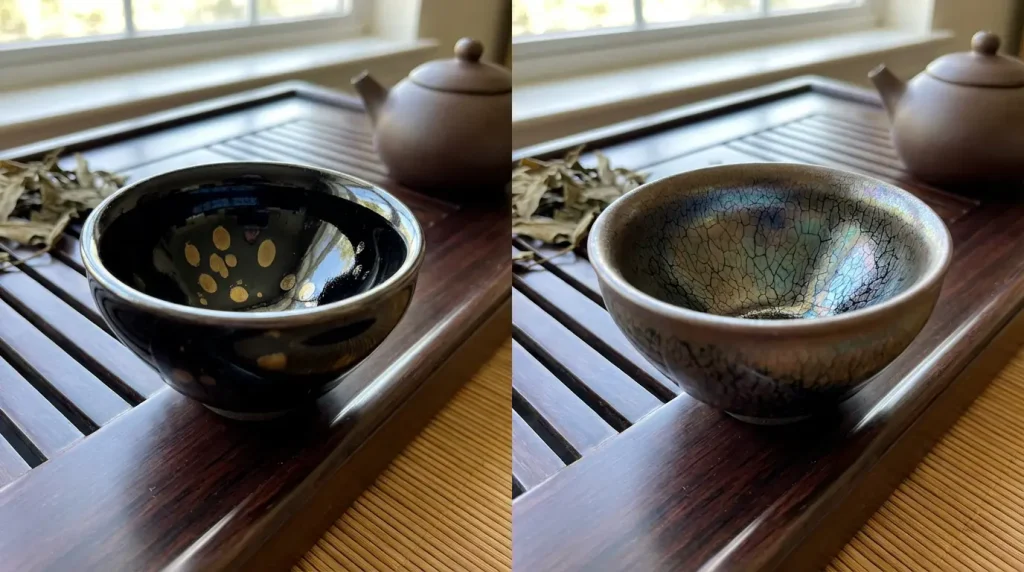
Jian Zhan seasoning, or yang zhan (养盏) in Chinese, is the natural aging process where the cup’s iron-rich glaze develops kaipian (fine crackles) and a beautiful tea patina through regular use, typically visible after 2-4 weeks.
This transformation is one of the most magical aspects of owning a Jian Zhan. New cups often display a “quiet” luster—beautiful but static. With proper care and regular use, your cup evolves into a “dynamic” piece, displaying mesmerizing colorful light reflections and unique crackle patterns that tell the story of your tea journey.
What happens during seasoning:
The process involves three overlapping stages. First, kaipian formation (开片) occurs as the glaze responds to the thermal expansion and contraction from hot tea. Fine, spider-web-like crackles begin appearing after 2-4 weeks of regular use, creating patterns as unique as fingerprints.
Next comes tea patina development. Tea oils and minerals gradually build a microscopic layer on the cup’s interior. Unlike dirty buildup, this patina is valued by collectors and enhances the cup’s appearance. It typically becomes visible after 1-2 months of consistent use.
Finally, colorful luster emergence appears. The interplay between the iron crystals in the glaze, the kaipian crackles, and the tea patina creates an iridescent effect. This takes 3-6 months of regular use but is worth the patience—your cup transforms from beautiful object to living art.
How to season properly:
- Use regularly — The best way to season your cup is to use it. Daily use or several times per week accelerates the natural transformation.
- Tea only — Stick to tea. Avoid coffee, milk, juice, or sugary drinks, which can cause unwanted staining or residue that interferes with the natural patina.
- Clean properly after each use — Follow the daily cleaning routine. The key is removing excess buildup while allowing the natural oils to condition the glaze.
- Rotate multiple cups — If you have more than one Jian Zhan, rotate their use. This allows each cup to “rest” between uses, which many practitioners believe enhances the seasoning process.
Common misconception: Some guides suggest deliberately leaving tea in the cup overnight or not cleaning it to speed up the colorful effect. This is harmful! While you might see something resembling colorful light in sunlight, this method creates dirty buildup that dulls the glaze and weakens the crystal formations. Authentic yang zhan comes from proper use and care, not neglect.
“The relationship between a tea drinker and their Jian Zhan is like a friendship—it deepens naturally over time with consistent care and attention.”
— Traditional Chinese tea wisdom
Once you’ve mastered caring for your first Jian Zhan and witnessed its transformation, explore our Oil Spot and Hare’s Fur collections to expand your practice with different glaze types.
Caring for Different Glaze Types
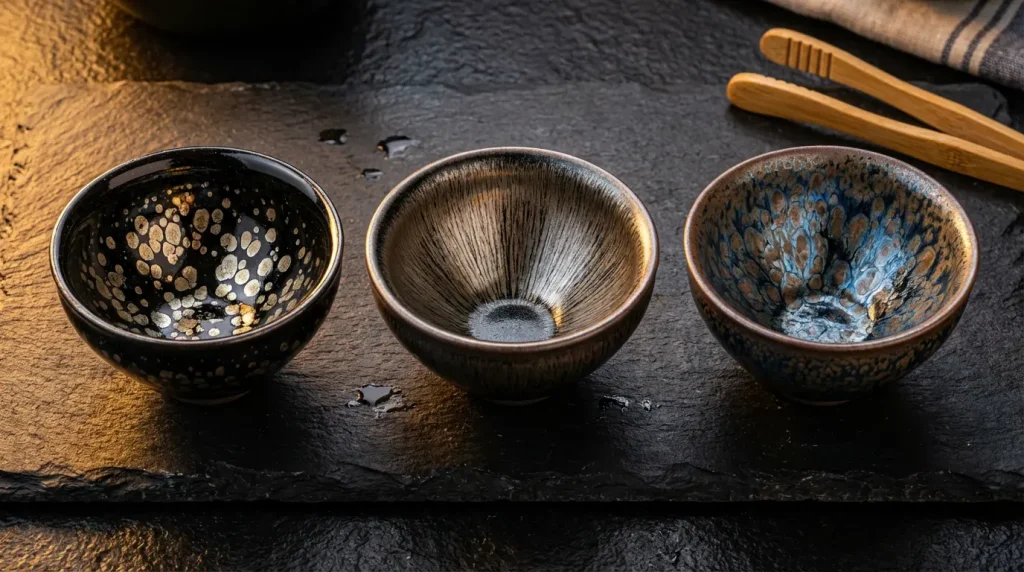
While all Jian Zhan require gentle care, Oil Spot glaze cups (with lower vitrification) need extra drying time (3-4 hours vs 2-3) to prevent oxidation, while Hare’s Fur and other glazes follow standard care protocols.
| Glaze Type | Characteristics | Special Care Notes |
|---|---|---|
| Oil Spot (油滴) | Lower vitrification, thinner quartz layer | Air dry 3-4 hours; more susceptible to oxidation; keep very dry to prevent “rust” appearance |
| Hare’s Fur (兔毫) | Standard vitrification | Follow general care guidelines; develops patina beautifully with regular use |
| Partridge Feather | Dense crystal structure | Very stable; standard 2-3 hour drying sufficient |
| Mirror Black | Smooth, glossy surface | Shows water spots easily; wipe thoroughly after washing |
Oil Spot cups require extra attention because their surface has a higher iron content and thinner protective layer. When exposed to air moisture, the iron can chemically react with oxygen to form iron oxide (rust), giving the cup a “rusty” appearance over time. This doesn’t damage the cup’s function but can affect its aesthetic beauty.
To prevent this, always ensure Oil Spot cups are completely dry before storage. If you live in a humid climate, consider storing them with silica gel packets or in a climate-controlled environment.
For all glaze types: The fundamental care principles remain the same—warm water rinsing, no soap, gentle cleaning, and complete drying. The differences are subtle and mainly affect drying time and storage conditions.
Proper Storage and Display
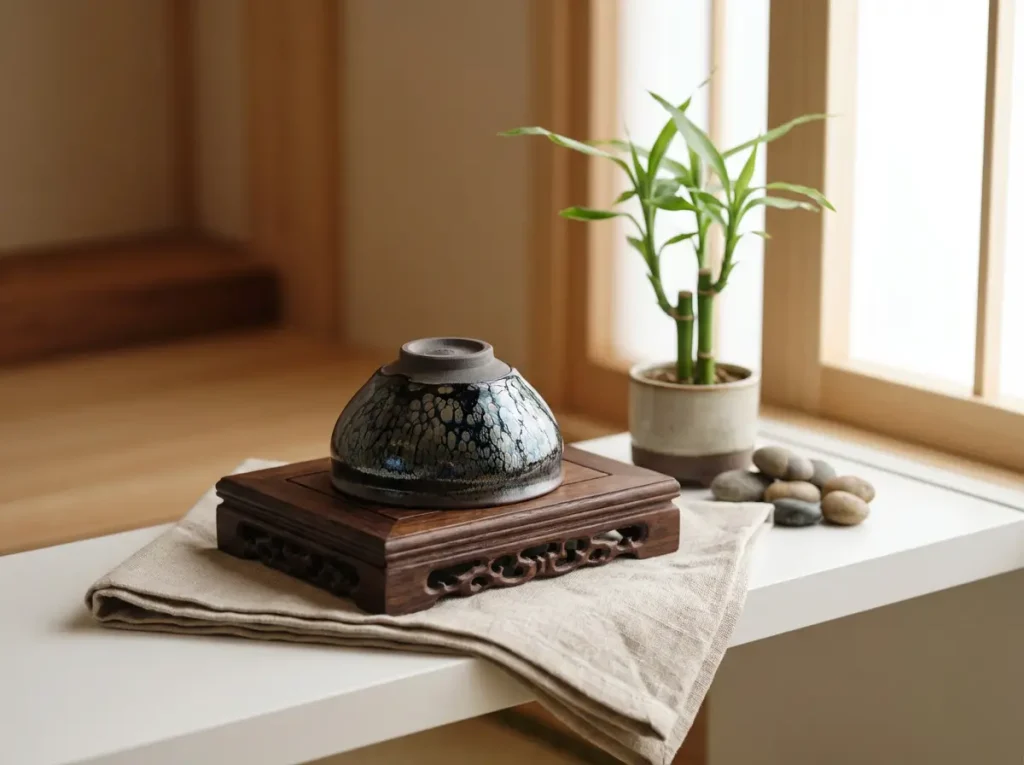
Store your Jian Zhan in a dry, ventilated area away from direct sunlight and heat sources—for display, use a wooden or cloth base to prevent scratches and moisture buildup.
Daily storage (between uses):
- Place in a dry, well-ventilated area away from the kitchen sink or humid spots
- Store upside-down or tilted to ensure complete airflow and drainage
- Avoid closed cabinets immediately after washing (wait until completely dry)
- Keep away from strong-smelling foods or chemicals that might affect the next tea session
Long-term storage (weeks or months unused):
- Clean thoroughly first — Perform a deep clean before storage to remove all tea residue.
- Air dry completely — Allow 3-4 hours of drying time in a well-ventilated area.
- Wrap carefully — Use a soft cloth pouch or the cup’s original presentation box. Avoid plastic bags which can trap moisture.
- Choose storage location — Select a dry, temperature-stable area. Avoid attics (too hot in summer), basements (too humid), or near exterior walls.
- Check monthly — Inspect stored cups once every 1-2 months for any moisture, mold, or odor issues.
Display considerations: Many Jian Zhan owners display their cups as decorative art when not in use. If displaying:
- Use a wooden or cloth-lined display base to prevent scratching the foot of the cup
- Avoid direct sunlight, which can affect the glaze’s appearance over time
- Keep away from heat sources (radiators, heating vents, fireplaces) that cause rapid temperature fluctuations
- Dust gently with a soft cloth weekly to prevent buildup
Travel and transport: When moving your Jian Zhan, wrap it in bubble wrap or soft cloth and place in a padded container. The thick ceramic is sturdy but can chip if knocked against hard surfaces.
Common Mistakes to Avoid
The top 5 mistakes that damage Jian Zhan: using dish soap (leaves residue), putting it in the dishwasher (thermal shock), cold water shock after hot tea, leaving tea overnight (weakens glaze), and over-scrubbing with abrasive tools.
Mistake #1: Using dish soap or detergents
Why harmful: Even “gentle” dish soaps leave microscopic chemical residue that affects tea flavor and interferes with the natural seasoning process. The surfactants can also disrupt the delicate balance of tea oils that create the prized patina.
Fix if you already did this: Rinse the cup 5-6 times with boiling water (let cool between rinses) to remove soap residue. Resume proper soap-free cleaning going forward.
Mistake #2: Dishwasher use
Why harmful: Dishwashers create extreme thermal shock (rapid hot-cold cycles) that can cause hairline cracks in the glaze. The harsh detergents are even more damaging than hand soap. High water pressure can also chip the cup’s rim.
Fix: There’s no fix—never use dishwashers for Jian Zhan. Always hand wash only.
Mistake #3: Cold water shock (pouring cold water on a hot cup)
Why harmful: Rapid temperature changes cause thermal stress. The glaze and clay body expand/contract at different rates, potentially causing cracks or “crazing” (unwanted crackle patterns).
Fix if minor: If you catch this early and see no visible cracks, resume gentle use. The cup may self-heal minor stress over 1-2 weeks of careful use with gradual temperature changes.
Mistake #4: Leaving tea in the cup overnight
Why harmful: Prolonged tea contact dulls the glaze, weakens crystal formations, and creates dirty buildup (not authentic patina). This also promotes bacterial growth.
Fix: Deep clean immediately using the toothpaste method, then resume proper daily cleaning routine. The glaze should recover with consistent care.
Mistake #5: Abrasive scrubbing with steel wool or harsh scrubbers
Why harmful: Scratches permanently damage the glaze surface, removing the protective quartz layer (especially critical for Oil Spot cups) and creating rough spots where stains accumulate more easily.
Fix: Stop further damage immediately. Switch to soft cloths only. The scratched glaze will slowly recover its luster over time, but deep scratches are permanent.
General principle: When in doubt, less is more. Jian Zhan thrives on simplicity—warm water and gentle care are all it needs. Avoid the temptation to “help” with special cleaners, prolonged soaking, or excessive scrubbing.
❓ Frequently Asked Questions
Can I use my Jian Zhan for coffee or other beverages?
While Jian Zhan can technically hold any liquid, it’s best used exclusively for tea to develop the ideal patina—coffee, milk, and sugary drinks can cause stains or residue that interfere with the seasoning process. The non-porous glaze means you won’t have flavor transfer issues, but these beverages leave different types of oils and residues that don’t contribute to the traditional yang zhan transformation.
How long does it take to see kaipian (crackles)?
Kaipian typically appears after 2-4 weeks of regular use (several times per week), though the timeline varies based on your cup’s glaze composition, the type of tea, and usage frequency—patience is key. Some cups show early signs within the first week, while others take longer. The temperature differential between hot tea and the cup’s surface triggers the natural cracking, so consistent use with properly heated tea accelerates the process.
Can I use Jian Zhan in the microwave?
No, never microwave your Jian Zhan—the metal oxides (iron) in the glaze can cause sparking and damage both your cup and microwave; always heat tea separately and pour into your cup. Even if it doesn’t spark immediately, microwave use creates uneven heating that stresses the glaze and can cause delayed cracking. There’s simply no safe way to microwave metal-oxide glazed ceramics.
Is the tea patina safe? Should I remove it?
The tea patina is completely safe and highly valued by collectors as it shows your cup’s history and enhances its beauty—avoid removing it unless buildup becomes excessive (more than a thin film), in which case use the gentle toothpaste method monthly. Think of patina like the seasoning on a cast-iron pan: it’s a feature, not a flaw. It actually improves your tea experience by conditioning the cup’s surface.
Ready to begin your Jian Zhan journey?
Each these bowls Jian Zhan is handcrafted by master artisans using traditional Song Dynasty techniques. Every cup is unique, with glazes that transform beautifully when cared for properly.
Final Thoughts: Caring for Your Living Art
Caring for your Jian Zhan is more than maintenance—it’s a meditative practice that deepens your connection with this Song Dynasty tradition, transforming both your cup and your tea experience over time.
The beauty of Jian Zhan care lies in its simplicity. Unlike teaware that demands elaborate seasoning rituals or strict usage rules, your Jian Zhan asks only for gentle treatment and regular use. The 60-second daily cleaning routine becomes a mindful moment in your day, a brief pause to appreciate the vessel that holds your tea ceremony.
As your cup develops its unique kaipian patterns and tea patina, you’re not just maintaining an object—you’re participating in a living tradition that connects you to centuries of tea culture. Each cup of tea you drink, each careful rinse, each moment of appreciation contributes to your cup’s story.
Remember these key principles:
- Daily care takes just 60 seconds: warm water rinse, gentle wipe, air dry
- Deep clean weekly (daily use) or monthly (occasional use) with non-abrasive toothpaste
- Never use soap, dishwasher, or abrasive scrubbers
- Allow 2-4 weeks of regular use to see the first kaipian crackles
- Trust the process—yang zhan happens naturally with proper care
Your Jian Zhan will reward your care with years of beautiful service, each cup of tea tasting slightly better as the seasoning develops. Whether you’re enjoying morning meditation, an afternoon tea break, or an evening wind-down ritual, your Jian Zhan becomes a trusted companion in your wellness journey.
Looking to complement your Jian Zhan with other traditional tea tools? Explore our guide to the Chinese tea ceremony or learn more about the rich history of these remarkable cups.
❓ How do I know if my tenmoku cup is authentic?
Look for an unglazed foot ring showing dark iron-rich clay, metallic luster that shifts with viewing angle, and subtle asymmetry from hand-forming. See the handmade tenmoku identification guide for a detailed checklist.
❓ Can I use tenmoku cups every day?
Yes. Authentic high-fired tenmoku is designed for daily tea drinking and is completely food safe. Daily use actually helps develop the glaze patina that collectors prize. The new tenmoku owner guide covers daily care routines.
❓ What tea tastes best in tenmoku?
Oolong and aged pu-erh are the classic pairings. The iron-rich glaze softens tannins and enhances aroma. Read the oolong-tenmoku pairing guide for the science behind this.
📚 References
- Song Dynasty Ceramics and Tea Culture: Smithsonian’s Jian Ware collection featuring detailed documentation of hare’s fur, oil spot, and other iron-rich glazes from Song Dynasty kilns. Smithsonian National Museum of Asian Art – Jian Ware Tea Bowl Collection
- Iron Oxide Glazes in Ceramic Materials: Scientific research on coloring effects of iron oxide content in ceramic glazes, including crystallization processes and surface properties at high temperatures. Gol, F., et al. (2021). “Coloring effect of iron oxide content on ceramic glazes.” Ceramics International, Volume 48
- Ceramic Care and Conservation Guidelines: Professional standards for caring for ceramics and glass objects, including cleaning protocols and preservation techniques. Canadian Conservation Institute – Care of Ceramics and Glass (CCI Notes 5/1)
- Ceramic Conservation Best Practices: American Institute for Conservation’s comprehensive guides for preserving ceramic objects, including handling, storage, and display recommendations. American Institute for Conservation – Caring for Your Treasures
About these pieces: We specialize in authentic Jian Zhan tea cups and traditional Chinese teaware, working directly with artisan workshops in Jianyang, Fujian. Each piece in our collection is carefully selected for quality, authenticity, and beauty. Our care guides are based on traditional practices combined with feedback from thousands of tea enthusiasts worldwide.
Article Review Process: This guide was researched and written by our tea culture specialists, reviewed for technical accuracy by ceramic artisans, and tested using these cups’s own collection over a 6-month period. We update our care recommendations regularly based on new research and customer feedback.
Elevate your tea experience? Browse Zen Tea Cup for authentic tenmoku cups and curated collections.


