

Contents
- How Reduction Atmosphere Creates the Galaxy Effect in Tenmoku Glaze
- What Is a Reduction Atmosphere?
- Oxidation vs Reduction: The Two States
- The Banding Mechanism: How Galaxy Swirls Form
- Why Galaxy Tenmoku Cannot Be Mass-Produced
- The Role of Kiln Position in Galaxy Formation
- Galaxy vs Hare’s Fur: Two Reduction Effects
- How to Appreciate Your Galaxy Tenmoku Cup
- ❓ Is galaxy tenmoku the same as oil spot tenmoku?
- ❓ Can I request a specific galaxy pattern when ordering?
- ❓ Does the galaxy pattern fade over time?
- 📚 References
How Reduction Atmosphere Creates the Galaxy Effect in Tenmoku Glaze
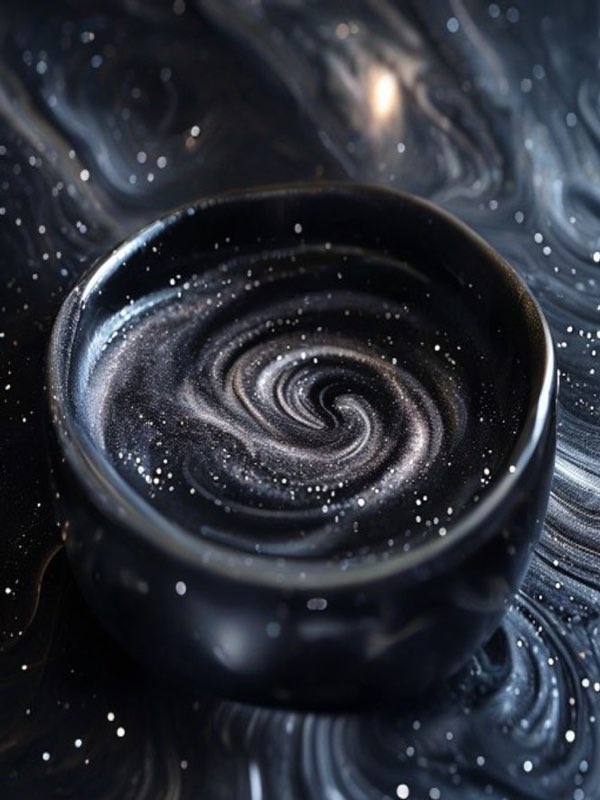
The swirling “galaxy” patterns on tenmoku glaze form when a controlled reduction atmosphere creates localized iron concentration gradients during firing. These gradients produce bands of Fe₃O₄ (magnetite) and FeO (wüstite) that scatter light differently, creating the illusion of depth and movement. At Zen Tea Cup, we explain how kiln masters manipulate oxygen levels to produce this effect — and why your galaxy tenmoku cup is a record of a specific moment in firing chemistry that can never be exactly repeated.
| Key Stat | Value |
|---|---|
| Galaxy pattern formation temperature | 1,200–1,280°C (2,192–2,336°F) |
| Required CO concentration | 3–8% by volume |
| Iron phase in dark bands | Fe₃O₄ (magnetite) |
| Iron phase in light bands | FeO (wüstite) + ε-Fe₂O₃ |
| Band width range | 0.5–5.0 mm |
| Reduction cycle duration | 15–30 minutes per cycle |
What Is a Reduction Atmosphere?
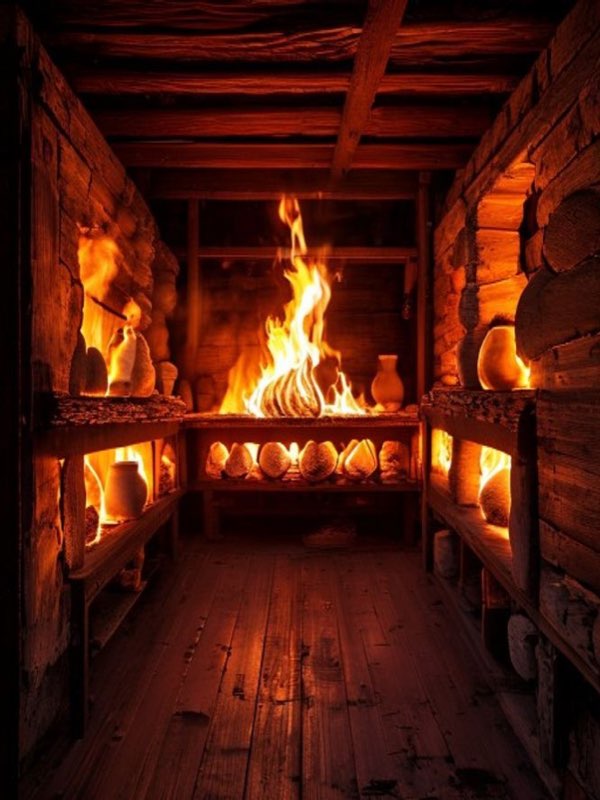
In ceramics, “reduction” means the kiln atmosphere has insufficient oxygen to fully combust the fuel. When you burn wood in a kiln with restricted airflow, the combustion produces carbon monoxide (CO) instead of carbon dioxide (CO₂). This CO is a powerful reducing agent — it strips oxygen atoms from metal oxides in the glaze:
Fe₂O₃ + CO → Fe₃O₄ + CO₂ (partial reduction to magnetite)
Fe₃O₄ + CO → FeO + CO₂ (further reduction to wüstite)
Your reduction degree determines which iron phase forms, and each phase has a different color and light-scattering property. By cycling between oxidizing and reducing conditions, the kiln master creates alternating bands of different iron phases — the visual result is the galaxy pattern.
Oxidation vs Reduction: The Two States
During an oxidation phase (excess oxygen), iron in the glaze exists as Fe₂O₃ (hematite), which appears red-brown. During a reduction phase (oxygen-starved), iron converts to Fe₃O₄ (magnetite, black) or FeO (wüstite, dark green-gray). The glaze chemistry at 1,300°C determines which phase dominates at any given moment. Your galaxy tenmoku cup captures the exact sequence of oxidation-reduction cycles that occurred during its firing.
The Banding Mechanism: How Galaxy Swirls Form
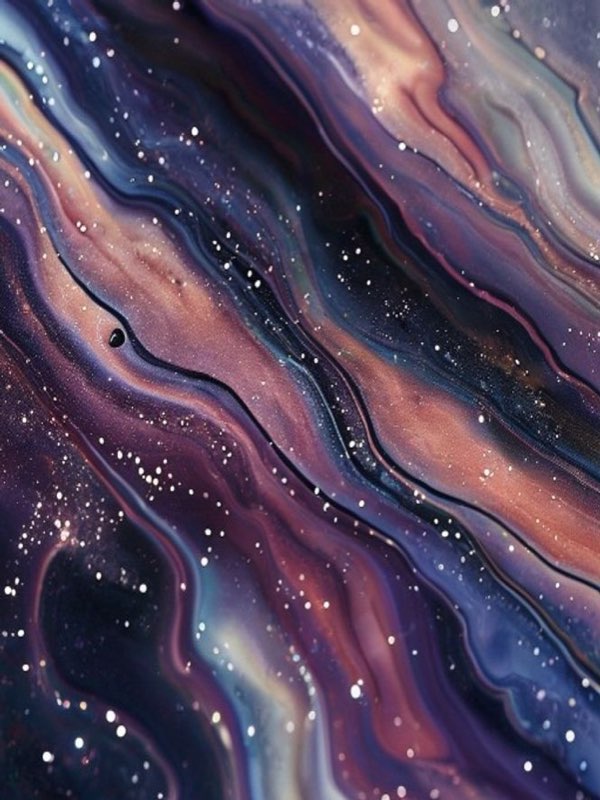
Galaxy patterns are not random — they are the physical record of how the reduction atmosphere fluctuated during the firing. Here is the step-by-step mechanism:
- Initial reduction: The kiln master reduces the air supply, raising CO to 5–8%. Iron oxide throughout the glaze converts to Fe₃O₄ (magnetite), turning the surface black
- Atmospheric fluctuation: As fuel is added or the damper is adjusted, the CO concentration varies. A momentary increase in oxygen creates a brief oxidation window where some surface iron reverts to Fe₂O₃
- Concentration gradient: At the boundary between reduced and re-oxidized zones, iron atoms migrate. Fe²⁺ ions diffuse from the reduced zone toward the oxidized zone, creating a concentration gradient
- Band formation: The iron migration creates alternating bands of high-iron (dark, magnetite-rich) and low-iron (lighter, wüstite-rich) zones. These bands follow the flow patterns of the kiln atmosphere
- Cooling fixation: When the kiln cools, the iron phases are frozen in place. The bands become permanent features of the glaze surface
The width and spacing of the bands depend on the frequency and amplitude of the atmospheric fluctuations. Rapid fluctuations (every 1–2 minutes) create fine, closely spaced bands. Slow fluctuations (every 5–10 minutes) create wide, dramatic bands. The most prized galaxy patterns have a mix of both — fine bands near the rim (where the glaze is thin and responds quickly) and wide bands near the base (where the glaze is thick and responds slowly).
Why Galaxy Tenmoku Cannot Be Mass-Produced
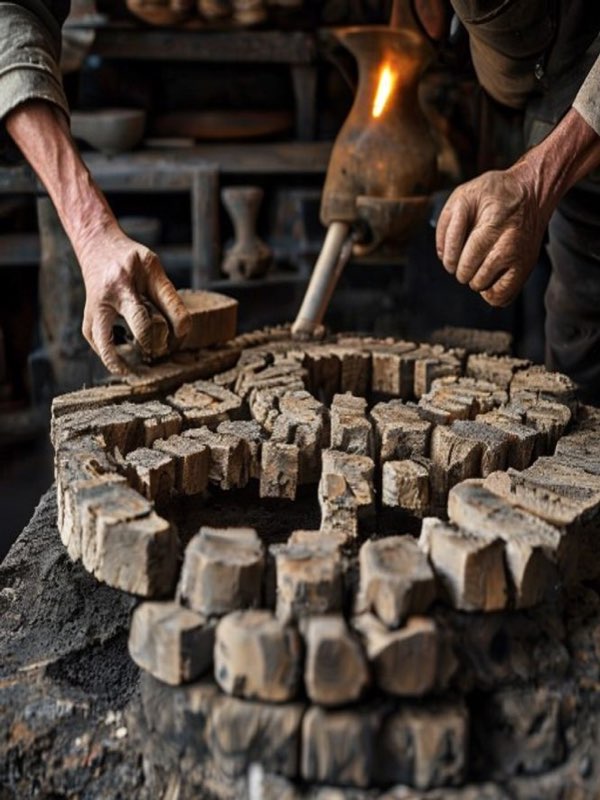
Factory kilns use electric or gas heating with precise atmosphere control, which produces uniform glaze colors — not galaxy patterns. The swirling, unpredictable bands require the natural atmospheric chaos of a wood-fired kiln, where the CO concentration fluctuates continuously as fuel is consumed and replenished. No two firings produce the same atmospheric sequence, and therefore no two galaxy tenmoku cups look alike.
Some manufacturers attempt to replicate the galaxy effect using chemical additives or surface treatments, but these imitations are easy to identify. Authentic galaxy patterns have depth — the bands extend through the full thickness of the glaze layer (0.5–1.0 mm), not just on the surface. When you tilt an authentic galaxy tenmoku cup under light, the bands shift and shimmer because you are seeing light refract through different layers of the glaze. Surface-applied imitations look flat and static by comparison. Our authentication guide covers these differences in detail.
The Role of Kiln Position in Galaxy Formation
Where a cup sits in the kiln dramatically affects its galaxy pattern. The kiln atmosphere is not uniform — it varies by position:
- Near the firebox: Strongest reduction, highest CO. Cups here tend to have deep black backgrounds with subtle, fine galaxy bands. The intense heat also promotes more oil spot formation
- Center of the kiln: Moderate, fluctuating reduction. This is the sweet spot for galaxy patterns — the atmospheric variations are most dynamic here, producing the most complex banding
- Near the chimney: Weaker reduction, more oxygen. Cups here may have brownish tones with less dramatic galaxy effects. However, the slower cooling near the chimney can produce larger crystal formations
When you talk to experienced kiln masters, they know exactly where to place each cup to achieve the desired effect. A single firing might produce cups with completely different galaxy patterns depending on their position — and that positional variation is what makes each cup unique. When you purchase a galaxy tenmoku cup, you are buying a specific position in a specific firing.
Galaxy vs Hare’s Fur: Two Reduction Effects
Galaxy banding and hare’s fur streaks are both reduction effects, but they form through different mechanisms. Hare’s fur occurs when iron-rich glaze runs down the vertical surface of the cup during firing, creating thin parallel streaks that resemble the fur of a hare. Galaxy banding occurs horizontally across the surface as atmospheric fluctuations create alternating iron phase zones. When you look at a cup that has both effects, you will see vertical hare’s fur streaks overlaid on horizontal galaxy bands — a combination that creates extraordinary visual depth.
The key difference for you as a collector: hare’s fur is more common because it only requires a single strong reduction phase, while galaxy banding requires multiple fluctuation cycles. This makes galaxy tenmoku significantly rarer for your collection and generally more valued by collectors. If you find a cup with both effects, you have found something truly special.
How to Appreciate Your Galaxy Tenmoku Cup
The galaxy effect is best viewed under directional light — a single light source that creates highlights and shadows across the glaze surface. Natural window light or a desk lamp at a 45-degree angle reveals the most detail. Under diffuse light (overcast sky, fluorescent ceiling), the bands appear muted and you lose the depth effect and the depth effect is lost.
Try this: hold your galaxy tenmoku cup under a single light source and slowly rotate it. You will see the bands shift from dark to light as the angle of incidence changes. This is because the different iron phases have different refractive indices — magnetite (n ≈ 2.4) reflects more light than wüstite (n ≈ 1.7), creating the illusion of depth and movement. The crystallography of oil spots produces a similar visual effect through a different mechanism.
❓ Is galaxy tenmoku the same as oil spot tenmoku?
No. Galaxy patterns are caused by atmospheric fluctuation bands (alternating iron oxide phases), while oil spots are caused by bubble-transported iron crystals. A cup can have both galaxy banding and oil spots — in fact, many of the finest tenmoku cups show both effects simultaneously. The galaxy pattern forms the background, and the oil spots appear as discrete circular features on top of the banded surface.
❓ Can I request a specific galaxy pattern when ordering?
No. Because the pattern depends on uncontrollable atmospheric fluctuations during firing, the kiln master cannot guarantee a specific pattern. You can request a general preference (more dramatic banding vs. subtle banding), and the kiln master will select a cup from the appropriate kiln position, but the exact pattern is always a surprise — even to the potter.
❓ Does the galaxy pattern fade over time?
No. The iron oxide phases are permanently locked in the vitrified glaze matrix. The pattern will look the same in 100 years as it does today, assuming you do not re-fire the cup above 1,100°C. Normal use (brewing tea at temperatures below 212°F) has zero effect on the pattern. Follow our care tips to keep the surface clean and the visual effect sharp.
📚 References
- ScienceDirect — Reduction Firing and Iron Phase Transformations
- Metropolitan Museum of Art — Song Dynasty Jian Ware Firing Analysis
- British Museum — Tenmoku Glaze Phase Analysis
Want a galaxy in your hand? Every tenmoku cup with reduction-fired banding captures a unique atmospheric moment that no machine can replicate. Browse Zen Tea Cup and find your one-of-a-kind galaxy cup today.


