

Tenmoku and Jian Zhan are not the same — Tenmoku is the broader Japanese term for dark-glazed tea ware inspired by Chinese imports, while Jian Zhan refers specifically to cups made in Jianyang, Fujian using iron-rich clay and traditional Song Dynasty firing techniques at 2,300°F (1,260°C). If you have ever wondered why the same cup goes by two names, you are not alone — the confusion runs deep across tea communities worldwide. Understanding this distinction helps you make better buying decisions and appreciate the craft behind each piece, whether you shop from Zen Tea Cup or other teaware specialists.
| Key Stat | Value |
|---|---|
| Jian Zhan Origin | Jianyang, Fujian, China (Song Dynasty 960–1279 AD) |
| Term “Tenmoku” Origin | Tianmu Mountain, Japan (Kamakura Period 1185–1333 AD) |
| Firing Temperature | 2,300°F (1,260°C) |
| Iron Oxide in Glaze | 5–8% |
| Typical Cup Diameter | 4.5–5.1 in (11.5–13 cm) |
| Typical Cup Weight | 4.2–6.3 oz (120–180 g) |
| Glaze Thickness | 0.04–0.08 in (1–2 mm) |
Contents
- Are Tenmoku and Jian Zhan the Same?
- Tenmoku: The Broader Japanese Category
- Jian Zhan: The Specific Chinese Tradition
- Historical Timeline: How the Terms Diverged
- Key Differences at a Glance
- Why the Confusion Persists
- How to Tell Which Term Applies
- Which Term Should You Use?
- What This Means for Collectors and Tea Drinkers
- Authenticity Red Flags
- ❓ Is Tenmoku the same as Jian Zhan?
- ❓ Why do Japanese people call Jian Zhan “Tenmoku”?
- ❓ Can a cup be both Tenmoku and Jian Zhan?
- ❓ Does the term affect the tea taste?
- 📚 References
Are Tenmoku and Jian Zhan the Same?
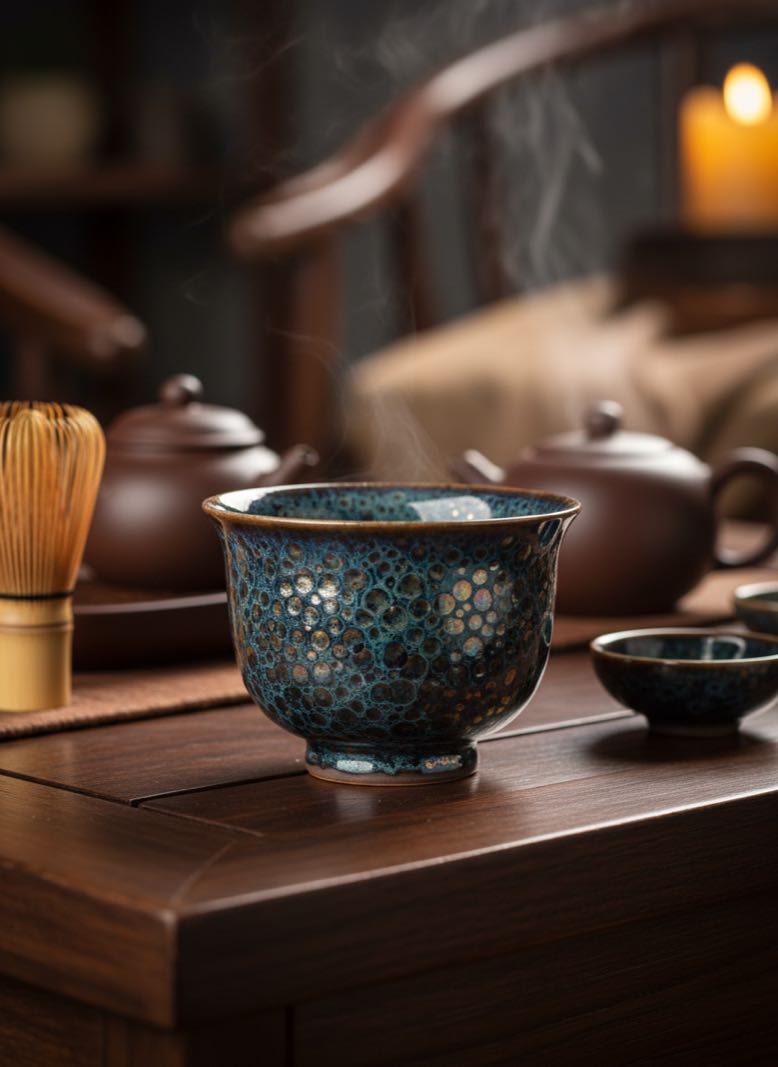
No — and the difference matters more than most tea drinkers realize. Tenmoku (天目) is a Japanese word that literally means “Heaven’s Eye,” derived from Tianmu Mountain in Zhejiang Province where Japanese monks first encountered these dark-glazed bowls. Jian Zhan (建盏) is the Chinese term that specifically identifies cups produced in the Jianyang kilns of Fujian Province, using local iron-rich clay and traditional reduction-firing methods developed during the Song Dynasty (960–1279 AD).
Think of it this way: all authentic Jian Zhan can be called Tenmoku in Japanese contexts, but not everything called Tenmoku is Jian Zhan. The Japanese term expanded over centuries to cover a wider family of dark-glazed pottery — including pieces made in Korea, Vietnam, and even modern Japanese studios — while Jian Zhan remains tightly defined by its geographic and technical origins (no two cups are alike, thanks to the unpredictable glaze chemistry at 2,300°F).
Tenmoku: The Broader Japanese Category
When Japanese Zen monks traveled to China during the Kamakura period (1185–1333 AD), they brought back dark-glazed tea bowls from the Jianyang kilns. These monks named the style “Tenmoku” after Tianmu Mountain, a sacred Buddhist site near where they studied. Over the following centuries, Japanese potters began creating their own versions of these dark-glazed bowls, and the term Tenmoku grew to encompass this entire family of ware — regardless of where it was made.
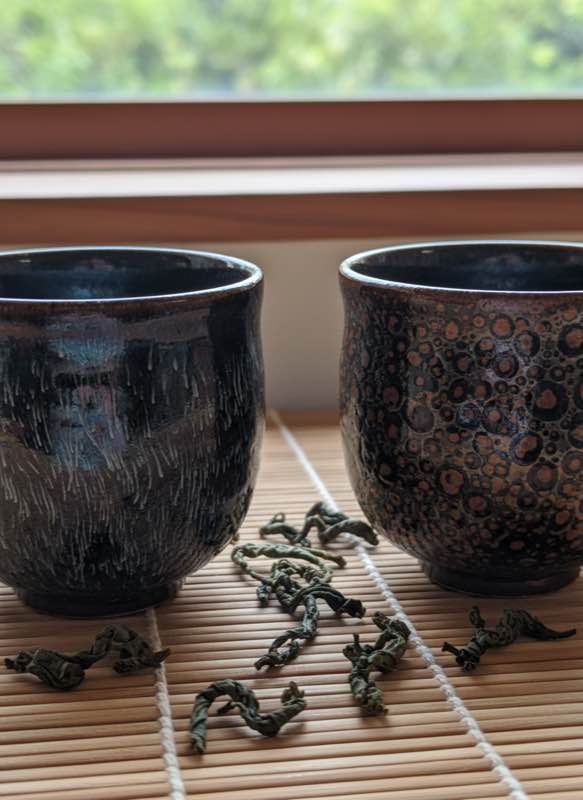
Today, when you see “Tenmoku” on a product listing, it could refer to a cup made in Japan, China, or elsewhere. The term has become a style descriptor rather than a geographic guarantee. According to the Kyoto National Museum, Tenmoku ware includes several sub-types: Yohen (glaze-change), Yuteki (oil-spot), and Kensan (hare’s fur), all sharing the characteristic dark glaze with metallic iridescence.
Jian Zhan: The Specific Chinese Tradition
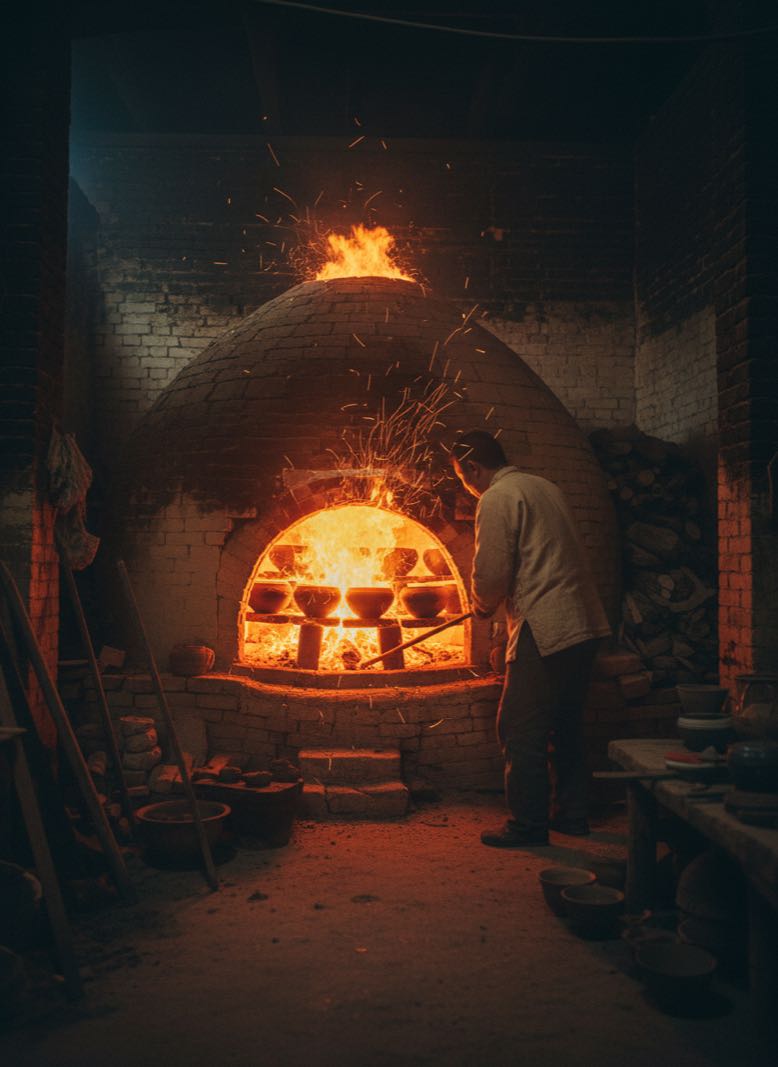
Jian Zhan, by contrast, carries strict requirements. The cup must be made in Jianyang, Fujian Province, using the region’s distinctive iron-rich clay (containing 5–8% iron oxide). It must be fired in a reduction atmosphere at approximately 2,300°F (1,260°C), and the glaze must develop its patterns naturally through the interaction of iron crystals during cooling — not through painting or artificial application. The Jian ware tradition dates back over a thousand years and was designated a National Intangible Cultural Heritage of China in 2011.
When you hold a genuine Jian Zhan, you can feel the difference — the weight (typically 4.2–6.3 oz / 120–180 g), the slightly rough foot ring where the clay was exposed, and the way light plays across the glaze surface to reveal hidden patterns. These are not decorative choices but the natural result of firing at extreme temperatures with specific mineral compositions.
Historical Timeline: How the Terms Diverged
The split between Tenmoku and Jian Zhan did not happen overnight. It took centuries of cultural exchange, trade, and linguistic evolution. Here is how the two terms grew apart:
| Period | Event | Impact on Terminology |
|---|---|---|
| 960–1279 AD | Song Dynasty peak production in Jianyang | “Jian Zhan” established as the Chinese term |
| 1185–1333 AD | Japanese monks import bowls via Tianmu Mountain | “Tenmoku” coined in Japan after the mountain |
| 14th–16th century | Japanese potters begin imitating the style | “Tenmoku” broadens to include Japanese-made pieces |
| 17th–19th century | Jianyang kilns decline; Japanese production continues | Terms fully diverge in meaning |
| 1980s–present | Jianyang kilns revived; modern Jian Zhan production resumes | Renewed confusion as both terms appear in global markets |
This timeline reveals why the confusion persists today — the terms evolved in parallel across two different cultures with different naming conventions. When you read “Tenmoku” in English, you are seeing the Japanese lens; when you read “Jian Zhan,” you are seeing the Chinese one.
Key Differences at a Glance
For a quick comparison, here is how Tenmoku and Jian Zhan stack up across the most important criteria:
| Feature | Jian Zhan | Tenmoku (Broader) |
|---|---|---|
| Definition | Cups from Jianyang, Fujian — specific | Dark-glazed tea ware — general category |
| Origin | China (Jianyang kilns only) | Japan, China, Korea, or elsewhere |
| Clay | Iron-rich Jianyang clay (5–8% Fe₂O₃) | Varies by region and maker |
| Firing | Reduction at 2,300°F (1,260°C) | Varies — typically 1,800–2,300°F |
| Glaze patterns | Naturally formed (oil spot, hare’s fur, yao bian) | May include painted or applied decoration |
| Cultural status | China National Intangible Cultural Heritage | Japanese cultural treasure classification |
| Price range | $30–$500+ depending on quality | $20–$1,000+ depending on origin and maker |
As you can see, the practical differences come down to origin, materials, and firing method — not just semantics. A cup labeled “Tenmoku” made in a Japanese studio will have different clay, different glaze chemistry, and different firing conditions than a genuine Jian Zhan from Jianyang. Both can be beautiful and functional, but they are distinct traditions with different standards of authenticity.
Why the Confusion Persists
Several factors keep the Tenmoku-vs-Jian-Zhan confusion alive in tea communities and online marketplaces:
1. Overlapping product listings. Many sellers use both terms interchangeably to maximize search visibility. You will often see “Jian Zhan Tenmoku Tea Cup” in a single product title — this is technically redundant for authentic Jian Zhan but helps the listing appear in more searches. When you are shopping, this dual-labeling makes it harder to know what you are actually buying.
2. Cultural translation gaps. The Chinese tea community uses “Jian Zhan” exclusively, while the Japanese and Western tea communities default to “Tenmoku.” When content crosses cultural boundaries — as it constantly does online — the terms get mixed. Our guide to Tenmoku glaze patterns uses both terms precisely because readers from different backgrounds search differently.
3. Modern production blurs the line. Some contemporary Chinese potters outside Jianyang produce dark-glazed cups inspired by the Jian Zhan tradition. These cups are technically “Tenmoku-style” rather than authentic Jian Zhan, but sellers may not make this distinction clear. The result: you might pay Jian Zhan prices for a cup that does not meet the geographic and technical criteria.
How to Tell Which Term Applies
When you encounter a dark-glazed tea cup, ask yourself three questions: (1) Was it made in Jianyang, Fujian? (2) Does it use local iron-rich clay? (3) Was it fired in a reduction kiln at approximately 2,300°F? If all three answers are yes, it is Jian Zhan — and you can also call it Tenmoku in a Japanese or Western context. If any answer is no, it is Tenmoku-style but not Jian Zhan. This simple test protects you from mislabeling and helps you understand what you are paying for.
Which Term Should You Use?
Context determines the correct term. If you are discussing Chinese tea culture, buying from Chinese artisans, or referencing Song Dynasty history, use “Jian Zhan” — it is the precise, respectful term in that context. If you are in a Japanese tea ceremony setting, discussing broader dark-glazed pottery traditions, or writing for a Western audience unfamiliar with Chinese terminology, “Tenmoku” is more accessible and widely understood.
The key is consistency within a given context. Switching between terms mid-conversation creates confusion — pick one and stick with it, then clarify the relationship if needed. For collectors, using “Jian Zhan” when referring to authentic Jianyang pieces and “Tenmoku” for the broader category shows expertise and precision that other collectors will respect.
When you browse teaware online, pay attention to which term the seller emphasizes. A seller who consistently uses “Jian Zhan” and provides details about Jianyang origin, clay composition, and firing methods is more likely to be selling authentic pieces than one who only uses “Tenmoku” without further specification.
What This Means for Collectors and Tea Drinkers
Understanding the Tenmoku-Jian Zhan distinction has real practical consequences for your tea experience and your wallet:
For collectors: Authentic Jian Zhan from Jianyang carries cultural heritage value that Tenmoku-style pieces from other regions do not. If you are building a collection with investment potential, verify the Jianyang origin — look for certificates of authenticity, detailed production information, and seller reputation. The Metropolitan Museum of Art houses Song Dynasty Jian Zhan pieces that illustrate the standard of historical authenticity.
For daily tea drinkers: Both Tenmoku and Jian Zhan cups perform well for tea. The iron-rich glaze interacts with tea compounds to soften astringency and enhance sweetness — this benefit comes from the glaze chemistry, not the geographic label. Whether your cup says “Tenmoku” or “Jian Zhan,” you will enjoy the thermal retention (keeping tea warm 3–5 minutes longer than porcelain) and the taste improvement that dark-glazed ware provides.
For gift buyers: If you are giving a cup to someone who values cultural authenticity, choose Jian Zhan and explain the heritage. If the recipient simply appreciates beautiful teaware, a well-made Tenmoku-style cup at a lower price point may be the better choice — you get the aesthetic without the premium for geographic specificity.
Authenticity Red Flags
Watch for these warning signs when shopping: (1) A seller who cannot specify the kiln location, (2) glaze patterns that look painted rather than naturally formed, (3) prices that seem too good to be true for “authentic Jian Zhan” — genuine pieces from Jianyang rarely sell below $30, and (4) cups described only as “Tenmoku” without any mention of Jianyang or Chinese origin when the price suggests Jian Zhan quality. When in doubt, ask the seller directly about origin and clay composition.
❓ Is Tenmoku the same as Jian Zhan?
No. Tenmoku is the broader Japanese term for dark-glazed tea ware, while Jian Zhan specifically refers to cups made in Jianyang, Fujian using iron-rich clay and traditional Song Dynasty firing techniques. All authentic Jian Zhan can be called Tenmoku, but not all Tenmoku is Jian Zhan.
❓ Why do Japanese people call Jian Zhan “Tenmoku”?
Japanese Zen monks who studied at temples near Tianmu (天目, “Heaven’s Eye”) Mountain in Zhejiang Province brought these dark-glazed bowls back to Japan during the Kamakura period (1185–1333 AD). They named the style after the mountain, and the term stuck in Japanese tea culture even though the bowls themselves came from Jianyang in Fujian — a different province entirely.
❓ Can a cup be both Tenmoku and Jian Zhan?
Yes — an authentic Jian Zhan from Jianyang is technically a type of Tenmoku in the Japanese classification system. However, the reverse is not true: a Tenmoku-style cup made in Japan or Korea is not Jian Zhan. When you see both terms on a product, it usually means the piece is genuine Jian Zhan being marketed with both the Chinese and Japanese terms for broader visibility.
❓ Does the term affect the tea taste?
No — the taste difference comes from the glaze chemistry and clay composition, not the label. Both authentic Jian Zhan and high-quality Tenmoku-style cups with iron-rich glazes will soften astringency and enhance sweetness. The label matters for authenticity and collectibility, not for your daily cup of tea.
📚 References
- Kyoto National Museum — Tenmoku Teabowls: Detailed explanation of Tenmoku classification and sub-types in Japanese ceramic history. Kyoto National Museum
- Metropolitan Museum of Art — Jian Ware Collection: Song Dynasty Jian Zhan pieces with provenance and historical context. The Metropolitan Museum of Art
- Wikipedia — Jian Ware: Comprehensive overview of Jian ware history, glaze chemistry, and cultural significance. Wikipedia
Explore our Jian Zhan museum collections guide to see how these cups are preserved and displayed worldwide — and discover your own piece of this living tradition at Zen Tea Cup.
Elevate your tea experience? Browse the Zen Tea Cup for authentic tenmoku cups and curated collections.


