

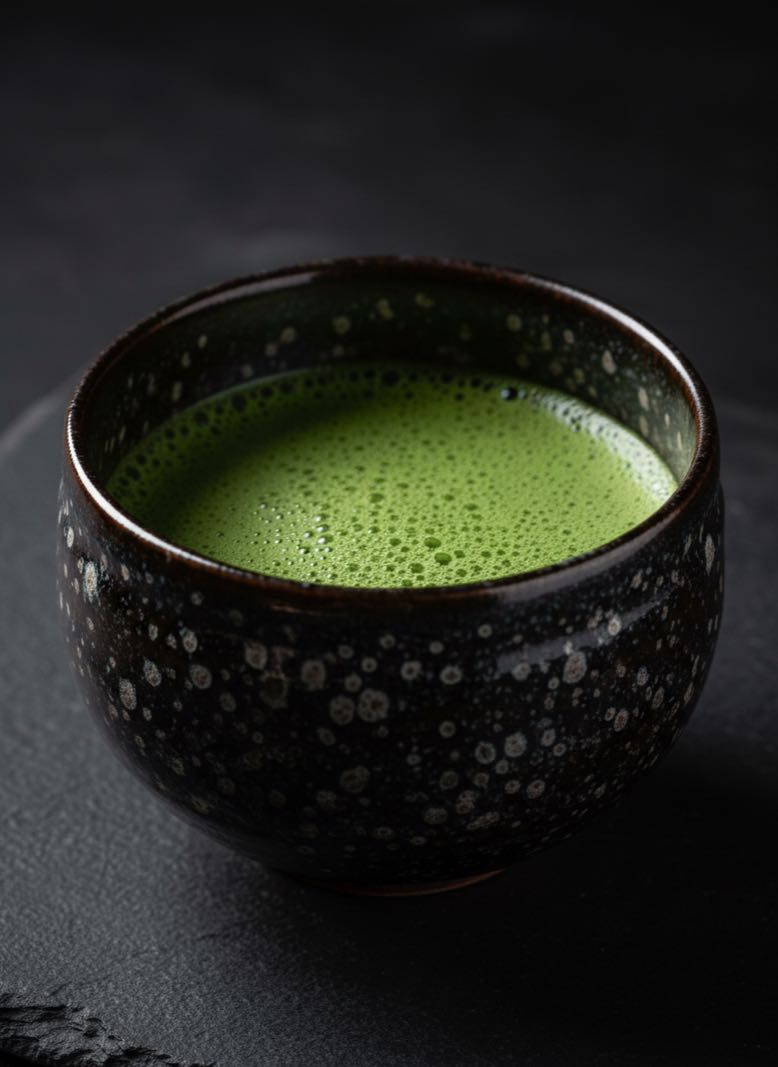
Oil Spot (You Di) is the best tenmoku glaze pattern for matcha because its metallic speckles create a striking visual contrast against the bright green foam, while the smooth interior surface allows your chasen to whisk freely. When you pour matcha into a dark tenmoku bowl, the glaze pattern transforms your tea experience — the vivid green against deep black, the play of light across crystalline spots — making every bowl a conversation piece. From Zen Tea Cup, here is your complete guide to choosing the right glaze pattern for matcha.
| Key Stat | Value |
|---|---|
| Best Glaze for Matcha | Oil Spot (You Di) |
| Matcha Bowl Capacity | 6–8 oz (180–240 ml) |
| Firing Temperature | 2,300°F (1,260°C) |
| Iron Oxide Content | 5–8% |
| Optimal Whisking Temp | 175°F (80°C) |
| Whisking Time | 15–20 seconds |
| Yao Bian Rarity | Less than 1% of production |
Contents
- Which Tenmoku Glaze Pattern Is Best for Matcha
- Why Oil Spot Wins for Matcha
- How Each Tenmoku Glaze Performs With Matcha
- Hare’s Fur: The Classic Choice for Tea Ceremony
- Practical Tips for Hare’s Fur and Matcha
- Yao Bian and Partridge Feather: Rare Beauties for Special Occasions
- Visual Contrast: Why Dark Glaze Makes Matcha Green Pop
- What to Consider When Choosing Your Matcha Tenmoku
- Capacity and Shape
- Interior Smoothness and Your Whisking Style
- ❓ Can you use any tenmoku glaze pattern for matcha?
- ❓ Does tenmoku glaze change the taste of matcha?
- ❓ What size tenmoku bowl is best for matcha?
- ❓ Is Yao Bian worth the premium for matcha?
- 📚 References
Which Tenmoku Glaze Pattern Is Best for Matcha
The answer depends on what you value most — visual contrast, foam performance, or collector appeal. Oil Spot tenmoku earns the top recommendation for matcha because its silver-gold metallic dots catch light alongside your matcha foam, creating an aesthetic that no other pattern can match. The surface of an Oil Spot bowl is also smooth enough that your bamboo whisk (chasen) glides without resistance, producing consistent, fine foam in 15–20 seconds of whisking.
You might wonder why the glaze pattern matters at all for matcha. After all, does the bowl really change the taste? The honest answer: not directly. But the visual experience of matcha — the bright green against a dark glaze, the way foam settles into the texture of the interior — is deeply tied to the Japanese tea ceremony tradition of ichigo ichie (one meeting, one opportunity). The right tenmoku glaze pattern elevates that moment.
Why Oil Spot Wins for Matcha
Oil Spot (You Di, 油滴) features round metallic spots that range from 0.08 to 0.16 inches (2–4 mm) in diameter. These spots form when iron oxide crystallizes during a reduction firing at approximately 2,300°F (1,260°C). When you whisk matcha in an Oil Spot bowl, the foam appears to float on a field of scattered stars — the dark glaze recedes while the metallic dots shimmer. This contrast is unmatched by any other tenmoku pattern.
Functionally, the Oil Spot interior is among the smoothest of all tenmoku surfaces. The crystallization process fills micro-textures, leaving a glassy surface that your chasen can sweep across without catching. For beginners who are still developing whisking technique, this matters — a rough interior can slow you down and produce uneven foam.
How Each Tenmoku Glaze Performs With Matcha
Every tenmoku glaze pattern interacts differently with matcha. Some enhance the visual experience; others may present small functional trade-offs. Understanding these differences helps you choose the bowl that fits your practice — whether you whisk daily or save your best tenmoku for ceremony.
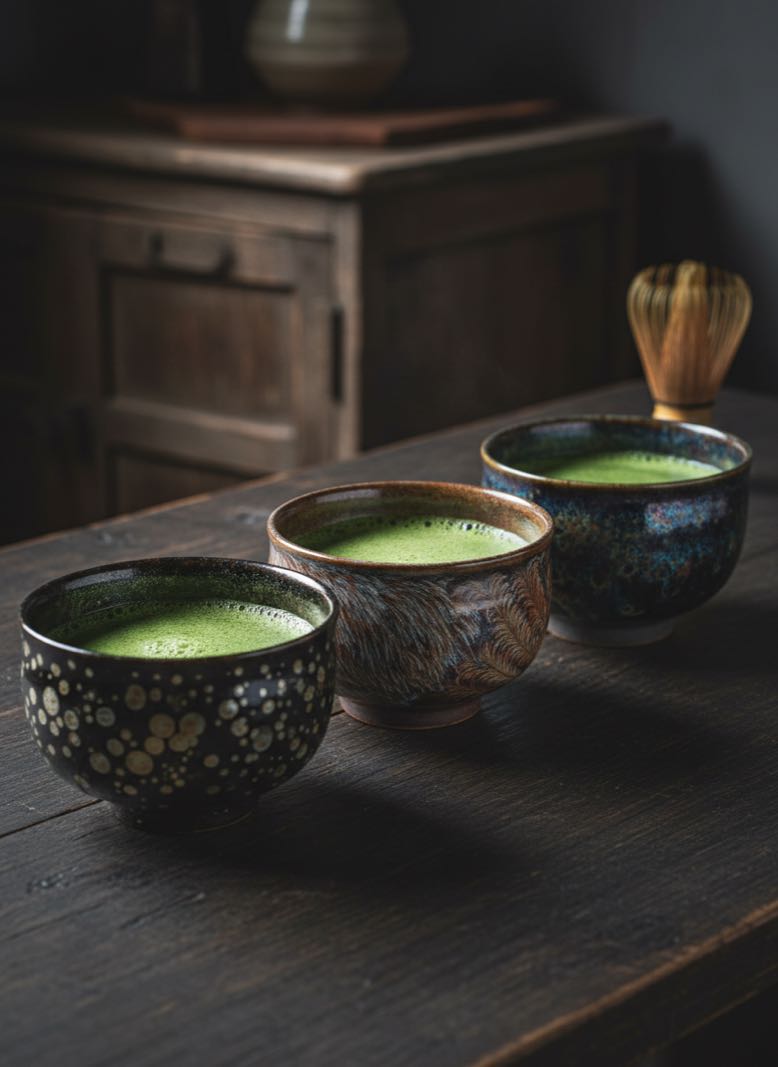
| Glaze Pattern | Visual Effect With Matcha | Interior Texture | Matcha Foam | Best For |
|---|---|---|---|---|
| Oil Spot (You Di) | Metallic dots contrast with green foam | Smooth, glassy | Excellent | Daily matcha, beginners |
| Hare’s Fur (Tu Hao) | Vertical streaks create depth | Slightly ridged | Good | Experienced whiskers, aesthetics |
| Partridge Feather (Zhe Gu Ban) | Rounded spots in clusters | Textured | Fair | Display, collectors |
| Yao Bian (曜变) | Iridescent halos around spots | Variable | Good | Investment, ceremony |
Hare’s Fur: The Classic Choice for Tea Ceremony
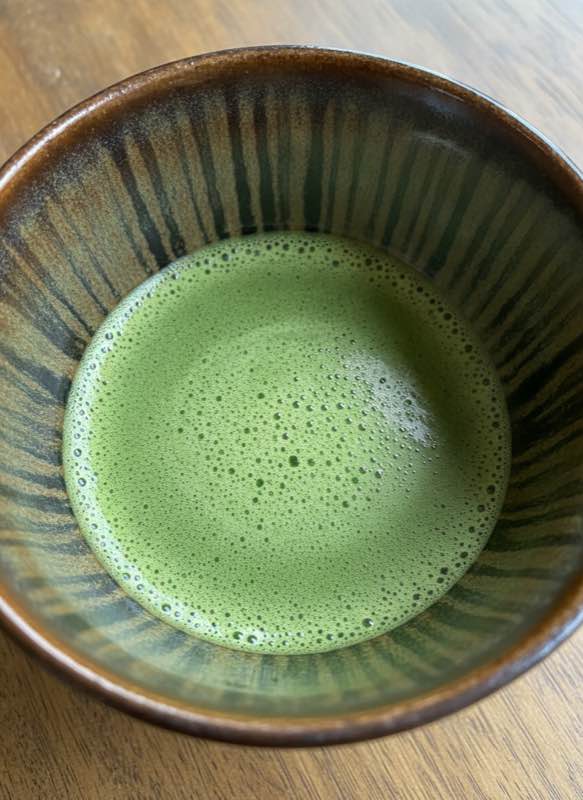
Hare’s Fur (Tu Hao, 兔毫) is perhaps the most recognized tenmoku glaze pattern — thin, parallel streaks running down the interior of the bowl like the fine hairs of a rabbit. When you pour matcha into a Hare’s Fur bowl, the vertical lines draw your eye downward into the tea, creating an illusion of depth that many tea practitioners find meditative.
The interior of a Hare’s Fur bowl is slightly more textured than Oil Spot. The fur-like ridges can catch your chasen slightly, especially if you whisk aggressively. However, experienced matcha makers often prefer this tactile feedback — it gives you a sense of how the foam is developing. If you have been making matcha for a while and enjoy the physical process of whisking, Hare’s Fur offers a more engaging experience.
According to the Metropolitan Museum of Art, Hare’s Fur tenmoku bowls were among the most prized tea wares during the Song Dynasty (960–1279 AD), valued by Emperor Huizong himself for their elegant restraint. This historical significance adds a layer of cultural depth when you use one for matcha today.
Practical Tips for Hare’s Fur and Matcha
When whisking matcha in a Hare’s Fur bowl, use a slightly gentler motion than you would with Oil Spot. Aim for a consistent 15–20 seconds of whisking at 175°F (80°C). The slightly ridged surface can actually help break up matcha clumps if you pre-sift your powder — the texture provides gentle agitation as you whisk. For those who appreciate understanding tenmoku glaze patterns at a deeper level, Hare’s Fur represents the most balanced choice between beauty and function.
Yao Bian and Partridge Feather: Rare Beauties for Special Occasions
Yao Bian (曜变, “heavenly change”) and Partridge Feather (Zhe Gu Ban, 鹧鸪斑) are the rarest tenmoku glaze patterns — and they create unforgettable matcha experiences, though with some practical caveats.
Yao Bian tenmoku is the holy grail of the tenmoku world. Fewer than 1% of all Jian Zhan firings produce a true Yao Bian effect, characterized by iridescent halos that shift color depending on the angle of light. When you hold a Yao Bian bowl with matcha, the foam seems to glow from within — the blue-purple halos interact with the green of the tea in a way that photographs cannot fully capture (you have to see it in person). Only three complete Yao Bian bowls are known to exist in Japanese national collections, making this pattern one of the rarest ceramic effects in human history.
Partridge Feather features rounded spots clustered in groups — each spot measures 0.08–0.16 inches (2–4 mm), larger and more irregular than Oil Spot. The interior surface is the most textured of the four patterns, which means your chasen may catch slightly during whisking. For daily matcha, this can be a minor inconvenience. For a special tea gathering where you want to present something extraordinary, the visual payoff is worth the trade-off.
As documented by the Freer Gallery of Art at the Smithsonian, Song Dynasty potters could not predict or control which glaze pattern would emerge from the kiln — every bowl was, in a sense, a collaboration between the potter and fire. This unpredictability is what makes tenmoku so compelling for matcha enthusiasts who value uniqueness.
Visual Contrast: Why Dark Glaze Makes Matcha Green Pop
The deeper your bowl’s glaze, the more vibrant your matcha appears. This is not just aesthetics — it is physics. The dark iron-rich tenmoku glaze (5–8% iron oxide) absorbs most ambient light, so the matcha green becomes the brightest element in your visual field. Your eye naturally gravitates toward the foam, which enhances focus during tea preparation.
Think of it this way: matcha in a white porcelain bowl looks bright green. Matcha in a dark tenmoku bowl looks luminous. The contrast transforms the experience from merely drinking tea to witnessing a small act of beauty — and that shift in attention is precisely what the Japanese tea ceremony cultivates.
Among the four patterns, Oil Spot and Hare’s Fur produce the deepest, most uniform dark backgrounds. Partridge Feather and Yao Bian can have slightly lighter areas where the crystallization is dense, which creates a more varied but less dramatically contrasting backdrop for your matcha.
What to Consider When Choosing Your Matcha Tenmoku
Beyond glaze pattern, several practical factors determine how well a tenmoku bowl works for matcha. You should consider capacity, shape, and interior smoothness before making your final choice.
Capacity and Shape
A matcha bowl needs to hold 6–8 oz (180–240 ml) of liquid while leaving enough headroom for foam. Look for bowls with a diameter of 4.5–5.2 inches (11–13 cm) at the rim — wide enough for your chasen to move freely, deep enough to prevent splashing. The ideal shape is slightly wider at the top than the base (a conical form), which helps concentrate the foam as it forms. Our tenmoku glaze patterns and colors guide covers bowl shapes in detail if you want to explore further.
Interior Smoothness and Your Whisking Style
If you are new to matcha, prioritize a smooth interior (Oil Spot). If you have years of experience and enjoy tactile feedback, a slightly textured surface (Hare’s Fur or Partridge Feather) adds another dimension to the process. The key insight: there is no universally “best” option — only the best fit for your practice.
One more consideration — temperature. Tenmoku bowls retain heat well due to the thick, iron-rich clay body. When you pre-warm your bowl with 175°F (80°C) water before adding matcha, a tenmoku bowl will maintain that temperature 3–5 minutes longer than a thin porcelain bowl. This means your matcha stays at optimal drinking temperature throughout the ceremony.
❓ Can you use any tenmoku glaze pattern for matcha?
Yes, you can use any tenmoku glaze pattern for matcha. All four patterns — Oil Spot, Hare’s Fur, Partridge Feather, and Yao Bian — are food-safe and function well as matcha bowls. The difference is primarily visual and tactile: Oil Spot offers the smoothest surface and strongest contrast, while Partridge Feather provides a more textured experience. Choose based on your aesthetic preference and whisking comfort.
❓ Does tenmoku glaze change the taste of matcha?
The tenmoku glaze itself does not significantly alter matcha taste. However, the iron-rich clay body (5–8% iron oxide) can subtly soften the astringency of certain matcha grades by slightly raising the pH of the water. This effect is most noticeable with ceremonial-grade matcha, where the flavor is delicate enough that small changes are perceptible. For everyday matcha, the taste difference is minimal.
❓ What size tenmoku bowl is best for matcha?
The best tenmoku bowl for matcha holds 6–8 oz (180–240 ml) with a rim diameter of 4.5–5.2 inches (11–13 cm). This size gives your chasen enough room to whisk properly while keeping the matcha concentrated. Bowls smaller than 5 oz (150 ml) restrict whisking motion, and bowls larger than 10 oz (300 ml) dilute the visual impact of the glaze pattern against the matcha.
Yao Bian tenmoku commands premium prices because fewer than 1% of Jian Zhan firings produce this pattern. For daily matcha, the premium is not functionally justified — Oil Spot performs just as well. For collectors and ceremonial use, however, the iridescent halos create a matcha experience that is genuinely unique and cannot be replicated by any other glaze pattern.
📚 References
- Song Dynasty Tea Culture: The Metropolitan Museum of Art documents the imperial preference for Jian Zhan tea bowls during the Song Dynasty. Metropolitan Museum of Art
- Yao Bian Classification: The Freer Gallery of Art at the Smithsonian Institution houses significant tenmoku collections and research on glaze formation. Freer Gallery of Art
- Jian Zhan Firing Process: Research from the Fujian Provincial Museum documents the kiln conditions and iron oxide crystallization that produce tenmoku glaze patterns. Wikipedia: Jian Ware
Discover the perfect tenmoku glaze pattern for your matcha practice — browse the tenmoku matcha bowl collection at Zen Tea Cup and find the pattern that speaks to you.


