

Contents
- What Is Tenmoku and Why Does It Matter Today?
- The Song Dynasty Origins of Tenmoku
- Jianyang Kilns: The Birthplace
- How Tenmoku Reached Japan and Became Sacred
- Karamono and the Cult of the Imported Bowl
- What Makes Tenmoku Glaze So Special?
- Tenmoku in Modern Tea Culture
- The Collector’s Perspective
- Tenmoku vs Other Tea Bowl Traditions
- ❓ What does the word “tenmoku” mean in Japanese?
- ❓ Is tenmoku the same as Jian Zhan?
- ❓ Why are some tenmoku bowls National Treasures in Japan?
- ❓ Can I use a tenmoku bowl for everyday tea drinking?
- 📚 References
What Is Tenmoku and Why Does It Matter Today?
Tenmoku is a type of dark, iron-rich glazed pottery that originated in China during the Song Dynasty (960–1279 AD) and was later brought to Japan, where it became one of the most revered ceramic traditions in tea culture. Its history spans nearly a thousand years, and its significance goes far beyond aesthetics — tenmoku bowls have shaped tea rituals, influenced art movements, and even earned the status of National Treasures. If you have ever admired the deep, shimmering glaze of a tea bowl and wondered about its origins, tenmoku is where that story begins from Zen Tea Cup.
| Key Stat | Value |
|---|---|
| Origin | Song Dynasty, China (960–1279 AD) |
| Firing Temperature | 2,300 °F (1,260 °C) |
| Iron Oxide in Clay | 7–10% |
| Typical Bowl Diameter | 4–5 inches (10–12 cm) |
| Japanese National Treasures | 4 designated tenmoku bowls |
| First Introduction to Japan | 1191 AD (monk Yōsai) |
The Song Dynasty Origins of Tenmoku
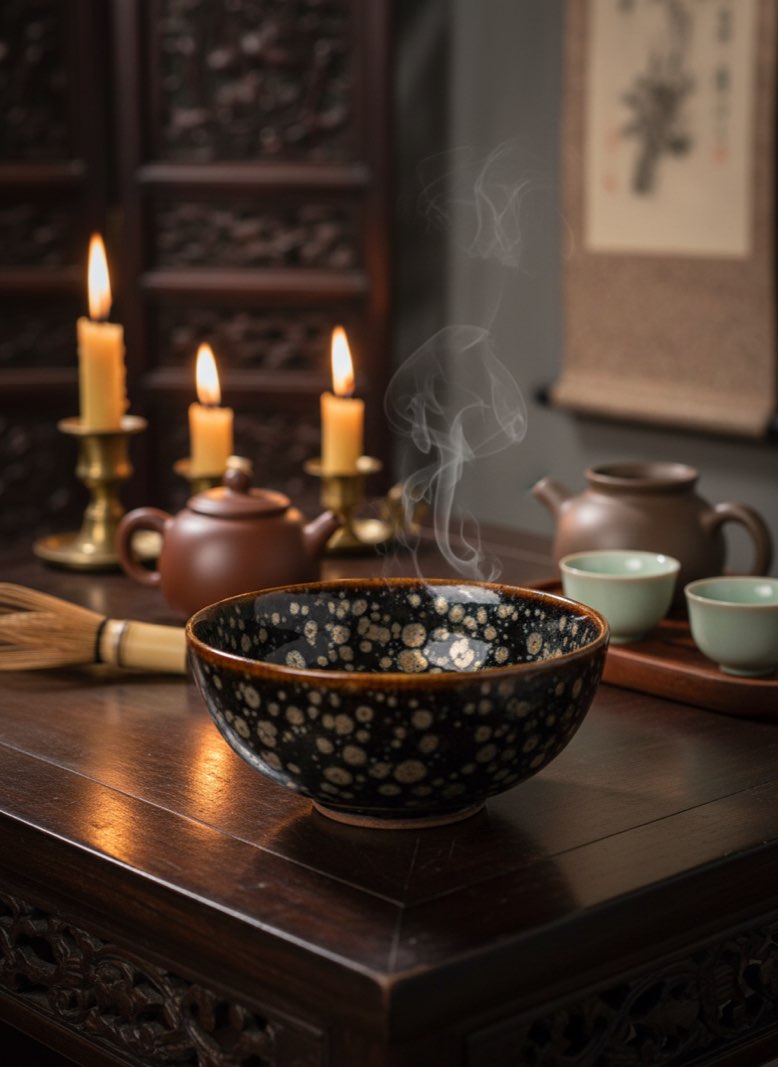
The story of tenmoku begins in the kilns of Jianyang, Fujian Province, during the Northern Song Dynasty. Potters there discovered that local iron-rich clay — containing 7–10% iron oxide — produced extraordinary glaze effects when fired at extreme temperatures reaching 2,300 °F (1,260 °C). The resulting bowls featured dark, lustrous surfaces with patterns that seemed to shift under light: oil spots, hare’s fur streaks, and the elusive yōhen (transformation) effect (no two bowls ever turn out the same).
Emperor Huizong, who ruled from 1100 to 1126 AD, was a passionate tea drinker and an ardent patron of Jian ware. In his treatise Daguan Chalun (“Treatise on Tea”), he declared that dark-glazed bowls were superior for whisked tea because they made the white froth stand out vividly. This imperial endorsement catapulted Jian bowls from regional craft to imperial treasure — and set the stage for the cultural phenomenon that would become tenmoku.
Jianyang Kilns: The Birthplace
The Jianyang kilns were not ordinary pottery workshops. They were massive production centers — archaeologists have excavated kiln sites stretching over 30 feet (9 m) in length, each capable of firing hundreds of bowls in a single cycle. The clay was sourced locally, and the glaze recipes were closely guarded secrets. When you hold a genuine Jian ware bowl today, you are holding something made from the same earth that Song Dynasty potters shaped a millennium ago.
How Tenmoku Reached Japan and Became Sacred
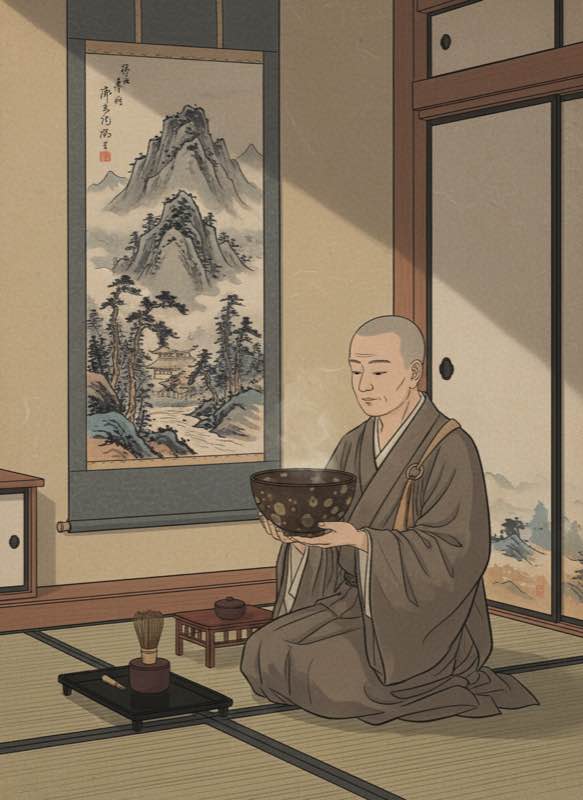
In 1191 AD, the Japanese Zen monk Yōsai (also written Eisai) returned from a pilgrimage to China carrying tea seeds, tea preparation knowledge, and — crucially — Jian tea bowls. He introduced both the practice of whisked powdered tea and the vessels used to serve it. The dark, dramatic bowls from Fujian were unlike anything Japanese potters had produced, and they immediately captured the attention of the emerging warrior class and Buddhist clergy.
The Japanese called these bowls “tenmoku” after Mount Tianmu (天目, “Heaven’s Eye”) in Zhejiang Province, where monks traditionally stopped on their way to and from Chinese Buddhist monasteries. The name stuck — and today, “tenmoku” refers not just to the original Chinese imports but to an entire family of dark-glazed pottery traditions that spread across Japan.
Karamono and the Cult of the Imported Bowl
In Japan, Chinese-origin tenmoku bowls were classified as karamono (唐物, “Chinese things”) — a term that carried immense prestige. During the Muromachi period (1336–1573), karamono-suki (the love of Chinese objects) became a cultural movement among the ashikura shogunate and the tea elite. Owning a tenmoku bowl was not merely about possessing a beautiful object — it signaled refined taste, cultural literacy, and social status. The Japanese government eventually designated four tenmoku bowls as National Treasures, the highest cultural honor in the country. You can still see these bowls in museums like the Tokyo National Museum.
What Makes Tenmoku Glaze So Special?
Tenmoku glaze is not simply “dark brown.” It is a complex, layered surface produced by the interaction of iron oxide, kiln atmosphere, and cooling rate. The glaze — typically 0.04–0.08 inches (1–2 mm) thick — flows during firing, creating patterns that range from subtle to spectacular. You can explore the history of Jian Zhan to see how these techniques developed over centuries:
- Oil Spot (Yōdekkō): Round, metallic spots that shimmer silver or gold under light
- Hare’s Fur (Nogime): Fine, parallel streaks that resemble the soft fur of a hare
- Tortoiseshell (Bekko): Mottled amber and black patterns
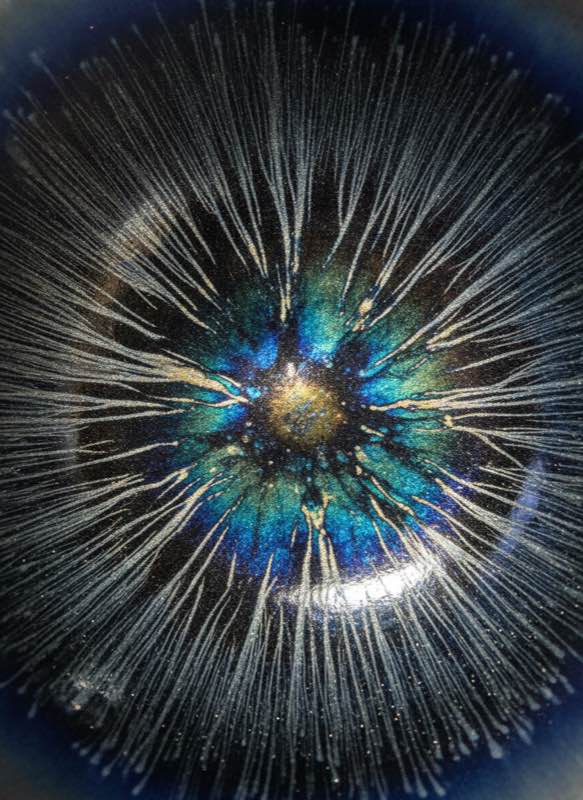
- Yōhen (Transformation): Iridescent, color-shifting surfaces that change depending on viewing angle
What surprises many first-time owners is how the glaze continues to evolve. With regular use, tea oils slowly interact with the surface — a process collectors call “nurturing” the bowl. Tenmoku glaze patterns each carry distinct cultural meanings and practical benefits, from heat retention to visual drama during tea preparation.
Tenmoku in Modern Tea Culture
Tenmoku is far from a museum relic. Today, it occupies a unique position at the intersection of art, ritual, and daily life. In Japan, tenmoku bowls are still used in formal tea ceremonies — particularly the temae (tea preparation ritual) where the host serves thick koicha to guests. In China, the revival of Jian Zhan (the Chinese name for tenmoku) has sparked a new generation of artisans who blend traditional techniques with contemporary aesthetics.
Why does tenmoku matter today? For one, its heat retention is unmatched — a tenmoku bowl keeps your tea warm 15–20 minutes longer than a porcelain cup of the same size. The iron-rich clay also interacts with tea compounds, softening astringency and enhancing sweetness (a claim supported by centuries of anecdotal evidence, though scientific studies are still emerging). But beyond the practical benefits, tenmoku represents a living link to a thousand-year tradition — each time you lift a tenmoku bowl, you participate in a ritual that connects you to Song Dynasty emperors, Zen monks, and tea masters across centuries.
The Collector’s Perspective
If you are considering collecting tenmoku, you should know that the market spans a wide range — from affordable modern reproductions starting around $30 to antique Song Dynasty fragments that sell for thousands of dollars at auction. The key is understanding what makes each piece valuable: provenance, glaze quality, condition, and rarity. Authentic hand-thrown pieces from Jianyang carry more weight than slip-cast reproductions, and the glaze pattern itself matters — yōhen pieces are among the rarest and most sought-after.
Tenmoku vs Other Tea Bowl Traditions
Tenmoku is often confused with or compared to other tea bowl traditions, and understanding the distinctions helps you appreciate its unique place in ceramic history:
| Feature | Tenmoku | Raku | Porcelain (Qingbai) |
|---|---|---|---|
| Origin | Song Dynasty China, 960–1279 AD | 16th century Japan | Song Dynasty China |
| Clay | Iron-rich stoneware | Low-fire earthenware | Refined white kaolin |
| Firing | 2,300 °F / reduction | 1,650 °F / rapid cooling | 2,300 °F / oxidation |
| Glaze | Dark, iron-based, patterned | Crackle, bold colors | Clear, white, translucent |
| Heat Retention | Excellent (15–20 min longer) | Moderate | Poor |
| Cultural Role | Formal ceremony, collecting | Casual ceremony, spontaneity | Everyday use, display |
Each tradition serves a different purpose, and choosing the right teacup material depends on how you drink tea and what you value most — ritual, aesthetics, or practicality.
❓ What does the word “tenmoku” mean in Japanese?
“Tenmoku” (天目) literally translates to “Heaven’s Eye” — it comes from Mount Tianmu in Zhejiang Province, China, where Japanese Zen monks stopped during pilgrimages. The bowls they brought back were named after this mountain, and the term eventually broadened to describe all dark-glazed tea bowls in this tradition.
❓ Is tenmoku the same as Jian Zhan?
They are closely related but not identical. Jian Zhan (建盏) refers specifically to bowls made in Jianyang, Fujian Province, using local iron-rich clay and traditional firing methods. Tenmoku is the broader Japanese term for dark-glazed tea bowls — it includes Jian Zhan imports but also Japanese-made bowls that imitate the style. Think of it this way: all Jian Zhan imported to Japan qualifies as tenmoku, but not all tenmoku is Jian Zhan.
❓ Why are some tenmoku bowls National Treasures in Japan?
Four tenmoku bowls — all originally from China — have been designated National Treasures by the Japanese government. These bowls represent the pinnacle of Song Dynasty ceramic art, featuring extraordinary glaze effects like yōhen (iridescent transformation) that modern potters still struggle to replicate. Their cultural significance is immense: they embody centuries of Japan-China cultural exchange and the evolution of tea ceremony aesthetics.
❓ Can I use a tenmoku bowl for everyday tea drinking?
Absolutely. While tenmoku bowls have ceremonial roots, modern tenmoku is designed for daily use. The iron-rich clay improves heat retention, and the glaze is food-safe and durable. Just avoid thermal shock — do not pour boiling water into a cold bowl. Let it warm gradually, and hand-wash with mild soap. With regular use, you will notice the glaze developing a richer, deeper patina over time.
📚 References
- Tenmoku Pottery History: Comprehensive overview of tenmoku origins, kiln sites, and cultural transmission. Tezumi
- Jian Ware and Song Dynasty Tea Culture: Academic study of imperial tea practices and ceramic production. Metropolitan Museum of Art
- Japanese National Treasure Tenmoku Bowls: Catalog and scholarly analysis of designated National Treasures. Tokyo National Museum
Discover the significance of tenmoku history for yourself — browse our curated tenmoku collection and find a bowl that carries a thousand years of meaning into your daily tea ritual.


