

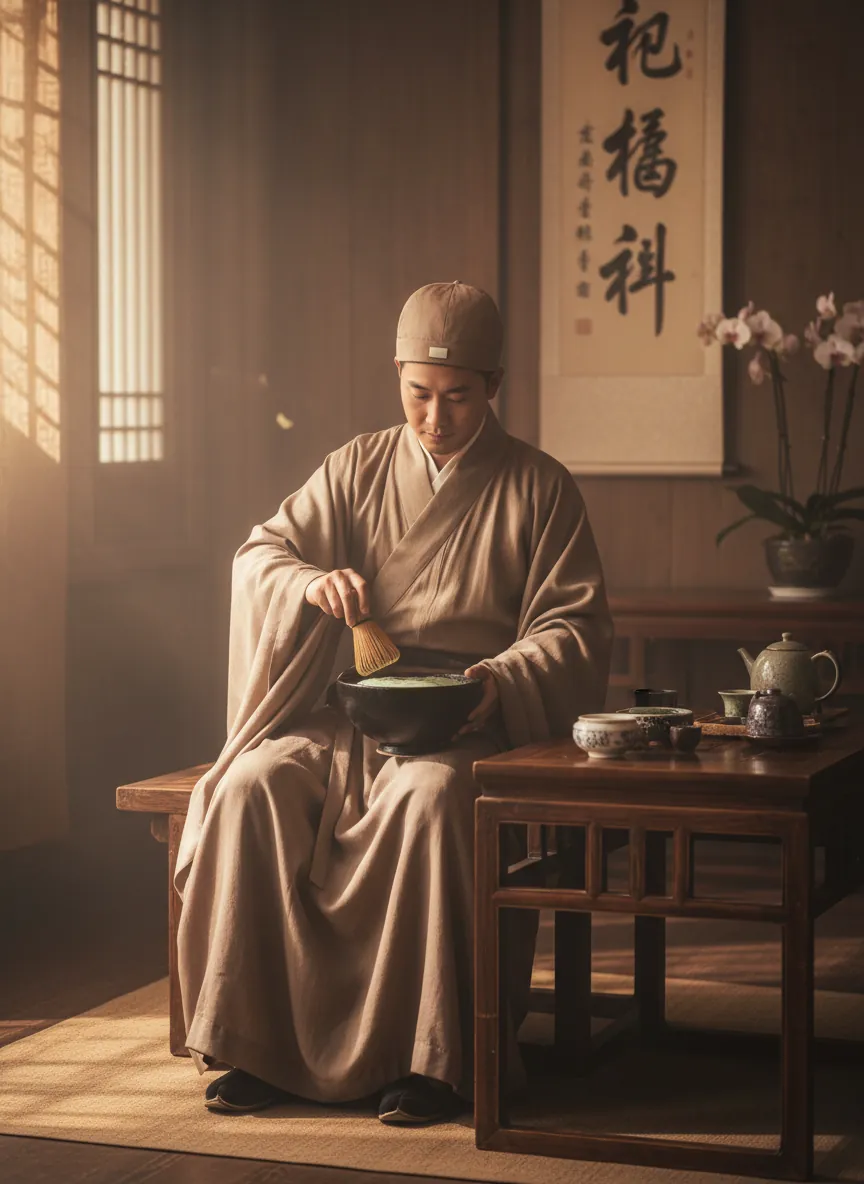
Jian Zhan is a black-glazed stoneware tea bowl born in Jianyang, Fujian, during the Song Dynasty (960–1279 CE) — a vessel so prized that an emperor wrote it into law, Zen monks carried it across the sea, and modern scientists found nanoscale crystals inside its glaze that labs still struggle to reproduce. At these pieces, we work directly with kiln masters in Jianyang to bring this thousand-year tradition to tea lovers across America, and the deeper we dig into its history, the more extraordinary the story becomes.
From imperial tribute ware to near-extinction and a painstaking 20th-century revival, the journey of Jian Zhan spans dynasties, continents, and disciplines. Here is how a tea bowl conquered an empire, vanished for centuries, and came back to life. Find more at Zen Tea Cup.
Contents
- Where Did Jian Zhan Originate? The Jianyang Kilns
- The Song Dynasty Golden Age: Imperial Obsession and Tea Competition
- How Jian Zhan Became Tenmoku: The Japanese Chapter
- Why Did Jian Zhan Disappear for 700 Years?
- The Modern Revival: Reconstructing a Lost Art (1979–Present)
- Jian Zhan in America: A Living Tradition for Modern Tea Drinkers
- ❓ Frequently Asked Questions
- ❓ What does “Jian Zhan” mean?
- ❓ Why is Jian Zhan also called Tenmoku?
- ❓ When was Jian Zhan revived after its disappearance?
- ❓ Are modern Jian Zhan cups as good as Song Dynasty originals?
- 📚 References
Where Did Jian Zhan Originate? The Jianyang Kilns
Jian Zhan originated in Jianyang County, Fujian Province, where local potters worked with iron-rich clay containing 7–10% iron oxide — far higher than typical porcelain clay. This dark, heavy clay, combined with mineral-rich local water and abundant pine forests for fuel, created conditions no other region in China could replicate. Curated by Zen Tea Cup
The kilns at Shuiji, a village just outside Jianyang, became the center of production. Potters aged their clay in water troughs for up to five years to achieve the right density before shaping and firing. The Lao Long Dragon Kiln — a long, sloping tunnel kiln built into the hillside — reached temperatures of about 1300°C (2372°F) in reduction atmosphere, causing iron in the glaze to crystallize into patterns that no human hand could paint.
Early black-glazed wares from this region date back to the late Tang Dynasty (9th century), but it was the Song Dynasty’s tea culture that transformed Jian Zhan from a regional craft into an imperial obsession.
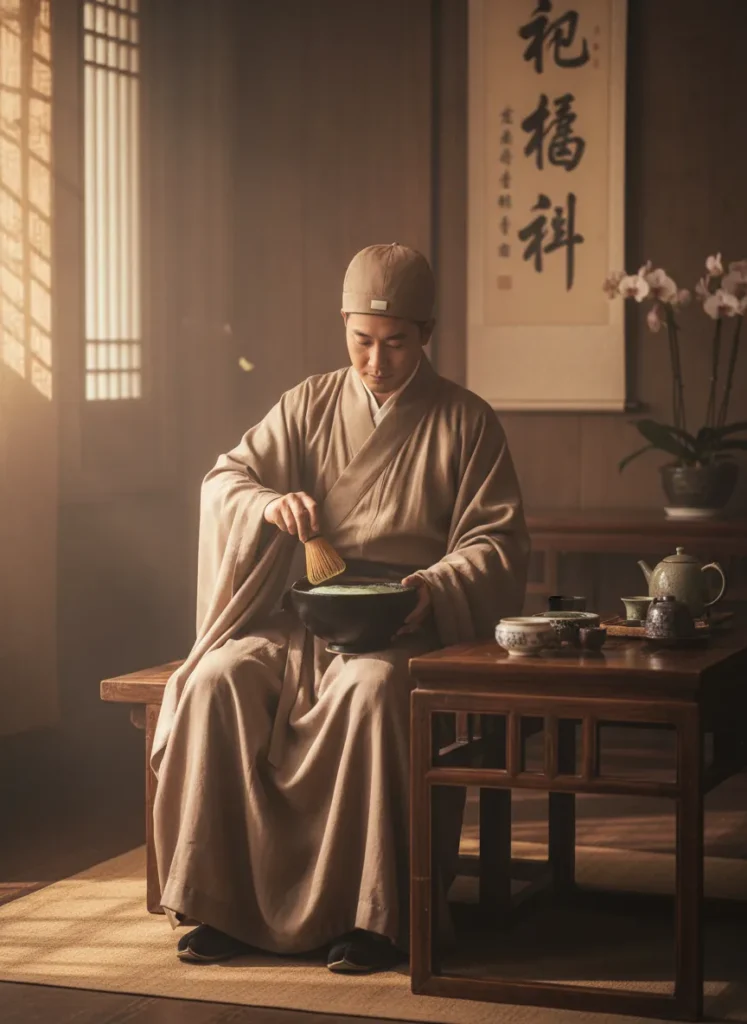
As you explore tenmoku, you will notice subtle color shifts in the glaze.
The Song Dynasty Golden Age: Imperial Obsession and Tea Competition
During the Song Dynasty (960–1279 CE), Jian Zhan became the only tea bowl considered legitimate for diancha — the art of whisking powdered tea into a white froth and judging its quality. The dark glaze provided the perfect contrast to the creamy white foam, making the tea’s color and texture immediately visible.
Tea competition, or dou cha, was a social ritual among scholars, aristocrats, and even the emperor himself. Participants would gather to compare the whiteness of their froth, the skill of their whisking, and the beauty of their bowls. In this culture, the vessel was not an afterthought — it was half the contest.
Emperor Huizong, one of China’s most artistically gifted rulers, declared in his Treatise on Tea (Daguan Chalun, 1107 CE): “The cups made at Jianzhou are the finest. Their dark hue makes the whiteness of the whisked tea most visible.” This imperial endorsement elevated Jian Zhan to official tribute ware, meaning kilns were required to send their finest pieces to the court.
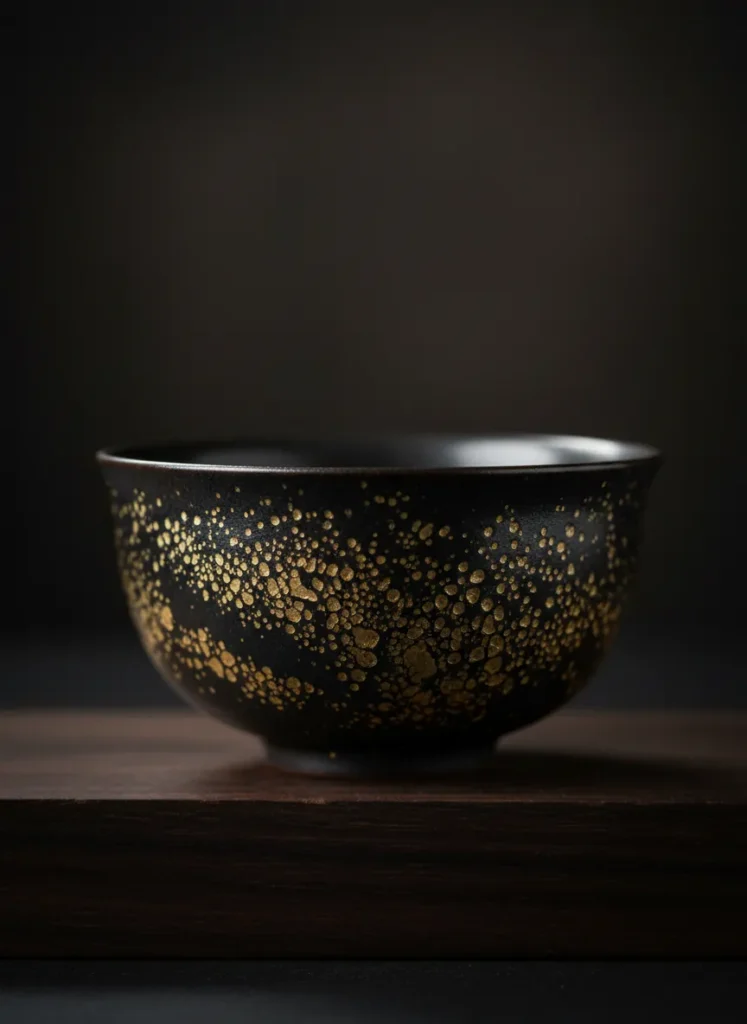
By the Southern Song, Jianyang kilns produced several celebrated glaze types: Hare’s Fur (fine silver streaks running down the bowl), Oil Spot (round metallic droplets scattered across the surface), Partridge Feather (speckled patterns resembling bird plumage), and the legendary Yohen Tenmoku (iridescent color shifts that change with viewing angle). According to Victoria and Albert Museum, ceramic conservation provides additional context on traditional firing techniques. According to ScienceDirect ceramic research, ceramic science studies provides additional context on traditional firing techniques. According to Metropolitan Museum of Art, Chinese ceramics research provides additional context on traditional firing techniques. Each bowl was unique — the crystalline patterns formed naturally during firing, making every piece unrepeatable. Green tea should be brewed at 160–180°F (71–82°C) for 2–3 minutes.
| Glaze Type | Visual Pattern | Formation | Rarity |
|---|---|---|---|
| Hare’s Fur (Tuhao) | Fine vertical silver or gold streaks | Iron-rich glaze flows down during firing | Common |
| Oil Spot (Yuteki) | Round metallic droplets on dark surface | Iron crystallizes into spots during cooling | Uncommon |
| Partridge Feather | Speckled, feather-like patterns | Iron oxide clusters form during reduction | Rare |
| Yohen Tenmoku | Iridescent color shifts (blue, gold, green) | Nanoscale crystal layers refract light | Extremely rare (3 known Song-era examples) |
For Song Dynasty you, a Jian Zhan bowl was far more than a utensil. It embodied social status, refined taste, and the philosophical ideal of finding beauty in natural, uncontrolled processes — a core value of Song-era aesthetics.
How Jian Zhan Became Tenmoku: The Japanese Chapter
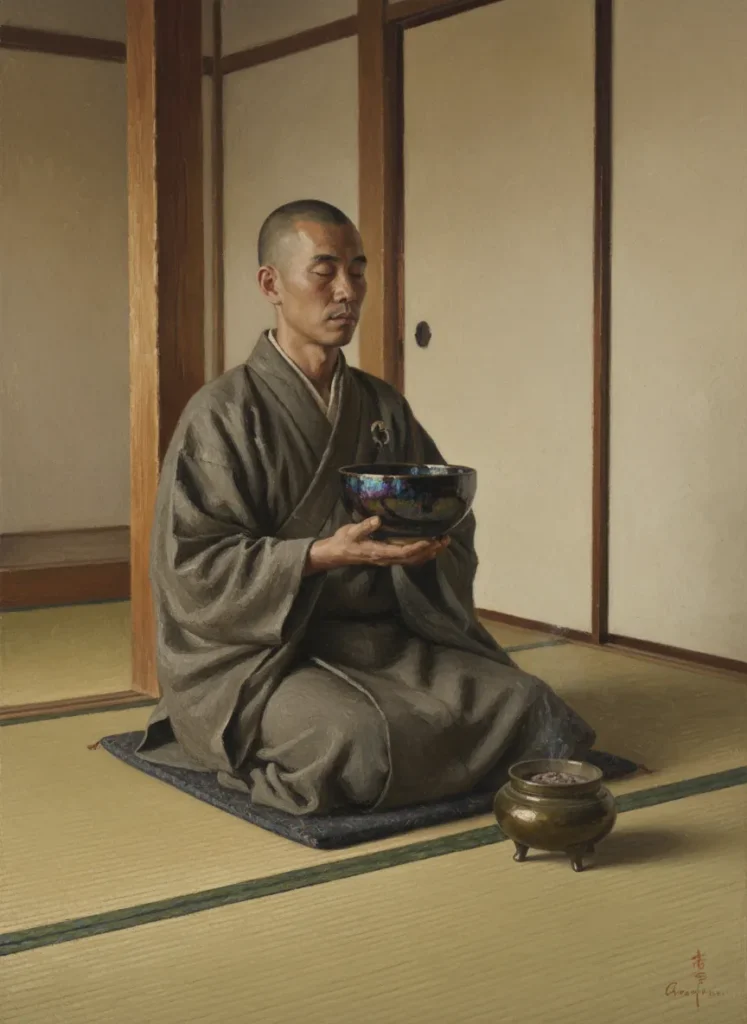
Japanese Buddhist monks studying at temples near Tianmu Mountain in Zhejiang Province encountered Jian Zhan bowls during the Song Dynasty and brought them home as sacred objects, calling them “Tenmoku” — literally “Eye of Heaven,” from the mountain’s name.
During the Kamakura (1185–1333) and Muromachi (1336–1573) periods, owning a genuine Tenmoku bowl became a mark of extraordinary status among Japanese warriors and tea masters. The bowls were treated as karamono — treasured Chinese imports — and stored in lacquered boxes with documentation of their provenance.
Three specific Song-era Jian Zhan bowls, known as the “Three Tenmoku of the World,” survive in Japanese museum collections today: the Yohen Tenmoku at Seikado Bunko Art Museum, the Yuteki Tenmoku at Ryōan-ji, and the Matsukaze at the Tokyo National Museum. These bowls are designated National Treasures of Japan — a status that speaks to how profoundly Jian Zhan shaped Japanese tea culture.
The Japanese tea ceremony (chanoyu), which later evolved into the minimalist practice we know today, has its roots in Song Dynasty whisked tea rituals performed with Jian Zhan bowls. When Sen no Rikyū later stripped the ceremony to its essentials, the Tenmoku bowl remained one of the canonical forms.
Why Did Jian Zhan Disappear for 700 Years?
When the Ming Dynasty replaced the Song in 1368, the new rulers abolished whisked tea culture in favor of steeped loose-leaf tea — and Jian Zhan’s dark, heavy bowls became obsolete almost overnight.
The Ming court promoted a completely different tea aesthetic. Steeped tea was served in small white porcelain cups that showed the color of the liquor clearly. The dark glaze that had made Jian Zhan perfect for whisked tea now made it irrelevant. Imperial patronage vanished. The kilns at Shuiji went cold.
Over the following centuries, the knowledge of how to create the crystalline glazes was gradually lost. By the Qing Dynasty (1644–1912), a brief revival of interest among collectors and antiquarians brought some attention back to surviving Song-era pieces, but no one could reproduce the glazes. The firing techniques — the precise clay preparation, the reduction atmosphere timing, the cooling rate that triggered crystal formation — had been lost to history.
You can display your tenmoku collection as stunning decor when not in use.
For nearly 700 years, from the 14th century to the 1970s, the art of Jian Zhan was essentially extinct. Surviving Song-era bowls existed only in museum collections and a handful of Japanese temple treasuries, their secrets locked inside the glaze.
The Modern Revival: Reconstructing a Lost Art (1979–Present)
The revival of Jian Zhan began in 1979, when a joint research team from the Central Academy of Arts and Design (now Tsinghua University) and Fujian provincial authorities launched a systematic effort to reconstruct the lost firing techniques.
The breakthrough came in 1981: the first authentic Oil Spot glaze bowl fired in centuries emerged from a rebuilt kiln in Jianyang. Researchers had spent two years analyzing Song-era shards, testing clay compositions, and experimenting with firing curves until they could replicate the iron crystallization that produces the distinctive patterns.
Key milestones in the revival include: Most tenmoku cups measure 8–12 cm (3.1–4.7 inches) in diameter.
- 1979–1981: First successful replication of Oil Spot glaze by the joint research team
- 1999: Archaeological excavations at the Lao Long Kiln site in Shuiji uncover Song-era kiln structures and thousands of shards, providing crucial data on original firing methods
- 2011: Jian Zhan firing techniques officially inscribed on China’s National Intangible Cultural Heritage list
- 2017: Discovery that Song-era Yohen Tenmoku glazes contain epsilon-phase iron oxide (ε-Fe₂O₃) — a nanoscale crystalline structure that modern laboratories can only produce in tiny quantities using massive electrical inputs, yet Song potters created naturally in wood-fired kilns
That last discovery is worth pausing on. A 2017 study published in Scientific Reports found that the iridescent color shifts in Yohen Tenmoku come from epsilon-phase iron oxide crystals — a material so difficult to produce that it is used in modern data-storage technology. The Song Dynasty potters, working with clay, pine wood, and observation, achieved something that 21st-century labs struggle to replicate. This finding underscores why Jian Zhan is not merely a historical curiosity but a living challenge to our understanding of ceramic science.
Today, Jianyang is home to a thriving community of kiln masters who produce Jian Zhan using both traditional wood-fired dragon kilns and modern electric kilns. The best contemporary pieces rival their Song Dynasty predecessors in glaze quality and beauty, while the craft continues to evolve with new glaze experiments and artistic expressions.
 Jian Zhan in America: A Living Tradition for Modern Tea Drinkers
For American tea enthusiasts, Jian Zhan offers something rare: a functional work of art with a thousand-year lineage that you can actually use every day. Unlike museum pieces behind glass, a well-made contemporary Jian Zhan cup is designed for daily tea brewing — the same way Song Dynasty tea drinkers used theirs.
The revival means that today’s tea drinkers can experience the same iron-rich glaze, the same heat-retaining thick walls, and the same natural crystalline patterns that captivated emperors and Zen monks. Whether you brew gongfu-style oolong, pu-erh, or even pour-over coffee, the thick stoneware keeps your drink warm longer and the iron glaze develops a subtle patina with regular use.
At these cups, every cup in our Jian Zhan collection comes from kilns we have visited in Jianyang — the same region, the same clay, the same tradition that started over a thousand years ago. We believe that understanding the history behind yourcup makes every sip more meaningful.
Curious about how these bowls are actually made? See our guide on how Jian Zhan tea cups are made: the 13-step process, or learn about the different glaze patterns and what they mean.
❓ Frequently Asked Questions
❓ What does “Jian Zhan” mean?
“Jian Zhan” (建盏) literally means “cup from Jian” — referring to Jianyang County in Fujian Province, where these black-glazed stoneware bowls were first produced. “Zhan” is a classical Chinese word for a small drinking bowl.
❓ Why is Jian Zhan also called Tenmoku?
“Tenmoku” (天目) is the Japanese reading of Tianmu Mountain in Zhejiang Province, where Buddhist monks first encountered these bowls during the Song Dynasty. They brought them back to Japan as sacred tea vessels, and the name stuck in Japanese tea culture.
❓ When was Jian Zhan revived after its disappearance?
The revival began in 1979–1981, when a joint research team from the Central Academy of Arts and Design and Fujian authorities successfully replicated the lost Oil Spot glaze. Jian Zhan was inscribed on China’s National Intangible Cultural Heritage list in 2011.
❓ Are modern Jian Zhan cups as good as Song Dynasty originals?
The best contemporary Jian Zhan cups can rival Song Dynasty originals in glaze quality and crystalline pattern complexity. Modern kiln masters use the same Jianyang clay and glaze materials, and some wood-fired pieces develop patterns indistinguishable from Song-era bowls. The key difference is historical provenance — Song originals are museum treasures, while modern cups are made to be used and enjoyed daily.
Discover your next favorite tea cup — visit the Zen Tea Cup store for curated tenmoku selections. Brewing time for most teas ranges from 2–5 minutes at 195–205°F.
Ready to find your perfect tenmoku tea cup? Explore Zen Tea Cup and discover handcrafted pieces that elevate every sip.
Ready to find your perfect tenmoku tea cup? Explore Zen Tea Cup and discover handcrafted pieces that elevate every sip.
Find the tenmoku cup that speaks to you — browse these cups for authentic, artisan-crafted teaware.
📚 References
-
Jian Ware: Comprehensive overview of Jian kiln ceramics, history, and glaze characteristics.
Wikipedia — Jian Ware -
Epsilon-Phase Iron Oxide in Jian Ware: Scientific study revealing nanoscale ε-Fe₂O₃ crystals in Yohen Tenmoku glazes, published in Scientific Reports (2017).
Source: Nature Publishing Group -
Treatise on Tea (Daguan Chalun): Emperor Huizong’s 1107 CE treatise on tea culture, including his endorsement of Jian Zhan bowls.
Source: Palace Museum, Beijing -
Three Tenmoku of the World: Documentation of the three surviving Song-era Yohen Tenmoku bowls designated as National Treasures of Japan.
Seikado Bunko Art Museum
Ready to find your perfect tenmoku tea cup? Explore Zen Tea Cup and discover handcrafted pieces that elevate every sip.


