

Contents
- How to Design a Japandi Tea Corner Under $100
- The $92 Sample Build
- The Five-Object Rule
- Choose the Right Small-Space Location
- Countertop, Cart, or Floating Shelf?
- Pick a Japandi Palette That Looks Calm, Not Empty
- Why Tenmoku Works as the Focal Object
- Minimalist Setup Rules That Keep the Corner Calm
- What to Hide and What to Display
- Use Texture Before Decoration
- Use a 10-Minute Weekly Reset to Keep It Minimal
- The Sunday Tray Test
- Common Mistakes That Make a Tea Corner Feel Busy
- Budget Breakdown for a Japandi Style Tea Corner
- FAQ
- ❓ Can I build a Japandi tea corner without buying new furniture?
- ❓ What is the best cup for a minimalist tea space?
- ❓ How much space do I need for a tea corner?
- ❓ Is Japandi the same as minimalism?
- 📚 References
How to Design a Japandi Tea Corner Under $100
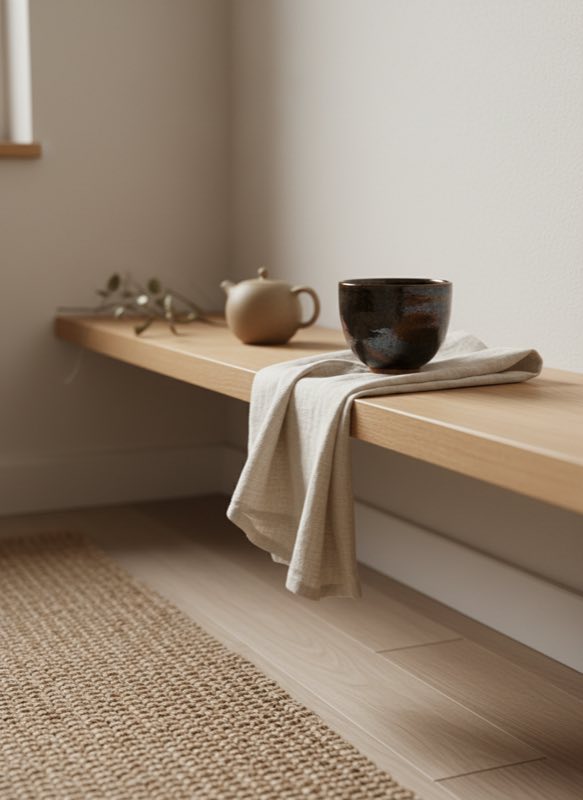
A Japandi tea corner is a small, calm tea station built with Japanese restraint, Scandinavian warmth, and only the objects you actually use. You can design a Japandi Style Tea Corner under $100 by choosing one surface, one handmade ceramic focal cup, one warm wood tray, discreet storage, and no more than five visible objects. At Zen Tea Cup, we like this approach because it turns a daily drink into a craft-minded ritual without asking you to remodel your kitchen.
| Key Stat | Value | Why It Matters |
|---|---|---|
| Total sample budget | $92 USD | Leaves a small cushion under the $100 cap |
| Minimum footprint | 24 x 18 inches (61 x 46 cm) | Fits a tray, cup, tea tin, and kettle access |
| Best shelf height | 30-42 inches (76-107 cm) | Keeps the setup easy to reach while standing |
| Visible object limit | 5 pieces or fewer | Protects the minimalist look from clutter creep |
| Tea cup capacity | 2-5 fl oz (60-150 ml) | Works for gongfu-style sessions and slow sipping |
| Weekly reset time | 10 minutes | Keeps the corner clean without becoming a chore |
Updated July 20, 2026: the budget below assumes US retail pricing, renter-friendly setup, and no new furniture. If you already own a tray or kettle, you can put more of the $100 toward a better cup, tea, or storage. The point is not to make the corner look expensive. The point is to make it easy enough that you return to it every day.
The $92 Sample Build
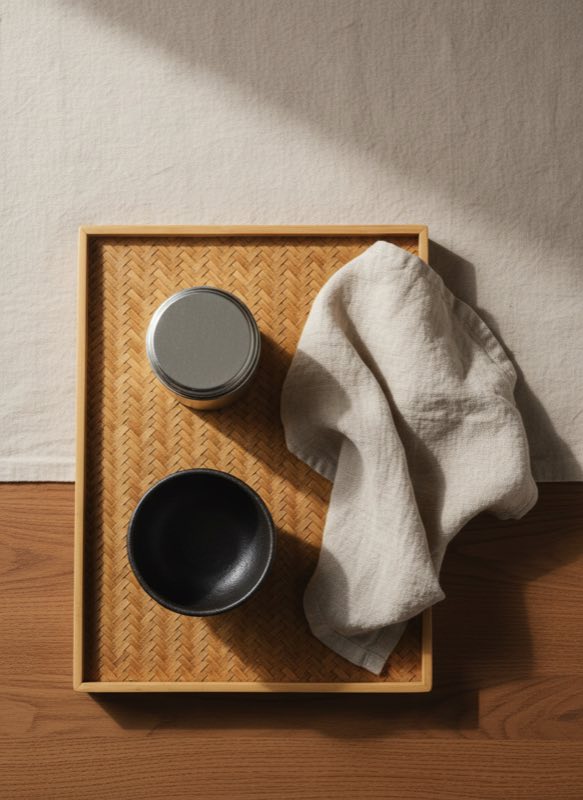
Start with a $20 wood or bamboo tray, a $12 cotton or linen cloth, a $14 airtight tea tin, a $16 low-profile organizer box, and a $30 focal cup. That lands at $92 before tax, and it gives you a complete minimalist setup without buying a cabinet, lamp, or decorative shelf. You can swap prices, but keep the hierarchy: cup first, tray second, storage third, decoration last.
If your tea routine leans cozy and slow, connect this corner to a broader ritual mindset with our guide to a cozy Tenmoku tea ritual. The Japandi tea corner should feel warm, not staged, and that warmth is what makes you use it.
The Five-Object Rule
The five visible objects are simple: cup, tray, tea tin, cloth, and one plant or stoneware accent. Your kettle can sit nearby if you use it daily, but do not force it into the visual zone if the cord looks messy. Negative space is part of the design. A 70% empty surface, 20% functional tools, and 10% quiet accent usually looks more Japandi than a perfectly symmetrical display.
Choose the Right Small-Space Location
The right small-space location is the one you can reach without moving three other things first. A Japandi tea corner fails when it lives in a pretty but inconvenient spot. You want a surface that is close to water, close to an outlet if you use an electric kettle, and far enough from cooking splatter that the cloth and cup do not become greasy.
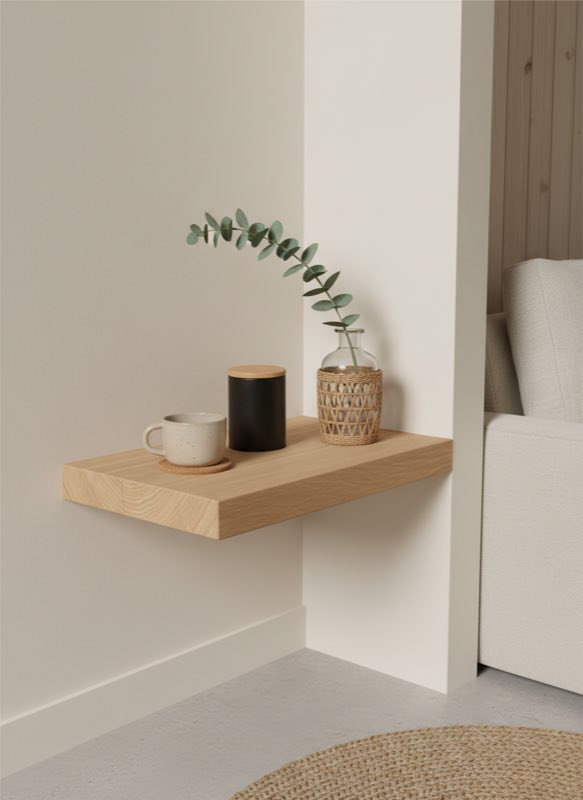
For most apartments, the best footprint is 24 x 18 inches. That can be a section of counter, the top of a narrow cabinet, a floating shelf, or the upper level of a bar cart. If you use a floating shelf, keep it around 30-42 inches from the floor so you can pour comfortably. If you use a cart, lock the wheels and leave at least 18 inches of walking clearance in front of it.
Countertop, Cart, or Floating Shelf?
A countertop is easiest if you already make tea in the kitchen, but it also attracts mail, keys, and snack wrappers. A cart is flexible, especially if you rent, but it can look busy unless the lower shelves are hidden with baskets. A floating shelf is the cleanest visual option, though it works best when you only need a cup, tea tin, and tray rather than a full kettle setup. Choose the option that lowers friction for you, not the option that photographs best.
Here is the practical test (it takes 5 minutes): stand where you will make tea, reach for water, reach for tea, reach for the cup, then imagine cleaning the area afterward. If any step feels awkward, the location is wrong. Japandi design looks effortless because the hidden workflow is doing real work.
Pick a Japandi Palette That Looks Calm, Not Empty
A Japandi palette works when the materials feel warm enough to touch, not just sparse enough to photograph. Use three core colors: warm wood, matte black or dark brown ceramic, and off-white fabric. If you add a fourth color, make it muted green from a real plant or dried branch. Keep bright packaging and glossy plastic outside the visible zone.
The easiest palette formula is 70% neutral base, 20% wood or bamboo, and 10% dark ceramic. This is where a Tenmoku cup earns its place. Its dark glaze can become the single focal point, so you do not need a row of mugs, a sign, or a decorative print. For more visual background, our guide to Tenmoku glaze patterns and meanings explains why one cup can carry so much texture.
Why Tenmoku Works as the Focal Object
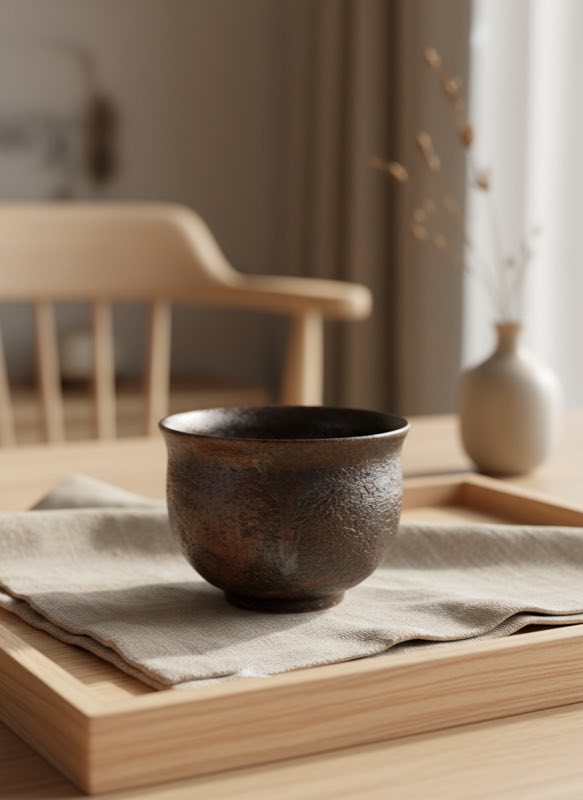
Tenmoku works in a minimalist tea space because the surface has depth without needing extra decoration. A black, oil-spot, or hare’s-fur glaze gives you variation at the scale of the hand. You see the pattern when you pour, lift, and turn the cup, not as visual noise from across the room. That is a useful distinction (and one many decorative corners miss).
Keep the rest of the corner quieter than the cup. If the cup is dark, choose a pale cloth. If the tray is strongly grained, choose a plain tea tin. If the wall behind the corner is busy, skip the plant. You are not removing personality; you are giving one object enough room to feel intentional.
Minimalist Setup Rules That Keep the Corner Calm
Minimalist setup rules keep the tea corner useful after the first week. The mistake is buying one more container every time the area feels cluttered. Better storage helps, but only after you reduce the number of decisions sitting in front of you.
Keep 3-5 teas in the visible zone and store the rest elsewhere. Keep one everyday cup out and move backup cups into a cabinet. Keep one cloth folded on the tray and put extra towels away. If you use a kettle, wrap or route the cord so it does not slice across the composition. These small choices matter because visual interruption is what makes a tiny corner feel messy.
What to Hide and What to Display
Display objects that improve the ritual: the cup you hold, the tray that defines the boundary, and the tea you will drink this week. Hide objects that only prove you own tea: sample packets, extra strainers, measuring spoons, boxes with loud labels, and souvenir mugs. When you hide the backups, you make it easier for the visible setup to say one clear thing.
Use a shallow organizer box for packets and tools. A box around 10 x 6 inches (25 x 15 cm) is usually enough for a small strainer, two sample bags, and a measuring spoon. If you need more than that, the issue is not storage; it is that the corner has turned into inventory. Keep the inventory nearby, but let the corner stay ritual-sized.
Use Texture Before Decoration
Texture is the safest way to make a small tea corner feel finished without making it feel crowded. Use matte ceramic, unfinished or lightly oiled wood, woven cotton, bamboo, stone, or linen. These materials fit Japandi because they age quietly. They can show use without looking ruined.
Decoration should be small and slow. A single branch in a narrow vase is enough. A small stone is enough. A folded cloth is enough. If you add a framed print, the frame should not compete with the cup. If you add a plant, choose one that stays compact. Your goal is a corner that lets you breathe out when you see it.
This is also where budget discipline helps. A $7 cloth can soften the corner more effectively than a $35 decorative object. A $12 tin in a neutral color can make the whole area calmer by hiding packaging. A $20 tray can make random objects read as one deliberate station. Spend where the eye rests.
Use a 10-Minute Weekly Reset to Keep It Minimal
A minimalist tea space only stays minimalist if you give it a short reset rhythm. Set a 10-minute weekly reset, ideally before your first quiet cup of the weekend. Remove everything from the tray, wipe the surface, refill only the teas you will drink, rinse or replace the cloth, and return the cup last.
The cup should go back last because it tells you whether the corner still has enough breathing room. If the cup looks crowded, remove one object. If the tea tins dominate, reduce them from five to three. If the cloth looks fussy, fold it smaller or use a simpler fabric. Keep in mind that a small space magnifies every extra label, cord, and duplicate tool.
The Sunday Tray Test
The Sunday tray test is simple: lift the tray with everything on it. If you feel nervous because items might slide, spill, or catch on a cord, the setup is too busy. A good tea corner should be movable in one careful lift, even if you rarely move it. That test forces you to keep only the pieces that belong together.
You can also use the 1-in, 1-out rule. If you buy a new cup, put one cup away. If you bring home a new tea tin, move one old tin to pantry storage. If you add a plant, remove the decorative stone. The rule sounds strict, but it protects the calm you built.
Common Mistakes That Make a Tea Corner Feel Busy
Most failed tea corners do not fail because they are cheap; they fail because too many objects compete for attention. The first mistake is displaying every tea you own. The second is using too many colors. The third is adding a sign that says “tea” when the cup, tray, and kettle already communicate tea perfectly well.
A fourth mistake is mixing too many design languages. Japandi can handle Japanese ceramic, Scandinavian wood, and a simple textile, but it gets confused when you add farmhouse labels, brass hotel trays, bright novelty mugs, and plastic organizers. Pick one material story and stay with it. Warm wood plus dark ceramic plus off-white cloth is enough.
The fifth mistake is ignoring cleaning. A dusty tea corner stops feeling mindful quickly. Tea dust, water rings, and loose leaves are normal, but they need a routine. If you do not want to clean around a tiny vase every week, skip the vase. If you do not want to polish a metal tray, choose wood. The best design choice is often the one you will maintain.
Budget Breakdown for a Japandi Style Tea Corner
A budget breakdown keeps the Japandi Style Tea Corner Under $100 from turning into a shopping spiral. You do not need everything at once. Buy the boundary first, then the focal cup, then the storage. If you already own one of those, your setup gets better without getting more expensive.
| Item | Target Cost | Design Role |
|---|---|---|
| Wood or bamboo tray | $18-$25 | Defines the tea zone |
| Handmade ceramic cup | $25-$35 | Creates the focal point |
| Neutral tea tin | $10-$15 | Hides loud packaging |
| Cotton or linen cloth | $7-$12 | Adds softness and protects surfaces |
| Small organizer box | $12-$18 | Stores tools out of sight |
| Optional plant or branch | $0-$8 | Adds life without clutter |
If you have only $50 today, buy the tray, cloth, and one cup. If you have the full $100, add storage after you test the layout for a week. That delay matters because you will notice what you actually reach for. You may discover that you do not need a second tin, a second spoon, or any wall decor at all.
FAQ
❓ Can I build a Japandi tea corner without buying new furniture?
Yes. You can use an existing shelf, tray, bar cart, or counter zone, then spend your budget on one focal cup, one tray, and discreet storage. Measure the surface first so you buy fewer things and make better choices.
❓ What is the best cup for a minimalist tea space?
A handmade ceramic cup works best because it adds texture without adding clutter. A dark Tenmoku cup is especially useful as one strong focal object because you can keep the surrounding palette quiet.
❓ How much space do I need for a tea corner?
A 24-by-18-inch footprint is enough for a tray, kettle access, one cup, one tea tin, and a cloth. If you have less space, use a wall shelf and move the kettle to the nearest outlet only when you brew.
❓ Is Japandi the same as minimalism?
No. Japandi uses restraint, but it also values warmth, natural materials, soft asymmetry, and imperfect texture. Minimalism can feel empty; Japandi should feel quiet and usable.
📚 References
- Japan House London explains the cultural role of chado and the Japanese tea ceremony.
- Nara National Research Institute for Cultural Properties provides background on wabi as a Japanese aesthetic concept.
- PubMed Central summarizes research on nature, design, and well-being signals relevant to calm interiors.
- Victoria and Albert Museum offers historical context for tea objects and ceramic design.
Your Japandi Tea Corner Under $100 works best when the minimalist setup still feels personal: one cup you love, one tray you use, and enough empty space to make the next pour feel deliberate. Browse the handmade teaware collection when you are ready to choose your focal cup, then start your tea corner with fewer objects and better attention.


