

Congratulations on your new tenmoku cup! Your first steps are: rinse it with warm water (120-140 F), inspect the glaze under natural light, brew your first cup of tea, and establish a daily care routine. This owner’s guide from Zen Tea Cup walks every new owner through everything you need to know from unboxing to your hundredth brew.
| Key Stat | Value |
|---|---|
| First rinse temperature | 120-140 F (49-60 C) |
| Seasoning brews recommended | 2-3 sessions |
| Daily cleaning method | Warm water only, no soap |
| Drying time | 2-4 hours air dry |
| Storage temperature | 60-80 F (15-27 C) |
| Thermal shock limit | Avoid temperature swings over 100 F |
Contents
- Unboxing and First Inspection
- What to Look For
- Preparing Your Tenmoku Cup for First Use
- Step 1: Warm Water Rinse
- Step 2: Seasoning Brews
- Your First Real Brew: A Step-by-Step Guide
- Choosing Your First Tea
- Daily Care Routine for Your Tenmoku Cup
- After Each Session
- Weekly Deep Clean
- Storage and Display Tips
- Short-Term Storage (Daily)
- Long-Term Storage (Months)
- ❓ Do I need to “open” my tenmoku cup like a Yixing teapot?
- ❓ Can I use my tenmoku cup for different types of tea?
- ❓ What should I do if my cup develops a crack?
- Common Beginner Mistakes to Avoid
- Mistake 1: Using Boiling Water for the First Rinse
- Mistake 2: Using Soap or Dishwasher
- Mistake 3: Storing While Damp
- References
Unboxing and First Inspection
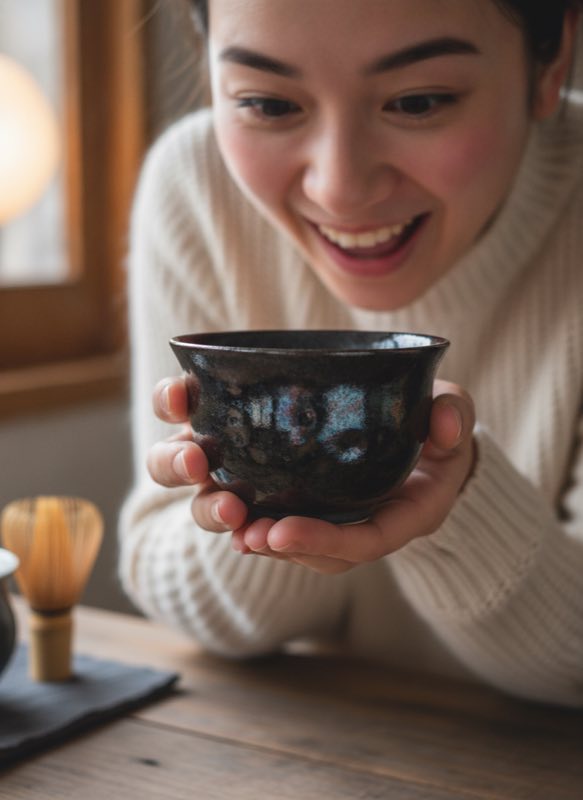
When you open the presentation box, take a moment to appreciate the packaging before removing the cup. The silk or brocade lining, the certificate of authenticity, and the foam cradle are all part of the experience. Then lift the cup carefully and hold it under natural daylight—this is when tenmoku glaze reveals its true character.
What to Look For
Examine three areas: the glaze surface, the foot ring, and the interior. On the glaze surface, look for the metallic spots (oil-spot), fine parallel lines (hare’s fur), or color-shifting effects (yohen) that define your cup’s pattern. The foot ring should show unglazed clay with slight wheel marks—this is the hallmark of handmade production. Inside the cup, check that the glaze covers the entire interior with no bare clay patches. Small variations in glaze thickness and pattern are normal and expected; they are what make each tenmoku cup unique. The handmade tenmoku guide at Zen Tea Cup provides photo references for what natural variation looks like versus actual defects.
Preparing Your Tenmoku Cup for First Use
Before you brew tea in your new cup, you need to clean and season it. This process removes any residual kiln dust and helps the glaze settle into its final surface character.
Step 1: Warm Water Rinse
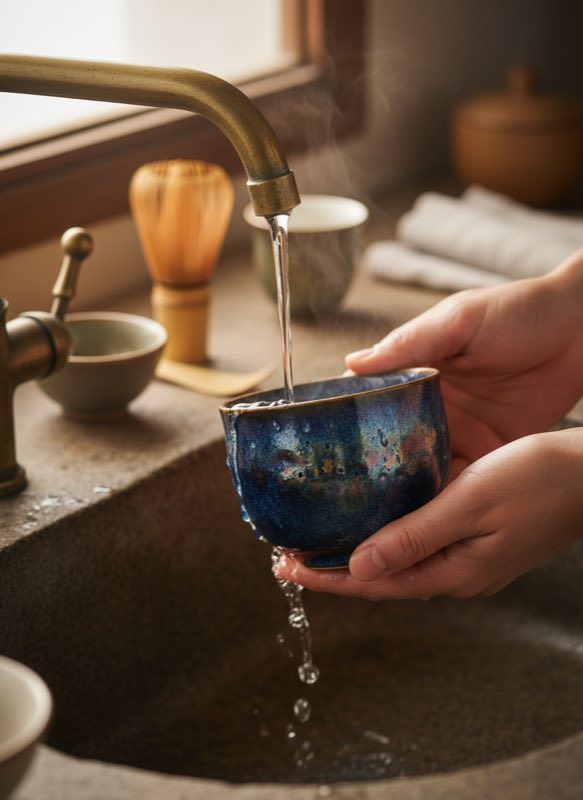
Fill a bowl with warm water at 120-140 F (49-60 C) and submerge the cup for 5 minutes. This gentle warmth opens the glaze micro-pores and releases any trapped kiln particles. Do not use boiling water—sudden temperature changes can crack the glaze. After soaking, use your fingers (not a brush or sponge) to gently wipe the interior and exterior. Rinse under warm running water and set on a clean towel to air dry for 2-4 hours.
Step 2: Seasoning Brews
Brew 2-3 sessions of tea in your new cup before drinking from it regularly. These seasoning brews serve two purposes: they fill the glaze micro-pores with tea oils that create a subtle patina over time, and they let you test the cup’s heat retention and pour behavior. Use a mid-grade oolong (tieguanyin or da hong pao) for seasoning—these teas have enough body to coat the glaze without wasting premium leaves. Pour the tea out after each 30-second steep; do not drink the seasoning brews. After the third session, your cup is ready for daily use.
Your First Real Brew: A Step-by-Step Guide
Now that your cup is seasoned, it is time for your first proper tea session. This is the moment where the cup stops being a beautiful object and becomes a daily companion.
Choosing Your First Tea
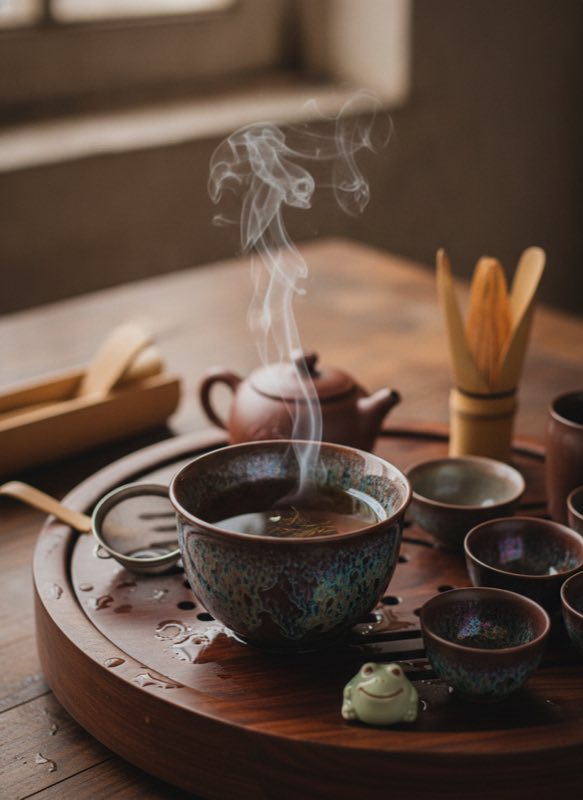
The best teas for your first tenmoku brew are oolongs with moderate oxidation (40-60%), such as tieguanyin, dancong, or roasted oolong. These teas showcase tenmoku’s strengths: the thick walls maintain brewing temperature (185-205 F / 85-96 C) throughout multiple short steeps, and the dark glaze provides a beautiful contrast against the amber liquor. Avoid delicate green teas for your first session—they require lower temperatures (165-175 F / 74-80 C) that do not fully exercise the cup’s heat retention. Save green tea for your second or third session once you are comfortable with the cup’s behavior. The gongfu brewing guide covers the complete pouring sequence.
Daily Care Routine for Your Tenmoku Cup
Tenmoku cups are remarkably low-maintenance compared to unglazed Yixing teapots, but a consistent care routine keeps the glaze vibrant and prevents buildup over years of use.
After Each Session
Rinse the cup with warm water immediately after your last brew. Use your fingers to wipe away any tea residue—never use soap, detergent, or abrasive sponges, as these strip the tea oil patina that develops naturally on the glaze surface. If tea stains build up over time (visible as a faint brown ring inside the cup), soak the cup in warm water for 10 minutes and gently rub with a soft cloth. Stubborn stains respond to a paste of baking soda and water applied with a fingertip, but use this method sparingly (once every few months at most).
Weekly Deep Clean
Once a week, give your tenmoku cup a deeper clean by boiling water in a pot, removing it from heat, and submerging the cup for 10 minutes once the water has cooled to about 160 F (71 C). This thermal bath releases trapped oils and refreshes the glaze surface. After the bath, rinse with warm water and air dry completely before storing. Never put your tenmoku cup in a dishwasher—the high-pressure water jets and harsh detergents will damage the glaze over time.
Storage and Display Tips
When you are not using your tenmoku cup, proper storage prevents accidental damage and keeps the glaze in optimal condition.
Short-Term Storage (Daily)
After your cup has dried completely (2-4 hours air drying), place it on a soft surface like a tea mat, felt pad, or the original presentation box. Avoid stacking other items on top of the cup. If you display your cup on a shelf, position it away from direct sunlight—prolonged UV exposure can subtly fade the metallic sheen of oil-spot and hare’s fur glazes over decades. The Jian Zhan display guide covers optimal shelf placement and lighting.
Long-Term Storage (Months)
If you need to store your tenmoku cup for an extended period, wrap it in a soft cloth or the original tissue paper and place it in the presentation box. Store the box in a climate-controlled area (60-80 F / 15-27 C) away from extreme humidity. Before resuming use after long storage, repeat the warm water rinse and one seasoning brew to refresh the glaze surface.
❓ Do I need to “open” my tenmoku cup like a Yixing teapot?
No. Unlike unglazed Yixing clay, tenmoku’s glaze surface is non-porous and does not require the elaborate “opening” ritual that Yixing teapots need. The 2-3 seasoning brews recommended above are sufficient to remove kiln residue and establish a clean surface. You do not need to boil the cup in tea, bury it in tea leaves, or perform any multi-day preparation.
❓ Can I use my tenmoku cup for different types of tea?
Yes. Because the glaze is non-porous, tenmoku cups do not absorb flavors the way unglazed clay does. You can brew oolong in the morning, green tea in the afternoon, and black tea in the evening in the same cup—just rinse with warm water between sessions. This versatility is one of tenmoku’s biggest advantages over Yixing teapots, which should be dedicated to a single tea type.
❓ What should I do if my cup develops a crack?
Small hairline cracks in the glaze (called crazing) are cosmetic and do not affect the cup’s function. If you notice a crack that goes through the clay body (you can feel it with your fingernail), stop using the cup for hot liquids immediately. A through-body crack can expand with thermal cycling and eventually cause the cup to break. Contact support about a replacement if the crack appeared without obvious mishandling.
Common Beginner Mistakes to Avoid
New tenmoku owners often make the same handful of mistakes in their first month. Knowing what they are helps you skip the learning curve and enjoy your cup from day one.
Mistake 1: Using Boiling Water for the First Rinse
The temptation to sanitize your new cup with boiling water is understandable but risky. Tenmoku glaze can handle sustained high temperatures during firing (2370 F / 1300 C), but rapid temperature changes cause thermal shock. Going from room temperature (70 F) to boiling (212 F) in seconds creates stress that can crack the glaze or even the clay body. Always start with warm water (120-140 F) and gradually increase temperature over your first few brewing sessions. By the third session, you can pour water at 205 F without concern—the cup has adapted to thermal input.
Mistake 2: Using Soap or Dishwasher
Any detergent—whether liquid soap, dishwasher pods, or even “gentle” dish soap—leaves a microscopic film on the glaze that interferes with the tea oil patina. This film creates a barrier between the glaze and the tea, preventing the subtle seasoning effect that gives well-used tenmoku cups their characteristic inner glow. If you accidentally wash your cup with soap, rinse it thoroughly with hot water and perform 2-3 seasoning brews to re-establish the tea oil layer.
Mistake 3: Storing While Damp
Putting your tenmoku cup away before it is completely dry creates a humid environment inside the cup that can promote mold growth in the unglazed foot ring. The foot ring’s exposed clay is the only part of the cup that absorbs moisture, and if that moisture does not evaporate fully, it becomes a breeding ground for mold and mildew over days or weeks. Always air dry your cup for at least 2-4 hours on a well-ventilated surface before storing. If you live in a humid climate, extend the drying time to 6-8 hours or use a fan to speed evaporation.
References
- Freer Gallery of Art: Ceramic Care and Conservation in Museum Collections. Smithsonian
- Victoria and Albert Museum: Glaze Chemistry and Maintenance of Stoneware. V and A Museum
- Metropolitan Museum of Art: Traditional Tea Vessel Preparation Methods. The Met
As a new tenmoku owner, you are ready to start your journey! Explore the complete tenmoku guide at Zen Tea Cup for more brewing tips and care advice. Start brewing today and discover why tenmoku has been the tea drinker’s choice for 800 years.
Elevate your tea experience? Browse Zen Tea Cup for authentic tenmoku cups and curated collections.


