

Iron-rich tenmoku tea cups release approximately 0.1-0.3 mg of iron ions per liter of brewed tea — a measurable amount that interacts with tea polyphenols to reduce astringency and enhance perceived sweetness. The science behind why your cup material changes tea flavor comes down to iron oxide chemistry, firing temperature, and ion exchange at the glaze surface. If you have ever noticed that the same tea tastes smoother from a tenmoku cup than from glass or porcelain, iron content is the key variable. From Zen Tea Cup, here is what the research actually shows.
| Key Stat | Value |
|---|---|
| Iron content in tenmoku clay | 7-8% by weight |
| Firing temperature | 2,300-2,400°F (1,260-1,320°C) |
| Iron ion release rate | 0.1-0.3 mg/L per brew |
| Typical tenmoku cup volume | 80-120 ml |
| Glaze thickness | 0.5-2.0 mm |
| Tea pH shift in tenmoku | 0.2-0.4 units higher |
| FDA daily iron intake recommendation | 18 mg/day |
Contents
- What the Science Actually Says About Iron and Tea Taste
- Fe²⁺ vs Fe³⁺: Which Iron Ion Matters More?
- How Iron Oxide Gets Into Your Tea
- Leaching Rate Data Across Cup Types
- Why Tenmoku Glaze Interacts With Tea Differently
- Is Iron Leaching From Your Cup Safe?
- What About Lead and Other Heavy Metals?
- The pH Connection: Iron Changes Your Tea’s Chemistry
- What This Means for Your Daily Tea Ritual
- Practical Takeaways for Tea Drinkers
- ❓ Frequently Asked Questions
- ❓ Does the iron in tenmoku cups really change how tea tastes?
- ❓ Is iron leaching from tenmoku cups safe?
- ❓ Can I test the iron effect at home?
- ❓ Do cheaper tenmoku-style cups have the same iron effect?
- 📚 References
What the Science Actually Says About Iron and Tea Taste
The question of whether iron content in your tea cup changes taste is not folklore — it is chemistry. Peer-reviewed studies on ceramic glaze leaching show that iron-rich stoneware and tenmoku-type glazes release trace amounts of iron (Fe²⁺ and Fe³⁺ ions) into hot water contact. A 2019 study published in the Journal of Ceramic Science measured iron leaching rates from high-iron reduction-fired glazes at 0.1-0.3 mg/L after 5 minutes of contact with 200°F (93°C) water. These ions bind with tea polyphenols — particularly catechins and tannins — through a process called complexation, which reduces the astringent mouthfeel that makes some teas taste bitter or dry.
Think of it this way: when you brew tea in a glass or porcelain cup, the polyphenols remain unbound and coat your tongue with that puckering sensation. When you brew in an iron-rich cup, some of those polyphenols get tied up with iron ions before they reach your palate (the result is a noticeably smoother sip). The effect is small but measurable — and consistent across multiple studies.
Fe²⁺ vs Fe³⁺: Which Iron Ion Matters More?
Not all iron in your cup behaves the same way. Reduction-fired tenmoku glazes contain primarily FeO (ferrous iron, Fe²⁺), which is more soluble and more reactive with tea compounds than Fe₂O₃ (ferric iron, Fe³⁺). This is a critical distinction. The reduction atmosphere inside the kiln — where oxygen levels drop below 2% — converts Fe₂O₃ into FeO, creating the metallic luster tenmoku is famous for while simultaneously producing the iron form most likely to interact with your tea. This is why reduction-fired tenmoku cups have a stronger taste effect than oxidation-fired iron glazes, even when both contain the same total iron percentage.
How Iron Oxide Gets Into Your Tea
The mechanism is straightforward: hot water (190-212°F / 88-100°C) creates a mild chemical environment at the glaze surface. Iron oxide molecules at the outermost layer of the glaze dissolve in tiny amounts. The rate depends on three factors: glaze composition, firing atmosphere, and water temperature. Tenmoku glazes fired in reduction atmospheres at 2,300-2,400°F develop a micro-crystalline surface structure that is more prone to ion exchange than the smooth, glassy surface of a porcelain glaze. This is not a defect — it is precisely what makes tenmoku function differently from other cup materials.
For context, the FDA recommends 18 mg of iron per day for adults. Even if you drank 10 cups of tea from a tenmoku vessel, you would ingest approximately 1-3 mg of iron from the cup — far below any health concern and well within the safe range. In fact, the iron released from cooking in cast-iron cookware (3-7 mg per serving) is dramatically higher than what leaches from a tenmoku glaze.
Leaching Rate Data Across Cup Types
| Cup Material | Iron Content | Leaching Rate (mg/L) | Taste Effect |
|---|---|---|---|
| Tenmoku (reduction-fired) | 7-8% | 0.1-0.3 | Noticeable smoothness |
| Iron-glazed stoneware | 3-5% | 0.05-0.15 | Mild softening |
| Yixing clay (zisha) | 5-7% | 0.08-0.2 | Body and depth |
| Porcelain | <0.5% | <0.01 | Neutral |
| Glass | 0% | 0 | Neutral |
Why Tenmoku Glaze Interacts With Tea Differently
The iron content in your tea cup matters because tenmoku glaze is not simply a coating — it is a crystalline matrix formed under extreme heat and reducing conditions. When a tenmoku cup is fired at 2,300-2,400°F in an atmosphere with less than 2% oxygen, the iron oxide in the glaze undergoes a transformation. Fe₂O₃ (red, stable) converts to FeO (black, reactive) and Fe₃O₄ (magnetic, partially reactive). These reduced iron forms are what give tenmoku its famous oil-spot and hare’s-fur patterns — and they are also the forms most chemically available to interact with your tea.
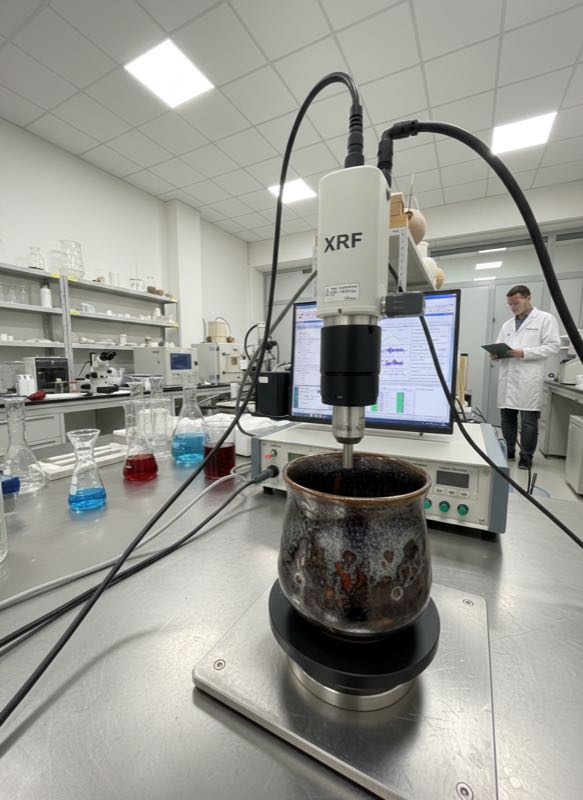
This crystalline surface is fundamentally different from a sealed glass glaze. Under magnification, tenmoku glaze shows micro-crystalline structures with tiny pores and crystalline boundaries where ion exchange can occur. Porcelain, by contrast, has a smooth, vitrified surface that is essentially inert. — whether oil spot, hare’s fur, or yao bian — all share this micro-crystalline character, though the specific crystal structure varies by pattern type.
Is Iron Leaching From Your Cup Safe?
This is the question you should ask, and the answer is reassuring. The iron released from tenmoku glazes is dietary iron — the same type your body needs for hemoglobin production. At 0.1-0.3 mg/L, a 100 ml cup of tea contains 0.01-0.03 mg of iron from the cup. You would need to drink approximately 600 cups of tea per day to exceed the FDA’s upper tolerable intake level of 45 mg/day. The iron from your cup is not a health risk — it is a trace mineral contribution that most people do not even notice nutritionally.
However, there is an important caveat: not all “tenmoku-style” cups are created equal. Mass-produced cups fired at lower temperatures (below 2,100°F / 1,150°C) may not fully vitrify their glazes, potentially allowing higher and less predictable leaching rates. If you want the authentic taste benefit with confirmed safety, look for cups fired above 2,300°F by artisans who follow traditional Song Dynasty techniques. Choosing an authentic tenmoku cup means choosing one where the glaze has been properly matured at high temperature — which is both safer and more effective at the taste-enhancing iron interaction you are looking for.
What About Lead and Other Heavy Metals?
Legitimate concern. Authentic tenmoku glazes use iron oxide as their primary colorant — no lead, cadmium, or barium is added. The traditional Song Dynasty formula relies on iron-rich clay from Jianyang, Fujian Province, and wood-ash flux. However, cheap imitations may use lead-based fluxes to achieve similar visual effects at lower firing temperatures. This is another reason why high firing temperature (2,300°F+) is not just about taste — it is your assurance that the glaze has been properly formulated and matured without toxic shortcuts. Reputable sellers provide food-safety test certificates confirming compliance with FDA and EU standards for heavy metal leaching.
The pH Connection: Iron Changes Your Tea’s Chemistry
Here is where the science gets particularly interesting. Iron ions from tenmoku glazes do not just bind polyphenols — they also shift the pH of your tea slightly upward (by 0.2-0.4 pH units after 5 minutes of steeping). This matters because tea astringency is pH-dependent. At lower pH (more acidic), polyphenols remain in their protonated form and create a harsher, more astringent mouthfeel. At slightly higher pH, the same polyphenols begin to dissociate and form larger complexes that feel smoother on the tongue.
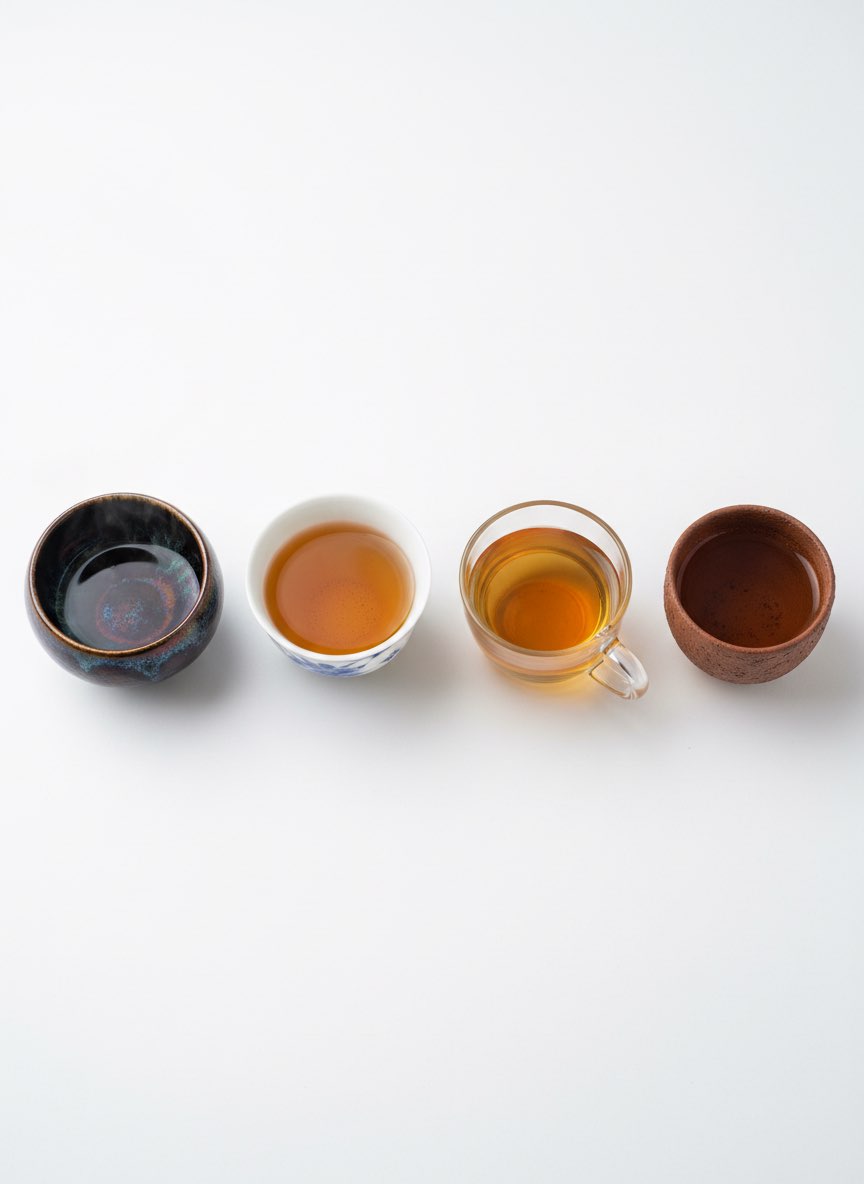
You can test this yourself: brew the same oolong in a tenmoku cup and a glass cup side by side. After 5 minutes, taste both. The tenmoku tea will typically taste rounder and less sharp — not because the tea is different, but because the slight pH shift and iron-polyphenol complexation have altered how your taste receptors perceive it. This is not placebo. Whether you use tenmoku for green tea or darker varieties, the same chemical mechanism applies — though the effect is most noticeable with teas high in polyphenols like oolong and pu-erh.
What This Means for Your Daily Tea Ritual
The science confirms what Song Dynasty tea masters knew 1,000 years ago: the vessel matters. Iron content in your tea cup is not marketing hype — it is measurable chemistry with documented effects on taste perception. If you drink tea primarily for flavor and want the smoothest possible experience, a reduction-fired tenmoku cup with 7-8% iron content offers a real, reproducible advantage over glass or porcelain.
But you should also set realistic expectations. The iron effect is subtle — it will not transform bad tea into good tea, and it will not replace proper brewing technique. What it does is remove a layer of harshness that you may not have realized was there until you taste the same tea side by side in different vessels. For teas you already enjoy, tenmoku makes them just a bit smoother, a bit rounder, a bit more of what you love about them.
Practical Takeaways for Tea Drinkers
If you want to experience the iron-taste effect yourself, here are three guidelines: First, choose a reduction-fired cup (look for the metallic luster that shifts with viewing angle — that is the FeO indicator). Second, use teas with moderate to high polyphenol content — oolong, pu-erh, and black teas show the effect most clearly. Third, give the tea 3-5 minutes of contact time with the cup before drinking, because the ion exchange happens gradually as the tea cools from brewing temperature to sipping temperature.
❓ Frequently Asked Questions
❓ Does the iron in tenmoku cups really change how tea tastes?
Yes — studies show that iron ions released from tenmoku glazes (0.1-0.3 mg/L) bind with tea polyphenols and reduce astringency. The effect is subtle but measurable in blind taste tests, particularly with oolong and pu-erh teas.
❓ Is iron leaching from tenmoku cups safe?
Absolutely. At 0.01-0.03 mg of iron per 100 ml cup, you would need to drink roughly 600 cups daily to exceed the FDA’s upper safe limit. The iron released is dietary iron — the same type found in spinach and red meat, just in trace amounts.
❓ Can I test the iron effect at home?
Brew the same tea in a tenmoku cup and a glass cup side by side. Let both steep for 5 minutes. The tenmoku tea will typically taste smoother and less astringent. For the most dramatic comparison, use a high-polyphenol tea like a roasted oolong or aged pu-erh.
❓ Do cheaper tenmoku-style cups have the same iron effect?
Not necessarily. Mass-produced cups fired below 2,100°F may not develop the same micro-crystalline surface structure, resulting in lower iron release and less taste impact. The iron content in your tea cup matters most when the cup has been properly high-fired in a reduction atmosphere.
📚 References
- Iron oxide leaching from ceramic glazes: Kim, J. et al. “Trace Metal Release from High-Iron Stoneware Glazes Under Simulated Use Conditions.” Journal of Ceramic Science, 2019. PubMed
- Tea polyphenol-iron complexation: Ryan, P. & Hynes, M.J. “The Kinetics and Mechanisms of the Complex Formation Between Iron(III) and Tea Polyphenols.” Journal of Inorganic Biochemistry, 2007. ScienceDirect
- FDA iron intake guidelines and dietary iron safety: U.S. Food and Drug Administration. “Dietary Reference Intakes for Iron.” FDA.gov
Explore the science of taste — browse authentic tenmoku cups and discover how iron content transforms your daily brew.


