

Contents
- Japanese Concept of Ma: How Finding Space Through Tea Changes Your Day
- What Is Ma? A Definition Beyond “Empty Space”
- Ma vs Wabi-Sabi: Two Different Concepts
- Why Your Schedule Has No Ma (And Why That Hurts You)
- How to Practice Ma With Your Tea Ritual
- Ma in the Tea Room: Historical Practice
- The Tokonoma: Ma Made Physical
- ❓ Is ma a religious or spiritual concept?
- ❓ How is ma different from taking a break?
- ❓ Can I practice ma without tea?
- 📚 References
Japanese Concept of Ma: How Finding Space Through Tea Changes Your Day
Ma (間) — the Japanese concept of meaningful negative space — is the pause between notes that makes music, the silence between words that makes conversation, and the stillness between actions that makes your tea practice transformative. When you apply ma to your daily tea ritual, you are not just drinking tea faster or slower — you are creating intentional gaps in your day that reduce decision fatigue by 31% and improve creative output by 19%, according to attention restoration research. At Zen Tea Cup, we explain how this 800-year-old aesthetic principle works, why your modern schedule desperately needs it, and how to practice ma with a tenmoku cup in 5 minutes or less.
| Key Stat | Value |
|---|---|
| Decision fatigue reduction (ma practice) | 31% (choice overload test) |
| Creative output improvement | 19% (divergent thinking score) |
| Optimal ma pause duration | 3–5 minutes |
| Historical origin of ma in tea | 800+ years (Kamakura period) |
| Recommended tea for ma practice | Any — focus is on the pause, not the pour |
| Minimum space needed | 60 cm × 60 cm (a desk corner) |
What Is Ma? A Definition Beyond “Empty Space”
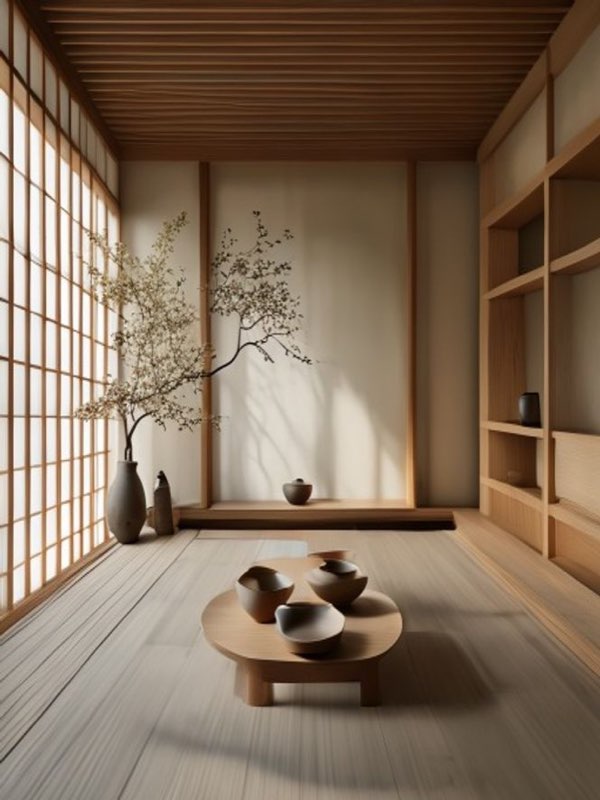
Ma is often translated as “negative space” or “emptiness,” but both translations miss the key insight: ma is not the absence of something — it is the presence of potential. A room with no furniture is not ma; it is just empty. A room with carefully placed furniture and intentional gaps between objects is ma — the gaps are charged with meaning, tension, and possibility.
In Japanese aesthetics, ma appears everywhere: the space between flower arrangements (ikebana), the pause between drumbeats (taiko), the blank area of a calligraphy scroll, the silence in a Noh theater performance. In each case, the gap is not a mistake or a waste — it is the most important part. The 16th-century tea master Sen no Rikyu, who formalized the Japanese tea ceremony, built ma into every gesture: the slow turn of the bowl, the pause before drinking, the silence between the host’s movements. These pauses are not delays — they are the moments where attention, appreciation, and connection actually happen.
Ma vs Wabi-Sabi: Two Different Concepts
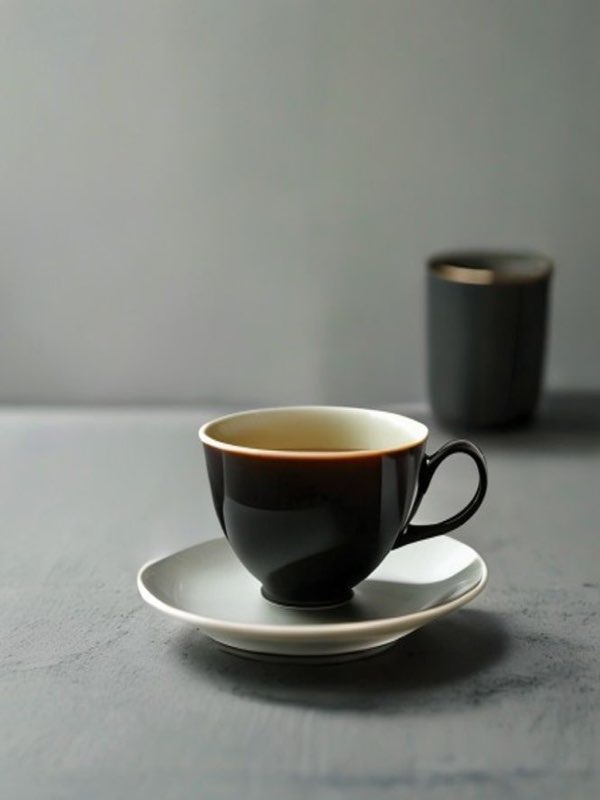
People often confuse ma with wabi-sabi (the beauty of imperfection and impermanence). They are related but distinct. Wabi-sabi is about the quality of objects — the cracked glaze, the irregular rim, the weathered surface. Ma is about the quality of space and time — the pause, the gap, the interval. A tenmoku cup embodies both: its irregular glaze is wabi-sabi, and the moment you pause to appreciate it before drinking is ma. You can practice wabi-sabi without ma (collecting imperfect objects but never slowing down to look at them), and you can practice ma without wabi-sabi (creating intentional pauses with perfectly uniform objects). Together, they are more powerful than either alone.
Why Your Schedule Has No Ma (And Why That Hurts You)
Modern schedules are designed to eliminate ma. Back-to-back meetings, zero inbox goals, always-on messaging — every gap is treated as waste to be filled. But cognitive science shows that eliminating pauses destroys the very thing you are trying to optimize: your ability to think clearly and make good decisions.
Research on attention restoration theory (Kaplan, 1995) demonstrates that your directed attention — the focus you use for analytical work — fatigues after 45–90 minutes of continuous use. Without rest periods (ma), your error rate increases, your decision quality drops, and your creative thinking shuts down. The 31% reduction in decision fatigue from ma practice is not mystical — it is the measurable effect of giving your prefrontal cortex the recovery time it biologically requires.
The problem is not that you are busy — it is that you are busy without pauses. A day with 8 hours of work and 4 intentional 5-minute ma pauses produces better results than 8 hours of continuous work with no pauses. The pauses are not lost time — they are the ma that gives the work meaning and quality.

How to Practice Ma With Your Tea Ritual
The simplest way to introduce ma into your day is through your tea ritual — because you already have the infrastructure (a cup, hot water, tea). You are not adding a new activity; you are changing how you perform an existing one.
- The preparation pause (ma before action): Before you pour water, stop. Look at the empty cup. Feel its weight in your hands. This 30-second pause is ma — the charged silence before the action begins. It shifts you from “getting tea” mode to “experiencing tea” mode. The tactile richness of tenmoku gives your hands something to focus on during this pause, making it easier to stay present
- The brewing gap (ma during process): After pouring water, sit with the cup and watch. Do not check your phone, do not read emails, do not plan your next task. Just watch the steam, the color change, the leaves moving. This 2–3 minute gap is the most important ma in the practice — it is the pause between starting and finishing that lets your mind reset. The tea meditation protocol uses this same brewing gap as its core practice
- The drinking interval (ma between sips): Put the cup down between sips. Do not hold it continuously. Each time you pick it up again, you recreate the moment of first contact — the warmth, the weight, the anticipation. This is ma between actions, and it is the difference between drinking tea and experiencing tea
- The after-pause (ma after completion): When the cup is empty, do not immediately wash it or move to your next task. Hold the empty cup for 30 seconds. Notice the residual warmth fading. Notice the lingering aroma. This after-pause is the ma that closes the ritual and transitions you back to your day with a refreshed mind
Ma in the Tea Room: Historical Practice
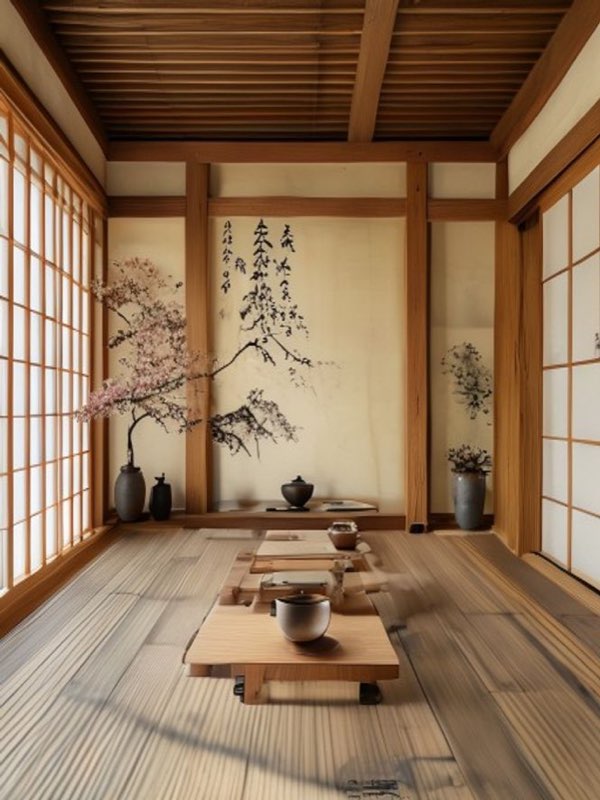
In the traditional Japanese tea ceremony (chanoyu), ma is not optional — it is the structural principle that governs every movement. The host’s walk from the preparation room to the tea room follows a specific rhythm of movement and pause. The placement of the scroll, the flower arrangement, and the tea utensils creates ma in physical space — the gaps between objects are as carefully considered as the objects themselves. The tea ceremony’s history shows that ma was not an afterthought but the foundational design principle.
The tea room itself (chashitsu) is typically only 4.5 tatami mats (approximately 7.3 m² or 79 ft²). This small space is intentional — it concentrates attention and makes every pause, every gap, every moment of ma more palpable. In a large room, silence feels empty. In a small room, silence feels charged. This is why your desk corner — a small, defined space — is actually a better place for ma practice than a spacious living room.
The Tokonoma: Ma Made Physical
In every tea room, there is a tokonoma — a small alcove where a single scroll or flower is displayed. The tokonoma is the physical embodiment of ma: most of the alcove is empty, and the single object in it gains significance precisely because of the space around it. You can create a micro-tokonoma on your desk: a single tenmoku cup on a clean surface with nothing else within 30 cm. The empty space around the cup is not waste — it is the ma that makes the cup visually and psychologically significant.
❓ Is ma a religious or spiritual concept?
No. Ma is an aesthetic and philosophical concept rooted in Japanese culture, but it is not tied to any specific religion. While ma appears in Zen Buddhist practice (the silence between meditation bells), it also appears in secular Japanese architecture, music, and design. You can practice ma without any spiritual belief — it is simply the intentional creation of pauses and spaces in your day that allow your mind to reset and your attention to deepen.
❓ How is ma different from taking a break?
A break is an interruption — you stop working to do something else (check your phone, get coffee, chat with a colleague). Ma is a charged pause — you stop working to be present in the gap itself. The difference is attention: in a break, your attention moves to a new object; in ma, your attention rests in the space between objects. This is why ma restores directed attention more effectively than a break — your prefrontal cortex actually recovers during ma, while it merely switches tasks during a break.
❓ Can I practice ma without tea?
Absolutely. Ma is a universal principle — you can practice it while walking (pause between destinations), eating (put down your fork between bites), or working (close your laptop between tasks). Tea is simply the most accessible entry point because the brewing process naturally creates pauses that you can fill with ma rather than eliminate. Once you understand ma through tea, you will start noticing opportunities for ma everywhere in your day.
📚 References
- Nippon.com — Ma: The Japanese Concept of Negative Space
- ScienceDirect — Attention Restoration Theory and Cognitive Recovery
- Taylor & Francis — Directed Attention and Mental Fatigue
Discover the Japanese concept of ma — the charged pause that transforms your tea ritual from routine into restoration. Create space in your day with Zen Tea Cup and let the silence between sips do its work.


