

Contents
- What Is the Japanese Tea Ceremony?
- A Brief History of the Japanese Tea Ceremony
- Essential Teaware for the Japanese Tea Ceremony
- Types of Tea Bowls Used in the Ceremony
- Basic Etiquette for Attending a Tea Ceremony
- How to Start Your Own Tea Practice at Home
- ❓ Frequently Asked Questions About the Japanese Tea Ceremony
- ❓ Do I need to sit seiza (on my knees) for the tea ceremony?
- ❓ What is the difference between a thin tea ceremony (usucha) and thick tea (koicha)?
- ❓ Can I use a Tenmoku bowl for everyday tea at home?
- ❓ How long does it take to learn the tea ceremony?
- 📚 References
What Is the Japanese Tea Ceremony?
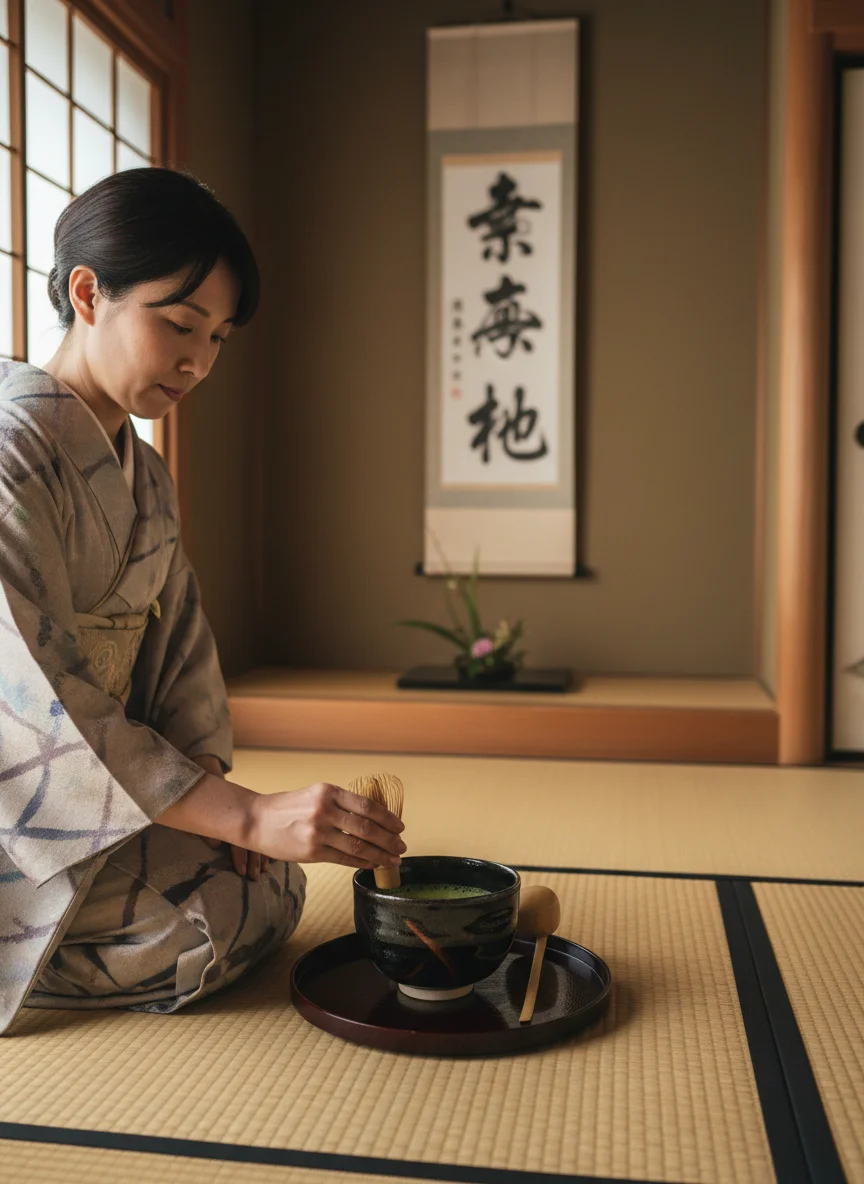
The Japanese tea ceremony — known as chanoyu (茶の湯, “hot water for tea”) or sadou (茶道, “the way of tea”) — is a meditative practice centered on the preparation and serving of matcha (powdered green tea). Far more than simply making tea, it is a choreographed ritual that embodies the core principles of Japanese aesthetics: harmony (和, wa), respect (敬, kei), purity (清, sei), and tranquility (寂, jaku). At potalastore, we believe understanding the tea ceremony is essential for anyone who truly wants to appreciate the teaware they use — because in this tradition, the bowl is not just a vessel but a participant in the ritual. at Zen Tea Cup
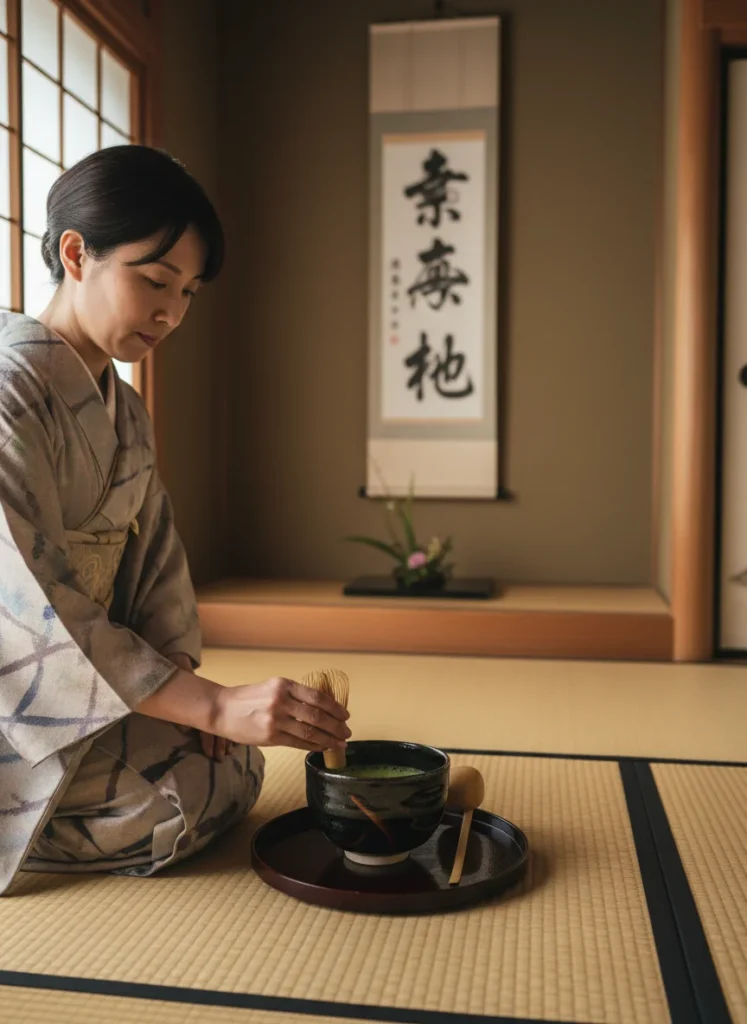
The tea ceremony traces its origins to the Song Dynasty Chinese practice of whisking powdered tea, which was brought to Japan by Buddhist monks in the 12th century. Over centuries, Japanese tea masters transformed this Chinese practice into something uniquely Japanese — a spiritual discipline that combines Zen Buddhism, architecture, garden design, calligraphy, flower arrangement, and ceramics into a single unified art form.
Today, the tea ceremony is practiced worldwide, and you do not need to be a master to begin. This guide covers the history, etiquette, and teaware you need to understand and — if you choose — start your own practice.
A Brief History of the Japanese Tea Ceremony
The history of the tea ceremony spans nearly 900 years, from its Chinese origins to its modern global practice:
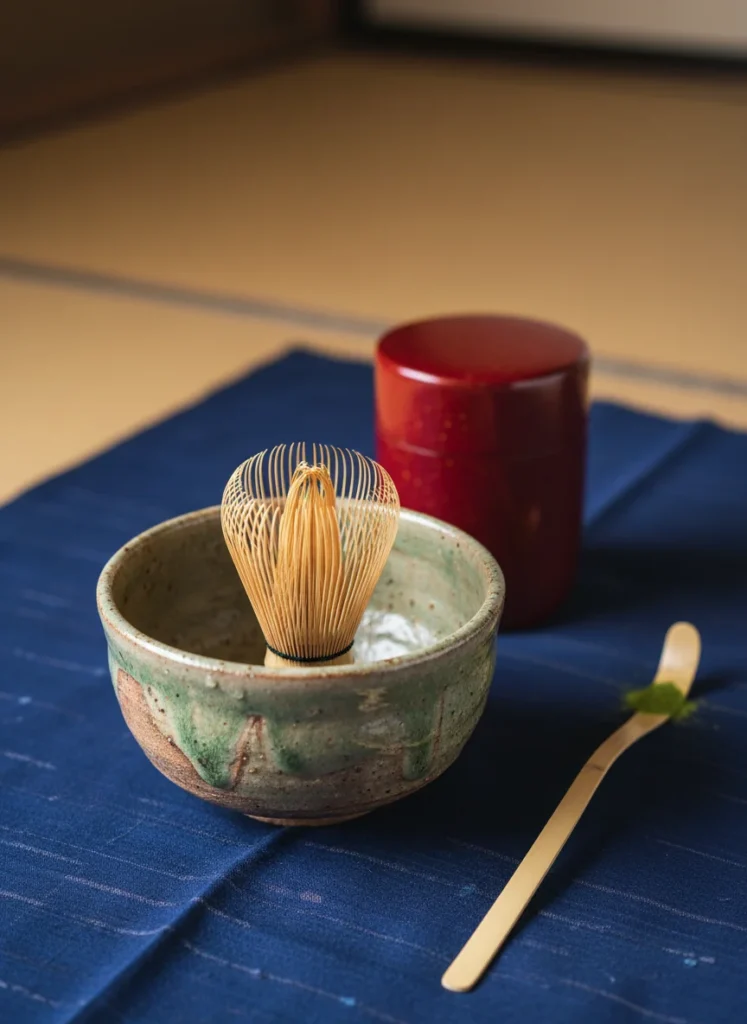
- 12th century — Introduction from China — The Zen monk Eisai (1141–1215) brought powdered tea and the Chinese method of whisking it from Song Dynasty China to Japan. Tea was initially consumed by monks for its medicinal properties and as an aid to meditation.
- 14th century — Kamakura aristocracy — Tea drinking spread from monasteries to the samurai aristocracy. Lavish tea gatherings called tocha (闘茶) involved gambling and displaying expensive Chinese tea utensils, especially Tenmoku bowls from Jian Zhan kilns.
- 15th century — Murata Jukō’s revolution — The monk Murata Jukō (c. 1423–1502) rejected the ostentatious style and introduced the concept of wabi-cha — tea that finds beauty in simplicity, imperfection, and natural materials. This was the birth of the tea ceremony as a spiritual practice rather than a social display.
- 16th century — Sen no Rikyū’s synthesis — Sen no Rikyū (1522–1591), the greatest tea master in Japanese history, refined wabi-cha into the form practiced today: tiny tea rooms, rustic utensils, and the philosophy of ichigo ichie (一期一会, “one meeting, one opportunity” — treasuring each encounter as unique and unrepeatable).
- 17th century onward — Three Sen schools — After Rikyū’s death, his descendants established the three main schools that survive today: Urasenke, Omotesenke, and Mushakōjisenke. These schools preserve and teach the ceremony’s traditions while adapting them to modern life.
The connection between Tenmoku and Japanese tea culture was established early: Song Dynasty Jian Zhan bowls were among the first and most treasured tea vessels in Japan, and they remain the most formal type of tea bowl used in the ceremony today.
Essential Teaware for the Japanese Tea Ceremony
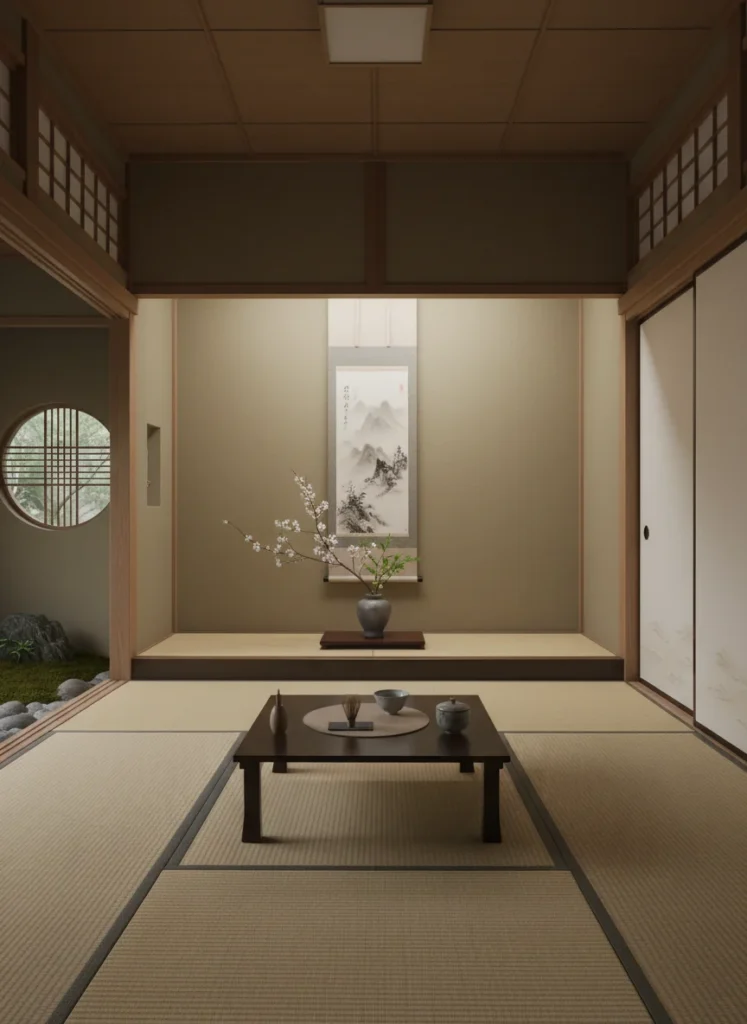
The tea ceremony uses a carefully defined set of utensils, each with a specific role and proper method of handling:
| Utensil | Japanese Name | Function |
|---|---|---|
| Tea bowl | Chawan (茶碗) | Whisking and serving matcha; the centerpiece of the ceremony |
| Tea whisk | Chasen (茶筅) | Bamboo whisk for mixing matcha with hot water |
| Tea scoop | Chashaku (茶杓) | Bamboo scoop for measuring matcha powder |
| Tea caddy | Natsume/Chaire (棗/茶入) | Container holding the matcha powder |
| Lid rest | Futaoki (蓋置) | Rest for the kettle lid during the ceremony |
| Waste water bowl | Kensui (建水) | Receiving bowl for used water and waste |
| Brazier/kettle | Furo/Kama (風炉/釜) | Heating the water for tea |
| Cloth | Chakin (茶巾) | White linen cloth for purifying the tea bowl |
Of all these utensils, the chawan (tea bowl) holds the greatest significance. The host selects a specific bowl for each gathering based on the season, the occasion, and the guests — and the bowl’s shape, glaze, and history all contribute to the atmosphere of the ceremony. Tenmoku bowls are reserved for the most formal occasions, while simpler Raku or Karatsu bowls are used for more intimate gatherings.
Types of Tea Bowls Used in the Ceremony
Understanding the hierarchy of tea bowls is essential for appreciating how the ceremony works: A typical Jian Zhan weighs between 120–180 g (4.2–6.3 oz).
- Karamono (唐物) — Chinese bowls — The most formal category, including Tenmoku (天目) bowls from Song Dynasty China. These are used for the highest-ranking guests and the most formal ceremonies. Tenmoku bowls with oil spot or hare’s fur patterns are particularly prized, as they carry the prestige of Song Dynasty Jian Zhan history.
- Kuniyaki (国焼) — Japanese bowls — Bowls made in Japan, including Raku (楽), Karatsu (唐津), Hagi (萩), and Shino (志野). These are less formal than karamono but offer a wider range of wabi-sabi aesthetics.
- Otsuboyaki (御壺焼) — Kiln-altered bowls — Bowls with natural kiln effects that make each piece unique. This category includes modern Jian Zhan and other wood-fired bowls that display natural glaze patterns.
When you attend a tea ceremony, the bowl the host selects tells you about the level of formality and the care they have taken for you as a guest. Being served in a Tenmoku bowl is the highest honor in the tea ceremony.
Basic Etiquette for Attending a Tea Ceremony
If you are invited to a tea ceremony for the first time, these are the essential points of etiquette you should know:
- Arrival — Arrive early. In the tea ceremony, timing is part of the practice. Wait in the waiting area (待合, machiai) until the host calls you.
- Purification — Before entering the tea room, wash your hands and mouth at the stone basin (蹲踞, tsukubai) in the garden. This symbolizes purification of body and mind.
- Entering the tea room — Crawl through the small entrance (躙口, nijiriguchi) — a low door that requires bowing, symbolizing that all guests are equal regardless of social rank.
- Viewing the scroll and flowers — Upon entering, go first to the alcove (床の間, tokonoma) and respectfully view the hanging scroll and flower arrangement before taking your seat.
- Receiving the tea — When the host presents the tea bowl, bow in gratitude. Pick up the bowl with your right hand, place it on your left palm. Turn the bowl clockwise twice (to avoid drinking from the front face, which faces the guest). Drink the tea in 2–3 sips. Wipe the rim where you drank with your fingers. Turn the bowl counterclockwise twice and set it down.
- Expressing appreciation — After drinking, admire the bowl. You may ask the host about its origin and history — this is expected and welcomed, as appreciating the utensils is part of the ceremony.
The most important thing is not memorizing every rule but approaching the ceremony with sincere respect and presence. A good host will guide you through any unfamiliar steps.
How to Start Your Own Tea Practice at Home
You do not need a dedicated tea room or expensive utensils to begin. Here is how to start a simple tea practice:
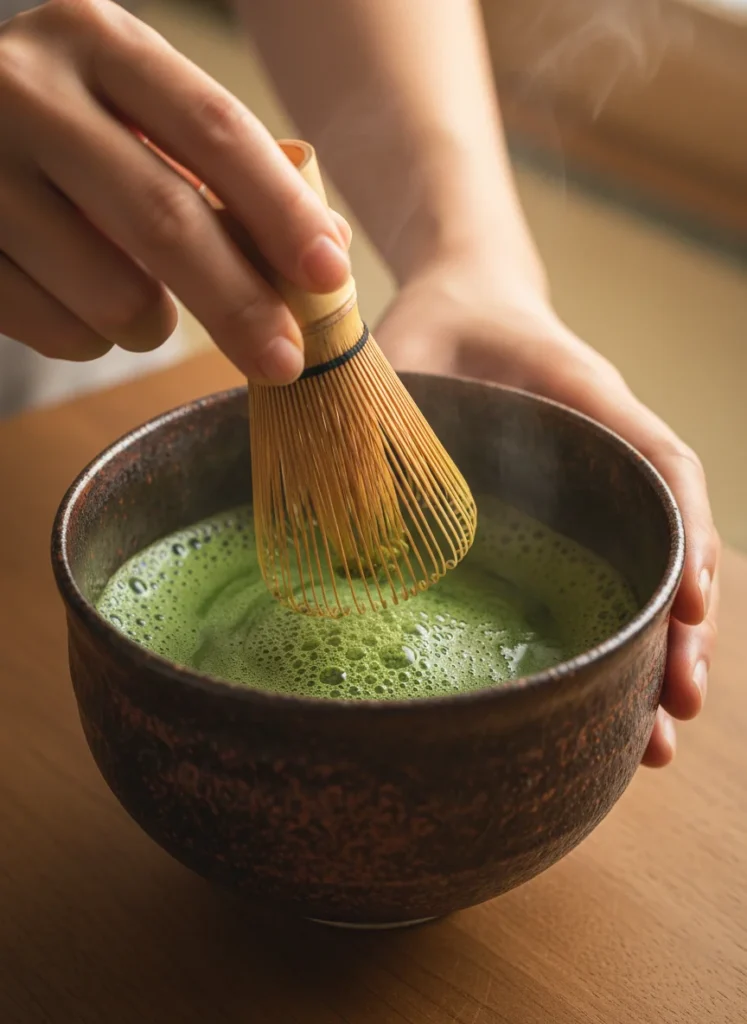
- Get a tea bowl — Start with a chawan that speaks to you. A handcrafted tea cup from our collection at potalastore can serve as your daily tea bowl — choose one with a shape and glaze that you find beautiful.
- Get a chasen (tea whisk) — A bamboo whisk is essential for properly mixing matcha. They are inexpensive and widely available online.
- Get quality matcha — Use ceremonial-grade matcha, not culinary grade. The flavor and color difference is significant.
- Practice the basic preparation — Sift 2 scoops of matcha into your bowl. Add approximately 70ml of water at 80°C (176°F). Whisk vigorously in an M-shaped motion until a fine froth forms on the surface.
- Create a ritual — Set aside a specific time and place for tea. Even 10 minutes of mindful tea preparation can become a meaningful daily practice. Focus your attention on each step — the sound of water, the color of the matcha, the warmth of the bowl in your hands.
The tea ceremony is not about perfection — it is about presence. Rikyū himself said: “Practice the ceremony with a heart of reverence, and you will understand its essence.”
❓ Frequently Asked Questions About the Japanese Tea Ceremony
❓ Do I need to sit seiza (on my knees) for the tea ceremony?
Traditionally yes, but modern practice is flexible. Many teachers allow guests to sit cross-legged or on a small stool, especially in Western settings. The important thing is to sit quietly and respectfully — the position is less important than the attitude.
❓ What is the difference between a thin tea ceremony (usucha) and thick tea (koicha)?
Thick tea (koicha) uses more matcha with less water, producing a thick, syrup-like tea. It is the more formal style and is served first, with each guest drinking from the same bowl in turn. Thin tea (usucha) uses less matcha with more water, producing a lighter, frothy tea. Each guest receives their own bowl. Most casual tea gatherings serve usucha.
❓ Can I use a Tenmoku bowl for everyday tea at home?
Absolutely. While Tenmoku bowls are the most formal choice for ceremonies, there is no rule against using them for daily tea. In fact, many tea practitioners believe that using good teaware daily deepens your appreciation of it through the yang hu (养壶) process, where the bowl develops a personal patina from regular use.
❓ How long does it take to learn the tea ceremony?
The basic preparation can be learned in a few sessions, but the tea ceremony is considered a lifelong practice. Most students study for years, and even masters continue to refine their practice. The journey is the point — there is no destination called “mastery” that you reach and stop.
📚 References
Sen no Rikyū, Nanporoku (南方録), tea records, 16th century.
Okakura Kakuzō, The Book of Tea, 1906. Classic English-language introduction to the philosophy of the tea ceremony.
Varley, Paul, and Kumakura Isao, Tea in Japan: Essays on the History of Chanoyu, University of Hawaii Press, 1989.
Pitelka, Morgan, Handmade Culture: Raku Potters, Patrons, and Tea Practitioners in Japan, University of Hawaii Press, 2006.
Updated June 2026.
Ready to begin your tea practice? Explore our curated Tenmoku collection at potalastore — bowls chosen for both ceremony and daily mindfulness. The foot ring diameter is usually around 3.5 cm (1.4 inches).


