

Contents
- What Are the Six Types of Chinese Tea?
- Green Tea: The Fresh Foundation
- White Tea: The Most Delicate
- Oolong Tea: The Most Complex
- Black Tea (Red Tea): Rich and Full-Bodied
- Pu’er and Dark Tea: The Tea That Ages Like Wine
- Yellow Tea: China’s Rarest and Most Misunderstood Type
- Which Chinese Tea Type Is Right for You?
- ❓ Frequently Asked Questions About Chinese Tea Types
- ❓ Are herbal teas like chamomile and peppermint considered Chinese tea types?
- ❓ Can I brew different tea types in the same Tenmoku cup?
- ❓ What is the difference between Chinese and Japanese green tea?
- ❓ How should I store Chinese tea?
- 📚 References
What Are the Six Types of Chinese Tea?
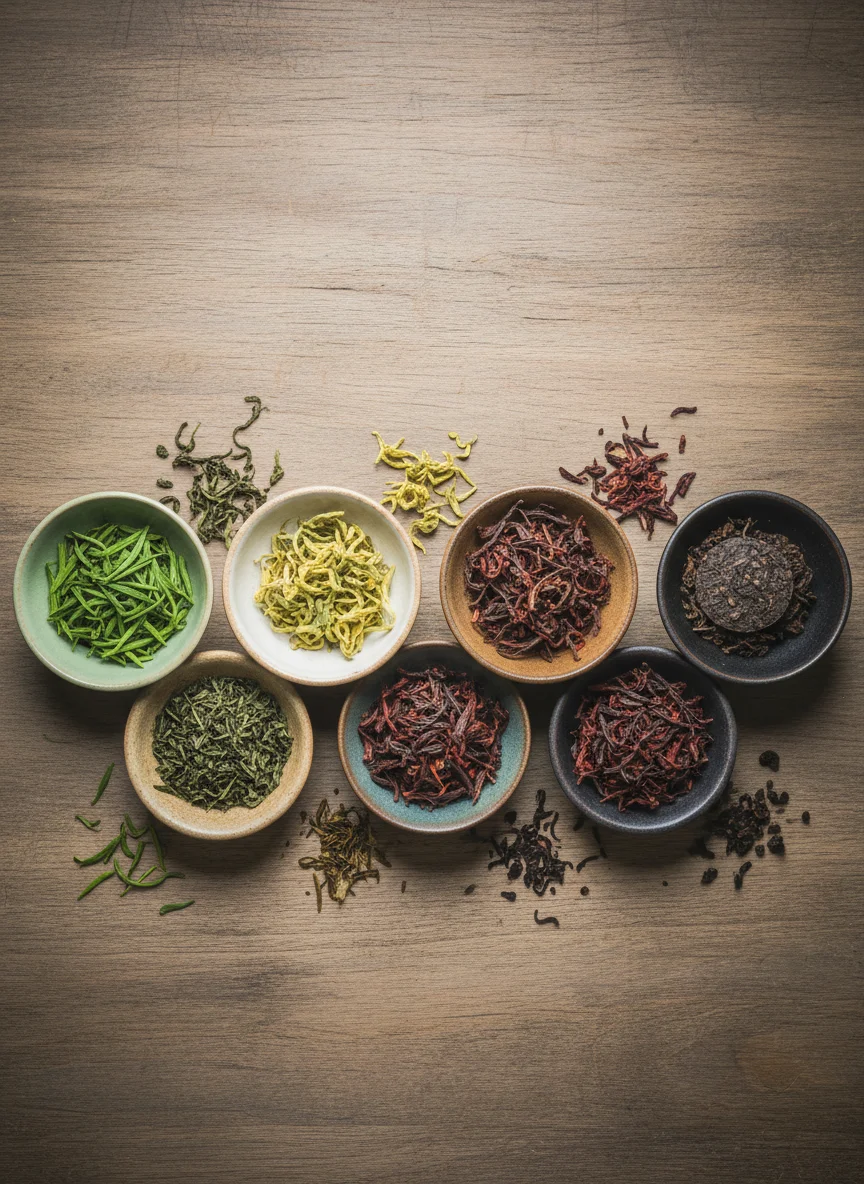
All true Chinese tea comes from a single plant species — Camellia sinensis. The six types of Chinese tea (green, white, yellow, oolong, black, and dark/Pu’er) are not different plants; they are different processing methods applied to the same leaves. The key variable that separates one tea type from another is oxidation — the degree to which the tea leaves are allowed to react with oxygen after harvesting. At potalastore, we believe understanding these six types explained here is the foundation for choosing the right tea for your Tenmoku cup, because each tea type interacts differently with the iron-rich glaze and produces a different taste experience. at Zen Tea Cup
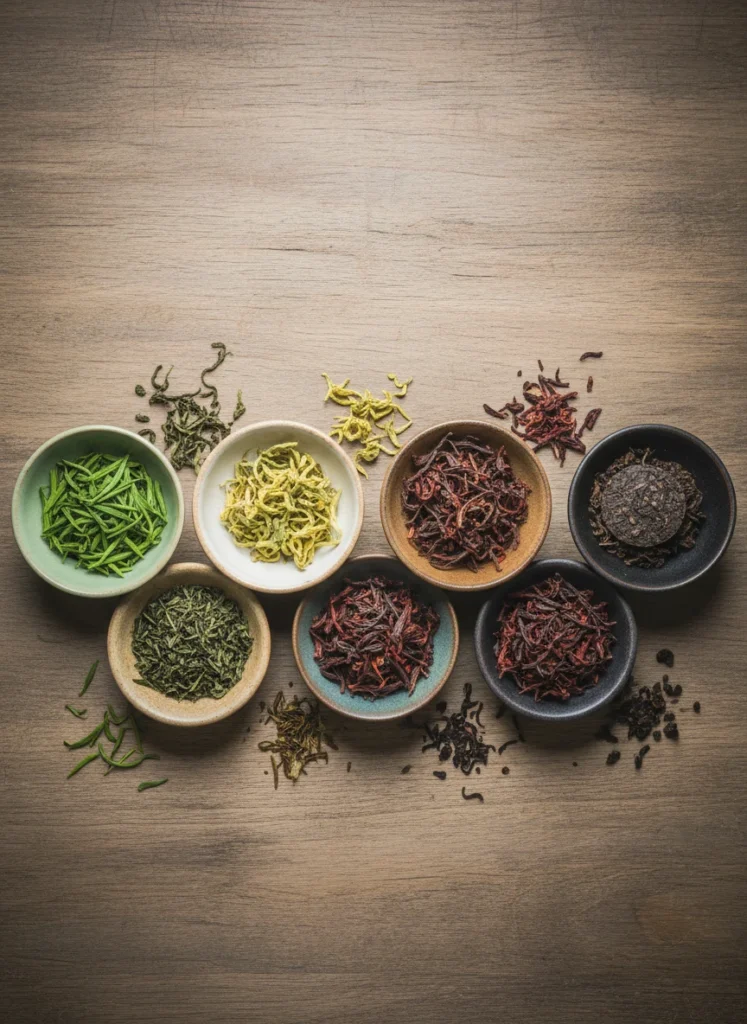
Here is the complete spectrum, from least oxidized to most oxidized:
| Tea Type | Oxidation | Key Characteristic | Best Known Example |
|---|---|---|---|
| Green Tea (绿茶) | 0–5% | Fresh, grassy, vegetal | Longjing (Dragon Well) |
| White Tea (白茶) | 5–15% | Delicate, floral, sweet | Baihao Yinzhen (Silver Needle) |
| Yellow Tea (黄茶) | 10–20% | Mellow, smooth, rare | Junshan Yinzhen |
| Oolong Tea (乌龙茶) | 15–85% | Complex, aromatic, varied | Tieguanyin, Da Hong Pao |
| Black Tea (红茶) | 95–100% | Rich, malty, full-bodied | Keemun, Dianhong |
| Dark/Pu’er Tea (黑茶) | Post-fermented | Earthy, deep, aging potential | Raw & Ripe Pu’er |
Note: In Chinese, what the West calls “black tea” is called hong cha (红茶, “red tea”), because the brewed liquid is red. Chinese hei cha (黑茶, “dark tea”) refers to post-fermented teas like Pu’er. This distinction matters when you are shopping for Chinese tea.
As you use your cup daily, you will notice the glaze becoming richer.
Green Tea: The Fresh Foundation
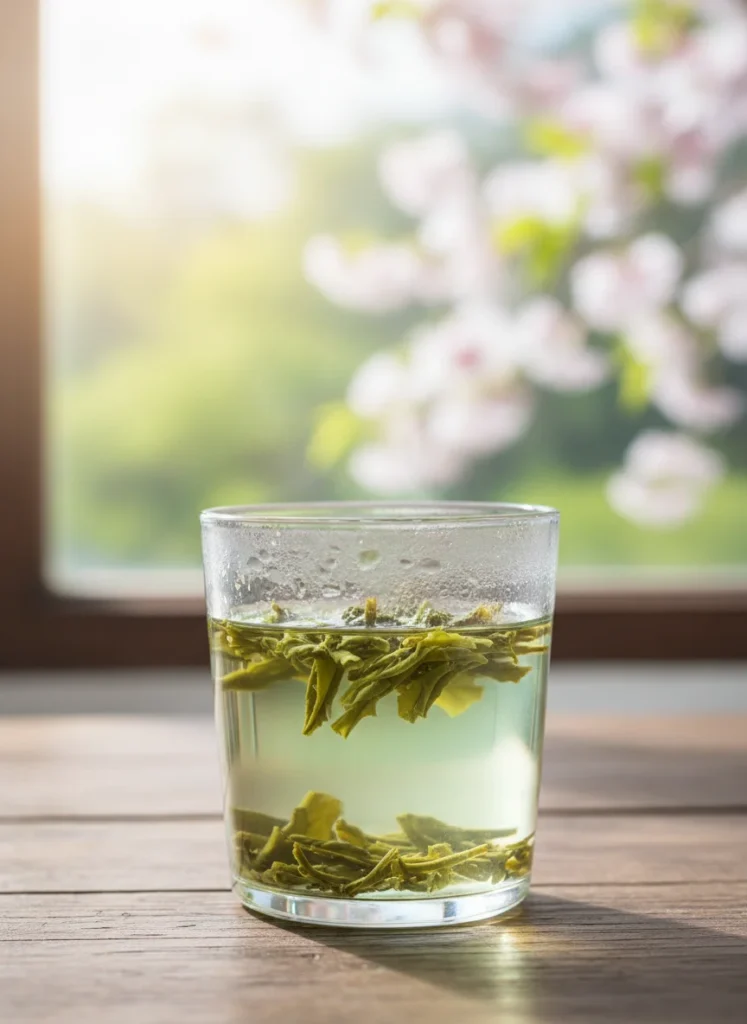
Green tea is the most widely produced and consumed tea type in China. After harvesting, the leaves are immediately heated (pan-fired or steamed) to halt oxidation, preserving their green color and fresh flavor. This “kill-green” step (杀青, sha qing) is what makes green tea green.
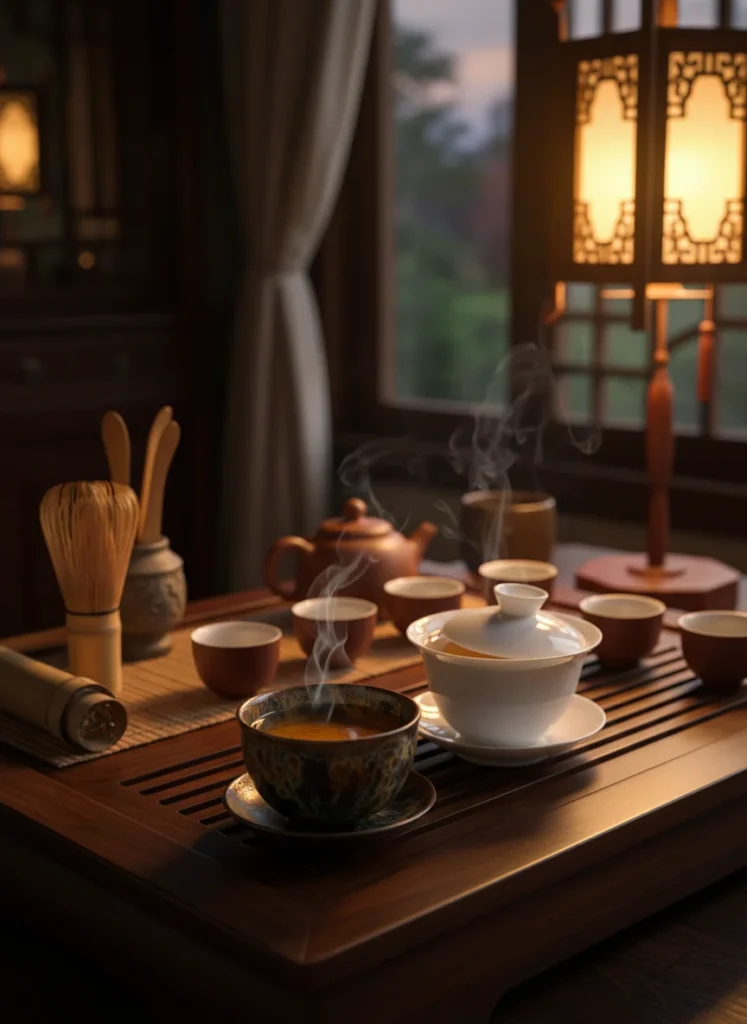
Chinese green teas are typically pan-fired, which gives them a nutty, roasted character distinct from the steamed green teas of Japan. The most famous Chinese green teas include:
- Longjing (龙井, Dragon Well) — From Hangzhou, Zhejiang. Flat, smooth leaves with a sweet chestnut flavor. The most celebrated green tea in China.
- Biluochun (碧螺春) — From Suzhou, Jiangsu. Tightly rolled leaves with a floral, fruity aroma.
- Huangshan Maofeng (黄山毛峰) — From Huangshan, Anhui. Downy buds with a clean, sweet taste.
Green tea is best brewed at 75–85°C (167–185°F) for 1–3 minutes. Over-brewing produces bitterness, so precision matters. In a Tenmoku cup, the iron content can soften green tea’s astringency, making it smoother on the palate.
White Tea: The Most Delicate
White tea is the least processed of all tea types. The leaves are simply plucked and dried in the sun or with minimal warm air — no rolling, no pan-firing, no intentional oxidation. This minimal processing preserves the tea’s natural sweetness and delicate floral notes.
White tea is graded by the proportion of buds to leaves:
- Baihao Yinzhen (白毫银针, Silver Needle) — Pure buds only. The highest grade and most expensive white tea. Delicate, sweet, with a honey-like finish.
- Bai Mudan (白牡丹, White Peony) — One bud with one or two leaves. More robust than Silver Needle, with floral and fruity notes.
- Shou Mei (寿眉, Longevity Eyebrow) — Mostly leaves. The most affordable white tea, with a fuller flavor that improves with age.
White tea is best brewed at 80–90°C (176–194°F) for 2–5 minutes. It is forgiving and can be steeped multiple times. Aged white tea (老白茶) is increasingly popular — properly stored white tea develops deeper, sweeter flavors over years, much like Pu’er.
Oolong Tea: The Most Complex
Oolong is the most diverse and technically demanding tea type. Its oxidation level ranges from 15% (nearly green) to 85% (nearly black), creating an enormous spectrum of flavors. Oolong production involves withering, bruising, partial oxidation, and roasting — a multi-step process that requires extraordinary skill and timing.
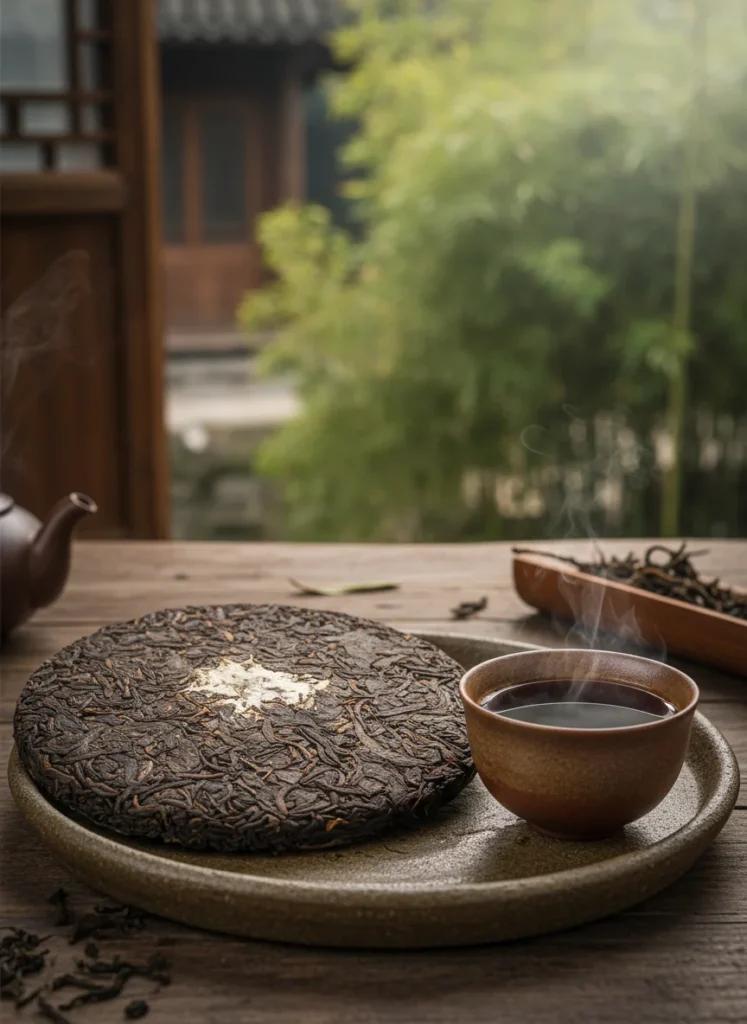
The major oolong categories include:
- Tieguanyin (铁观音, Iron Goddess of Mercy) — From Anxi, Fujian. Lightly oxidized with a floral, orchid-like aroma. One of China’s most popular teas.
- Da Hong Pao (大红袍, Big Red Robe) — From Wuyi Mountain, Fujian. Heavily oxidized and roasted with a mineral, smoky character. One of the world’s most expensive teas.
- Dancong (单丛) — From Chaozhou, Guangdong. Single-bush oolongs with intense floral and fruit aromas that mimic specific flowers or fruits.
- Taiwanese High Mountain Oolong (高山乌龙) — Grown above 1,000 meters in Taiwan. Lightly oxidized with a creamy, buttery texture and sweet aftertaste.
Oolong is the tea type that benefits most from the Gongfu Cha brewing method — multiple short infusions in a small pot or gaiwan, each revealing a different layer of flavor. The iron in Tenmoku cups enhances oolong’s mineral notes, particularly for Wuyi rock oolongs like Da Hong Pao.
Black Tea (Red Tea): Rich and Full-Bodied
Chinese black tea (hong cha, 红茶) is fully oxidized, producing deep red liquor and rich, malty flavors. China is the birthplace of black tea — the first black tea, Zhengshan Xiaozhong (Lapsang Souchong), was created in Wuyi Mountain, Fujian, in the 16th century.
Notable Chinese black teas include:
- Keemun (祁门, Qimen) — From Anhui. Smooth, wine-like, with orchid notes. One of the three most aromatic black teas in the world.
- Dianhong (滇红) — From Yunnan. Made from large-leaf varietals, producing a robust, malty cup with golden tips.
- Zhengshan Xiaozhong (正山小种) — From Wuyi Mountain. The original black tea, traditionally pine-smoked for a distinctive campfire aroma.
- Jin Jun Mei (金骏眉) — A modern luxury black tea made entirely from golden buds. Sweet, honey-like, and extremely expensive.
Black tea is best brewed at 90–95°C (194–203°F) for 3–5 minutes. It is the most forgiving tea type for beginners — harder to over-brew and consistently satisfying.
Pu’er and Dark Tea: The Tea That Ages Like Wine
Pu’er tea (普洱茶) from Yunnan Province is China’s most distinctive tea type — a post-fermented tea that improves with age, much like fine wine. Pu’er comes in two forms:
- Raw Pu’er (生普, sheng pu) — Made from sun-dried green tea leaves that are compressed into cakes and aged naturally over years or decades. Young raw Pu’er is astringent and grassy; aged raw Pu’er develops complex, layered flavors with notes of camphor, dried fruit, and forest floor.
- Ripe Pu’er (熟普, shou pu) — Invented in 1973, ripe Pu’er undergoes an accelerated fermentation process (渥堆, wo dui) that mimics decades of aging in just 45–60 days. The result is a dark, earthy, smooth tea with notes of wood, leather, and mushroom.
Pu’er is best brewed at 100°C (212°F) using the Gongfu method — multiple short infusions starting from 10 seconds. A good Pu’er can yield 15–20 infusions from a single portion. The deep, earthy character of aged Pu’er pairs beautifully with Tenmoku cups, where the iron enriches the tea’s warmth and depth.
Yellow Tea: China’s Rarest and Most Misunderstood Type
Yellow tea (黄茶, huang cha) is the rarest of the six Chinese tea types — so rare that many you have never tried it, and some do not even know it exists. The production process is similar to green tea, but with one crucial additional step: men huang (闷黄, “yellow wrapping”), where the warm, moist leaves are wrapped in cloth or paper and allowed to undergo a slow, gentle oxidation. This smothering step transforms the grassy sharpness of green tea into a mellow, smooth sweetness with a characteristic yellow-green liquor.
Yellow tea is produced in very small quantities because the men huang step is labor-intensive and requires precise timing. The most famous yellow teas include:
- Junshan Yinzhen (君山银针) — From Junshan Island in Dongting Lake, Hunan. Pure buds with a sweet, mellow flavor. One of China’s tribute teas (贡茶), historically reserved for the emperor.
- Huoshan Huangya (霍山黄芽) — From Huoshan, Anhui. Delicate buds with a chestnut sweetness and smooth finish.
- Mengding Huangya (蒙顶黄芽) — From Mengding Mountain, Sichuan. One of the oldest tea types in China, with a history dating back over 1,000 years.
Because yellow tea is so rare and the production knowledge is held by few masters, it is often counterfeited — many teas sold as “yellow tea” are actually lightly oxidized green teas. Genuine yellow tea has a distinctive mellowness that no green tea can replicate. If you can find authentic Junshan Yinzhen, it is worth trying at least once — it represents a tea tradition that nearly disappeared and is now being carefully preserved by a handful of dedicated producers.
Yellow tea is best brewed at 75–80°C (167–176°F) for 2–3 minutes. Like green tea, it is delicate and should be consumed fresh — yellow tea does not age well.
Which Chinese Tea Type Is Right for You?
Choosing a tea type depends on what you value most in your cup:
| If You Want… | Try This Tea Type | Start With |
|---|---|---|
| Fresh, light, energizing | Green tea | Longjing (Dragon Well) |
| Delicate, sweet, calming | White tea | Bai Mudan (White Peony) |
| Complex, aromatic, varied | Oolong tea | Tieguanyin or Da Hong Pao |
| Rich, malty, comforting | Black tea | Dianhong or Keemun |
| Earthy, deep, collectible | Pu’er tea | Ripe Pu’er (shou pu) |
| Rare, mellow, unique | Yellow tea | Junshan Yinzhen |
There is no “best” tea type — only the tea that suits your taste, your mood, and your moment. Many tea lovers start with green or oolong and gradually explore the full spectrum as their palate develops.
❓ Frequently Asked Questions About Chinese Tea Types
❓ Are herbal teas like chamomile and peppermint considered Chinese tea types?
No. True tea must come from Camellia sinensis. Herbal infusions (tisanes) like chamomile, peppermint, and rooibos are not tea in the technical sense, even though they are commonly called “tea.” The six Chinese tea types all derive from the same tea plant — the differences come entirely from processing.
❓ Can I brew different tea types in the same Tenmoku cup?
Yes, but with a caveat. Tenmoku cups develop a patina (yang hu) from regular use with a specific tea type. If you switch between very different teas — say, from delicate white tea to earthy Pu’er — the residual flavors may interfere. Many tea practitioners dedicate specific cups to specific tea types for this reason.
❓ What is the difference between Chinese and Japanese green tea?
Chinese green teas are pan-fired (dry heat), producing a nutty, roasted character. Japanese green teas are steamed (moist heat), producing a vegetal, seaweed-like character. The processing difference is the main distinction — both use the same plant species.
❓ How should I store Chinese tea?
Green and yellow tea: Refrigerate in airtight containers — they are fresh and degrade quickly. White and oolong tea: Store in cool, dry, dark places in sealed containers. Pu’er tea: Store in ventilated, moderate-humidity environments — Pu’er needs air circulation to age properly. Never store any tea near strong odors, as tea leaves absorb surrounding smells.
📚 References
Liu Zhonghua, Chinese Tea, China Intercontinental Press, 2010.
Heiss, Mary Lou, and Robert J. Heiss, The Tea Enthusiast’s Handbook: A Guide to the World’s Best Teas, Ten Speed Press, 2010.
Zhang Jinhua, Chinese Tea Culture, Foreign Languages Press, 2004.
Updated June 2026.
Ready to find your perfect tea? Explore our Tenmoku collection at potalastore — cups chosen to enhance every tea type from delicate white to deep Pu’er.


