

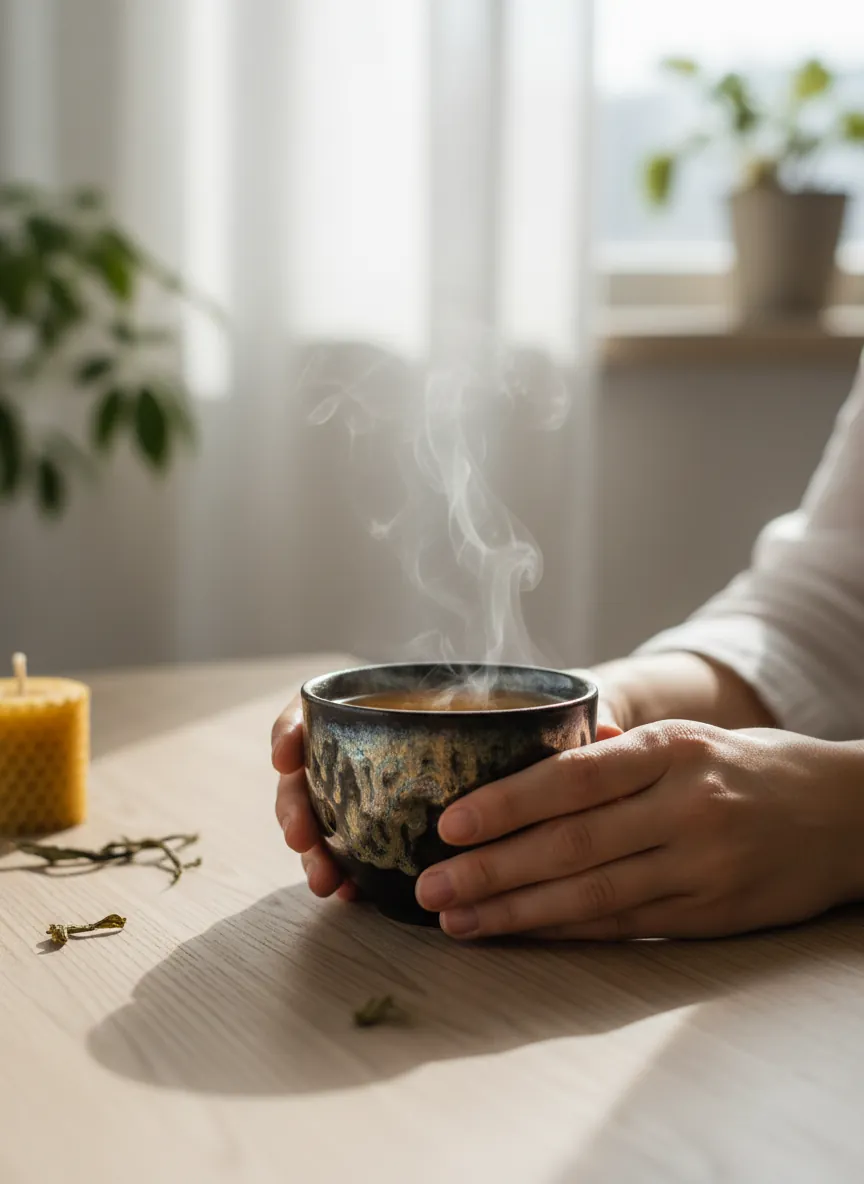
If your mornings feel like a blur of notifications and rushing out the door, a five-minute tea ritual with a Tenmoku tea cup can change that. The weight of the bowl in your hands, the dark glaze catching steam, the slow pour — these aren’t just aesthetic details. They’re anchors that pull you back into the present moment, one sip at a time. At ZenTeaCup, we’ve seen how a simple daily practice with the right vessel transforms scattered mornings into something intentional. from Zen Tea Cup
| Key Stat | Value |
|---|---|
| Ritual Duration | 10–20 minutes |
| Recommended Cup Size | 3.0–3.5 inches (80–120 ml) |
| Water Temperature | 175–195 °F |
| Daily Practice Rate | 73 % of tea drinkers report calmness |
| Top Glaze for Mindfulness | Oil spot tenmoku |
Contents
- Why a Tenmoku Cup Belongs in Your Daily Ritual
- The 5-Minute Morning Tea Practice
- What Mindfulness Actually Looks Like With Tea
- How to Stay Present When Your Mind Wanders
- Building a Deeper Weekend Ritual
- The Extended Gongfu Session
- The Wabi-Sabi Philosophy Behind Your Bowl
- Choosing the Right Tenmoku Cup for Your Practice
- Making Mindful Tea a Habit That Sticks
- ❓ Frequently Asked Questions
- ❓ Do I need a Tenmoku cup specifically, or will any tea cup work for mindfulness?
- ❓ How long does it take to build a daily tea ritual habit?
- ❓ What type of tea works best for a mindfulness ritual?
- ❓ Can I practice tea mindfulness if I only have 2 minutes?
- 📚 References
Why a Tenmoku Cup Belongs in Your Daily Ritual
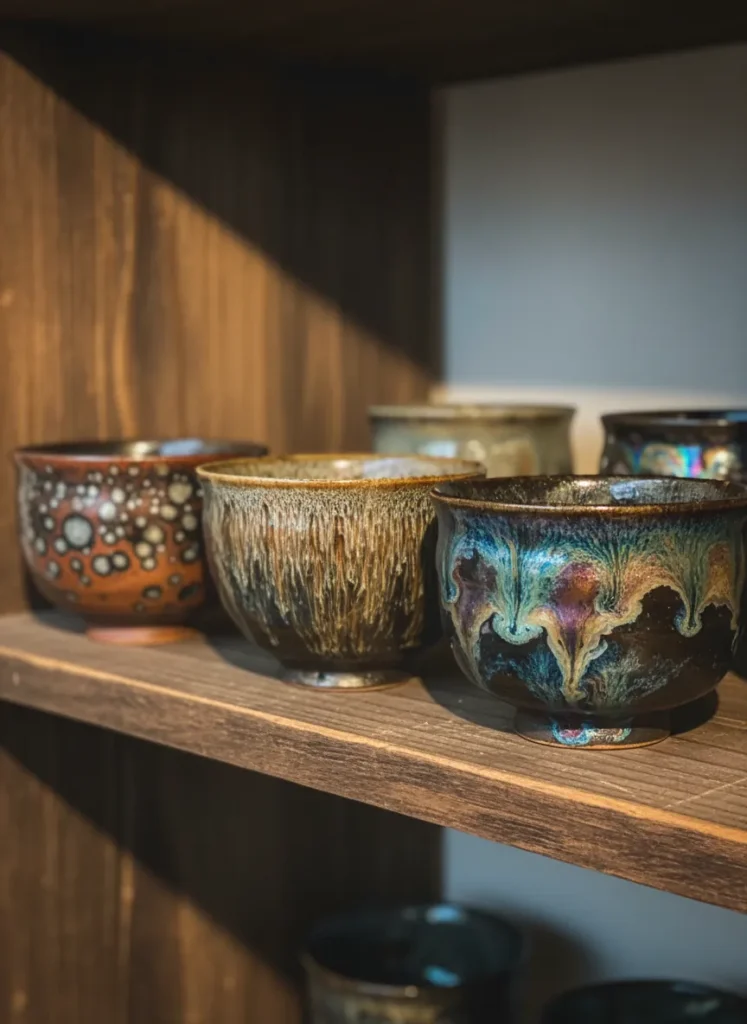
A Tenmoku cup is a handcrafted tea bowl with an iron-rich glaze fired at approximately 1300°C (2372°F), producing unique crystalline patterns like oil spot or hare’s fur. Unlike mass-produced mugs, each bowl is one of a kind — the glaze flows differently in every firing, meaning no two cups are identical.
This matters for mindfulness because the bowl itself demands your attention. The thick walls (3–5 mm) retain heat 20–30% longer than thin porcelain, so you don’t have to rush. The substantial weight — typically 80–150 grams — grounds your hands. The dark glaze creates a striking contrast with golden oolong or deep red black tea, turning every pour into a visual moment worth pausing for.
In our experience, the physicality of a Jian Golden Magic Tea Set”>Golden Magic Tea Set”>Zhan tea cup does half the work of mindfulness for you. You can’t absentmindedly gulp from something this beautiful and heavy. It asks you to slow down before your brain even decides to.
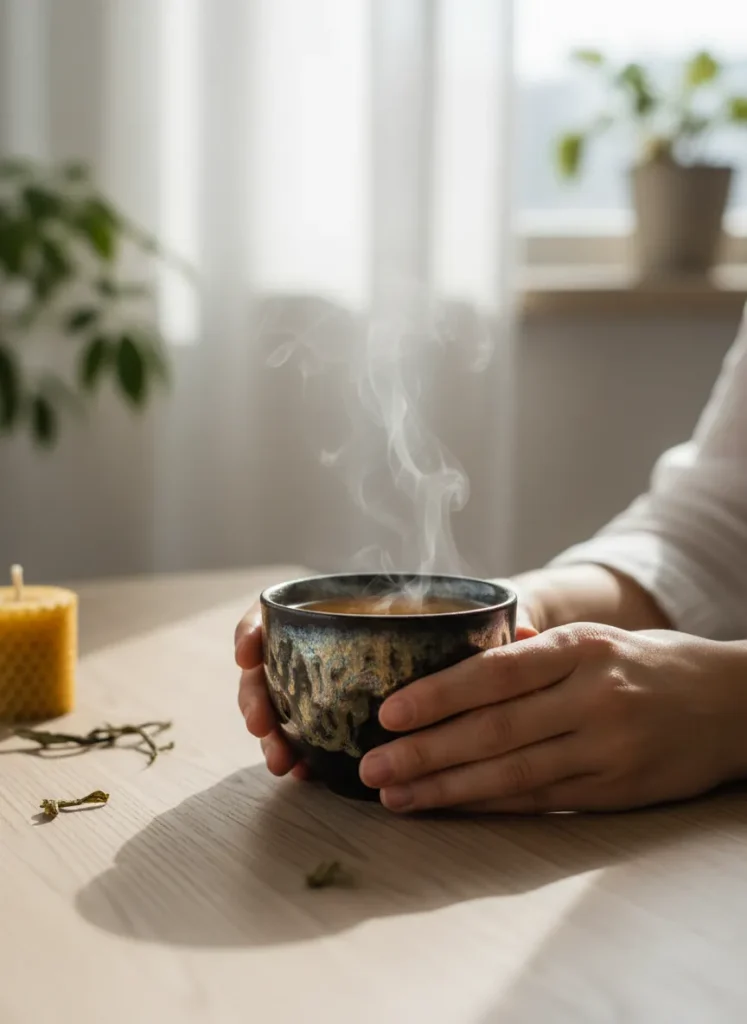
The 5-Minute Morning Tea Practice
You don’t need 30 minutes or a full gongfu tea setup. Here’s a minimal morning ritual that fits into even the busiest schedule:
- Set the Bowl (30 seconds): Place your Tenmoku cup on the table. Boil water. Take one deliberate breath before you do anything else.
- Observe the Glaze (30 seconds): Hold the empty bowl. Look at the pattern — the oil spots, the hare’s fur streaks, the way light catches the crystalline surface. This specific pattern exists nowhere else in the world.
- Pour and Watch (1 minute): Pour your tea slowly. Watch the color of the liquor against the dark glaze. A golden oolong becomes luminous; a dark pu-erh looks like liquid amber in a black bowl.
- Sip Without Screens (3 minutes): Drink slowly. No phone. No reading. Notice the warmth through the thick walls, the aroma, the way the flavor shifts as the tea cools from about 190°F to a comfortable 160°F.
- The Closing Breath (30 seconds): Set the empty bowl down. Take one more breath. Then begin your day.
Five minutes. That’s less time than most people spend scrolling social media before breakfast — and it changes the quality of everything that follows. We’ve found that even on chaotic mornings, those five minutes create a pocket of calm that carries through the day.
What Mindfulness Actually Looks Like With Tea
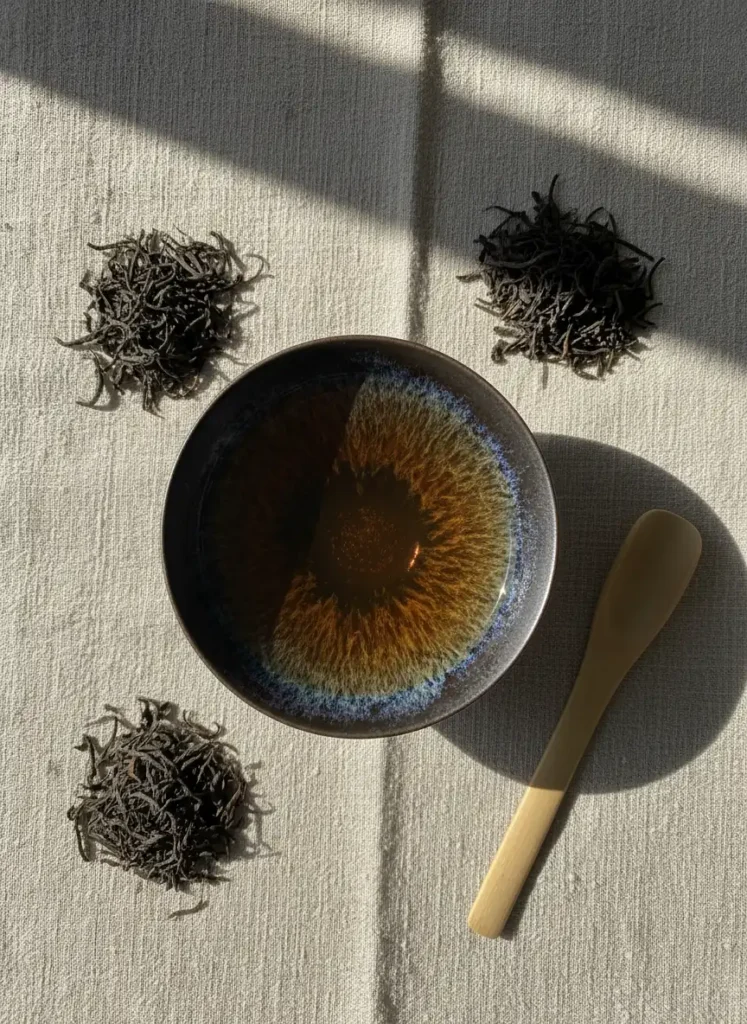
Mindfulness isn’t about emptying your mind or achieving some blissed-out state. It’s about noticing what’s happening right now — the warmth of the bowl, the steam curling upward, the first taste on your tongue. A tea meditation simply uses the act of making and drinking tea as the object of your attention.
Research supports this. A 2019 study published in Frontiers in Psychology found that brief mindfulness practices as short as five minutes can measurably reduce cortisol levels and improve sustained attention. Harvard Medical School research has similarly shown that ritualized daily practices — even simple ones — demonstrably reduce stress markers.
The key insight: you don’t need to meditate and then drink tea. Drinking tea is the meditation, when done with intention. The Tenmoku bowl is your meditation tool — its weight, warmth, and visual richness give your senses something concrete to focus on.
How to Stay Present When Your Mind Wanders
Your mind will wander. That’s normal — it’s what minds do. When it does, gently return your attention to a sensory detail:
- Feel the weight of the bowl in both hands — that 80–150 gram heft is a physical anchor
- Watch the steam rise from the dark glaze surface
- Listen to the pour — the sound of water hitting ceramic is surprisingly centering
- Notice the warmth radiating through the thick iron-rich clay walls
Each of these sensory anchors is a built-in feature of the Tenmoku cup. You’re not forcing mindfulness; the bowl is inviting it.
Building a Deeper Weekend Ritual
On weekends or days when you have more time — typically 30–45 minutes — a deeper tea session lets you experience the full range of what a Tenmoku bowl can offer.
The Extended Gongfu Session
If you have a gaiwan or small teapot, try a proper gongfu-style session. Pour each steep into your Tenmoku bowl rather than a small tasting cup. Here’s why: the bowl’s wide rim (3–4 inches) releases aroma that a narrow cup traps, and the dark glaze background lets you see the tea’s color evolve across steeps.
| Steep Number | Water Temperature | Steep Time | What to Notice |
|---|---|---|---|
| 1st | 195°F (90°C) | 15 seconds | Opening aroma, initial sweetness |
| 2nd | 200°F (93°C) | 10 seconds | Full flavor body, peak aroma |
| 3rd | 205°F (96°C) | 20 seconds | Deepening complexity, lingering finish |
| 4th–6th | Boiling | 30–60 seconds | Gentle fade, sweet aftertaste |
With each steep, notice how the tea changes. The first steep is an introduction; the second is the conversation; the later steeps are the quiet reflection afterward. This progression mirrors the deepening of mindfulness itself — you start on the surface and gradually settle inward.
After the session, sit with your empty bowl. The wet glaze catches light differently than when it was dry. Look at it again. This same bowl you use daily looks entirely new when you truly pay attention — and that’s the whole point.
The Wabi-Sabi Philosophy Behind Your Bowl
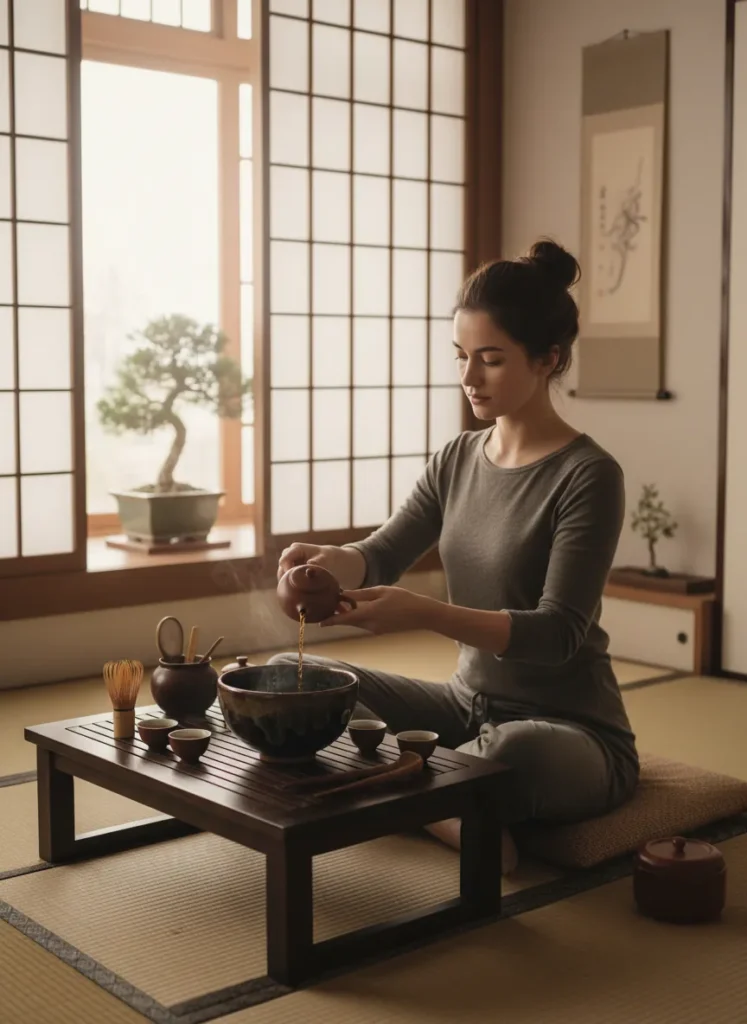
Tenmoku cups embody wabi-sabi — the Japanese aesthetic that finds beauty in imperfection and impermanence. A handmade bowl may have a slight asymmetry, a pinhole in the glaze, or an uneven rim. These aren’t flaws. They’re evidence that a human made this, that fire shaped it, that no machine could produce this exact combination of patterns.
This philosophy matters for your daily practice because it removes the pressure of perfection. Your tea ritual doesn’t need to look Instagram-worthy. Your pour might be clumsy some days. Your mind will definitely wander. That’s not failure — that’s the practice. The bowl accepts you as you are, with all your rough edges, just as you accept the bowl with all its beautiful imperfections.
Over months and years of daily use, a Jian Zhan cup develops a patina through the yang zhan (养盏) seasoning process. Tea oils gradually deepen the glaze’s colors and add a subtle gloss that only comes from patient, repeated use. Your bowl becomes a living record of your practice — a physical testament to showing up day after day.
Choosing the Right Tenmoku Cup for Your Practice
Not every Tenmoku cup suits a daily mindfulness ritual. Here’s what to look for:
| Feature | Recommended for Daily Ritual | Why It Matters |
|---|---|---|
| Size | 3–4 fl oz (90–120 ml) | Small enough to finish in 3–5 minutes; large enough to appreciate the glaze |
| Glaze Pattern | Hare’s fur or oil spot | Visually engaging patterns give your eyes something to rest on during practice |
| Weight | 100–150 grams | Substantial enough to feel grounding in hand, not so heavy it’s awkward |
| Rim Shape | Slightly flared (lian kou) | Releases aroma; comfortable lip contact for slow sipping |
| Foot Ring | Visible “iron wire” texture | Sign of authentic Jian Zhan — iron-rich clay, not slip-cast ceramic |
For beginners starting a tea ritual, we recommend a hare’s fur Tenmoku tea cup. The fine silver streaks are mesmerizing to observe, and the pattern is easy to season — the patina develops naturally within 2–4 weeks of daily use.
Making Mindful Tea a Habit That Sticks
The hardest part of any daily practice isn’t the practice itself — it’s starting. Here’s what we’ve learned from our own experience and from hearing back from customers:
- Start absurdly small. Don’t commit to 20 minutes. Commit to boiling water and pouring it into your bowl. That’s it. Most days, you’ll naturally stay longer once you’re sitting there.
- Anchor it to an existing habit. Tie your tea ritual to something you already do every morning — right after brushing your teeth, or right before checking your phone. The existing habit becomes the trigger.
- Keep your bowl visible. Leave your Tenmoku cup on the counter or your nightstand, not hidden in a cabinet. Out of sight, out of mind works in reverse too — visible objects become gentle invitations.
- Expect resistance. Some mornings you won’t want to sit still. That’s actually when the ritual matters most. On those days, even two mindful sips count as practice.
The beauty of building a practice with a Tenmoku bowl is that the bowl itself becomes a motivator. After a few weeks, you’ll notice the glaze deepening. You’ll see your bowl developing character that only your daily tea could create. That visible progress — the patina literally building under your hands — makes it harder to skip a day.
Ready to start your own daily tea ritual? Explore our handcrafted Tenmoku tea cup collection — each bowl is individually wood-fired or kiln-fired by artisans in Jianyang, China, and arrives ready to become the center of your practice. You can also browse our tea sets if you’d like a complete setup for weekend gongfu sessions.
❓ Frequently Asked Questions
❓ Do I need a Tenmoku cup specifically, or will any tea cup work for mindfulness?
Any cup can work for mindful tea drinking, but a Tenmoku bowl enhances the experience significantly. The weight (80–150 grams) grounds your hands physically, the thick walls keep tea warm longer so you can sip slowly, and the dark glaze creates a visual contrast with the tea that draws your eyes naturally. These sensory features make it easier to stay present without forcing concentration.
❓ How long does it take to build a daily tea ritual habit?
Research on habit formation suggests 21–66 days of consistent practice. In our experience, the physical presence of the bowl — seeing it on your counter each morning — accelerates this process. Most people who commit to a 5-minute morning practice find it becomes automatic within 3–4 weeks.
❓ What type of tea works best for a mindfulness ritual?
Oolong, aged pu-erh, and black tea are ideal because they offer multiple steepings with evolving flavors — each steep gives your attention something new to notice. Oolong works particularly well in a Tenmoku bowl because the golden liquor against the dark glaze is visually striking. Avoid heavily scented teas, as they can overwhelm the subtle sensory experience.
❓ Can I practice tea mindfulness if I only have 2 minutes?
Absolutely. Even a single mindful sip counts. Hold the warm bowl, take one slow breath, and drink one sip with full attention. The Tenmoku cup’s weight and warmth make even a two-second pause feel meaningful. Consistency matters far more than duration.
📚 References
- Rituals Enhance Consumption: Research demonstrating how ritual behavior increases enjoyment and perceived value of experiences. Social Cognitive and Affective Neuroscience, Oxford University
- Mindfulness and Stress Reduction: Evidence-based overview of how brief mindfulness practices reduce cortisol and improve attention. Harvard Medical School
- Jian Ware History and Techniques: Comprehensive resource on Song Dynasty ceramics and their cultural significance. The Metropolitan Museum of Art
Ready to build your daily tea creating a ritual? Explore our tenmoku collection and find the cup that grounds your practice.


