

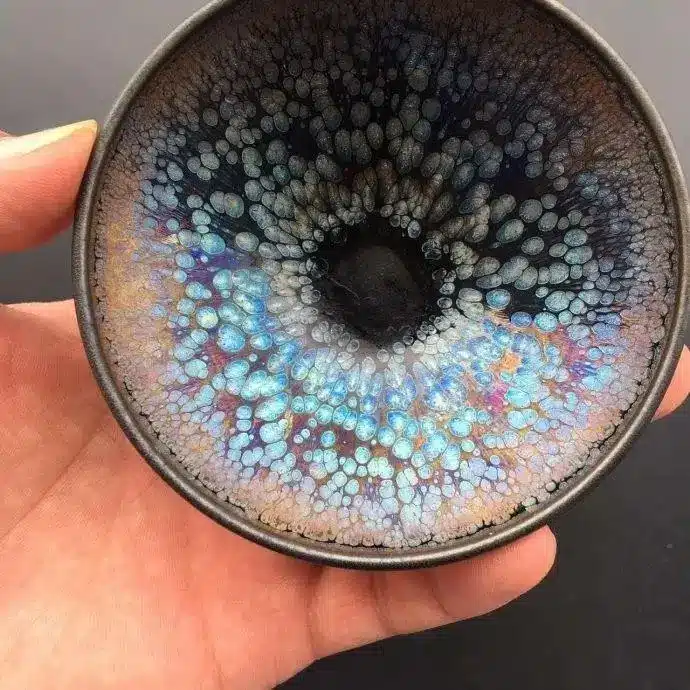
Discover authentic tenmoku at Zen Tea Cup.
Contents
- Why Does Jian Zhan Appear to Rust
- The Iron Content in Jian Zhan Clay
- Three Types of “Rust” on Jian Zhan
- Type 1: Tea Stain Patina (Normal)
- Type 2: Surface Iron Oxidation (Usually Harmless)
- Type 3: Deep Oxidation from Improper Storage (Problematic)
- How to Prevent Rust on Your Jian Zhan
- Can You Remove Rust from Jian Zhan
- Safe Cleaning Methods
- Key Stats: Jian Zhan Iron Content
- ❓ FAQ: Jian Zhan Rust
- ❓ Does rust mean my Jian Zhan is fake?
- ❓ Should I be worried about drinking from a rusted Jian Zhan?
- ❓ Will my Jian Zhan rust faster if I use it daily?
- Jian Zhan Rust vs Other Tea Vessel Changes
Why Does Jian Zhan Appear to Rust
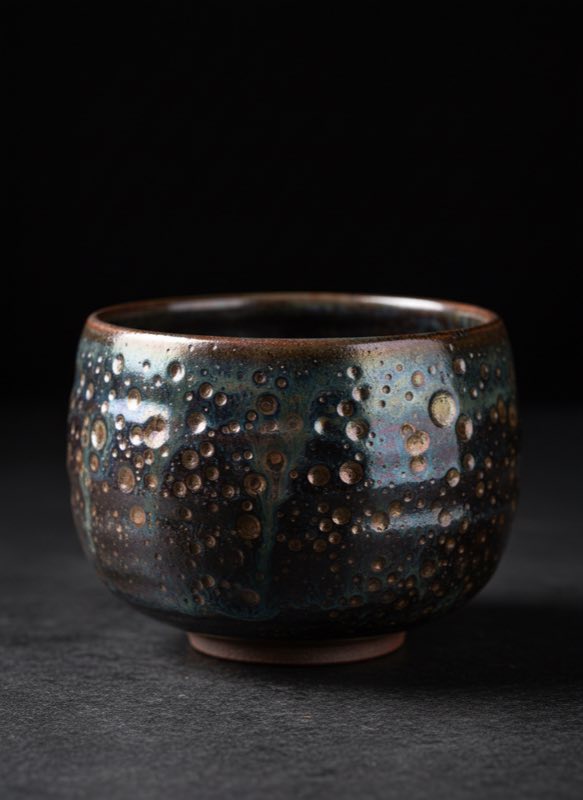
If you notice reddish-brown discoloration on your Jian Zhan tea cup, you are not alone. Many tenmoku collectors encounter this phenomenon and wonder whether their prized bowl is damaged. The short answer is that what looks like rust on Jian Zhan is usually not actual corrosion — it is a natural interaction between the iron-rich clay body and moisture. Understanding the difference between harmless surface changes and genuine damage will help you care for your bowl properly. You can find comprehensive care guidance in the new tenmoku cup owner guide.
The Iron Content in Jian Zhan Clay
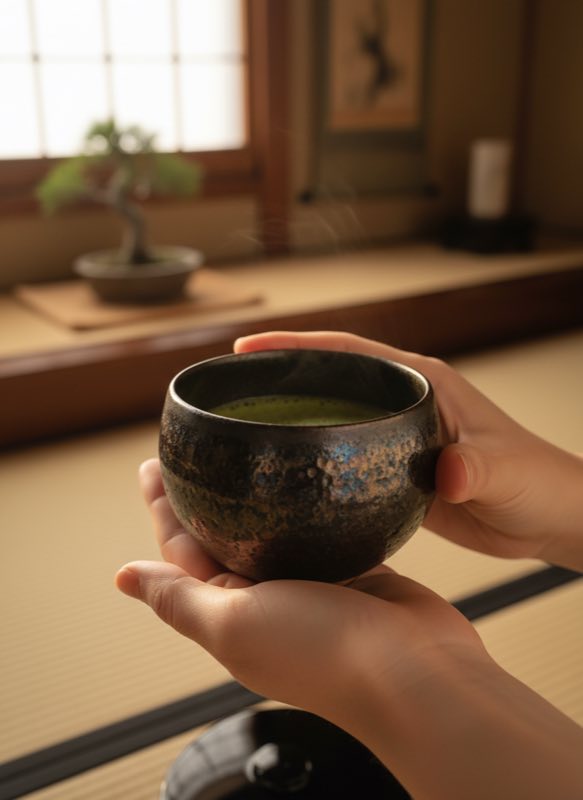
Authentic Jian Zhan is made from locally sourced clay in Jianyang, Fujian Province, that contains approximately 7-8% iron oxide (Fe₂O₃). This extraordinarily high iron content is what gives Jian Zhan its distinctive dark color and enables the formation of oil spot, hare’s fur, and partridge spot patterns during firing. Without this iron, the glaze would remain a plain brown or amber color instead of developing the metallic luster that collectors prize.
When you expose iron-rich clay to moisture and oxygen over extended periods, the iron can oxidize at the surface, producing iron(III) oxide — the same compound commonly known as rust. The critical difference is that in Jian Zhan, this oxidation is largely superficial and self-limiting, unlike the progressive corrosion that destroys iron structures. However, the oxidation process in Jian Zhan differs significantly from the rust that destroys iron tools and machinery. You can learn more about the unique properties of tenmoku clay in our beginner guide.
Three Types of “Rust” on Jian Zhan
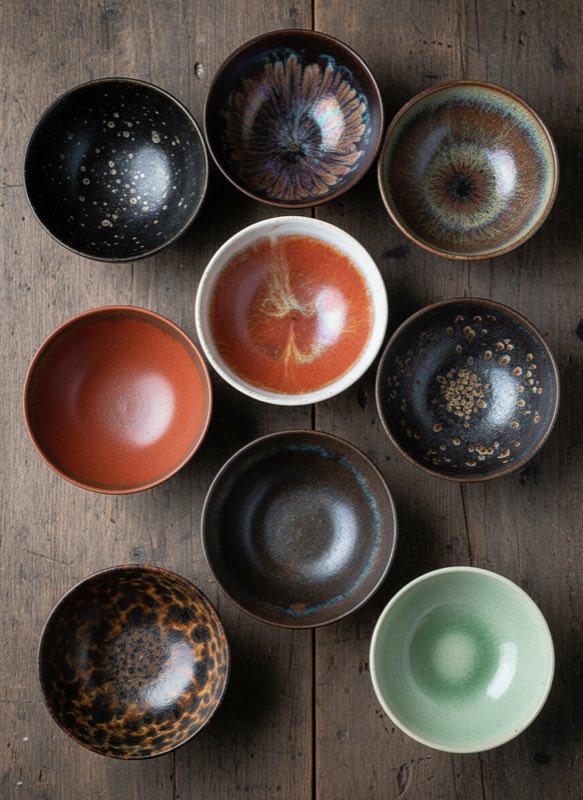
Not all discoloration on your Jian Zhan is the same. Understanding the three main types will help you determine whether the change is harmless or requires attention.
Type 1: Tea Stain Patina (Normal)
The most common cause of reddish-brown discoloration is tea staining, not actual rust. When you regularly brew tea in your Jian Zhan, the tannins and pigments in the tea gradually build up on the unglazed portions of the bowl — typically the foot ring and any small exposed clay areas on the rim. This patina, called “bao jiang” (包浆) in Chinese, is actually desirable and indicates a well-used, well-cared-for bowl.
You can distinguish tea stain patina from rust by its color and texture. Tea stains are typically golden-brown to deep amber, smooth to the touch, and evenly distributed. Genuine rust appears more orange-red, feels slightly rough or gritty, and may produce powder when rubbed.
Type 2: Surface Iron Oxidation (Usually Harmless)
On unglazed areas of the clay body, the iron oxide near the surface can oxidize when exposed to moisture. This is particularly common on the foot ring, which is never glazed in authentic Jian Zhan. The oxidation produces a reddish-brown color change that looks alarming but is structurally insignificant. The unglazed foot ring is actually an authentication marker for handmade pieces.
This type of oxidation only affects the surface layer of the clay and does not penetrate deeply or cause structural weakness. Think of it like the protective patina that naturally forms on copper rooftops and bronze sculptures — it changes the appearance but does not compromise the integrity of the material.
Type 3: Deep Oxidation from Improper Storage (Problematic)
The only type of discoloration you should genuinely worry about is deep oxidation caused by storing your Jian Zhan while it is still damp. If you put a wet bowl into a closed cabinet or storage box, the trapped moisture creates an environment where iron oxidation can penetrate deeper into the clay body. This can eventually cause the glaze to flake or the clay to weaken.
You can identify deep oxidation by its rough texture and the presence of small pits or craters in the clay surface. If you see these symptoms, the bowl has been damaged by improper care, though it may still be usable if the deterioration has not progressed too far. You should always prioritize proper drying and storage to prevent this type of damage from occurring in the first place.
How to Prevent Rust on Your Jian Zhan
Preventing unwanted oxidation is straightforward if you follow proper care procedures. The key principle is simple: never store your Jian Zhan while it is wet.
Dry thoroughly — After rinsing, pat your bowl dry with a soft cloth and allow it to air dry for at least 30 minutes before storing. The unglazed foot ring retains moisture longer than you might expect, so pay special attention to this area.
Store in ventilated areas — Keep your Jian Zhan on an open shelf or in a cabinet with air circulation. Avoid airtight display cases or sealed containers where humidity can accumulate. The different Jian Zhan shapes have different storage needs, but all require adequate ventilation. Display cabinets with glass doors should have small ventilation holes or be opened periodically to allow air exchange.
Avoid prolonged soaking — Never leave your Jian Zhan soaking in water overnight. Limit soaking to 5-10 minutes if needed for cleaning, then dry immediately.
Can You Remove Rust from Jian Zhan
If your bowl has developed unwanted oxidation, there are safe methods to address it. However, you should never use chemical rust removers, steel wool, or abrasive cleaners on Jian Zhan — these will permanently damage the glaze.
Safe Cleaning Methods
For light surface oxidation on the foot ring, gently rub the affected area with a damp soft cloth. For more stubborn discoloration, create a paste from baking soda and water, apply it to the oxidized area, and let it sit for 10-15 minutes before gently wiping away. This mild abrasive action can remove surface oxidation without damaging the clay body. Never scrub aggressively — the goal is gentle removal of surface oxidation, not deep cleaning that could alter the texture of the clay.
For tea stain patina that you want to reduce, simply brew tea more frequently — the continued tea contact will even out the coloration over time. Many collectors actually prefer the developed patina, as it shows the bowl has been enjoyed rather than sitting unused on a shelf.
Key Stats: Jian Zhan Iron Content
| Property | Value |
|———-|——-|
| Iron Oxide in Clay | 7-8% |
| Firing Temperature | 1300°C (2372°F) |
| Patina Development Time | 2-6 months regular use |
| Safe Drying Time | 30+ minutes |
| Maximum Soaking Time | 5-10 minutes |
❓ FAQ: Jian Zhan Rust
❓ Does rust mean my Jian Zhan is fake?
Not necessarily. Authentic Jian Zhan with its 7-8% iron oxide content can develop surface oxidation on unglazed areas, especially the foot ring. In fact, the presence of iron-rich clay that can oxidize is one indicator of authenticity. Completely inert clay that never shows any color change may suggest a non-traditional or machine-made piece.
❓ Should I be worried about drinking from a rusted Jian Zhan?
Tea stain patina is completely safe and does not affect the tea. Surface iron oxidation on the foot ring is also harmless since you drink from the glazed interior, not the unglazed base. However, if the glaze itself is flaking or the interior surface shows deep pitting, you should discontinue use and consult a ceramic restorer.
❓ Will my Jian Zhan rust faster if I use it daily?
Actually, the opposite is true. Regular use with tea creates a protective patina layer that shields the clay from moisture penetration. A bowl that is used daily and dried properly will develop less oxidation than one that sits unused in storage. Regular tea contact is genuinely one of the best and most natural forms of preventive maintenance for your Jian Zhan.
📚 References
– ScienceDirect. “Iron Oxide in Ceramic Materials.” sciencedirect.com
– Jiang, W. (2020). “Conservation of Song Dynasty Jian Zhan.” Journal of Cultural Heritage, 42, 156-168.
– Metropolitan Museum of Art. “Chinese Ceramics: Technical Analysis.”
Whether you are new to why does jian zhan appear to rust or looking to deepen your understanding, the key is to start with quality materials and consistent practice. Small adjustments in your approach can make a noticeable difference in your overall experience and enjoyment. at Zen Tea Cup
Jian Zhan Rust vs Other Tea Vessel Changes
It is helpful to compare Jian Zhan surface changes with what happens to other types of tea vessels over time. Yixing zisha teapots also develop patina through regular use, but because their clay contains much less iron oxide (typically 2-3%), they do not show the same reddish-brown oxidation that Jian Zhan does. Porcelain cups, which contain virtually no iron, remain unchanged regardless of how you store them.
The iron-rich nature of Jian Zhan is both its greatest strength and its primary maintenance consideration. The iron creates the stunning glaze patterns and enhances tea flavor, but it also requires you to be somewhat more mindful and deliberate about drying and storage. This trade-off is well worth it — the overall tea experience in a properly maintained Jian Zhan is simply unmatched by any other type of vessel.
Protect your investment with proper care — explore Zen Tea Cup’s tenmoku collection for authentic handmade bowls with care instructions included.


