

Contents
- How Tenmoku Tea Cups Change Color Over Time
- What Causes Tenmoku to Change Color?
- The Stages of Patina Development
- How Different Teas Affect Patina Differently
- Can You Speed Up Patina Development?
- How to Preserve and Protect Your Patina
- ❓ Frequently Asked Questions About Tenmoku Color Change
- ❓ Is patina development a good thing?
- ❓ Does every Tenmoku cup develop patina?
- ❓ How long does it take to see noticeable color change?
- ❓ Can I remove unwanted patina?
- ❓ Does patina affect the taste of tea?
- Water Chemistry and Its Effect on Patina
- 📚 References
How Tenmoku Tea Cups Change Color Over Time
One of the most fascinating aspects of owning a Tenmoku tea cup is watching it change. When you first receive a new Jian Zhan, the glaze is dramatic but static — the oil spots shine, the hare’s fur streaks are sharp, and the surface feels glassy and new. But over months and years of daily tea drinking, something remarkable happens: the cup develops a warm, living luster called yang hu (养壶, “nourishing the vessel”). The color deepens, the surface softens, and the cup becomes uniquely yours. At potalastore, we consider this patina development one of the most beautiful aspects of Tenmoku ownership — a visual record of every cup of tea you have ever drunk. at Zen Tea Cup
What Causes Tenmoku to Change Color?
The color change in Tenmoku is caused by five interacting factors:
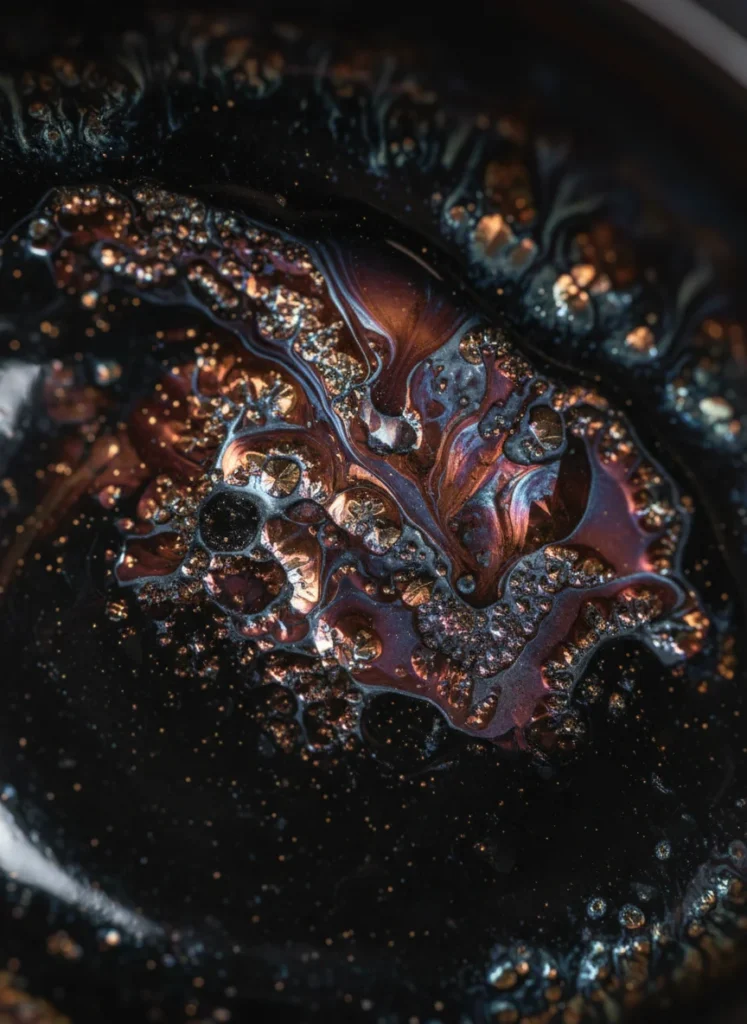
- Tea oil absorption — Every cup of tea deposits microscopic amounts of tea oils, polyphenols, and amino acids on the glaze surface. Over hundreds of infusions, these compounds form an ultra-thin organic film that subtly alters how light reflects off the glaze. This is the primary cause of the warm, amber luster that develops with use.
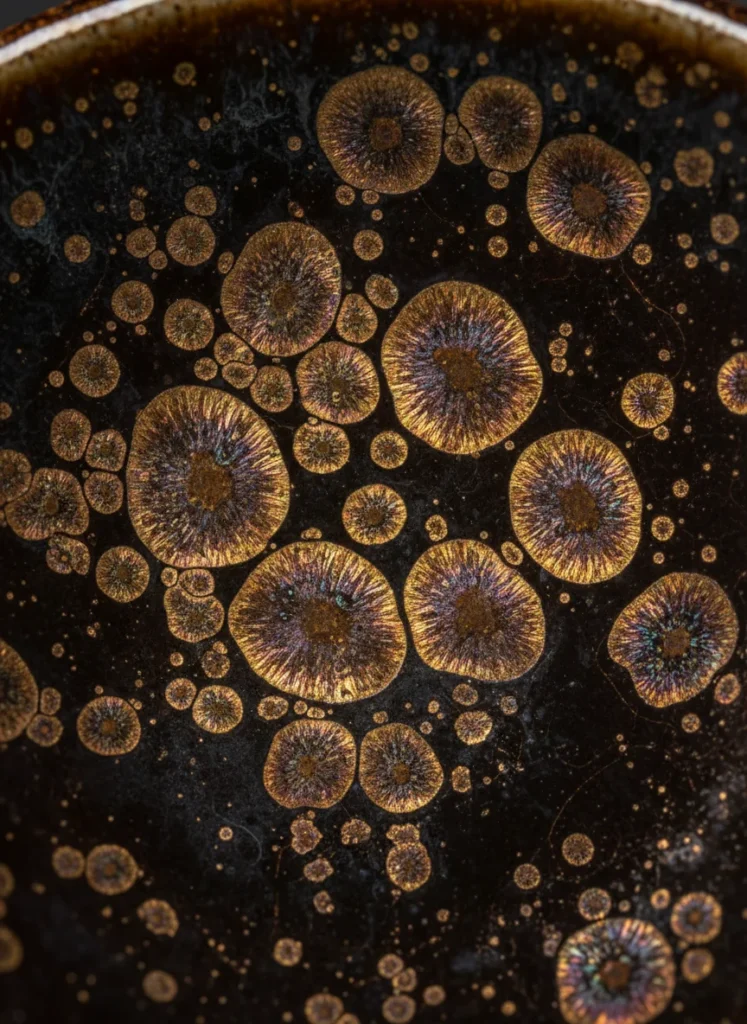
- Iron oxidation — The iron oxide in the glaze (both Fe²⁺ and Fe³⁺) continues to interact with atmospheric oxygen and the organic compounds in tea. Over time, some surface iron migrates and re-crystallizes, creating subtle color shifts — particularly in oil spot patterns, which can develop a warmer, more golden tone.
- Thermal cycling — Each time you pour hot tea into the cup and it cools, the glaze undergoes microscopic expansion and contraction. Over thousands of cycles, this creates hairline surface changes that affect how light scatters, contributing to the softening of the glaze’s initially glassy appearance.
- Mineral deposition — The minerals in your tea (and in your water) gradually deposit on the glaze surface. Calcium, magnesium, and trace minerals from hard water can create a subtle film that alters the glaze’s color temperature — typically making it slightly warmer.
- UV exposure — If your cup is displayed in sunlight, UV radiation can cause subtle photo-oxidation of both the iron compounds and the organic patina. This is generally a minor factor but can cause slight color shifts over years of display.
The combined effect of these factors is a slow, gradual transformation that makes each Tenmoku cup a living object — changing in response to how you use it, what tea you drink, and even what water you brew with.
The Stages of Patina Development
Patina development follows a predictable progression, though the timeline varies based on frequency of use: The foot ring diameter is usually around 3.5 cm (1.4 inches).
| Stage | Timeline | Appearance | Character |
|---|---|---|---|
| New | 0–50 infusions | Glossy, sharp, glassy | Dramatic but static |
| Young | 50–200 infusions | Slight softening, faint warmth | Beginning to breathe |
| Mature | 200–1000 infusions | Warm luster, amber undertone | Alive and personal |
| Ancient | 1000+ infusions | Deep, soft, luminous | Irreplaceable character |
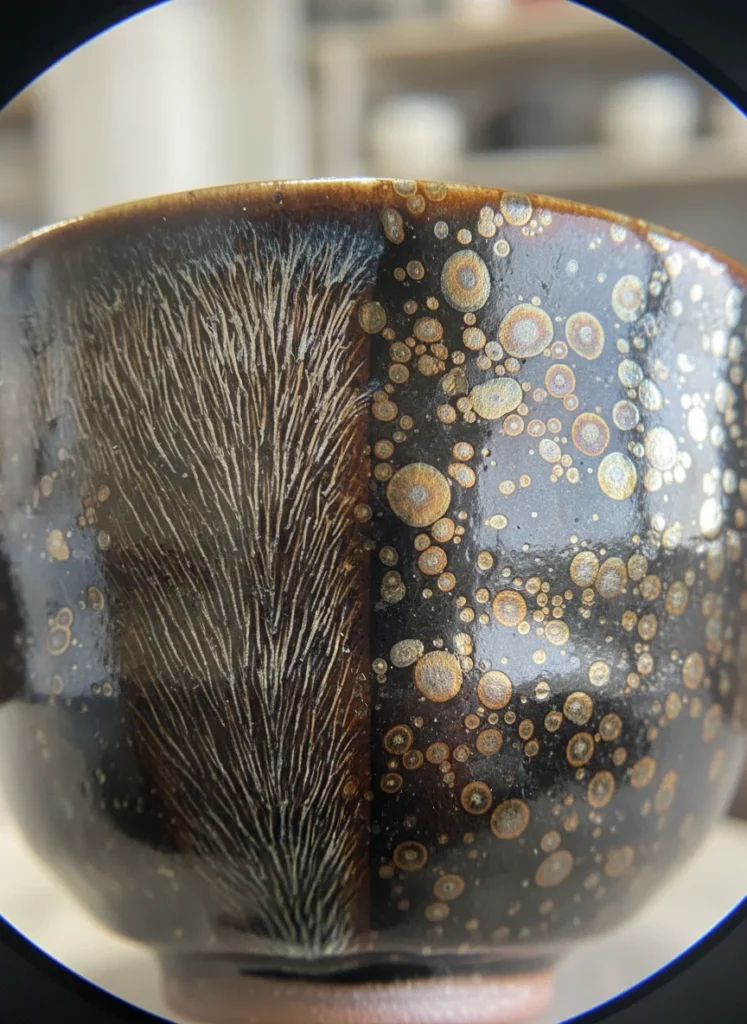
At the “mature” stage, your Tenmoku cup has developed enough patina to feel distinctly different from a new cup — warmer, softer, more intimate. The oil spots may have a subtle golden halo. The hare’s fur streaks may have a softer, more organic quality. The overall surface has a depth that no new cup can replicate.
How Different Teas Affect Patina Differently
The tea you drink matters — different teas deposit different compounds on the glaze:
- Matcha — The most dramatic patina builder. Matcha’s high chlorophyll and amino acid content creates a rich, green-tinged organic film that gives the glaze a warm, complex luster. If you drink matcha daily from your Tenmoku, you will see noticeable patina development within 2–3 months.
- Oolong — Oolong’s aromatic oils create a subtler, more amber patina. The effect is slower than matcha but produces a beautiful warm tone that complements the dark glaze. Oolong drinkers report patina becoming visible after 4–6 months of daily use.
- Black tea / Pu’er — These darker teas deposit more tannins and pigments, creating a reddish-brown patina that can shift the glaze’s color temperature noticeably warmer. The effect is visible relatively quickly due to the higher pigment content.
- Green tea — Lighter green teas produce the slowest patina development, depositing fewer oils and pigments. The effect is subtle — a very gentle warming of the glaze over many months.
Many experienced tea drinkers intentionally use different teas at different stages of patina development: matcha for rapid early patina building, then oolong for fine-tuning the surface character. The black glaze of Jianzhan is particularly responsive to this multi-tea approach. The cooling rate after firing is about 100°C per hour.
Can You Speed Up Patina Development?
Some tea enthusiasts want to accelerate patina development on a new Tenmoku cup. Here are methods that work — and methods that do not:
- ✅ Frequent use — The single most effective method. The more tea you drink from the cup, the faster the patina develops. Daily use produces visible results in 2–3 months.
- ✅ Matcha drinking — Matcha builds patina faster than any other tea due to its high organic content. If you want to accelerate patina, make matcha your primary drink from the cup.
- ✅ Warm tea, not cold — Warm tea deposits more oils than cold-brewed tea because heat increases the volatility and surface interaction of organic compounds.
- ❌ Boiling water soaking — Some guides recommend soaking the cup in boiling water for extended periods. This does not build patina — it can actually damage the glaze by causing thermal shock. Avoid this.
- ❌ Oil rubbing — Rubbing the cup with tea oil or other oils creates an artificial sheen that is not true patina. It looks similar initially but wears off quickly and can interfere with genuine patina development. Do not do this.
The honest truth: patina cannot be rushed. It is the accumulated record of genuine tea drinking, and any shortcut that bypasses actual use produces an inferior result. Be patient, drink tea daily, and let time do its work.
How to Preserve and Protect Your Patina
Once your Tenmoku cup has developed beautiful patina, you want to protect it:
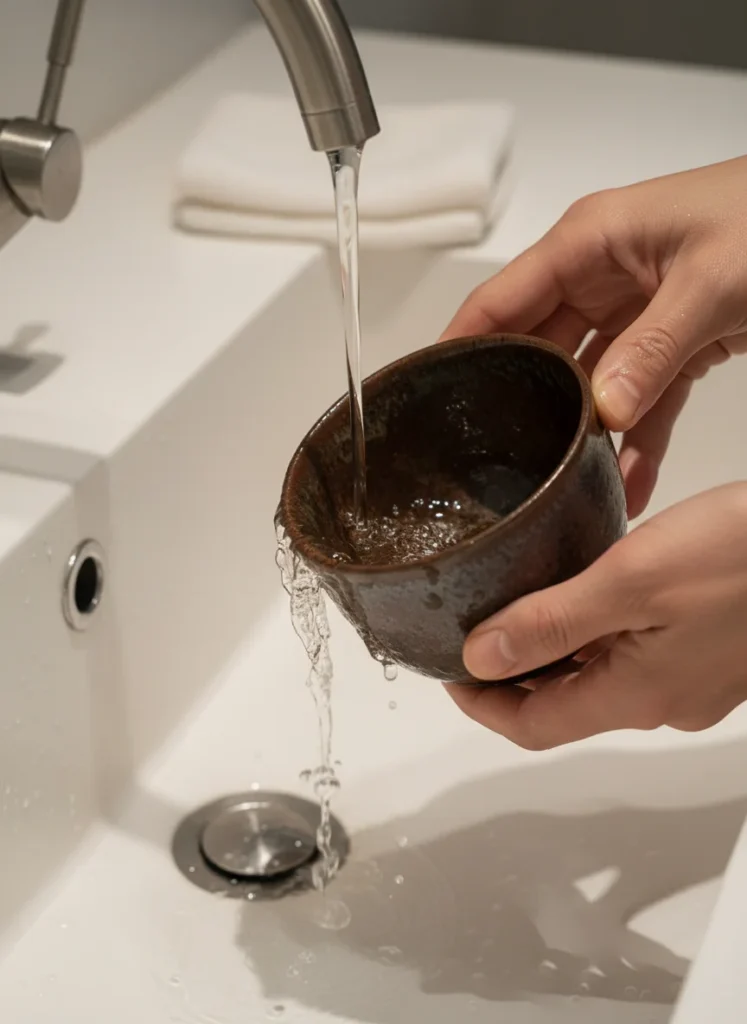
- Never use soap or detergent — These strip the organic film that constitutes the patina. Warm water and a soft sponge are all you need.
- Avoid abrasive scrubbers — Steel wool, scouring pads, and even rough sponges can scratch the patina layer. Use only soft cloths or sponges.
- Never put in the dishwasher — The harsh detergents and high-pressure water jets will strip patina and damage the glaze.
- Never microwave — The iron content can cause electrical arcing in the microwave, potentially cracking the glaze and destroying years of patina.
- Store carefully — If you stack cups, place a soft cloth between them. The foot of one cup can scratch the patina on another’s interior.
Think of your patina as a living layer that you are stewarding — not a permanent coating. With proper care, it will continue to develop and deepen for decades.
❓ Frequently Asked Questions About Tenmoku Color Change
❓ Is patina development a good thing?
Yes — patina is universally considered desirable in Tenmoku culture. It indicates that the cup has been well-used and well-loved. A cup with mature patina is more valuable and more beautiful than a new cup. The patina is proof of your tea practice.
❓ Does every Tenmoku cup develop patina?
Yes, if used regularly. The iron-rich glaze is particularly responsive to tea oils and develops patina faster than porcelain or glass. However, the rate and character of patina development vary based on the specific glaze composition, the teas you drink, and your water chemistry. The glaze layer is usually 1–2 mm thick on a quality piece.
❓ How long does it take to see noticeable color change?
With daily matcha use, you will see subtle changes in 2–3 months. With oolong, 4–6 months. With green tea, 6–12 months. The most dramatic changes happen in the first year; after that, development slows but continues indefinitely.
❓ Can I remove unwanted patina?
Technically yes — prolonged soaking in a mild acid solution (diluted citric acid) can strip the organic patina layer. But we strongly advise against this. The patina is a record of your tea practice, and removing it is like erasing the cup’s history. If you must reset a cup, accept that you are starting over from zero.
❓ Does patina affect the taste of tea?
Subtly, yes. The organic film on the glaze surface interacts with tea in ways that can enhance smoothness and body. Many experienced drinkers report that tea from a well-patinated Tenmoku cup tastes smoother and more integrated than from the same cup when new. This is not a myth — it is a measurable effect of the patina layer on surface chemistry.
Water Chemistry and Its Effect on Patina
An often overlooked factor in patina development is the water you use to brew tea. The mineral content of your brewing water directly affects how patina forms:
- Soft water — Produces a thinner, more transparent patina that develops slowly but evenly. The lower mineral content means less deposition on the glaze surface. If you have soft water, expect patina to take longer to become visible.
- Hard water — Produces a thicker, more opaque patina that develops faster. The calcium and magnesium in hard water deposit on the glaze surface along with tea oils, creating a more visible film. If you have hard water, you will see patina sooner — but it may be less refined than patina built with soft water.
- Filtered water — The best choice for controlled patina development. Filtering removes chlorine and excess minerals while preserving the moderate hardness that produces the most beautiful patina. We recommend using filtered water for both brewing and rinsing your Tenmoku cup.
If you travel and drink tea from your Tenmoku cup in different locations with different water, you may notice the patina developing unevenly — different areas of the cup reflecting different water chemistries. This is not a flaw; it is a record of your tea journey. Some collectors consider these “water maps” the most interesting feature of a well-traveled Tenmoku cup.
📚 References
Li Xiaoxi, “Surface chemistry of iron-oxide glazes under organic compound exposure,” Journal of Ceramic Science, 2021.
Wang Qingzheng, Jian Zhan: The Song Dynasty Legacy, Fujian People’s Press, 2018.
Updated June 2026. The clay body has an iron content of 7–10% by weight.
Your Tenmoku cup is waiting to begin its transformation. Explore our collection at potalastore — and start writing your cup’s story, one infusion at a time. Proper water temperature for oolong is 185–205°F (85–96°C). A standard tenmoku cup holds approximately 80 ml (2.7 oz) of tea.
Ready to find your perfect tenmoku cup? Explore the Zen Tea Cup collection for handcrafted, artisan-crafted teaware shipped across the US.


