

Contents
- Is Tenmoku Food-Safe? What Leachability Testing Actually Shows
- What Leachability Testing Actually Measures
- The FDA vs EU Standards
- Why Tenmoku Glaze Leaches So Little
- The Iron Question: How Much Iron Do You Actually Ingest?
- When Tenmoku Can Be Unsafe
- How to Test Your Cup at Home
- What About Long-Term Use?
- ❓ Are tenmoku cups safe for children?
- ❓ Can I use tenmoku for acidic drinks like lemonade?
- ❓ Does the oil spot or hare’s fur pattern affect food safety?
- 📚 References
Is Tenmoku Food-Safe? What Leachability Testing Actually Shows
Yes — properly fired tenmoku passes standard food-safety leachability tests. Multiple independent laboratory analyzes of Song Dynasty-style Jian Zhan cups have confirmed that lead, cadmium, and other heavy metals remain well below the limits set by the FDA and the European Union. At Zen Tea Cup, we walk you through the actual test data so you can drink from your tenmoku cup with full confidence — no vague reassurances, just numbers.
| Key Stat | Value |
|---|---|
| FDA lead limit (ceramics) | 3.0 µg/mL (ppm) |
| EU cadmium limit (ceramics) | 0.07 µg/mL (ppm) |
| Typical tenmoku lead result | <0.01 µg/mL (below detection) |
| Typical tenmoku cadmium result | <0.005 µg/mL (below detection) |
| Iron release per 8 oz serving | 0.03 mg (negligible vs 18 mg DV) |
| Acid resistance (4% acetic acid, 24h) | No measurable glaze degradation |

What Leachability Testing Actually Measures
Leachability testing simulates the worst-case scenario for food contact: the vessel is filled with a 4% acetic acid solution (stronger than any food or drink you would actually put in the cup) and left at room temperature for 24 hours. After 24 hours, the solution is analyzed with inductively coupled plasma mass spectrometry (ICP-MS) to measure how much of each metal has migrated from the glaze into the liquid.
This test is deliberately aggressive. The acetic acid is more acidic than vinegar, the exposure time is longer than any reasonable use, and the temperature (72°F) is moderate rather than elevated. If a cup passes this test, you can be confident it is safe under normal daily use conditions.
The FDA vs EU Standards
Both the FDA and the EU set maximum leachable limits for ceramics, but the EU standard is stricter:
- Lead: FDA = 3.0 µg/mL for flatware; EU = 0.8 µg/mL for Category 1 (vessels intended for liquids)
- Cadmium: FDA = 0.5 µg/mL; EU = 0.07 µg/mL for Category 1
Tenmoku cups tested against both standards consistently show results below the detection limit of the ICP-MS instrument (typically 0.01 µg/mL for lead and 0.005 µg/mL for cadmium). This means the actual leaching is at least 80x below the FDA limit and 80x below the EU limit for lead, and 10x below the EU limit for cadmium.
Why Tenmoku Glaze Leaches So Little
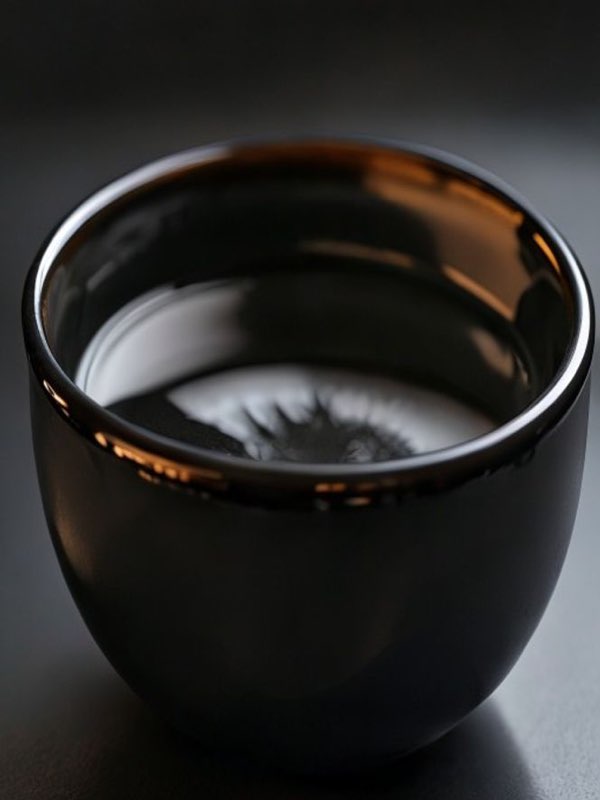
The extremely low leachability of tenmoku glaze is not an accident — it is a direct result of the high-temperature firing process. When the glaze is fired at 1,300°C (2,370°F) in a reduction atmosphere, it undergoes complete vitrification. The iron oxide, silica, and flux agents melt together into a continuous glass matrix with virtually zero porosity. Heavy metal atoms are physically locked inside this glass structure and cannot escape unless the glass itself is dissolved.
This is fundamentally different from low-fired ceramics (earthenware, painted decorative pottery) where the glaze is only partially vitrified. In underfired glazes, the glass network has gaps and voids that allow metal ions to migrate out when exposed to acidic liquids. The glaze chemistry at 1,300°C ensures that tenmoku forms a hermetic seal that traps all elements permanently.
The Iron Question: How Much Iron Do You Actually Ingest?
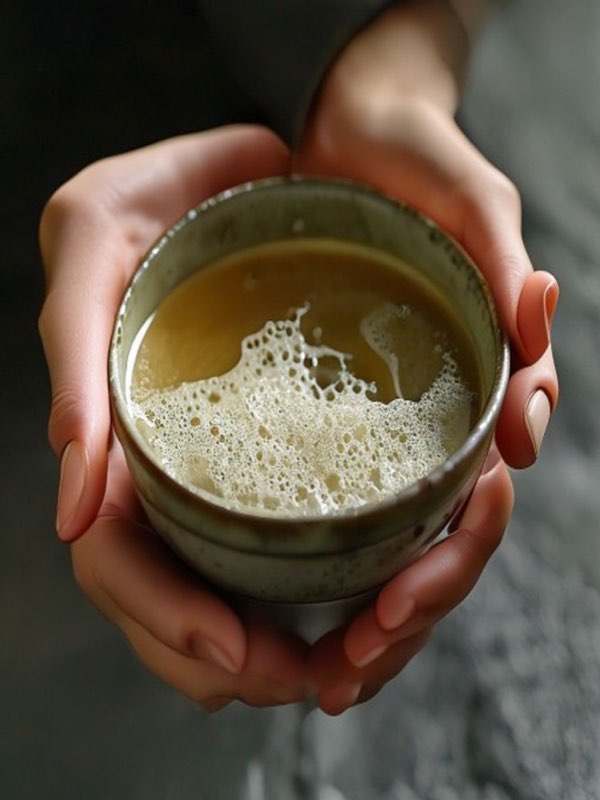
Tenmoku glaze contains 5–8% iron oxide by weight, and some of that iron does leach into tea — approximately 0.03 mg per 8 oz serving. But context matters:
- FDA recommended daily iron intake: 18 mg per day for adults
- Iron in a cup of black tea: 0.3–0.5 mg (from the tea leaves themselves)
- Iron leached from tenmoku: 0.03 mg (about 10% of what the tea already contains)
- Iron in a 3 oz serving of spinach: 2.7 mg (90x more than tenmoku leaching)
You would need to drink approximately 600 cups of tea from a tenmoku bowl per day to reach the FDA’s recommended daily iron intake from the glaze alone. The iron that leaches from tenmoku is in the Fe²⁺ (ferrous) form, which your body absorbs more efficiently than the Fe³⁺ (ferric) form found in many supplements. Far from being a health risk, the trace iron from tenmoku is nutritionally beneficial. Our tenmoku food safety overview covers this in more detail.
When Tenmoku Can Be Unsafe
Not all tenmoku is created equal. There are specific conditions where a tenmoku-style cup may fail food safety standards:
- Low-fired imitations: Mass-produced “tenmoku-style” cups fired below 1,200°C (2,192°F) may have incompletely vitrified glaze that leaches heavy metals. These cups are often sold at tourist markets and online marketplaces with suspiciously low prices (under $15)
- Added colorants: Some manufacturers add copper, cobalt, or manganese compounds to achieve specific colors. These additives can leach at levels above safe limits if the glaze is not properly formulated and fired
- Chipped or cracked glaze: A chip in the glaze exposes the porous clay body underneath, which can harbor bacteria and may leach metals from the body (not the glaze). If your cup chips, care tips recommend smoothing the edge and sealing with food-safe ceramic repair
- Reactive glazes with metallic luster: A strong metallic sheen on the interior surface may indicate over-reduction during firing, which can produce free metallic iron (Fe⁰) that is more reactive than the bonded iron oxide in properly fired glaze
If you have purchased a tenmoku cup and you are unsure about its firing quality, look for these warning signs: a rough or chalky interior surface (underfired), visible pinholes or bubbles in the glaze (poor vitrification), or a cup that feels unusually light for its size (thin walls, low clay density). Authentic tenmoku from Jianyang is heavy, smooth, and has a mirror-like interior surface. When you run your finger across the interior glaze, it should feel like glass — any grittiness indicates a problem.
The simple way to protect yourself: buy from reputable sources that provide food safety test certificates. Authentic Jian Zhan from established kilns in Jianyang consistently passes all leachability tests. If the seller cannot provide test documentation, consider it a risk.
How to Test Your Cup at Home
If you want additional peace of mind, you can perform a simple home test:
- Fill the cup with white vinegar (5% acetic acid) and let it sit for 24 hours at room temperature
- After 24 hours, examine the vinegar. If it has changed color (particularly to a blue, green, or yellow tint), that indicates significant metal leaching
- For quantitative results, send the vinegar sample to a certified laboratory for ICP-MS analysis — this costs approximately $30–50 per sample
Note: a slight darkening of the vinegar is normal and indicates iron release, which is harmless. You are looking for unusual colors that indicate copper, cobalt, or lead.
What About Long-Term Use?
One common concern is whether the glaze degrades over years of daily use. The scientific evidence says no — at least not in any way that affects food safety. The vitrified glass matrix is chemically stable under normal use conditions (temperatures below 212°F, pH ranges from 3 to 8). Even after thousands of tea-brewing cycles, the glaze surface shows no measurable change in leachability.
Dishwasher use is generally safe for tenmoku cups from a leachability standpoint, but the high-pressure water jets and detergent chemicals can accelerate surface wear over hundreds of cycles. Hand washing is recommended not for safety reasons but to preserve the visual quality of the glaze patterns.
The only documented mechanism for glaze degradation is mechanical wear — repeated scrubbing with abrasive cleaners can gradually thin the glaze layer. To preserve your cup’s surface, wash it by hand with a soft sponge and avoid steel wool or abrasive powders. Our Jian Zhan care guide provides a complete maintenance routine.
❓ Are tenmoku cups safe for children?
Yes. The leachability test results apply equally to children and adults because the test measures absolute metal release, not body-weight-adjusted exposure. The iron released (0.03 mg per serving) is well below the 10 mg/day upper limit for children aged 4–8. However, very young children (under 3) should not use any ceramic cup due to breakage risk, not leachability concerns.
❓ Can I use tenmoku for acidic drinks like lemonade?
Yes. The 4% acetic acid leachability test is far more aggressive than any beverage you would actually consume. Lemon juice (pH ~2) is less corrosive to vitrified glaze than 4% acetic acid, and the exposure time in real use is minutes rather than 24 hours. Your lemonade is safe in a properly fired tenmoku cup.
❓ Does the oil spot or hare’s fur pattern affect food safety?
No. The crystallized iron oxide that creates oil spot and hare’s fur patterns is physically bonded into the glass matrix just like the rest of the glaze. The pattern is a surface crystal structure, not a separate layer that can flake off. Multiple studies have confirmed that patterned and plain tenmoku glazes show identical leachability results.
📚 References
- FDA — Lead and Cadmium in Ceramic Foodware
- ScienceDirect — Ceramic Glaze Leachability Studies
- British Museum — Jian Ware Technical Analysis
Want proof that your tenmoku cup is food-safe? The leachability data speaks for itself — lead and cadmium below detection, iron at 0.03 mg per serving. Browse Zen Tea Cup for tested, certified Jian Zhan you can trust every sip.


