

Contents
- Tenmoku Tea Cup FAQ: Everything You Need to Know About Shipping, Returns, and Care
- How Is Your Tenmoku Tea Cup Shipped?
- Standard vs Express Shipping Times
- What If Your Package Arrives Damaged?
- What Is the Return Policy for Tenmoku Tea Cups?
- When Are Returns Not Accepted?
- How Should You Care for Your Tenmoku Tea Cup?
- Daily Cleaning: The 5-Minute Routine
- What to Avoid: The Big Four
- How Do You Store Tenmoku Tea Cups Properly?
- Long-Term Storage Tips
- Common Questions About Tenmoku Tea Cup Patina and Color Changes
- Is Patina the Same as Cracking or Damage?
- Tenmoku Tea Cup FAQ: Your Top Questions Answered
- ❓ How long does shipping take for tenmoku tea cups?
- ❓ Can I return my tenmoku cup if I do not like the glaze pattern?
- ❓ Can I put my tenmoku cup in the dishwasher?
- ❓ Why does my tenmoku cup change color over time?
- 📚 References
Tenmoku Tea Cup FAQ: Everything You Need to Know About Shipping, Returns, and Care
At Zen Tea Cup, at our shop, tenmoku tea cups from our shop ship worldwide in 7–14 business days with foam-cushioned packaging, come with a 30-day return window for undamaged items, and require simple hand-washing with warm water to maintain their kiln-fired glaze for decades. Whether you are buying your first jian zhan or adding to a growing collection, you probably have questions about how your cup arrives, what happens if something goes wrong, and how to keep that stunning glaze looking its best — this guide covers every common question buyers ask.
| Key Stat | Value |
|---|---|
| Standard Shipping Time | 7–14 business days |
| Express Shipping Time | 3–5 business days |
| Return Window | 30 days from delivery |
| Firing Temperature | 2,300 °F (1,260 °C) |
| Max Safe Temperature Swing | 180 °F (82 °C) |
| Typical Cup Diameter | 3–4 inches (7–10 cm) |
| Average Cup Weight | 4–7 oz (120–200 g) |
How Is Your Tenmoku Tea Cup Shipped?
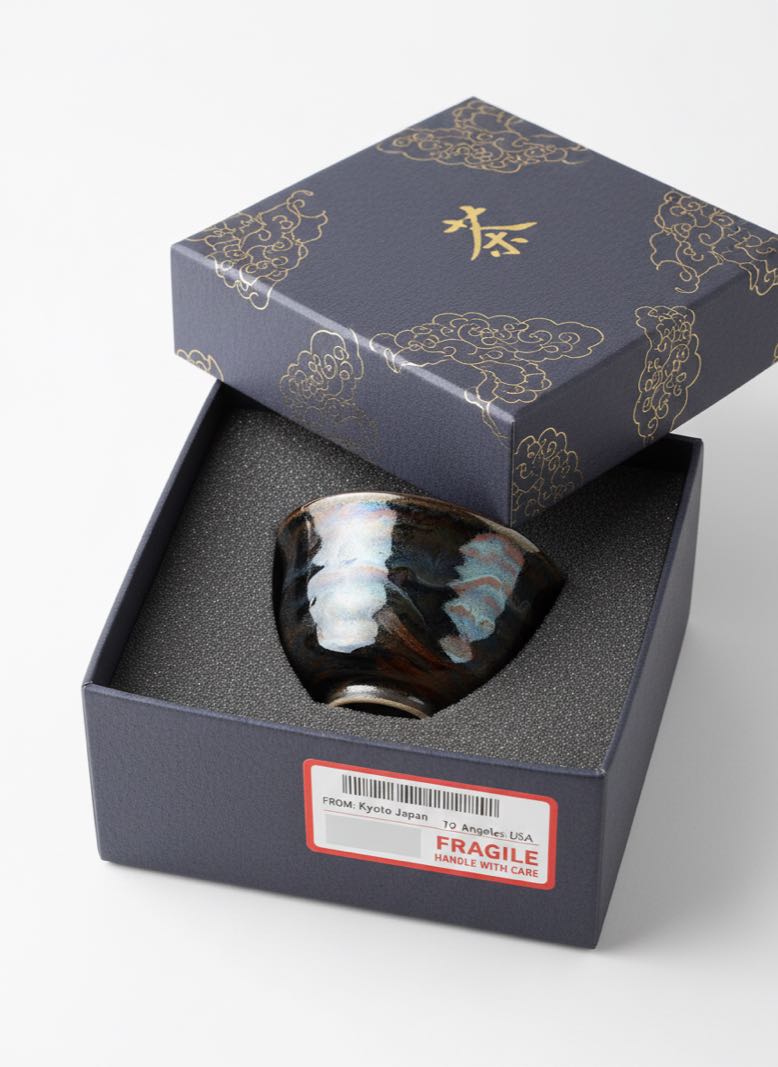
Every tenmoku tea cup you order is a handcrafted ceramic piece fired at 2,300 °F (1,260 °C) — it deserves packaging that matches its value. At our shop, each cup is wrapped in layers of bubble wrap and foam inserts, then placed inside a rigid corrugated box designed to absorb impacts during transit. The goal is simple: your cup should arrive in the same pristine condition it left the kiln.
Standard vs Express Shipping Times
Standard shipping takes 7–14 business days, while express delivery reaches you in 3–5 business days. Both options include a tracking number so you can monitor your package every step of the way. Shipping is available to the United States, Canada, the European Union, Australia, and most countries in Asia — you can check availability during checkout. For orders over $75, standard shipping is free within the US (a nice perk if you are ordering a tea set or multiple cups).
What If Your Package Arrives Damaged?
Despite careful packaging, occasional rough handling by carriers can happen. If your tenmoku cup arrives chipped, cracked, or broken, you should photograph the damage within 24 hours and contact customer support immediately. The team at our shop will arrange a replacement at no extra cost — no need to ship the broken pieces back in most cases. This is one of the most frequently asked questions, and the answer is reassuring: you are covered.
What Is the Return Policy for Tenmoku Tea Cups?
You have 30 days from the date of delivery to return your tenmoku tea cup if you change your mind. The cup must be unused, in its original packaging, and in the same condition you received it. Because each jian zhan is handmade, slight variations in glaze pattern are normal and expected — they are not considered defects. As the Metropolitan Museum of Art notes, these variations are a hallmark of handcrafted Chinese ceramics that mass production simply cannot replicate.
When Are Returns Not Accepted?
Returns are not accepted for cups that have been used, washed in a dishwasher, exposed to thermal shock (sudden temperature changes above 180 °F), or dropped. If you have already brewed tea in your cup and then decide the size is not right for you, a return is unfortunately not possible — hygiene and safety standards apply. This is why measuring your preferred cup size before ordering matters. For guidance, check our jian zhan care and maintenance tips to understand what counts as “used.”
How Should You Care for Your Tenmoku Tea Cup?
Caring for your tenmoku tea cup is surprisingly simple — hand-wash with warm water, avoid sudden temperature changes, and let it air-dry completely before storing. The iron-rich glaze fired at 2,300 °F is remarkably durable, but it is still a handmade ceramic that responds to how you treat it. With proper care, your cup can last a lifetime (and even develop a beautiful tea patina over years of use).

Daily Cleaning: The 5-Minute Routine
After each tea session, rinse your cup with warm water (not hot — keep it below 120 °F for rinsing). Use a soft sponge if needed, but never abrasive scrubbers or steel wool. A brief soak of 5–10 minutes in warm water loosens any tea residue. Then simply let the cup air-dry on a soft cloth. No soap, no detergent, no fuss — the porous glaze actually benefits from gentle tea-oil absorption over time (this is what creates the coveted patina that collectors prize).
What to Avoid: The Big Four
There are four things you should never do with your tenmoku cup: (1) Never put it in a dishwasher — the high-pressure jets and harsh detergents strip the glaze. (2) Never expose it to thermal shock — pouring boiling water into a cold cup, or placing a hot cup on a cold surface, can crack the ceramic. Keep temperature changes under 180 °F. (3) Never use it in a microwave — uneven heating can cause micro-fractures. (4) Never use bleach or strong chemicals for cleaning — they permanently damage the glaze surface. Following these four rules will keep your cup safe for years.
How Do You Store Tenmoku Tea Cups Properly?
Store each tenmoku cup in its own soft cloth bag or padded box, away from direct sunlight and extreme temperature fluctuations. If you stack cups, place a soft cloth or felt pad between them — the foot rim of one cup can scratch the glaze of the cup below it. A dedicated display shelf with individual slots is ideal for collectors, and it lets you enjoy the glaze patterns daily. For more display ideas, see our guide to tenmoku teaware which covers both storage and presentation.

Long-Term Storage Tips
If you need to store cups for an extended period (moving, rotating a seasonal collection), wrap each cup individually in acid-free tissue paper before placing it in a padded box. Avoid plastic wrap — it traps moisture and can promote mold on any residual tea oils. Store boxes in a climate-controlled area where temperatures stay between 50–80 °F and humidity remains below 60%. These conditions mirror the stable environments that museums use to preserve Song Dynasty jian zhan pieces, according to the Smithsonian’s National Museum of Asian Art.
Common Questions About Tenmoku Tea Cup Patina and Color Changes
One of the most frequently asked questions is about color changes in the glaze over time. This is completely normal — and for many collectors, it is the whole point. The iron-rich clay and glaze interact with tea oils over months and years, creating subtle shifts in color and sheen. A cup that starts with a deep black glaze may develop warm amber tones in areas where tea frequently contacts the surface. This patina is a sign of a well-loved cup, not damage.
Is Patina the Same as Cracking or Damage?
No — patina and damage are entirely different. Patina is a surface-level color enhancement caused by tea oil absorption into the glaze’s micro-pores. Cracking, on the other hand, is structural: it happens when thermal shock creates a fracture line through the ceramic body. You can tell the difference easily: patina feels smooth and looks like a warm glow, while a crack has a visible line and may feel slightly rough when you run your fingernail across it. If you see a crack, stop using the cup for hot liquids immediately — but patina? Enjoy it. The British Museum catalogs many historical jian zhan cups where patina is considered a valued feature of age and use.
Tenmoku Tea Cup FAQ: Your Top Questions Answered
❓ How long does shipping take for tenmoku tea cups?
Standard shipping takes 7–14 business days and express takes 3–5 business days. All orders include tracking. Free standard shipping applies to US orders over $75.
❓ Can I return my tenmoku cup if I do not like the glaze pattern?
Yes, you can return unused cups within 30 days of delivery. Because each cup is handmade, slight variations in glaze are normal and not considered defects — they are the mark of authentic handcrafted tenmoku.
❓ Can I put my tenmoku cup in the dishwasher?
Never. Dishwashers use high-pressure water jets and harsh detergents that can strip the glaze and cause micro-scratches. Always hand-wash with warm water only — it takes just 5 minutes and preserves your cup’s beauty for decades.
❓ Why does my tenmoku cup change color over time?
Color changes are caused by tea oil absorption into the glaze’s micro-pores, creating a warm patina. This is a normal and desirable feature of handcrafted tenmoku — many collectors consider patina a sign that a cup has been well-used and loved.
📚 References
- Chinese Pottery: Overview of Chinese ceramic traditions and glaze techniques. Metropolitan Museum of Art
- Collections Care: Guidelines for preserving ceramic objects in museum environments. Smithsonian National Museum of Asian Art
- Jian Zhan History: Historical catalog of Song Dynasty tea bowls and their glaze characteristics. British Museum
Explore the full tenmoku tea cup comparison chart at these cups to find the perfect cup for your shipping, care, and collection needs.
Find your next favorite cup — shop at these cups for handcrafted tenmoku tea cups delivered to your door.
Ready to elevate your tea ritual? Explore Zen Tea Cup for handcrafted tenmoku cups shipped across the US.


