

Contents
- What Is a Wood Fire Kiln and Why Does It Matter?
- Types of Wood Fire Kilns
- Anagama (穴窯)
- Noborigama (登窯)
- Dragon Kiln (龙窑)
- How Wood Firing Creates Unique Glaze Effects
- Key Stats: Wood Fire Kiln Parameters
- Wood Firing vs. Gas and Electric Kilns
- The Firing Process: Step by Step
- ❓ FAQ: Wood Fire Kilns
- ❓ Why is wood-fired tenmoku more expensive?
- ❓ Can I tell if a piece was wood-fired by looking at it?
- ❓ Is wood-fired teaware food safe?
What Is a Wood Fire Kiln and Why Does It Matter?
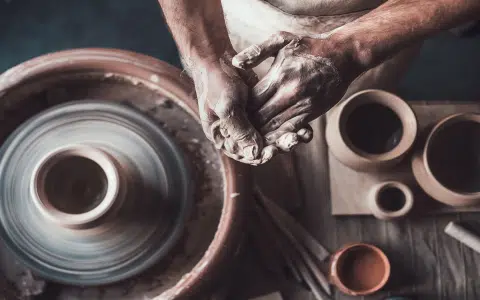
A wood fire kiln is a traditional firing chamber that uses burning wood as its sole fuel source to reach temperatures of 2100-2500°F (1150-1370°C). If you are passionate about ceramics — especially tenmoku and Jian Zhan — understanding wood firing is essential because it produces glaze effects that no other kiln type can replicate. At Zen Tea Cup, we believe that knowing how your teaware was made deepens your appreciation for every piece you own.
Wood firing is the oldest method of firing ceramics, dating back over 10,000 years. The Song Dynasty potters who created the original Jian Zhan bowls used wood-fired kilns, and the atmospheric conditions inside those kilns were responsible for the extraordinary oil spot and hare’s fur patterns that make tenmoku famous. When you hold an authentic wood-fired tenmoku cup, you are holding the product of a technology refined across millennia. The tenmoku beginner guide provides historical context on how these kilns shaped teaware traditions.
You can display your tenmoku collection as stunning decor when not in use.
Types of Wood Fire Kilns
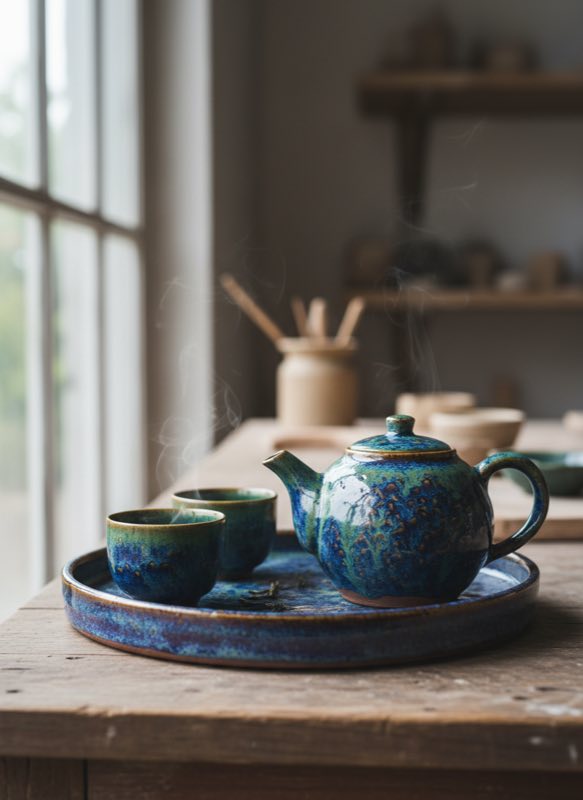
Several distinct kiln designs have evolved across different cultures and eras. Each produces unique atmospheric conditions that affect glaze results differently.
Anagama (穴窯)
The anagama is the simplest and oldest wood kiln design — a single-chamber tunnel dug into a hillside. The fire burns at the front entrance, and flames travel the length of the chamber before exiting through a chimney or vent at the back. Anagama firing cycles last 3-7 days of continuous stoking, producing dramatic ash deposits and natural glaze effects on pieces placed near the firebox. The extreme variation in temperature and atmosphere within the kiln means that each piece emerges uniquely marked by its position relative to the flame path.
Noborigama (登窯)
The noborigama is a multi-chamber climbing kiln built on a slope. Each chamber sits slightly higher than the previous one, and heat passes from one chamber to the next. This design allows simultaneous firing of different temperature zones — the first chamber reaches the highest temperature (2400-2500°F / 1315-1370°C) while subsequent chambers are progressively cooler. The noborigama is the traditional kiln type used in Jianyang, Fujian Province, for firing Jian Zhan.
Dragon Kiln (龙窑)
The dragon kiln is a long, narrow tunnel kiln built along a hillside, resembling the body of a dragon. Originating in China during the Shang Dynasty (1600-1046 BCE), dragon kilns can be 30-60 feet (9-18 meters) long. Their length creates a natural draft that pulls flames through the entire chamber, achieving consistent high temperatures with relatively less fuel than shorter designs. The handmade tenmoku identification explains how dragon kiln firing creates the distinctive glaze characteristics that authenticate genuine Jian Zhan.
How Wood Firing Creates Unique Glaze Effects
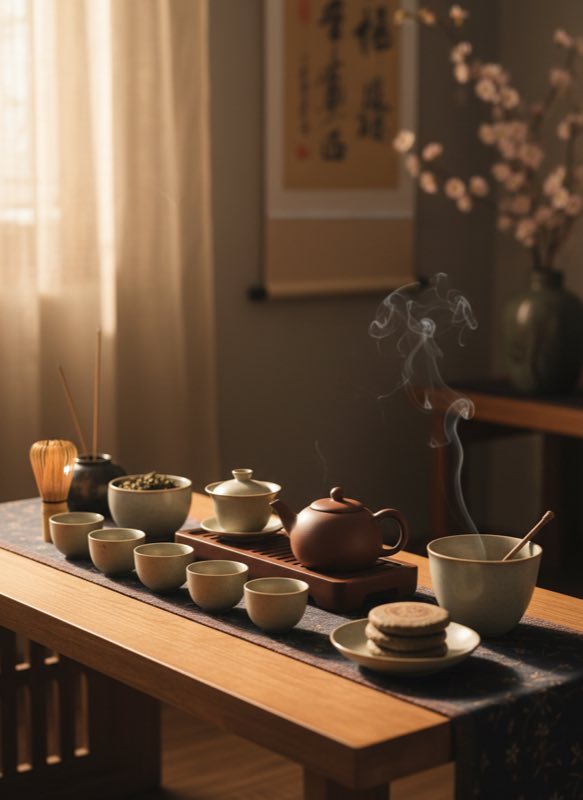
The magic of wood firing lies in the atmospheric conditions inside the kiln — conditions that are inherently variable and impossible to fully control.
Reduction atmosphere. When wood burns with insufficient oxygen, it creates a reducing atmosphere where carbon monoxide pulls oxygen atoms from the glaze and clay. This converts red iron oxide (Fe₂O₃) to black iron oxide (FeO), which produces the deep, mirror-like black base color characteristic of authentic tenmoku. Electric kilns cannot easily achieve sustained reduction, which is why electric-fired pieces tend toward brown rather than black.
Ash deposition. Fly ash from the burning wood drifts through the kiln and settles on the ware. Wood ash is rich in silica, alumina, and flux minerals (calcium, potassium) that melt at high temperatures and create natural glaze effects. This ash glaze is what gives wood-fired pieces their organic, unpredictable surface texture.
Flashing. The path of the flame across the ware creates “flashing” — areas where the direct flame contact alters the glaze color. Pieces on the windward side of the flame path may show warmer colors, while sheltered areas remain darker. You can see similar effects in the handmade tenmoku comparison.
Key Stats: Wood Fire Kiln Parameters
| Parameter | Value |
|---|---|
| Peak Temperature | 2100-2500°F (1150-1370°C) |
| Firing Duration | 8-168 hours depending on kiln type |
| Cooling Duration | 12-72 hours |
| Wood Consumption | 1-5 cords per firing |
| Success Rate (Jian Zhan) | 10-40% for quality pieces |
| Typical Kiln Load | 50-500 pieces |
Wood Firing vs. Gas and Electric Kilns
Understanding the differences between kiln types helps you make informed purchasing decisions:
Atmosphere control. Electric kilns offer precise temperature control but fire only in oxidation. Gas kilns allow reduction firing with moderate control. Wood kilns create the most dynamic, variable atmosphere but offer the least predictability. Each approach has strengths — electric for consistency, gas for balance, wood for character.
Glaze results. Wood firing produces the most varied and organic glaze effects, including ash glaze, flashing, and natural reduction patterns. Gas firing achieves controlled reduction that produces consistent oil spots and hare’s fur. Electric firing produces the most uniform results but cannot create true reduction effects.
Labor and cost. Wood firing requires 8-168 hours of constant attention from skilled stokers. Gas firing needs less hands-on time (4-12 hours). Electric firing is largely automated once programmed. These labor differences are reflected in the price of finished pieces.
The Firing Process: Step by Step
Understanding the wood firing process helps you appreciate why the results are so variable and why skilled firing is so valuable. Here is what happens during a typical Jian Zhan wood firing:
Loading the kiln (2-4 hours). Pieces are carefully arranged inside the kiln, with the most valued pieces placed in zones known for producing the best glaze effects. The placement determines how much ash falls on each piece and how directly the flame contacts the glaze. Experienced kiln masters spend years learning the optimal placement for each kiln design.
Initial heating (4-6 hours). The fire is started slowly, raising the temperature from ambient to about 600°F (315°C). This phase drives off remaining moisture in the clay. Heating too quickly at this stage causes steam explosions that can shatter pieces.
Rapid temperature increase (4-8 hours). The stoking intensity increases, driving the temperature from 600°F to 2200°F (315°C to 1200°C). The kiln master monitors pyrometric cones and flame color to gauge temperature. At this stage, the reduction atmosphere develops as the stokers add wood faster than it can fully combust.
Peak temperature hold (1-2 hours). The temperature is held at 2300-2400°F (1260-1320°C). This is when the critical iron oxide crystallization occurs in tenmoku glaze. The kiln master adjusts the air intake and fuel rate to maintain the precise balance of reduction and temperature that produces the desired patterns. This is the most skill-intensive phase — a few minutes of wrong atmosphere can ruin an entire kiln load.
Cooling (12-48 hours). The kiln is sealed and allowed to cool naturally. Rapid cooling would cause thermal shock cracking. The cooling rate also affects crystallization — slower cooling produces larger, more defined oil spots and hare’s fur streaks.
Unloading (2-4 hours). Once the kiln reaches ambient temperature, the pieces are carefully removed and inspected. For Jian Zhan, the success rate is typically 10-40% for pieces with quality glaze patterns. The remaining pieces may have no pattern, weak patterns, or glaze defects. This high failure rate is a major factor in the cost of quality wood-fired tenmoku. The tenmoku pairing guide explains how firing results affect tea performance.
Caring for Wood-Fired Teaware
Wood-fired pieces require slightly different care than electric or gas-fired ware:
Initial cleaning. New wood-fired pieces may have a light ash residue on the surface. Rinse thoroughly with warm water before first use. A gentle wipe with a soft cloth removes any remaining ash.
Avoid soap on unglazed areas. Wood-fired pieces often have larger unglazed areas (from wad marks or kiln furniture contacts). These porous surfaces absorb soap, which affects tea flavor. Use warm water only on unglazed clay. The new tenmoku owner guide provides detailed care instructions.
Embrace the patina. Wood-fired teaware develops patina faster than electric-fired pieces because the slightly more porous glaze surface absorbs tea oils more readily. This is a feature, not a flaw — the patina adds depth and warmth to the glaze over time.
❓ FAQ: Wood Fire Kilns
❓ Why is wood-fired tenmoku more expensive?
Wood firing requires significantly more labor, fuel, and time than other methods. A single firing cycle takes 8-14 hours of constant attention, the failure rate is 30-40%, and a cord of firewood costs $150-300. These costs are reflected in the price. You are paying for the artisan’s time, the unpredictability of the process, and the unique character that only wood firing can produce.
❓ Can I tell if a piece was wood-fired by looking at it?
Experienced collectors can identify wood-fired pieces by several telltale signs: ash deposits (small, natural-looking glaze drips), flashing (color variations from flame contact), and slight warping from the intense heat variation. Electric-fired pieces lack these features and tend to look more uniform. The curated collection labels each piece with its firing method.
❓ Is wood-fired teaware food safe?
Yes, as long as the piece was fired to full vitrification temperature (above 2200°F / 1200°C). The ash deposits and reduction effects are surface phenomena that do not compromise the food-safe glaze barrier. Always verify that the foot ring shows fully vitrified (non-porous) clay.
📚 References
– Metropolitan Museum of Art. “Wood Firing in Ceramic History.” metmuseum.org
– ScienceDirect. “Wood Ash Glaze Chemistry and Reduction Firing.” sciencedirect.com
– Victoria and Albert Museum. “Traditional Kiln Technologies.” vam.ac.uk
Experience the character of wood-fired teaware — explore Zen Tea Cup’s collection of authentic wood-fired tenmoku.


