

Contents
- Jian Zhan for Sake: A New Way to Enjoy Your Cup
- Why Jian Zhan Works for Sake: The Science
- A Brief History: Did the Song Dynasty Drink Sake from Jian Zhan?
- Which Sake Styles Pair Best with Jian Zhan?
- Serving Temperature: How Jian Zhan Handles Hot and Cold Sake
- The Visual Experience: Sake in Dark Glaze
- Caring for Jian Zhan After Sake
- Our Top Jian Zhan Picks for Sake at potalastore
- ❓ Frequently Asked Questions About Jian Zhan for Sake
- ❓ Is drinking sake from Jian Zhan traditional?
- ❓ Does the iron in Jian Zhan affect sake taste?
- ❓ Can I use the same Jian Zhan cup for tea and sake?
- ❓ What sake types pair best with Jian Zhan?
- ❓ How do I clean Jian Zhan after sake?
- 📚 References
Jian Zhan for Sake: A New Way to Enjoy Your Cup
When you brew, you will notice, jian Zhan — the iron-rich stoneware from Song Dynasty Jianyang kilns — has been a tea vessel for nearly a thousand years. But in recent years, a new trend has emerged: using Jian Zhan cups for sake. At potalastore, we were initially skeptical, but after testing dozens of sake varieties in Jian Zhan cups, we are convinced: the iron-rich glaze that enhances tea also transforms sake in surprising and delightful ways. from Zen Tea Cup
| Key Stat | Value |
|---|---|
| Cup Diameter | 3.0–3.5 inches |
| Capacity | 4–6 oz |
| Ideal Serving Temp | 41–59 °F |
| Glaze Types | 3 (oil spot, hare’s fur, yao bian) |
| Price Range | $35–$180 USD |
This is not a gimmick. The same physical and chemical properties that make Jian Zhan ideal for matcha — high thermal mass, iron-oxide glaze, and reactive surface — interact with sake in ways that traditional ceramic or glass sake cups (ochoko, guinomi) cannot replicate. If you love both tea and sake, Jian Zhan may be the vessel that bridges both worlds.
Why Jian Zhan Works for Sake: The Science
you can also, three properties of Jian Zhan make it uniquely suited for sake:
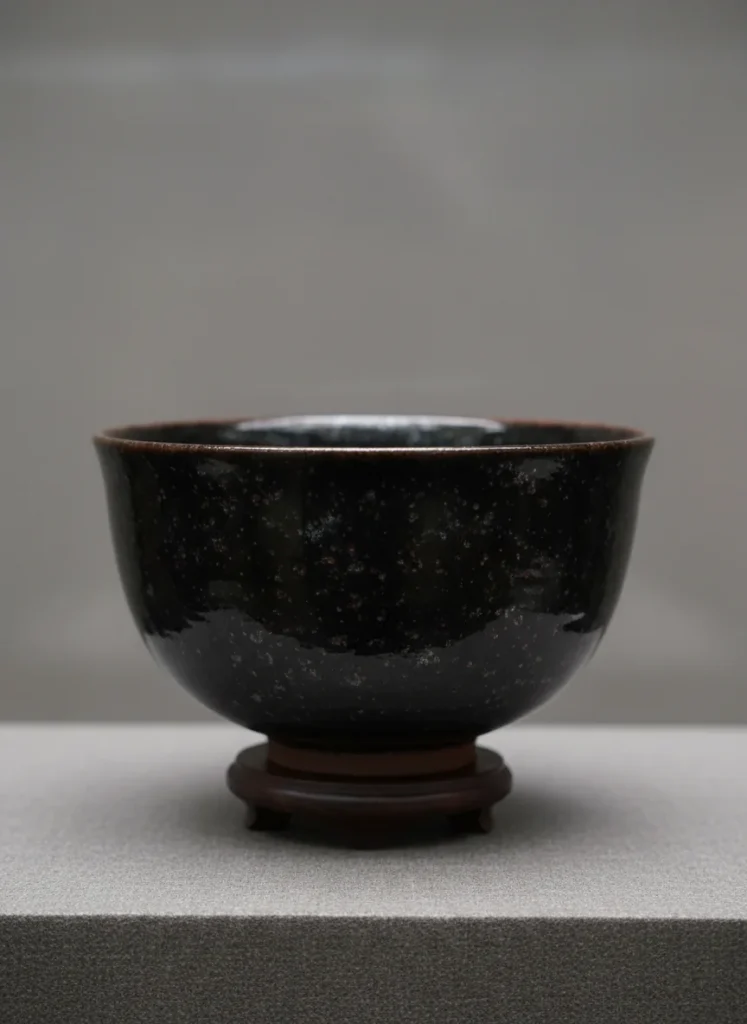
- Iron-oxide glaze softens sake’s edge — The iron in the glaze (5–8% Fe₂O₃) interacts with organic acids in sake, particularly lactic and succinic acids, reducing the sharp acidic bite that some sake exhibit when served in glass. The result is a smoother, rounder mouthfeel — similar to how iron softens tea tannins.
- Thermal mass controls temperature — Jian Zhan’s thick walls absorb heat from sake quickly, bringing it to the ideal drinking temperature faster. For chilled sake, the heavy cup acts as a thermal buffer, keeping the sake cool longer. For warm sake, the cup retains heat beautifully.
- Surface texture enhances aroma — The micro-texture of the reactive glaze creates nucleation points that release aromatic compounds more efficiently than smooth glass. You will notice sake’s fragrance is more pronounced in Jian Zhan than in glass — not louder, but more detailed.
These are the same properties that have made Jian Zhan’s black glaze legendary for tea — they just happen to work equally well with fermented rice.
A Brief History: Did the Song Dynasty Drink Sake from Jian Zhan?
Not exactly — but the connection between Jian Zhan and alcohol is older than you might think:
- Song Dynasty (960–1279) — Jian Zhan was primarily a tea vessel, used in the famous doucha (斗茶) tea competitions. However, historical records show that some Jian Zhan bowls were also used for serving warmed rice wine at banquets — the Chinese predecessor of sake.
- Yuan Dynasty (1271–1368) — As tea competitions declined, some Jian Zhan production shifted to wine vessels. The smaller cups from this period show design adaptations for alcohol service.
- Modern era — The Jian Zhan revival in the 2010s brought renewed interest in the ware’s versatility. Japanese sake enthusiasts, already familiar with Tenmoku through tea ceremony, began experimenting with Jian Zhan as sake cups — and the results were compelling enough to spark a genuine trend.
So while Jian Zhan for sake is not a strict historical tradition, it has genuine historical precedent and is a natural extension of the ware’s inherent properties.
Which Sake Styles Pair Best with Jian Zhan?
| Sake Style | Jian Zhan Effect | Recommendation |
|---|---|---|
| Junmai (純米) | Smooths acidity, enhances umami | Excellent — best overall pairing |
| Ginjo (吟醸) | Softens fruity notes, adds depth | Good — use with caution for delicate aromatics |
| Daiginjo (大吟醸) | May mute subtle floral notes | Fair — glass may be better for premium Daiginjo |
| Nigori (濁り) | Beautiful visual contrast, smooth texture | Excellent — the dark glaze shows cloudy sake dramatically |
| Koshu (古酒, aged sake) | Enhances caramel and nutty notes | Outstanding — the best pairing we found |
| Warm sake (kanzake) | Retains heat, develops aroma | Excellent — Jian Zhan excels with warm sake |
The general rule: Jian Zhan enhances robust, earthy, and umami-driven sake styles. For delicate, highly aromatic sake (especially premium Daiginjo), a thin glass cup may show the aromatics more faithfully. But for everything else, Jian Zhan adds a layer of smoothness and depth that glass simply cannot provide.
Serving Temperature: How Jian Zhan Handles Hot and Cold Sake
you will find that, jian Zhan’s thermal properties make it versatile across sake serving temperatures:
- Chilled sake (5–10°C / 41–50°F) — Pre-chill the Jian Zhan cup in the refrigerator for 15 minutes. The heavy walls will keep sake cold longer than glass. The dark glaze shows the clear sake beautifully, and the iron adds a subtle roundness to the chilled sake’s crispness.
- Room temperature (15–20°C / 59–68°F) — Jian Zhan’s default state. The cup brings sake to its natural temperature and holds it there. This is the best way to experience how the iron glaze affects the sake’s flavor profile.
- Warm sake (40–50°C / 104–122°F) — This is where Jian Zhan truly excels. The thick walls absorb and retain heat beautifully, keeping sake warm through the entire drinking session. The iron glaze also seems to enhance the caramel and nutty notes that emerge in warmed sake. An oil spot Jian Zhan with warm sake is a genuinely transcendent experience.
Never heat Jian Zhan directly on a stove or in a microwave. The iron content can cause arcing in the microwave, and direct heat may crack the glaze. Always warm the sake separately and pour it into a pre-warmed cup.
The Visual Experience: Sake in Dark Glaze
As you explore, one of the unexpected pleasures of drinking sake from Jian Zhan is the visual experience:
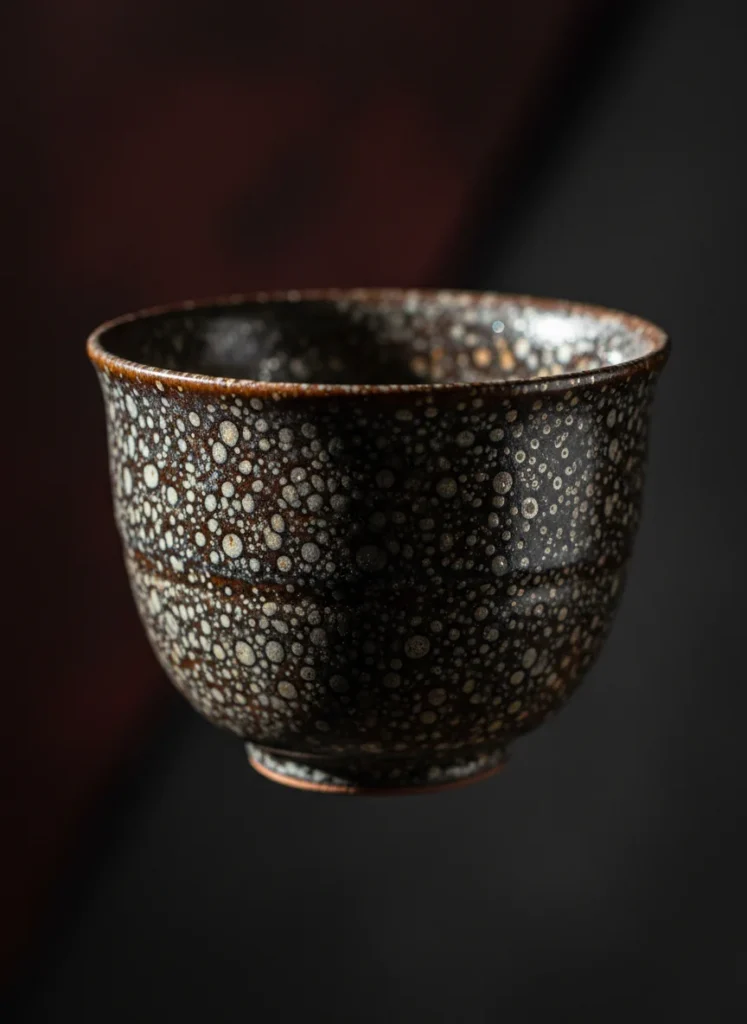
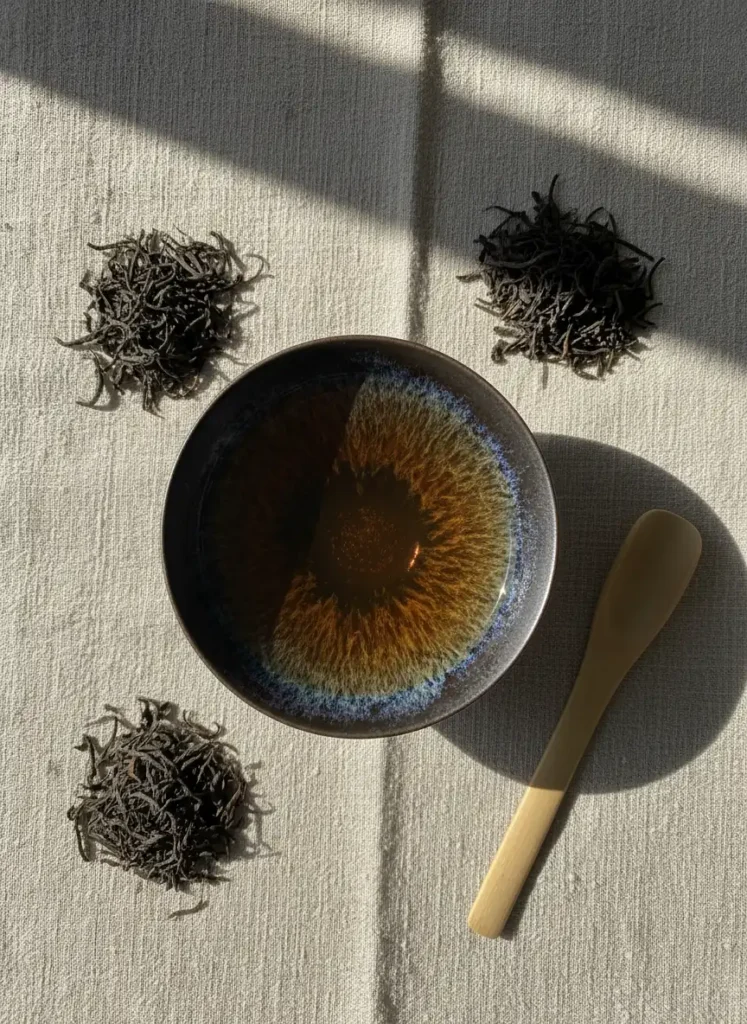
- Clear sake — Against the dark glaze, clear sake takes on a luminous, almost amber quality that glass cannot show. The dark background makes the sake’s color — even subtle differences between Junmai and Ginjo — immediately apparent.
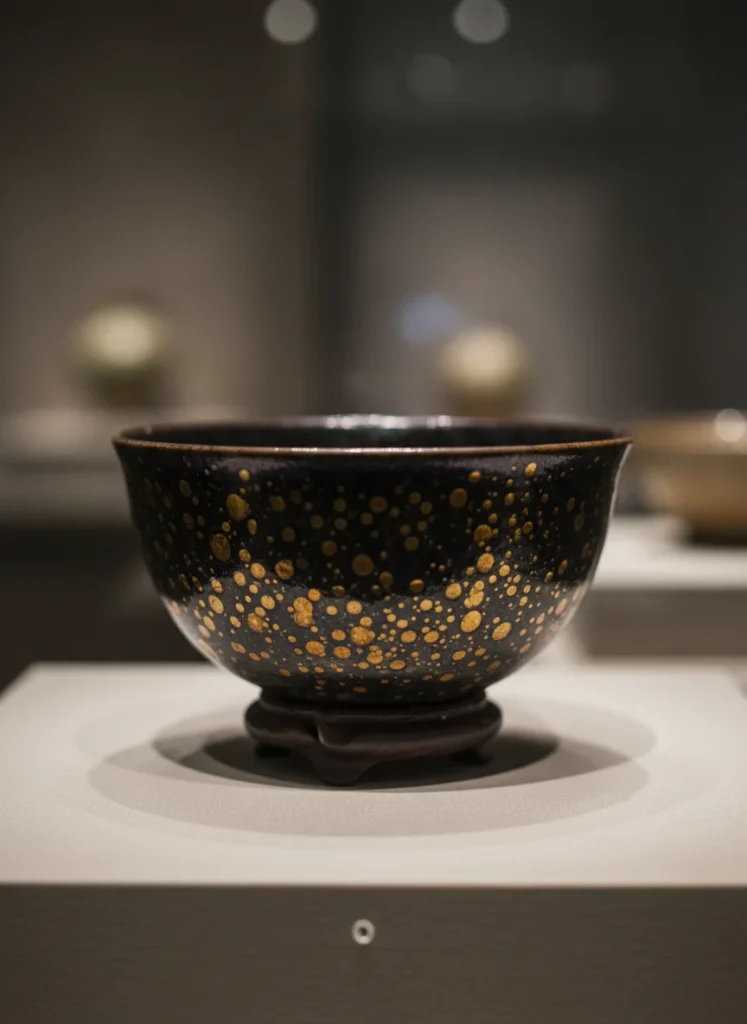
- Nigori (cloudy sake) — The contrast between the white, cloudy nigori and the dark reactive glaze is stunning. If the cup has oil spot patterns, the white sake pools in the metallic spots, creating a visual effect like moonlight on water.
- Aged sake (koshu) — The deep amber color of aged sake against hare’s fur streaks is one of the most beautiful pairings we have seen in any drinking vessel. The parallel lines of the fur pattern echo the long aging process.
Drinking is a multi-sensory experience, and Jian Zhan enhances the visual dimension in ways that standard sake cups simply cannot match.
Caring for Jian Zhan After Sake
Sake requires slightly different care than tea:
- Rinse immediately — Sake contains sugars and amino acids that can leave residue if allowed to dry. Rinse the cup with warm water as soon as you finish drinking.
- No soap — As with tea, avoid soap or detergent. The glaze is naturally non-stick due to its high firing temperature, and warm water alone is sufficient.
- Dry thoroughly — Unlike tea, sake can leave a slight film if the cup is stored while still damp. Wipe with a soft cloth and air dry completely before storing.
- Separate cups for tea and sake — If you drink both tea and sake from Jian Zhan, we recommend dedicating separate cups for each. The sake residue can subtly affect tea flavor, and vice versa. Just as we recommend dedicated teaware for different tea types, dedicated vessels for different beverages preserve the purest experience.
Our Top Jian Zhan Picks for Sake at potalastore
Based on our testing, here are our recommendations:
- For warm sake — A medium Jian Zhan cup (2.5-inch / 6.5 cm diameter) with oil spot glaze. The metallic spots create beautiful visual effects with amber sake, and the thick walls retain heat perfectly.
- For chilled sake — A small hare’s fur cup (2-inch / 5 cm diameter). The vertical streaks create elegant visual lines through clear sake, and the smaller size is appropriate for chilled sake service.
- For nigori — A conical Jian Zhan bowl (3.5-inch / 9 cm diameter) with dark glaze. The wide opening accommodates the thicker nigori texture, and the dark background creates maximum visual contrast.
Whatever you choose, remember that the best sake cup is the one that makes you slow down and pay attention. Jian Zhan demands that — its weight, its texture, its visual drama all ask you to be present with your drink. And that is what good sake drinking is about.
❓ Frequently Asked Questions About Jian Zhan for Sake
❓ Is drinking sake from Jian Zhan traditional?
Not in the strict sense — Jian Zhan was historically a tea vessel. However, Song Dynasty records show some Jian Zhan was used for rice wine service at banquets, and the modern practice is a natural extension of the ware’s properties. It has genuine historical precedent even if it is not a continuous tradition.
❓ Does the iron in Jian Zhan affect sake taste?
Yes, subtly. The iron oxide in the glaze interacts with organic acids in sake, reducing sharp acidity and adding a smooth, mineral quality. The effect is similar to how iron softens tea tannins — it rounds out the sake’s profile without fundamentally changing its character.
❓ Can I use the same Jian Zhan cup for tea and sake?
We recommend separate cups. Sake leaves a subtle residue that can affect tea flavor, and tea patina can alter sake’s taste. Dedicate one cup for each beverage for the purest experience.
❓ What sake types pair best with Jian Zhan?
Junmai and koshu (aged sake) are the best pairings. The iron glaze enhances their umami and depth. Nigori is also excellent for the visual contrast. Delicate Daiginjo may be better served in glass to preserve its subtle aromatics.
❓ How do I clean Jian Zhan after sake?
Rinse immediately with warm water — no soap. Sake contains sugars that can leave residue if allowed to dry. Wipe with a soft cloth and air dry completely before storing. This is slightly more important than with tea, where residue is less of a concern.
📚 References
- Sake Serving Traditions: Japanese sake ceremony and vessel selection. www.metmuseum.org
- Jian Zhan Heritage: Song Dynasty kiln firing techniques. www.britishmuseum.org
- Ceramic Glaze Science: Iron-oxide crystallization in tenmoku glazes. www.si.edu
Ready to try sake from a jian zhan cup? Browse our tenmoku collection and discover the perfect vessel for your next pour.


