

Contents
- Why Oolong Tea Is Perfect for Beginners
- What Makes Oolong Different from Other Teas?
- The Role of Terroir in Oolong Flavor
- Tieguanyin (铁观音): The Gateway Oolong
- How to Brew Tieguanyin
- Da Hong Pao (大红袍): The King of Oolong
- How to Brew Da Hong Pao
- Other Oolongs Every Beginner Should Try
- Milk Oolong (金萱, Jin Xuan)
- Phoenix Dancong (凤凰单丛)
- Oriental Beauty (东方美人, Dong Fang Mei Ren)
- Choosing the Right Teaware for Oolong
- Quick Teaware Pairing Guide
- Frequently Asked Questions About Oolong Tea for Beginners
- ❓ Does oolong tea contain caffeine?
- ❓ How should I store oolong tea?
- ❓ Can I steep oolong tea more than once?
- 📚 References
Why Oolong Tea Is Perfect for Beginners
If you are new to the world of loose-leaf tea, oolong is one of the most rewarding categories to explore. Sitting between green and black tea in oxidation level, oolong offers an incredible range of flavors — from floral and creamy to roasted and nutty. For beginners who want to experience the depth of Chinese tea culture without feeling overwhelmed, oolong — especially iconic varieties like Tieguanyin — is the ideal starting point. At Zen Tea Cup, we believe the teaware you choose shapes every sip, and understanding which oolong suits your palate will transform your daily ritual.
| Key Stat | Value |
|---|---|
| Oxidation Range | 15–85 % |
| Caffeine Level | 30–50 mg per 8 oz |
| Water Temp | 185–205 °F |
| Steep Count | 5–8 infusions |
| Price Range | $8–$60 per 100 g |
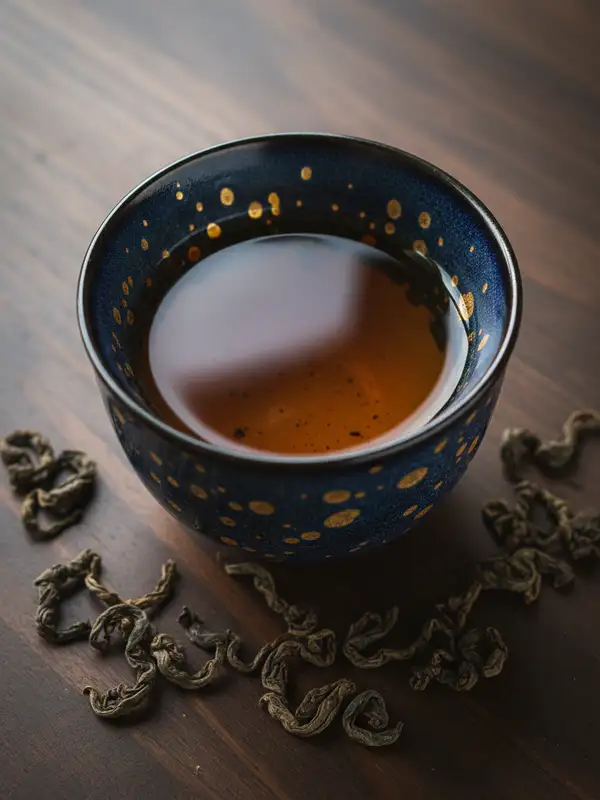
Oolong tea (乌龙茶, wūlóng chá) undergoes partial oxidation — typically between 15% and 85% — which gives each variety a distinct character. Unlike green tea, which can taste grassy if brewed incorrectly, or black tea, which may feel too strong for a delicate palate, oolong provides a forgiving brewing window and complex layers that reveal themselves over multiple infusions. Whether you prefer something light and fragrant or bold and warming, there is an oolong waiting for you.
What Makes Oolong Different from Other Teas?
Oolong stands apart because of its unique processing. After harvesting, the leaves are withered, bruised, partially oxidized, and then fired to halt oxidation at a precise point. This controlled oxidation is what creates oolong’s signature depth. Green tea is minimally oxidized (0–5%), black tea is fully oxidized (95–100%), and oolong occupies the vast middle ground.
| Tea Type | Oxidation Range | Flavor Profile | Brewing Temperature |
|---|---|---|---|
| Green Tea | 0–5% | Grassy, vegetal, fresh | 175°F (80°C) |
| Light Oolong | 15–35% | Floral, creamy, sweet | 185°F (85°C) |
| Dark Oolong | 50–85% | Roasted, nutty, caramel | 205°F (96°C) |
| Black Tea | 95–100% | Malty, brisk, robust | 212°F (100°C) |
One of oolong’s greatest advantages for beginners is its durability. You can re-steep the same leaves 5 to 8 times, and each infusion reveals a new flavor layer. This makes oolong both economical and endlessly fascinating — you get to watch the tea “open up” over the course of a session, a process the Chinese call kāi tāng (开汤).
The Role of Terroir in Oolong Flavor
Like wine, oolong tea is shaped by its terroir — the soil, altitude, and climate where the tea plants grow. Tieguanyin from the rocky hills of Anxi tastes distinctly different from a high-mountain oolong grown at 5,900 feet (1,800 meters) in Taiwan’s Alishan region. The mineral content of the soil, the fog that blankets the mountains, and the temperature swings between day and night all leave their mark on the leaf. When you choose an oolong, you are tasting a specific place and season.
Tieguanyin (铁观音): The Gateway Oolong
Tieguanyin, also spelled Tie Guan Yin, is perhaps the most approachable oolong for beginners. Originating from Anxi County in Fujian Province, this tea is named after the Buddhist deity Guanyin (the Goddess of Mercy). The legend says a poor farmer discovered the tea plant growing beside a dilapidated temple dedicated to Guanyin, and his care for the temple was rewarded with this extraordinary tea.
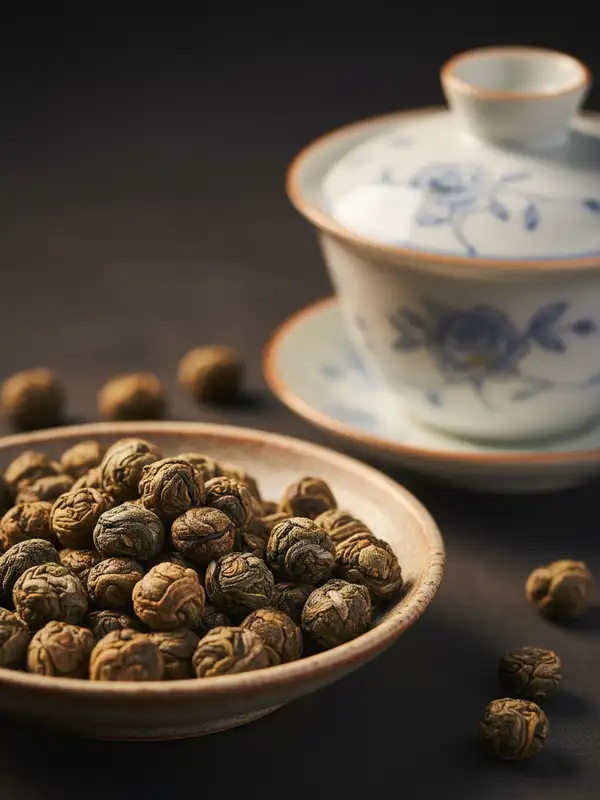
Modern Tieguanyin comes in two main styles. The jade style (清香型, qīngxiāng) is lightly oxidized at 15–25% and roasted gently, producing a bright, floral liquor with notes of orchid and fresh cream. The traditional style (浓香型, nóngxiāng) is oxidized to 35–50% and roasted more heavily, yielding a deeper, toastier cup with hints of roasted chestnut and brown sugar.
How to Brew Tieguanyin
For beginners, here is a reliable brewing method. Use 0.35 oz (10 grams) of leaf per 5.1 fl oz (150 ml) of water. Heat your water to 195°F (90°C) for jade style or 205°F (96°C) for traditional style. Pour the water over the leaves and decant the first infusion after 30 seconds — this is a “wash” that awakens the leaves. For subsequent infusions, steep for 20–30 seconds, adding 5–10 seconds per round. You can expect 6 to 8 infusions from a single serving. Brew Tieguanyin in a small teacup or gaiwan for the best flavor concentration. (compare options on our comparison chart)
Da Hong Pao (大红袍): The King of Oolong
Da Hong Pao, meaning “Big Red Robe,” is one of China’s most famous — and most storied — teas. Grown in the Wuyi Mountains of northern Fujian, this dark oolong is heavily oxidized (60–80%) and charcoal-roasted, producing a rich, complex liquor with notes of dark chocolate, roasted grain, dried plum, and mineral. The name comes from a Ming Dynasty legend: an emperor sent red robes to clothe the tea bushes that cured his illness.
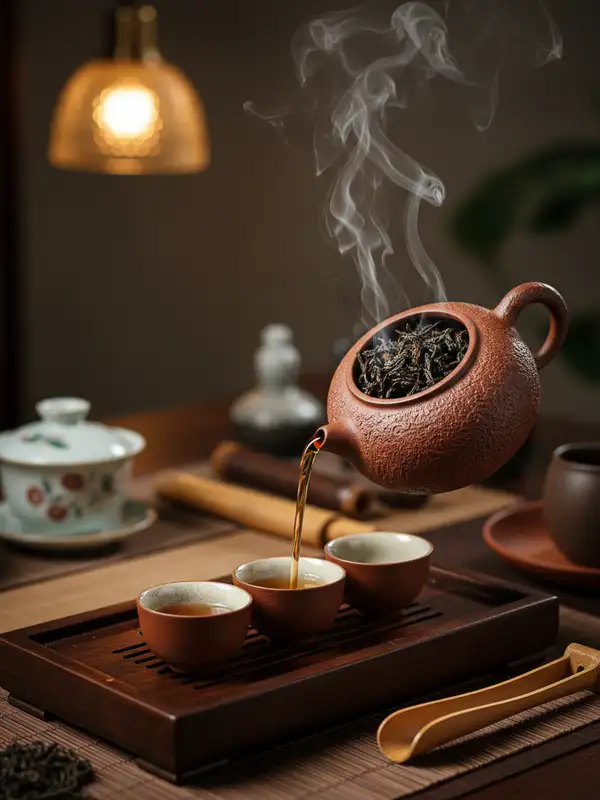
Authentic Da Hong Pao from the original mother bushes is extraordinarily rare — in 2005, 0.7 oz (20 grams) of the original bush tea sold at auction for approximately $22,000. Fortunately, commercial Da Hong Pao is propagated from cuttings of those original plants and still captures much of that mineral-rich Wuyi character. For beginners, Da Hong Pao is an excellent introduction to the world of yán chá (岩茶, “rock tea”) — oolongs grown in the mineral-rich soil of Wuyi’s cliff faces.
How to Brew Da Hong Pao
Da Hong Pao demands near-boiling water: 205–212°F (96–100°C). Use 0.35 oz (10 grams) of leaf per 5.1 fl oz (150 ml). The first infusion should be a quick 10-second rinse. Then steep for 15–20 seconds for the first proper infusion, gradually increasing to 45–60 seconds by the fifth or sixth round. A well-made Da Hong Pao will reward you with 8 to 12 infusions, each revealing different layers of its roasted, mineral complexity. The tea’s deep amber color looks stunning in a tenmoku cup with oil-spot glaze, where the metallic sheen of the glaze mirrors the tea’s richness.
Other Oolongs Every Beginner Should Try
While Tieguanyin and Da Hong Pao are the cornerstones, the oolong world has much more to offer. Here are three more varieties that beginners will love:
Milk Oolong (金萱, Jin Xuan)
Grown primarily in Taiwan at elevations around 3,280 feet (1,000 meters), Jin Xuan is a cultivar known for its naturally creamy, buttery mouthfeel. Despite the name “Milk Oolong,” authentic Jin Xuan contains no dairy — its creamy texture comes from the cultivar’s natural amino acid profile and a light roasting process. Brew it at 185°F (85°C) for 30 seconds per infusion. The liquor is pale gold with a sweet, milky aroma that makes it one of the most crowd-pleasing oolongs for newcomers.
Phoenix Dancong (凤凰单丛)
Grown on Phoenix Mountain in Guangdong Province, Dancong is famous for its intoxicating aroma — so intense that each bush is said to have its own unique fragrance. Common aroma profiles include honey orchid, almond, and gardenia. Dancong is lightly oxidized (25–40%) and minimally roasted, so it preserves bright, floral top notes. Brew at 195°F (90°C) for 20 seconds per infusion. This tea pairs beautifully with a tenmoku cup, which softens the astringency and enhances the floral sweetness.
Oriental Beauty (东方美人, Dong Fang Mei Ren)
Also known as Eastern Beauty, this Taiwanese oolong is unique because it requires the bite of a tiny insect called the tea green leafhopper (Jacobiasca formosana) to trigger the plant’s defensive chemistry, which produces the tea’s signature honey and muscat grape aroma. Oxidized to 50–70%, Oriental Beauty brews into a deep amber liquor with notes of wild honey, ripe peach, and spice. Use 195°F (90°C) water and steep for 45–60 seconds. This tea cannot be re-steeped as many times as Tieguanyin (typically 3–4 rounds), but each infusion is a concentrated burst of honeyed complexity.
Choosing the Right Teaware for Oolong
The vessel you brew in matters enormously. For light oolongs like Tieguanyin and Jin Xuan, a porcelain gaiwan or thin-walled ceramic teapot preserves the delicate floral aromas. For dark, roasted oolongs like Da Hong Pao, an Yixing clay teapot enhances the tea’s warmth and depth — the porous clay absorbs tea oils over time and develops a “seasoning” that enriches future brews.
When it comes to drinking vessels, a tenmoku tea cup is an exceptional choice for any oolong. The iron-rich glaze interacts subtly with the tea’s chemistry, rounding out harsh edges and amplifying the tea’s natural sweetness. The thick walls of a tenmoku cup also retain heat longer than porcelain, keeping your oolong at the ideal tasting temperature — around 140°F (60°C) — for minutes longer. If you are building your oolong tea kit, explore our tenmoku teaware collection at Zen Tea Cup to find cups that match your style.
Quick Teaware Pairing Guide
| Oolong Type | Brewing Vessel | Drinking Cup | Why |
|---|---|---|---|
| Light (Tieguanyin, Jin Xuan) | Porcelain gaiwan | Thin porcelain or light tenmoku | Preserves floral aromatics |
| Dark (Da Hong Pao, Dancong) | Yixing clay teapot | Dark tenmoku with oil-spot | Enhances warmth and depth |
| Aged oolong | Yixing or stoneware | Thick-walled tenmoku | Retains heat for slow sipping |
Frequently Asked Questions About Oolong Tea for Beginners
❓ Does oolong tea contain caffeine?
Yes, oolong tea contains moderate caffeine — typically 30–50 mg per 8 fl oz (240 ml) cup, which is less than black tea (50–90 mg) but more than most green teas (20–45 mg). If you are sensitive to caffeine, brew your oolong with slightly cooler water and shorter steep times to reduce caffeine extraction.
❓ How should I store oolong tea?
Store oolong in an airtight container away from light, heat, and moisture. Light oolongs stay fresh for about 6–12 months, while dark roasted oolongs like Da Hong Pao can last 2–3 years if stored properly. Some aged oolongs are deliberately stored for 5+ years, developing a smoother, sweeter profile over time.
❓ Can I steep oolong tea more than once?
Absolutely — re-steeping is one of oolong’s greatest pleasures. Light oolongs yield 5–8 infusions, while dark oolongs can produce 8–12 or more. Simply add 5–10 seconds to each subsequent steep. You will notice the flavor evolving from bright and floral to deep and sweet as the leaves gradually unfurl.
📚 References
- The Met Museum: The Japanese Tea Ceremony: An overview of tea culture and the vessels used in traditional ceremonies. The Metropolitan Museum of Art
- Wuyi Rock Tea Research: Studies on the mineral composition of Wuyi Mountain soil and its impact on Da Hong Pao flavor chemistry. Chado Tea
- Taiwan Tea Research and Extension Station: Official research on Jin Xuan cultivar development and Oriental Beauty production methods. Tea From Taiwan
Ready to begin your oolong journey? Whether you start with a floral Tieguanyin or a bold Da Hong Pao, the right cup makes every infusion better. Browse our collection of handcrafted tenmoku tea cups at Zen Tea Cup and find the perfect vessel for your first — and hundredth — cup of oolong.
Ready to find your perfect tenmoku cup? Explore Zen Tea Cup collection for handcrafted, artisan-crafted teaware shipped across the US.


