

The best way to display your Jian Zhan collection at home is with indirect LED lighting at 3000-4000K, placed on shelves 24-30 inches (61-76 cm) high with at least 6 inches (15 cm) of depth, keeping room humidity between 40-60% to protect the iridescent glaze. If you have spent months — or years — building a Jian Zhan collection, you already know that these Tenmoku tea cups deserve far more than a dusty kitchen shelf. The oil spot and hare’s fur patterns shift under different light, and the right display setup lets you see what you paid for. After working with collectors and visiting display setups in Jianyang, we learned that most people unintentionally hide their best pieces behind poor lighting or cramped shelves. From Zen Tea Cup, here is a practical guide to showcasing your collection the way it deserves.
| Key Stat | Value |
|---|---|
| Optimal Display Humidity | 40-60% |
| Recommended LED Color Temperature | 3000-4000K |
| Shelf Depth Minimum | 6 inches (15 cm) |
| Shelf Height Range | 24-30 inches (61-76 cm) |
| Typical Jian Zhan Diameter | 7-9 cm |
| Typical Jian Zhan Weight | 120-180 g |
| UV Damage Threshold | 4+ hours direct sunlight daily |
Contents
- Why Your Jian Zhan Collection Deserves a Proper Display
- Choosing the Right Location for Your Display
- Best Rooms and Surfaces
- Lighting: The Secret to Showcasing Tenmoku Glaze
- LED Lighting Setup for Glaze Patterns
- Display Shelving and Cabinet Options
- Open Shelving vs Glass Cabinets
- Protecting Your Collection from Environmental Damage
- Arrangement Ideas: Creating Visual Impact
- Grouping by Glaze Pattern
- ❓ Frequently Asked Questions
- ❓ Can I display Jian Zhan cups in direct sunlight?
- ❓ What humidity level is safe for a Jian Zhan collection?
- ❓ How often should I rotate the cups in my display?
- 📚 References
Why Your Jian Zhan Collection Deserves a Proper Display
Your Jian Zhan cups are not ordinary ceramics — they are functional art with iridescent glaze patterns that change depending on the angle and quality of light. A hare’s fur cup that looks dark brown under a ceiling bulb can reveal silver streaks under a warm LED. An oil spot bowl that seems plain in shadow will flash with golden flecks when lit from 30-45 degrees. When you display your collection properly, you protect the glaze from environmental damage and you get to enjoy the visual complexity that makes each piece unique (no two Jian Zhan cups ever look identical — that is part of their charm).
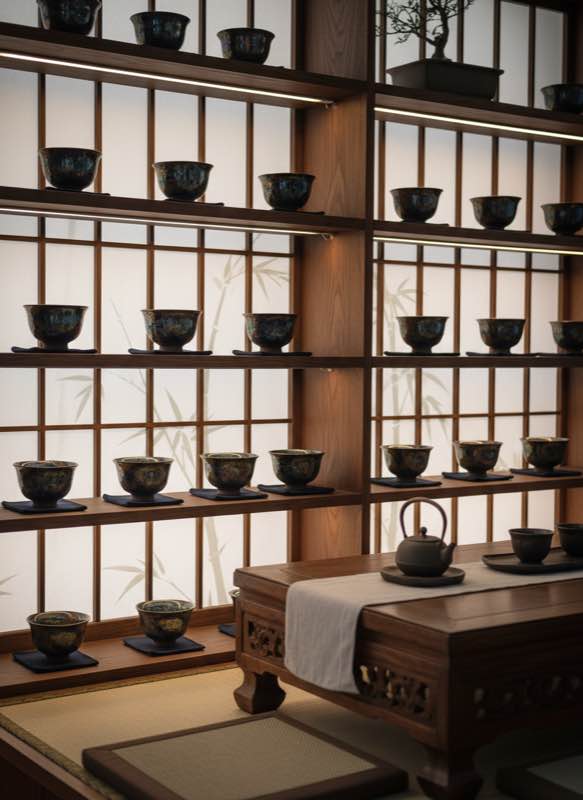
Most collectors we spoke with admitted they kept their best cups in boxes or on random shelves, missing the daily pleasure of seeing how light interacts with the glaze. A dedicated display does not require a museum budget — you can create an impressive setup for under $100 with the right shelf and a single LED strip.
Choosing the Right Location for Your Display
The ideal spot for your Jian Zhan display balances three factors: lighting control, humidity stability, and visibility from where you spend time. You want a location where you can adjust the light, where the temperature stays relatively constant, and where you actually see the cups daily — a display you never look at serves no purpose.
Best Rooms and Surfaces
A dedicated tea room or study is ideal because you can control the environment. A living room bookshelf works well too, as long as it is not directly next to a window or heating vent. Avoid kitchens (humidity swings from cooking) and bathrooms (moisture damage). The surface should be stable — no wobbly tables or shelves that vibrate when someone walks by. Each Jian Zhan cup weighs 120-180 g, so a shelf holding 5-8 cups needs to support about 1-1.5 kg comfortably.
When we set up our first display, we made the mistake of placing cups near a south-facing window — within weeks, the direct afternoon sun had faded the subtle blue tones on one Yao Bian piece. Learn from that error: keep your collection at least 3 feet (about 90 cm) from any window that gets direct sunlight for more than 2 hours a day.
Lighting: The Secret to Showcasing Tenmoku Glaze
Lighting is the single most important factor in displaying Jian Zhan. The iron-rich glaze on these cups creates optical effects — iridescence, color shifts, metallic reflections — that only appear under the right conditions. Standard overhead lighting flattens these effects. You need directional, warm-toned light to bring out the depth.
LED Lighting Setup for Glaze Patterns
Use LED strip lights or adjustable spotlights rated at 3000-4000K (warm white to neutral white). This color range mimics the warm glow of traditional tea ceremony lighting and makes the metallic flecks in oil spot and hare’s fur patterns pop. Position lights at a 30-45 degree angle from above — this creates the shadows and highlights that reveal the glaze’s three-dimensional texture. Avoid cool white LEDs (5000K+) because they wash out the warm amber and gold tones that make Tenmoku glaze distinctive.
For a shelf of 3-5 cups, a single 5-watt LED strip mounted under the shelf above is sufficient. If you have a glass cabinet, place the LED strip along the top interior edge. The investment is small — a quality LED strip costs $15-25 — but the visual improvement is dramatic. You can explore more about Tenmoku glaze patterns and what they mean to understand which lighting works best for each type.
Display Shelving and Cabinet Options
The right shelf or cabinet protects your Jian Zhan while presenting it beautifully. You have three main options, each with different trade-offs between protection, visibility, and cost.
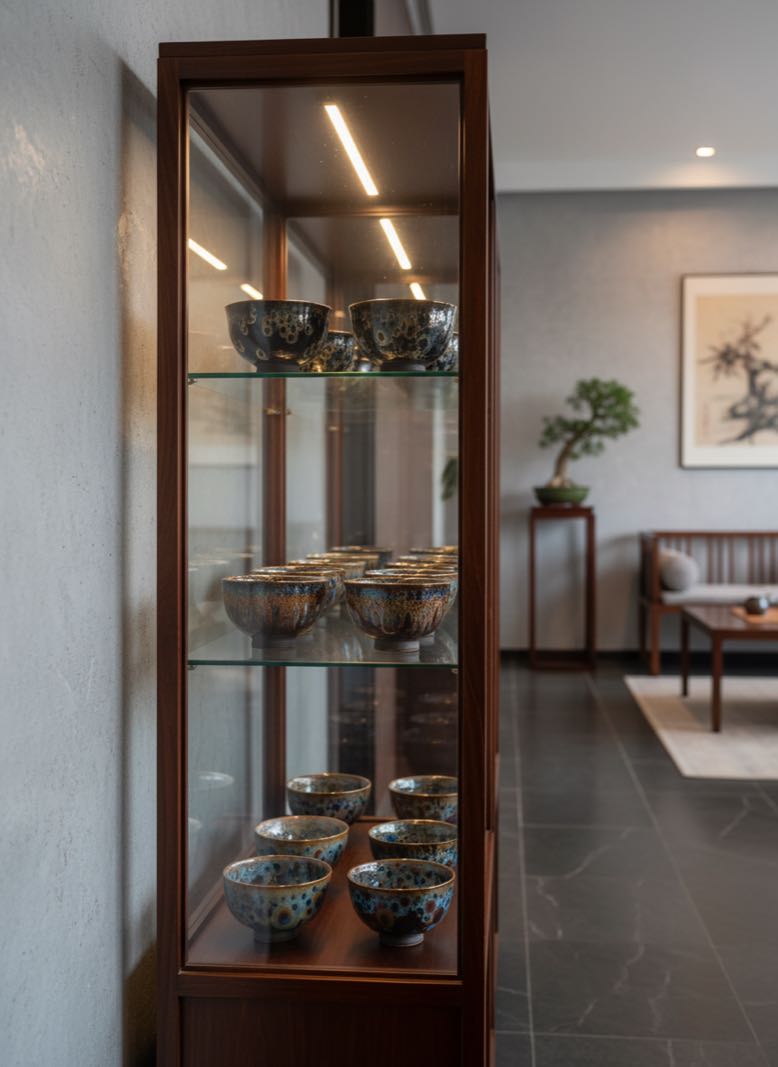
Open Shelving vs Glass Cabinets
Open shelves give you the easiest access and the most flexible lighting, but they expose cups to dust and accidental bumps. Glass-front cabinets protect from dust and let you control the internal lighting, but they cost more and can create reflections that obscure the glaze. A hybrid approach works well: use open shelves for your everyday rotation cups and a glass cabinet for your most valuable or fragile pieces.
Shelf depth should be at least 6 inches (15 cm) to accommodate a Jian Zhan cup’s typical 7-9 cm diameter with room for a small stand or riser. Shelf height between 24-30 inches (61-76 cm) puts the cups at eye level when you are seated for tea — the traditional viewing height in Chinese and Japanese tea culture. If you stack shelves vertically, leave 8-10 inches (20-25 cm) between shelves so you can pick up a cup without knocking the one above.
Protecting Your Collection from Environmental Damage
Jian Zhan glaze is remarkably durable — it was fired at 2,300°F (1,260°C) — but that does not mean it is indestructible. The two biggest threats are rapid humidity changes and UV exposure. Maintaining stable humidity between 40-60% prevents the clay body from expanding and contracting, which can cause micro-cracks over years. A small hygrometer ($10-15) lets you monitor conditions. If humidity drops below 40% in winter, a small humidifier in the room helps.
UV damage is slower but irreversible. More than 4 hours of direct sunlight daily can gradually fade the subtle color variations in Yao Bian and other sensitive glaze patterns. Use UV-filtering window film ($20-30 per window) if your display is near natural light, or simply position the display away from direct sun. Dust is cosmetic rather than structural, but it dulls the glaze’s shine. A soft camel-hair brush once a week keeps cups looking their best without risking scratches.
Understanding the difference between handmade and machine-made Jian Zhan helps you decide which pieces need the most protection — handmade cups with rare glaze patterns are irreplaceable and deserve the safest spot in your display.
Arrangement Ideas: Creating Visual Impact
How you arrange your Jian Zhan on the shelf matters as much as the shelf itself. A random row of cups looks cluttered; a thoughtful arrangement tells a story and draws the eye to each piece’s unique character.
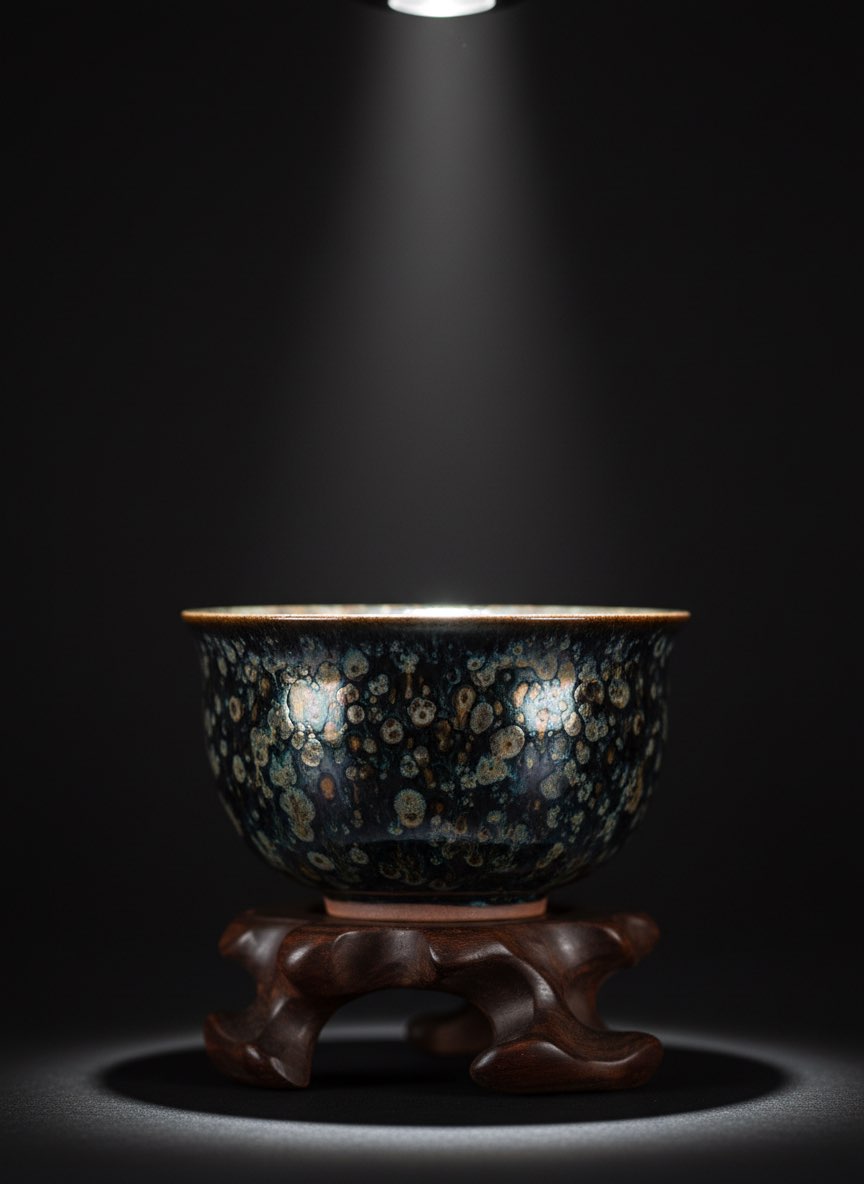
Grouping by Glaze Pattern
Arrange cups by glaze type — all oil spot together, all hare’s fur together, all Yao Bian together. This grouping lets you see how the same glaze category varies from cup to cup (the firing process ensures no two are identical). Place your most dramatic piece at the center and work outward with progressively subtler examples. Use small wooden or ceramic stands — 1-1.5 inches (2.5-4 cm) tall — to elevate the center cup slightly above the others, creating a natural focal point.
Alternatively, arrange by size: largest cups at the back, smallest in front. This creates depth and ensures every cup is visible. Leave 2-3 inches (5-8 cm) between cups so each one has breathing room and you can pick one up without disturbing its neighbors. A rotation schedule — swapping cups every 2-3 months — keeps the display fresh and gives you a reason to handle each piece, which is part of the joy of collecting.
❓ Frequently Asked Questions
❓ Can I display Jian Zhan cups in direct sunlight?
No — prolonged direct sunlight (4+ hours daily) can fade sensitive glaze patterns like Yao Bian over time. Use indirect natural light or LED lighting at 3000-4000K instead. If your display must be near a window, apply UV-filtering film to the glass.
❓ What humidity level is safe for a Jian Zhan collection?
Keep room humidity between 40-60%. Rapid swings above or below this range can cause the clay body to expand or contract, potentially leading to micro-cracks over years. A $10-15 hygrometer near your display lets you monitor conditions easily.
❓ How often should I rotate the cups in my display?
Every 2-3 months is ideal. Rotation keeps the display visually fresh, gives you a reason to inspect each cup for damage, and ensures no single piece is exposed to the same light angle continuously. It also lets you enjoy different glaze patterns as the seasons change.
📚 References
- Jian Ware at the Metropolitan Museum of Art: Collection overview and conservation notes for Song Dynasty ceramics. The Metropolitan Museum of Art
- Ceramic Display and Conservation Guidelines: Best practices for humidity, lighting, and shelving of ceramic collections. Smithsonian Museum Conservation Institute
- Chinese Ceramics: From the Paleolithic Period through the Qing Dynasty: Academic reference on Jian ware firing techniques and glaze chemistry. Yale University Press
Ready to build a display that does justice to your Jian Zhan collection? Whether you are arranging your first three cups or curating a shelf of rare glaze patterns, the right lighting, shelving, and protection make all the difference. Explore our curated Tenmoku collection to find your next display-worthy piece — every cup deserves to be seen at its best.


