

Contents
- What Is Gongfu Cha and Why Host a Session at Home
- The Difference Between Gongfu and Western Brewing
- Essential Equipment for Your Gongfu Cha Setup
- Choosing Your Brewing Vessel: Gaiwan vs Yixing vs Tenmoku
- The Minimalist Setup: What You Actually Need
- Setting Up Your Tea Space at Home
- Apartment-Friendly Gongfu Setup Tips
- Step-by-Step: Hosting Your Gongfu Cha Session
- Infusion Timing Guide by Tea Type
- Which Teas Work Best for Gongfu Cha
- Tips for Hosting Friends at a Gongfu Tea Session
- 📚 References
- ❓ How much tea do I need for a gongfu session?
- ❓ Can I do gongfu cha without a tea tray?
- ❓ What is the best tea for a first gongfu session?
- ❓ How long does a gongfu cha session last?
What Is Gongfu Cha and Why Host a Session at Home
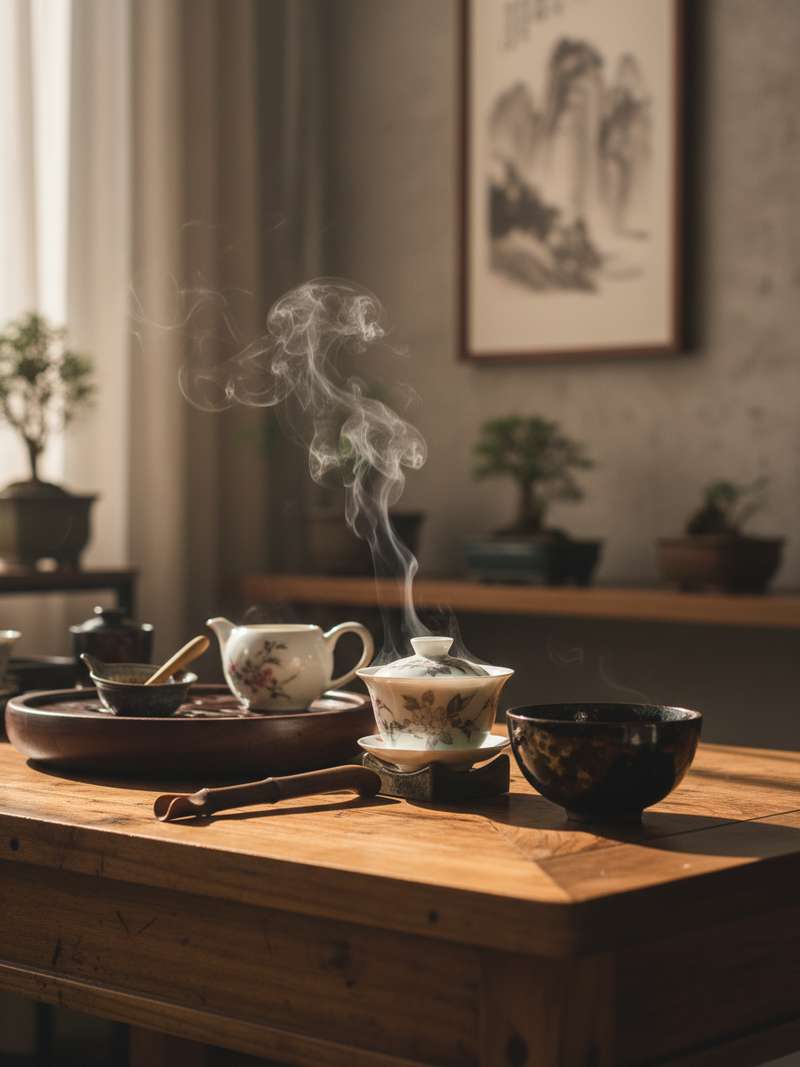
Gongfu Cha — literally “skillful tea brewing” — is a Chinese method that uses a high leaf-to-water ratio with multiple short infusions to extract the full flavor profile of each tea leaf. When you host a gongfu cha session at home, you use just 5–8 grams (0.18–0.28 oz) of tea, 100–150 ml (3.4–5.1 oz) of water, and 6–12 quick steeps to experience how a single leaf transforms across every cup. You don’t need a dedicated tea room or expensive equipment — a simple gaiwan, a tenmoku cup from Zen Tea Cup, and hot water are enough to start.
| Key Stat | Value |
|---|---|
| Tea per session | 5–8 grams (0.18–0.28 oz) |
| Water per infusion | 100–150 ml (3.4–5.1 oz) |
| Infusions per session | 6–12 |
| First steep time | 10–15 seconds |
| Session duration | 30–60 minutes |
| Water temperature range | 170–212 °F (77–100 °C) |
The Difference Between Gongfu and Western Brewing
Gongfu brewing uses roughly 5 grams of tea in 150 ml of water with short steeps of 10–20 seconds, while Western-style brewing typically uses 2 grams in 300 ml for 3–5 minutes. The gongfu approach gives you concentrated, evolving infusions — the first steep may taste floral, the fifth turns sweet, and the tenth reveals a deep mineral finish. You get to taste every phase of the leaf, which is why this method is called “skillful.” By contrast, Western brewing blends all those phases into one cup. When you host a gongfu session, you slow down and pay attention to each infusion — it becomes a mindful ritual rather than a rushed drink.
Essential Equipment for Your Gongfu Cha Setup
You can start a gongfu cha session with as few as three items: a brewing vessel, a cup, and hot water — but a few additions make the experience smoother and more enjoyable. Here is what you actually need to host your first session at home.
Choosing Your Brewing Vessel: Gaiwan vs Yixing vs Tenmoku
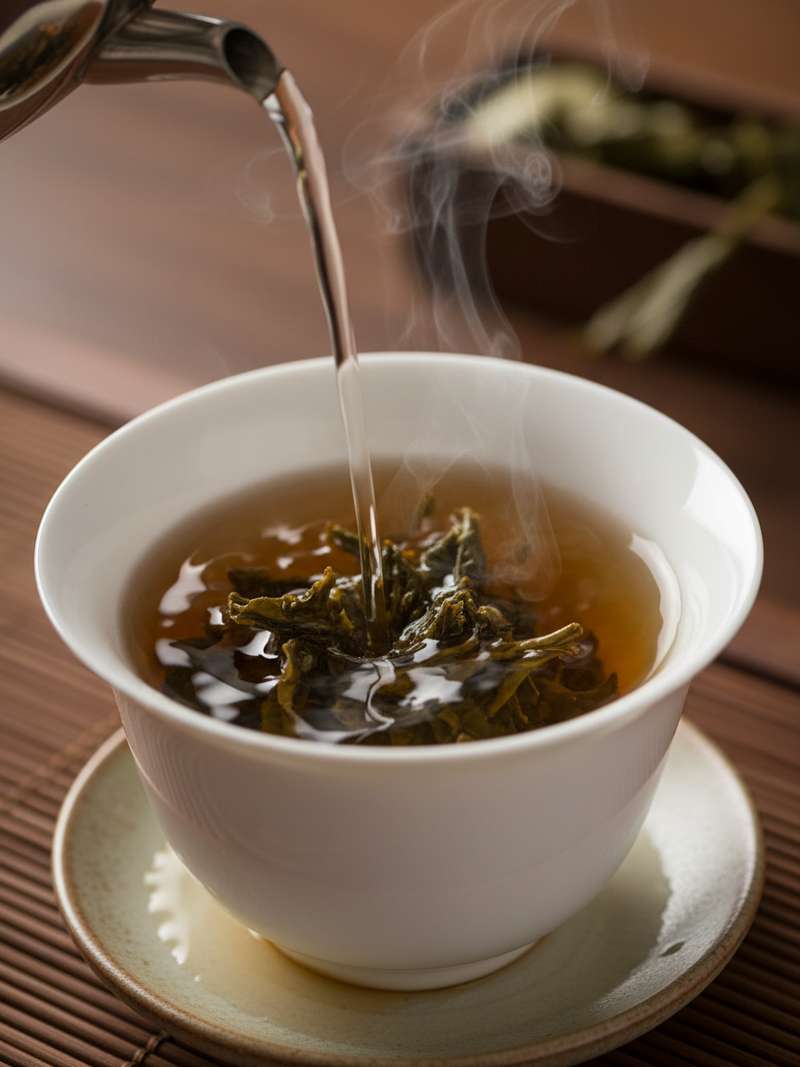
A gaiwan (lidded bowl, 100–150 ml / 3.4–5.1 oz) is the most versatile choice for beginners — it works with every tea type and lets you watch the leaves unfurl. A Yixing clay teapot seasons over time, absorbing tea oils that enrich future brews, but it’s best reserved for a single tea type. A tenmoku cup isn’t a brewing vessel, but it’s an exceptional serving cup — its iron-rich glaze (3.1–3.5 inches / 8–9 cm in diameter) enhances aroma and keeps tea warmer longer. Explore our complete tenmoku guide to find the right cup for your sessions.
The Minimalist Setup: What You Actually Need
If you live in an apartment or have limited space, here is the absolute minimum: a gaiwan, a small cup, and a variable-temperature electric kettle. You can skip the tea tray entirely — just place a bowl or towel underneath to catch spills. A tea strainer is helpful but optional; many gaiwans have a built-in lid that strains leaves when you pour. That’s it: three items and you’re ready to host a gongfu cha session at home.
Setting Up Your Tea Space at Home
Your tea space doesn’t need to be elaborate — a corner of your kitchen table or a small tray on a bookshelf works perfectly for gongfu cha. The key is having everything within arm’s reach so you can focus on the brewing rather than hunting for tools. A minimum surface of about 12 × 8 inches (30 × 20 cm) gives you enough room for a gaiwan, cup, and kettle.
Apartment-Friendly Gongfu Setup Tips
If you don’t have space for a full tea table with a drain, here are some apartment-friendly solutions: use a silicone mat or bamboo tray (12 × 8 inches) instead of a traditional tea tray with a reservoir; keep a small towel handy for wiping spills; use a compact variable-temperature kettle instead of a stovetop one; and store your tea and tools in a decorative box that doubles as your brewing surface. When you’re brewing in a small space, simplicity is your best friend — the less you have to manage, the more you can focus on the tea itself.
Step-by-Step: Hosting Your Gongfu Cha Session
Follow these steps to host your first gongfu cha session from start to finish — each infusion reveals a new layer of flavor. I remember my first session: I was so focused on getting the timing right that I forgot to actually taste the tea. The secret? Relax and let the tea guide you.
- Warm your vessels — Pour hot water into your gaiwan and cup, swirl, then discard. This preheats the ware so your tea doesn’t cool too quickly.
- Add tea leaves — Place 5–8 grams (0.18–0.28 oz) of tea into your gaiwan. For rolled oolong, this is about 1–2 teaspoons of pearls.
- Rinse the leaves — Pour hot water over the leaves, immediately pour out, and discard this first rinse. This “awakens” the leaves and removes dust.
- Smell the lid — After rinsing, lift the gaiwan lid and inhale. The aroma on the lid reveals the tea’s character before you even taste it.
- First infusion — Pour hot water (temperature depends on tea type — see table below), steep for 10–15 seconds, then decant into your cup or a sharing pitcher.
- Taste and observe — Notice the color, aroma, and flavor. Each subsequent infusion will be slightly different.
- Continue infusing — Add 5–10 seconds per steep. A good oolong gives you 6–10 infusions; puer can reach 12 or more.
- End when flavor fades — When the liquor becomes thin or bland, your session is complete. The spent leaves can go in your compost or garden.
Infusion Timing Guide by Tea Type
| Tea Type | Water Temp | First Steep | Subsequent Steeps | Total Infusions |
|---|---|---|---|---|
| Oolong (rolled) | 185–205 °F (85–96 °C) | 10–15 seconds | +5–10 seconds | 6–10 |
| Puer (raw/ripe) | 195–212 °F (90–100 °C) | 10–15 seconds | +5–10 seconds | 8–12 |
| Black tea | 195–205 °F (90–96 °C) | 10–20 seconds | +5–10 seconds | 5–8 |
| White tea | 175–185 °F (80–85 °C) | 15–20 seconds | +10 seconds | 4–6 |
| Green tea | 170–185 °F (77–85 °C) | 10–15 seconds | +5 seconds | 3–5 |
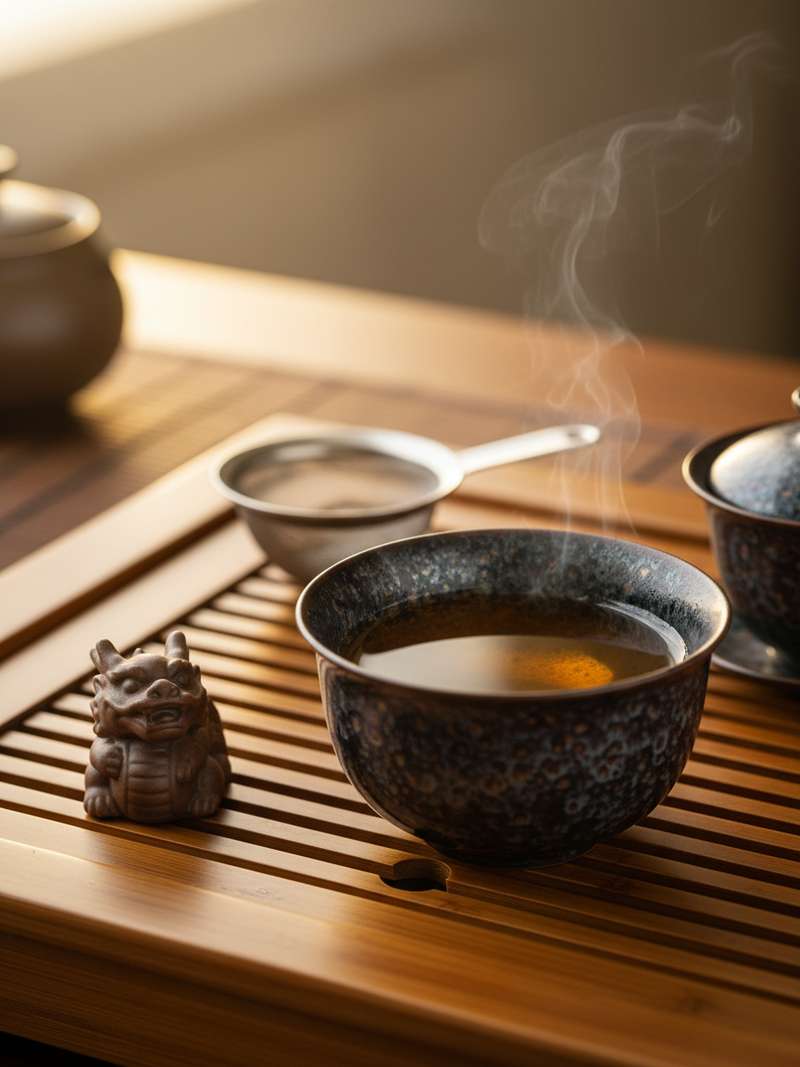
These are starting points — you’ll develop your own preferences as you brew more. If a particular infusion tastes too strong, steep for less time next round; if it’s too weak, add a few more seconds. Gongfu cha is forgiving, and adjusting on the fly is part of the process. For a deeper dive into which teas work best, check out our Chinese tea types guide.
Which Teas Work Best for Gongfu Cha
Not all teas are equal for gongfu brewing — compressed, rolled, or whole-leaf teas reward multiple short infusions with evolving flavors. The best choices share one trait: they can withstand repeated steeping without collapsing into bitterness.
Rolled oolongs (like Tieguanyin or Da Hong Pao) are ideal for beginners because they unfurl slowly over 6–10 infusions, giving you a clear sense of how flavor evolves. Puer tea (both raw and ripe) is the gongfu champion — a good puer delivers 8–12 distinct infusions, each with different depth and character. Black tea works well too, especially whole-leaf varieties from Yunnan or Fujian that yield 5–8 steeps. White tea (particularly aged white peony) offers gentle, sweet infusions for 4–6 rounds. Green tea can be brewed gongfu-style but requires lower temperatures (170–185 °F / 77–85 °C) and shorter steeps to avoid bitterness.
Teas to avoid for gongfu: broken-leaf tea bags, finely cut CTC black tea, and highly roasted greens — they release all their flavor in one steep and turn bitter on the second.
Tips for Hosting Friends at a Gongfu Tea Session
Gongfu cha is traditionally a shared experience — inviting friends turns a quiet ritual into a memorable social event. Three to four guests is ideal for a single gaiwan; each person receives a small cup from every infusion, and the conversation flows naturally between steeps. A typical session with guests lasts 30–60 minutes, giving everyone time to savor the changing flavors without feeling rushed.
Worried about hosting your first session? Start with one close friend — gongfu is about connection, not performance. You don’t need to explain every step; just pour and let the tea speak. Prepare a few snacks (dried fruit, nuts, or simple pastries) to complement the tea, and keep a second kettle warm so you can brew continuously without pauses. If you have tenmoku cups for your guests, the visual beauty of the glaze adds an extra layer of appreciation to each pour.
📚 References
- Gong Fu Cha: The Complete Guide to Making Chinese Tea: Detailed traditional brewing methods with equipment and technique guidance. The Chinese Tea Shop
- Tea Chemistry and Brewing Parameters: Research on how water temperature and steeping time affect catechin and caffeine extraction. ScienceDirect — Food Chemistry
- The Way of Tea: Chado and Chinese Tea Culture: Historical and cultural context for gongfu brewing traditions. Metropolitan Museum of Art
Ready to host your own gongfu cha session at home? Start with a gaiwan, pick up a tenmoku cup for serving, and explore our tenmoku collection at Zen Tea Cup to find the perfect cup for your next tea session at home.
❓ How much tea do I need for a gongfu session?
Use 5–8 grams of tea (about 0.18–0.28 oz) for a standard gaiwan session. This gives you enough leaf for 6–12 infusions with rich flavor in each cup.
❓ Can I do gongfu cha without a tea tray?
Yes — place a large bowl or towel under your gaiwan to catch spills. A tea tray is convenient but not required for a home session.
❓ What is the best tea for a first gongfu session?
Rolled oolong like Tieguanyin or Da Hong Pao is ideal for beginners — it unfurls slowly over many infusions, giving you a clear sense of how flavor evolves. Explore our oolong selection at Zen Tea Cup.
❓ How long does a gongfu cha session last?
A typical session runs 30–60 minutes depending on the tea and number of infusions. Puer can go even longer with 12+ steeps.
Find your next favorite cup — shop at these cups for handcrafted tenmoku tea cups delivered to your door.
Ready to elevate your tea ritual? Explore our shop for handcrafted tenmoku cups shipped across the US.


