

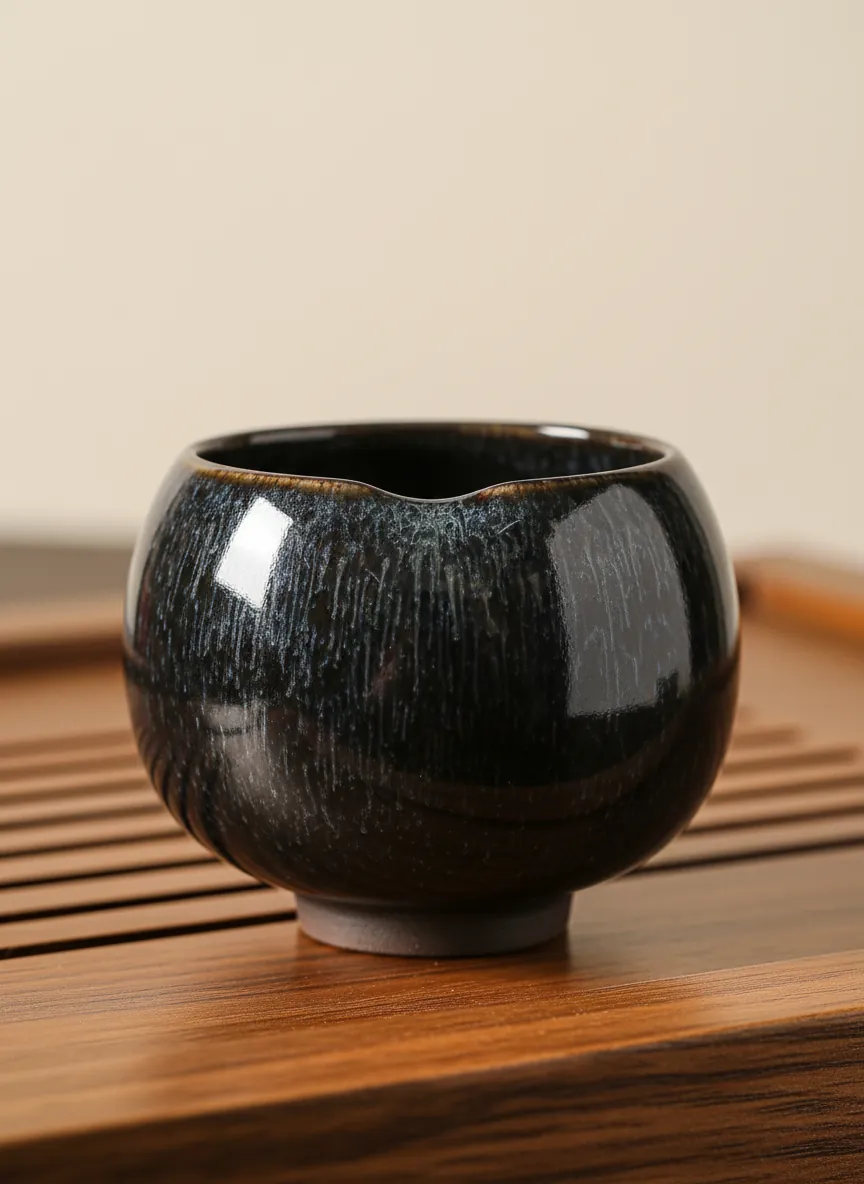
Among the four traditional shapes of Jian Zhan tea cups, Lian Kou (敛口) — the Slightly Constricted Mouth — stands out as the most balanced and versatile form. Its gently inward-tapered rim gives it a quietly confident silhouette that has served you since the Song Dynasty, offering excellent heat retention without the bold flare of a Pie Kou or the strict constriction of a Shu Kou. At ZenTeaCup, we’ve found that many of our customers reach for a Lian Kou cup first — it simply feels right in the hand and performs beautifully across different tea styles.
Contents
- What Does Lian Kou Mean in Jian Zhan Classification?
- Key Structural Features of the Lian Kou Shape
- Inward-Curving Rim
- Rounded Belly
- Compact Foot Ring
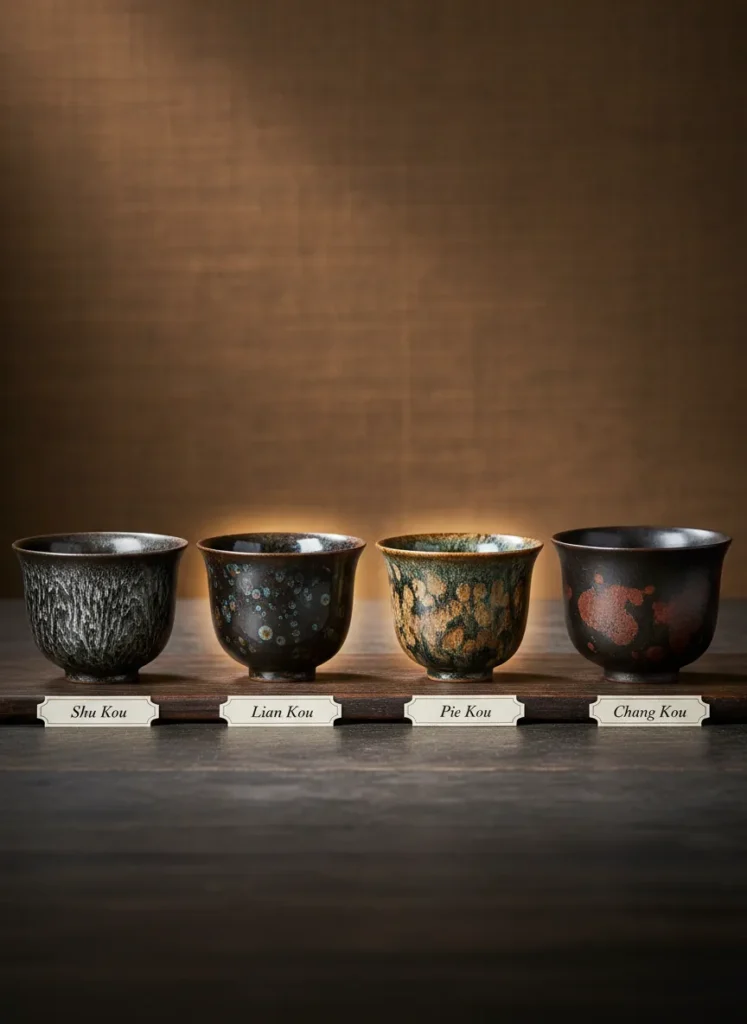
- Lian Kou vs. the Other Three Jian Zhan Shapes
- Why the Lian Kou Shape Excels for Everyday Tea
- How Lian Kou Fits Into Song Dynasty Tea Culture
- Choosing a Lian Kou Jian Zhan: What to Look For
- Caring for Your Lian Kou Jian Zhan Cup
- ❓ Frequently Asked Questions About Lian Kou Jian Zhan
- ❓ Is Lian Kou the same as Shu Kou?
- ❓ What tea pairs best with a Lian Kou cup?
- ❓ Why is Lian Kou recommended for beginners?
- 📚 References
What Does Lian Kou Mean in Jian Zhan Classification?
Lian Kou (敛口) translates to “Slightly Constricted Mouth” or “Recessed Rim” — it describes a Jian Zhan shape whose rim curves gently inward rather than flaring outward or remaining open. The Chinese character 敛 means “to gather in” or “to restrain,” which precisely captures how this rim gathers the tea’s warmth and aroma toward the center of the bowl.
In the official Jian Zhan shape taxonomy, there are four primary categories: Shu Kou (束口, Constricted Mouth), Pie Kou (撇口, Flared Mouth), Lian Kou (敛口, Slightly Constricted Mouth), and Chang Kou (敞口, Open Mouth). Each shape is further divided into large, medium, and small sizes. Lian Kou sits between Shu Kou and Chang Kou on the spectrum of rim openness — more open than Shu Kou but less than Chang Kou — making it a natural middle ground.
Key Structural Features of the Lian Kou Shape
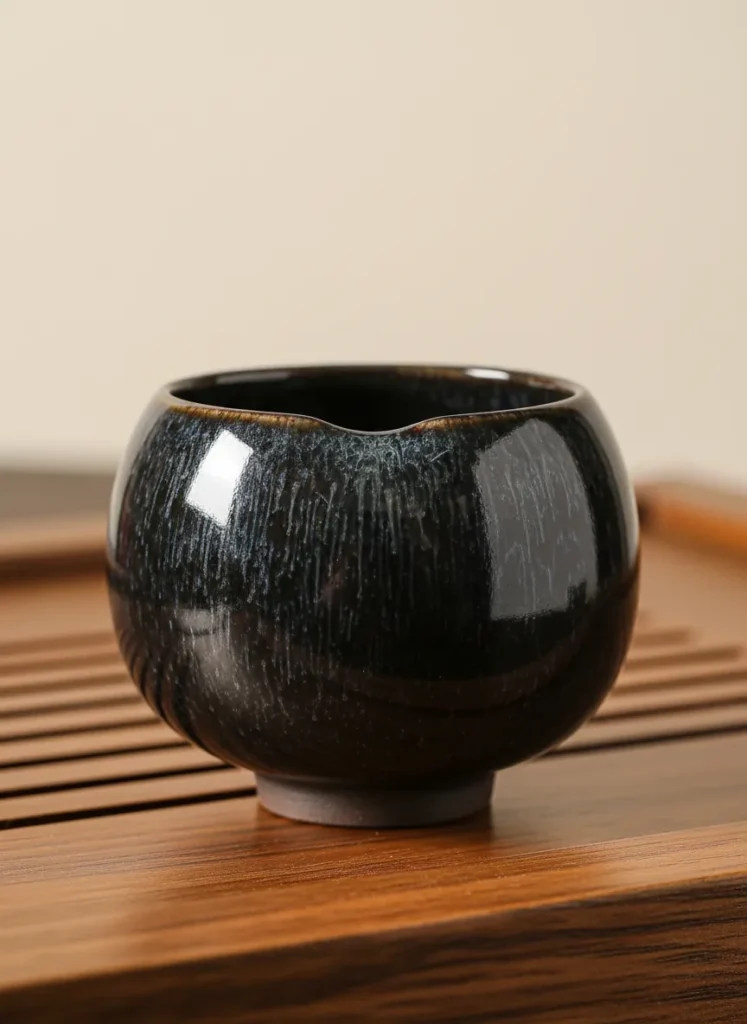
A Lian Kou cup is defined by three structural characteristics that work together: the inward-curving rim, a gently rounded belly, and a compact foot ring.
Inward-Curving Rim
The defining feature. The rim curves slightly inward — typically 2–4 mm — creating a subtle lip that narrows the opening compared to the bowl’s widest point. This inward curve is far gentler than the pronounced constriction of Shu Kou, which can narrow by 8–12 mm. The Lian Kou rim’s gentle inward sweep helps contain heat and reduces the chance of spills during whisking or pouring.
Rounded Belly
Beneath the rim, the bowl expands into a softly rounded belly — the widest section of the cup. This curved body serves two purposes: it gives the cup a comfortable, full feel in the hand, and it provides ample interior surface area for tea leaves to unfurl and for glaze patterns to develop. The belly diameter on a standard Lian Kou cup (about 4 inches across) typically measures 3.5–4.2 inches.
Compact Foot Ring
Lian Kou cups rest on a short, relatively narrow foot ring with a shallow foot indentation. This compact base contributes to the cup’s stability and gives it a lower center of gravity than taller Shu Kou forms. The foot ring diameter usually measures about 1.6–2.0 inches, proportionate to the overall bowl size.
Lian Kou vs. the Other Three Jian Zhan Shapes
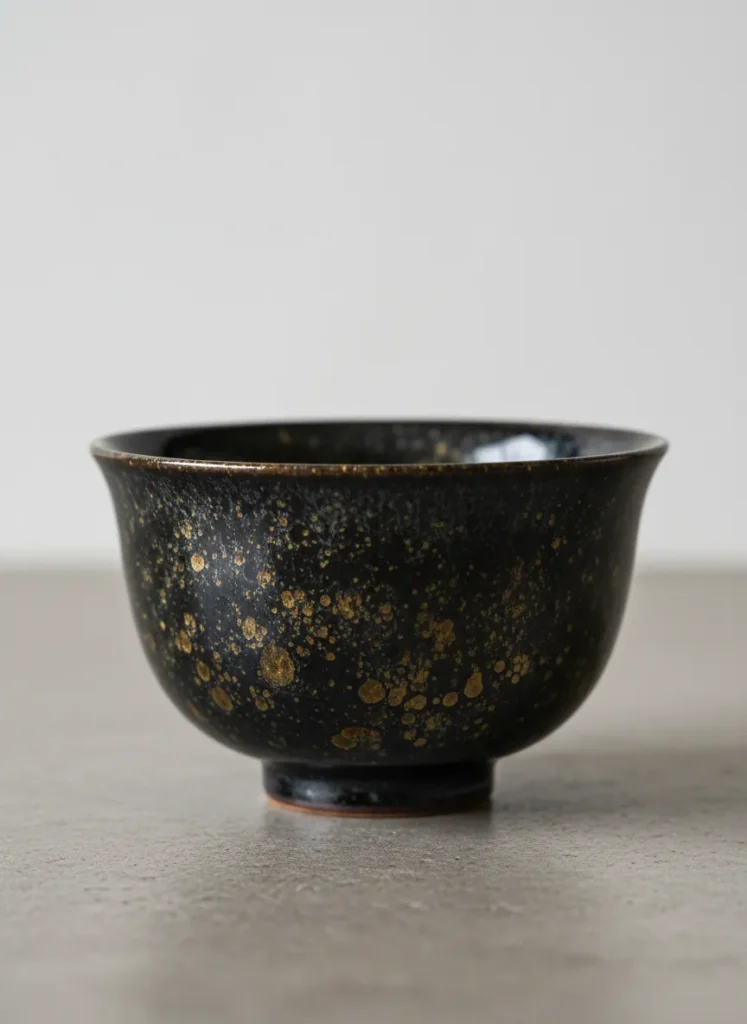
Understanding Lian Kou becomes easier when you see how it compares to the other three canonical Jian Zhan shapes. Each form was designed with a specific tea function in mind.
| Feature | Shu Kou (束口) | Lian Kou (敛口) | Pie Kou (撇口) | Chang Kou (敞口) |
|---|---|---|---|---|
| Rim Direction | Strongly inward | Gently inward | Outward flare | Straight, open |
| Heat Retention | Excellent | Very good | Moderate | Fair |
| Aroma Release | Contained | Balanced | Enhanced | Wide |
| Spill Resistance | High | High | Moderate | Low |
| Best For | Tea competition, formal ceremony | Everyday gongfu tea | Aroma appreciation | Quick cooling, casual sipping |
As the table shows, Lian Kou occupies the “best all-rounder” position. It retains heat well enough for gongfu sessions, resists spills during pouring, and still allows a satisfying amount of aroma to reach your nose. This balance is why many experienced tea drinkers consider it the ideal everyday Jian Zhan shape. For a deeper comparison of how different shapes affect your tea experience, see our guide on Jian Zhan Tea Cup Size Guide.
Why the Lian Kou Shape Excels for Everyday Tea
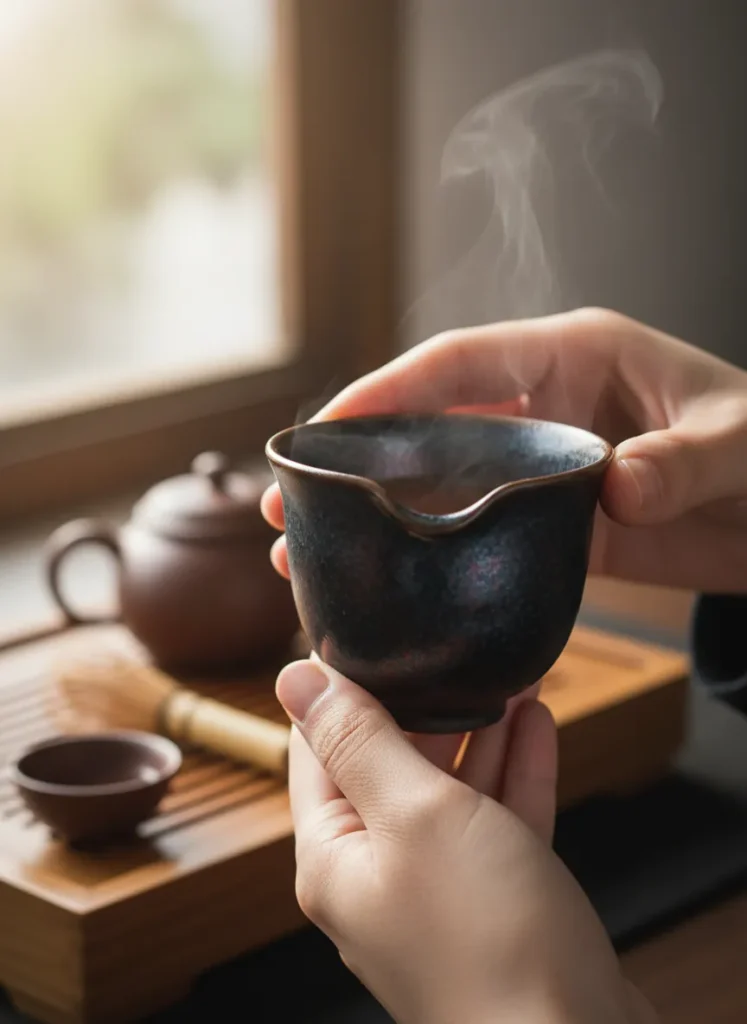
The Lian Kou form was not just an aesthetic choice — its inward rim creates specific functional advantages that become apparent after weeks of daily use.
Spill prevention during whisking: When you whisk matcha or stir loose-leaf tea, the inward rim acts as a natural barrier. Tea that might splash over an open-rimmed cup stays contained. This is particularly useful during gongfu tea sessions where you pour rapidly from a gaiwan or teapot.
Heat retention without trapping steam: Unlike Shu Kou, whose deep constriction can trap steam and make the rim too hot to touch, Lian Kou’s moderate inward curve retains about 85–90% of the heat-holding capability of Shu Kou while allowing enough airflow that the rim remains comfortable against your lips. In our experience, a Lian Kou cup keeps tea at drinking temperature about 20–25% longer than a Chang Kou of the same volume.
Comfortable grip: The rounded belly fills the hand naturally. When you cradle a Lian Kou cup, the widest point of the bowl sits in the center of your palm, and the inward rim prevents your fingers from slipping upward. This ergonomic quality makes it a favorite for long tea sessions where you hold the cup repeatedly.
Versatility across tea types: Because Lian Kou balances heat retention and aroma release, it performs well with nearly every tea — from delicate green teas that benefit from moderate warmth to robust pu-erh and oolong that need sustained heat. This is why we often recommend a Lian Kou cup as a first Jian Zhan for beginners. Browse our handcrafted tea cup collection to find a Lian Kou shape that suits your style.
How Lian Kou Fits Into Song Dynasty Tea Culture
The four-shape classification system was not arbitrary — each form was developed during the Song Dynasty (960–1279 CE) to serve a specific role in the era’s elaborate tea culture. During this period, tea was whisked into a froth rather than steeped, and the shape of the bowl directly affected how that froth formed and held.
Lian Kou cups were used for daily tea drinking and informal gatherings. While Shu Kou was the preferred shape for formal tea competitions (斗茶, dou cha) — where the constricted rim helped retain the white froth for judging — Lian Kou served the everyday drinker who wanted a refined cup without the formality. Historical records and surviving Song Dynasty kiln shards from Jianyang show that Lian Kou was among the most commonly produced shapes, suggesting it was the workhorse of Song tea ware.
The inward rim of Lian Kou also served a practical purpose in Song tea preparation: when tea was whisked with a bamboo whisk (茶筅, cha xian), the slight inward curve helped contain the froth while still allowing the whisking motion. This functional design carried over into Japanese tea ceremony, where similar rim shapes are still used for matcha preparation today. Learn more about this cultural journey in our article on How Tenmoku Became Popular in Japan.
Choosing a Lian Kou Jian Zhan: What to Look For
If you’re considering a Lian Kou cup, pay attention to these details that separate a well-crafted piece from a mediocre one.
Rim consistency: Run your finger along the inner edge of the rim. A quality Lian Kou cup has a smooth, even inward curve with no flat spots or abrupt angles. The transition from rim to belly should feel seamless.
Proportions: The ideal Lian Kou has a rim diameter that is roughly 85–90% of its belly diameter. If the rim is too close to the belly width, you lose the constriction benefit; if it’s too narrow, the cup becomes functionally a Shu Kou.
Wall thickness: Authentic Jian Zhan walls are thick — typically 0.12–0.20 inches (3–5 mm). This thickness is essential for heat retention and is a hallmark of genuine Jian Zhan. Cups with paper-thin walls are likely machine-made replicas. For tips on distinguishing authentic pieces, see our guide on Handmade vs Machine-Made Jian Zhan.
Glaze coverage: The glaze should extend to just above the foot ring, leaving a small band of raw clay exposed. This unglazed band is normal — it prevents the cup from fusing to the kiln shelf during firing. The interior glaze should be smooth and even, with the pattern (hare’s fur, oil spot, or otherwise) developing naturally across the rounded belly.
Caring for Your Lian Kou Jian Zhan Cup
The Lian Kou shape is one of the easiest Jian Zhan forms to maintain, but a few care practices will keep it in top condition for years.
Rinse immediately after use: Pour hot water into the cup right after drinking. The Lian Kou rim makes this easy — you can swirl water inside without worrying about splashing over the sides. This prevents tea residue from building up on the glaze.
Avoid soap and detergent: Jian Zhan glaze develops a patina over time through regular tea contact. Detergent strips this patina and can leave residue in the microscopic texture of the iron glaze. Hot water alone is sufficient.
Air dry with the rim facing up: Because of the inward rim, a Lian Kou cup can trap a small amount of moisture if placed rim-down on a flat surface. Always air dry with the opening facing up to allow complete evaporation.
Handle with care near the rim: The inward-curved rim is the most delicate part of the cup. While Jian Zhan is stoneware and quite durable, avoid tapping the rim against hard surfaces, as the slight overhang of the inward curve can be a vulnerable point.
For a complete care routine, see our detailed guide on How to Care for Your Jian Zhan Tea Cup.
❓ Frequently Asked Questions About Lian Kou Jian Zhan
❓ Is Lian Kou the same as Shu Kou?
No. While both have inward-curving rims, Shu Kou (束口) has a pronounced constriction — typically 8–12 mm of inward curve — with a visible groove near the rim. Lian Kou (敛口) has a much gentler inward sweep of only 2–4 mm, with no groove. Shu Kou was designed for Song Dynasty tea competitions; Lian Kou was designed for everyday drinking.
❓ What tea pairs best with a Lian Kou cup?
Lian Kou’s balanced shape works well with almost any tea. It excels with oolong, pu-erh, and black tea, where its heat retention keeps the brew warm through multiple infusions. It also performs admirably with matcha — the inward rim helps contain the froth during whisking.
❓ Why is Lian Kou recommended for beginners?
Lian Kou offers the best balance of all four Jian Zhan shapes. It retains heat well, resists spills, feels comfortable in the hand, and suits most tea styles. For someone just starting with Jian Zhan, a Lian Kou cup lets you experience the full range of what this teaware can do without the specialization of other shapes.
📚 References
- Jian Ware Classification and History: Overview of Jian Zhan shape taxonomy, glaze types, and Song Dynasty kiln traditions. Baidu Baike — Jian Zhan
- Song Dynasty Tea Culture and Tea Ware: Scholarly research on the role of tea bowls in Song Dynasty tea competitions and daily life. Source: Palace Museum, Beijing (You may search the institution’s website for current resources)
- Tenmoku and Jianzhan: A Beginner’s Guide: Shape comparison table and functional analysis of the four Jian Zhan forms. Old Village Puer
Explore ZenTeaCup’s collection of handcrafted Tenmoku tea cups — including Lian Kou, Shu Kou, and Pie Kou shapes — each one wood-fired or electric-kiln-fired by artisans in Jianyang, Fujian. Shop Tea Cups →
Elevate your tea experience? Browse the Zen Tea Cup for authentic tenmoku cups and curated collections.


