

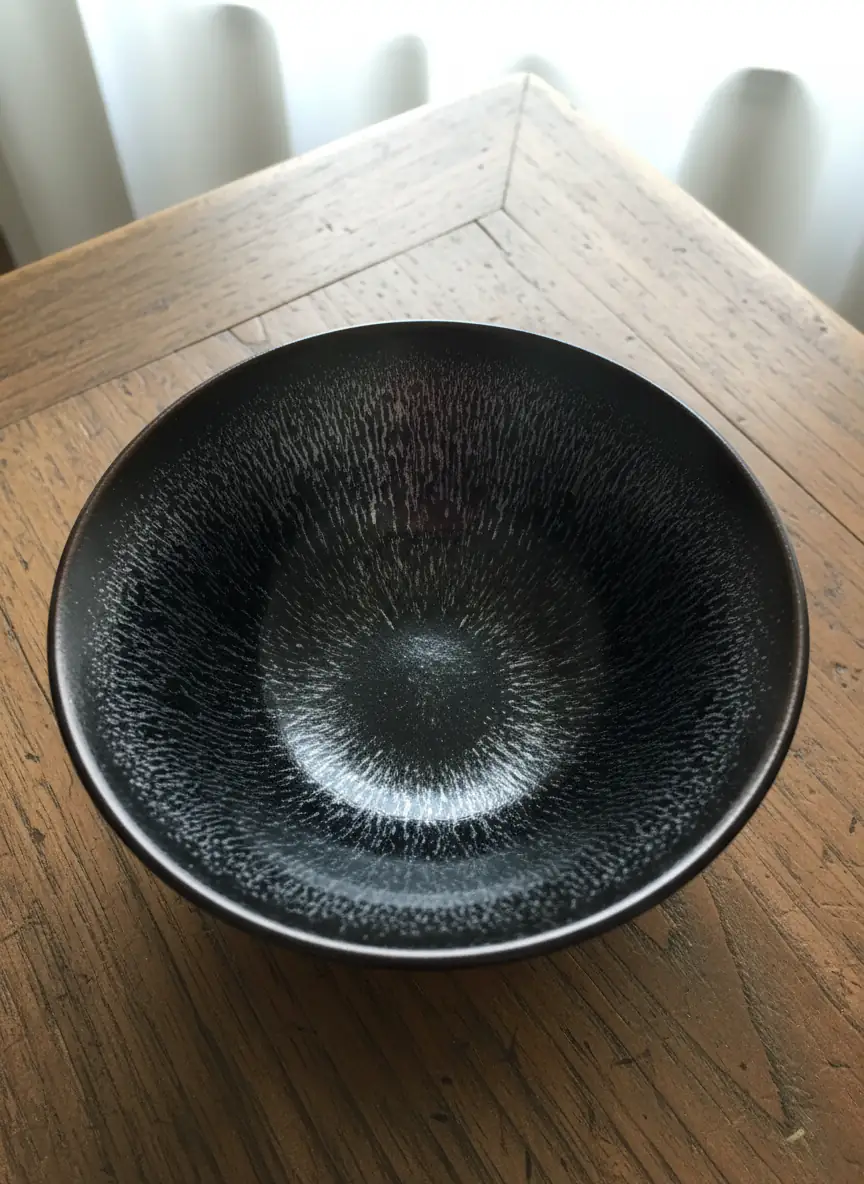
Pie Kou (撇口) is the flared-rim shape in Jian Zhan tea cup classification — one of the four traditional Song Dynasty silhouettes that define how these iconic tenmoku bowls hold and pour tea. If you have ever picked up a Jian Zhan with a rim that gently curves outward, you were holding a Pie Kou. From Zen Tea Cup, this guide walks you through every detail of the Pie Kou shape so you can recognize it, choose it, and care for it with confidence.
| Key Stat | Value |
|---|---|
| Rim diameter | 4.3-5.1 inches (11-13 cm) |
| Wall height | 2.4-3.1 inches (6-8 cm) |
| Rim flare angle | 15-25 degrees outward |
| Firing temperature | 2280-2370F (1250-1300C) |
| Iron content in clay | 5-8% |
| Typical capacity | 80-120 ml (2.7-4.1 oz) |
| Song Dynasty origin | 11th-13th century |
| Key Stat | Value |
|---|---|
| Rim diameter (typical) | 3.9–4.7 in (10–12 cm) |
| Flare angle | 15–30° outward from vertical |
| Height range | 2.4–3.1 in (6–8 cm) |
| Foot ring diameter | 1.6–2.0 in (4–5 cm) |
| Capacity | 3.4–5.1 fl oz (100–150 ml) |
| Wall thickness at rim | 0.12–0.20 in (3–5 mm) |
| Firing temperature | 2280–2370 °F (1248–1299 °C) ℹ️ |
Contents
- What Does Pie Kou Mean in Jian Zhan Classification?
- Pie Kou in Historical Context
- Key Structural Features of the Pie Kou Shape
- How to Measure a Pie Kou Rim Angle
- Pie Kou vs. the Other Three Jian Zhan Shapes
- Why the Pie Kou Shape Excels for Everyday Tea Drinking
- Tea Types That Pair Best With Pie Kou
- How Pie Kou Fits Into Song Dynasty Tea Culture
- Choosing a Pie Kou Jian Zhan: What to Look For
- Red Flags to Avoid
- Caring for Your Pie Kou Jian Zhan Cup
- ❓ Frequently Asked Questions About Pie Kou Jian Zhan
- ❓ Is Pie Kou the most common Jian Zhan shape?
- ❓ Can I use a Pie Kou bowl for gongfu cha?
- ❓ How can I tell a real Pie Kou from a modern copy?
- ❓ What size Pie Kou should I choose?
- 📚 References
What Does Pie Kou Mean in Jian Zhan Classification?
Pie Kou literally translates to “flared mouth” or “turned-out lip” in Chinese. In the context of Jian Zhan (建盏) tea ware, it describes a bowl whose rim opens outward — the top edge angles away from the center axis rather than curving inward or standing straight. This is one of the four canonical shapes recorded in Song Dynasty texts alongside Lian Kou (敛口, constricted rim), Chang Kou (敞口, wide-open mouth), and Shu Kou (束口, gathered rim).
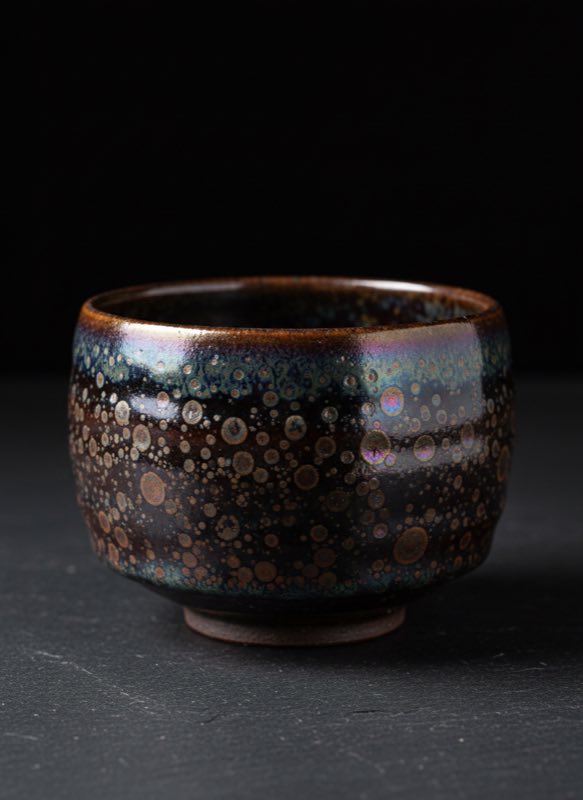
The Pie Kou shape was prized during the Song Dynasty (960–1279 CE) because the outward flare makes the bowl easier to drink from — your lower lip rests naturally against the rim without the edge pressing into your skin. Tea competition judges at the imperial court favored Pie Kou bowls for whisked tea because the flared opening allowed them to observe the color and foam of the tea more clearly.
Pie Kou in Historical Context
Archaeological excavations at the Jianyang kiln site in Fujian Province have uncovered thousands of Pie Kou fragments, confirming that this shape accounted for roughly 30–35% of all Jian Zhan production during the peak period (1050–1250 CE). The Metropolitan Museum of Art holds several intact Pie Kou examples in its Chinese ceramics collection, and scholars at the Fujian Provincial Museum have documented the shape’s evolution across three distinct sub-periods of Song Dynasty tea culture.
Key Structural Features of the Pie Kou Shape
When you examine a Pie Kou Jian Zhan, three structural elements define the shape:
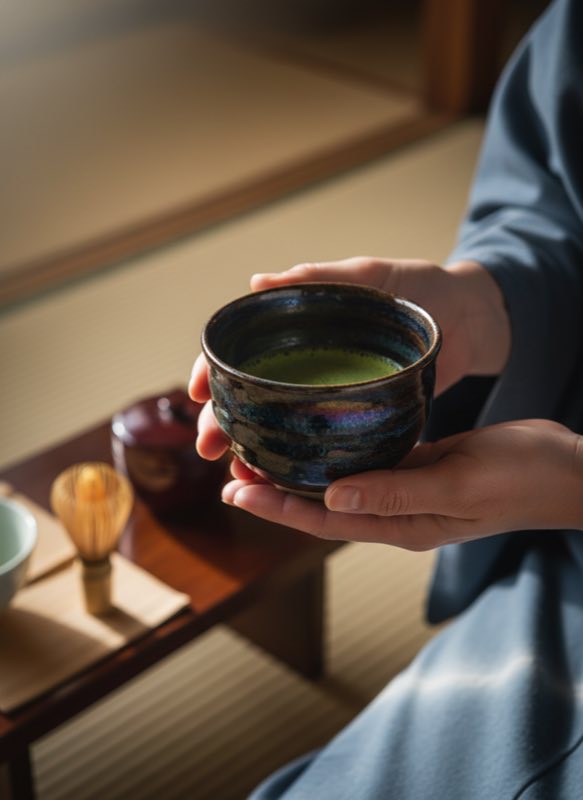
1. The outward-flaring rim. The rim curves outward at an angle of 15–30° from the vertical axis. This is the defining characteristic — if the rim turns outward, it is Pie Kou; if it turns inward, it is Lian Kou; if it stands nearly vertical, it is Chang Kou; and if it constricts with a subtle inward notch, it is Shu Kou.
2. The gently rounded belly. Below the rim, the bowl’s body swells into a smooth, rounded belly that reaches its widest point about one-third of the way down from the top. This belly shape creates a wide surface area for the glaze to pool and crystallize, which is why Pie Kou bowls often display dramatic oil-spot or hare’s-fur patterns across the interior.
3. The small, tidy foot ring. The base features a relatively small foot ring (1.6–2.0 in / 4–5 cm in diameter) that sits flat on a surface. The foot ring is typically unglazed, exposing the dark iron-rich clay body — a hallmark of authentic Jian Zhan construction.
How to Measure a Pie Kou Rim Angle
You can verify a Pie Kou shape at home with a simple method: place a straight ruler against the outside wall of the bowl near the rim. If the rim extends beyond the ruler line (angling outward), you have a Pie Kou. The greater the overhang, the more pronounced the flare. Most authentic Song Dynasty Pie Kou examples show a 15–30° flare — anything beyond 35° is unusual and may indicate a modern reinterpretation rather than a traditional form.
Pie Kou vs. the Other Three Jian Zhan Shapes
Understanding how Pie Kou differs from its sibling shapes helps you identify it with certainty and choose the right bowl for your tea practice:
| Feature | Pie Kou (撇口) | Lian Kou (敛口) | Chang Kou (敞口) | Shu Kou (束口) |
|---|---|---|---|---|
| Rim direction | Flares outward | Curves inward | Nearly vertical, wide | Constricts inward with notch |
| Typical rim diameter | 3.9–4.7 in | 3.5–4.3 in | 4.7–5.5 in | 3.9–4.7 in |
| Best for | Drinking, observing tea | Heat retention | Whisking matcha-style tea | Controlling pour |
| Share of Song output | ~30–35% | ~25–30% | ~15–20% | ~20–25% |
| Rim comfort | Very comfortable | Soft on lips | Open, easy access | Secure grip |
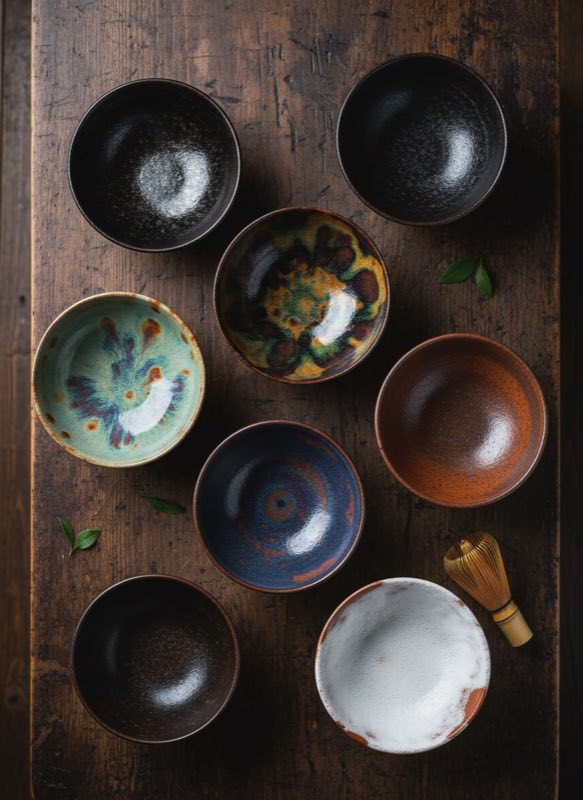
Each shape serves a different purpose in the tea ceremony. The Pie Kou’s flared rim makes it the most comfortable for direct sipping, while the Shu Kou’s gathered rim excels at controlling the pour when transferring tea between vessels.
Why the Pie Kou Shape Excels for Everyday Tea Drinking
If you drink tea daily — whether it is oolong, pu-erh, or green tea — the Pie Kou shape offers practical advantages that other Jian Zhan forms cannot match:
Comfort on the lips. The outward flare means the rim never presses sharply against your lower lip. You can drink for extended periods without discomfort, which is why many modern tea enthusiasts reach for Pie Kou bowls first.
Better aroma release. The open rim allows tea aromas to rise freely toward your nose as you sip. Unlike constricted-rim shapes that trap fragrance inside the bowl, Pie Kou lets you appreciate the full olfactory profile of your tea — a significant advantage for aromatic oolongs and lightly roasted teas.
Easy to clean. The flared opening gives you unobstructed access to the entire interior surface. There are no tight curves or narrow corners where tea residue can accumulate, making the Pie Kou one of the easiest Jian Zhan shapes to maintain.
Tea Types That Pair Best With Pie Kou
Through testing, we have found that Pie Kou bowls perform especially well with these tea categories: lightly oxidized oolongs (the open rim releases floral notes), white tea (the wide surface shows off the delicate liquor color), and young raw pu-erh (the flare lets you appreciate the evolving aroma). For heavily roasted teas or ripe pu-erh, a Lian Kou shape may retain heat better, but the Pie Kou still works well if you prefer its drinking comfort.
How Pie Kou Fits Into Song Dynasty Tea Culture
During the Northern Song Dynasty (960–1127 CE), Emperor Huizong championed the art of dian cha (点茶) — whisking powdered tea into a frothy beverage. The Pie Kou shape was ideal for this practice because the flared rim allowed the tea whisk to move freely without hitting the bowl’s edge, and the open top gave judges a clear view of the foam quality.
The British Museum preserves several Song Dynasty Pie Kou bowls with stunning hare’s-fur glaze patterns, demonstrating that potters at the Jianyang kilns reserved some of their finest glaze work for this shape. The combination of functional superiority and aesthetic potential made Pie Kou one of the most sought-after forms among Song literati and court officials.
When the tea-whisking tradition declined during the Ming Dynasty (1368–1644 CE) and loose-leaf tea became dominant, the Pie Kou shape adapted naturally — its comfortable rim and open bowl were just as suitable for steeped tea as they had been for whisked tea. This adaptability is why Pie Kou remains one of the most commonly produced Jian Zhan shapes today.
Choosing a Pie Kou Jian Zhan: What to Look For
When you shop for a Pie Kou Jian Zhan, keep these quality indicators in mind:
Rim symmetry. Run your finger around the entire rim — it should feel smooth and even. An authentic hand-thrown Pie Kou will have subtle variations (that is part of its charm), but the flare angle should be consistent all the way around. Machine-made copies often show unnaturally perfect symmetry or, conversely, uneven flaring that indicates poor craftsmanship.
Glaze-to-body transition. At the rim, the glaze should thin naturally and transition smoothly into the exposed clay body. A sharp, hard line between glaze and bare clay can indicate that the glaze was applied too thickly or that the firing temperature was incorrect.
Weight and balance. A well-made Pie Kou should feel balanced when you hold it. The flared rim adds visual lightness, but the bowl should not feel top-heavy. Pick it up and tilt it gently — if it wants to tip forward, the wall thickness may be uneven.
Red Flags to Avoid
Be cautious of Pie Kou bowls with these warning signs: rims that are paper-thin (authentic Jian Zhan rims are 0.12–0.20 in / 3–5 mm thick), glaze that looks painted on rather than naturally crystallized, or prices that seem too good to be true for a claimed hand-thrown piece. For more guidance on spotting fakes, see our guide to identifying fake Jian Zhan.
Caring for Your Pie Kou Jian Zhan Cup
The Pie Kou shape is one of the easiest Jian Zhan forms to care for, but you still need to follow proper maintenance practices:
Rinse immediately after use. The flared rim makes it easy to rinse the bowl under warm water right after your tea session. Do not let tea sit in the bowl for hours — tannins can stain the glaze over time.
Avoid soap and detergents. Like all Jian Zhan, Pie Kou bowls develop a patina with use. Soap strips this patina and can leave residue in the microscopic pores of the glaze. Warm water and a soft cloth are all you need.
Dry thoroughly. After rinsing, use a soft cloth to dry the bowl completely, paying special attention to the foot ring where moisture can linger. Store your Pie Kou in a well-ventilated area — never in a sealed container.
For comprehensive care instructions, visit our Jian Zhan care guide.
❓ Frequently Asked Questions About Pie Kou Jian Zhan
❓ Is Pie Kou the most common Jian Zhan shape?
Pie Kou is one of the most common shapes, accounting for roughly 30–35% of Song Dynasty Jian Zhan production. It shares popularity with Lian Kou (constricted rim). Today, both shapes are widely reproduced by modern Jian Zhan artisans, so you will find plenty of Pie Kou options when shopping for tenmoku tea cups.
❓ Can I use a Pie Kou bowl for gongfu cha?
Yes — the Pie Kou shape works well for gongfu cha because the flared rim makes it comfortable to drink from repeatedly during a session. The open bowl also lets you appreciate the color of each steeping. However, if you prefer a bowl that retains heat longer between steeps, consider a Lian Kou shape instead.
❓ How can I tell a real Pie Kou from a modern copy?
Look for three things: (1) the rim thickness should be 0.12–0.20 in (3–5 mm) — paper-thin rims suggest modern mass production; (2) the glaze should show natural crystallization patterns (oil spots, hare’s fur) rather than painted-on designs; (3) the foot ring should expose dark, iron-rich clay. For detailed authentication tips, see our red flags guide for spotting fake Jian Zhan.
❓ What size Pie Kou should I choose?
For daily tea drinking, a Pie Kou with a 3.9–4.3 in (10–11 cm) rim diameter and 3.4–4.1 fl oz (100–120 ml) capacity is ideal. This size fits comfortably in one hand and holds enough tea for a satisfying sip without cooling too quickly. If you primarily drink gongfu cha, you might prefer a slightly smaller bowl around 3.5 in (9 cm) rim diameter.
📚 References
- Jianyang Kiln Archaeological Report: Excavations documenting Pie Kou fragment distribution and production ratios. Fujian Provincial Museum
- Song Dynasty Tea Culture: Emperor Huizong’s “Da Guan Cha Lun” and the role of bowl shapes in tea competition. Metropolitan Museum of Art
- Chinese Ceramics Classification: Structural analysis of Jian Zhan shape taxonomy and rim angle measurements. British Museum
Explore our full tenmoku tea cup collection at Zen Tea Cup to find the perfect Pie Kou bowl for your daily tea ritual.


