

Taiwanese high mountain oolong is a semi-oxidized tea grown above 1,000 meters on Taiwan’s central mountain range — where cool nights and misty mornings create its signature floral sweetness (the altitude literally changes the chemistry of the leaf). If you have ever sipped a cup of high mountain oolong and wondered what makes it taste so different from everyday tea, you are in the right place.
This guide walks you through the regions, the craft, and the brewing know-how you need to appreciate one of the world’s most sought-after tea categories. Whether you are a curious beginner or a seasoned sipper looking to deepen your knowledge, Zen Tea Cup has you covered.
| Key Stat | Value |
|---|---|
| Growing Altitude | 1,000–2,600 m (3,300–8,500 ft) |
| Oxidation Range | 15–35% |
| Core Regions | Alishan, Lishan, Li Shan, Dong Ding |
| Brew Temperature | 195°F (90°C) |
| Typical Leaf Amount | 3–5 g per 100–150 ml |
| Re-steep Potential | 5–8 infusions |
| Flavor Profile | Floral (orchid, lily), sweet, lingering finish |
Contents
- What Is Taiwanese High Mountain Oolong Tea?
- Why Altitude Matters
- The Four Famous Regions
- How Is High Mountain Oolong Made?
- How to Brew High Mountain Oolong (Gongfu Style)
- Water Temperature and Timing
- The Right Teaware
- What Does High Mountain Oolong Taste Like?
- Where to Start Your High Mountain Oolong Journey
- ❓ What Is High Mountain Oolong Tea?
- ❓ Is Alishan or Lishan Oolong Better?
- ❓ Can You Brew High Mountain Oolong in a Tenmoku Cup?
- ❓ How Many Times Can You Re-Steep High Mountain Oolong?
- 📚 References
What Is Taiwanese High Mountain Oolong Tea?
Taiwanese high mountain oolong, known locally as gao shan cha (高山茶), refers to any semi-oxidized tea cultivated at elevations above 1,000 meters on Taiwan’s mountainous spine. The higher the garden, the slower the leaves grow — and slower growth means tighter cell structures, more concentrated amino acids, and that distinctive creamy sweetness you taste in every cup.
Why Altitude Matters
At 1,000 meters and above, daytime temperatures hover around 68–77°F (20–25°C) while nights drop to 50–59°F (10–15°C). This 15–20°F swing stresses the tea plant in a productive way: it slows leaf growth, concentrates L-theanine and sugars, and reduces the bitter catechins that thrive in hot lowland conditions. The result is a naturally sweeter, more aromatic tea — no added sugar required.
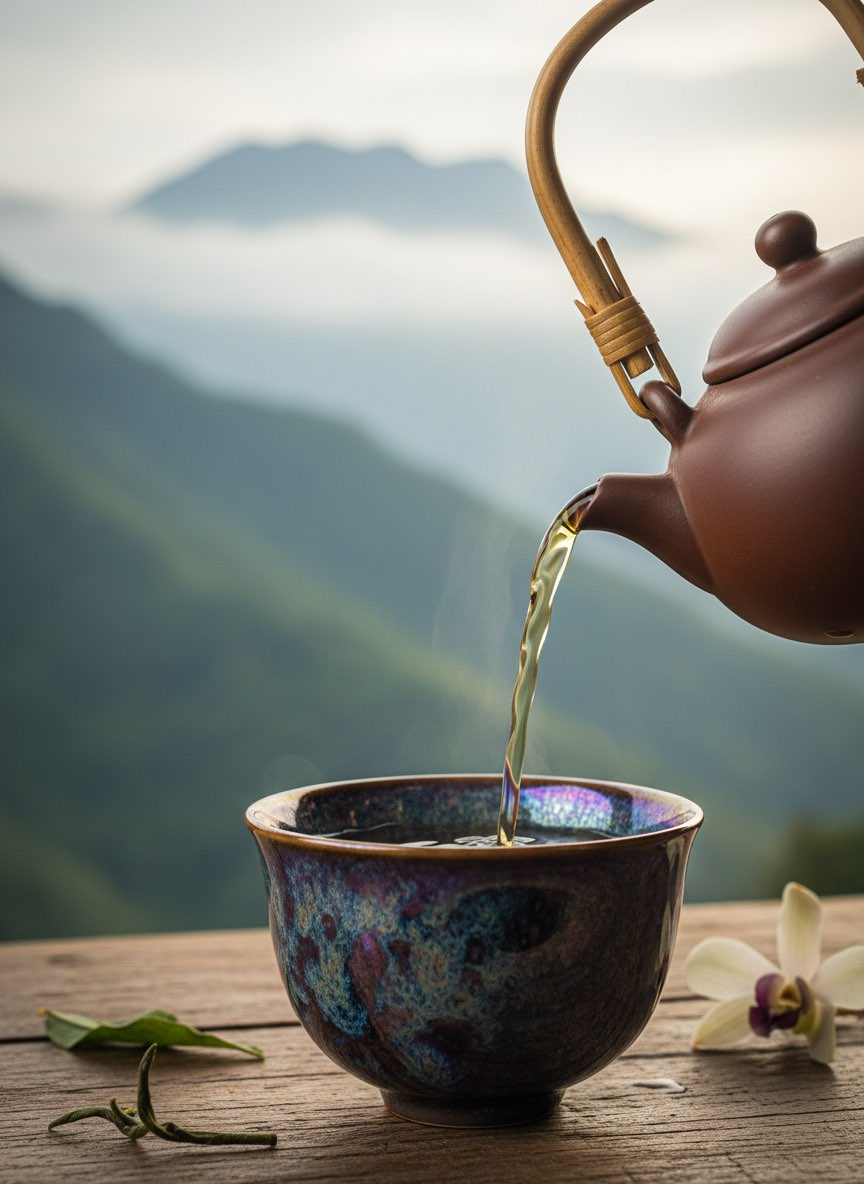
Fog is the second secret ingredient. High mountain gardens sit in cloud banks for 6–10 hours a day, filtering sunlight and keeping the leaves hydrated. This diffused light increases chlorophyll production, giving high mountain oolong its vivid jade-green color. Growers in Alishan and Lishan often describe their gardens as “living in the clouds” — and they mean it literally. During our visit to an Alishan tea farm in spring 2024, we watched fog roll in at 2 p.m. and not clear until the following morning. The leaves never saw direct afternoon sun.
The Four Famous Regions
Not all high mountain oolong is created equal. The region where the tea grows shapes its flavor as much as the altitude itself. Here is how the four main growing areas compare:
| Region | Altitude | Flavor Profile | Best For |
|---|---|---|---|
| Alishan | 1,000–1,700 m | Orchid floral, light cream, honey finish | Beginners — approachable and widely available |
| Lishan (Pear Mountain) | 1,800–2,500 m | Crisp pear, buttery, long sweet aftertaste | Those who want depth without heaviness |
| Li Shan | 2,200–2,600 m | Complex fruit, thick mouthfeel, mineral undertone | Experienced drinkers seeking nuance |
| Dong Ding | 600–1,000 m | Roasted nut, caramel, full body | Fans of traditional roasted oolong style |
Notice that Dong Ding sits below the 1,000 m threshold — technically it is not “high mountain,” but its traditional heavy roast and cultural significance earn it a place in any Taiwanese oolong discussion.
How Is High Mountain Oolong Made?
The journey from fresh leaf to finished oolong involves at least eight steps, each one carefully timed. Here is the condensed version:
1. Plucking — Hand-picked in spring and winter, selecting the top two or three leaves plus a bud.
2. Withering — Leaves spread on bamboo trays for 4–8 hours under sunlight and shade, losing 15–20% of their moisture.
3. Bruising (Yao Qing) — The leaves are gently shaken 5–7 times over several hours. This breaks cell walls and triggers oxidation — the careful hand-rolling that gives each bead its shape and releases aromatic compounds.
4. Fixation (Sha Qing) — Heated at 300–320°F (150–160°C) to halt oxidation at the desired level (15–35%).
5. Rolling — Repeated pressing and shaping into tight beads or strips.
6. Drying — Baked at 200–230°F (95–110°C) to lock in flavor and reduce moisture below 5%.
7. Roasting (optional) — Light to medium roast at 120–140°C for 4–12 hours, depending on style. High mountain oolong is typically lightly roasted to preserve its floral notes.
The entire process can take 18–36 hours from pluck to finished product — a testament to the skill and patience of Taiwan’s tea masters. One mistake at any step — too much oxidation, too little withering, a few degrees too hot during fixation — and the entire batch is compromised. This is why high mountain oolong commands premium prices: you are paying for decades of accumulated craft, not just the leaves themselves.
How to Brew High Mountain Oolong (Gongfu Style)
Gongfu brewing — short steeps, small vessels, high leaf-to-water ratio — is the traditional method for bringing out the full spectrum of flavor in high mountain oolong. Our detailed gongfu cha guide covers the complete ritual, but here are the essentials:
Water Temperature and Timing
| Parameter | Recommendation |
|---|---|
| Water temperature | 195°F (90°C) — never boiling |
| Leaf amount | 3–5 g |
| Vessel size | 100–150 ml gaiwan or teapot |
| First steep | 30 seconds (rinse first, discard) |
| Second steep | 30 seconds |
| Third steep onward | Add 10–15 seconds per steep |
| Total infusions | 5–8 (some Li Shan goes to 10+) |
The first infusion is a rinse — pour 195°F water over the leaves, swirl for 5 seconds, and discard. This “awakens” the leaves and removes any surface dust. Your real tea starts with the second pour.
The Right Teaware
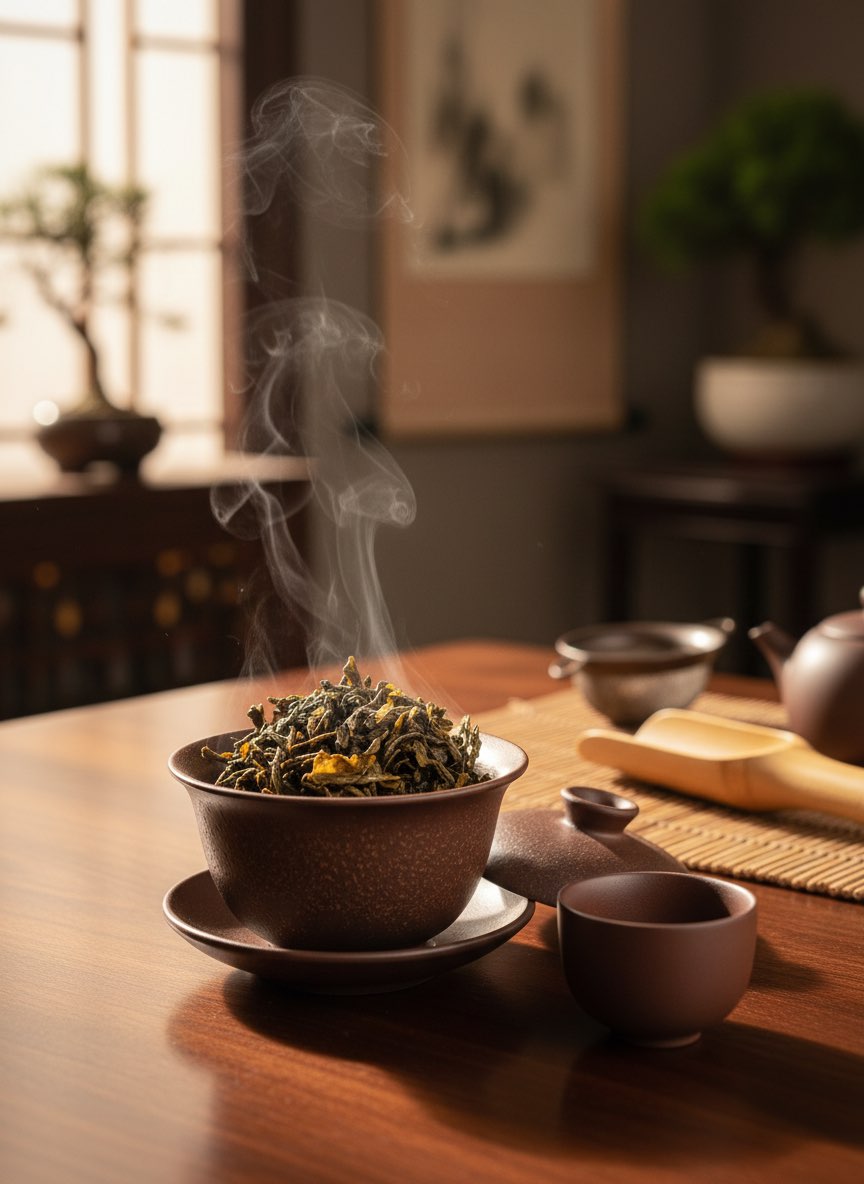
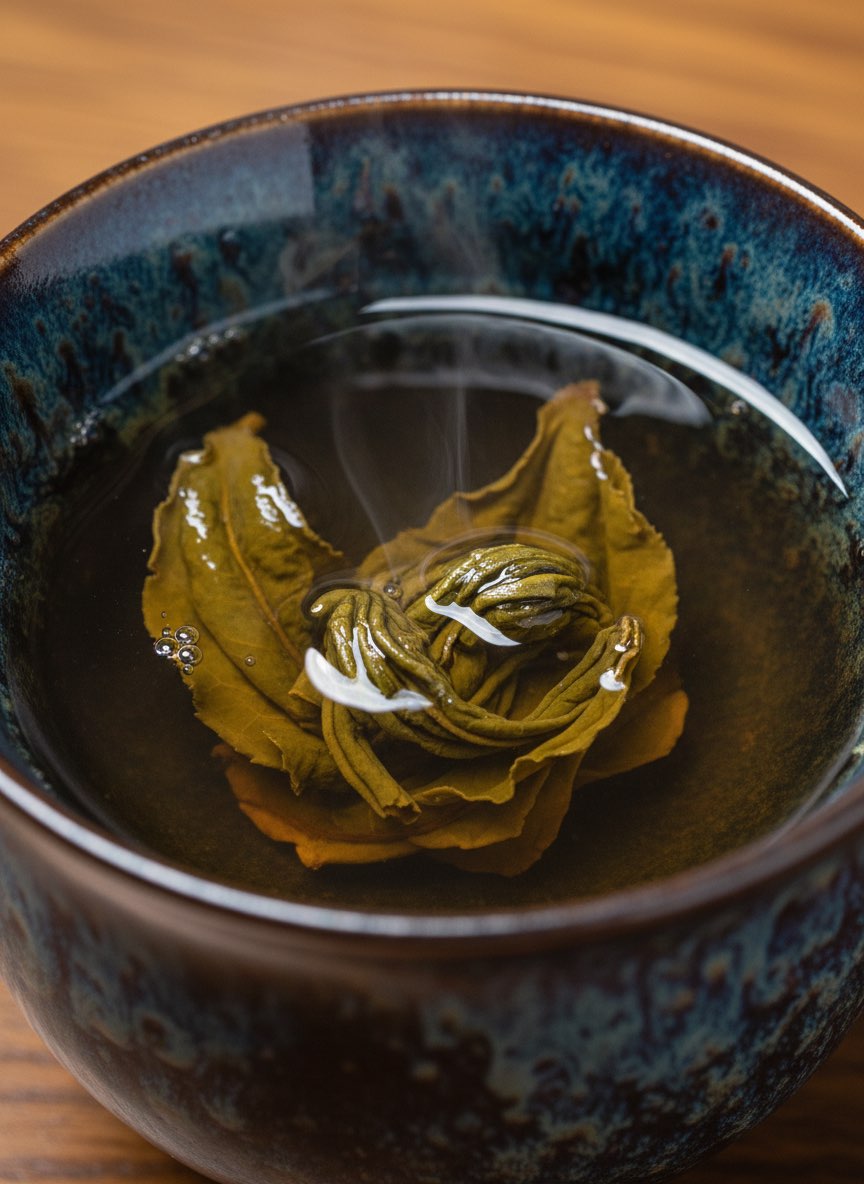
A gaiwan is the most versatile vessel for high mountain oolong — its wide opening lets you watch the leaves unfurl and appreciate the aroma before each sip. If you prefer a teapot, a small Yixing clay pot or a porcelain pot works beautifully.
For drinking, many tea lovers reach for a tenmoku cup — the iron-rich glaze subtly rounds out the astringency and enhances the tea’s natural sweetness. A 7–9 cm diameter cup holds about 50–80 ml, the perfect size for gongfu-style tasting. The thick walls also retain heat longer than thin porcelain, which matters when you are savoring small portions over multiple infusions.
What Does High Mountain Oolong Taste Like?
Flavor is where high mountain oolong truly shines. Across all regions, you can expect these core characteristics:
Aroma: Fresh orchid, lily, or jasmine — sometimes with a hint of cream or butter. The fragrance alone is enough to slow you down and savor the moment.
Taste: Smooth, sweet, and layered. The first sip often delivers a light floral note; the second reveals a thicker, creamier body; and the finish lingers with a hui gan (回甘) — a returning sweetness that can last 15–30 minutes after your cup is empty.
Texture: Viscous and coating, especially in Li Shan and aged oolongs. You will feel it on the sides of your tongue before the flavor even registers. This mouthfeel is one of the clearest markers of genuine high-altitude tea — lowland oolongs simply cannot replicate it.
Each re-steep tells a slightly different story. The early infusions are floral and bright; the middle steeps turn sweeter and more full-bodied; the final rounds fade into a gentle mineral finish that feels like the mountain itself saying goodbye (yes, tea people really do talk this way — and after a few cups of Li Shan, you will understand why).
Where to Start Your High Mountain Oolong Journey
If you are new to Taiwanese oolong, start with Alishan — its approachable floral profile and wide availability make it the perfect entry point. From there, work your way up in altitude: Lishan offers more complexity, and Li Shan rewards experienced palates with its extraordinary depth. Think of it as climbing a mountain — each step up reveals a broader view.
Budget tip: a 50 g sample of Alishan typically costs $8–15 USD, while the same amount of Li Shan can run $25–40. Start small, taste widely, and invest in the ones that make you close your eyes on the first sip.
Not sure which oolong to try first? Our beginner’s guide to oolong teas covers Tieguanyin, Da Hong Pao, and high mountain varieties with specific recommendations.
And if you want to explore which teas pair best with your tenmoku cup, our teaware pairing guide has you covered — oolong and tenmoku are a natural match.
❓ What Is High Mountain Oolong Tea?
High mountain oolong is a semi-oxidized tea (15–35% oxidation) grown above 1,000 meters in Taiwan’s central mountain range. The high altitude slows leaf growth, concentrating amino acids and sugars while reducing bitterness — producing a naturally sweet, floral cup.
❓ Is Alishan or Lishan Oolong Better?
Neither is objectively “better” — they serve different preferences. Alishan (1,000–1,700 m) is lighter and more floral, ideal for beginners. Lishan (1,800–2,500 m) is richer and more complex, with a buttery mouthfeel that experienced drinkers love. If you are just starting, try Alishan first — it gives you a clear reference point before you explore the higher, more nuanced gardens.
❓ Can You Brew High Mountain Oolong in a Tenmoku Cup?
Yes — a tenmoku cup is an excellent vessel for drinking oolong. The thick walls keep the tea warm, and the iron-rich glaze smooths out any astringency, enhancing the natural sweetness. Use a gaiwan for brewing, then pour into your tenmoku cup to enjoy. The combination of gaiwan brewing and tenmoku drinking gives you the best of both worlds.
❓ How Many Times Can You Re-Steep High Mountain Oolong?
You can re-steep high mountain oolong 5–8 times using the gongfu method. Premium Li Shan oolongs can go 10+ infusions. Each steep reveals a different layer — start with 30 seconds and add 10–15 seconds per round. The later infusions tend to be the sweetest, so do not discard the leaves too early.
📚 References
- Chen, G. et al. “Effect of Altitude on the Chemical Composition and Sensory Quality of Oolong Tea.” Foods, 2022. — Confirms altitude’s impact on amino acid concentration and flavor profile.
- UK Tea & Infusions Association, “Taiwanese Oolong Tea.” — Overview of Taiwanese oolong categories, production methods, and brewing standards.
- ScienceDirect, “Oolong Tea — Science Topic.” — Peer-reviewed research on oolong tea processing, oxidation, and health-related compounds.
Ready to taste the mountains? Explore our handcrafted tenmoku collection at Zen Tea Cup — each piece is designed to bring out the best in every cup of oolong you brew.


