

Tenmoku is the ideal cup for aged pu-erh because its iron-rich clay (6-8% iron oxide) and thick walls (3-5 mm) smooth the earthy astringency of aged tea while maintaining the 205-212 F (96-100 C) brewing temperature that pu-erh requires across multiple steeps. From Zen Tea Cup‘s pairing research, here is why tenmoku and aged pu-erh pair perfectly together.
| Key Stat | Value |
|---|---|
| Pu-erh brewing temperature | 205-212 F (96-100 C) |
| Aged pu-erh steep time | 10-30 seconds (gongfu) |
| Recommended tenmoku size | 4-6 oz (120-180 ml) |
| Iron oxide in tenmoku clay | 6-8% |
| Tenmoku wall thickness | 3-5 mm |
| Heat retention advantage | 15-25% longer than porcelain |
Contents
- Why Tenmoku Complements Aged Pu-erh
- Iron Clay Meets Fermented Tea
- Thermal Mass for Consistent Steeping
- Choosing the Right Tenmoku for Aged Pu-erh
- Size: 4-6 oz for Gongfu, 8 oz for Grandpa Style
- Glaze: Dark Patterns Show the Liquor Color Best
- Brewing Aged Pu-erh in Tenmoku: A Practical Guide
- Step 1: Rinse the Tea (2 Steeps, 5 Seconds Each)
- Step 2: First Infusion (10 Seconds)
- Step 3: Peak Infusions (Steeps 3-8, 15-20 Seconds)
- Why Porcelain Fails With Aged Pu-erh
- Heat Loss Problem
- Flavor Interaction Absent
- ❓ Can I use tenmoku for raw (sheng) pu-erh too?
- ❓ Does the tenmoku glaze type affect pu-erh flavor?
- ❓ How many steeps can I get from aged pu-erh in tenmoku?
- Caring for Your Tenmoku After Pu-erh Sessions
- Immediate Rinse Is Essential
- Monthly Deep Clean for Pu-erh Drinkers
- References
Why Tenmoku Complements Aged Pu-erh
Aged pu-erh and tenmoku share a deep connection rooted in material chemistry and brewing physics. Understanding this connection helps you appreciate why experienced pu-erh drinkers reach for tenmoku first.
Iron Clay Meets Fermented Tea
Aged pu-erh undergoes microbial fermentation over years or decades, producing complex compounds including theabrownins (responsible for the dark amber color), gallic acid (contributing astringency), and volatile terpenes (creating the characteristic earthy aroma). When this fermented liquor contacts tenmoku’s iron-rich glaze, two things happen: the iron oxide partially binds with residual tannins to smooth the astringent edge, and the glaze’s micro-porous surface traps some of the harsher volatile compounds while allowing the deeper, sweeter aromatics to pass through. The result is a rounder, more integrated cup of pu-erh with less bite and more depth. You can taste the difference by brewing the same aged pu-erh in both tenmoku and glass—the tenmoku pour will be noticeably softer and more complex. The gongfu brewing guide at Zen Tea Cup covers the complete steeping method.
Thermal Mass for Consistent Steeping
Aged pu-erh demands the highest brewing temperature of any tea category: 205-212 F (96-100 C), sustained across 10-20 steeping sessions. Tenmoku’s thick walls (3-5 mm vs 1-2 mm for porcelain) provide thermal mass that maintains this temperature throughout each 10-30 second steep. With a thinner cup, the liquor temperature drops 5-8 F between pours, causing your later steeps to taste flat and under-extracted. Tenmoku limits this drop to 2-3 F, keeping your 15th steep as vibrant as your 3rd. This thermal consistency is the single most practical reason pu-erh enthusiasts prefer tenmoku over any other cup material.
Choosing the Right Tenmoku for Aged Pu-erh
Not all tenmoku cups work equally well for aged pu-erh. Size, glaze type, and wall thickness all affect the brewing experience.
Size: 4-6 oz for Gongfu, 8 oz for Grandpa Style
For gongfu-style brewing with 10-20 short steeps, a 4-6 oz tenmoku cup is ideal. This size holds enough liquid for 3-4 sips per pour (the standard gongfu portion) while remaining comfortable to hold for extended sessions. If you prefer grandpa style (leaves steeping continuously in the cup), choose an 8 oz tenmoku bowl with a wider rim that allows leaves to settle to the bottom and provides enough volume for a longer drinking session without constant refilling. The tenmoku size guide includes specific recommendations for pu-erh brewing styles.
Glaze: Dark Patterns Show the Liquor Color Best
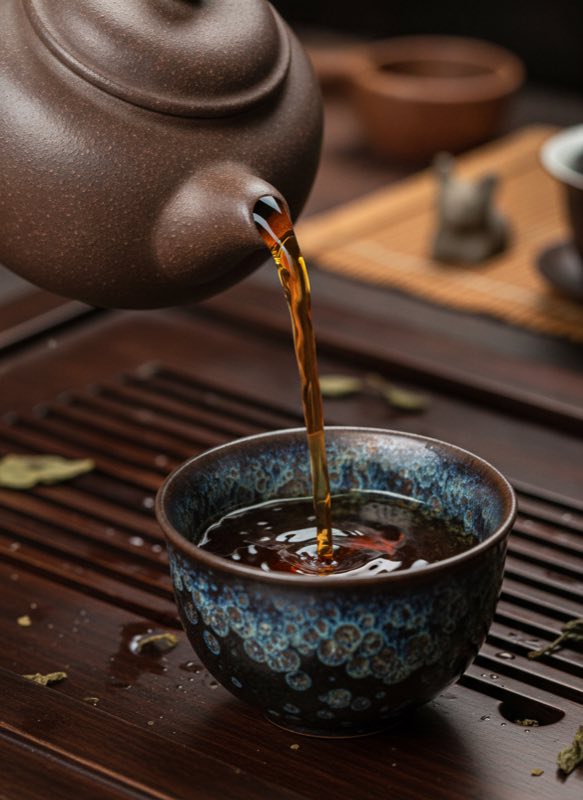
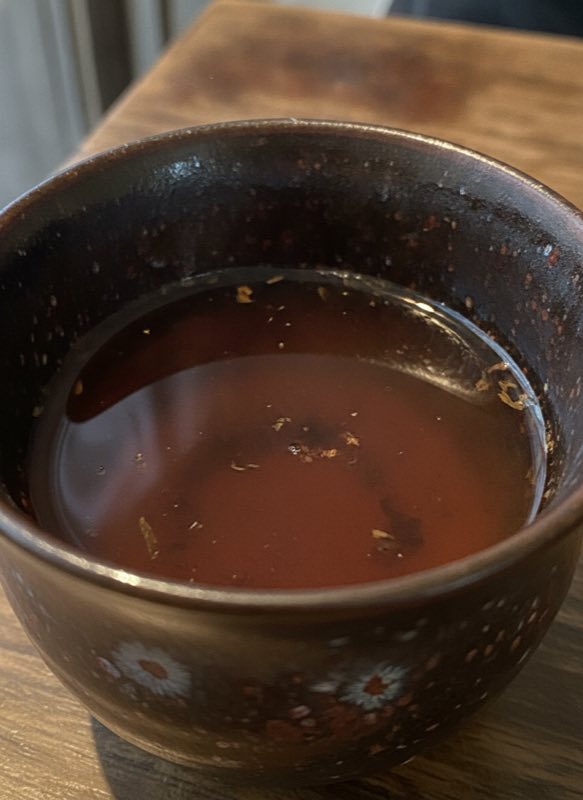
Aged pu-erh produces a deep amber to mahogany liquor that looks stunning against tenmoku’s dark glazes. Oil-spot and hare’s fur patterns create the most dramatic visual contrast—the metallic spots or fine lines shimmer beneath the dark tea, creating a visual depth that enhances the tasting experience. Yohen (kiln-altered) cups are particularly beautiful with pu-erh because the color-shifting glaze interacts with the changing liquor color across multiple steeps, from light gold on the first pour to deep amber by the tenth. This visual progression is part of the gongfu experience that you simply do not get with a white porcelain cup.
Brewing Aged Pu-erh in Tenmoku: A Practical Guide
Here is a step-by-step method specifically optimized for aged pu-erh in a tenmoku cup, based on traditional gongfu technique adapted for the cup’s thermal properties.
Step 1: Rinse the Tea (2 Steeps, 5 Seconds Each)
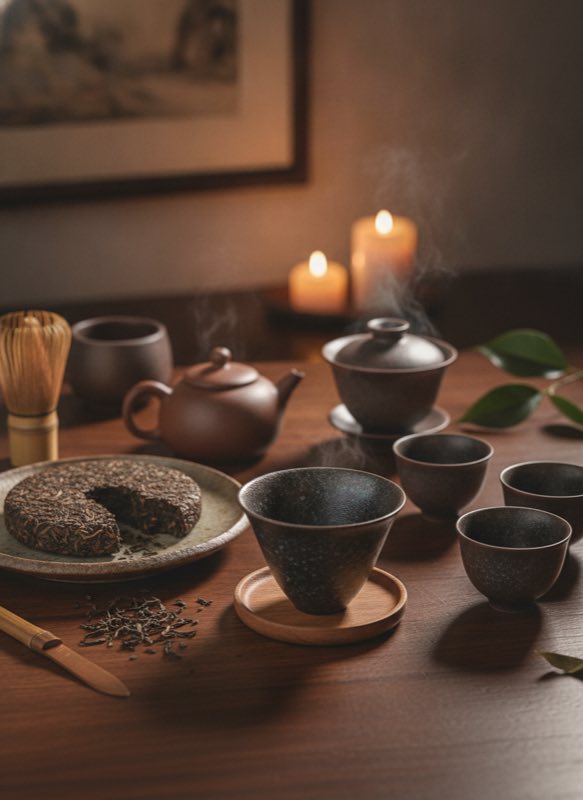
Place 7-8 g of aged pu-erh (about 1 square inch from a cake) in your teapot or gaiwan. Pour 205-212 F water over the leaves, wait 5 seconds, and discard. Repeat once. These two rinse steeps remove storage dust and “wake up” the leaves for extraction. Pour the rinse water into your tenmoku cup to pre-warm it—this is an often-overlooked step that makes a significant difference because a cold cup drops the first brewing steep by 10-15 F.
Step 2: First Infusion (10 Seconds)
Pour water at 212 F over the awakened leaves and steep for 10 seconds. Pour the liquor into your tenmoku cup through a strainer. The first infusion of aged pu-erh is typically light and floral—it reveals the tea’s age and storage conditions. Smell the empty tenmoku cup after drinking; the residual aroma (called “cup fragrance” or bei xiang) tells you about the tea’s quality and fermentation level.
Step 3: Peak Infusions (Steeps 3-8, 15-20 Seconds)
Steeps 3 through 8 are the peak of aged pu-erh—the liquor is at its richest, most complex, and most balanced. Increase steep time by 5 seconds per infusion (15, 20, 25, 30, 35, 40 seconds) to maintain consistent extraction as the leaves gradually release their compounds. Your tenmoku cup will show a steady deepening of the liquor color from bright amber to dark mahogany, with the dark glaze providing a beautiful backdrop for this color progression. The Freer Gallery of Art at the Smithsonian documents how Song Dynasty tea practitioners observed this same color progression in tenmoku bowls.
Why Porcelain Fails With Aged Pu-erh
Many tea drinkers default to porcelain tasting cups because they show liquor color clearly. But for aged pu-erh, porcelain has two significant disadvantages that tenmoku perfectly overcomes.
Heat Loss Problem
Porcelain cups with thin walls (1-2 mm) cool rapidly. By the time you lift a porcelain cup to your lips, the liquor temperature has already dropped 8-12 F from the pour temperature. With aged pu-erh, this temperature drop causes the volatile aromatic compounds to condense prematurely—you smell less aroma and taste less complexity. Tenmoku’s thermal mass keeps the liquor 5-8 F hotter at the point of tasting, which means you experience the full aromatic spectrum that aged pu-erh offers. The difference is not subtle; it is the difference between a flat, one-dimensional pour and a layered, evolving one.
Flavor Interaction Absent
Porcelain, unlike handmade tenmoku, is chemically inert—it does not interact with the tea liquor at all. This neutrality is considered a virtue for evaluating tea quality, but it is a drawback for enjoying aged pu-erh at its best. Tenmoku’s iron-rich glaze provides a subtle chemical interaction that smooths the rough edges of younger aged pu-erh and adds mineral depth to older vintages. Think of it as the difference between drinking wine from a stainless steel cup versus a proper wine glass—the container shape and material genuinely affect the experience.
❓ Can I use tenmoku for raw (sheng) pu-erh too?
Yes, but with a temperature adjustment. Raw pu-erh brews at 190-200 F (88-93 C), which is lower than aged (ripe) pu-erh. Tenmoku’s heat retention works the same way—your tea stays at the correct temperature longer. However, raw pu-erh’s lighter, more floral character benefits from a slightly thinner cup that cools faster, so you may prefer a 3 oz tenmoku for raw pu-erh sessions.
❓ Does the tenmoku glaze type affect pu-erh flavor?
The glaze pattern (oil-spot, hare’s fur, yohen) does not significantly affect flavor—all genuine tenmoku glazes share the same iron-rich composition. The practical difference is visual: dark glazes show the amber liquor color better, and metallic spots create a shimmering effect that enhances the aesthetic experience of drinking aged pu-erh.
❓ How many steeps can I get from aged pu-erh in tenmoku?
Quality aged pu-erh yields 12-20 steeps in gongfu style, with later steeps becoming progressively lighter and sweeter. Your tenmoku cup’s heat retention ensures the later steeps remain vibrant even as extraction decreases. Most experienced drinkers like you stop when your liquor becomes noticeably thin—typically around steep 15-18 for well-aged pu-erh.
Caring for Your Tenmoku After Pu-erh Sessions
Aged pu-erh leaves more residue than other teas because of its high theabrownin content and microbial fermentation byproducts. Your tenmoku cup needs slightly different care after a pu-erh session compared to lighter teas.
Immediate Rinse Is Essential
Rinse your tenmoku cup with warm water immediately after your last pu-erh steep. Aged pu-erh stains are darker and more persistent than oolong or green tea stains because the theabrownins bond more strongly with the glaze micro-pores. If you let the residue dry, you will need a baking soda paste to remove the brown ring that forms inside the cup. A quick warm water rinse while the cup is still warm takes 10 seconds and prevents 90% of staining issues. Never use soap—just warm water and your fingertips.
Monthly Deep Clean for Pu-erh Drinkers
If you drink aged pu-erh in your tenmoku cup daily, perform a monthly deep clean by filling the cup with warm water (160 F / 71 C) and letting it soak for 15 minutes. This thermal bath releases trapped theabrownin residues from the glaze micro-pores. After soaking, wipe the interior with a soft cloth and air dry. This monthly routine keeps your tenmoku’s interior glaze vibrant and prevents the gradual darkening that heavy pu-erh use can cause over years. The patina that develops from regular tea use is desirable, but excessive buildup obscures the glaze’s natural shimmer and reduces its visual appeal.
References
- Freer Gallery of Art: Song Dynasty Tea Bowls and Fermented Tea Traditions. Smithsonian
- Victoria and Albert Museum: Iron Oxide Interaction in Ceramic Tea Vessels. V and A Museum
- Metropolitan Museum of Art: Pu-erh Tea Culture and Vessel Selection. The Met
Ready to pair your aged pu-erh with the right cup? Explore the handmade tenmoku collection at Zen Tea Cup and taste the difference. Discover your perfect pu-erh cup today.


