

Contents
- Tenmoku and Mindfulness: Creating a Daily Tea Ritual
- Why Tenmoku Is the Ideal Mindfulness Cup
- The Morning Ritual: Five Steps to Presence
- The Evening Ritual: Unwinding with Tea
- The Science: Why Tea Rituals Reduce Stress
- Creating Your Tea Space
- ❓ Frequently Asked Questions About Tea and Mindfulness
- ❓ Do I need to learn the formal Japanese tea ceremony?
- ❓ Which tea is best for mindfulness practice?
- ❓ How long should my tea ritual take?
- ❓ Can I practice mindfulness with any cup?
- ❓ What if my mind keeps wandering during the ritual?
- 📚 References
Tenmoku and Mindfulness: Creating a Daily Tea Ritual
In a world of constant notifications and endless scrolling, the simple act of making tea in a Tenmoku cup can become a powerful mindfulness practice. Not a formal meditation — nothing intimidating or esoteric — just five minutes of genuine presence with a cup, some tea, and your own breath. At potalastore, we believe that the heavy, beautiful Tenmoku cup is uniquely suited to this practice because it demands your attention: its weight anchors your hands, its glaze rewards your gaze, and its iron-rich surface transforms the tea in ways that ask you to pay attention.
This is not about performing a Japanese tea ceremony. It is about creating a simple, personal ritual that gives you five minutes of sanity in an otherwise chaotic day. The Tenmoku cup is your anchor. The tea is your medium. The mindfulness is the result.
Why Tenmoku Is the Ideal Mindfulness Cup
Several physical properties of Tenmoku make it particularly effective as a mindfulness object:
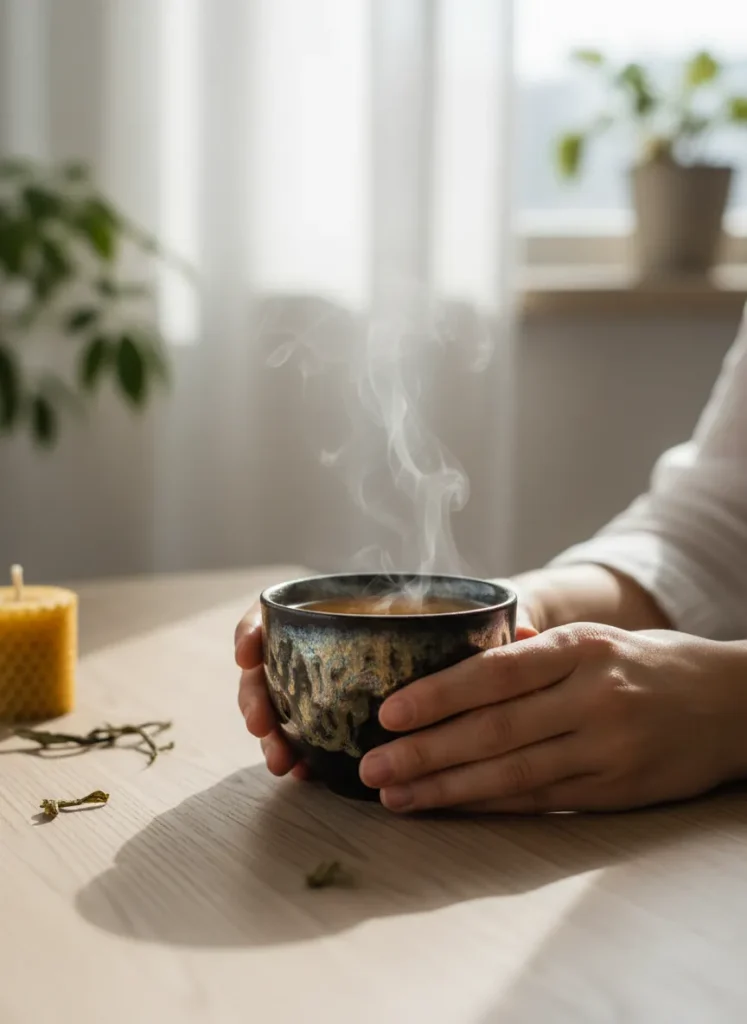
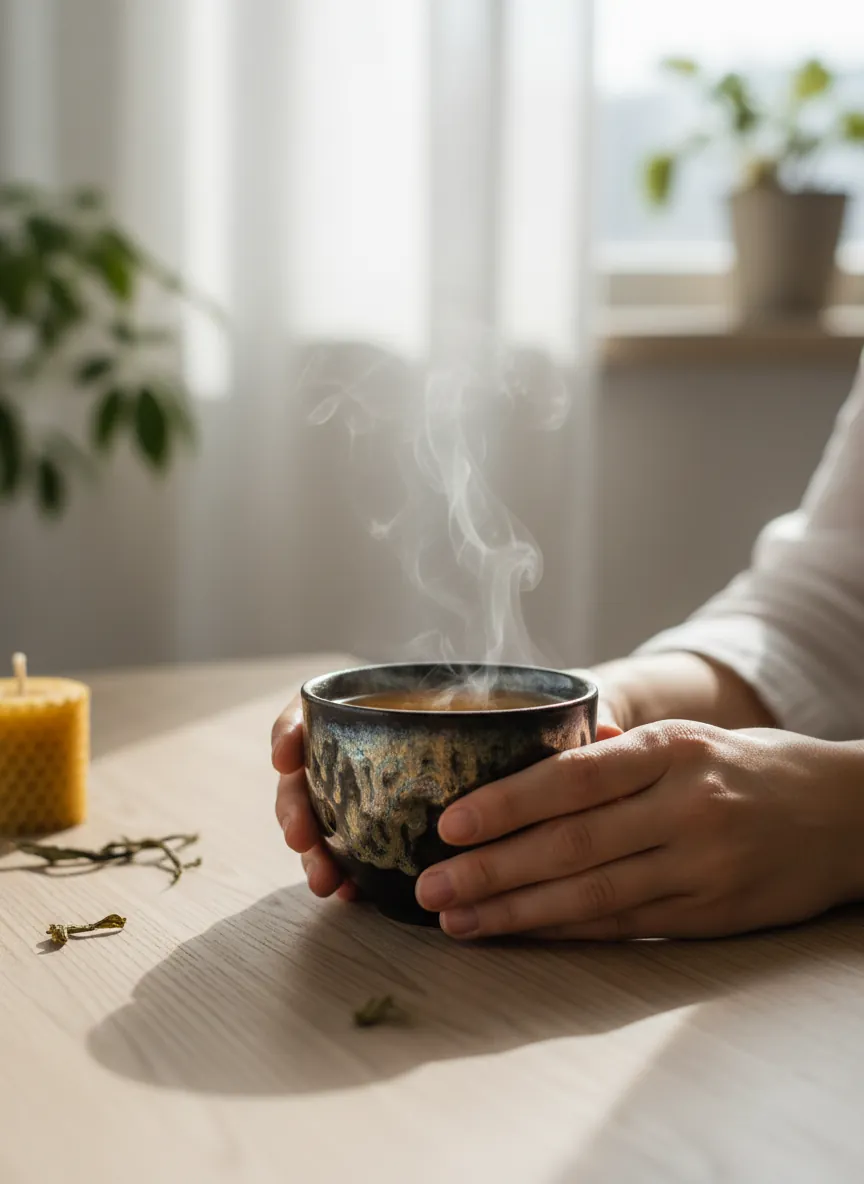
- Weight — A Tenmoku cup weighs significantly more than a porcelain or glass cup. When you hold it in both hands, you feel it. This physical weight creates a grounding sensation that draws your attention to your hands and away from your racing thoughts. It is the same principle as a weighted blanket — the sensory input anchors you in the present moment.
- Thermal mass — The thick walls absorb heat slowly, which means you can hold the cup while it is warm without discomfort. The warmth against your palms is a continuous sensory reminder to stay present — a physical tether to the moment.
- Visual complexity — The reactive iron glaze patterns (oil spots, hare’s fur) are endlessly fascinating to look at. Each time you examine the cup, you see new details. This visual richness gives your eyes something to rest on when your mind wants to wander.
- Transformative — The iron in the glaze genuinely changes the taste of tea, making it smoother and more integrated. This means you can actually taste the difference the cup makes — which gives your palate something to focus on, extending the sensory engagement.
Together, these properties create a multi-sensory mindfulness anchor that is more effective than any single-sense focus object. No other teacup material offers this combination.
The Morning Ritual: Five Steps to Presence
Here is a simple, practical morning tea ritual that takes 5–7 minutes:
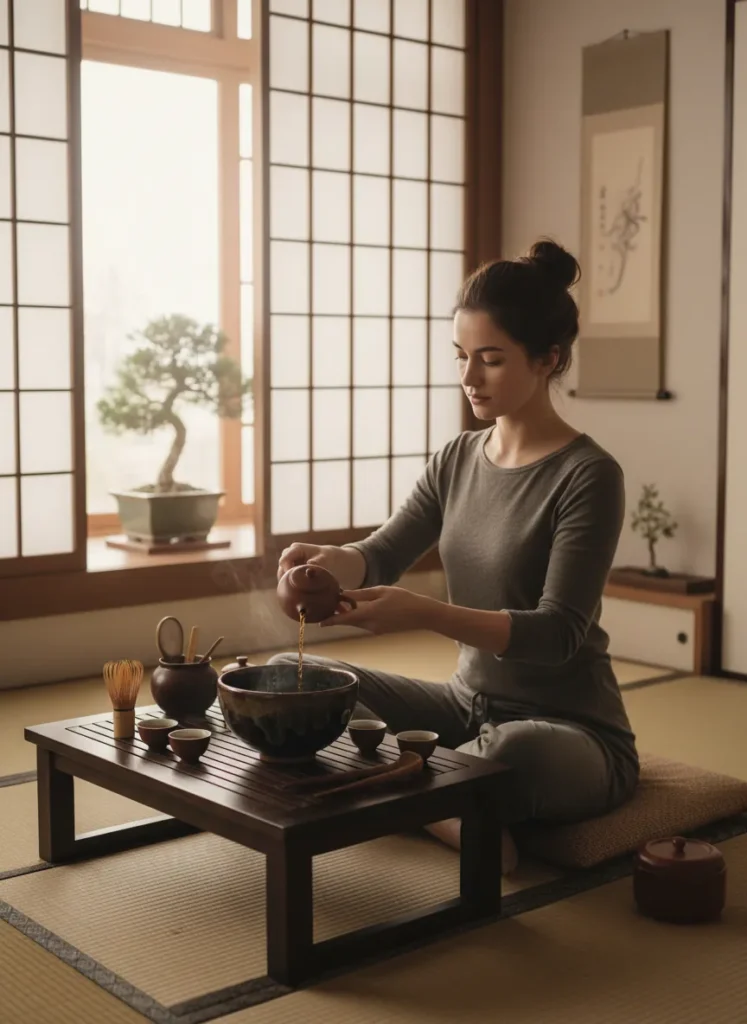
- Choose (30 seconds) — Select your tea and your Tenmoku cup. Do this deliberately, not automatically. Look at the cup. Notice its weight in your hand. This is the transition from sleep to presence.
- Warm (1 minute) — Pour hot water into the cup and let it sit for 30 seconds, then pour it out. This warms the cup and begins the sensory engagement — you feel the heat transferring to the ceramic, you hear the water, you see the steam. Your mind is already settling.
- Brew (2 minutes) — Add tea leaves and water. Watch the leaves unfurl. Notice the color changing. Smell the aroma developing. If your mind wanders to your to-do list, gently return your attention to the tea. This is the core mindfulness practice — not forcing focus, but gently returning when you wander.
- See (1 minute) — Before drinking, spend one full minute just looking at the tea in the cup. The color against the dark glaze. The steam rising. The surface of the liquid. This visual meditation is surprisingly calming — it gives your eyes a rest from screens and your mind a rest from words.
- Drink (2 minutes) — Take your first sip slowly. Notice the temperature, the texture, the flavor. Let the tea sit on your tongue for a moment before swallowing. Feel the warmth spread through your body. This is not about analyzing the tea — it is about experiencing it fully.
That is the entire ritual. No ceremony, no special equipment, no philosophy. Just you and the tea and the cup, for five minutes of genuine presence.
The Evening Ritual: Unwinding with Tea
The evening version of the tea ritual is different — not about waking up, but about winding down:
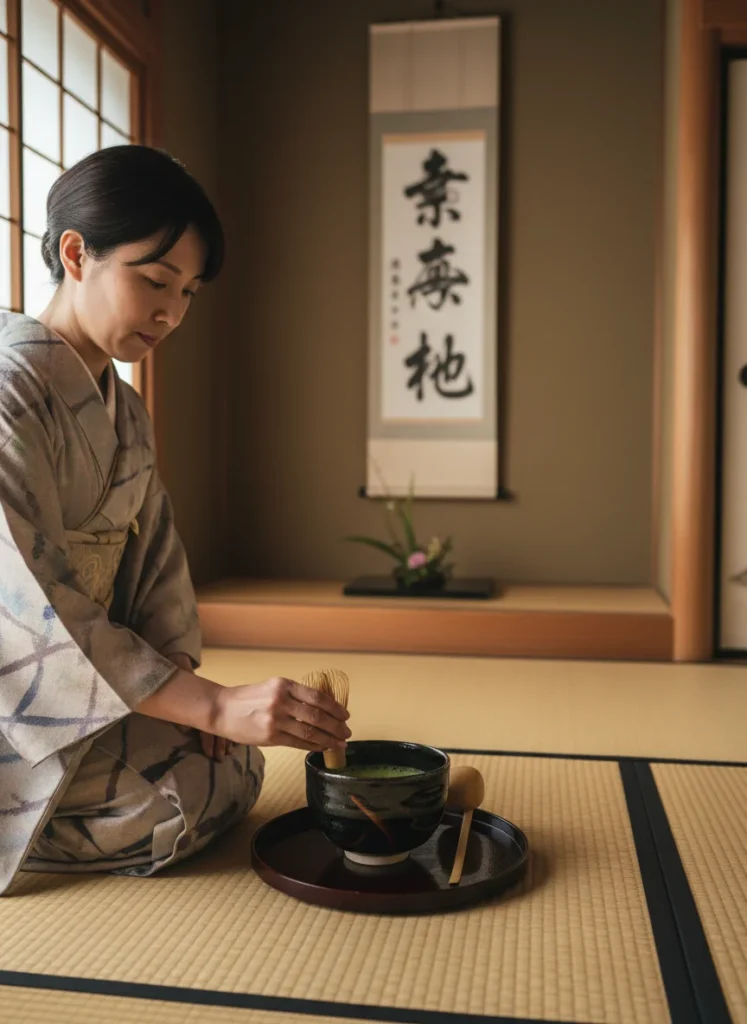
- Choose a calming tea — Low-caffeine or caffeine-free. White tea, herbal tea, or a lightly roasted oolong. The goal is not stimulation but relaxation.
- Brew at a lower temperature — Use water at 175°F (80°C) instead of boiling. The slower extraction produces a gentler, more meditative cup. The lower temperature also means you can hold the warm cup longer without it being too hot.
- Drink without screens — This is the critical rule. No phone, no laptop, no TV. Just you and the tea. If you must have something to do with your eyes, look at the cup. The glaze patterns are more interesting than any social media feed.
- Breathe with the tea — Match your breathing to the tea. Inhale the aroma. Exhale slowly. Take a sip. Repeat. This simple rhythm — smell, breathe, sip — creates a natural breathing pattern that activates your parasympathetic nervous system.
Five minutes of screen-free tea drinking before bed can meaningfully improve your sleep quality. The ritual signals to your brain that the day is over, and the L-theanine in the tea promotes alpha brain waves associated with relaxation.
The Science: Why Tea Rituals Reduce Stress
The stress-reduction effects of tea rituals are not just anecdotal — they are supported by research:
- L-theanine — Tea contains L-theanine, an amino acid that promotes alpha brain wave activity (8–13 Hz), associated with relaxed alertness. Studies show that 200 mg of L-theanine reduces cortisol levels and subjective stress ratings within 40 minutes of consumption. A single cup of green tea provides 5–20 mg.
- Rhythmic repetition — The repetitive actions of the tea ritual (warming, brewing, pouring, drinking) create a rhythmic pattern that activates the brain’s default mode network — the same network active during meditation. This is why repetitive rituals are calming across all cultures.
- Sensory engagement — Multi-sensory activities (touch, smell, taste, sight) are more effective at reducing rumination than single-sense activities. The Tenmoku cup engages all four senses simultaneously, making it more effective as a mindfulness tool than, say, staring at a candle.
- Thermal comfort — Holding a warm cup activates C-tactile afferents in the skin — the same nerve fibers that respond to a warm hug. This produces oxytocin release and a genuine feeling of social warmth, even when you are alone.
The combination of L-theanine, rhythmic action, multi-sensory engagement, and thermal comfort makes a tea ritual one of the most accessible and effective stress-reduction practices available. Matcha provides the most L-theanine per cup, but any tea in a Tenmoku cup delivers the full sensory benefit.
Creating Your Tea Space
A dedicated tea space enhances the ritual’s effectiveness by creating a physical boundary between your tea practice and the rest of your life:
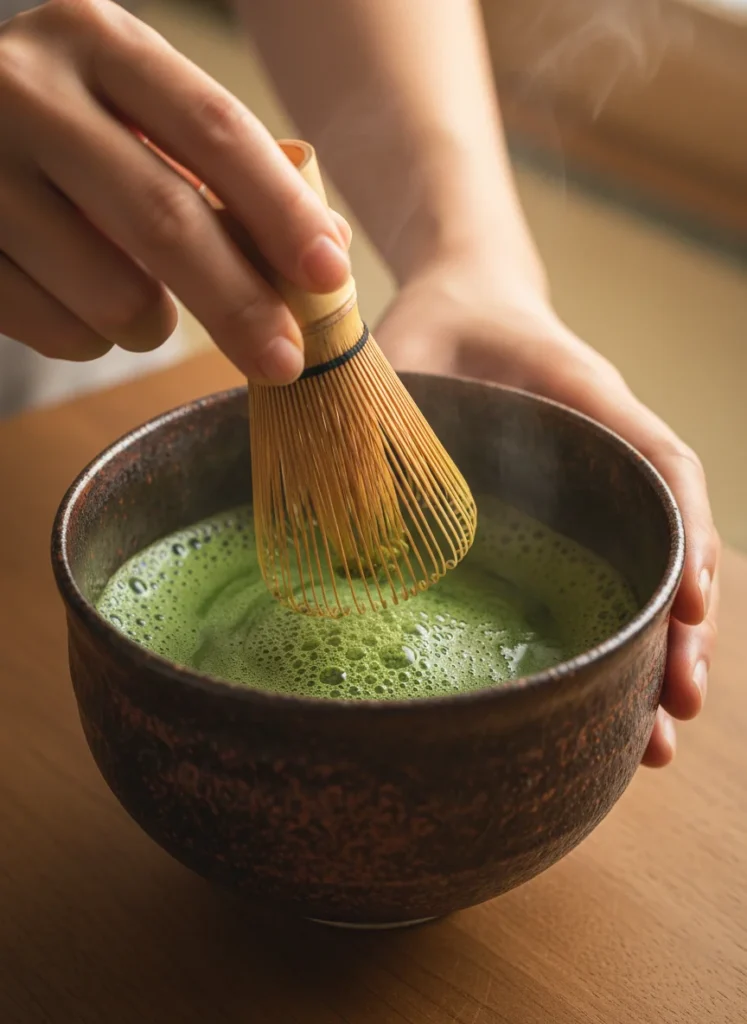
- Location — A corner of a shelf, a small table, or a windowsill. It does not need to be large — just consistent. The same spot every day creates a spatial habit that makes the ritual automatic.
- Essentials only — Your Tenmoku cup, a tea tin, and a kettle. Nothing else. The simplicity of the space reinforces the simplicity of the practice. The Japanese tea ceremony calls this wabi — beauty in simplicity.
- No screens visible — Position your tea space so that no screens are in your line of sight. This is the single most important design decision. If you can see a screen, you will look at it.
- Natural light if possible — The interplay of natural light with Tenmoku glaze is beautiful and calming. Morning light on oil spot patterns is genuinely therapeutic to observe.
Your tea space does not need to look like a tea room. It just needs to be yours — a small corner of the world where the only rule is: be present with the tea.
❓ Frequently Asked Questions About Tea and Mindfulness
❓ Do I need to learn the formal Japanese tea ceremony?
No. The formal ceremony (chanoyu) is a beautiful tradition, but it takes years to learn and is not necessary for mindfulness benefits. A simple five-minute ritual with your Tenmoku cup provides the same stress-reduction and presence benefits without any formal training.
❓ Which tea is best for mindfulness practice?
Any tea you enjoy. Matcha provides the most L-theanine for calm focus, but the ritual’s effectiveness comes from the practice itself, not the specific tea. Choose a tea you genuinely like — you will practice more consistently with tea you enjoy.
❓ How long should my tea ritual take?
Five minutes is enough. Ten minutes is better. Twenty minutes is a luxury. The key is consistency — a daily five-minute ritual is more beneficial than an occasional hour-long session. Start with five minutes and let it grow naturally.
❓ Can I practice mindfulness with any cup?
Yes, but Tenmoku is uniquely effective because of its multi-sensory properties: weight for grounding, thermal mass for warmth, visual complexity for gaze resting, and iron glaze for taste transformation. A glass or porcelain cup works, but Tenmoku works better.
❓ What if my mind keeps wandering during the ritual?
That is normal and expected. Mindfulness is not about emptying your mind — it is about noticing when your mind wanders and gently returning your attention to the tea. Each time you notice wandering and return, you are strengthening your attention. The wandering is not failure; it is the practice.
📚 References
Hidese, T., et al., “Effects of L-theanine on stress-related symptoms,” Nutrients, 2019.
Kabat-Zinn, J., Full Catastrophe Living, Delta, 1990.
Updated June 2026.
Ready to start your daily practice? Explore our Tenmoku collection at potalastore — cups that anchor you in the present, one sip at a time.


