

Contents
- Matcha vs. Loose Leaf Tea: Which Is Better for You?
- Nutritional Comparison: Matcha vs. Loose Leaf Green Tea
- Caffeine and L-Theanine: The Energy Difference
- Taste and Preparation: Different Experiences
- Health Benefits: What Does the Science Say?
- Cost Comparison: Which Is More Affordable?
- When to Choose Matcha vs. Loose Leaf Tea
- ❓ Frequently Asked Questions About Matcha vs. Loose Leaf Tea
- ❓ Is matcha just crushed green tea leaves?
- ❓ Can I use loose leaf green tea in a Tenmoku cup?
- ❓ Does matcha have more caffeine than coffee?
- ❓ Can I steep matcha like regular tea?
- The Environmental Impact: Matcha vs. Loose Leaf
- Making the Switch: Practical Tips
- Our Recommendation at potalastore
- 📚 References
Matcha vs. Loose Leaf Tea: Which Is Better for You?
The matcha vs. loose leaf tea debate is one of the most common questions among tea drinkers — and the answer depends entirely on what you mean by “better.” Better for health? Better for convenience? Better for taste? Better for mindfulness? At potalastore, we believe both forms have genuine strengths, and understanding the differences helps you choose the right tea for the right moment. from Zen Tea Cup
| Key Stat | Value |
|---|---|
| Caffeine (Matcha) | 70 mg per 8 oz |
| Caffeine (Loose Leaf) | 40–60 mg per 8 oz |
| L-Theanine per Cup | 20–30 mg (matcha) |
| Prep Time | 30 sec (matcha) vs 3–5 min (loose leaf) |
| Price per Serving | $0.50–$2.50 |
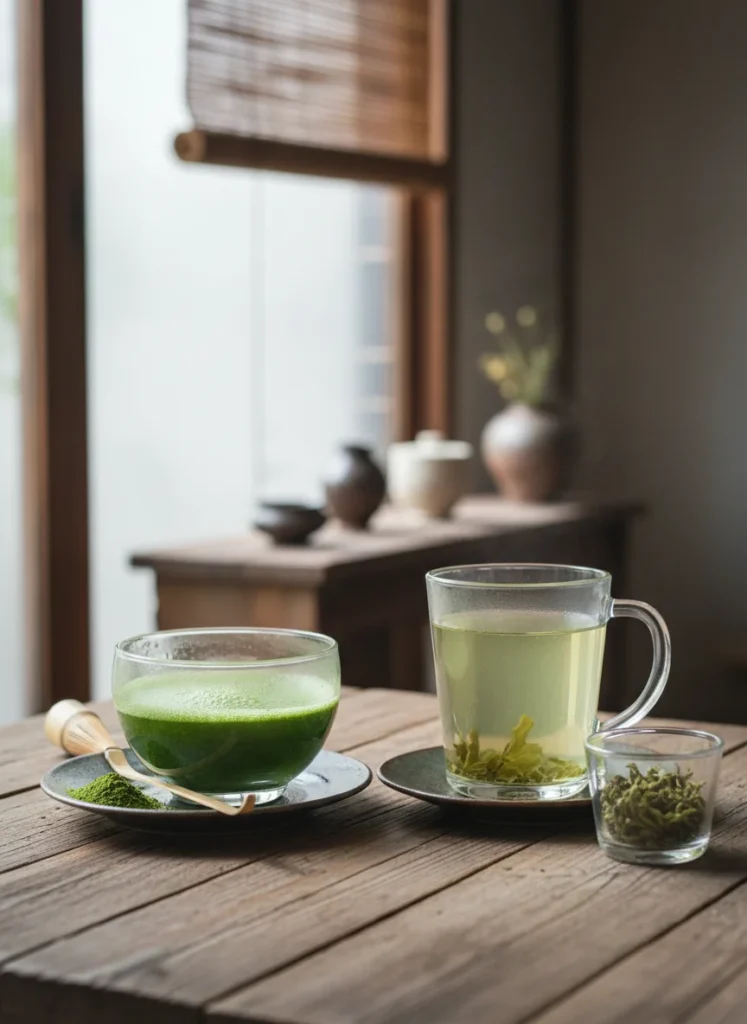
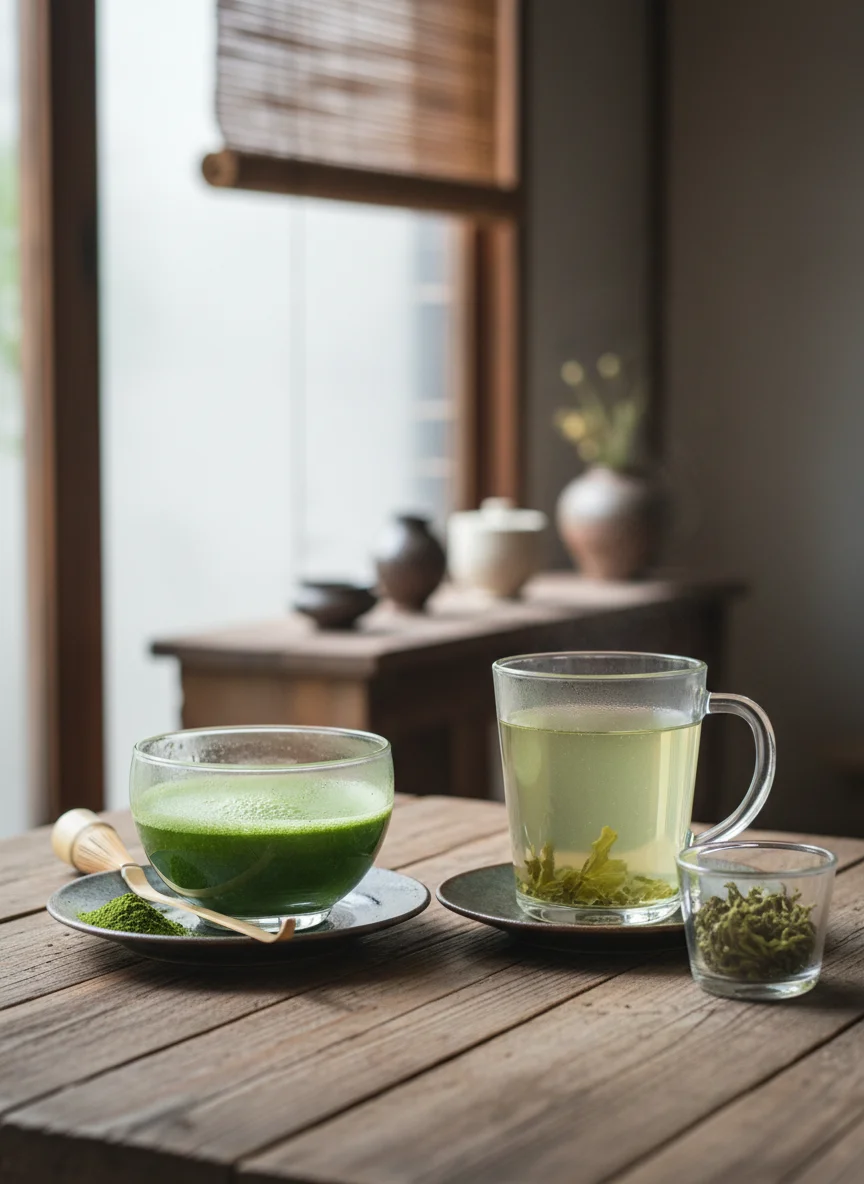
The fundamental difference: with loose leaf tea, you steep the leaves and discard them — you extract only the water-soluble compounds. With matcha, you consume the entire leaf in powdered form — you get everything the leaf contains. This single fact drives most of the differences between the two.
Nutritional Comparison: Matcha vs. Loose Leaf Green Tea
Because matcha is consumed whole rather than steeped, its nutritional profile is significantly more concentrated:
| Nutrient | Matcha (1 serving) | Loose Leaf Green Tea (1 cup) |
|---|---|---|
| Catechins (EGCG) | 60–130 mg | 20–50 mg |
| L-theanine | 20–40 mg | 4–10 mg |
| Caffeine | 30–70 mg | 15–50 mg |
| Vitamin C | 0.6 mg | 0.3 mg (steeped) |
| Fiber | Present (whole leaf) | Negligible (leaves discarded) |
| Chlorophyll | High (shade-grown) | Moderate |
Matcha delivers approximately 3 times the catechins and 4 times the L-theanine of steeped green tea. This is not because matcha leaves are inherently different — it is because you are eating the whole leaf rather than just drinking the infusion.
Caffeine and L-Theanine: The Energy Difference
The caffeine experience is where matcha and loose leaf tea differ most noticeably:
- Loose leaf green tea — Moderate caffeine (15–50 mg per cup) with modest L-theanine. The energy boost is gentle and short-lasting. You may feel a mild lift followed by a gradual fade.
- Matcha — Higher caffeine (30–70 mg) paired with significantly more L-theanine. The L-theanine modulates the caffeine, creating a calm, focused alertness without the jitters or crash associated with coffee. This is the “matcha buzz” that regular tea drinkers notice immediately.
If you are replacing coffee, matcha is the better choice — it provides comparable alertness with a smoother, longer-lasting energy curve. If you are sensitive to caffeine or want a gentle afternoon tea, loose leaf green tea is more appropriate.
Taste and Preparation: Different Experiences
The taste and preparation differences are substantial:
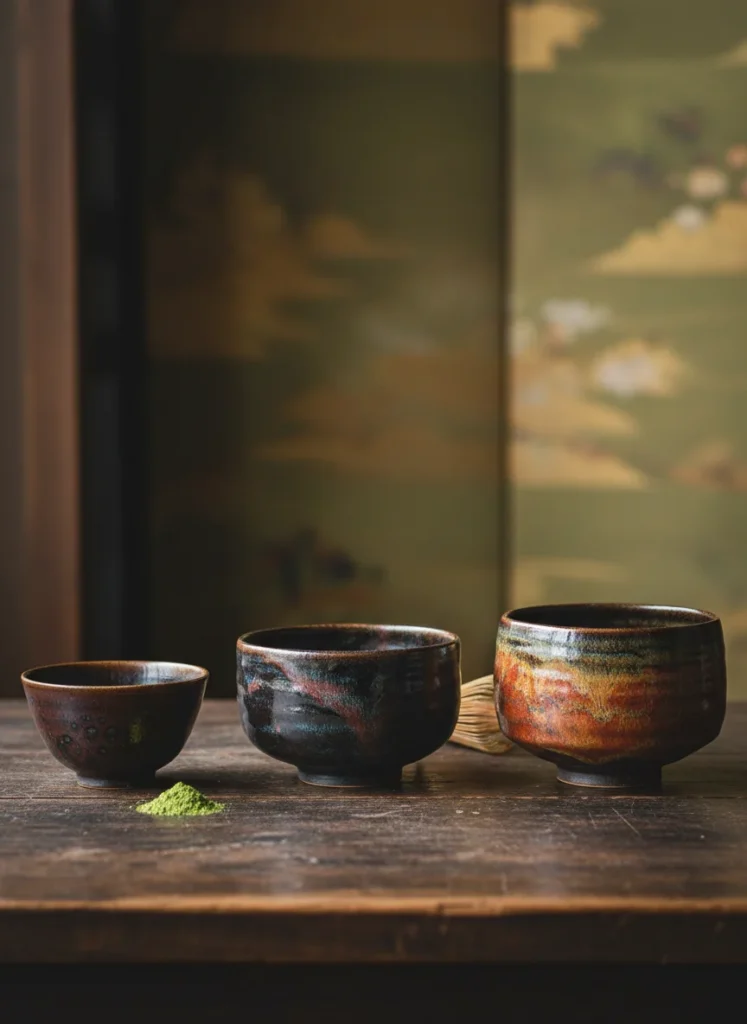
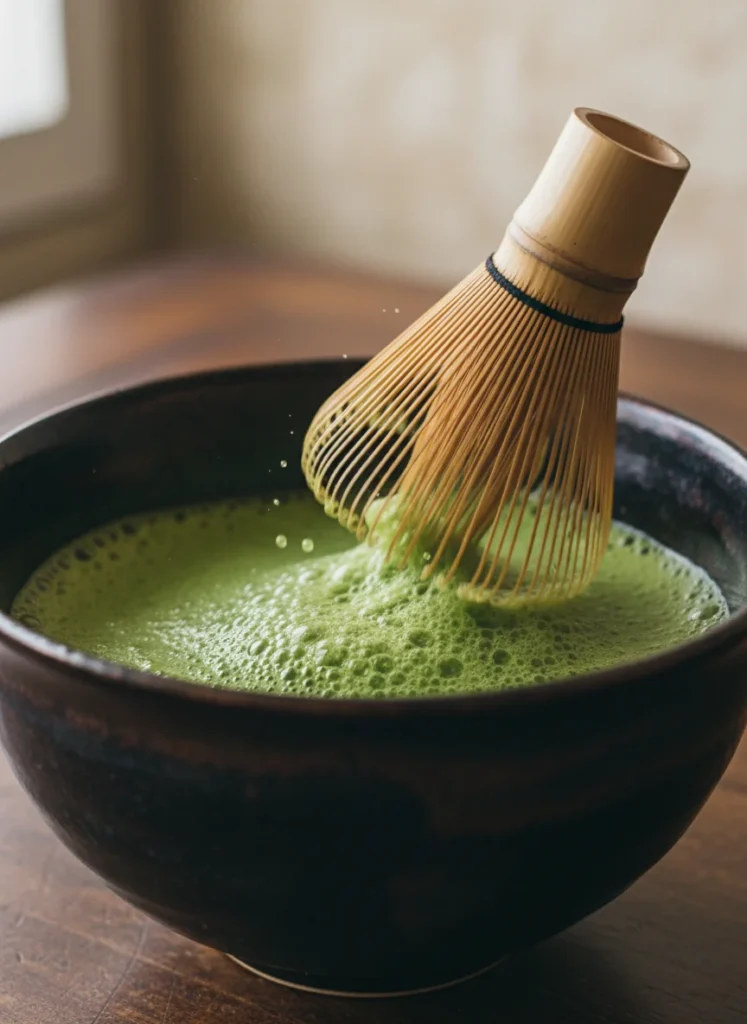
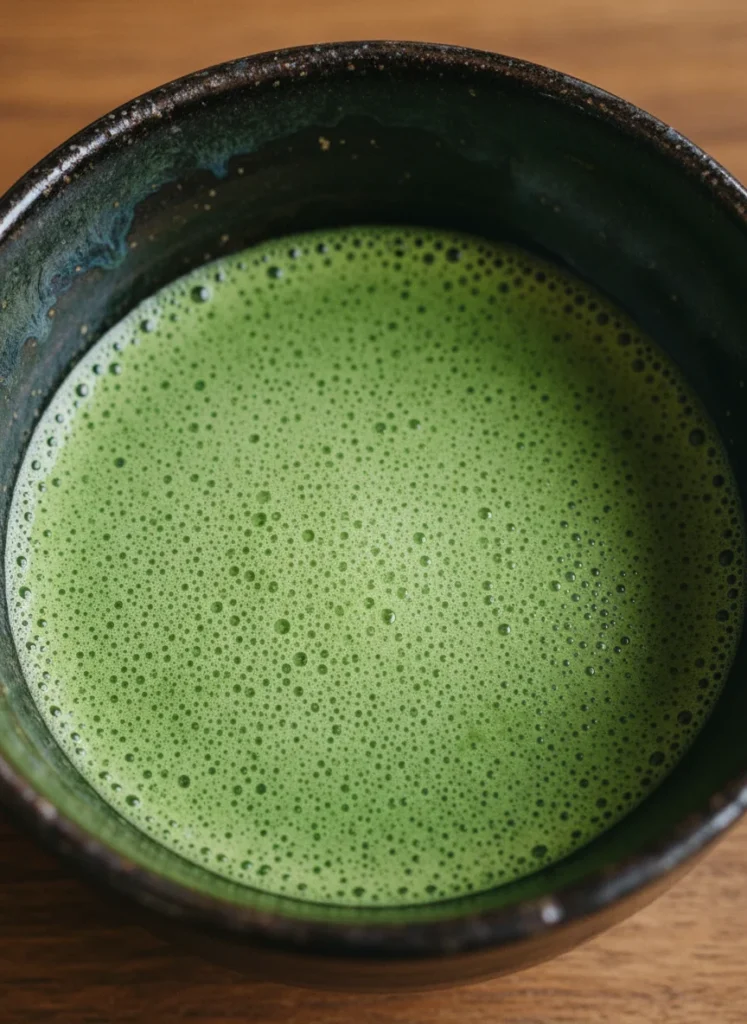
- Matcha — Rich, umami, vegetal, and creamy. Preparation requires a bamboo whisk (chasen), a bowl (chawan), and a specific technique: sift powder, add water at 175°F (80°C), whisk vigorously in an M-motion until frothy. Preparation time: 2–3 minutes. Best served in a Tenmoku or chawan bowl.
- Loose leaf green tea — Light, floral, grassy, and refreshing. Preparation is simpler: add leaves to a vessel, pour hot water, steep 1–3 minutes, and drink. Can be re-steeped 3–5 times. Preparation time: 1–2 minutes. Best served in a glass or porcelain cup to appreciate the pale green color.
Matcha is a ritual — the whisking, the foam, the bowl. Loose leaf tea is more casual — steep and sip. Neither is inherently better; they serve different moods and moments.
Health Benefits: What Does the Science Say?
Both matcha and loose leaf green tea offer significant health benefits, but the evidence favors matcha for potency:
- Antioxidant power — Matcha’s ORAC (Oxygen Radical Absorbance Capacity) score is approximately 3 times higher than steeped green tea, because you consume the whole leaf’s antioxidant content rather than just the water-soluble fraction.
- Heart health — Both forms are associated with reduced cardiovascular risk, but matcha’s higher catechin content may provide stronger protection. A 2020 meta-analysis found that green tea catechins reduce LDL cholesterol by 5–10%.
- Mental focus — Matcha’s L-theanine + caffeine combination produces alpha brain waves associated with relaxed alertness. This is the basis for matcha’s reputation as a “meditation in a cup” and why mindfulness practitioners prefer matcha.
- Detoxification — Matcha’s exceptionally high chlorophyll content (from shade-growing) supports natural detoxification. Steeped green tea provides some chlorophyll, but far less.
Important caveat: these benefits assume high-quality tea. Cheap culinary-grade matcha may contain less L-theanine and catechins than premium loose leaf green tea. Quality matters more than form.
Cost Comparison: Which Is More Affordable?
Cost is where loose leaf tea has a clear advantage:
- Loose leaf green tea — $0.10–$0.50 per cup for good quality. A 100-gram bag yields approximately 50 cups.
- Ceremonial matcha — $0.50–$2.00 per serving for good quality. A 30-gram tin yields approximately 30 servings. The higher cost reflects the labor-intensive production (shade-growing, stone-grinding).
- Culinary matcha — $0.10–$0.30 per serving. Affordable but lacks the smooth taste and high L-theanine of ceremonial grade.
For daily consumption on a budget, loose leaf green tea is more economical. For maximum health benefits and the unique matcha experience, ceremonial matcha is worth the premium.
When to Choose Matcha vs. Loose Leaf Tea
| Choose Matcha When… | Choose Loose Leaf When… |
|---|---|
| You want maximum antioxidant intake | You want a light, refreshing cup |
| You need focused, calm energy | You prefer a gentler caffeine effect |
| You enjoy the whisking ritual | You want quick, simple preparation |
| You are replacing coffee | You want to re-steep multiple times |
| You are practicing mindfulness | You are serving multiple people easily |
| Budget is not the primary concern | Cost efficiency matters |
The best approach for most tea lovers is to keep both — matcha for morning focus and ritual, loose leaf for afternoon ease and variety. They complement each other perfectly.
❓ Frequently Asked Questions About Matcha vs. Loose Leaf Tea
❓ Is matcha just crushed green tea leaves?
No. Matcha is made from shade-grown tea leaves (covered for 20–30 days before harvest) that are steamed, dried, destemmed, and then stone-ground into an ultra-fine powder. The shade-growing step increases chlorophyll and L-theanine, making matcha fundamentally different from regular green tea leaves that are simply crushed.
❓ Can I use loose leaf green tea in a Tenmoku cup?
Absolutely. The iron in Tenmoku glaze softens the water and reduces green tea’s astringency, making it smoother. The dark glaze also shows the pale green liquor beautifully. Tenmoku works well for both matcha and loose leaf green tea.
❓ Does matcha have more caffeine than coffee?
Typically no. A standard matcha serving contains 30–70 mg of caffeine, while a cup of coffee contains 80–120 mg. However, matcha’s L-theanine makes the caffeine feel different — smoother onset, no jitters, and a gradual decline rather than a crash.
❓ Can I steep matcha like regular tea?
You can, but you will not get the proper texture or flavor. Matcha needs to be whisked to suspend the powder evenly in the water and create the characteristic froth. Simply steeping matcha powder in hot water produces a gritty, uneven cup. Invest in a bamboo whisk (chasen) — it makes a significant difference.
The Environmental Impact: Matcha vs. Loose Leaf
An often overlooked factor in the matcha vs. loose leaf debate is environmental sustainability. Both forms have different environmental footprints that are worth considering:
- Loose leaf tea — Generally more resource-efficient per cup. The leaves are simply processed and dried, with minimal waste. The used leaves are compostable. However, many loose leaf teas are packaged in single-use tins or foil pouches that generate waste.
- Matcha — More resource-intensive to produce. The shade-growing period (20–30 days of covering tea bushes) requires additional materials and labor. Stone-grinding is slow and energy-intensive — it takes approximately one hour to grind 30 grams of matcha. However, matcha produces zero leaf waste because you consume the entire product.
From a pure waste perspective, matcha is actually more efficient — there is nothing to discard. But from a production energy perspective, loose leaf is lighter. The most sustainable choice is to buy either form in bulk from producers who use eco-friendly packaging and farming practices.
Making the Switch: Practical Tips
If you are currently a loose leaf tea drinker considering matcha (or vice versa), here are practical tips for making the switch:
- Switching to matcha — Start with a half-teaspoon of ceremonial-grade matcha per serving. Use water at 175°F (80°C), not boiling. Whisk in a W or M motion — do not stir in circles. The foam should be fine and even, not bubbly. Give it two weeks — matcha’s umami flavor is an acquired taste for some, but most people find it addictive once they adjust.
- Switching to loose leaf — Start with a Chinese green tea like Longjing (Dragon Well). Use water at 180°F (82°C) and steep for 90 seconds. Do not over-steep — bitterness means the water was too hot or the steep too long. A good Chinese tea guide will help you explore beyond green tea.
Whichever direction you choose, the investment in quality teaware — particularly a good Tenmoku cup — will enhance your experience with either form. The cup you drink from matters as much as the tea you put in it.
Our Recommendation at potalastore
After years of helping customers choose between matcha and loose leaf, our honest recommendation is simple: start with whichever form appeals to you most, and eventually try both. The tea world is large and generous — there is room for both matcha and loose leaf in your daily practice.
If you are drawn to ritual and mindfulness, matcha will reward you with a practice that deepens over time. If you prefer variety and ease, loose leaf tea offers an infinite world of flavors to explore. And if you use a quality Tenmoku cup for either one, you will experience the best that each form has to offer — because the iron in the glaze enhances every type of tea, making each cup smoother, richer, and more present.
The question is not “which is better” — it is “which is better for me, right now.” And the answer to that question changes with the seasons, the time of day, and the state of your heart. That is the beauty of tea: it meets you wherever you are.
📚 References
- Matcha Health Research: L-theanine and caffeine synergy studies. www.si.edu
- Loose Leaf Tea Science: Extraction and brewing parameter research. www.tea.co.uk
- Japanese Tea Ceremony: Matcha preparation traditions and vessels. www.metmuseum.org
Ready to choose your tea style? Discover our tenmoku collection and find the perfect cup for matcha or loose leaf.


