

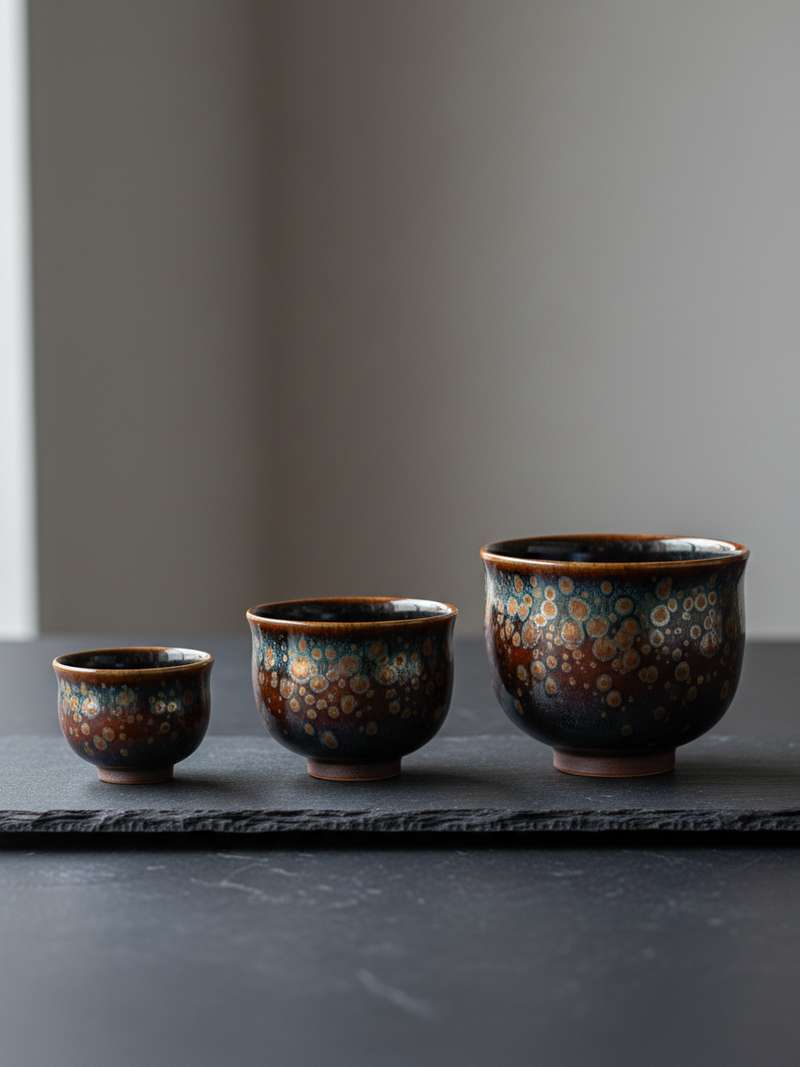
Use this tenmoku tea cup comparison chart to match cup size, glaze pattern, and price tier to your brewing style — whether you prefer daily gongfu sessions, ceremonial matcha, or an eye-catching display piece. Tenmoku tea cups, also known as Jian Zhan, vary from 7 cm to 12 cm in diameter, hold between 50 ml and 200 ml, and range from $30 to $300 depending on glaze complexity and artisan pedigree. This guide gives you the exact measurements, use-case pairings, and expert recommendations you need to find your perfect match from Zen Tea Cup‘s tenmoku collection.
| Key Stat | Value |
|---|---|
| Origin | Song Dynasty (960–1279 AD), Jianyang, Fujian |
| Primary Clay | Iron-rich stoneware clay (5–8% Fe₂O₃) |
| Firing Temperature | 2,300°F (1,260°C) in reduction atmosphere |
| Small Cup Diameter | 7–8 cm (2.8–3.1 in) |
| Medium Cup Diameter | 8–9 cm (3.1–3.5 in) |
| Large Cup Diameter | 9–12 cm (3.5–4.7 in) |
| Typical Weight Range | 120–180 g (4.2–6.3 oz) |
| Entry Price | From $30–$60 (machine-finished) |
Contents
- Tenmoku Tea Cup Comparison Chart
- How to Read This Comparison Chart
- Size Categories: Small, Medium, Large
- Glaze Patterns and How They Affect Your Choice
- Oil Spot vs Hare’s Fur: Which Glaze for Which Tea?
- Matching Cup Size to Your Brewing Style
- Price Tiers: What You Get at Each Level
- Tenmoku Tea Cup Care and Longevity
- ❓ What size tenmoku cup should I buy first?
- ❓ Can I use the same tenmoku cup for different teas?
- ❓ Why do tenmoku cups cost more than regular ceramic cups?
- ❓ How do I know if a tenmoku cup is authentic?
- 📚 References
Tenmoku Tea Cup Comparison Chart
The chart below compares tenmoku tea cups across the three most common sizes so you can quickly identify which one fits your needs. Each column represents a size category, and every row highlights a key attribute — from capacity to ideal tea type. When you compare cups side by side, the right choice becomes obvious (and yes, the difference between 80 ml and 150 ml is more noticeable than you might think).
| Attribute | Small (7–8 cm) | Medium (8–9 cm) | Large (9–12 cm) |
|---|---|---|---|
| Diameter | 7–8 cm (2.8–3.1 in) | 8–9 cm (3.1–3.5 in) | 9–12 cm (3.5–4.7 in) |
| Capacity | 50–80 ml (1.7–2.7 oz) | 80–120 ml (2.7–4.0 oz) | 120–200 ml (4.0–6.8 oz) |
| Weight | 120–140 g (4.2–4.9 oz) | 140–160 g (4.9–5.6 oz) | 160–180 g (5.6–6.3 oz) |
| Rim Width | 6–7 cm | 7–8 cm | 8–11 cm |
| Best For | Gongfu cha, tasting sessions | Daily brewing, oolong | Matcha, display, sharing |
| Glaze Patterns | Hare’s fur, oil spot | Oil spot, yao bian | All patterns, partridge feather |
| Price Range | $30–$80 | $50–$150 | $80–$300 |
| Hands Fit | Small hands ideal | Most hand sizes | Large hands preferred |
How to Read This Comparison Chart
A comparison chart is only helpful if you know what the numbers mean for your daily tea routine. Here is how to interpret each row so you can match a tenmoku cup to the way you actually brew.
Size Categories: Small, Medium, Large
Small cups (7–8 cm diameter) hold 50–80 ml, making them perfect for gongfu cha sessions where you brew multiple short infusions. The narrow rim concentrates aroma — you will notice the fragrance of a high-roast Da Hong Pao much more intensely in a small tenmoku cup than in a wide bowl. If your hands are on the smaller side (glove size S–M), a small cup sits naturally in your palm without straining your grip. The thick stoneware walls (about 3–4 mm) retain heat for 3–5 minutes, keeping each pour warm while you savor the aroma.
Medium cups (8–9 cm diameter) are the most versatile size. At 80–120 ml, they accommodate a standard oolong pour and still leave room for the tea to breathe. This is the size most tea drinkers reach for daily — not too precious, not too casual. The medium cup works well for most hand sizes and tea types, which is why it is often the first tenmoku cup people buy. You can expect a comfortable 4–6 minute heat retention window with this size.
Large cups (9–12 cm diameter) hold 120–200 ml and are best suited for matcha preparation, sharing pours, or display. The wide rim lets you whisk matcha with a chasen (bamboo whisk) comfortably — a task that is awkward in a narrow cup. Large tenmoku bowls also showcase glaze patterns like yao bian and partridge feather more dramatically because the broader surface area allows the glaze to pool and crystallize over longer stretches. You can explore how these patterns form in our tenmoku glaze patterns guide.
Glaze Patterns and How They Affect Your Choice
The glaze pattern on a tenmoku cup is not just decoration — it determines how the cup interacts with light, how it feels in your hand, and even how it influences your perception of the tea inside. According to the Metropolitan Museum of Art, Song Dynasty potters in Jianyang developed these patterns through precise control of kiln temperature and reduction atmosphere at 2,300°F (1,260°C). Each pattern has a distinct personality — and each pairs better with certain teas than others.
Oil Spot vs Hare’s Fur: Which Glaze for Which Tea?
Oil spot (you-dian) features round, silver-blue crystalline spots scattered across a dark iron glaze. These spots form when iron oxide crystallizes on the surface during the cooling phase — a process that happens only when the kiln temperature drops at a specific rate through the 1,800–2,000°F range. Oil spot cups are prized by collectors and look spectacular under direct light — the spots shimmer like stars. For daily use, oil spot pairs well with lighter teas (green, white, lightly oxidized oolong) because the visual shimmer complements a delicate brew. (compare options on our comparison chart)
Hare’s fur (tu-hao) shows fine, hair-like streaks running vertically down the interior. These streaks form when the glaze flows downward during firing and iron-rich droplets leave trails across the dark surface. Hare’s fur is the most common traditional pattern and works beautifully with darker teas — the streaks seem to echo the flowing liquor of a rich pu’er or a roasted tieguanyin. Research published by the British Museum documents how Song Dynasty kiln masters controlled glaze flow direction by adjusting cup orientation in the kiln.
Yao bian (kiln-altered) is the rarest pattern — no two cups are alike. The glaze shifts unpredictably during firing, producing iridescent bands of color that range from sunset orange to deep violet. Yao bian cups command the highest prices ($150–$300) and are typically medium-to-large sizes where the glaze has more surface area to develop. The kiln yield rate for yao bian is only 10–15%, meaning that out of every 100 cups fired, only 10–15 achieve this rare pattern — which explains both the price and the excitement when you find one.
Matching Cup Size to Your Brewing Style
Your brewing method should determine your cup size, not the other way around. Here is a practical breakdown that helps you choose based on how you actually make tea at home.
For gongfu cha (multiple short infusions): Choose a small or medium cup. In gongfu brewing, you pour 5–8 ml of tea per infusion, so a 50–80 ml small cup lets you enjoy 6–10 infusions before the cup overflows. The thick walls of tenmoku stoneware retain heat for 3–5 minutes — long enough to savor each pour without rushing. A small hare’s fur cup (7–8 cm) is the classic gongfu choice: the narrow rim focuses the aroma, and the streaked glaze echoes the rhythm of repeated pours.
For casual daily brewing (Western style): A medium cup at 80–120 ml is ideal. You can brew a single large pour of oolong or black tea and drink it at a comfortable pace. The tenmoku clay softens astringency in stronger teas, which is why many drinkers notice their everyday oolong tastes smoother in a Jian Zhan cup. If you brew one cup in the morning and another in the afternoon, a medium oil spot cup handles both sessions without feeling too small or too large.
For matcha preparation: You need a large bowl (9–12 cm) with a wide rim. The standard matcha serving is 70–100 ml, and you need at least 3 cm of clearance above the liquid to whisk without splashing. A tenmoku chawan with its 10–12 cm diameter provides exactly that — and the textured interior helps break up matcha clumps during whisking. The iron-rich glaze also does something unexpected: it subtly enhances matcha’s umami flavor by interacting with the tea’s amino acids.
For display and collecting: Go for large cups with yao bian or partridge feather glazes. The wider surface showcases the glaze pattern dramatically, and larger cups tend to develop more patina over years of careful use. The Freyer Foundation has documented how tenmoku glazes evolve over decades of tea contact, developing a subtle luster that machine-made ceramics simply cannot replicate.
Price Tiers: What You Get at Each Level
Tenmoku tea cups span a wide price range, and understanding what drives the cost helps you avoid overpaying or undershooting your needs.
| Tier | Price Range | What You Get |
|---|---|---|
| Entry | $30–$60 | Machine-shaped, standard oil spot or hare’s fur glaze, consistent quality |
| Mid-Range | $60–$150 | Hand-finished shaping, more complex glaze patterns, individual character |
| Premium | $150–$300 | Full hand-throwing, yao bian or rare glazes, kiln-tested by master potters |
At the entry tier, you get a functional tenmoku cup with decent glaze — perfect if you are trying tenmoku for the first time and want to see how the clay affects your tea. Mid-range cups offer hand-finishing, which means the shape is more refined and the glaze has more variation (each cup looks slightly different from its siblings — this is the charm of handmade ceramics). Premium cups are artisan-made, often by potters who trained in Jianyang, and feature rare glaze patterns that are difficult to produce consistently. If you are a collector or buying a meaningful gift, premium is the way to go.
Tenmoku Tea Cup Care and Longevity
A tenmoku cup can last decades — even centuries — with proper care. The iron-rich stoneware is fired at 2,300°F, making it highly durable, but the glaze surface requires gentle attention. Here is what you need to know to keep your cup in pristine condition for years to come.
Wash your cup by hand with warm water after each session. Avoid dish soap, which can leave a film that dulls the glaze over time. If you brew heavily roasted teas, a light scrub with a soft bamboo brush removes residue without scratching the glaze. Never put a tenmoku cup in the dishwasher or microwave; the sudden temperature changes can crack the glaze or even fracture the body. Store your cups upright on a soft surface — a cloth or felt pad — to protect the foot ring from chipping.
With regular use, tenmoku cups develop a subtle patina — a soft sheen that comes from tea oils bonding with the iron-rich surface. This is not a flaw; it is a sign of a well-loved cup. According to ceramics researchers, Song Dynasty tea masters valued this patina so highly that they passed cups down through generations. You can learn more about maintaining your cup in our Jian Zhan care guide.
❓ What size tenmoku cup should I buy first?
Start with a medium cup (8–9 cm, 80–120 ml). It is the most versatile size — suitable for gongfu cha, daily brewing, and even light matcha. You can always add a small tasting cup or a large matcha bowl later, but a medium cup covers the widest range of uses and helps you find your perfect match without guessing.
❓ Can I use the same tenmoku cup for different teas?
Yes, but with a caveat. Tenmoku clay is porous enough to absorb faint flavor residues over time. If you switch between very different teas (e.g., strong pu’er one day, delicate green tea the next), rinse the cup with hot water between sessions. Some tea enthusiasts dedicate separate cups to different tea families — a small hare’s fur cup for oolong and a large oil spot bowl for matcha.
❓ Why do tenmoku cups cost more than regular ceramic cups?
Tenmoku cups are fired at 2,300°F (1,260°C) in a reduction atmosphere — a process that requires precise kiln control and yields only a 30–40% success rate for premium glazes. The iron-rich clay must be sourced from specific regions near Jianyang, and hand-finishing each cup takes 2–3 hours. You are paying for authentic materials, kiln time, and artisan skill that mass-produced ceramics simply cannot match.
❓ How do I know if a tenmoku cup is authentic?
Authentic Jian Zhan tenmoku cups have visible iron crystals in the glaze (checkable under a 10x loupe), a dense stoneware body that produces a clear ring when tapped, and a foot ring with unglazed clay showing the natural iron-rich brown color. The Metropolitan Museum of Art collection provides reference examples of genuine Song Dynasty tenmoku for comparison.
📚 References
- Song Dynasty Jian Ware: The Metropolitan Museum of Art’s collection of Jian Zhan tea bowls with detailed provenance and glaze analysis. The Metropolitan Museum of Art
- Jian Ware in the British Museum: Documentation of hare’s fur and oil spot glaze formation processes from the Song Dynasty. The British Museum
- Tenmoku Glaze Research: Freyer Foundation’s analysis of iron crystallization in tenmoku glazes and patina development over time. Freyer Foundation
Ready to find your perfect match? Browse the full tenmoku tea cup comparison at Zen Tea Cup — from small gongfu cups to large matcha bowls, every comparison chart pick and every match is available for you to explore, compare, and enjoy.


