

Contents
- Tenmoku Tea Sets vs Individual Cups: Which Should You Buy?
- What Comes in a Tenmoku Tea Set?
- Why Choose Individual Tenmoku Cups?
- Side-by-Side Comparison: Tea Set vs Individual Cups
- When a Tenmoku Tea Set Makes More Sense
- When Individual Tenmoku Cups Are the Smarter Buy
- How Glaze Type Should Influence Your Decision
- Cost Breakdown: What You Actually Pay For
- ❓ Frequently Asked Questions
- ❓ Can I Mix Tenmoku Cups From Different Sets?
- ❓ Are Tenmoku Tea Sets Worth It for Beginners?
- ❓ How Do I Replace a Broken Cup in a Matched Set?
- ❓ Does a Tea Set Really Improve the Tea Taste?
- 📚 References
Tenmoku Tea Sets vs Individual Cups: Which Should You Buy?
If you are deciding between a full Tenmoku tea set or picking individual Jian Zhan cups, the right choice depends on how you drink tea. A matched set brings visual harmony and a complete gongfu ritual experience, while individual cups let you curate different glaze patterns and often cost less upfront. At ZenTeaCup, we have helped thousands of tea lovers weigh both options—here is what actually matters when making that decision.
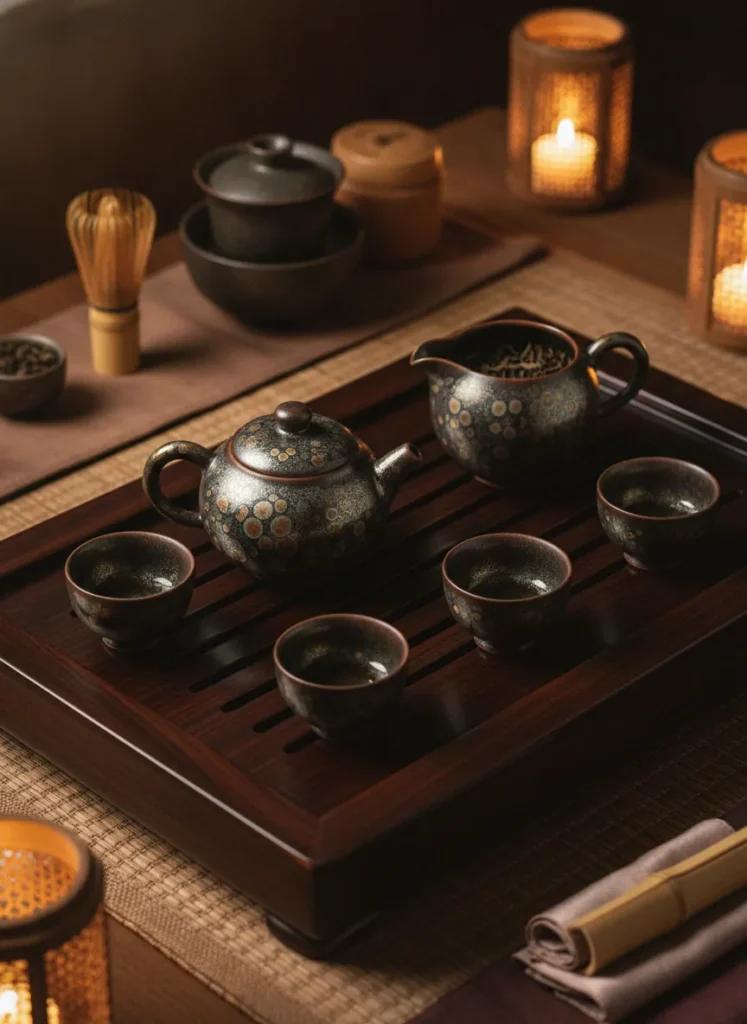
A Tenmoku tea set typically includes a teapot, a sharing pitcher (gongdao bei), and 2–6 matching cups, all crafted with the same iron-rich glaze fired at roughly 1,300 °C. Individual cups give you the freedom to mix hare’s fur, oil spot, and yao bian patterns in one session. Below, we break down the real differences in cost, versatility, aesthetics, and daily use so you can buy with confidence.
What Comes in a Tenmoku Tea Set?
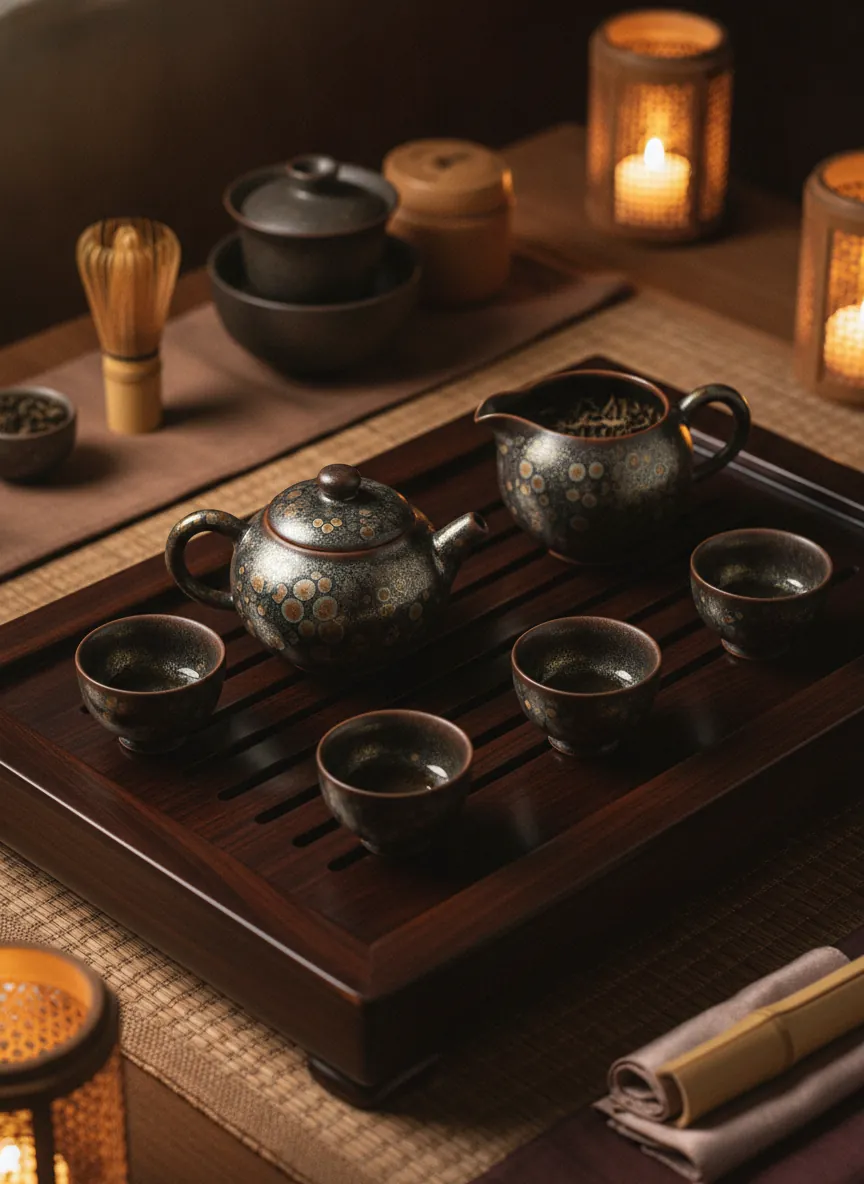
A standard Tenmoku tea set from Jianyang, Fujian, includes three to seven pieces unified by the same glaze recipe and firing cycle. The core pieces are a teapot (120–200 ml), a sharing pitcher (150–250 ml), and 2–6 cups (50–80 ml each). Premium sets may also add a tea tray, a tea strainer, and a pair of tongs.
Because every piece shares the same kiln batch, the glaze color and pattern are consistent across the set. This matters for gongfu tea sessions where visual cohesion enhances the ritual. A matched set also guarantees that the teapot’s pour speed and the cups’ rim diameter work together—your tea cools to a drinkable temperature by the time it reaches the cup.
| Component | Typical Size | Purpose |
|---|---|---|
| Teapot | 120–200 ml | Brews and pours tea with controlled flow |
| Sharing Pitcher | 150–250 ml | Ensures even strength across all cups |
| Tea Cups | 50–80 ml each | Individual serving vessels for tasting |
| Tea Tray | Varies | Catches spills and holds the setup |
Why Choose Individual Tenmoku Cups?
Individual cups offer one thing a set cannot: creative freedom. You can pair a hare’s fur cup for oolong with an oil spot cup for pu-erh, building a collection that matches your actual drinking habits rather than a factory-preset combination.
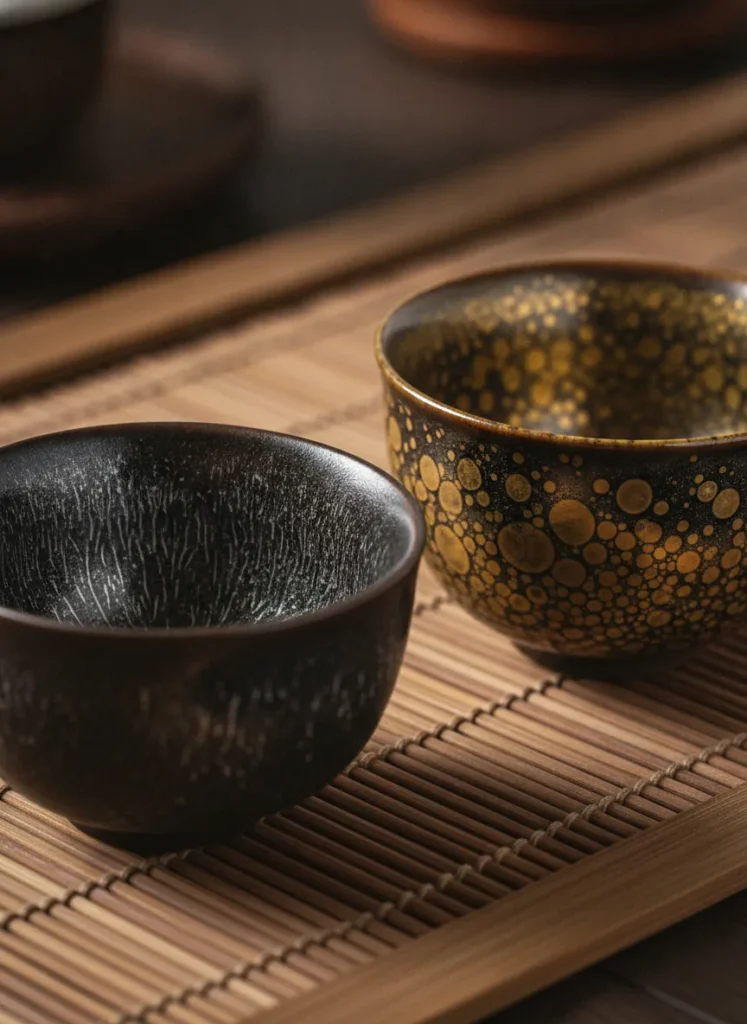
From a cost perspective, individual cups usually start around $35–$60 USD for a quality hare’s fur piece, while a full matching set ranges from $120–$300 USD. If you already own a gaiwan or a teapot you love, buying individual Tenmoku cups to complete your setup is the more budget-friendly path.
We have found that many experienced tea drinkers actually prefer mismatched cups. On Reddit’s r/tea community, several long-time gongfu practitioners note that using different cups for different teas prevents flavor cross-contamination and keeps each tasting fresh. One practical advantage: if a single cup chips or breaks, you only replace that one piece—not the entire set.
Side-by-Side Comparison: Tea Set vs Individual Cups
Here is a clear breakdown to help you compare the two options across the factors that matter most.
| Factor | Tenmoku Tea Set | Individual Cups |
|---|---|---|
| Upfront Cost | $120–$300 for 4–7 pieces | $35–$60 per cup |
| Visual Harmony | Matched glaze across all pieces | Curated mix of patterns |
| Flexibility | Fixed combination | Add or swap anytime |
| Replacement Ease | Hard to match a broken piece | Simply buy another cup |
| Gift Appeal | High—looks complete and intentional | Moderate—requires curation |
| Best For | Hosts, gongfu beginners, gift buyers | Collectors, experienced drinkers, budget-conscious |
Notice the trade-off: a set wins on visual cohesion and gifting, while individual cups win on flexibility and replacement cost. Neither option is inherently better—it depends on your situation.
When a Tenmoku Tea Set Makes More Sense
A matched set is the right call in three specific situations. First, if you are just starting with gongfu tea, a set removes guesswork. The teapot, pitcher, and cups are proportioned to work together, so your brew-to-cup ratio is dialed in from day one. You will not outgrow it quickly either—a good set lasts for years with proper care.
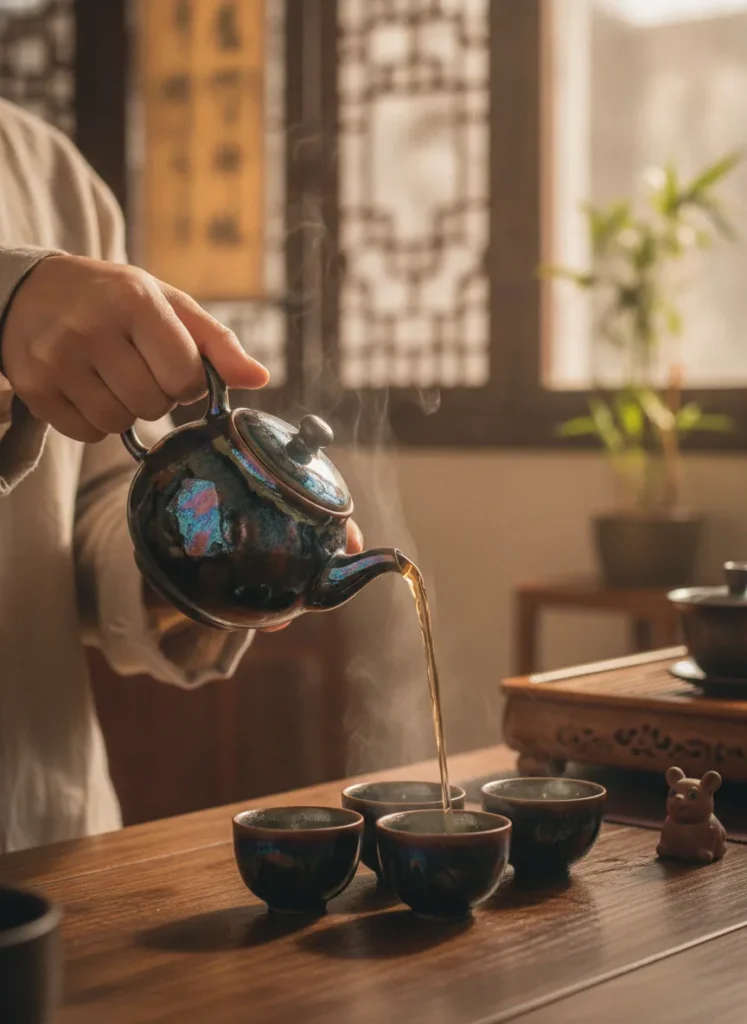
Second, if you regularly host tea sessions for two or more people, a matching set creates an inviting, polished presentation. In traditional Chinese tea culture, serving guests from a unified set signals thoughtfulness and respect. Your guests will notice the consistency.
Third, if you are buying a gift, a complete tea set feels more substantial and intentional than a single cup. Pair it with a tea tray and a bag of quality oolong, and you have a gift that will genuinely be used rather than displayed once and forgotten. Explore our handcrafted Tenmoku tea sets to see options that include teapot, pitcher, and cups in matching glazes.
When Individual Tenmoku Cups Are the Smarter Buy
Individual cups shine when you already have a brewing vessel you trust. If you brew with a gaiwan or a porcelain teapot, adding a hare’s fur Jian Zhan cup for oolong and an oil spot cup for dark tea gives you the Tenmoku tasting experience without paying for pieces you do not need.
Collectors also benefit from buying individual cups. Each Tenmoku glaze pattern—hare’s fur, oil spot, yao bian—has distinct visual and tactile characteristics. By selecting cups one at a time, you build a collection that tells a story across patterns, kiln batches, and firing methods. Our customers often tell us they started with one cup from ZenTeaCup and gradually added more, each time discovering new details in the glaze.
Budget is another factor. At $35–$60 per cup, you can start experiencing the heat retention and flavor-softening properties of iron-rich Tenmoku glaze for less than half the price of a full set. Browse our Jian Zhan tea cup collection to find your first—or next—piece.
How Glaze Type Should Influence Your Decision
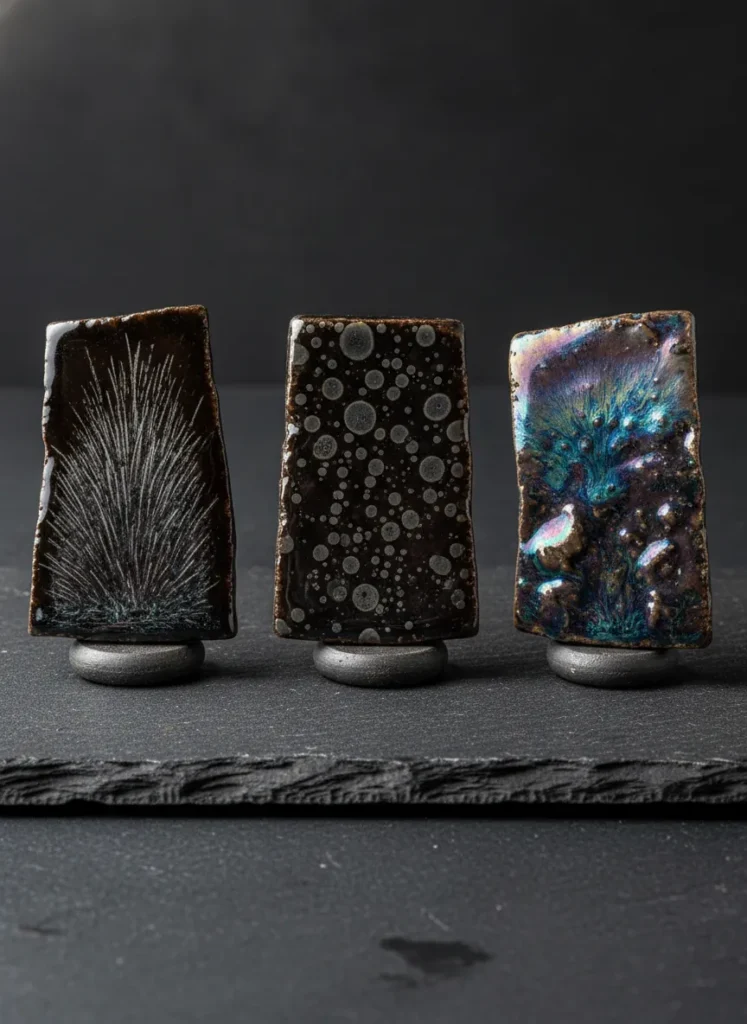
The glaze pattern on your Tenmoku cup directly affects how it interacts with tea. This matters whether you buy a set or individual cups—but it matters more when you are mixing and matching.
Hare’s fur (tuhao) cups feature fine, hair-like streaks of silver or gold across a dark glaze. They are the most versatile—suitable for oolong, black tea, and pu-erh. The thinner glaze layer lets you observe color clarity in the liquor.
Oil spot (yuteki) cups display round metallic spots that catch light dramatically. Their thicker glaze retains heat roughly 20–30% longer than standard porcelain, making them ideal for teas you want to sip slowly, like aged pu-erh or roasted oolong.
Yao bian (yohen) cups show iridescent color shifts depending on the viewing angle. They are rarer and more expensive—often $80–$150 per cup—because the kiln transformation is unpredictable. Most collectors buy yao bian as individual statement pieces rather than in sets.
If you are buying a set, hare’s fur is the safest choice because it works with the widest range of teas. If you are building an individual collection, consider one of each pattern to cover different tasting scenarios. For more on glaze types, see our guide to Tenmoku glaze patterns explained.
Cost Breakdown: What You Actually Pay For
Understanding the price structure helps you decide where your money goes. Here is what drives the cost in both options.
| Cost Factor | Tea Set | Individual Cup |
|---|---|---|
| Clay & Glaze Material | Shared across pieces | Unique per cup |
| Wood-Fired vs Electric | Wood-fired adds $50–$100 | Wood-fired adds $15–$30 |
| Glaze Rarity | Set price reflects the rarest piece | Pay only for the glaze you choose |
| Shipping | One shipment, lower per-piece cost | Multiple shipments may increase cost |
| Breakage Risk | Replacing one piece means a visual mismatch | Replace only what breaks |
A key insight: in a set, the price of the rarest glaze piece often lifts the entire set’s cost. With individual cups, you control exactly how much rarity you pay for. This makes individual buying more cost-efficient if you only want one or two specific glaze types.
❓ Frequently Asked Questions
❓ Can I Mix Tenmoku Cups From Different Sets?
Absolutely. Many gongfu tea practitioners prefer mixing glaze patterns. A hare’s fur cup for lighter teas and an oil spot cup for darker teas gives you the best of both worlds. The iron-rich glaze in every authentic Jian Zhan cup still provides the heat retention and flavor-softening benefits regardless of pattern.
❓ Are Tenmoku Tea Sets Worth It for Beginners?
Yes, if you plan to practice gongfu tea regularly. A set removes the guesswork of matching a teapot’s pour speed to your cups’ volume. The consistent rim diameter and wall thickness across a matched set help you develop pouring technique faster. If you are unsure about commitment, start with one quality cup and a gaiwan before investing in a full set.
❓ How Do I Replace a Broken Cup in a Matched Set?
It is difficult. Because each Tenmoku set comes from a single kiln batch, finding an exact glaze match after the fact is nearly impossible. Some retailers offer individual replacement cups in similar—not identical—patterns. This is one of the strongest arguments for buying individual cups if breakage is a concern in your household.
❓ Does a Tea Set Really Improve the Tea Taste?
The set itself does not change the chemistry of the tea. However, the teapot-to-cup ratio in a matched set is designed so tea reaches the optimal drinking temperature by the time you sip. Individual cups paired with mismatched brewing vessels can produce the same result—you just need to calibrate pour volume and timing yourself.
📚 References
- Teasenz – Tenmoku & Jian Zhan Tea Cups Guide: Historical context, production process, and tasting experience of Tenmoku teaware. Teasenz
- Musubi Kiln – Guide to Japanese Tea Sets: Overview of traditional tea set components, styles, and how to choose based on tea type. Musubi Kiln
- The Metropolitan Museum of Art – Chinese Ceramics: Scholarly resource on Jian ware and its significance in Song Dynasty tea culture. The Met
Whether you choose a complete Tenmoku tea set or build your own rotation of individual Jian Zhan cups, ZenTeaCup offers hand-selected pieces from certified kilns in Jianyang. Every cup is wood-fired or electric-fired by skilled artisans—so you get authentic iron-rich glaze that enhances your daily tea ritual. Browse our full collection to find the perfect match for your next brewing session.
Ready to elevate your tea ritual? Explore these cups for handcrafted tenmoku cups shipped across the US.


