

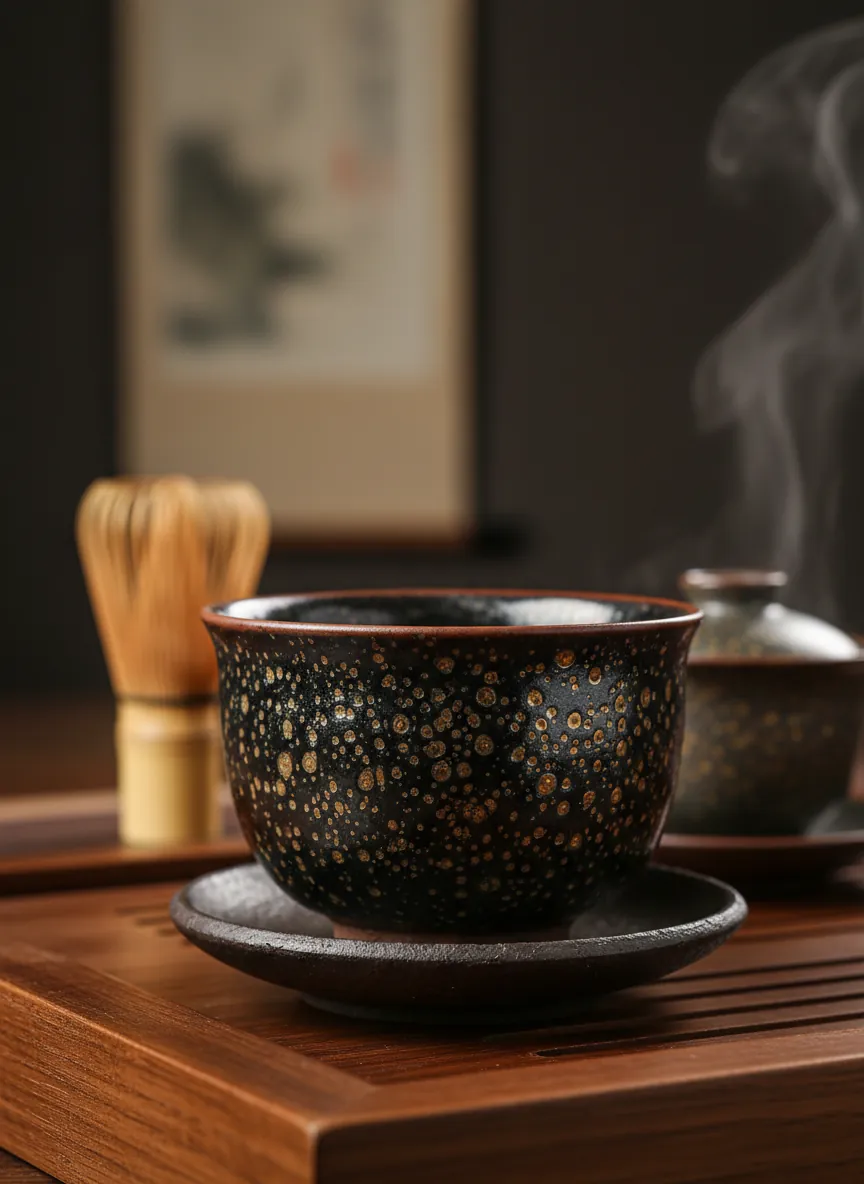
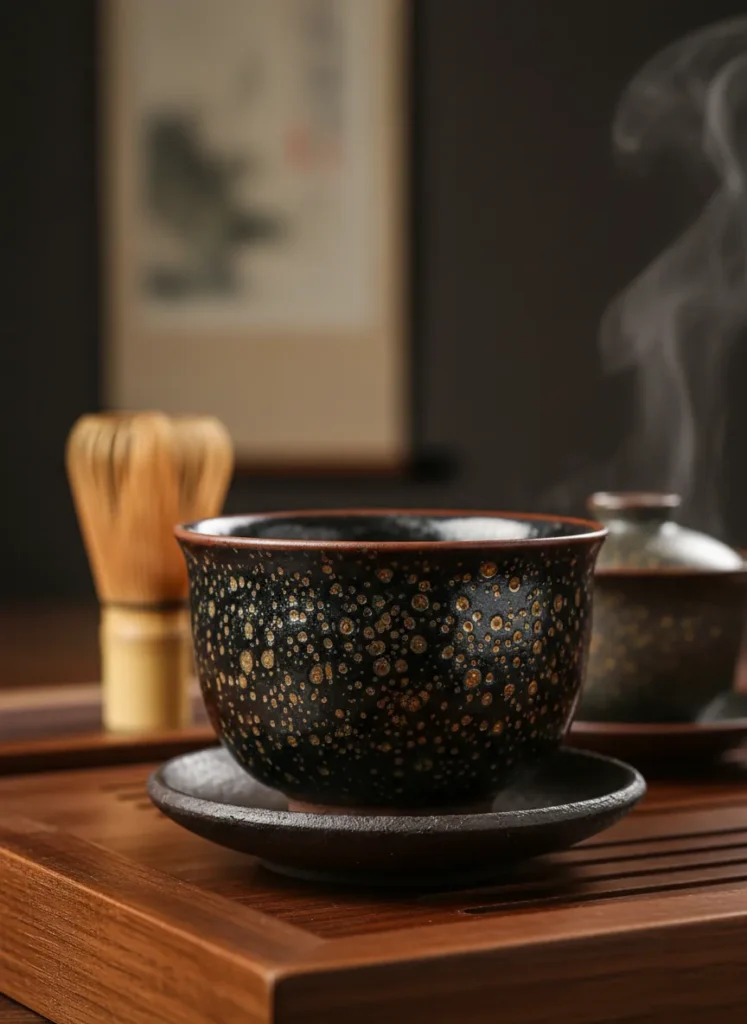
At Zen Tea Cup, if you have ever browsed Jian Zhan tea cups and wondered why a small bowl can cost $80, $200, or even $900, you are asking the right question. Jian Zhan tea cups are expensive because each one is hand-thrown from iron-rich clay, glazed with minerals that form unpredictable crystalline patterns at 1300°C, and subject to a kiln failure rate that can exceed 40%. Unlike factory-made mugs that roll off a production line by the thousands, a single authentic Jian Zhan cup — also called a Tenmoku tea bowl — may be one of only a handful that survived an entire kiln firing. At these cups, we work directly with kiln masters in Jianyang, Fujian, and we have seen firsthand how much craft, risk, and material goes into every piece.
Contents
- What Makes a Jian Zhan Tea Cup Cost More Than a Regular Mug?
- The Iron-Rich Clay: Why Source Matters for Price
- Kiln Firing: Where the Real Cost Hides
- Why Oil Spot and Hare’s Fur Patterns Command Higher Prices
- Handmade vs. Machine-Made: How Craft Affects What You Pay
- Jian Zhan Price Ranges: What You Actually Get at Each Level
- How to Judge Whether a Jian Zhan Cup Is Worth Its Price
- ❓ Frequently Asked Questions
- ❓ Are Jian Zhan tea cups worth the investment?
- ❓ Why do some Jian Zhan cups cost $900 or more?
- ❓ Can I find authentic Jian Zhan cups under $100?
- ❓ Does a more expensive Jian Zhan cup make tea taste better?
- 📚 References
What Makes a Jian Zhan Tea Cup Cost More Than a Regular Mug?
A standard ceramic mug is designed for consistency: slip-cast in a mold, glazed uniformly, and fired for repeatable results. A Jian Zhan tea cup follows the opposite logic. Its value comes from controlled unpredictability — the iron in the glaze separates, crystallizes, and flows during firing, creating patterns that no painter could replicate and no machine could stamp out. Curated by Zen Tea Cup
Think of it this way: a mass-produced watch tells time just fine, but a hand-finished mechanical timepiece carries craft, risk, scarcity, and emotional value. The same principle applies to Jian Zhan. You are not paying for a container; you are paying for a ceramic tradition that connects Song Dynasty tea culture, Japanese tea aesthetics, and modern gongfu tea rituals in one small object.
Here is a quick comparison of what drives the cost difference:.
| Factor | Factory Ceramic Mug | Handmade Jian Zhan Cup |
|---|---|---|
| Clay | Standard kaolin, widely available | Iron-rich local clay from Jianyang (FeO 15–30%) |
| Forming | Slip-cast or machine-pressed | Hand-thrown on a potter’s wheel |
| Glaze | Commercial glaze, predictable color | Iron-ash mineral glaze, crystallizes in kiln |
| Firing | Electric kiln, ~98% success rate | Reduction firing at 1300°C, 40–60% failure rate |
| Result | Identical pieces by the thousand | Every cup is one of a kind |
The Iron-Rich Clay: Why Source Matters for Price
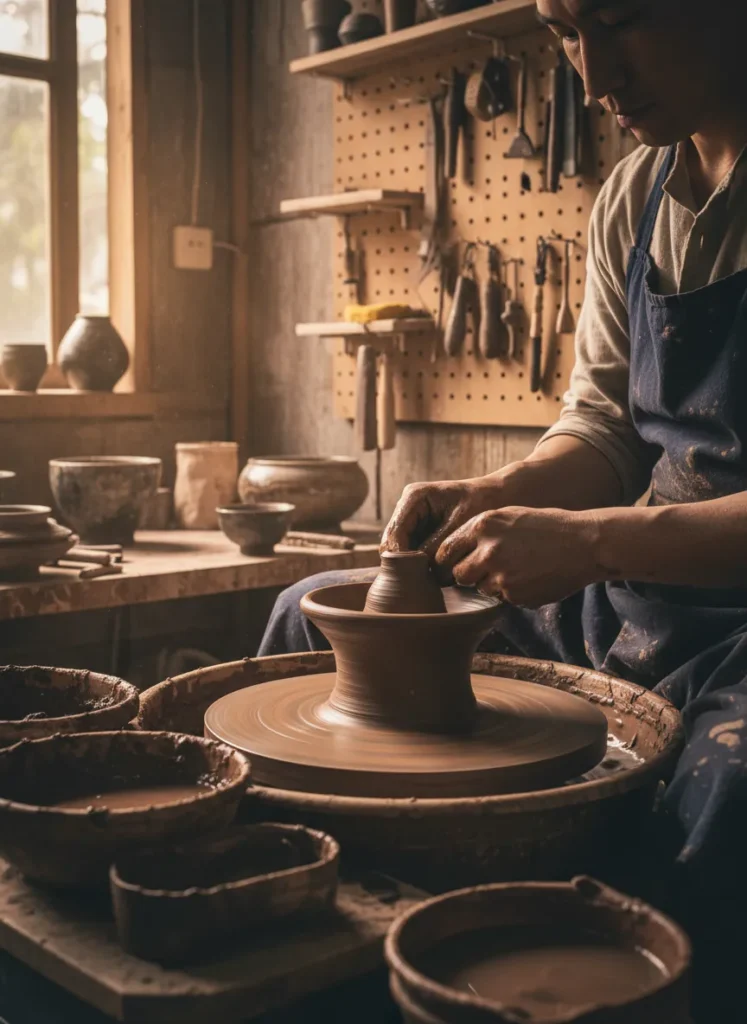
Authentic Jian Zhan begins with clay that most potters cannot access. The local clay in Jianyang, Fujian contains 15–30% iron oxide (FeO), far higher than typical ceramic clay. This iron content is what gives the cup its dark, heavy body and enables the glaze to develop those famous oil spot and hare’s fur patterns during firing.
Many have tried to replicate Jian Zhan using clay from other regions. The results consistently fall short — the body lacks the right density, the glaze does not crystallize the same way, and the cup feels lighter and less substantial in the hand. When we first visited Jianyang, our founder was surprised to learn that even potters a few provinces over could not match the local material. The clay is genuinely location-specific, which limits supply and raises the price of authentic pieces. Find more at these bowls.
This is also why you will see some “Jian Zhan-style” cups priced under $30 online. Those are often made with standard clay and painted-on patterns that mimic the real thing but lack the depth, weight, and kiln-formed texture of an authentic piece. Find more at these pieces.
Kiln Firing: Where the Real Cost Hides
The single biggest factor behind Jian Zhan pricing is the firing loss rate. When a potter loads a kiln with 100 glazed cups, anywhere from 40 to 60 of them may come out unsellable. Some crack from thermal shock. Some warp beyond usable shape. Some have dull, flat glaze that never developed the desired crystalline effect. Others stick to the kiln shelf because the glaze ran too far.
Imagine running a bakery where you throw away nearly half your output every day, and you start to understand the economics. The price of every successful cup has to cover the cost of the failed ones, plus the kiln fuel, plus the labor of inspecting and discarding subpar pieces. Find more at these cups.
Traditional wood-fired dragon kilns make the risk even higher — and the rewards more spectacular. A 36-hour wood firing creates atmospheric conditions inside the kiln that electric kilns simply cannot replicate. The reduction atmosphere, the fly ash settling on the glaze, the unpredictable temperature fluctuations — these are what produce the most dramatic oil spot and iridescent yohen effects. But wood firing also means less control and more loss. In our experience working with a sixth-generation kiln master, a single wood firing can take three days of constant attention, and the best pieces from that load may number fewer than ten. Find more at these cups.

Why Oil Spot and Hare’s Fur Patterns Command Higher Prices
Not all Jian Zhan cups are priced equally. The glaze pattern is one of the strongest price differentiators, and understanding why helps you judge value more confidently.
Oil spot (Yuteki) and hare’s fur (Tuhao) are not painted decorations. They are mineral events — iron in the glaze physically separates, crystallizes, and migrates during the extreme heat of firing. The potter controls the glaze recipe, thickness, and firing curve, but the kiln has the final say on how those iron crystals arrange themselves. Discover more at Zen Tea Cup.
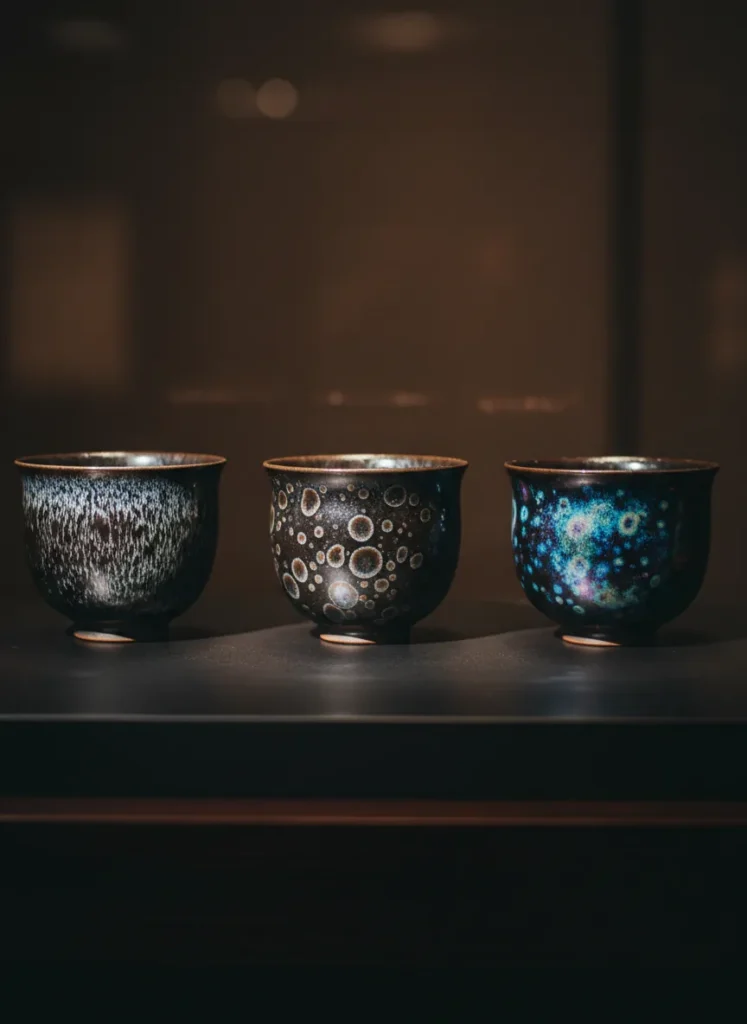
- Hare’s fur: Fine, streaming lines of silver or gold that run down the bowl’s interior. These form when iron-rich glaze flows under gravity during peak temperature. Relatively more common, so hare’s fur cups tend to be the most affordable authentic options ($50–$120).
- Oil spot: Round, metallic droplets scattered across the glaze surface. These require a very specific cooling cycle where iron crystallizes into discrete spots rather than flowing lines. Harder to achieve consistently, so well-formed oil spot cups typically range from $120–$300.
- Yohen (kiln change): Iridescent, color-shifting effects that change depending on the viewing angle. The rarest outcome — caused by nanoscale glass-crystal layers in the glaze. Cups showing strong yohen can command prices from $300 into the thousands.
When a particularly dramatic oil spot or yohen piece comes out of the kiln, it is genuinely rare. You cannot simply fire another batch and expect the same result. That scarcity is what collectors and serious tea drinkers pay for.
Handmade vs. Machine-Made: How Craft Affects What You Pay
The gap between a $15 “Tenmoku-style” cup and a $120 handcrafted Jian Zhan is not just markup. It reflects fundamentally different making processes.
Machine-made or slip-cast cups are produced in molds for speed and consistency. The glaze is often applied by spray gun, and the patterns are sometimes simulated with metallic paints or decals rather than formed through actual kiln chemistry. These cups can look attractive in photos but feel lightweight, lack the characteristic heft of iron-rich clay, and do not develop the patina that authentic Jian Zhan builds over time.
Handmade Jian Zhan cups, on the other hand, are individually thrown on a wheel, trimmed by hand, glazed with careful attention to thickness and drip direction, and fired in small batches. Each step requires skill that takes years to develop. A kiln master may spend a decade refining their glaze recipe and firing curve before producing consistently beautiful results. That expertise is baked into the price of every cup they sell.
If you are trying to tell the difference, weight and texture are your best clues. An authentic Jian Zhan cup weighs 80–150 grams and has a noticeably thick wall (3–5 mm) that retains heat far longer than a thin-walled copy. The foot ring is typically unglazed, revealing the dark, coarse iron-rich clay body underneath.
Jian Zhan Price Ranges: What You Actually Get at Each Level
Understanding the price landscape helps you avoid overpaying for inferior cups — and recognize genuine value when you see it. Here is a practical breakdown:
| Price Range | What to Expect | Best For |
|---|---|---|
| Under $50 | Entry-level or mass-produced; may have painted patterns rather than kiln-formed effects | Testing the style, casual use |
| $50–$120 | Authentic handmade cups with attractive hare’s fur or simple glaze; good daily drinkers | Tea drinkers seeking real value |
| $120–$300 | Stronger glaze character, well-formed oil spot, better form and balance | Premium gifts, serious gongfu sessions |
| $300+ | Artist pieces, rare firing results, exceptional yohen effects, collectible quality | Collectors and luxury buyers |
The best value for most tea drinkers sits in the $50–$120 range. You get an authentically crafted cup with genuine kiln-formed glaze, comfortable weight, and the heat retention that makes gongfu tea sessions more enjoyable. For guidance on choosing the right size and style for your tea ritual, check our Jian Zhan cup size guide.
How to Judge Whether a Jian Zhan Cup Is Worth Its Price
Price tags alone do not tell you whether a cup is fairly valued. Here are five things to check before you buy:
- Clay body: Look at the unglazed foot ring. Authentic Jian Zhan shows dark, coarse, iron-rich clay — not smooth white porcelain.
- Weight and wall thickness: A real Jian Zhan feels substantial in the hand. Thin walls and light weight suggest machine-made or non-local clay.
- Glaze depth: Kiln-formed patterns have depth and texture you can see at different angles. Painted-on patterns look flat and uniform.
- Seller transparency: Reputable sellers state the origin, clay source, and maker. If a listing is vague about where and how the cup was made, that is a red flag.
- Comfort in hand: Even a beautiful cup should feel balanced. The lip thickness, foot ring, and overall weight distribution matter for daily use.
For a deeper dive into spotting authentic pieces, our handmade vs. machine-made Jian Zhan guide walks you through the telltale signs.
❓ Frequently Asked Questions
❓ Are Jian Zhan tea cups worth the investment?
For regular tea drinkers, yes. A well-made Jian Zhan cup improves with use — the glaze develops a subtle patina over weeks and months of tea brewing, and the thick iron-rich walls keep tea warm 20–30% longer than thin porcelain. Think of it as a daily tool that gets better over time, not a decorative object that sits on a shelf.
❓ Why do some Jian Zhan cups cost $900 or more?
Cups at that price point are typically works by recognized kiln masters, feature exceptionally rare yohen (kiln change) effects, or have documented provenance connecting them to a specific artist and firing. Like signed prints or studio-made knives, the premium reflects the maker’s reputation and the rarity of the result — not just the materials.
❓ Can I find authentic Jian Zhan cups under $100?
Absolutely. Many authentic handcrafted hare’s fur cups fall in the $50–$100 range. The key is buying from sellers who are transparent about origin and materials. Avoid cups with suspiciously low prices and no maker information — those are often mass-produced replicas. Browse our Jian Zhan tea cup collection for hand-selected options at every budget.
❓ Does a more expensive Jian Zhan cup make tea taste better?
The iron-rich glaze is traditionally believed to soften water and enhance tea flavor, and many tea drinkers report a noticeable difference — especially with oolong and pu-erh. However, these claims are based on personal experience rather than conclusive scientific evidence. A more expensive cup will not magically transform bad tea, but the ritual quality, heat retention, and visual beauty do genuinely enhance the overall experience.
📚 References
-
Jian Ware History and Significance:
Overview of Jian kiln ceramics and their cultural importance in Song Dynasty tea culture.
The Metropolitan Museum of Art -
Ceramic Tableware Safety Standards:
FDA guidance on lead and cadmium safety for ceramic foodware, relevant to evaluating glaze safety.
U.S. FDA -
Song Dynasty Tea Culture and Jian Zhan Revival:
Historical account of Jian Zhan’s decline after the Song Dynasty and modern revival efforts since 1979.
Source: Path of Cha, referencing Fujian Research Institute records
Ready to find your perfect tenmoku tea cup? Explore Zen Tea Cup and discover handcrafted pieces that elevate every sip.


