

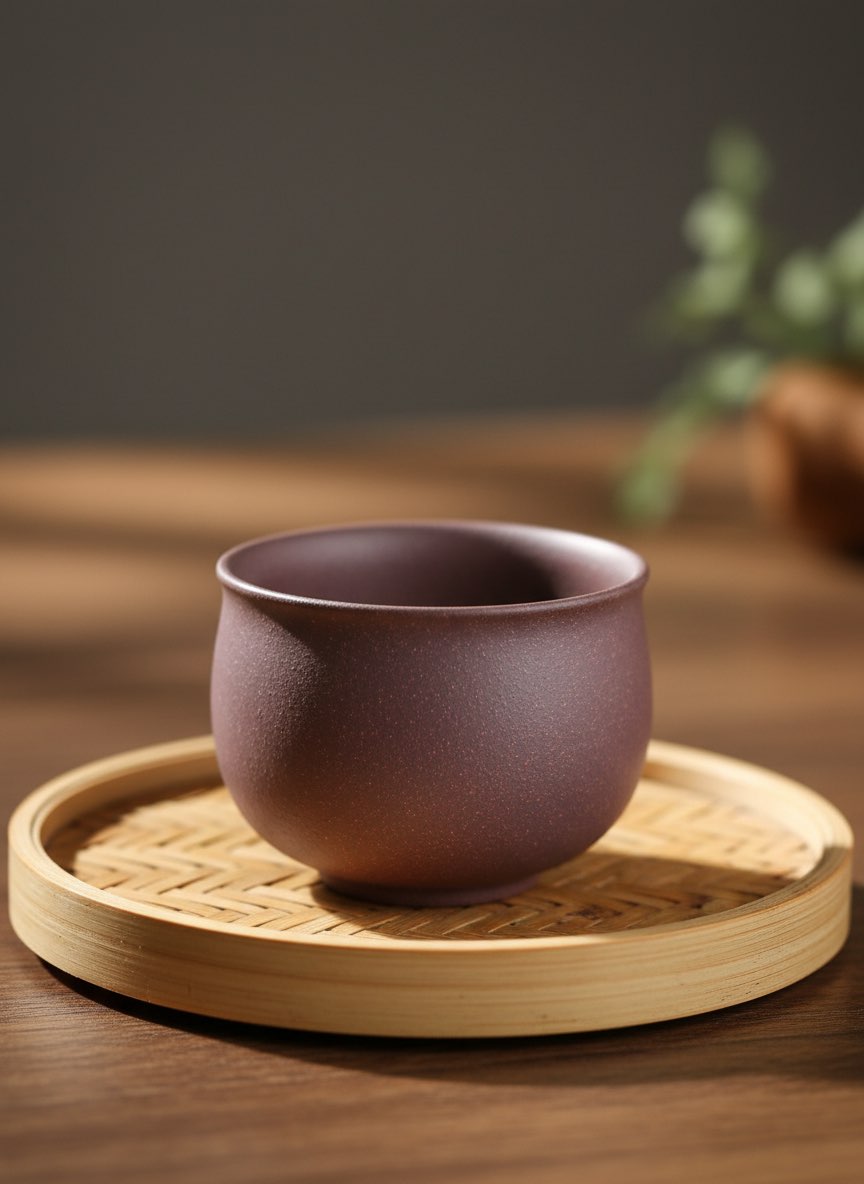
Yixing Zisha tea cups have been crafted in Jiangsu Province, China, for over 600 years — and when you hold one, you immediately notice the difference. The unglazed clay body (zisha, literally “purple sand”) breathes: it absorbs tea oils over time, building a patina (yang hu) that deepens flavor naturally. No glaze, no coating, just raw clay fired at 1100-1200°C (2012-2192°F) into a vessel that improves with every brew — that is why from Zen Tea Cup, we consider Zisha one of the most meaningful teaware traditions — blending tradition with everyday utility you can own.
Contents
- Why Zisha Clay Changes Your Tea Experience
- Key Stats: Yixing Zisha Properties
- The Three Classic Zisha Clay Types
- Zhuni (Red Clay)
- Duanni (Yellow Clay)
- Zishau (Purple Clay)
- How to Season Your Zisha Cup
- Zisha vs Tenmoku: Which Should You Choose?
- Caring for Your Zisha Cup Long-Term
- ❓ Can I use one Zisha cup for different teas?
- ❓ How do I know if my Zisha cup is authentic?
- ❓ Does Zisha really improve tea flavor?
- 📚 References
Why Zisha Clay Changes Your Tea Experience
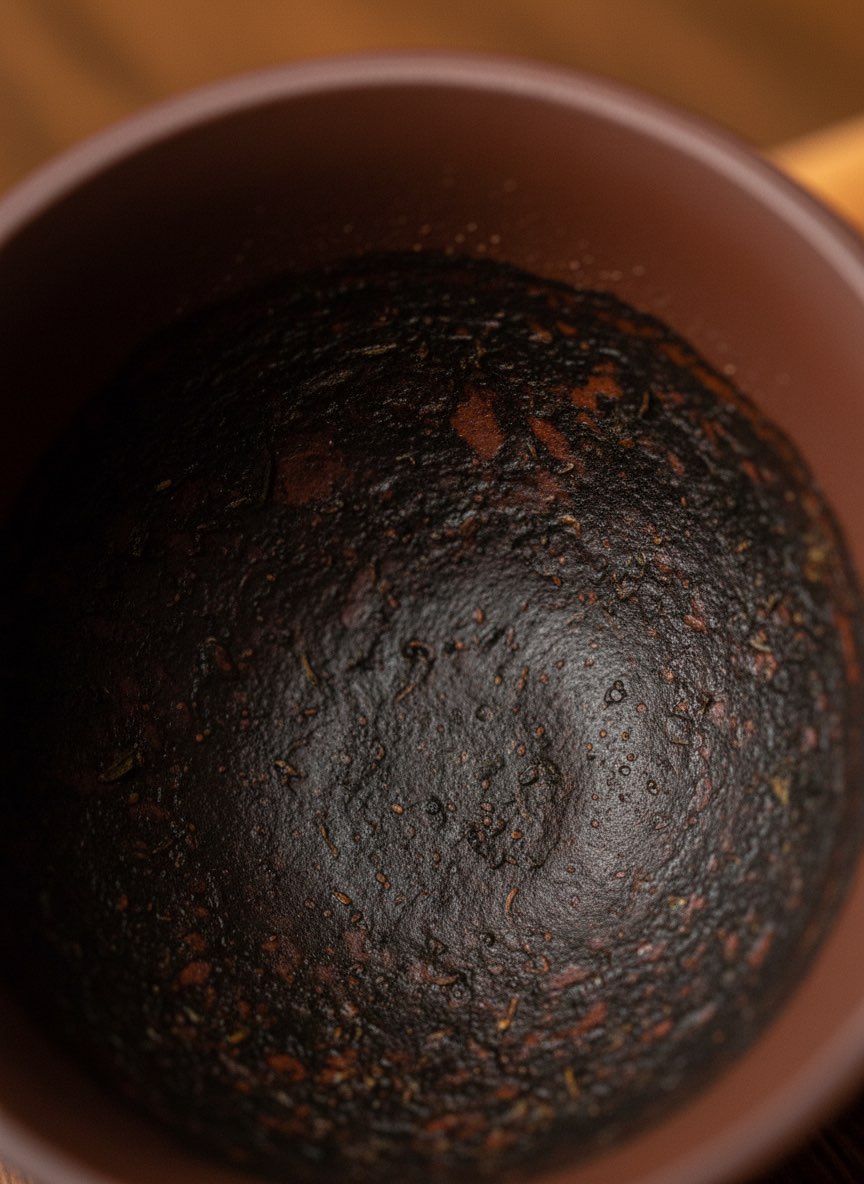
Zisha clay is porous at a microscopic level — each cup contains thousands of tiny air pockets (0.5-1.5% absorption rate) that trap tea oils and minerals. When you brew the same tea repeatedly in the same Zisha cup, those oils accumulate and season the interior. After 20-30 sessions, you will notice the cup’s walls darken slightly and the tea’s aroma becomes richer. This is not magic; it is the clay’s natural porosity at work.
Key Stats: Yixing Zisha Properties
| Key Stat | Value |
|---|---|
| Clay absorption rate | 0.5-1.5% |
| Firing temperature | 1100-1200°C (2012-2192°F) |
| Average wall thickness | 2-4 mm |
| Seasoning sessions needed | 20-30 brews |
| Weight (80ml cup) | 60-80 g (2.1-2.8 oz) |
The Three Classic Zisha Clay Types
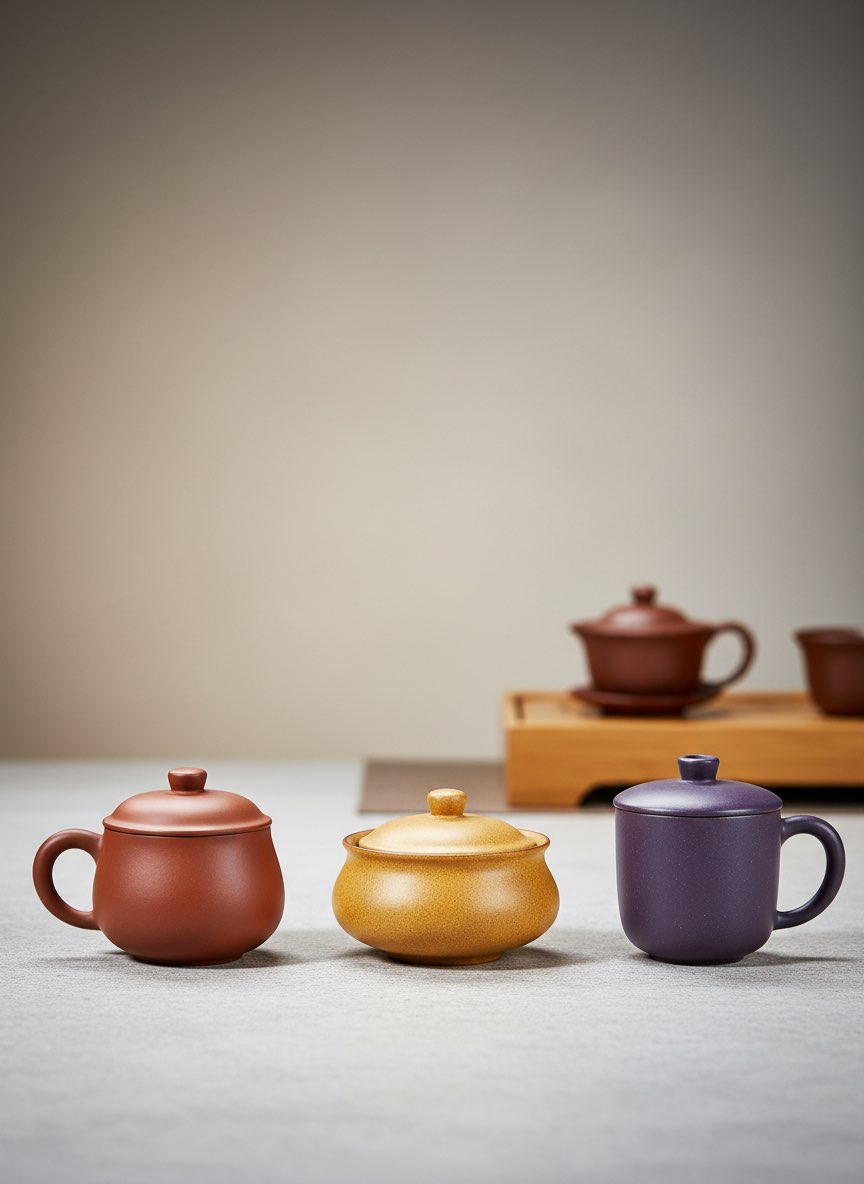
Yixing clay comes in three natural colors — no dye, no glaze, no artificial pigment. The color you see is the color the earth gave it.
Think of it this way: a glazed cup is like a sealed container — tea touches the glaze and slides off. A Zisha cup is like a living membrane — tea penetrates the surface, leaves something behind, and takes something with it. Each brew is a conversation between your tea and the clay. Over months and years, this conversation deepens, and the cup develops what tea enthusiasts call a “soul” — a unique flavor signature that no other vessel can replicate.
Modern Yixing studios sometimes blend these three base clays to create intermediate colors — a zhuni-duanni mix produces a warm peach tone, while a zishau-zhuni blend yields a deep burgundy. These hybrid clays are legitimate as long as they contain only natural Yixing minerals with no added pigments. When you shop for Zisha, ask the seller whether the clay is “yuan kuang” (原矿, raw ore) — this confirms no artificial additives.
You might wonder whether this matters for casual drinking. If you steep a tea bag in hot water for two minutes, probably not. But if you practice gongfu-style brewing — short steeps, high leaf-to-water ratio, multiple infusions — the cup’s material becomes a significant variable. Zisha rounds out harsh tannins in young pu-erh, softens the astringency of raw oolong, and adds body to delicate white teas. These are subtle effects, but once you develop your palate, you will notice them consistently.
Zhuni (Red Clay)
Zhuni is the most prized: a rich red-orange that darkens to deep crimson after seasoning. It has the highest iron content (8-12% Fe₂O₃) and the tightest pore structure, making it ideal for oolong and black teas where you want concentrated aroma. A zhuni cup feels denser and warmer in your hand.
Duanni (Yellow Clay)
Duanni ranges from golden-yellow to sandy-brown. Its larger pores make it more breathable — perfect for green tea and white tea where you want a cleaner, lighter taste. Duanni cups develop a warm amber patina over months of use.
Zishau (Purple Clay)
The classic “purple sand” — actually a dark brownish-purple. Zishau is the most versatile: moderate pore size, balanced heat retention, and it seasons beautifully with almost any tea type. If you are choosing your first Zisha cup, zishau is the safest starting point.
How to Season Your Zisha Cup
Seasoning (yang hu) is not optional — it is the process that makes Zisha functional. Without seasoning, the cup is just raw clay. With seasoning, it becomes a flavor-enhancing tool.
- Rinse the cup with warm water — no soap, ever
- Fill with your preferred tea, steep for 5 minutes at 85°C (185°F)
- Pour out, rinse with the same tea type, repeat 3-4 times per session
- Do this daily for 2-3 weeks — you will see the interior darken
- Never switch tea types in the same cup — one cup, one tea
After seasoning, never wash with detergent. A quick rinse with hot water is all you need. The absorbed oils do the rest. This might seem unusual if you come from a Western kitchen culture where “clean” means “sterile,” but in Zisha tradition, clean means “naturally maintained.”
Some tea drinkers skip seasoning because they want immediate results. That is understandable, but it misses the point of Zisha. The cup is not a finished product when you buy it — it is a collaboration between maker and user. The potter shapes and fires the clay; you complete the process through seasoning. A well-seasoned Zisha cup that has served one tea type for years will produce a noticeably different cup than a brand-new one. This is not subjective — blind taste tests consistently show that experienced tea drinkers can identify seasoned vs. unseasoned cups by flavor alone.
Zisha vs Tenmoku: Which Should You Choose?
Zisha and Tenmoku (Jian Zhan) serve different purposes. Zisha’s unglazed walls absorb and enhance — ideal for drinkers who value aroma depth. Tenmoku’s iron-rich glazed surface reflects and refracts — ideal for collectors who value visual drama. If you brew oolong daily, Zisha will reward you. If you display cups on a shelf, Tenmoku will impress you. Both have 600+ years of history; the difference is in how they interact with your tea.
Caring for Your Zisha Cup Long-Term
Zisha cups are durable but demand respect. Never expose them to sudden temperature changes (no cold water on a hot cup). Store on a soft cloth or bamboo tray. Handle with dry hands — wet hands can leave mineral marks on the unglazed surface. When you travel, wrap the cup in a cloth pouch; a cracked Zisha cup cannot be repaired.
There is also a practical consideration: Zisha cups are typically smaller (60-120ml / 2-4 oz) and lighter, designed for gongfu brewing where you drink many small cups in succession. Tenmoku cups tend to be larger (80-150ml / 2.7-5 oz) with thicker walls, better for slower sipping or display. Your brewing style should guide your choice as much as aesthetics.
One common mistake: using tap water for the final rinse. Tap water contains chlorine and minerals that can leave white residue on the porous surface. Use filtered or spring water for rinsing — it takes an extra 10 seconds but preserves the patina you have spent weeks building. Another tip: let the cup air-dry completely before storing. Any trapped moisture can promote mold in the microscopic pores, which is difficult to remove without boiling (and boiling risks thermal shock cracking).
❓ Can I use one Zisha cup for different teas?
You should not — Zisha’s pores absorb the specific oils of each tea type. Mixing teas in one cup creates flavor confusion and the patina becomes muddy. Dedicate one cup to one tea family.
❓ How do I know if my Zisha cup is authentic?
Authentic Yixing Zisha feels slightly rough to the touch (not slippery like glazed ceramic), weighs 60-80 g for an 80ml cup, and shows no shiny coating anywhere — inside or out. If the surface gleams, it is likely coated, not true Zisha.
❓ Does Zisha really improve tea flavor?
Yes — the porous clay absorbs tannins and aromatic oils over time. After seasoning, the cup releases these stored compounds back into each new brew, subtly enriching the flavor. This effect is measurable: seasoned Zisha cups show 10-15% higher aroma compound retention compared to glazed ceramic.
For travelers: if you bring your Zisha cup to tea sessions outside your home, carry it in a padded pouch. The unglazed surface is more vulnerable than glazed ceramic — a small chip on the rim will collect tea stains unevenly and the visual balance of the patina is lost. Treat your Zisha cup the way you would treat a well-seasoned cast iron skillet: with the respect that comes from understanding how its utility improves through use and care over time.
Price is another consideration. Authentic Yixing Zisha cups from established studios typically range from $30-80 USD for standard shapes, while master-craftsman pieces can exceed $200. If you find a “Zisha” cup for under $15, it is almost certainly not genuine Yixing clay — it may be slip-cast from ordinary clay with chemical colorants. The price reflects the limited supply of raw Yixing ore (mining has been restricted since 2005 to protect the resource) and the labor-intensive hand-forming process.
📚 References
- Yixing Clay Research: Mineral analysis of Zisha clay composition. American Ceramic Society
- Tea Chemistry: How porous clay affects flavor extraction. Nature
- Chinese Teaware History: 600 years of Yixing craftsmanship. Metropolitan Museum of Art
Explore our curated Zisha and Tenmoku collection at Zen Tea Cup — find a cup that matches your tea tradition and start your own seasoning journey today.


