

Contents
- What Causes the Oil Spot Effect in Tenmoku Glazes?
- Firing Techniques That Produce the Best Oil Spot Patterns
- How Cooling Rate Shapes Oil Spot Crystal Formation
- Silver vs Golden Oil Spot Tenmoku: What Makes the Difference
- Common Mistakes When Firing Oil Spot Tenmoku Glazes
- ❓ Frequently Asked Questions
- Can oil spot Tenmoku be achieved at cone 6?
- What’s the difference between oil spot and hare’s fur Tenmoku?
- How can I tell if my oil spot Tenmoku cup is authentic?
- 📚 References
What Causes the Oil Spot Effect in Tenmoku Glazes?
If you’ve ever marveled at those shimmering metallic spots on a Tenmoku tea bowl and wondered how they got there, you’re not alone. According to Victoria and Albert Museum, ceramic conservation provides additional context on traditional firing techniques. According to ScienceDirect ceramic research, ceramic science studies provides additional context on traditional firing techniques. According to Metropolitan Museum of Art, Chinese ceramics research provides additional context on traditional firing techniques. The oil spot effect — known in Japanese as Yuteki Tenmoku — has captivated potters and tea practitioners since the Song Dynasty (960–1279 CE), when Jianyang kiln masters in Fujian province first perfected the technique. At ZenTeaCup, we work directly with those same Jianyang kiln traditions, and we’ve seen firsthand how a deep understanding of the process transforms results from random to repeatable.
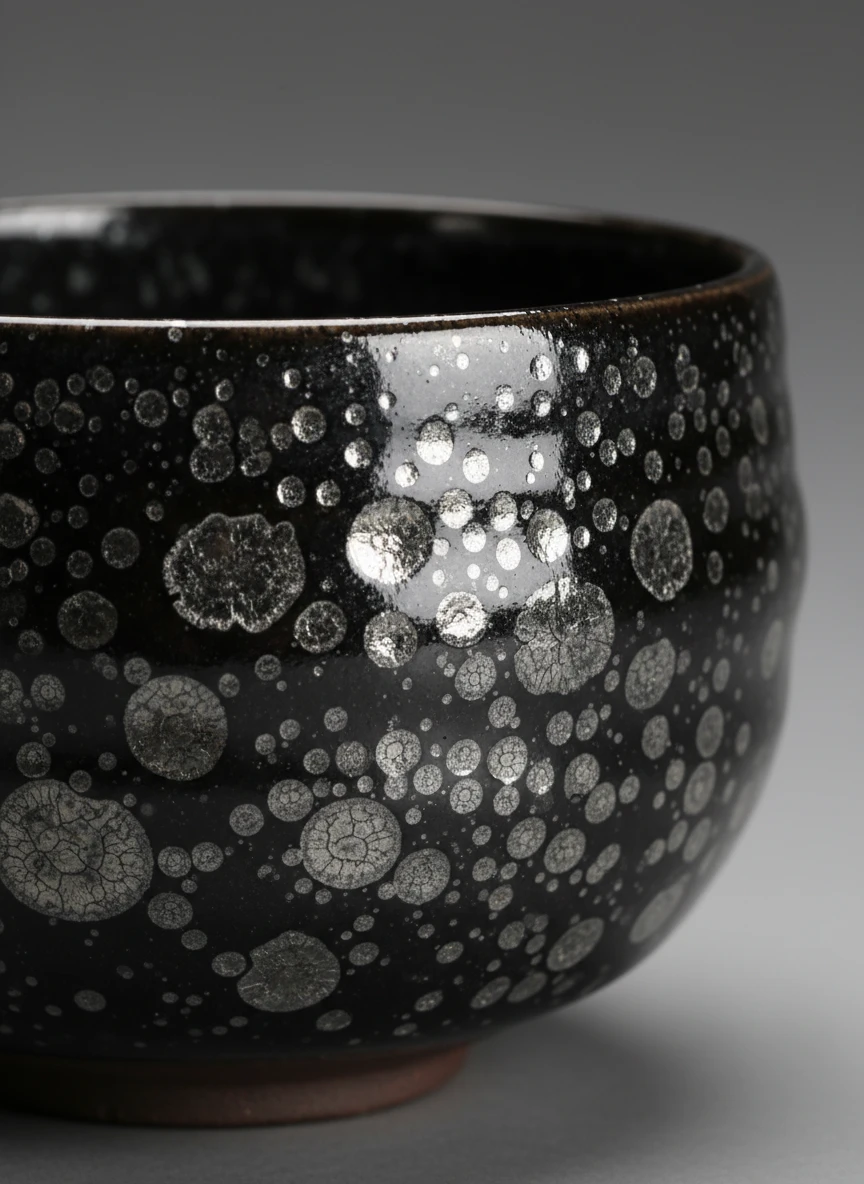
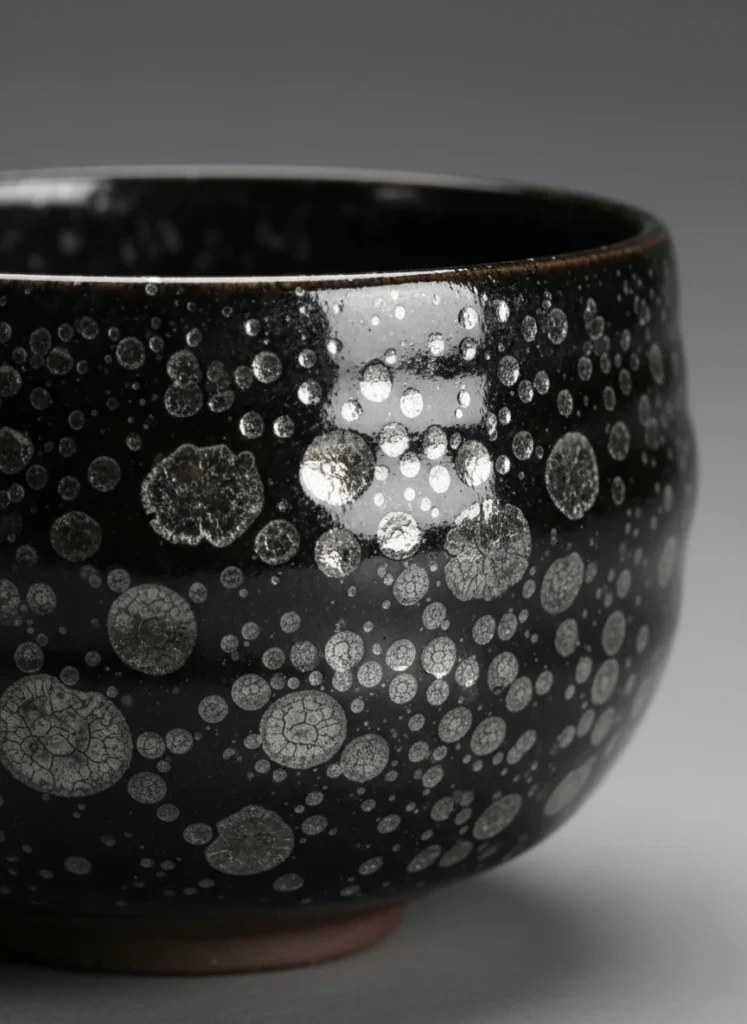
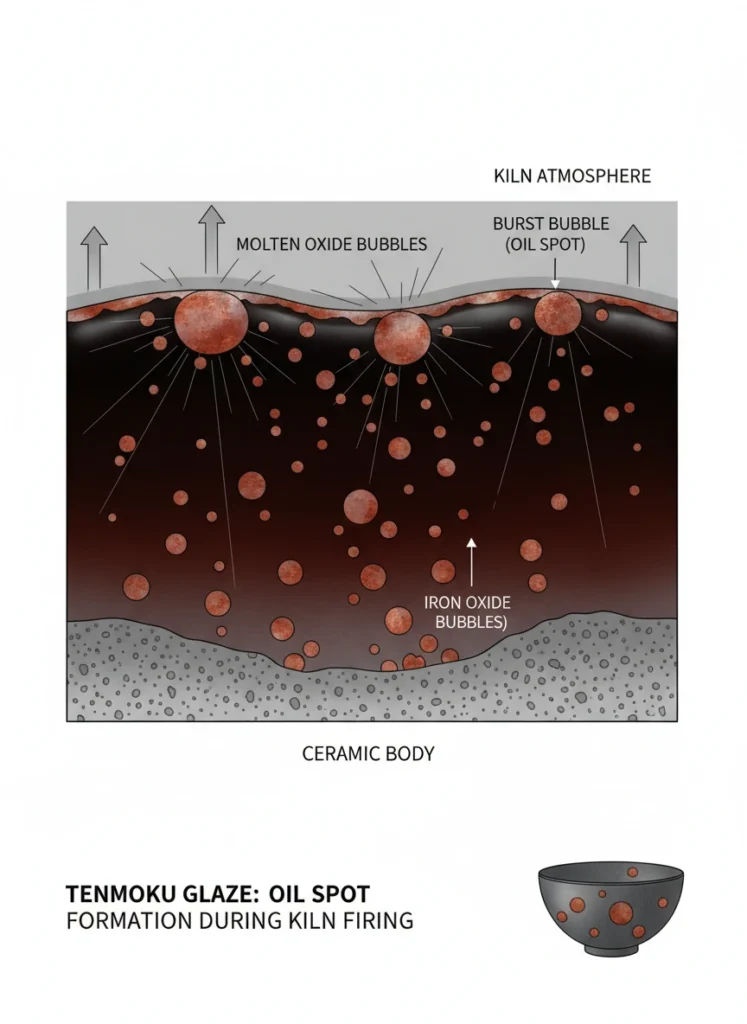
So what exactly causes the oil spot effect in Tenmoku glazes? The answer lies in thermal reduction of iron oxide during high-temperature oxidation firing. When a glaze containing 8–15% iron oxide (Fe₂O₃) by weight is fired to approximately 1250–1300°C (2280–2370°F), the intense heat triggers a chemical transformation. The red iron oxide (Fe₂O₃) undergoes thermal reduction, converting first to magnetite (Fe₃O₄) and then to wüstite (FeO). This reduction reaction releases oxygen gas, which forms bubbles that rise through the molten glaze. As these oxygen bubbles break the surface, they deposit tiny magnetite crystals — and those crystals are what we see as the characteristic metallic oil spots.
Think of it like carbonation in a glass of champagne: the bubbles rise, and when they pop at the surface, they leave behind a trace. In a Tenmoku glaze, that trace is a crystalline deposit of iron oxide that catches the light with an iridescent, metallic gleam. The spots typically range from 1 to over 10 millimeters in diameter, depending on firing conditions and glaze composition.
This process is different from what happens in standard Tenmoku glazes fired in reduction. In a reduction atmosphere, the iron dissolves into the glaze melt, producing a uniform dark surface — beautiful, but without the crystalline spots. The oil spot pattern specifically requires an oxidation atmosphere at peak temperature, which is one of the key distinctions potters must understand. For a deeper dive into the full family of Tenmoku patterns, see our guide to understanding Tenmoku glaze patterns.
Firing Techniques That Produce the Best Oil Spot Patterns
Achieving a reliable oil spot pattern comes down to three critical firing variables: oxidation atmosphere, thick glaze application, and a controlled soaking period at peak temperature. Get all three right, and the results can be breathtaking. Miss even one, and you’ll likely end up with a plain dark glaze — or worse, a running, uneven surface.
Oxidation firing is essential for oil spot formation. While traditional Tenmoku relies on reduction to produce deep black and brown tones, oil spots specifically need oxygen present in the kiln atmosphere. This is because the thermal reduction of iron oxide is an internal chemical process — it happens within the glaze itself — and the surrounding atmosphere needs to remain oxidizing so that the magnetite crystals deposited on the surface don’t dissolve back into the glaze melt. In practice, this means firing with adequate ventilation and avoiding heavy reduction during the final phases.
Glaze thickness is equally important. The glaze must be applied at approximately 1/4 to 3/8 inch (6–10 mm) thick — far thicker than most functional glazes. This heavy application provides enough iron oxide to generate a sufficient volume of oxygen bubbles and enough glaze melt depth for those bubbles to form well-defined crystal deposits. A thin glaze simply doesn’t contain enough iron to produce visible spots.
The soaking period — holding the kiln at peak temperature (cone 10 or higher) for 1–2 hours — is where the oil spot crystals develop and grow. In our experience working with Jianyang kiln masters, the soaking period is where the magic happens — or doesn’t. Too short a soak, and the crystals remain tiny and barely visible. Too long, and the spots can grow so large that they run together, merging into streaks (which actually creates the related hare’s fur pattern). The sweet spot requires patient observation and, often, pulling test cones to monitor the glaze’s progression.
For those interested in how these traditional firing methods fit into the broader making process, our article on how Jian Zhan tea cups are made walks through all 13 steps from clay preparation to final inspection. And if you’re looking to add a beautifully fired oil spot cup to your collection, browse our handmade tea cups.
How Cooling Rate Shapes Oil Spot Crystal Formation
The story doesn’t end when the kiln reaches peak temperature. In fact, the crystal growth rate during the cooling phase is just as critical as the firing itself. This is because oil spot crystals continue to grow and develop as the glaze slowly cools — and the cooling rate directly determines their final size, definition, and visual quality.
Slow cooling allows maximum crystal growth. When the kiln temperature drops gradually — typically over 8 to 12 hours from peak to around 1800°F (980°C) — the magnetite crystals on the glaze surface have time to organize into larger, more defined spots with sharp metallic luster. The iron atoms in the glaze melt continue migrating toward existing crystal nuclei, adding layer upon layer to each spot. This extended crystal growth phase is what produces those dramatic, eye-catching oil spots that seem to glow with inner light.
Rapid cooling, on the other hand, freezes the crystals while they’re still small and poorly formed. The spots end up as tiny, scattered pinpoints rather than the bold, confident circles that characterize the best Yuteki Tenmoku. In extreme cases, quenching the kiln can suppress crystal formation entirely, leaving a plain dark surface with barely a hint of metallic sheen.
Some potters use a technique called “firing down” — intentionally controlling the cooling curve by periodically firing burners during the descent. This approach keeps the glaze at temperatures where crystal growth is active for longer periods, producing exceptionally large and well-formed oil spots. The technique requires careful temperature monitoring and a willingness to babysit the kiln, but the results can be extraordinary.
The interplay between cooling rate and crystal growth also affects the color of the spots. A very slow cool through the 1800–1500°F (980–820°C) range allows some re-oxidation of the magnetite back to hematite, which can shift the color from silver toward golden tones — a topic we’ll explore in the next section. For more on the broader range of Tenmoku visual effects, see our overview of the top 5 Tenmoku glaze patterns and their meanings.
Silver vs Golden Oil Spot Tenmoku: What Makes the Difference
Not all oil spot Tenmoku glazes look the same. The two most sought-after varieties — silver oil spot and golden oil spot — differ in both chemistry and visual impact, and understanding what creates each one gives you far more control over your results.
Silver oil spots are composed primarily of magnetite (Fe₃O₄) crystals. These form when the glaze cools relatively quickly through the temperature range where re-oxidation occurs, preserving the reduced iron state. The result is a cool, silvery metallic sheen against a deep black glaze — dramatic and contemporary in feel. Adding cobalt carbonate (2–5%) to the glaze recipe can intensify the silver-on-black effect, creating an even more striking contrast.
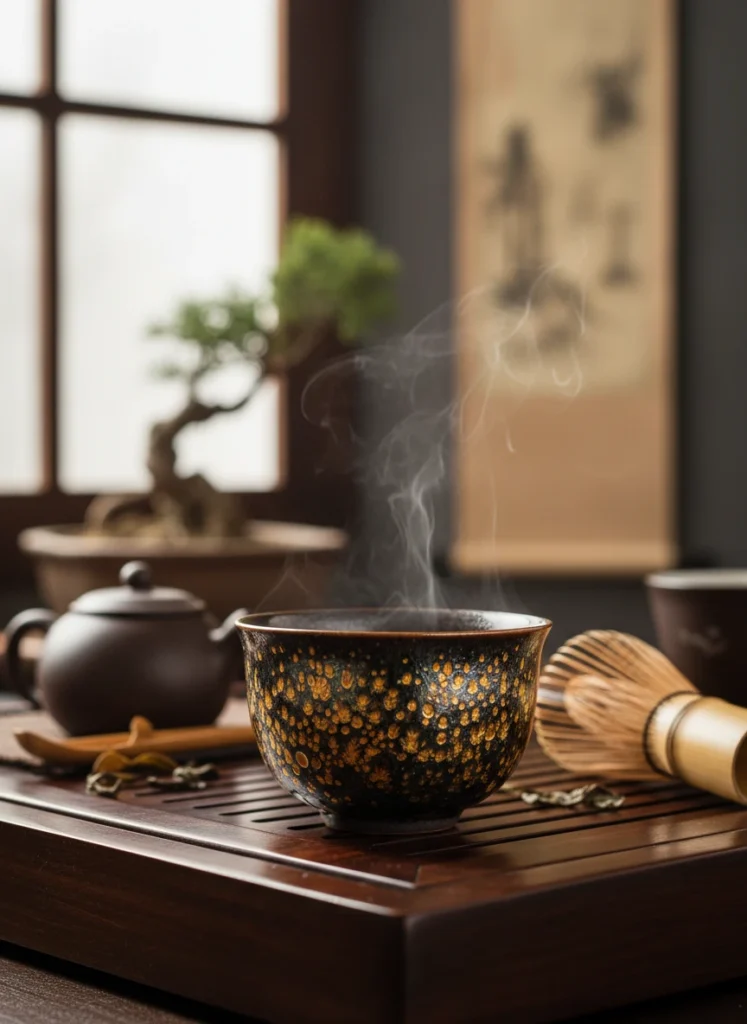
Golden oil spots result from partial re-oxidation of the magnetite crystals back to hematite (Fe₂O₃) during a slower cooling phase. As the kiln descends through that critical 1800–1500°F range, oxygen in the atmosphere re-oxidizes the surface of the magnetite crystals, producing a warm, golden-to-amber metallic luster. This is the classic Yuteki pattern — literally “oil spots” in Japanese — and it’s the most historically celebrated version, prized by tea masters since the Song Dynasty.
| Feature | Silver Oil Spot | Golden Oil Spot |
|---|---|---|
| Primary crystal | Magnetite (Fe₃O₄) | Re-oxidized hematite (Fe₂O₃) |
| Cooling rate | Relatively faster | Slower through 1800–1500°F |
| Visual tone | Cool, silvery metallic | Warm, golden-amber metallic |
| Glaze additive | Cobalt carbonate (2–5%) | Standard iron-heavy recipe |
| Historical name | Gin-teki (silver spots) | Yuteki (oil spots) |
| Rarity | Moderate | More rare and prized |
There’s also a related pattern called Yohen Tenmoku, where the spots display iridescent, color-shifting qualities — sometimes showing patches of blue, purple, or even red within a single spot. Yohen results from even more complex interactions between cooling rate, glaze thickness, and kiln atmosphere, and it’s considered the rarest and most valuable of all Jian Zhan patterns.
If the golden oil spot aesthetic speaks to you, our Golden Drops Jian Zhan tea cup showcases this pattern beautifully — each one individually fired in Jianyang with the traditional techniques described here. You can also explore our full tea set collection for matching pieces.
Common Mistakes When Firing Oil Spot Tenmoku Glazes
We’ve seen many firings where everything looked perfect until the kiln opened — here’s what usually goes wrong. Oil spot Tenmoku is notoriously unforgiving, and even experienced potters lose firings to predictable errors. Recognizing these common mistakes is the first step toward avoiding them.
- Insufficient glaze thickness. This is the single most common mistake. A glaze applied at standard functional thickness (1–2 mm) simply cannot produce oil spots. You need 1/4 to 3/8 inch (6–10 mm) of glaze — thick enough that it looks almost too heavy. Apply multiple coats, and don’t be shy about it.
- Wrong kiln atmosphere. Firing in reduction (which is standard for most dark Tenmoku) prevents oil spot formation. The oxygen-poor atmosphere dissolves the iron crystals back into the glaze melt before they can form on the surface. Oil spots require an oxidation atmosphere at peak temperature.
- Rushing the cooling phase. It’s tempting to crack the kiln early, especially after a long firing. But rapid cooling freezes the crystals while they’re still microscopic, producing barely visible spots instead of the bold, confident patterns you’re after. Patience during cooling is non-negotiable.
- Under-firing the glaze. Oil spots begin forming around cone 7 (approximately 2250°F / 1232°C), but the best results come from firing to cone 10 or above with a soak. Pulling the kiln too early means the glaze hasn’t fully melted, and the bubble-and-crystal process hasn’t had time to develop.
- Inconsistent glaze application. Oil spots form most reliably on a thick, even glaze coat. Patches that are too thin produce weak or absent spots, while patches that are too thick can cause the glaze to run off the piece entirely. Practice your application technique on test tiles before committing to finished work.
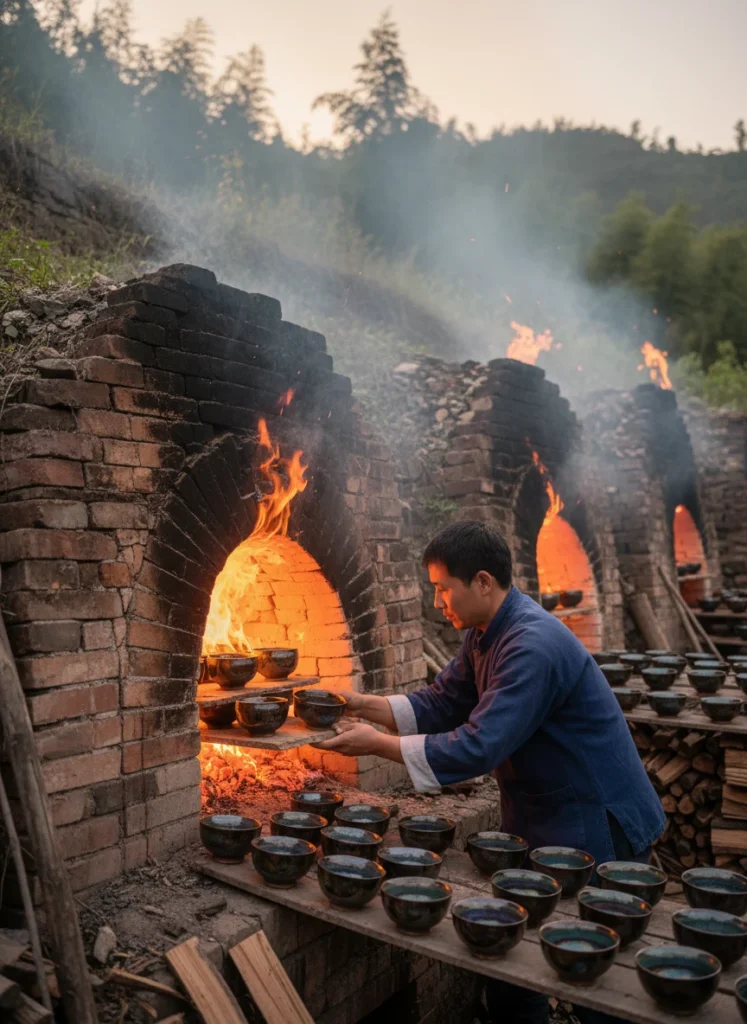
Avoiding these five errors will put you well ahead of most potters attempting oil spot Tenmoku for the first time. For more on the differences that kiln type makes, our comparison of wood-fired vs electric-fired Jian Zhan explains how each approach affects the final glaze.
Note: Some traditional sources claim that the iron content in Jian Zhan glazes can affect the taste or health properties of tea. While it’s true that these cups are made with iron-rich clay and glazes, scientific evidence for significant health effects remains limited. We recommend appreciating these cups for their artistry and cultural heritage.
❓ Frequently Asked Questions
Can oil spot Tenmoku be achieved at cone 6?
Yes, but the spots will be smaller and less defined than cone 10+ firings. The lower peak temperature means less thermal reduction of iron oxide, which produces fewer and smaller oxygen bubbles. Soaking the kiln from cone 6 until cone 7 drops can improve results by giving the crystals more time to develop. Some potters also increase the iron oxide content in their cone 6 recipes to compensate for the lower temperature. For beginners, see our beginner’s guide to Tenmoku and Jian Zhan.
What’s the difference between oil spot and hare’s fur Tenmoku?
Oil spots are round metallic crystals that sit on the glaze surface, while hare’s fur features fine, hair-like streaks running down the bowl. Hare’s fur forms when oil spots run and melt together during a hotter firing or longer soak — essentially, hare’s fur is what happens when oil spots “overflow.” Both patterns come from the same iron oxide thermal reduction process, but they represent different stages of crystal development and glaze flow.
How can I tell if my oil spot Tenmoku cup is authentic?
Authentic Jian Zhan oil spot cups are made from Jianyang iron-rich clay, feel heavy for their size (typically 80–150 grams for a standard tea bowl), and show natural variation in spot size and distribution. Machine-made imitations tend to have uniform, painted-on patterns that lack the depth and iridescence of genuine crystalline spots. Look closely with a magnifier — real oil spots have a three-dimensional, crystalline structure that sits on or slightly above the glaze surface.
📚 References
- Britt, John. “Oil Spot and Hare’s Fur Glazes: Demystifying Classic Ceramic Glazes.” Ceramic Arts Network / American Ceramic Society. Comprehensive research on the chemistry and firing processes behind oil spot and hare’s fur patterns.
- “Tenmoku.” Wikipedia. Overview of Tenmoku glaze history, characteristics, and the formation of oil spot patterns in Jian Zhan ware.
- “Oil-Spot Glaze.” DigitalFire Ceramic Materials Workshop Glossary. Technical reference on glaze chemistry, thermal reduction processes, and material properties relevant to oil spot formation.
Elevate your tea experience? Browse the Zen Tea Cup for authentic tenmoku cups and curated collections.


