

Contents
- Wood-Fired vs Electric-Fired Jian Zhan: What’s the Real Difference?
- How the Firing Method Affects Your Cup
- Wood-Fired Jian Zhan: The Traditional Standard
- What Makes Wood-Fired Special
- Wood-Fired Considerations
- Electric-Fired Jian Zhan: Precision at a Better Price
- What Makes Electric-Fired Different
- Electric-Fired Considerations
- Side-by-Side Comparison
- Which Should You Choose?
- ❓ Frequently Asked Questions
- ❓ Does wood-fired Jian Zhan taste better than electric-fired?
- ❓ Why is wood-fired Jian Zhan so much more expensive?
- ❓ Can electric-kiln Jian Zhan develop authentic glaze patterns?
- 📚 References
Wood-Fired vs Electric-Fired Jian Zhan: What’s the Real Difference?
Wood-fired Jian Zhan and electric-fired Jian Zhan use the same iron-rich clay and glaze, but differ in kiln atmosphere, temperature control, and the unpredictability of the firing process — and those differences directly affect the glaze patterns, price, and collector value of each cup. Wood firing produces more organic, varied patterns through natural reduction and ash interaction; electric firing offers precise temperature control that yields more consistent results at a lower price.
At ZenTeaCup, we offer both types because each serves a different need. This guide explains exactly how they differ — so you can choose the right cup for your budget, your aesthetic preferences, and how you plan to use it.
How the Firing Method Affects Your Cup
The firing method is the single most important factor that determines a Jian Zhan cup’s glaze pattern, texture, and price — even though both wood-fired and electric-fired cups start with the same iron-rich clay from Jianyang, Fujian. As Path of Cha notes, “all Jian ware is made and glazed equally. The differences in the final patterns will depend on the firing temperatures.”
Here is why: during firing, the kiln’s atmosphere — not just its temperature — determines how iron oxide crystals form. A reduction atmosphere (oxygen-starved) causes iron to release oxygen and crystallize into the patterns we recognize as hare’s fur or oil spot. The way that reduction happens is completely different in a wood kiln versus an electric kiln.
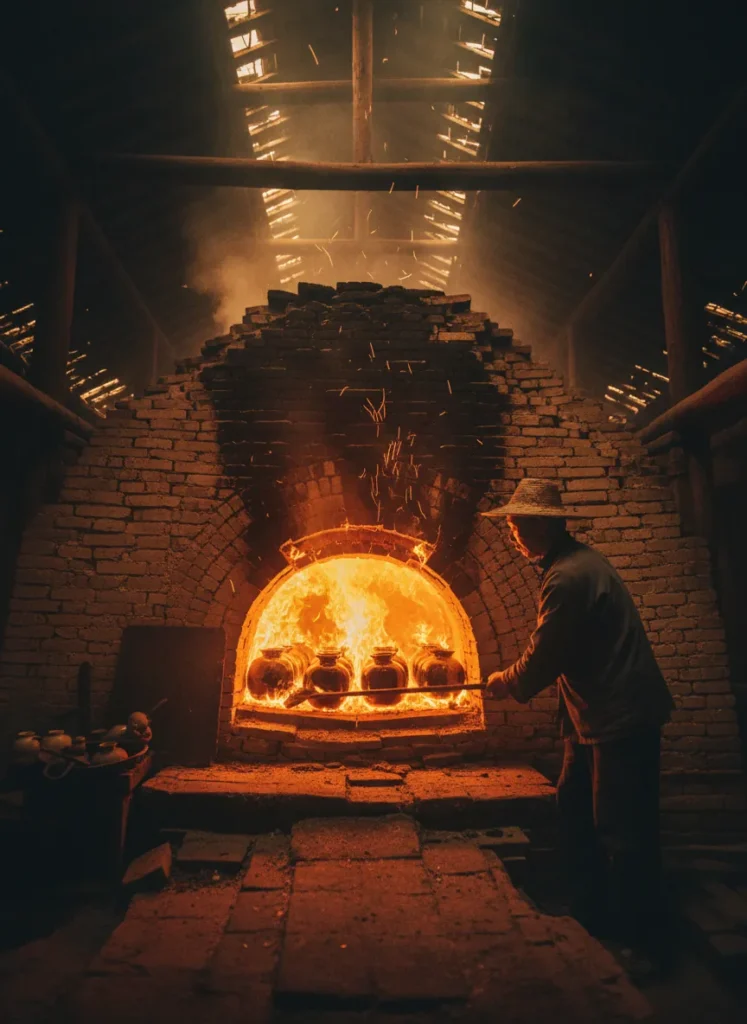
- Wood firing: Fuel combustion naturally consumes oxygen, creating a reduction atmosphere. The degree of reduction fluctuates as wood is added, creating organic variation in crystal formation.
- Electric firing: The kiln atmosphere is neutral (neither reduction nor oxidation) unless the potter deliberately introduces reducing agents. Temperature is digitally controlled, resulting in more uniform conditions.
Wood-Fired Jian Zhan: The Traditional Standard
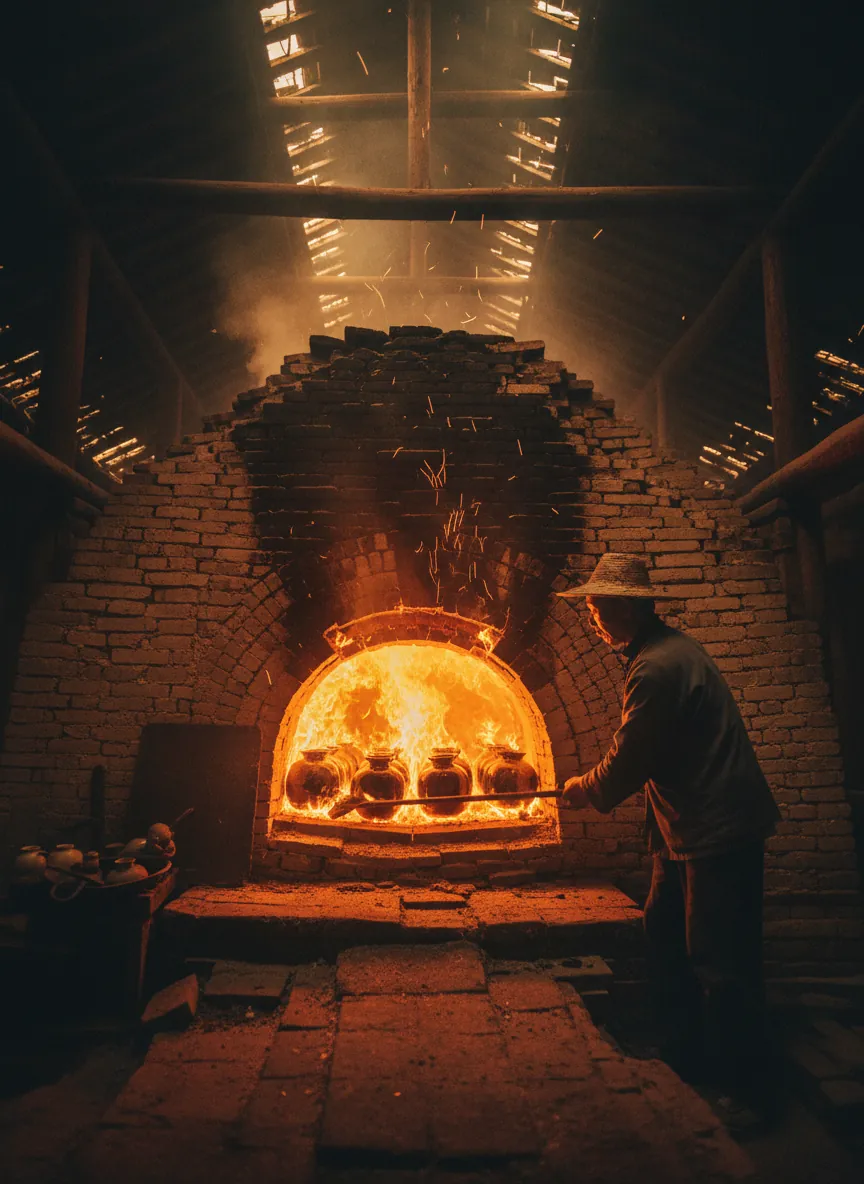
Wood-fired Jian Zhan is the authentic traditional method — the same approach used since the Song Dynasty (960–1279), when Emperor Huizong declared these cups the finest for tea. A wood-fired dragon kiln burns 3–5 tons of pine over 10–14 hours, and the firing master controls the reduction atmosphere by adjusting fuel intake and dampers.
What Makes Wood-Fired Special
- Natural variation: Each cup’s position in the kiln — closer to the firebox or near the chimney — exposes it to different temperatures and reduction levels, producing unique patterns that cannot be replicated.
- Ash interaction: Wood ash landing on glaze surfaces can create subtle color shifts and textures that electric kilns cannot produce.
- Unpredictability: This is both the advantage and the challenge. The same glaze, the same clay, the same kiln — but each firing produces different results.
Tea Journey explains that “wood-fired kilns, electric kilns, and gas kilns” are the three types used for Jian Zhan, with wood firing being the most traditional and valued. Crimson Lotus Tea describes how “wood firing creates unique colors and patterns. The smoke and inconsistent heat become the artist.”
Wood-Fired Considerations
- Price: Higher — $80–$500+ for authentic pieces
- Yield rate: Only 30–50% of cups survive with acceptable patterns; 5–10% achieve exceptional results
- Pattern variety: Greater variation, including rare yao bian effects
- Collector value: Highest — all three Japanese National Treasure bowls were wood-fired
Electric-Fired Jian Zhan: Precision at a Better Price
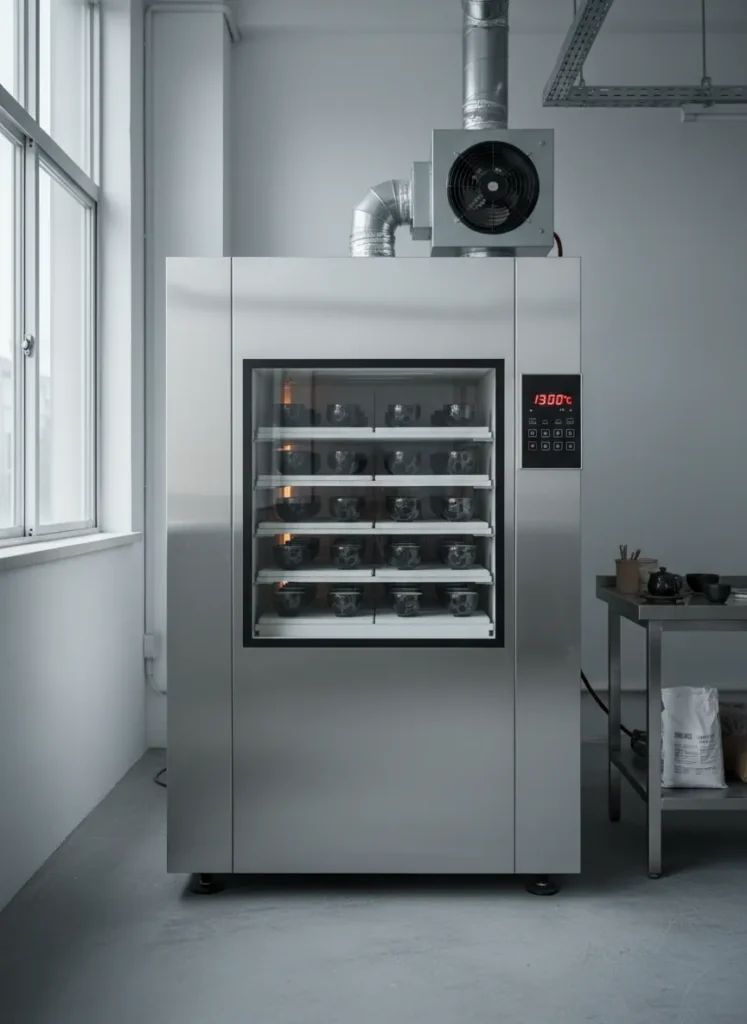
Electric-fired Jian Zhan uses the same clay and glaze but fires in an electronically controlled kiln where temperature is regulated to within a few degrees. This precision means fewer surprises — and that is both its strength and its limitation.
What Makes Electric-Fired Different
- Consistent temperature: Digital controllers maintain exact temperatures, producing more uniform glaze results across multiple cups.
- Controlled atmosphere: Without natural fuel combustion, the kiln atmosphere remains mostly neutral. Some potters add organic materials to simulate reduction, but the effect is less pronounced than wood firing.
- Higher yield: With predictable conditions, a higher percentage of cups achieve the intended glaze pattern — typically 60–80% success rate versus 30–50% for wood firing.
Tenmokus.com notes that “both types of Tenmoku use exactly the same raw materials, but differ in the way they are heated and the kiln environment.” This means an electric-fired cup is still genuine Jian Zhan — it is simply produced using modern technology rather than traditional methods.
Electric-Fired Considerations
- Price: More affordable — $30–$120 for authentic pieces
- Yield rate: Higher — 60–80% success, lower material waste
- Pattern consistency: More uniform; ideal if you want a specific look
- Collector value: Lower — collectors prefer wood-fired for rarity and uniqueness
Side-by-Side Comparison
| Feature | Wood-Fired | Electric-Fired |
|---|---|---|
| Clay & glaze | Same iron-rich Jianyang clay | Same iron-rich Jianyang clay |
| Kiln type | Traditional dragon kiln | Electric programmable kiln |
| Temperature control | Manual — fuel and dampers | Digital — precise to ±5°C |
| Atmosphere | Natural reduction from combustion | Neutral (reduction only if deliberately introduced) |
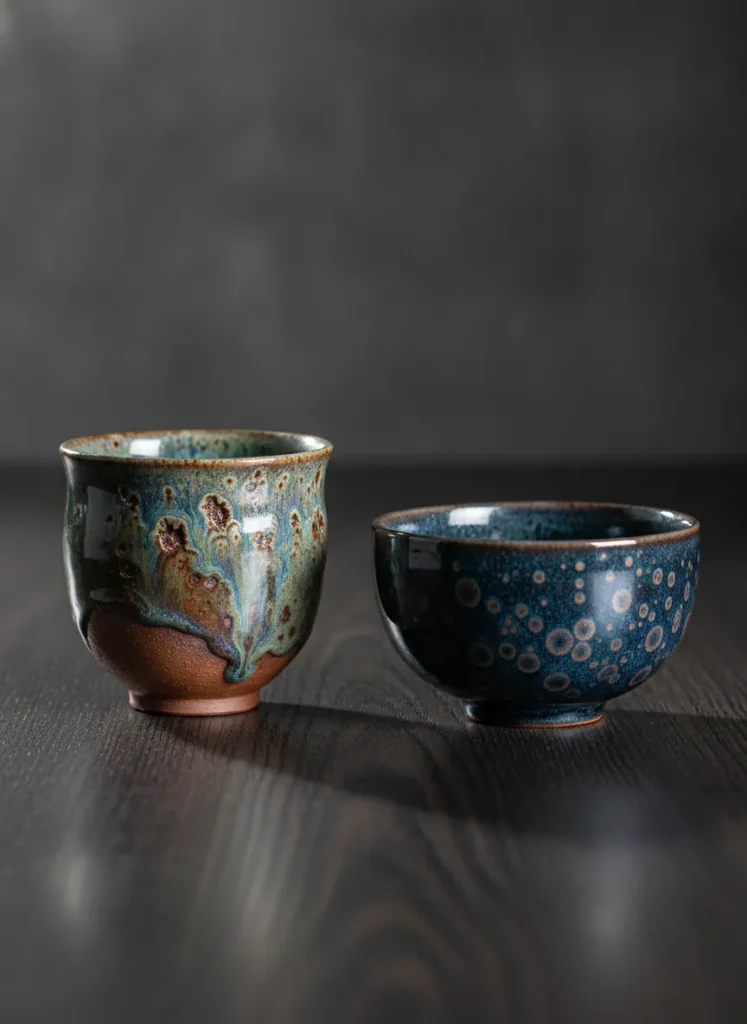
| Glaze patterns | More varied, organic, unpredictable | More uniform, consistent |
| Ash effects | Yes — ash creates color shifts | No |
| Yield rate | 30–50% | 60–80% |
| Price range | $80–$500+ | $30–$120 |
| Collector value | High | Moderate |
| Best for | Collectors, enthusiasts, gifts | Daily use, first-time buyers, budget-conscious |
Which Should You Choose?
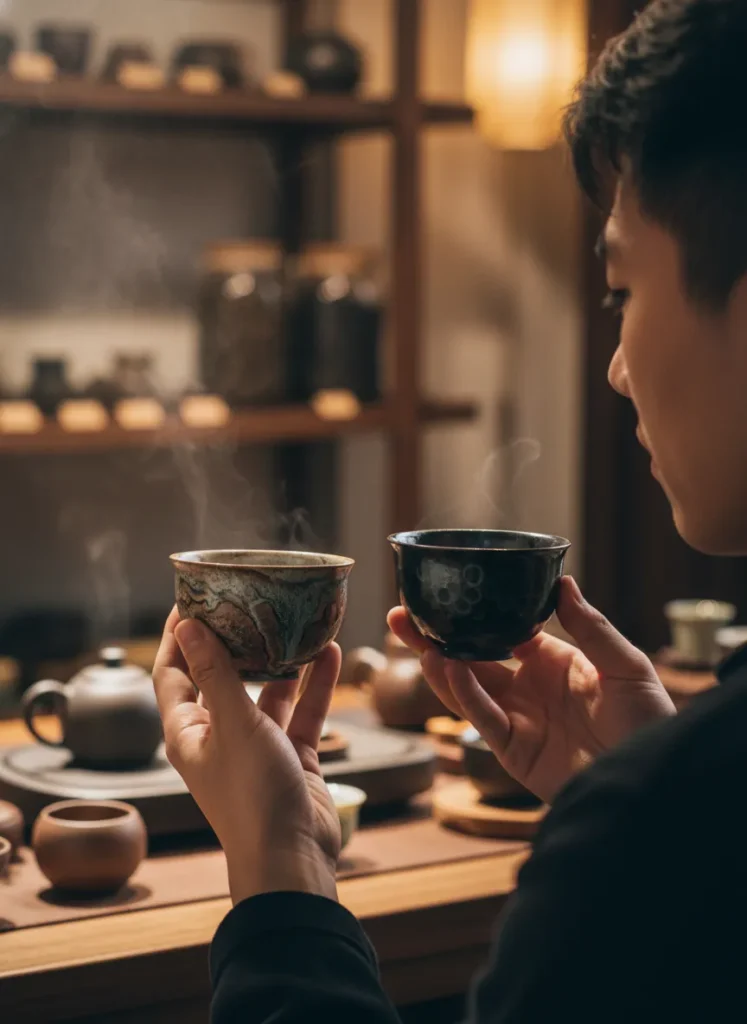
Your choice comes down to three questions: budget, purpose, and how much you value uniqueness.
Choose wood-fired if: you are a collector, want the most authentic traditional experience, value the uniqueness of each cup, or are purchasing a meaningful gift. The organic variation and lower yield rate make each piece genuinely one of a kind — no other cup in the world will have the same pattern.
Choose electric-fired if: you want a beautiful, food-safe Jian Zhan for daily use, are buying your first Tenmoku cup, or prefer a specific glaze pattern with predictable results. Electric-fired cups deliver the same heat retention and aesthetic impact at a price that makes sense for everyday enjoyment. Browse our complete Tenmoku collection to compare both types.
For a deeper understanding of how these firing methods produce different glaze patterns, see our guide to Tenmoku glaze patterns. And if safety is a concern, our Tenmoku food safety guide covers both firing types.
❓ Frequently Asked Questions
Is electric-fired Jian Zhan still authentic?
Yes. Both wood-fired and electric-fired Jian Zhan use the same iron-rich clay from Jianyang and the same traditional glaze formulas. The firing method differs, but the materials and craftsmanship are authentic. Electric firing is a modern technique applied to a traditional craft — not a counterfeit method.
Why is wood-fired Jian Zhan so much more expensive?
Wood firing has a much lower yield rate (30–50% vs 60–80%), requires significantly more labor and fuel (3–5 tons of pine per firing), and produces rare patterns that cannot be replicated. These factors combine to drive the price higher. See our full breakdown of Jian Zhan pricing.
Can you tell the difference between wood-fired and electric-fired by looking?
Usually, yes. Wood-fired cups tend to have more organic, varied patterns with subtle color shifts from ash interaction. Electric-fired cups have more uniform, consistent patterns without ash effects. An experienced eye can spot the difference, but both produce beautiful, functional cups.
Which is better for a first-time buyer?
Electric-fired is generally the better starting point — it offers authentic Jian Zhan quality at a more accessible price ($30–$120). Once you have experienced using a Tenmoku cup daily, you can decide whether the uniqueness of wood-fired justifies the higher investment for your next purchase.
❓ Does wood-fired Jian Zhan taste better than electric-fired?
Most experienced tea drinkers report that wood-fired Jian Zhan produces a noticeably smoother tea experience. The reduction atmosphere from wood burning creates deeper, more complex glaze patterns, and the iron oxide crystallization is more pronounced. However, the difference is subtle and may not be noticeable to beginners. If you are just starting, a quality electric-fired piece is perfectly acceptable for daily use.
❓ Why is wood-fired Jian Zhan so much more expensive?
Wood firing requires significantly more labor, fuel, and time. A single wood firing cycle takes 8-14 hours of constant attention, with the potter managing fuel input and damper positions throughout. The failure rate is also higher — 30-40% of pieces may be lost to temperature spikes or ash damage. These costs are reflected in the price. See the handmade vs mass-produced comparison for a detailed cost breakdown.
❓ Can electric-kiln Jian Zhan develop authentic glaze patterns?
Electric kilns can produce hare’s fur and basic oil spot patterns, but these tend to be flatter and less dynamic than wood-fired examples. The consistent oxidation atmosphere in electric kilns prevents the reduction-oxidation cycles that create the most striking metallic luster and color variation. For the most authentic results, you should look for wood or gas-fired pieces. The authentication guide explains how to identify the firing method from visual and tactile clues.
📚 References
- The Art of Earth and Fire: Comprehensive overview of Jian Zhan firing methods including wood, electric, and gas kilns, and how each affects glaze results. Tea Journey
- Wood-Fired vs. Electric-Fired Tenmoku: Differences & Value: Detailed comparison of firing methods, materials, and value assessment. Tenmokus
- All About The Jian Zhan Tea Cup: Background on how firing temperatures determine glaze pattern differences in Jian ware. Path of Cha
Ready to elevate your tea ritual? Explore these cups for handcrafted tenmoku cups shipped across the US.


