

Contents
- What Does It Mean to Season a Jian Zhan Cup?
- Before First Brew: How to Prepare a New Jian Zhan
- The Science Behind Seasoning: How Iron Glaze Interacts With Tea
- 5 Steps to Season Your Jian Zhan for Better Flavor
- Which Teas Season a Jian Zhan Best?
- Common Seasoning Mistakes That Ruin Your Cup
- Glaze-Specific Seasoning Tips
- ❓ Frequently Asked Questions
- ❓ Does seasoning a Jian Zhan really improve tea flavor?
- ❓ Can I use different teas in the same Jian Zhan?
- ❓ How long does it take to see visible patina on a Jian Zhan?
- ❓ Should I boil my new Jian Zhan before first use?
- 📚 References
What Does It Mean to Season a Jian Zhan Cup?
Seasoning a Jian Zhan cup means building a tea-derived patina on the iron-rich glaze through daily use, gradually deepening its color and enhancing the way your tea tastes. Unlike Zisha teapots that require elaborate opening rituals, a Jian Zhan needs nothing more than a simple hot-water rinse before its first brew — and then consistent, mindful use over time.
If you have ever noticed that an older Jian Zhan seems to glow with a warmer, more lustrous sheen than a brand-new one, you are seeing the result of yang zhan (养盏) — the traditional Chinese practice of “nourishing the cup.” The process is straightforward, but a few key details make the difference between a cup that truly improves your tea and one that simply accumulates tea stains.
At ZenTeaCup, we have worked with kiln masters in Jianyang for years, and the most common question we hear is whether seasoning actually changes the flavor of your tea. The short answer: yes — through gradual mineral interaction between the iron glaze and your tea, many drinkers notice a smoother, rounder mouthfeel after several weeks of regular use.
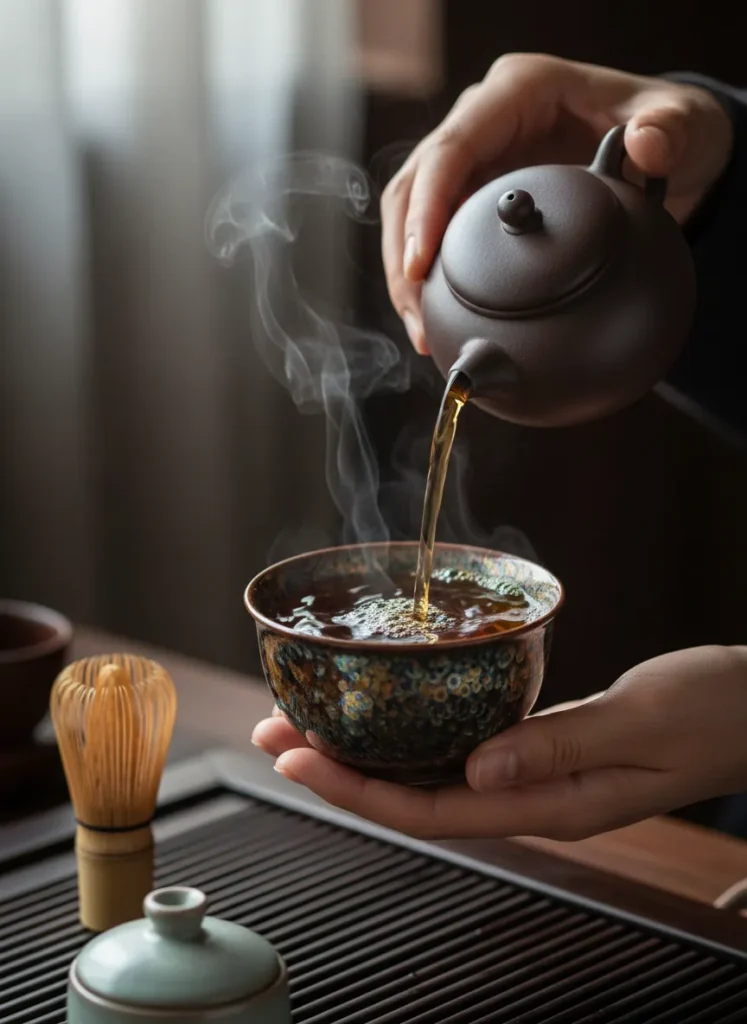
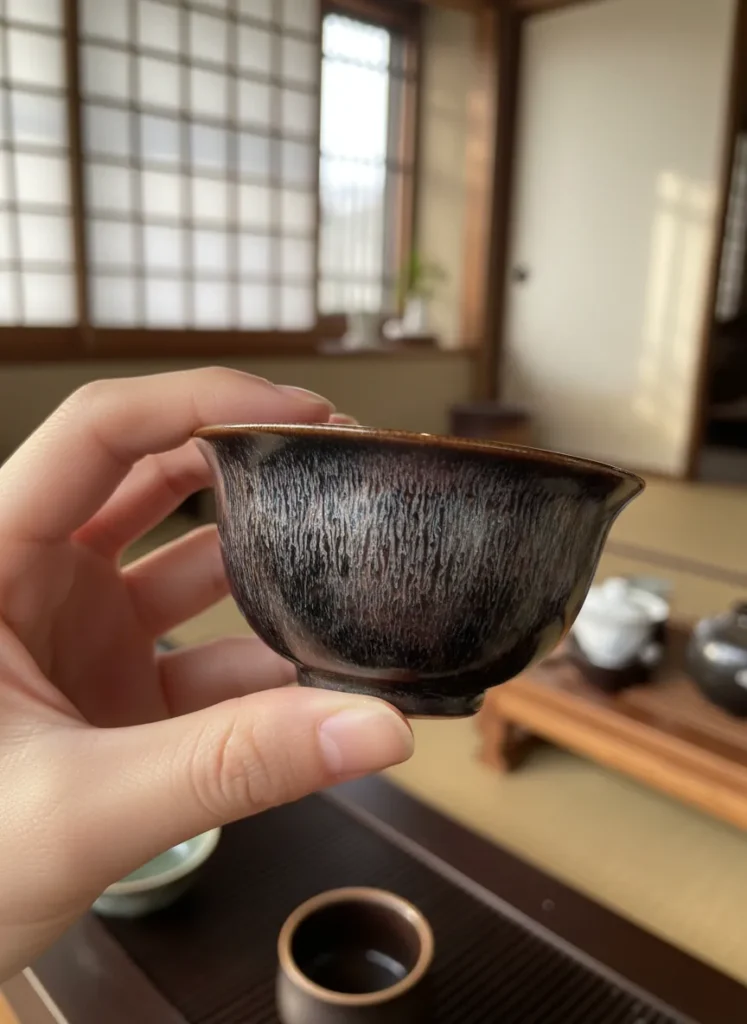
When you season your Jian Zhan properly, you develop a beautiful patina over time.
Before First Brew: How to Prepare a New Jian Zhan
Your new Tenmoku tea bowl arrives with residual dust and microscopic glaze particles from the kiln. A quick opening ritual prepares the surface for proper seasoning:
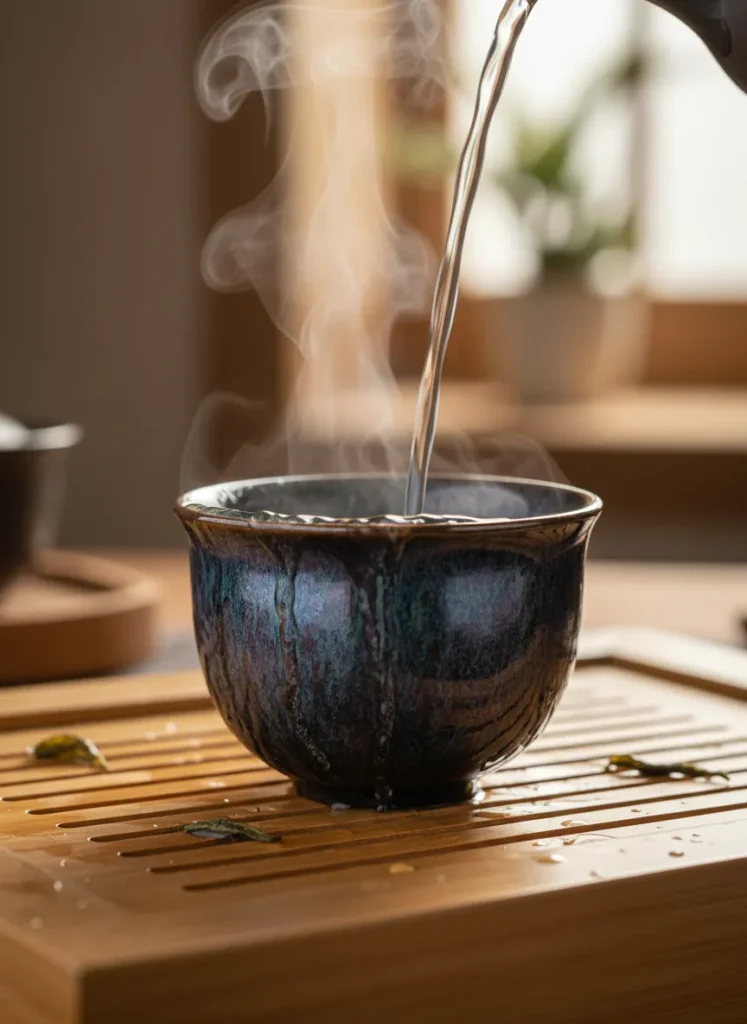
- Rinse with hot water 3–5 times — Pour near-boiling water (about 200°F / 93°C) over the entire bowl, swirling each time to reach every surface.
- Soak for 15–20 minutes — Fill the bowl with hot water and let it sit. This thermally “opens” the iron-rich glaze and loosens any remaining kiln dust.
- Dry with a soft cloth — Gently pat the interior and exterior. Avoid abrasive towels.
- Air dry upside down for 24 hours — Place it on a clean rack in a well-ventilated spot before your first brew.
Do not boil your Jian Zhan for extended periods. Unlike unglazed clay teapots, the high-fired glaze does not need prolonged thermal treatment. Extended boiling can stress the glaze and even cause hairline cracks.
The Science Behind Seasoning: How Iron Glaze Interacts With Tea
A Jian Zhan cup’s glaze contains iron oxide (FeO) at 15–30%, fired at roughly 1300°C in a reduction atmosphere. At a microscopic level, the glaze surface is not perfectly smooth — it has tiny pores and crystalline structures where tea compounds gradually deposit over time.
Here is what happens during seasoning:
- Tannins and polyphenols from tea settle into the micro-pores of the glaze, deepening its color over weeks and months.
- Iron in the glaze interacts with tea minerals, which is traditionally believed to soften water and slightly raise the alkalinity of the tea liquid — many drinkers report a smoother, less astringent mouthfeel.
- Oil spot and hare’s fur metallic crystals become more visually pronounced as the surrounding glaze darkens from tea deposits.
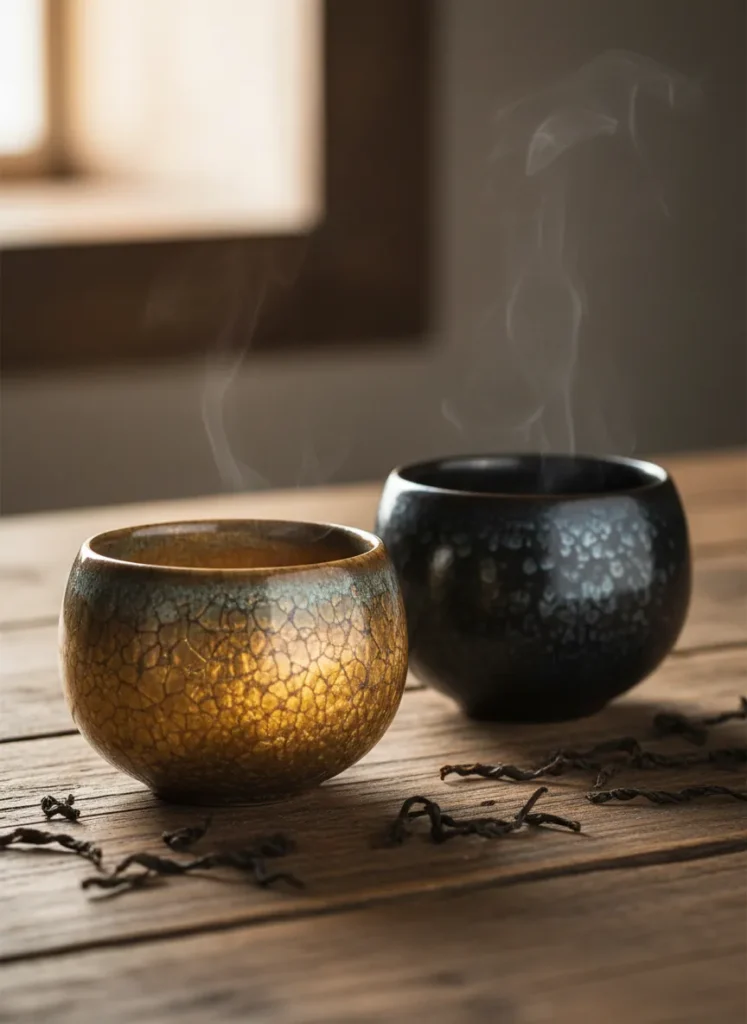
One thing we discovered in our own testing: the change is most noticeable after about 2–4 weeks of daily use. Before that, the glaze still looks “new” and the flavor impact is minimal. After the 4-week mark, a subtle warm amber tone begins to appear, and regular seasoning gradually deepens the patina your Jian Zhan develops over months.
5 Steps to Season Your Jian Zhan for Better Flavor
Follow this simple daily routine to build a rich patina and enhance your tea experience:
- Brew daily in the same cup. Consistency is the single most important factor. Using your Jian Zhan every day — even for just one session — accelerates the seasoning process far more than occasional use.
- Rinse with hot water immediately after drinking. Before any tea residue dries on the glaze, pour hot water (190–200°F / 88–93°C) and swirl. This removes loose tea particles while allowing beneficial tannin deposits to remain in the glaze’s micro-pores.
- Wipe gently with a soft cloth or bamboo brush. A light wipe after rinsing helps distribute the thin tea film evenly across the surface. Never scrub — you want to preserve the developing patina, not strip it.
- Air dry completely, bowl-side down. Place your cup on a clean, ventilated drying rack. Trapped moisture can create water spots that dull the glaze over time.
- Rotate between two cups if possible. Giving each Jian Zhan a day of rest between uses allows the patina to set properly. Many experienced you in Jianyang keep at least two cups in rotation.
For beginners, we recommend starting with a hare’s fur tea cup — it is the most forgiving glaze type for seasoning and responds beautifully to daily use.
Which Teas Season a Jian Zhan Best?
The type of tea you drink directly affects how your patina develops. Different teas leave different mineral and tannin profiles in the glaze:
| Tea Type | Seasoning Effect | Patina Character |
|---|---|---|
| Oolong (Da Hong Pao, Tie Guan Yin) | Rich tannin deposit; fastest color change | Warm amber-gold tones |
| Pu-erh (ripe) | Deep pigment deposit; dramatic darkening | Deep reddish-brown sheen |
| Black tea (Dian Hong) | Moderate tannin; even color development | Smooth honey-gold glow |
| Green tea (Long Jing) | Light deposit; subtle change | Faint greenish-gold tint |
We found that oolong and ripe pu-erh produce the most visible patina because of their higher tannin and polyphenol content. That said, Jian Zhan is not fussy — you can drink any tea from the same cup. Simply rinse with hot water before switching to a different tea. The high-fired glaze does not absorb flavors the way unglazed clay does.
Curious which teas pair best with Tenmoku? Check out our guide on the best teas to drink from a Tenmoku cup.
Common Seasoning Mistakes That Ruin Your Cup
In our experience working with new Jian Zhan owners, these are the five most common mistakes that slow down or damage the seasoning process:
- Leaving tea overnight on purpose. Some people believe that letting tea sit for hours (or days) will speed up patina development. In reality, it creates a thick layer of tea dirt rather than a true patina — and can make the glaze look dry and dull instead of luminous.
- Using dish soap or detergent. This strips the developing patina and can permanently dull the metallic sheen on oil spot and yohen glazes. Hot water only — always.
- Scrubbing with abrasive sponges or steel wool. Even one aggressive scrub can undo weeks of careful seasoning by removing the micro-thin tea film that builds the patina.
- Rinsing a hot cup with cold water. Thermal shock is the most common cause of cracks in Jian Zhan. Always use hot or warm water when cleaning.
- Storing in a sealed cabinet while damp. Residual moisture trapped in an enclosed space can affect the unglazed foot ring and create a musty odor over time.
The easiest mistake to make is also the easiest to fix: just rinse with hot water right after drinking. If you let tea residue dry on the glaze, it becomes much harder to clean without scrubbing — and scrubbing works against the seasoning you are trying to build. For a deeper dive into daily maintenance, see our complete Jian Zhan care guide.
Glaze-Specific Seasoning Tips
Not all Tenmoku glazes respond the same way to seasoning. Here is what to expect from the most common types:
- Hare’s Fur (Tu Hao): The most forgiving glaze for beginners. Seasoning develops a subtle warm sheen along the fine streaks. If you accidentally use a tiny bit of mild soap once, it will not dramatically affect the pattern.
- Oil Spot (Yu Teka): The metallic dots become dramatically more pronounced as the surrounding glaze darkens. Never use soap — detergents strip the metallic sheen and can permanently dull the spots.
- Yohen (Yao Bian): The rarest and most delicate. Seasoning can bring out extraordinary iridescent shifts, but the glaze is also the most sensitive. Handle with extra care: no soap, no thermal shock, and store with cloth padding.
- Partridge Spot: A durable glaze that responds well to yang zhan over time. The speckled pattern deepens evenly with consistent daily use.
Explore our full collection of handcrafted Jian Zhan tea cups to find the right glaze for your tea practice.
❓ Frequently Asked Questions
❓ Does seasoning a Jian Zhan really improve tea flavor?
Many tea drinkers report that after 2–4 weeks of daily use, tea from a seasoned Jian Zhan tastes smoother and less astringent. This is traditionally attributed to the iron-rich glaze interacting with tea minerals to slightly soften the water. However, individual experiences vary, and these effects have not been conclusively validated by controlled scientific studies.
❓ Can I use different teas in the same Jian Zhan?
Yes. Unlike unglazed Zisha clay, the high-fired glaze of a Jian Zhan does not absorb tea flavors. Simply rinse with hot water before switching teas. In fact, using different teas can contribute diverse trace minerals that may enrich the patina.
❓ How long does it take to see visible patina on a Jian Zhan?
Most owners notice a subtle warm tone after 2–4 weeks of daily use. A more pronounced, lustrous sheen typically develops over 3–6 months. Oolong and ripe pu-erh teas tend to produce the fastest and most visible results.
❓ Should I boil my new Jian Zhan before first use?
A brief boil of a few minutes is fine, but extended boiling is unnecessary and risks damaging the glaze. A simple hot-water soak for 15–20 minutes is sufficient to prepare the surface.
Start your tenmoku journey today — browse the Zen Tea Cup shop for authentic, hand-selected pieces.
Find the tenmoku cup that speaks to you — browse Zen Tea Cup for authentic, artisan-crafted teaware.
Discover your next favorite tea cup — visit the Zen Tea Cup store for curated tenmoku selections.
Find the tenmoku cup that speaks to you — browse these cups for authentic, artisan-crafted teaware.
📚 References
-
Jian Ware and Song Dynasty Tea Culture:
Overview of Jian kiln ceramics and their cultural significance in Chinese tea traditions.
The Metropolitan Museum of Art -
Ceramic Foodware Safety Standards:
Guidance on lead and cadmium limits for ceramic tableware in contact with food.
U.S. FDA -
Iron Oxide in Ceramic Glazes:
Technical reference on the role of iron oxide in high-temperature reduction-fired glazes.
Angelo State University Chemistry Resources
Discover your next favorite tea cup — visit the Zen Tea Cup store for curated tenmoku selections.


