

Contents
- What Is the Connection Between Zen Buddhism and Tea?
- How Tea Entered Buddhist Monasteries in Ancient China
- The Four Principles of Tea That Mirror Zen Philosophy
- Tea as Meditation in Motion — The Practice of Mindful Brewing
- Key Figures Who United Zen and Tea Culture
- Wabi-Sabi in Zen Buddhism — Finding Beauty in Imperfection
- How to Practice a Zen Tea Ritual at Home
- ❓ Frequently Asked Questions About Zen and Tea
- ❓ What does “tea and Zen share the same flavor” mean?
- ❓ Did Zen monks invent the tea ceremony?
- ❓ Can I practice Zen tea meditation without formal training?
- ❓ Why is a Jian Zhan bowl good for Zen tea practice?
- 📚 References
What Is the Connection Between Zen Buddhism and Tea?
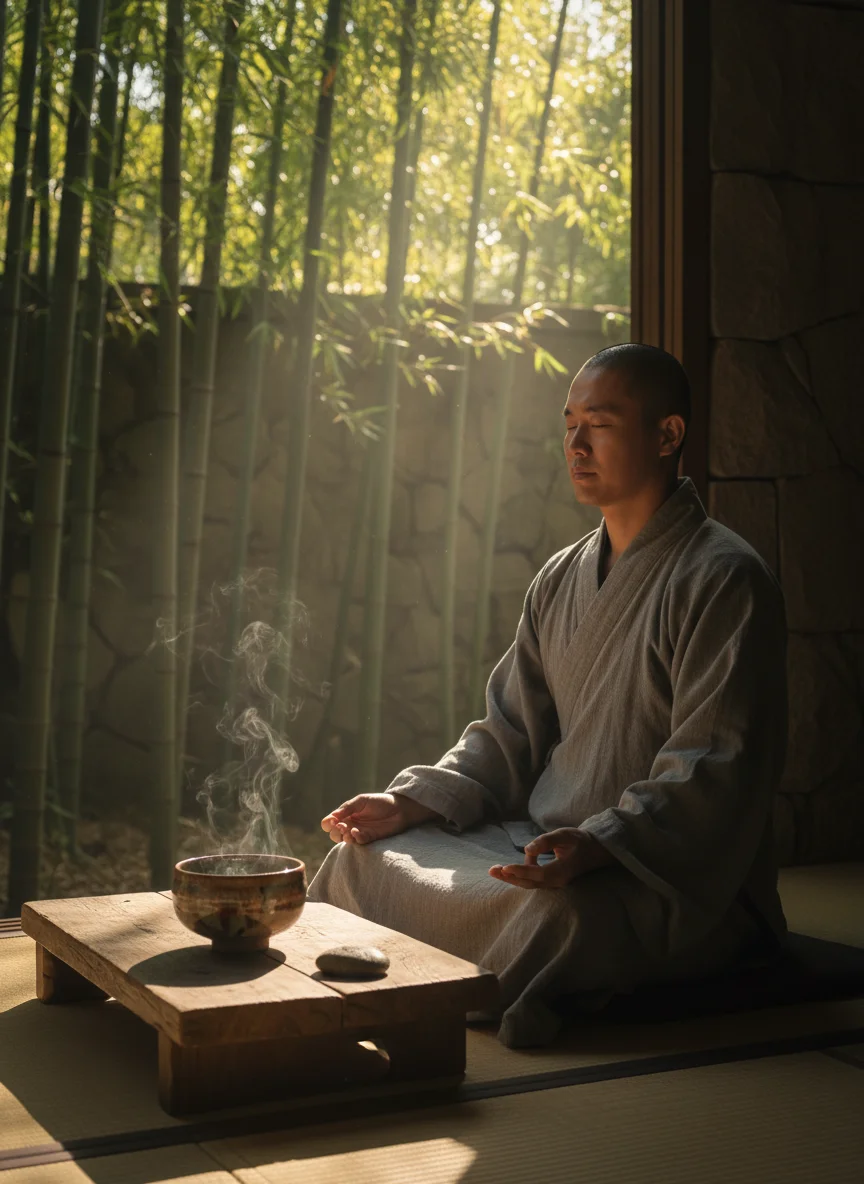
The bond between Zen Buddhism and tea runs far deeper than a simple preference for a warm drink — it is a spiritual partnership that, at potalastore, we believe has shaped East Asian culture for over a thousand years. The phrase cha zen yi wei (茶禅一味), meaning “tea and Zen share the same flavor,” captures this unity: both demand presence, simplicity, and an alert yet calm mind. at Zen Tea Cup
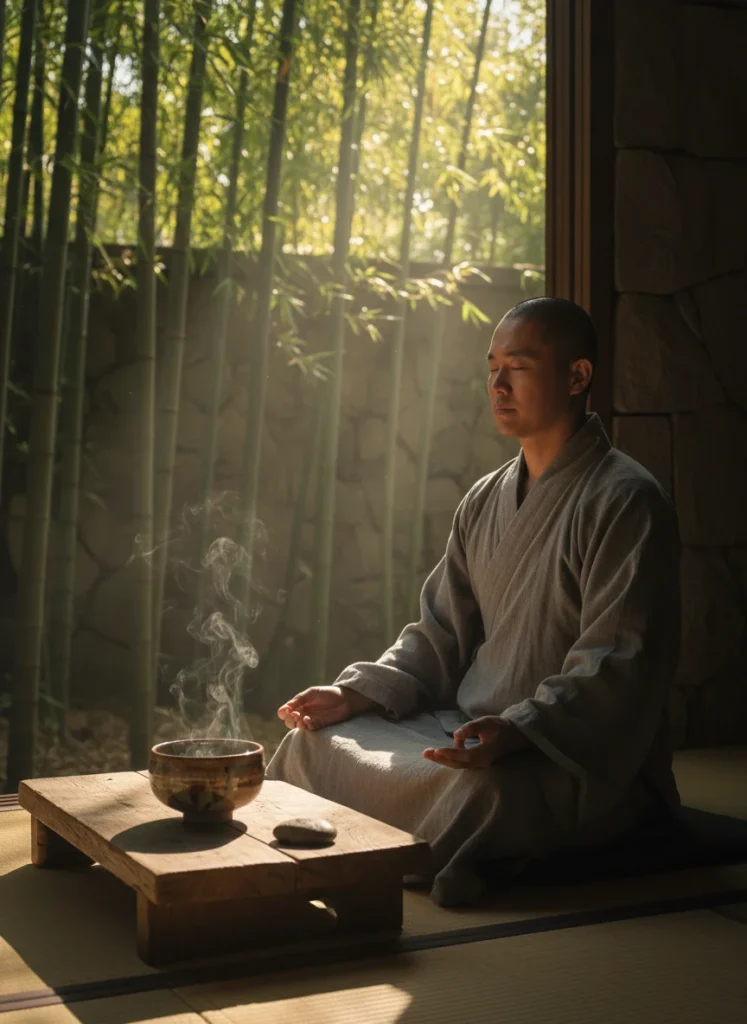
Historically, Chan (Zen) monks in China discovered that tea sharpened awareness during long hours of seated meditation. When the monk Eisai brought both Zen Buddhism and tea seeds from China to Japan in the late 12th century, this practice evolved into the Japanese tea ceremony — a ritual where every gesture becomes an expression of mindfulness. In the Zen-inspired tradition, preparing and sharing tea is not a break from meditation; it is meditation.
If you are new to tenmoku, you can start with an affordable piece under $50.
How Tea Entered Buddhist Monasteries in Ancient China
Tea’s role in Buddhist life began in China’s Tang Dynasty (618–907 CE), when Chan monks in mountain monasteries cultivated tea gardens as part of their daily practice. The Cha Jing (The Classic of Tea) by Lu Yu, written around 760 CE, described tea as a remedy for drowsiness and a companion for contemplation — qualities that made it indispensable in meditation halls.
According to tradition, Bodhidharma, the founder of Chan Buddhism, meditated facing a wall for nine years. When sleep overcame him, he cut off his eyelids in frustration, and where they fell, the first tea plants sprouted. While mythical, this story reflects a core truth: tea became the sacred companion of Zen practice, keeping monks alert while calming the restless mind. By the Song Dynasty (960–1279 CE), tea competitions and whisked tea preparation had become integral to Chan monastery culture, particularly in Fujian province — the home of Jian Zhan tea bowls.
The Four Principles of Tea That Mirror Zen Philosophy
Sen no Rikyū (1522–1591), the most influential tea master in Japanese history, distilled the spirit of tea into four principles that echo core Zen teachings: A gongfu tea session typically uses 5–8 g of tea leaves per 100 ml.
- Harmony (和 Wa) — aligning with the rhythm of nature, the season, and your guests, much as Zen cultivates oneness with the present moment
- Respect (敬 Kei) — treating every person and object with genuine care, reflecting the Zen view that all things possess inherent worth
- Purity (清 Sei) — clearing both the physical space and the mind of attachments, echoing Zen’s emphasis on beginner’s mind and empty-cup awareness
- Tranquility (寂 Jaku) — the stillness that arises naturally when harmony, respect, and purity are present — the very stillness Zen meditation seeks
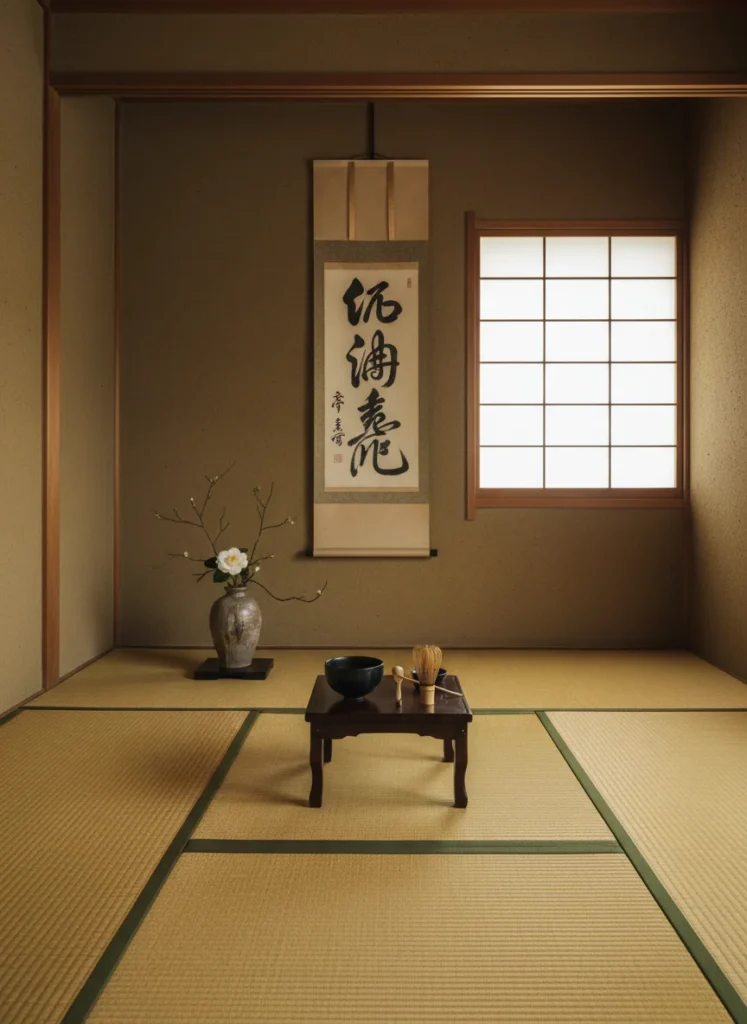
These principles are not abstract ideals. In a tea gathering, harmony appears in the choice of a seasonal flower arrangement; respect in the way the host cleans the tea bowl before serving; purity in the deliberate rinsing of each utensil; tranquility in the hush that settles over the room as the whisked matcha is shared. Each action is a living expression of Zen awareness.
Tea as Meditation in Motion — The Practice of Mindful Brewing
In Zen teaching, there is no separation between sitting meditation and everyday activity. The tea ceremony embodies this principle fully. From the moment the host enters the tearoom, every movement — opening the sliding door, folding the silk cloth, whisking the tea — is performed with complete attention and nothing held back.
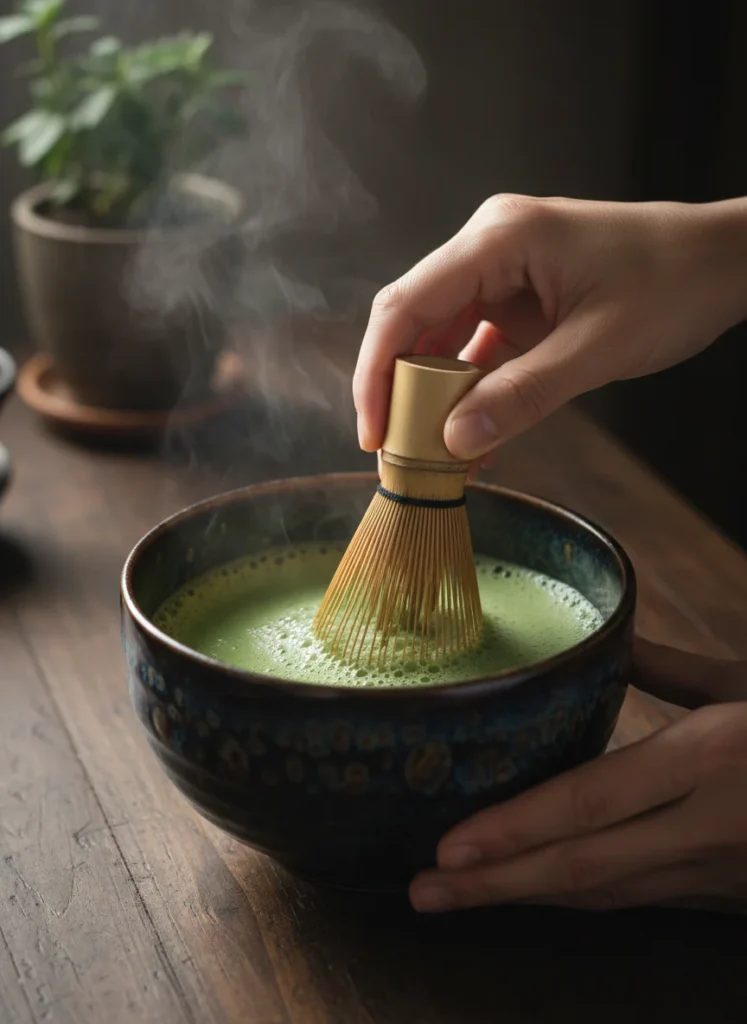
This is what Zen calls ichigo ichie (一期一会), “one time, one meeting” — the awareness that this particular gathering of people, in this particular moment, will never happen again. The tea practitioner treats each encounter as precious and irreplaceable, the same way a Zen meditator treats each breath.
For those who wish to bring this spirit into daily life, the practice can start simply: heating water, selecting a handcrafted tea cup, watching the leaves unfurl, and listening to the sound of pouring — all with full sensory engagement. The teaware itself becomes part of the meditation. A Jian Zhan bowl, with its iridescent glaze and heavy stoneware body, draws the eye and the hand into the present moment, making it a natural companion for mindful tea practice.
Key Figures Who United Zen and Tea Culture
Several historical figures shaped the intertwined traditions of Zen and tea:
| Figure | Era | Contribution |
|---|---|---|
| Eisai (Myōan Yōsai) | 1141–1215 | Brought Zen Buddhism and tea seeds from China to Japan; wrote Kissa Yōjōki (How to Stay Healthy by Drinking Tea) |
| Daitō Kokushi | 1282–1337 | Zen master who promoted tea drinking in monastic communities as an aid to meditation |
| Murata Jukō | c. 1423–1502 | Founded the wabi-cha style, emphasizing simplicity and rustic aesthetics rooted in Zen values |
| Sen no Rikyū | 1522–1591 | Formalized the four principles of tea (harmony, respect, purity, tranquility) and established the small, austere tearoom |
| Takeno Jōō | 1502–1555 | Deepened the wabi aesthetic in tea, connecting it more closely to Zen’s emphasis on imperfection and transience |
Each of these figures moved tea practice further from aristocratic display and closer to Zen simplicity — from ornate gatherings in grand halls to quiet ceremonies in a two-tatami-mat room where host and guest share a single bowl of tea.
Wabi-Sabi in Zen Buddhism — Finding Beauty in Imperfection
Central to both Zen and the tea ceremony is wabi-sabi, the aesthetic that finds beauty in imperfection, impermanence, and incompleteness. A tea bowl with an uneven rim, a glaze that crackled unpredictably in the kiln, a room with a pillar left rough and unpainted — these are not flaws but expressions of a deeper truth: nothing in this world is permanent or perfect.
This philosophy resonates deeply with the material culture of tea. A Jian Zhan bowl, for instance, owes its extraordinary beauty to the kiln’s unpredictable transformation — no two pieces are alike, and the maker cannot fully control the outcome. The iridescent halos of a Yohen Tenmoku bowl emerged from the chaos of a 1300°C (2372°F) dragon kiln, a collaboration between human craft and natural forces. In Zen terms, this is mushin (無心), “no-mind” — the state where the creator acts without attachment to the result, allowing the work to become what it naturally wants to be.
In a tearoom, wabi-sabi appears in the weathered bamboo vase, the intentionally irregular tea scoop, and the single wild flower placed at an angle. These choices are not random; they are deliberate invitations to see beauty in the humble and the aged — a direct application of Zen’s teaching that enlightenment is found in the ordinary. The reduction firing phase lasts approximately 30–45 minutes.
How to Practice a Zen Tea Ritual at Home
You do not need a traditional Japanese tearoom or years of training to bring the spirit of Zen into your tea practice. What matters is intention — the commitment to be fully present with each step. Here is a simple framework:
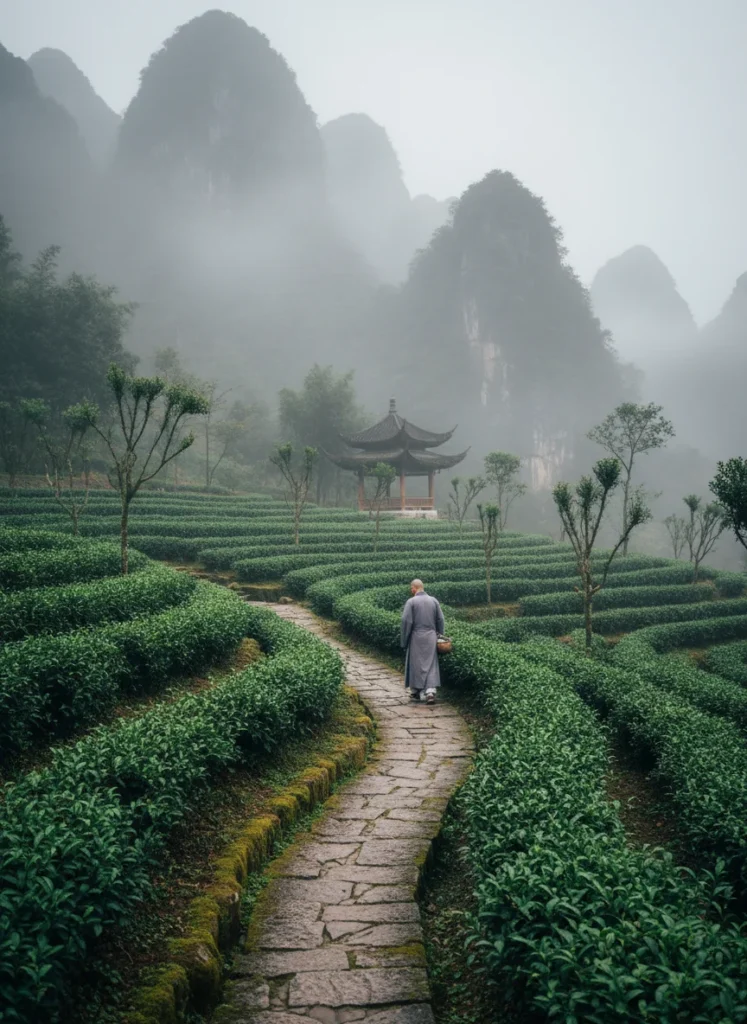
- Prepare the space — Clear your table of distractions. Set out your teaware deliberately: a bowl or cup, a whisk or strainer, and the tea itself. A Jian Zhan bowl is ideal — its weight and texture anchor your attention in the physical moment.
- Heat the water with awareness — Listen to the sound change as the water heats. In the tea tradition, different stages of boiling have poetic names: “fish eyes” for the first large bubbles, “string of pearls” for the steady stream, and “raging torrent” for the full boil.
- Whisk or brew with full attention — Whether you are whisking matcha or steeping loose-leaf tea, let this be the only thing you are doing. Feel the motion of your wrist, watch the color deepen, notice the aroma rising.
- Receive the tea gratefully — Before drinking, pause. Acknowledge the effort that brought this tea to your hands — the growers, the makers, the earth itself.
- Drink with all five senses — Feel the warmth of the bowl, see the color of the tea, smell the fragrance, taste the flavor, and hear the quiet of the room. This is Zen in a cup.
This practice can take as little as ten minutes, but its effects ripple through the rest of your day. The stillness you cultivate at the tea table becomes the stillness you carry into conversations, work, and relationships — exactly the transformation Zen masters have pointed to for centuries.
❓ Frequently Asked Questions About Zen and Tea
The phrase cha zen yi wei (茶禅一味) expresses the idea that the core experience of tea practice and Zen meditation is identical: alert presence, simplicity, and the dissolution of the ego’s constant chatter. Both return you to this moment, fully and without reservation.
❓ Did Zen monks invent the tea ceremony?
Not exactly. Chinese Chan monks developed tea drinking as an aid to meditation as early as the Tang Dynasty. Japanese monks like Eisai brought this practice to Japan, where it gradually evolved into the formalized ceremony (chanoyu) under the influence of tea masters like Sen no Rikyū, who shaped it into a Zen-inflected art form.
❓ Can I practice Zen tea meditation without formal training?
Yes. While formal tea ceremony training deepens understanding, the essence of Zen tea practice is mindful presence — something anyyou can cultivate. Start by brewing one cup of tea each day with full attention to each step, and let the ritual grow naturally from there.
❓ Why is a Jian Zhan bowl good for Zen tea practice?
A Jian Zhan bowl supports mindful tea practice in several ways: its substantial weight grounds your attention in the physical moment, its heat-retaining stoneware keeps tea warm throughout a slow ceremony, and its iridescent glaze — born from unpredictable kiln transformation — embodies the wabi-sabi principle of finding beauty in what cannot be controlled.
📚 References
Sen no Rikyū, Nanpōroku (Records of the Southern Tradition). Translated by Dennis Hirota, in Wind in the Pines: Classic Writings of the Way of Tea as a Buddhist Path, 1995.
Eisai, Kissa Yōjōki (Treatise on Tea Drinking for Health), 1211. Available in translation through the Japanese Classics Translation Series.
Lu Yu, Cha Jing (The Classic of Tea), c. 760 CE. Translated by Francis Ross Carpenter, The Classic of Tea, Little, Brown, 1974.
Kristin Surak, The Tea Ceremony and Japan’s National Identity, Routledge, 2024.
Morgan Pitelka, Japanese Tea Culture: The Art of Practice, Routledge, 2023.
Updated June 2026. The spiritual dimensions of tea continue to evolve as practitioners worldwide adapt traditional forms to contemporary life.
Ready to bring the spirit of Zen into your daily cup? Explore our handcrafted tea cup collection at potalastore — where centuries of tradition meet the present moment. The glaze layer is usually 1–2 mm thick on a quality piece. The cooling rate after firing is about 100°C per hour.


