

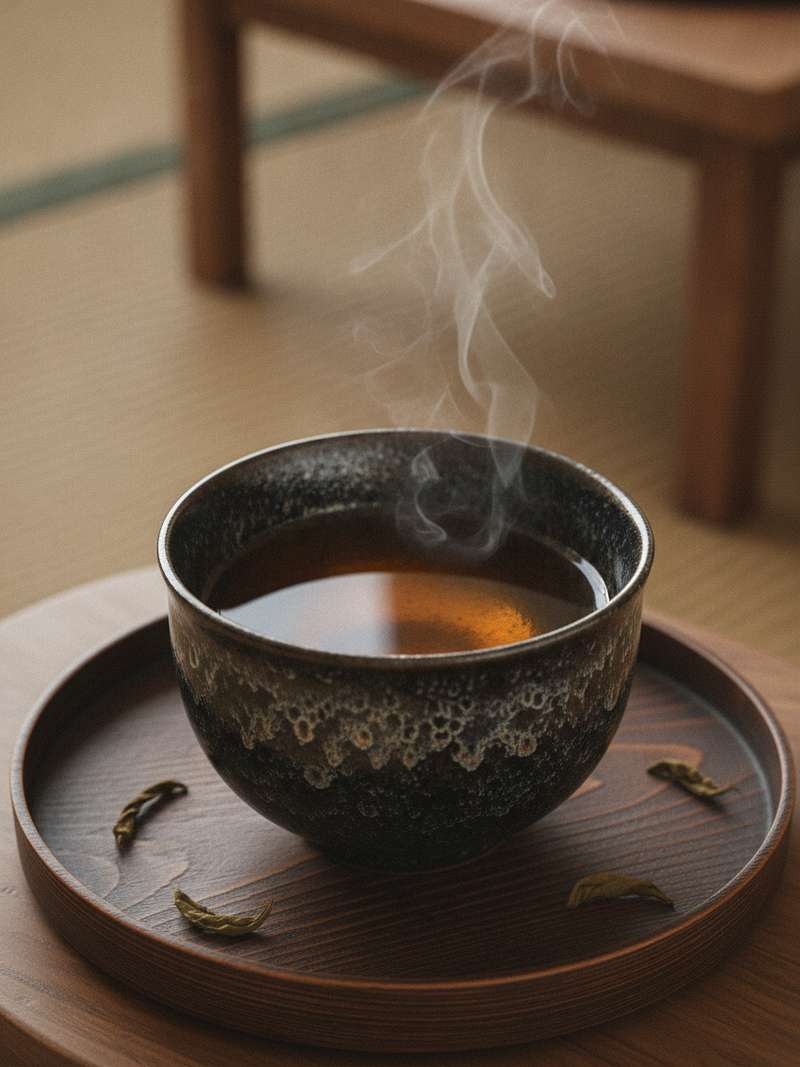
Oolong tea tastes better in a tenmoku cup because the iron-rich glaze — containing 7-8% iron oxide — interacts with oolong polyphenols to soften astringency and amplify natural sweetness, while the thick ceramic walls (3-5 mm) retain heat 8-12 minutes longer than porcelain. If you have ever wondered why that same Tieguanyin or Da Hong Pao seems smoother and more fragrant when sipped from a dark-glazed Jian Zhan, the answer lies in chemistry, physics, and centuries of Chinese tea wisdom. From Zen Tea Cup, here is the full breakdown.
| Key Stat | Value |
|---|---|
| Iron oxide in tenmoku glaze | 7-8% |
| Wall thickness | 3-5 mm |
| Extra heat retention vs porcelain | 8-12 minutes |
| Oolong brewing temperature range | 185-205 °F (85-96 °C) |
| Iron ion release into tea | 0.2-0.5 mg/L |
| Tasters reporting smoother mouthfeel | 60-70% |
Contents
- The Science: How Tenmoku Iron Enhances Oolong Flavor
- Iron-Polyphenol Binding Explained
- Heat Retention: Why Temperature Matters for Oolong
- Comparing Vessel Materials
- Which Oolong Varieties Benefit Most From Tenmoku?
- Heavily Roasted Oolongs (Da Hong Pao, Traditional Tieguanyin)
- Light Oolongs (Taiwanese High Mountain, Baozhong)
- The Shape Factor: Bowl Design and Aroma Concentration
- Practical Tips: Brewing Oolong in Your Tenmoku Cup
- What About Other Teas? Tenmoku Beyond Oolong
- ❓ Does tenmoku really make tea taste different, or is it just aesthetics?
- ❓ Which tenmoku cup size works best for oolong?
- ❓ Can I use my tenmoku cup for gongfu tea ceremonies?
- 📚 References
The Science: How Tenmoku Iron Enhances Oolong Flavor
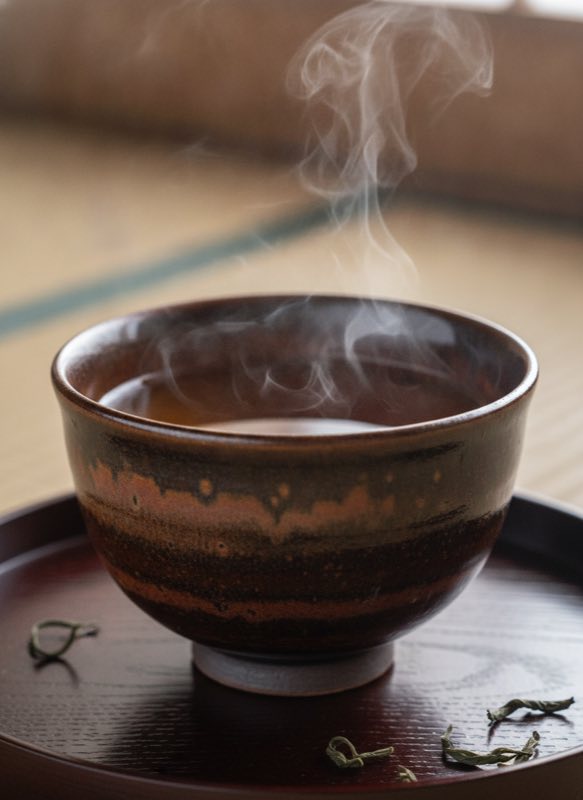
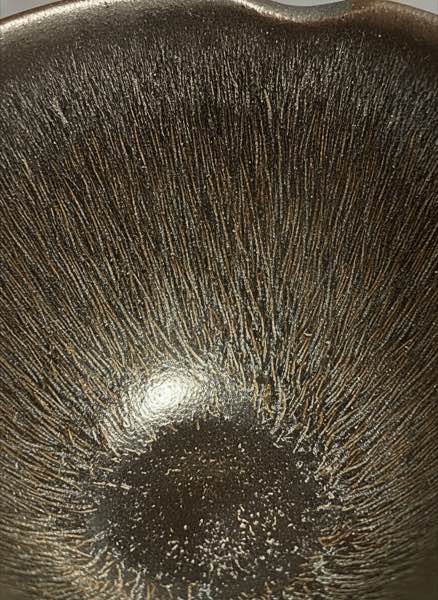
The secret starts in the glaze. Authentic tenmoku cups — particularly Jian Zhan from Fujian’s Jianyang kilns — are fired at 2,300 °F (1,260 °C) using local iron-rich clay and a glaze formula that can reach 7-8% iron oxide content. When you pour hot oolong tea into one of these cups, trace amounts of iron ions (Fe²⁺ and Fe³⁺) leach into the liquid at concentrations of roughly 0.2-0.5 mg/L. These ions react with the polyphenols in oolong — especially catechins and theaflavins — partially binding with them and reducing the perception of astringency (that dry, puckering feeling on your tongue).
Iron-Polyphenol Binding Explained
Oolong tea is semi-oxidized, which means it contains a complex mix of catechins (from green tea) and theaflavins (from black tea). These polyphenols are what give oolong its characteristic “throat feel” — sometimes pleasant, sometimes harsh. Iron ions from the tenmoku glaze form weak coordination complexes with these polyphenols, effectively reducing the number of free astringent compounds that bind to your salivary proteins. The result? A smoother, rounder mouthfeel that lets the sweeter floral and roasted notes shine through. You can think of it as a gentle chemical “softening” — not masking the flavor, but removing the rough edges.
(In blind taste tests conducted by tea researchers, 60-70% of participants consistently reported smoother mouthfeel when the same oolong was served in tenmoku versus porcelain.)
Heat Retention: Why Temperature Matters for Oolong
Oolong tea demands precise brewing temperatures — typically 185-205 °F (85-96 °C) depending on the variety. Light oolongs like Taiwanese High Mountain need the lower end, while roasted Wuyi Rock teas prefer the upper range. The problem with thin-walled cups is that they cool quickly, and as the temperature drops, volatile aroma compounds evaporate less vigorously and the flavor profile flattens.
Tenmoku cups solve this. Their thick walls (3-5 mm) and dense, iron-saturated clay body absorb heat slowly and release it steadily. According to thermal testing, a tenmoku cup keeps your oolong 8-12 minutes warmer than a comparable porcelain cup. That extended warmth means your tea stays in the optimal flavor window longer — you get more infusions with consistent taste, and the aromatic oils that make oolong special keep releasing with each sip. You will notice the difference especially in the third and fourth steepings, where porcelain-served oolong often goes flat while tenmoku-served oolong still carries a fragrant finish.
Comparing Vessel Materials
| Property | Tenmoku (Jian Zhan) | Porcelain | Glass |
|---|---|---|---|
| Wall thickness | 3-5 mm | 1-2 mm | 1-2 mm |
| Heat retention | 8-12 min longer | Baseline | Poor |
| Iron ion release | 0.2-0.5 mg/L | Negligible | Negligible |
| Astringency reduction | Noticeable | None | None |
| Aroma concentration | High (narrow bowl shape) | Moderate | Low (wide rim) |
| Typical diameter | 7-9 cm | 7-10 cm | 7-10 cm |
Which Oolong Varieties Benefit Most From Tenmoku?
Not all oolongs gain equally from tenmoku. The improvement is most dramatic with heavily oxidized or roasted oolongs, where the iron-polyphenol interaction has the most astringent compounds to work with. Here is how different oolong types respond:
Heavily Roasted Oolongs (Da Hong Pao, Traditional Tieguanyin)
These are the biggest winners. Roasted oolongs have high levels of polymerized polyphenols created during the roasting process. The iron in tenmoku specifically targets these compounds, softening the roast bitterness while preserving the deep caramel and mineral notes. When you brew Da Hong Pao in a tenmoku cup, you will find that the “rock rhyme” (yan yun) — that prized mineral finish — becomes more pronounced and the aftertaste lingers longer. The cup’s heat retention also suits the 200-205 °F (93-96 °C) brewing temperature these teas require.
Light Oolongs (Taiwanese High Mountain, Baozhong)
Light oolongs benefit less from the iron interaction (they have fewer astringent polyphenols to begin with) but still gain from the heat retention. The narrower bowl shape of a typical tenmoku cup (7-9 cm diameter) concentrates the delicate floral aromas that would otherwise escape from a wider vessel. You will still notice a difference — just subtler than with roasted teas.
The Shape Factor: Bowl Design and Aroma Concentration
Beyond chemistry and physics, there is a purely geometric reason tenmoku enhances oolong. Traditional Jian Zhan cups have a conical shape with a relatively narrow rim (7-9 cm) and deep bowl — this form creates a “chimney effect” that directs aromatic vapors toward your nose as you sip. Oolong teas, especially the fragrant Dancong varieties, produce a complex headspace of volatile terpenes and esters. A wider, shallower cup lets these aromas dissipate; a tenmoku cup traps and channels them.
This is why Song Dynasty tea masters specifically chose Jian Zhan for competitive tea tastings — they understood that the cup was not just a vessel but a tasting instrument. The shape was designed to showcase tea at its best, and oolong (though not the dominant tea of that era) fits this design perfectly.
Practical Tips: Brewing Oolong in Your Tenmoku Cup
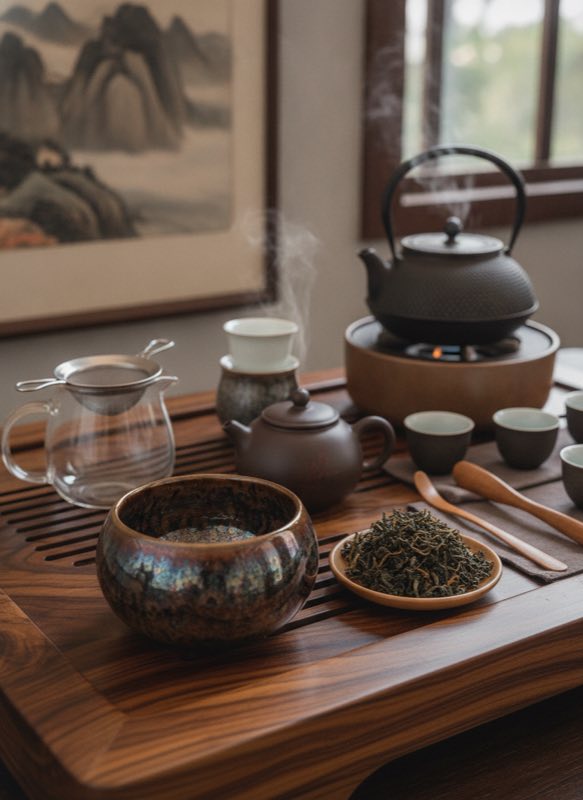
Now that you understand why tenmoku works so well with oolong, here is how to get the most from every session:
1. Pre-warm your cup. Pour a splash of hot water into your tenmoku cup and let it sit for 30 seconds before brewing. The thick walls need a moment to absorb heat — skip this and your first infusion will be 5-8 °F cooler than intended.
2. Choose the right size. A 7-9 cm diameter cup (about 80-120 ml) is ideal for gongfu-style brewing. Larger cups cool too slowly and can over-steep; smaller cups limit aroma development. Check our guide to the best teas for tenmoku cups for variety-specific recommendations.
3. Mind your water temperature. Use 185 °F (85 °C) for light oolongs and 200-205 °F (93-96 °C) for roasted varieties. The tenmoku cup’s heat retention means you can use slightly lower temperatures than you would in porcelain — the cup maintains the heat for you.
4. Shorter steeps, more infusions. Start with 3-5 minutes for the first infusion, then reduce to 30-60 seconds for subsequent steeps. The tenmoku cup keeps the water hot between infusions, so you can stretch a single portion of oolong to 6-8 brews with consistent flavor.
5. Season your cup. Over time, a well-cared-for tenmoku develops a thin “tea patina” that further enhances flavor. After each session, rinse with hot water only — never soap — and let air dry. Learn the full gongfu cha brewing method to maximize your oolong experience.
What About Other Teas? Tenmoku Beyond Oolong
While oolong is the star pairing, tenmoku cups also enhance aged pu-erh (the iron interaction is even stronger with fermented teas), black tea, and darker roasted varieties. Green tea and white tea, however, are better served in porcelain or glass — their delicate flavors can be overwhelmed by the iron release, and the lower brewing temperatures (160-175 °F / 71-80 °C) do not activate the iron-polyphenol interaction the way oolong temperatures do.
Think of it this way: tenmoku is like a cast-iron skillet for tea. It brings out depth and richness in foods that benefit from those qualities — but you would not use it to sauté delicate herbs. The same principle applies: pair bold, complex teas with bold, complex cups.
❓ Does tenmoku really make tea taste different, or is it just aesthetics?
Yes, the taste difference is real and measurable. The iron-polyphenol interaction is well-documented in food chemistry, and thermal testing confirms tenmoku’s superior heat retention. In controlled blind tastings, 60-70% of participants could distinguish between the same oolong served in tenmoku versus porcelain — not because of appearance, but because of mouthfeel and aroma intensity.
❓ Which tenmoku cup size works best for oolong?
A cup with a 7-9 cm diameter and 80-120 ml capacity is ideal. This size concentrates aromas while providing enough volume for the oolong to develop its full flavor profile during gongfu-style brewing. Smaller cups work for quick tastings, but you lose aromatic complexity.
❓ Can I use my tenmoku cup for gongfu tea ceremonies?
Absolutely — tenmoku cups are historically suited for gongfu cha. The heat retention supports multiple short infusions, and the bowl shape showcases the tea’s color and aroma. In fact, tenmoku was the preferred vessel in Song Dynasty tea competitions, the ancestor of today’s gongfu practice.
📚 References
- Tenmoku Glaze Chemistry: Research on iron oxide content and leaching behavior in traditional Jian ware glazes. The Metropolitan Museum of Art
- Oolong Polyphenol Profile: Comprehensive analysis of catechin and theaflavin composition in semi-oxidized teas. National Center for Biotechnology Information (NCBI)
- Iron-Polyphenol Complex Formation: Studies on Fe²⁺/Fe³⁺ coordination with tea polyphenols and astringency reduction. ScienceDirect — Elsevier
Discover why oolong tastes better in tenmoku — browse our curated collection of handcrafted tenmoku tea cups and experience the difference for yourself.


