

Contents
- Are the Air Holes in Jian Zhan Really Flaws?
- What Causes Air Holes in Jian Zhan Glaze
- Gas Evolution During Firing
- Iron Oxide Decomposition
- When Air Holes Are Normal vs. When They Indicate Problems
- The Cultural Perspective on Glaze Imperfections
- How to Evaluate Air Holes When Purchasing
- Key Stats: Jian Zhan Glaze Features
- ❓ FAQ: Jian Zhan Glaze Features
- ❓ Do air holes affect the food safety of my Jian Zhan?
- ❓ Can I fill the pinholes in my Jian Zhan?
- ❓ Are bowls with fewer pinholes higher quality?
- How Different Kiln Types Affect Air Hole Formation
Are the Air Holes in Jian Zhan Really Flaws?
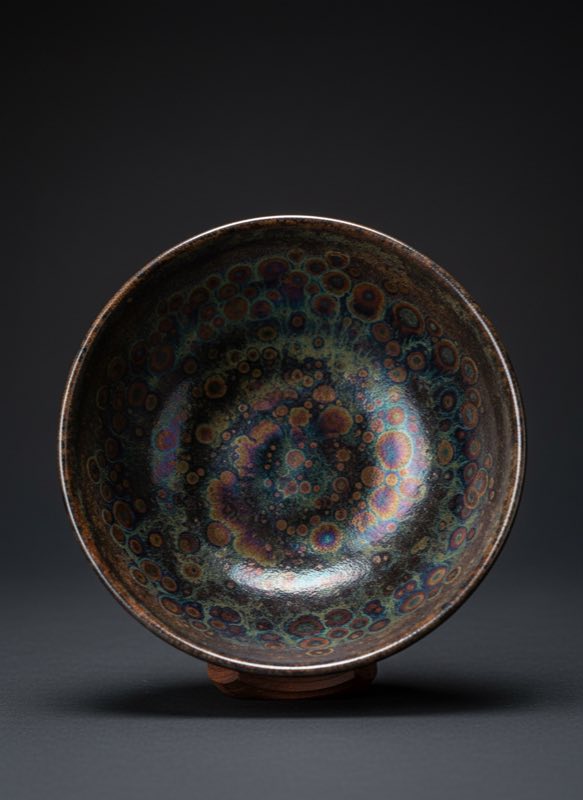
No, the small holes or pits you sometimes see on the surface of Jian Zhan (tenmoku) tea bowls are not flaws — they are natural features of the glaze formation process. If you have ever examined a Jian Zhan bowl closely and noticed tiny pits or bubbles in the glaze, you might have wondered whether the piece is defective. At Zen Tea Cup, we want you to understand the science behind these features so you can appreciate them rather than worry about them.
These surface features — technically called glaze bubbles, pinholes, or blister marks — are a normal result of the high-temperature firing process that creates tenmoku glaze. In fact, their presence often indicates that the bowl was genuinely high-fired in a traditional kiln, which is a mark of authenticity rather than a defect. The handmade tenmoku identification guide explains how these features help distinguish authentic pieces from factory imitations.
What Causes Air Holes in Jian Zhan Glaze
The formation of air holes in tenmoku glaze involves several chemical and physical processes that occur during firing:
Gas Evolution During Firing
As the glaze melts at temperatures above 2280°F (1250°C), gases trapped within the clay body and glaze layer expand and attempt to escape. These gases come from several sources: moisture in the clay that converts to steam, carbon compounds from organic material in the clay that decompose, and air trapped in microscopic pores during the glazing process. When these gas bubbles rise through the molten glaze, they create small craters on the surface. If the glaze is sufficiently fluid, it flows back and fills these craters. If the glaze is more viscous (which is common in iron-rich tenmoku formulations), the craters may remain as visible pinholes.
Iron Oxide Decomposition
The high iron oxide content in tenmoku glaze (5-8% by weight) contributes to gas evolution. At temperatures above 2200°F (1200°C), some iron compounds release oxygen as they decompose and re-crystallize. This oxygen creates bubbles within the glaze layer. The size and distribution of these bubbles depend on the firing temperature, the rate of temperature increase, and the specific iron compounds present in the glaze formula.
When Air Holes Are Normal vs. When They Indicate Problems
Not all surface irregularities are created equal. Here is how you can distinguish between normal features and genuine defects:
Normal features: Small pinholes (0.5-2 mm diameter) scattered randomly across the glaze surface, particularly near the foot ring where the glaze is thickest. These are expected and acceptable. They do not affect the structural integrity or food safety of the bowl.
Acceptable variations: Slightly larger pits (2-4 mm) on the exterior surface, especially near the base. These occur because the exterior glaze is often applied thinner and may not self-level as effectively as the interior glaze.
Potential concerns: Large craters (over 4 mm) on the interior surface where tea contacts the bowl. While not necessarily a food safety issue if the underlying clay is fully vitrified, these can trap tea residue and make cleaning more difficult. The new tenmoku owner guide provides cleaning tips for textured glaze surfaces.
Actual defects: Crazing (a network of fine cracks in the glaze), shivering (glaze flaking off), or crawling (glaze pulling away from the clay in large patches). These indicate a mismatch between the clay body and glaze expansion coefficients and are genuine quality issues.
The Cultural Perspective on Glaze Imperfections
In Japanese and Chinese tea culture, minor glaze irregularities are not just tolerated — they are valued. The aesthetic concept of wabi-sabi (侘寂) finds beauty in imperfection, impermanence, and incompleteness. A Jian Zhan bowl with a few pinholes tells the story of its creation — the intense heat of the kiln, the flow of the molten glaze, the crystallization of iron oxide into patterns. Each small irregularity is a record of the physical processes that made the bowl unique.
This perspective contrasts sharply with the Western expectation of factory-perfect uniformity. Mass-produced bowls achieve surface perfection by using simplified glaze formulas fired in controlled electric kilns, but they sacrifice the organic variation and depth that make handmade tenmoku compelling. The handmade vs mass-produced comparison explores this trade-off in detail.
How to Evaluate Air Holes When Purchasing
When you are shopping for Jian Zhan, use these guidelines to assess surface features:
Run your fingertip over the surface. Normal pinholes feel like tiny dimples — shallow and smooth-edged. If a hole feels sharp or deep enough to catch your fingernail, it may be a genuine defect.
Check the interior specifically. The interior surface (where tea contacts the glaze) should be relatively smooth. A few small pinholes are fine, but you should avoid bowls with numerous or large pits on the drinking surface.
Consider the overall glaze quality. A bowl with stunning oil spot or hare’s fur patterns and a few minor pinholes is far more valuable than a bowl with a perfect but plain glaze surface. The patterns are what make tenmoku extraordinary; the pinholes are incidental.
Ask the seller. Reputable dealers understand these features and can explain which are normal for their specific pieces. If a seller cannot distinguish between normal glaze features and actual defects, find a more knowledgeable source. The tenmoku beginner guide lists trusted sources and evaluation criteria.
Key Stats: Jian Zhan Glaze Features
| Feature | Size Range | Classification |
|---|---|---|
| Pinholes | 0.5-2 mm | Normal, expected |
| Small pits | 2-4 mm | Acceptable variation |
| Large craters | 4+ mm | Potential concern |
| Crazing | Network of cracks | Defect |
| Crawling | Bare patches | Defect |
❓ FAQ: Jian Zhan Glaze Features
❓ Do air holes affect the food safety of my Jian Zhan?
No, as long as the underlying clay is fully vitrified (fired above 2280°F / 1250°C), small pinholes do not compromise food safety. The vitrified clay beneath the glaze is non-porous and inert. However, if you notice crazing (crack networks) in the glaze, you should discontinue food use, as crazing can harbor bacteria.
❓ Can I fill the pinholes in my Jian Zhan?
You should not attempt to fill or repair glaze pinholes. Any filler material would likely be incompatible with the glaze surface and could introduce food safety concerns. Instead, embrace these features as part of your bowl’s unique character. With regular use and proper care, tea oils gradually fill the smallest pinholes naturally, creating a smoother surface over time. The tenmoku collection includes care instructions for developing this natural patina.
❓ Are bowls with fewer pinholes higher quality?
Not necessarily. Pinhole frequency depends on the specific glaze formula, firing conditions, and kiln type — not on the artisan’s skill. A master potter using a traditional high-iron glaze in a wood kiln may produce bowls with more pinholes than a beginner using a simplified formula in an electric kiln. Quality in tenmoku is measured by the beauty and clarity of the glaze patterns, not by surface smoothness.
📚 References
– Mowry, R. D. (1996). “Hare’s Fur, Tortoiseshell, and Partridge Feathers.” Harvard University Art Museums. metmuseum.org
– ScienceDirect. “Glaze Defects in High-Iron Ceramics.” sciencedirect.com
– Victoria and Albert Museum. “Ceramic Glaze Technology.” vam.ac.uk
How Different Kiln Types Affect Air Hole Formation
The type of kiln used to fire your Jian Zhan significantly affects the number and character of surface pinholes. Understanding these differences helps you set realistic expectations and make informed purchasing decisions.
Wood-fired kilns. Wood firing produces the most variable atmosphere inside the kiln, with frequent fluctuations between oxidation and reduction. These fluctuations cause the glaze to melt and re-solidify multiple times during the firing cycle, which can trap gas bubbles at various stages. Wood-fired Jian Zhan typically shows the most surface variation, including pinholes, ash deposits, and color variations. These features are considered desirable by collectors because they demonstrate the dynamic, unpredictable nature of the firing process.
Gas-fired kilns. Gas kilns offer more atmospheric control than wood kilns but still allow for reduction firing. The more consistent atmosphere means fewer dramatic fluctuations in glaze melting, resulting in somewhat fewer pinholes than wood-fired pieces. Gas-fired tenmoku strikes a balance between the organic character of wood firing and the consistency of electric firing.
Electric kilns. Electric kilns fire in a purely oxidizing atmosphere with very consistent temperature control. This consistency minimizes gas evolution and produces the fewest surface pinholes. However, electric kilns cannot achieve the reduction atmosphere necessary for the most dramatic oil spot and hare’s fur patterns. The trade-off is clear: fewer pinholes but less spectacular glaze effects.
The firing temperature also matters. Pieces fired at the higher end of the range (2350-2400°F / 1290-1320°C) tend to have fewer pinholes because the glaze is more fluid and can self-level more effectively. Pieces fired at the lower end (2280-2330°F / 1250-1280°C) may show more pinholes but also tend to have more defined crystallization patterns because the slower cooling allows larger crystals to form.
Practical advice for buyers. If you prioritize surface smoothness, look for gas or electric-fired pieces. If you prioritize the most dramatic and authentic glaze patterns, choose wood-fired pieces and accept the surface variation as part of the package. The tenmoku selection guide helps you navigate these trade-offs based on your preferences and budget.
Appreciate the character of authentic tenmoku — explore Zen Tea Cup’s Jian Zhan collection where every feature tells a story.


