

Contents
- Why Proper Care Matters for Your Jian Zhan Tea Cup
- What Happens If You Use Soap on a Tenmoku Tea Bowl?
- What About Toothpaste for Stubborn Stains?
- Daily Cleaning Routine: 60 Seconds After Every Brew
- Monthly Deep Clean: Removing Tea Stains Without Damaging the Glaze
- How to Season a New Jian Zhan Cup Before First Use
- Storing Your Tenmoku Tea Cup to Prevent Damage
- Common Mistakes That Damage Jian Zhan Glaze
- Does Water Quality Affect Your Jian Zhan Patina?
- ❓ Frequently Asked Questions
- Can I put my Jian Zhan tea cup in the dishwasher?
- How often should I deep-clean my Tenmoku tea bowl?
- Why does my new Jian Zhan have an earthy smell?
- Can I use my Jian Zhan cup for different types of tea?
- ❓ How do I know if my tenmoku cup is authentic?
- ❓ Can I use tenmoku cups every day?
- ❓ What tea tastes best in tenmoku?
- 📚 References
Why Proper Care Matters for Your Jian Zhan Tea Cup
A Jian Zhan tea cup is a living piece of craft — its iron-rich glaze actually improves with regular use, developing a deeper patina that tea drinkers prize. But use the wrong cleaning method even once, and you can strip that hard-earned finish or leave residue that alters your next brew. At ZenTeaCup, we have worked with kiln masters in Jianyang for years, and we have seen firsthand how a simple care routine keeps a Tenmoku tea bowl looking stunning for decades.
The good news? Caring for your Jian Zhan is not complicated. It takes about 60 seconds after each session and a slightly deeper clean once a month. This guide walks you through every step — from daily rinsing to long-term preservation — so your cup only gets better with age.
What Happens If You Use Soap on a Tenmoku Tea Bowl?
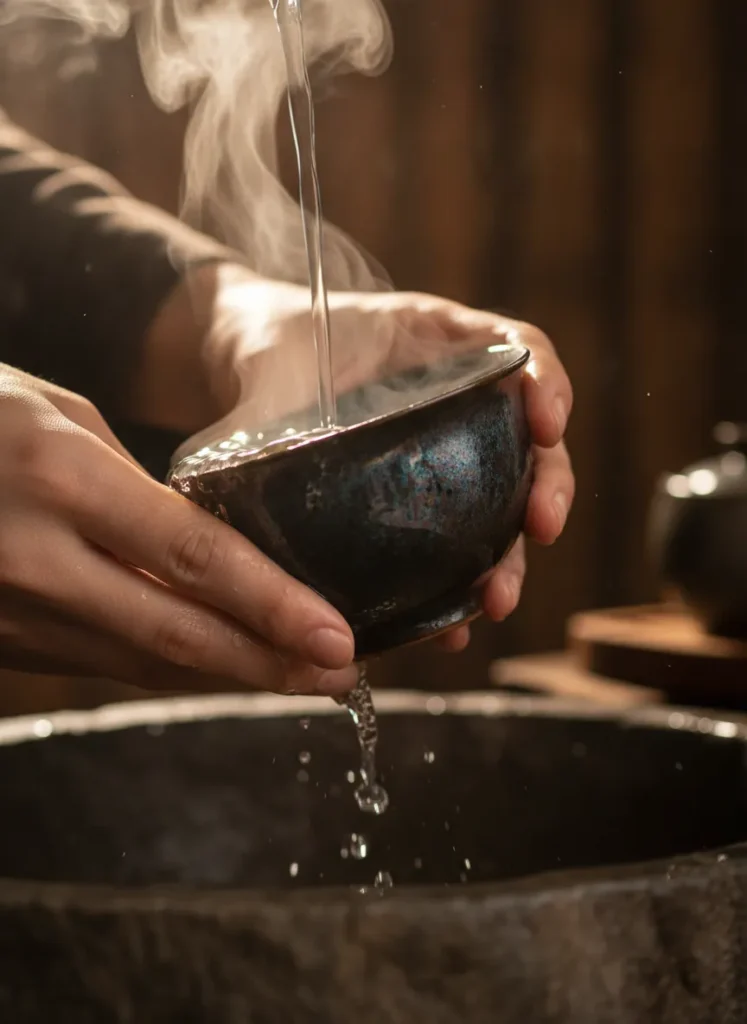
Never use dish detergent, soap, or any chemical cleaner on your Jian Zhan tea cup. The iron glaze on a Tenmoku tea bowl is porous at a microscopic level — that is exactly what allows it to develop a patina and interact with your tea. Detergents seep into those pores, leave behind residue, and gradually strip the glaze’s natural sheen. Even a single wash with soap can undo weeks of careful seasoning.
Instead, stick to hot water and gentle physical cleaning. This is the single most important rule of Jian Zhan care, and every experienced gongfu tea drinker follows it. If you have ever noticed a soapy aftertaste in your tea, detergent residue in the glaze is almost certainly the culprit.
What About Toothpaste for Stubborn Stains?
Some guides suggest using a tiny amount of toothpaste on a soft cloth to remove tough tea stains. This can work on smooth porcelain, but we recommend caution with Jian Zhan. Toothpaste contains mild abrasives that can micro-scratch the iron glaze surface over time. If you do use it, apply the smallest amount possible, rub gently for no more than 10 seconds, and rinse thoroughly with hot water immediately after.
Daily Cleaning Routine: 60 Seconds After Every Brew
After each tea session, follow this simple four-step routine. It takes less than a minute and keeps your cup in peak condition:
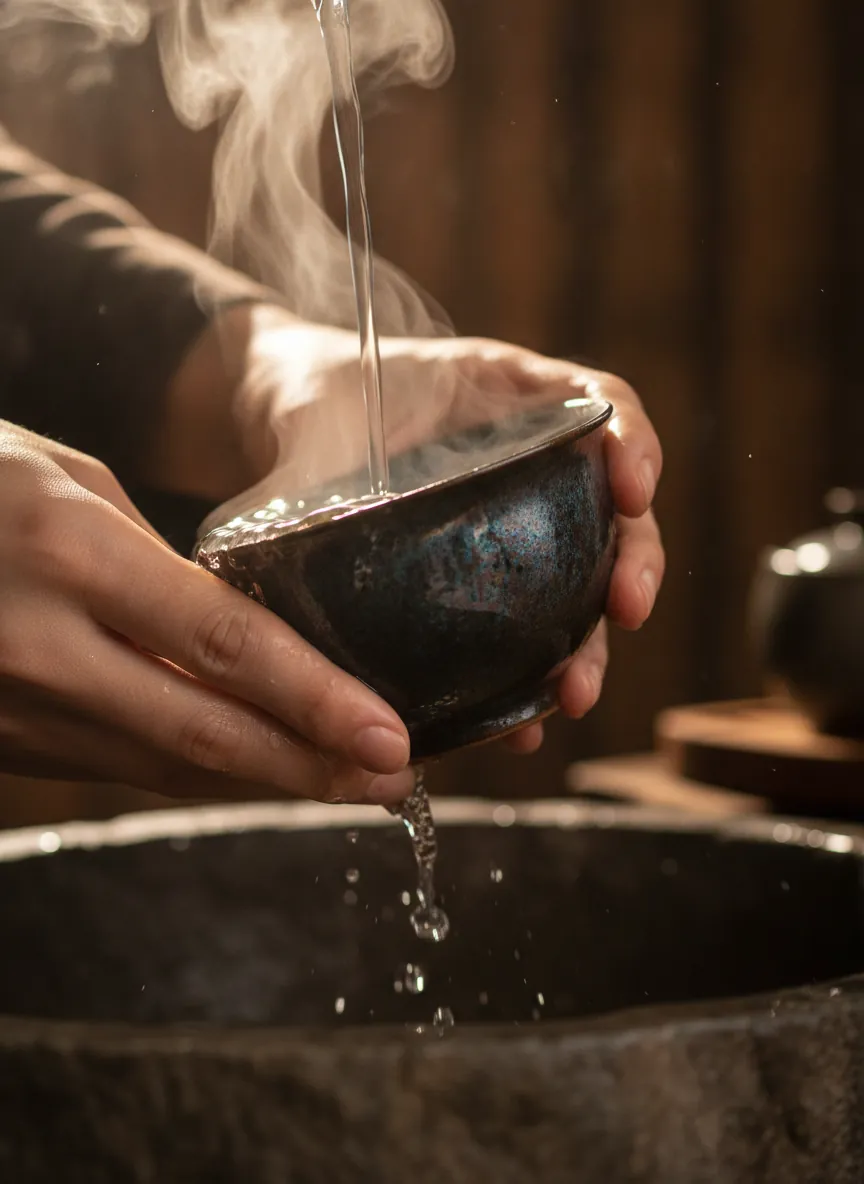
- Rinse immediately — Run warm water (around 140–160°F / 60–70°C) through the cup right after your last pour. Do not let tea residue dry inside; dried tannins are much harder to remove.
- Wipe the interior — Use your fingers or a soft bamboo brush to gently rub the inside surface. The warmth of the water combined with light friction removes most residue.
- Rinse the exterior — Give the outside a quick rinse to remove any drips or fingerprints. The glaze on the outside is just as important to preserve.
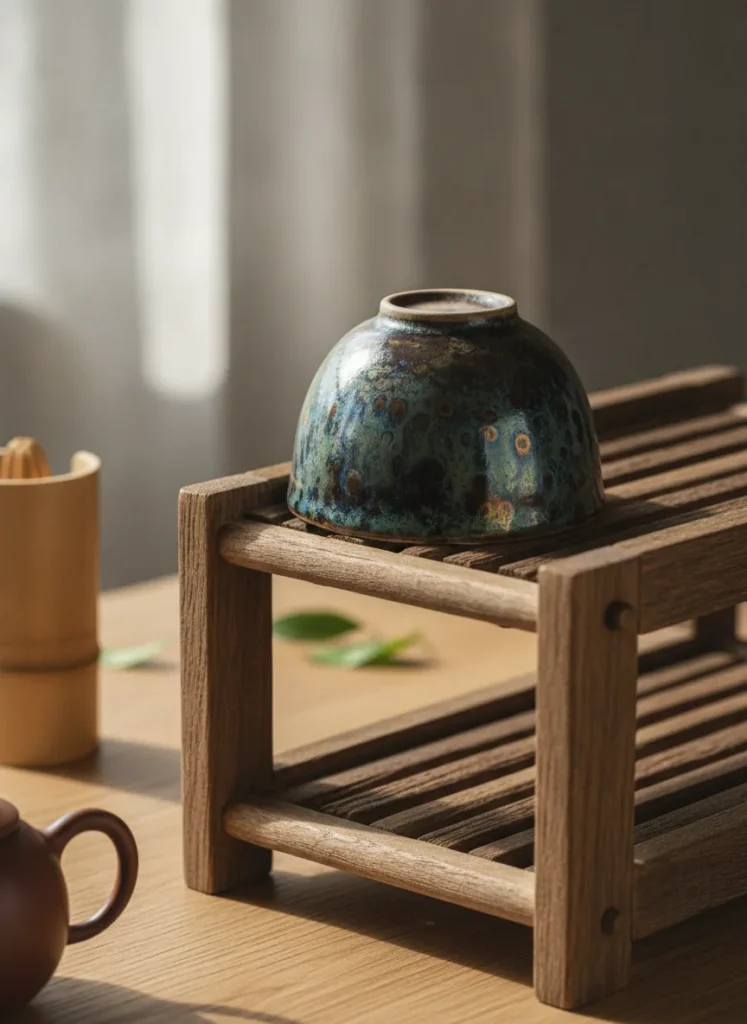
- Air dry completely — Place the cup upside down on a clean drying rack or soft cloth. Do not store it until it is fully dry; trapped moisture can cause water spots on the iron glaze.
That is it. No soap, no scrubbing, no soaking. Just hot water and a gentle touch. Over weeks and months, this routine is exactly what builds the glossy patina that makes a well-cared-for Jian Zhan so beautiful.
Monthly Deep Clean: Removing Tea Stains Without Damaging the Glaze
Even with perfect daily care, tea tannins will slowly build up inside your cup, creating a brownish film. This is normal and actually harmless — many tea drinkers consider it part of the cup’s character. But if the staining becomes heavy enough to hide the glaze pattern, here is how to clean it safely:
- Soak in hot water — Fill the cup with near-boiling water (200°F / 93°C) and let it sit for 15–20 minutes. This softens the tannin layer.
- Gently scrub with a soft sponge — Use only the soft side of a kitchen sponge (never the abrasive side). Work in small circular motions on the stained areas.
- For stubborn stains, try baking soda — Make a thin paste of baking soda and water, apply it to the stain, and rub gently with a soft cloth for 30 seconds. Rinse thoroughly with hot water immediately.
- Final rinse and dry — Run hot water through the cup for 30 seconds to remove any baking soda residue, then air dry upside down.
A monthly deep clean is usually enough for cups used daily. If you only brew a few times a week, you can stretch this to every 6–8 weeks.
How to Season a New Jian Zhan Cup Before First Use
Before you brew your first pot of tea in a brand-new Jian Zhan, take a few minutes to prepare it. Seasoning removes manufacturing dust and helps the glaze begin its patina journey:
- Rinse with boiling water three times — Pour boiling water into the cup, swirl for 5 seconds, and discard. Repeat twice more. This removes dust, kiln residue, and any “earthy smell” that new Jian Zhan sometimes has.
- Optional: soak in tea — Fill the cup with strong black tea or pu-erh and let it sit for 1–2 hours. Some tea drinkers believe this jump-starts the patina process. Discard the tea and rinse with hot water.
- Air dry — Let the cup dry completely before your first real brew.
We have found that the boiling-water rinse alone is sufficient for most cups. The tea soak is a traditional practice that many of our customers enjoy, but it is not strictly necessary. What matters most is that you never skip the initial rinse — kiln dust and packaging residue can affect your first few brews if left unchecked.
Storing Your Tenmoku Tea Cup to Prevent Damage
Proper storage prevents the two most common forms of Jian Zhan damage: rim chipping and glaze scratching. Here are the key rules:
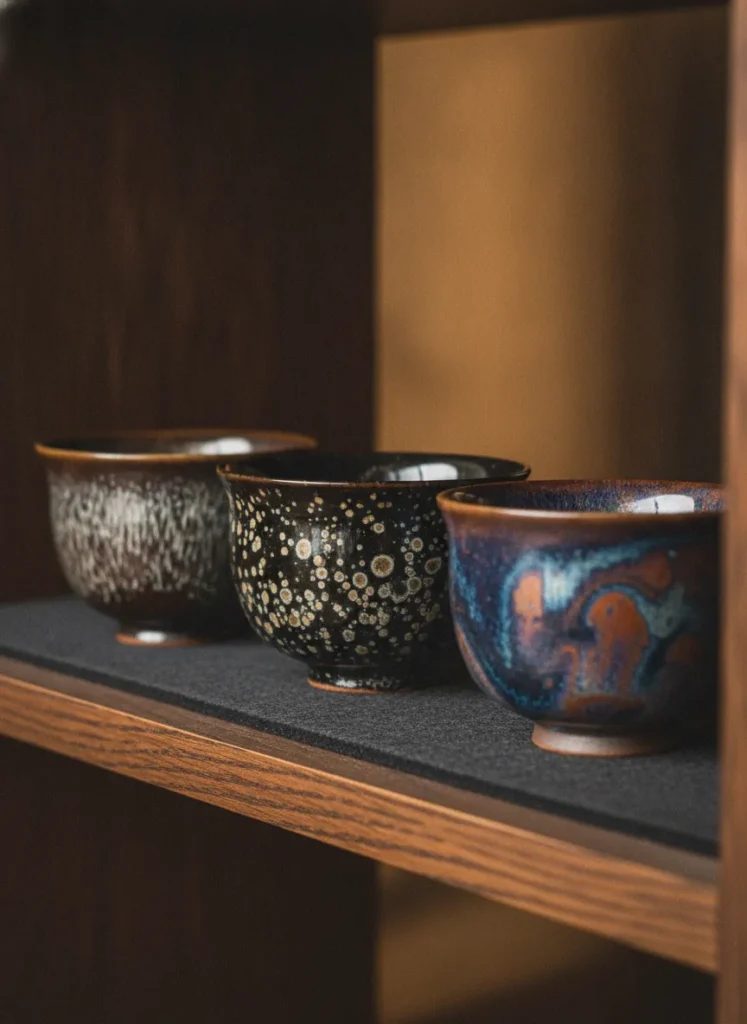
- Store each cup separately — Never stack Jian Zhan cups on top of each other. The rim is the most fragile part, and even light contact between rims can cause tiny chips.
- Use a padded surface — Place the cup on a soft cloth, felt pad, or wooden shelf. Avoid hard ceramic or glass surfaces that can scratch the foot ring (base) of the cup.
- Keep it dry — Always store the cup completely dry. Any lingering moisture can cause water marks or, in humid climates, encourage mold in the unglazed foot ring.
- Avoid sealed containers — Do not store your cup in an airtight box or plastic bag. The iron glaze benefits from air circulation. A ventilated cabinet or open shelf is ideal.
- Display it proudly — Jian Zhan cups are works of art. Storing them on an open shelf where they get gentle, indirect light is perfectly fine — and lets you enjoy them even when you are not brewing.
If you need to transport your cup, wrap it in a soft cloth and place it in a rigid container. The thin walls of a Jian Zhan (typically 0.08–0.12 inches / 2–3 mm) make it more vulnerable to impact than thicker stoneware.
Common Mistakes That Damage Jian Zhan Glaze
After helping thousands of tea lovers care for their Tenmoku teaware, these are the mistakes we see most often:
| Mistake | What Happens | Correct Approach |
|---|---|---|
| Using dish soap | Strips patina, leaves residue in glaze pores | Hot water only — every time |
| Scrubbing with abrasive pads | Micro-scratches dull the glaze surface | Soft sponge, bamboo brush, or fingers |
| Putting it in the dishwasher | High-pressure jets + detergent = glaze damage | Always hand-wash with warm water |
| Stacking cups | Rim chips and scratches | Store separately on padded surfaces |
| Leaving tea to dry inside | Stubborn tannin stains that are hard to remove | Rinse immediately after each session |
| Using bleach or chemical cleaners | Permanently damages the iron glaze | Baking soda paste for tough stains only |
The easiest mistake to make is also the most damaging: reaching for dish soap because it feels “more hygienic.” With Jian Zhan, the porous iron glaze is the whole point — it is what makes the cup interact with your tea and develop character. Treating it like regular dishware defeats that purpose. Think of your Jian Zhan more like a cast-iron skillet: the “seasoning” is a feature, not something to scrub away.
Does Water Quality Affect Your Jian Zhan Patina?
Yes — the water you brew with directly influences how your cup’s patina develops over time. Hard water (high in calcium and magnesium) tends to leave white mineral deposits on the glaze, while soft water produces a cleaner, more even patina. If you live in an area with hard water (common across much of the United States), you may notice a faint white film building up inside your cup.
To manage this:
- Rinse with filtered or distilled water for the final rinse after each session. This prevents mineral deposits from accumulating.
- Descale monthly if you see white buildup: soak the cup in a 50/50 mix of warm water and white vinegar for 10 minutes, then rinse thoroughly with hot water. Use this method sparingly — no more than once a month.
- Consider a water filter for your brewing water. A simple countertop filter reduces hardness and improves both your tea flavor and your cup’s long-term appearance.
This is a detail that most care guides overlook, but it makes a noticeable difference — especially if you are brewing daily and want that patina to develop evenly.
❓ Frequently Asked Questions
Can I put my Jian Zhan tea cup in the dishwasher?
No. Dishwashers use high-pressure water jets, harsh detergents, and high heat — all three will damage the iron glaze. Always hand-wash your Jian Zhan with warm water only.
How often should I deep-clean my Tenmoku tea bowl?
For daily use, a deep clean once a month is sufficient. If you brew only a few times a week, every 6–8 weeks is fine. The brown tannin film inside is normal and does not harm the cup or your tea.
Why does my new Jian Zhan have an earthy smell?
This is completely normal and comes from kiln residue in the porous clay. Rinsing three times with boiling water before first use removes it. If the smell lingers, soak the cup in hot tea for 1–2 hours, then rinse.
Can I use my Jian Zhan cup for different types of tea?
Yes, but many tea drinkers dedicate each cup to one tea type (such as oolong or pu-erh) to let the patina develop a consistent character. Switching between teas will not damage the cup — it just means the patina will be more mixed. Learn more about pairing teas with your cup in our guide to the best teas for a Tenmoku cup.
❓ How do I know if my tenmoku cup is authentic?
Look for an unglazed foot ring showing dark iron-rich clay, metallic luster that shifts with viewing angle, and subtle asymmetry from hand-forming. See the handmade tenmoku identification guide for a detailed checklist.
❓ Can I use tenmoku cups every day?
Yes. Authentic high-fired tenmoku is designed for daily tea drinking and is completely food safe. Daily use actually helps develop the glaze patina that collectors prize. The new tenmoku owner guide covers daily care routines.
❓ What tea tastes best in tenmoku?
Oolong and aged pu-erh are the classic pairings. The iron-rich glaze softens tannins and enhances aroma. Read the oolong-tenmoku pairing guide for the science behind this.
📚 References
- Jian Ware and Song Dynasty Tea Culture: Historical overview of Jian kiln ceramics and their significance in Chinese tea tradition. The Metropolitan Museum of Art
- Lead and Cadmium Safety Standards for Ceramic Tableware: FDA guidance on heavy metal limits in ceramic foodware, relevant to confirming food-safe glazes. U.S. FDA
- Ceramic Glaze Care and Maintenance: Conservation guidelines for preserving ceramic surfaces and glazes in domestic use. Victoria and Albert Museum (V&A)
Want to experience the difference a tenmoku cup makes? Shop the Zen Tea Cup collection and find your perfect match.
Elevate your tea experience? Browse Zen Tea Cup for authentic tenmoku cups and curated collections.


