

When you display your Jian Zhan collection, you’ve been collecting Jian Zhan tea cups, you already know they’re too beautiful to keep in a cabinet. The iron-rich glaze, the shifting oil-spot patterns, the deep hare’s-fur streaks — each Tenmoku bowl deserves a spot where light can catch it and guests can admire it. After helping thousands of tea lovers at ZenTeaCup find their perfect cups, we’ve learned a thing or two about showing off a Jian Zhan collection without looking cluttered or risking damage. Here’s a room-by-room guide to displaying your Tenmoku teaware so it stays safe, looks stunning, and even invites you to brew more often.
| Key Stat | Value |
|---|---|
| Optimal display humidity | 40-60% RH |
| Recommended light level | 50-100 lux (LED) |
| Display shelf depth | 6-8 inches (15-20 cm) |
| Safe viewing distance | 12-18 inches (30-46 cm) |
| Jian Zhan firing temperature | 2280-2370F (1250-1300C) |
| Typical cup height | 2.4-3.5 inches (6-9 cm) |
Contents
- Why Displaying Jian Zhan Is Different from Ordinary Teacups
- Choosing the Right Display Location for Your Tenmoku Collection
- Best Rooms for Jian Zhan Display
- What to Avoid: Direct Sunlight and Steam
- 5 Display Methods That Showcase Glaze Patterns Beautifully
- How to Light Your Jian Zhan Display for Maximum Impact
- Arranging by Glaze Pattern: Grouping Strategies That Work
- By Glaze Type
- By Size and Shape
- By Color Temperature
- Protecting Your Collection: Dust, Accidents, and Long-Term Care
- Dust Management
- Earthquake and Accident Prevention
- Seasonal Rotation
- Creating a Tea Ceremony Corner: When Display Meets Daily Use
- ❓ Frequently Asked Questions
- Can You Display Jian Zhan Cups Without Stands?
- How Do I Keep Dust Off Open-Shelf Jian Zhan?
- Is It Safe to Hang Jian Zhan Cups on Wall Hooks?
- What Background Color Makes Tenmoku Glaze Patterns Stand Out?
- 📚 References
Why Displaying Jian Zhan Is Different from Ordinary Teacups
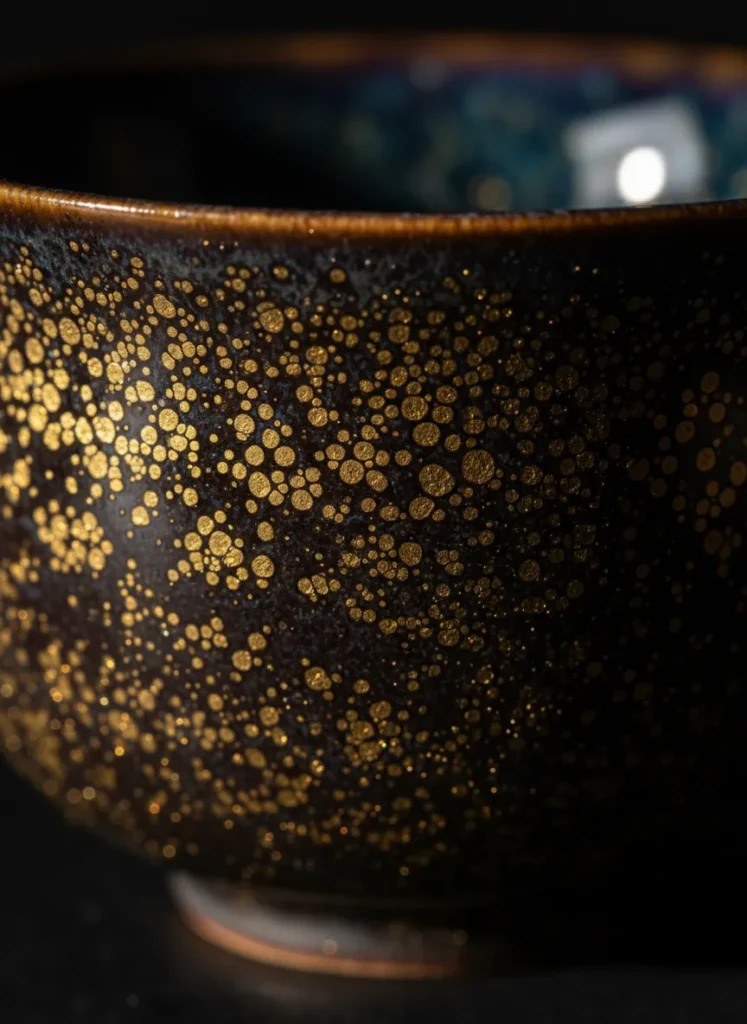
Jian Zhan tea cups demand a different display approach than standard porcelain or ceramic mugs because their glaze effect changes with light and angle. An oil-spot (Yuteki) pattern that looks nearly black under kitchen fluorescents reveals metallic gold droplets under warm directional light. A Yao Bian cup shifts between blue and purple depending on where you stand. This means your display strategy needs to prioritize lighting and viewing angle — two factors most generic teacup display guides ignore.
Beyond aesthetics, Jian Zhan’s iron-rich stoneware body (FeO content 15–30%) makes each cup heavier than typical porcelain — roughly 80–150 grams for a standard 4 oz (120 ml) cup. That weight is a plus for stability on open shelves, but it also means a fall from height can chip or crack the foot rim. A display plan that accounts for both visual impact and physical safety is essential.
Choosing the Right Display Location for Your Tenmoku Collection
Where you place your Jian Zhan matters more than how you arrange them. The right spot balances three factors: light quality, humidity control, and daily accessibility.
Best Rooms for Jian Zhan Display
Not every room is equally suited. Here’s a quick comparison:
| Room | Light Quality | Humidity Risk | Best For |
|---|---|---|---|
| Living Room | Great — natural + accent light options | Low | Primary display area, conversation starter |
| Home Office / Study | Good — desk lamp accent lighting | Low | Small curated group, tea-tasting desk |
| Dining Room | Good — overhead chandelier works well | Low | Tea ceremony setup, seasonal rotation |
| Kitchen | Varies — often too harsh | Medium (steam, grease) | Daily-use cups only, not collectibles |
| Bathroom | Poor — no direct light on cups | High (condensation) | Avoid — moisture damages unglazed foot |
We recommend the living room as the primary display space. It’s where guests gather, where natural light tends to be best, and where humidity stays stable. A dedicated shelf or cabinet in the living room lets your Tenmoku collection serve double duty: functional art and conversation piece.
What to Avoid: Direct Sunlight and Steam
While Jian Zhan loves good light, prolonged direct sunlight is harmful. UV rays won’t damage the glaze itself (it was fired at 1300°C), but they can fade any wooden display stands, lacquer trays, or fabric backdrops you pair with your cups. More importantly, the dramatic temperature swings from sunlight hitting a dark glaze surface can stress the unglazed foot rim over years of exposure. Keep your collection in indirect natural light supplemented by warm LED accent lights (2700K–3000K) for the best effect.
Steam is the silent enemy. The unglazed foot of a Jian Zhan cup is porous iron-rich clay that absorbs moisture. A bathroom or directly above a stovetop means repeated steam exposure, which can slowly darken the foot and even encourage mineral deposits. If a cup’s foot rim develops white crusty spots after months in a humid spot, that’s mineral buildup — not mold, but not ideal either.
5 Display Methods That Showcase Glaze Patterns Beautifully
Here are five proven ways to display a Jian Zhan collection, each chosen to highlight the unique properties of Tenmoku glaze:
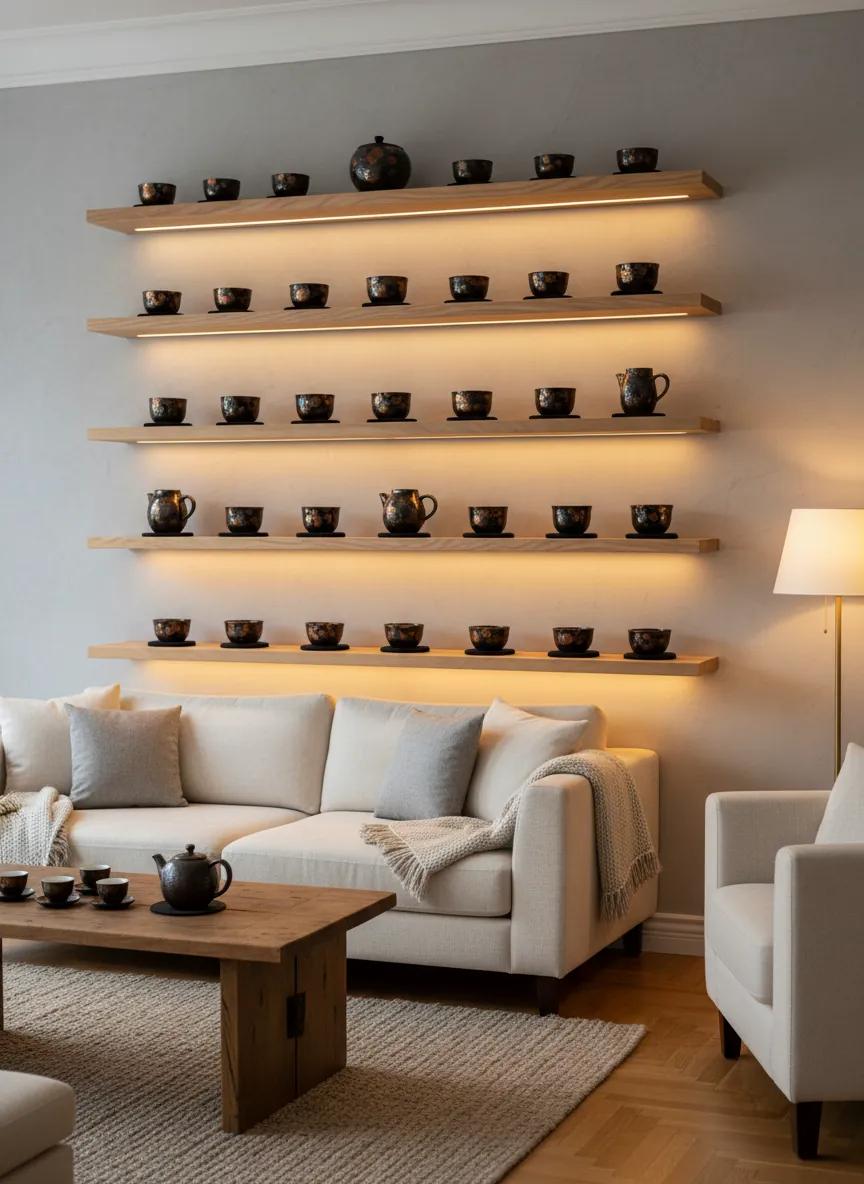
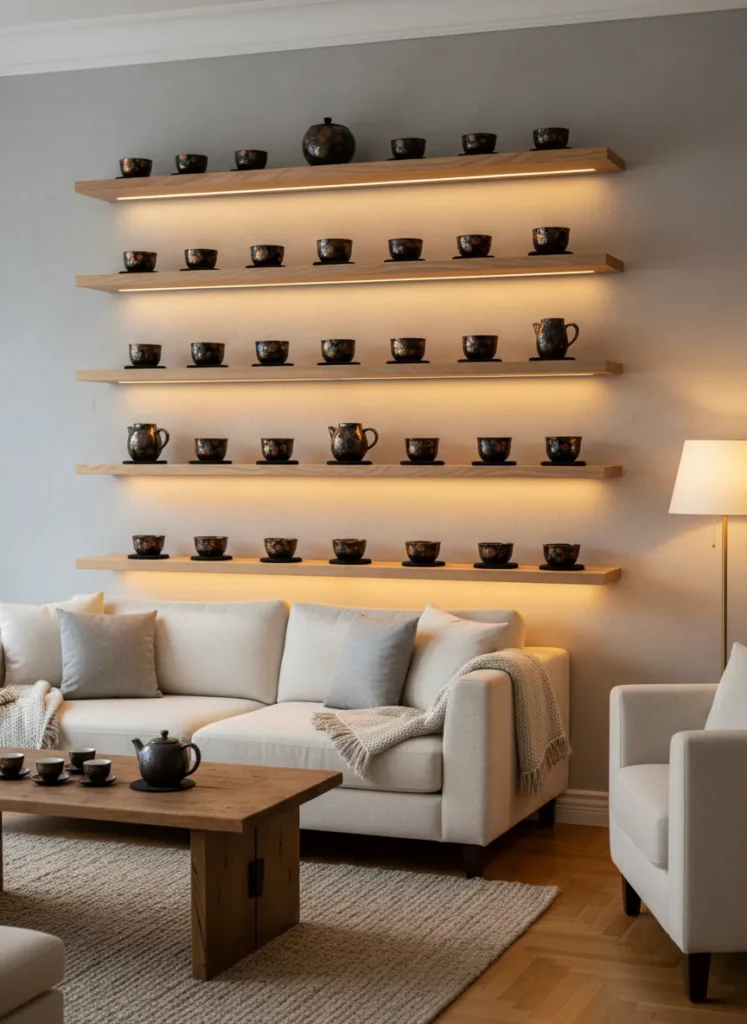
- Open Floating Shelves with LED Tape Light: Mount 6–8 inch deep floating shelves at eye level (about 54–60 inches from the floor). Run a warm-white LED strip along the back edge of each shelf. The light rakes forward across the cup interiors, making oil-spot and hare’s-fur patterns shimmer. Space cups 3–4 inches apart so each piece breathes. This is the single most effective setup we’ve seen — and the one we use for our own ZenTeaCup tea cup collection photography.
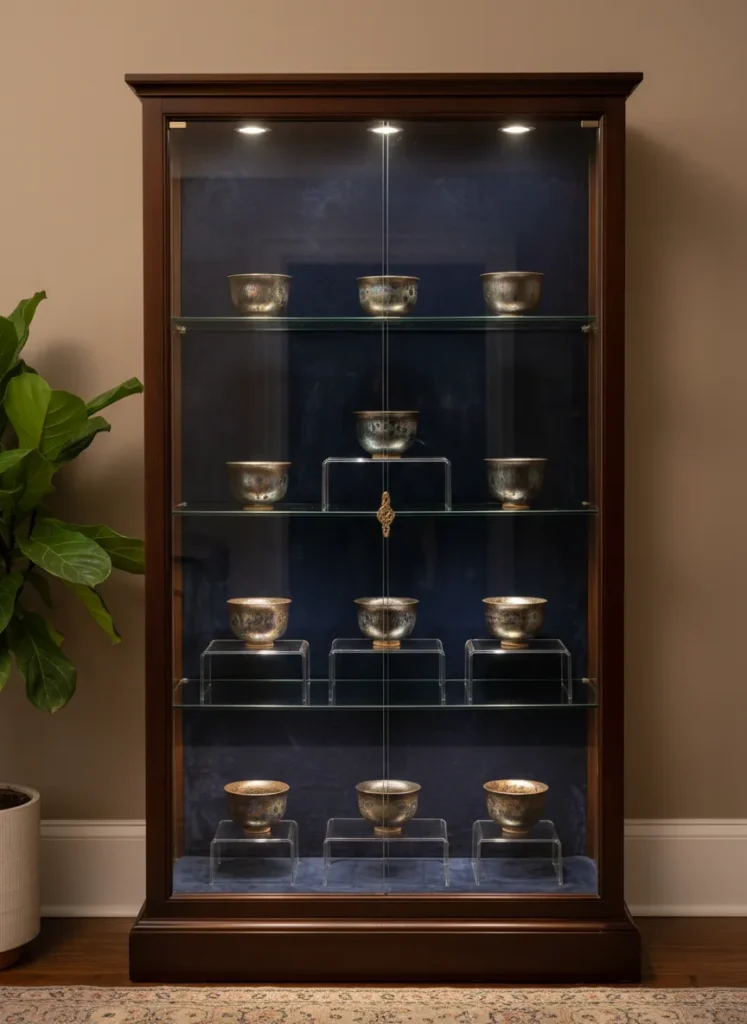
- Glass-Front Curio Cabinet: A curio or china cabinet with glass doors protects cups from dust while keeping them visible. Line the interior with a dark felt or velvet backing (charcoal or navy) — dark backgrounds make the metallic glaze effects pop dramatically. Install a small interior LED puck light at the top for dramatic downlighting. This method works best for collections of 8+ cups that deserve a dedicated stage.
- Individual Wooden Display Stands on a Sideboard: Place each cup on its own carved wooden stand (available for $8–15 on Amazon or tea specialty shops) along a sideboard or console table. The stand elevates the cup about 1.5 inches and tilts it slightly forward, making the interior glaze visible even from across the room. Group by glaze type — all oil-spot cups together, all hare’s-fur together — for visual cohesion.
- Wall-Mounted Cup Hooks (for Everyday Cups): Install decorative cup hooks beneath upper kitchen cabinets or along a wooden rail. Hang cups by their rim with the interior facing out. This works beautifully for your daily-use Jian Zhan — the ones you reach for every morning. It keeps them accessible and air-dried between uses. Just avoid this for your most valuable collectibles, since rim contact with metal hooks can wear the glaze over years.
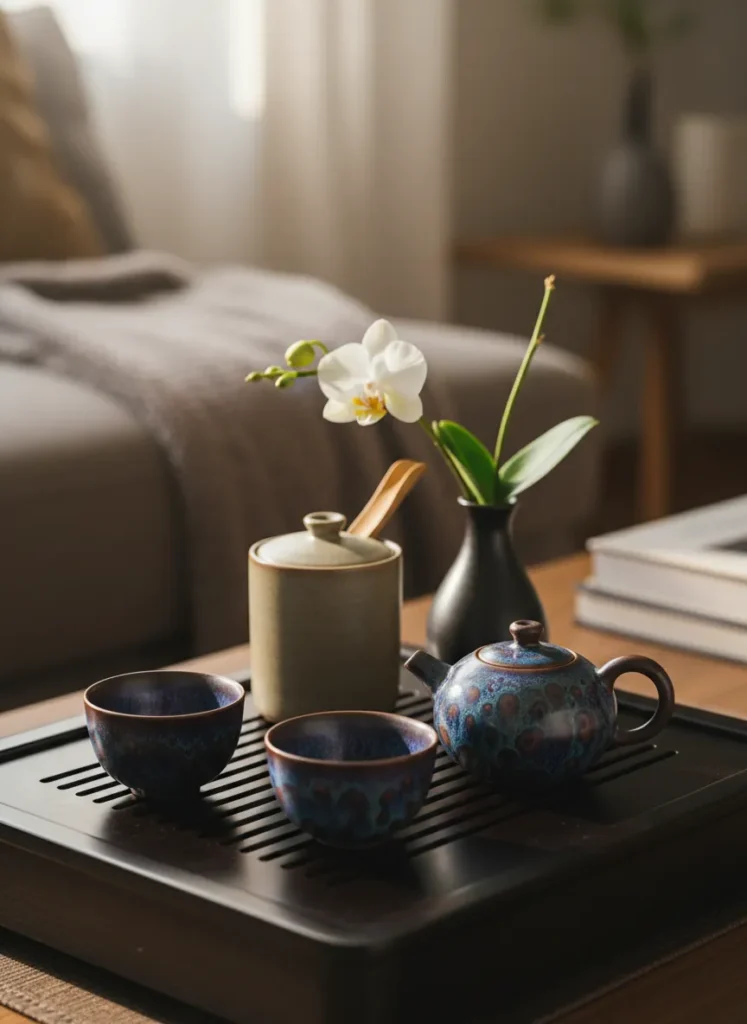
- Tea Tray Vignette: Create a small “tea station” on a tray — one star cup, a matching teapot, a bamboo scoop, and a tea caddy. This isn’t a mass display but a living scene that invites use. Rotate the star cup weekly so every piece in your collection gets its moment. We’ve found this approach turns a static collection into an active tea practice.
How to Light Your Jian Zhan Display for Maximum Impact
Lighting is the single most underrated element of ceramic display. Without the right light, even the most stunning oil-spot glaze looks flat and dark. With it, every cup becomes a miniature light show.
The key principle: raking light at a low angle reveals glaze texture. Overhead light shines straight down into the cup, which illuminates the interior evenly but flattens the three-dimensional quality of the glaze crystals. Light that comes from the side (or back) at roughly 30–45 degrees skims across the glaze surface, catching every metallic droplet and crystal ridge.
Here’s a simple lighting setup that works:
- Primary light: Warm-white LED tape (2700K) mounted along the back edge of each shelf, aimed forward and slightly down at about 30 degrees.
- Accent light: A small LED puck light or spot aimed from the side for cross-lighting. This is what makes the metallic oil-spot droplets “flash” as you walk past.
- Avoid: Cool-white bulbs (4000K+), which make the dark glaze look flat and gray. Fluorescent tubes, which create harsh reflections on the glossy glaze surface.
If you display cups in a glass cabinet, place a single LED puck light at the top center of the interior. The downlight naturally rakes across the cups on each shelf. For a sideboard display, a single table lamp with a warm bulb positioned 2–3 feet to the left of your cups creates a beautiful side-lit effect.
Arranging by Glaze Pattern: Grouping Strategies That Work
A random scatter of cups looks messy. A thoughtful arrangement tells a story. Here are three grouping strategies we recommend:
By Glaze Type
Group all oil-spot (Yuteki) cups on one shelf, hare’s-fur (Tuhao) on another, and Yao Bian on a third. This creates visual rhythm — the spotted, the streaked, the iridescent — and lets viewers compare how each pattern type catches light differently. It’s also the most natural arrangement for collectors who want to appreciate the craft behind each glaze category.
By Size and Shape
Line up cups from smallest to largest, left to right. Jian Zhan cups range from about 2 inches (5 cm) diameter for tiny tasting cups to 5 inches (12 cm) for large ceremonial bowls. A size gradient creates a satisfying visual flow and is especially effective on a single long shelf.
By Color Temperature
Arrange cups from the warmest tones (golden oil-spot, amber hare’s-fur) through the coolest (silver hare’s-fur, blue-shifted Yao Bian). This creates a color gradient that reads like a sunset across your shelf — warm on one end, cool on the other. It works particularly well for collections with diverse glaze patterns.
Whichever strategy you choose, leave negative space. A common mistake is packing cups shoulder-to-shoulder like books on a shelf. Leave at least 3 inches between cups. Negative space lets each piece breathe and prevents the visual clutter that makes even beautiful collections look like storage rather than display.
Protecting Your Collection: Dust, Accidents, and Long-Term Care
Display isn’t just about aesthetics — it’s about preservation. Here’s how to keep your Jian Zhan safe while they’re on show.
Dust Management
Dust settles into the textured glaze surface of Jian Zhan over weeks and months, dulling the metallic sheen. For open-shelf displays, dust cups gently every 2–3 weeks with a soft goat-hair brush (the kind sold for calligraphy or camera lenses). Don’t use compressed air — it can blow dust deeper into micro-textures. For glass-front cabinets, dusting once every 2–3 months is usually sufficient.
Earthquake and Accident Prevention
If you live in an earthquake zone (California, Japan, Taiwan), secure your display. Use museum wax (also called quake wax) under the foot of each cup — a small dab holds the cup firmly but releases cleanly when you twist gently. For shelves, install L-brackets to anchor them to wall studs. A single unsecured shelf can send an entire collection crashing in a 5.0+ quake.
For households with children or pets, a glass-front cabinet is worth the investment. Curious hands and wagging tails are the top two causes of accidental damage in our customer feedback at these pieces.
Seasonal Rotation
Rotate cups between display and storage every 3–4 months. This serves two purposes: it gives every cup in your collection a chance to shine, and it lets you inspect each piece for any developing issues (hairline cracks, mineral deposits on the foot). When storing, wrap each cup individually in a soft cloth or bubble wrap and place it upright in a padded box — never stack cups inside one another, as the rim of the lower cup can scratch the glaze interior of the upper one.
For more detailed maintenance guidance, see our complete Jian Zhan care guide.
Creating a Tea Ceremony Corner: When Display Meets Daily Use
The best Jian Zhan display is one that invites you to use the cups. A dedicated tea ceremony corner — even a small one — bridges the gap between collectible and functional. You don’t need a full gongfu cha setup. Here’s what a minimal corner looks like:
- A small table or tray (18 × 12 inches minimum) — bamboo or dark wood tones complement the dark glaze
- 2–3 cups from your collection — the ones you reach for most
- A gaiwan or small teapot — a matching tea set ties the scene together
- A tea caddy and scoop — functional items that also look beautiful on display
- A small plant or flower — a single stem in a narrow vase adds life without competing
The point isn’t to recreate a formal tea room. It’s to make your display livable. When your Jian Zhan sits within arm’s reach of your daily tea session, you’ll find yourself reaching for them more often — and that regular use is actually the best way to maintain the glaze. Frequent tea rinsing builds patina, deepens the glaze sheen, and keeps the cup looking better than one that sits untouched for months.
We’ve heard from many these cups customers that the moment they set up a dedicated tea corner, their daily tea ritual went from “sometimes” to “every morning.” There’s something about having your Tenmoku cups visible and accessible that makes you want to slow down and brew.
❓ Frequently Asked Questions
Can You Display Jian Zhan Cups Without Stands?
Yes. Jian Zhan cups have a stable, wide foot that sits flat on most surfaces without a stand. However, a wooden display stand elevates the cup about 1.5 inches and tilts it slightly forward, making the interior glaze pattern visible from across the room. For everyday cups, skip the stand. For collectibles you want to showcase, stands are worth the small investment ($8–15 each).
How Do I Keep Dust Off Open-Shelf Jian Zhan?
Dust your cups every 2–3 weeks with a soft goat-hair brush. For a lower-maintenance approach, choose a glass-front cabinet, which cuts dust exposure by 90%. You can also position shelves away from HVAC vents, which circulate dust throughout the room.
Is It Safe to Hang Jian Zhan Cups on Wall Hooks?
It’s safe for everyday cups, but not recommended for valuable collectibles. Metal hooks make continuous contact with the rim, which can wear the glaze over years. For collectible pieces, use individual wooden stands or flat shelf display instead. If you do use wall hooks, choose rubber-coated hooks and rotate cups periodically.
What Background Color Makes Tenmoku Glaze Patterns Stand Out?
Dark backgrounds — charcoal, navy, or deep forest green — make metallic oil-spot and hare’s-fur patterns dramatically more visible than white or light backgrounds. The contrast between a dark backing and the reflective glaze crystals creates a jewelry-box effect that’s hard to achieve any other way.
📚 References
- Jian Ware and Song Dynasty Tea Culture: Historical context on Jian Zhan as both functional teaware and artistic object. The Metropolitan Museum of Art
- Ceramic Display and Conservation: Guidelines for displaying and preserving ceramic collections in home environments. American Ceramic Society
- Home Display Lighting for Art and Collectibles: Best practices for accent lighting that reveals surface texture and color. Architectural Digest
Ready to build a display that does your Jian Zhan justice? Browse ZenTeaCup’s handcrafted Tenmoku collection — each cup comes with care instructions designed to keep it beautiful on your shelf and in your hands.


