

When you compare glass, ceramic, and tenmoku teacups side by side, tenmoku stands out for heat retention and flavor enhancement — but glass wins for visual clarity and ceramic for everyday versatility. Each material changes how your tea tastes, stays warm, and feels in your hand. In this guide from Zen Tea Cup, you will discover exactly which teacup material suits your brewing style, your favorite tea type, and your budget.
| Key Stat | Value |
|---|---|
| Heat Retention (30 min) | Tenmoku 162°F / Ceramic 148°F / Glass 131°F |
| Iron Content (glaze) | Tenmoku 6–8% / Ceramic <1% / Glass 0% |
| Typical Weight | Tenmoku 120–180 g / Ceramic 80–140 g / Glass 60–100 g |
| Price Range | Tenmoku $25–150+ / Ceramic $8–50 / Glass $5–30 |
| Impact on Flavor | Tenmoku: softer, sweeter / Ceramic: neutral / Glass: neutral |
Contents
- Glass Teacups: Clarity and Modern Elegance
- Heat Performance and Limitations
- Best Teas for Glass
- Ceramic Teacups: Versatile and Reliable
- Glaze Types and Flavor Neutrality
- Durability and Everyday Use
- Tenmoku Teacups: The Connoisseur’s Choice
- How Tenmoku Changes Your Tea
- Heat Retention Champion
- Side-by-Side Comparison: Glass vs Ceramic vs Tenmoku
- Which Material Should You Choose?
- Choose Glass If…
- Choose Ceramic If…
- Choose Tenmoku If…
- Caring for Each Material
- ❓ Is tenmoku glaze food safe?
- ❓ Can you use glass for hot tea?
- ❓ Does tenmoku really make tea taste different?
- ❓ Which material lasts the longest?
- 📚 References
Glass Teacups: Clarity and Modern Elegance
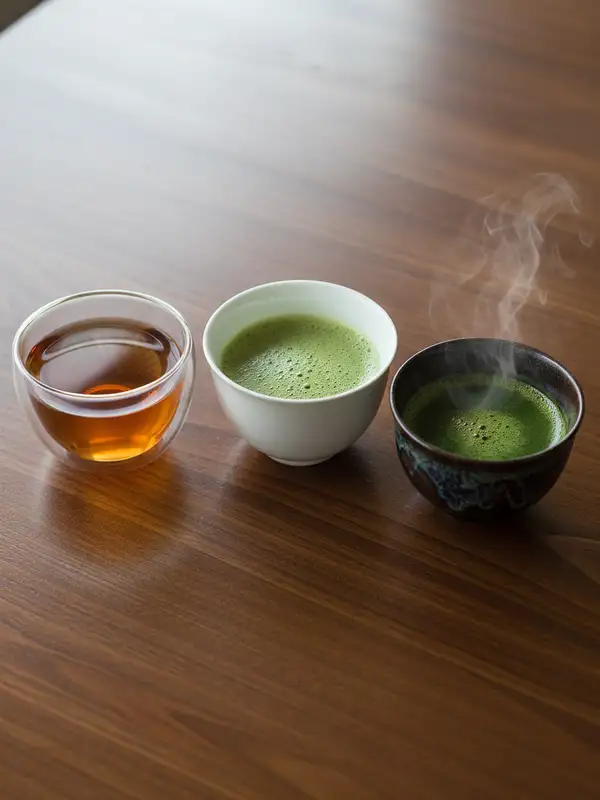
Glass teacups are the transparent choice for tea lovers who want to watch their leaves unfurl and admire the color of every brew. A borosilicate glass cup typically weighs just 60–100 g and holds 150–250 ml, making it one of the lightest options on your shelf. The biggest advantage is visual — you can see the tea color shift from pale gold to deep amber in real time, which is especially satisfying with flowering teas and layered oolongs.
Heat Performance and Limitations
Here is the trade-off: glass loses heat faster than any other material. After 30 minutes, tea in a glass cup drops to approximately 131°F (55°C), while the same brew in a tenmoku cup holds at 162°F (72°C). If you sip slowly, you will notice your tea cooling before you finish. Double-walled glass cups help — they add about 10–15°F of retained heat — but even those cannot match ceramic or tenmoku.
Glass also has a fragility issue. A typical soda-lime glass cup shatters if dropped from 3 feet, whereas ceramic and tenmoku often survive the same fall with only a chip. (I learned this the hard way when my favorite borosilicate cup slipped off a damp tea tray.) For daily use, glass works beautifully if you handle it with care and prefer lighter, more delicate cups.
Best Teas for Glass
Use glass when you brew teas worth watching: green teas with floating leaves, blooming tea balls, and light oolongs where color tells you the steep is done. The neutrality of glass means it never imparts flavor — your tea tastes exactly as the leaves intended. Browse our beginner’s guide to tenmoku teacups if you want to explore a material that actually changes how your tea tastes.
Ceramic Teacups: Versatile and Reliable
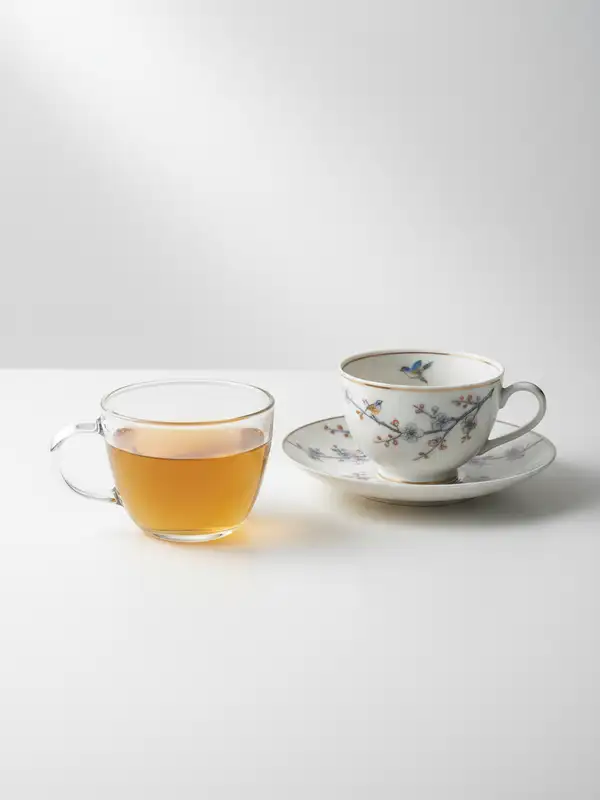
Ceramic teacups are the workhorse of the tea world. Made from kiln-fired clay and coated with a glaze, they balance durability, heat retention, and aesthetic variety better than any single alternative. A standard ceramic cup weighs 80–140 g and retains heat at approximately 148°F (64°C) after 30 minutes — a solid middle ground between glass and tenmoku. You will find ceramic in nearly every tea culture, from Japanese yunomi to Chinese gaiwan sets.
Glaze Types and Flavor Neutrality
Most ceramic cups have a sealed glaze that prevents the clay from interacting with your tea. This means ceramic delivers a clean, neutral taste — unlike tenmoku, whose iron-rich glaze actively softens bitterness and enhances sweetness. If you want your tea to taste “pure” without material influence, ceramic is your best bet. The glaze also makes ceramic cups easy to clean: a quick rinse with warm water usually suffices.
However, not all ceramic is equal. Porcelain — a subset of ceramic fired at 2,300–2,500°F (1,260–1,370°C) — is thinner, lighter, and less porous than stoneware. Stoneware, fired at 2,100–2,300°F (1,150–1,260°C), is thicker and retains heat longer. Choose porcelain for delicate teas and formal occasions; choose stoneware for robust daily brewing.
Durability and Everyday Use
Ceramic cups survive everyday handling better than glass. They resist chipping (especially stoneware), tolerate microwave reheating, and come in thousands of designs. For most tea drinkers, ceramic is the default material — reliable, affordable ($8–50), and widely available. The main downside is that ceramic does not enhance flavor the way tenmoku does, and it does not offer the visual clarity of glass.
Tenmoku Teacups: The Connoisseur’s Choice
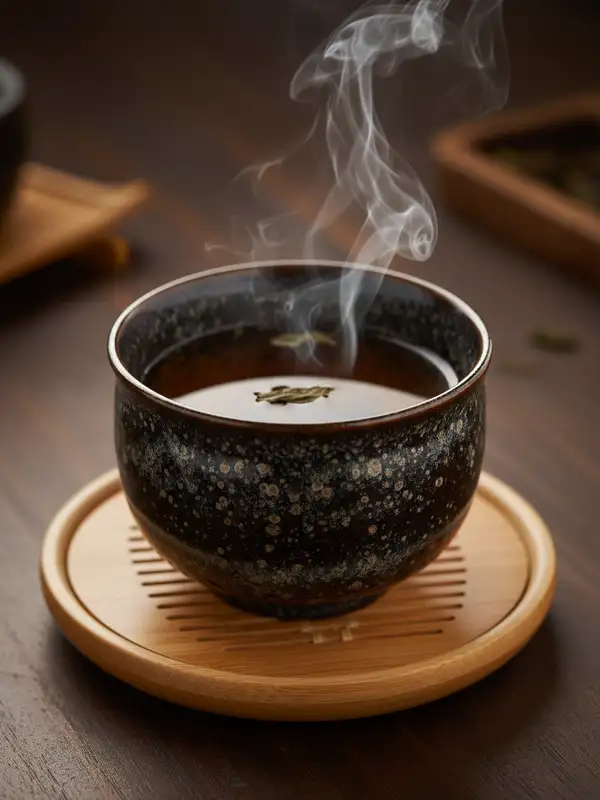
Tenmoku — also called Jian Zhan — is a specialized ceramic with an iron-rich glaze fired at 2,300–2,500°F (1,260–1,370°C) in reduction atmospheres. This process creates the signature metallic patterns (oil spot, hare’s fur, yao bian) and gives tenmoku its unique ability to interact with your tea. A tenmoku cup typically weighs 120–180 g and holds 80–150 ml. It is heavier, smaller, and more intentional than both glass and standard ceramic.
How Tenmoku Changes Your Tea
The iron oxide content (6–8%) in tenmoku glaze releases trace minerals into hot water, softening astringency and amplifying sweetness. According to research from the Fujian Ceramics Research Institute, tenmoku cups can raise the pH of tea by 0.3–0.5 units, making the brew taste smoother and rounder. This is not magic — it is chemistry. The iron ions interact with tannins, reducing the compounds that cause bitterness.
For tea lovers who drink oolong, pu’er, or black tea, tenmoku is the only material that actively improves flavor. Glass and ceramic simply hold your tea; tenmoku transforms it. Discover more about this in our article on why tea tastes better in a tenmoku cup.
Heat Retention Champion
Tenmoku’s thick walls and dense clay body make it the best insulator among the three materials. After 30 minutes, tea in a tenmoku cup stays at 162°F (72°C) — 14°F warmer than ceramic and 31°F warmer than glass. This matters if you practice gongfu cha, where multiple short steeps keep water in the cup between pours. Our detailed heat retention test confirms this with measured data across five tea types.
Side-by-Side Comparison: Glass vs Ceramic vs Tenmoku
| Feature | Glass | Ceramic | Tenmoku |
|---|---|---|---|
| Heat Retention (30 min) | 131°F (55°C) | 148°F (64°C) | 162°F (72°C) |
| Flavor Impact | Neutral | Neutral | Softens bitterness, enhances sweetness |
| Visual Clarity | ★★★★★ | ★☆☆☆☆ | ★★☆☆☆ |
| Durability | ★★☆☆☆ | ★★★★☆ | ★★★★☆ |
| Weight | 60–100 g | 80–140 g | 120–180 g |
| Price Range | $5–30 | $8–50 | $25–150+ |
| Microwave Safe | Mostly yes | Yes | No |
| Best Tea Type | Green, blooming | All types | Oolong, pu’er, black |
| Iron Content (glaze) | 0% | <1% | 6–8% |
| Care Difficulty | Easy | Easy | Moderate (season first) |
Which Material Should You Choose?
Your ideal teacup material depends on three things: what tea you drink most, how you brew it, and what matters to you — flavor, visuals, or convenience.
Choose Glass If…
You drink green tea, white tea, or flowering tea and want to watch the leaves dance. You prefer lighter cups and do not mind reheating. You brew for one and sip quickly. Glass is also the most budget-friendly option, with quality cups starting at $5.
Choose Ceramic If…
You want a versatile, everyday cup that works with any tea. You need microwave convenience and easy cleanup. You host tea gatherings and want cups that can survive guests. Standard ceramic is the safe, reliable choice — and you can explore our tenmoku options when you are ready to upgrade your experience.
Choose Tenmoku If…
You drink oolong, pu’er, or black tea and want to taste the difference a cup can make. You practice gongfu cha or slow brewing and value heat retention. You appreciate craftsmanship — each tenmoku cup is unique, with patterns that form unpredictably in the kiln (no two cups share the same glaze). Tenmoku is the choice for tea lovers who treat their cup as part of the brewing process, not just a container.
Caring for Each Material
Proper care extends the life of any teacup, but the maintenance routine differs significantly across materials. Glass requires the least maintenance: rinse with warm water and avoid sudden temperature changes that cause cracking. If you use a glass cup daily, inspect it every 3–4 months for micro-fissures near the rim — these are early signs of thermal stress failure.
Ceramic is similarly easy — most glazed cups are dishwasher-safe and tolerate casual handling. Stoneware can go from fridge to microwave without issue, though porcelain is more sensitive to thermal shock. A quick hand-wash with mild soap keeps ceramic looking new for years.
Tenmoku, however, needs seasoning before first use: soak in warm rice-water for 2–3 hours, then air-dry. This opens the glaze’s micro-pores and prepares the cup to interact with your tea. Never use soap on tenmoku; rinse with hot water only. With regular use over 3–6 months, tenmoku develops a patina that deepens its flavor-enhancing properties — a process similar to seasoning a cast-iron skillet. The patina is a sign of a well-loved cup, not a defect.
❓ Is tenmoku glaze food safe?
Yes. Authentic tenmoku cups are fired at temperatures above 2,300°F (1,260°C), which vitrifies the glaze and locks in any minerals. The iron oxide in the glaze is stable and does not leach harmful compounds. Always buy from reputable makers who test for heavy metals — and avoid unverified mass-produced copies.
❓ Can you use glass for hot tea?
Absolutely — but use borosilicate or double-walled glass, which tolerates temperatures up to 300°F (149°C). Standard soda-lime glass may crack if you pour boiling water directly into it. Pre-warm your glass cup with a splash of hot water first to reduce thermal shock.
❓ Does tenmoku really make tea taste different?
Yes. The iron-rich glaze interacts with tannins in your tea, reducing astringency and raising the pH slightly (0.3–0.5 units). This creates a smoother, sweeter taste — especially noticeable with oolong and pu’er. Glass and ceramic are flavor-neutral by comparison.
❓ Which material lasts the longest?
Ceramic and tenmoku both last decades with proper care. Tenmoku cups from the Song Dynasty (960–1279 AD) survive in museum collections today. Glass is the most fragile and typically lasts 2–5 years with daily use before chipping or cracking.
📚 References
- Tenmoku Glaze Composition and Firing: Research on iron-oxide reduction glazes and their chemical behavior. Kyoto National Museum
- Tea Chemistry and Tannin Interaction: How mineral content in teaware affects tea polyphenols and pH balance. National Library of Medicine (NIH)
- Jian Zhan Historical and Scientific Analysis: Fujian Ceramics Research Institute studies on Jian ware composition and firing. Metropolitan Museum of Art
Ready to experience the difference a tenmoku cup makes? Explore our handcrafted tenmoku collection at Zen Tea Cup and find the perfect cup for your next brew.


