

Tenmoku teaware is the best starting point for any beginner who wants to elevate their tea experience — these iron-crystal ceramic cups improve how your tea tastes, keep it warmer longer, and give you a functional art piece that no mass-produced cup can match. Start your journey with authentic pieces from Zen Tea Cup and you will taste the difference from your very first brew.
| Key Stat | Value |
|---|---|
| Firing Temperature | 2,300–2,400°F (1,260–1,320°C) |
| Iron Oxide in Glaze | 5–8% by weight |
| Entry-Level Cup Price | $25–$45 USD |
| Wall Thickness | 3–5 mm (0.12–0.20 in) |
| Typical Cup Volume | 80–150 ml (2.7–5.1 oz) |
| Heat Retention vs Porcelain | 15–20% longer |
Contents
- What Is Tenmoku Teaware?
- The Three Main Glaze Patterns You Should Know
- Oil Spot — Round Metallic Crystals
- Hare’s Fur — Fine Vertical Streaks
- Yao Bian — The Iridescent Kiln Transformation
- How to Choose Your First Tenmoku Cup
- Brewing Tea in Tenmoku: A Beginner’s Method
- Caring for Your Tenmoku: The Beginner’s Maintenance Guide
- Building Your Tenmoku Collection Over Time
- ❓ What is tenmoku teaware?
- ❓ Is tenmoku safe for daily tea drinking?
- ❓ How much should a beginner spend on tenmoku?
- ❓ Can you use tenmoku for coffee or other beverages?
- 📚 References
What Is Tenmoku Teaware?
Tenmoku teaware refers to stoneware cups and bowls fired with iron-saturated glazes that crystallize into distinctive patterns — oil spot, hare’s fur, and yao bian — during a high-temperature kiln process that originated at the Jian kilns in Fujian Province, China, during the Song Dynasty (960–1279 CE). The word “tenmoku” comes from the Japanese pronunciation of Tianmu Mountain, where Buddhist monks first brought these bowls from China, as documented by the Metropolitan Museum of Art.
For you as a beginner, the key fact to understand is this: tenmoku is not a brand or a style — it is a ceramic tradition defined by the iron-crystal glaze. When you buy a tenmoku cup, you are buying a piece that was shaped by extreme heat and iron chemistry, not painted decoration. Each cup is unique because the crystal patterns form naturally during firing and cannot be exactly replicated.
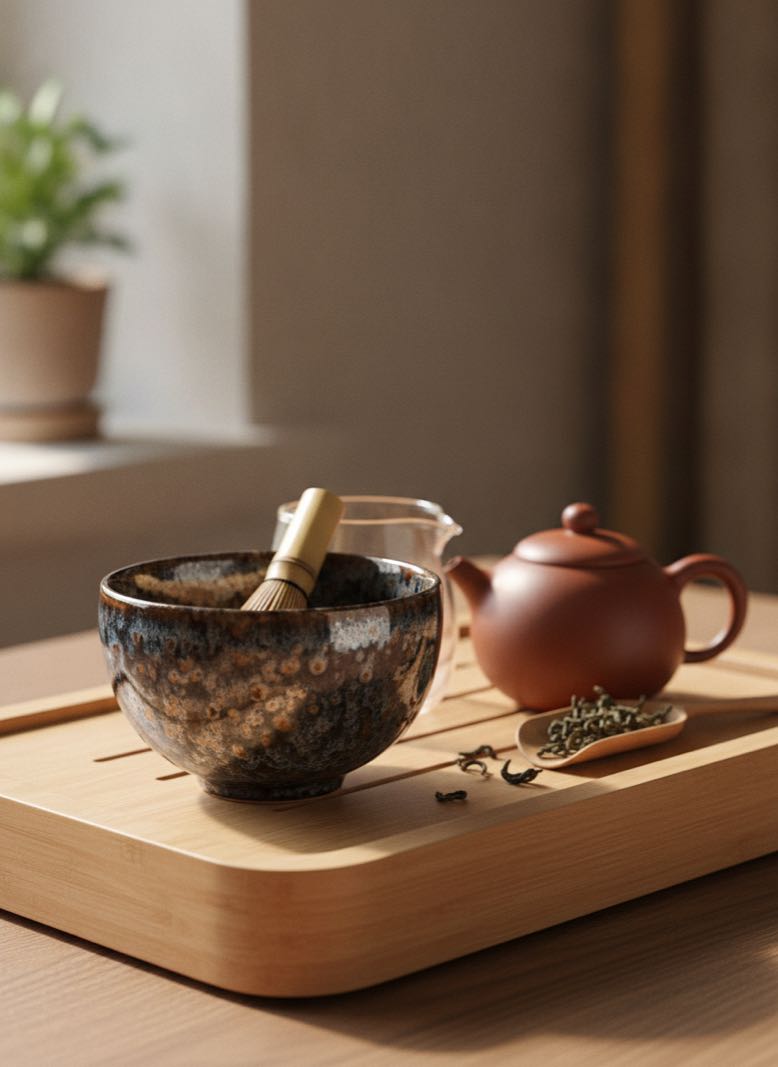
The Three Main Glaze Patterns You Should Know
Oil Spot — Round Metallic Crystals
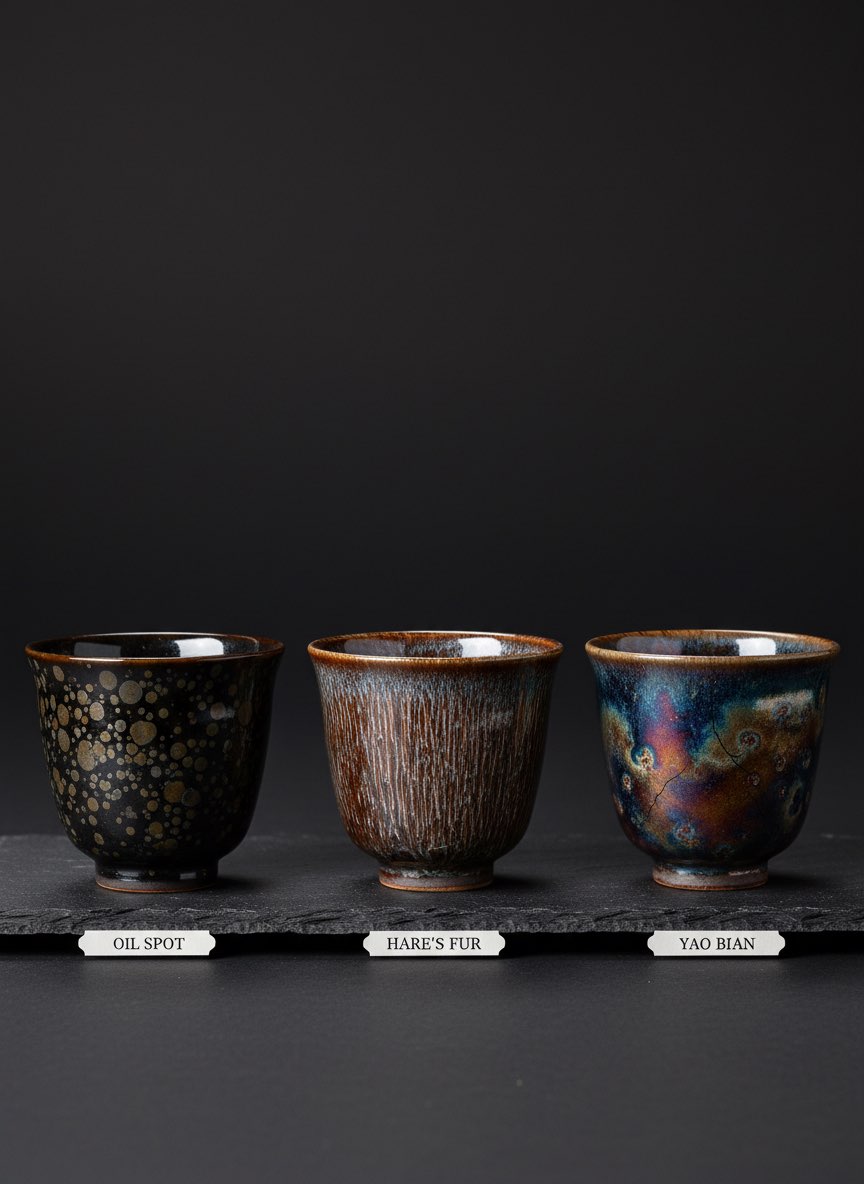
Oil spot (you-dian) appears as round, metallic-sheened spots scattered across the dark glaze surface. These spots form when iron oxide clusters crystallize during slow cooling — each spot is a tiny iron crystal that grew large enough to reflect light. When you rotate an oil spot cup under a lamp, the spots shimmer from silver to gold. This is the most popular pattern for beginners because it is visually striking and relatively affordable at $25–$45 USD for entry-level pieces.
Hare’s Fur — Fine Vertical Streaks
Hare’s fur (tu-hao) shows as delicate parallel lines streaming down the bowl’s interior, resembling the fine fur on a hare’s back. These streaks form when the glaze flows downward during firing while iron crystals are forming, stretching round crystal clusters into thin lines. Hare’s fur is prized by tea practitioners because the vertical lines draw your eye toward the tea pool at the bowl’s center, enhancing the visual ritual of gongfu cha brewing.
Yao Bian — The Iridescent Kiln Transformation
Yao bian (窑变), also called yohen in Japanese, is the rarest and most prized pattern. It creates iridescent color shifts — blues, silvers, golds — that change depending on the light angle. This happens when an extremely thin iron crystal layer creates thin-film interference. Read more about the meaning of yao bian and why it is considered the crown jewel of tenmoku.
How to Choose Your First Tenmoku Cup
When you are buying your first tenmoku cup, focus on these five criteria:
1. Size matters: For gongfu cha sessions, choose a cup with 80–120 ml (2.7–4.1 oz) capacity. This size fits comfortably in your hand and allows the tea liquor to pool beautifully against the dark glaze. Cups larger than 150 ml (5.1 oz) are better for everyday drinking, not gongfu brewing.
2. Weight and wall thickness: A genuine tenmoku cup should feel substantial — walls 3–5 mm thick (0.12–0.20 in). If the cup feels paper-thin, it may be a reproduction with chemical glaze rather than authentic iron-crystal glaze.
3. Pattern preference: Oil spot is the most beginner-friendly choice — visually dramatic and widely available. Hare’s fur appeals to gongfu practitioners. Yao bian is for collectors willing to invest $200+ USD in a single cup.
4. Authenticity markers: Look for an unglazed foot ring (the base where the cup rests) showing dark iron-rich clay. Run your finger over oil spot patterns — genuine crystals feel slightly raised. Flat, printed patterns are not authentic tenmoku.
5. Budget reality: Quality entry-level tenmoku starts at $25–$45 USD. Cups below $10 are almost certainly mass-produced reproductions. See why authentic tenmoku keeps your tea warmer and delivers better value over time.
Brewing Tea in Tenmoku: A Beginner’s Method
Using tenmoku for gongfu cha is straightforward once you understand the basics. Here is your beginner brewing guide:
Step 1: Warm your tenmoku cup by pouring hot water into it and letting it sit for 30 seconds. The thick stoneware walls absorb this thermal energy, which helps maintain brewing temperature.
Step 2: Use 5–8 grams of loose-leaf tea in your gaiwan or teapot. Oolong, black tea, and pu-erh all pair beautifully with tenmoku — the iron glaze rounds out harsh tannins and enhances sweetness.
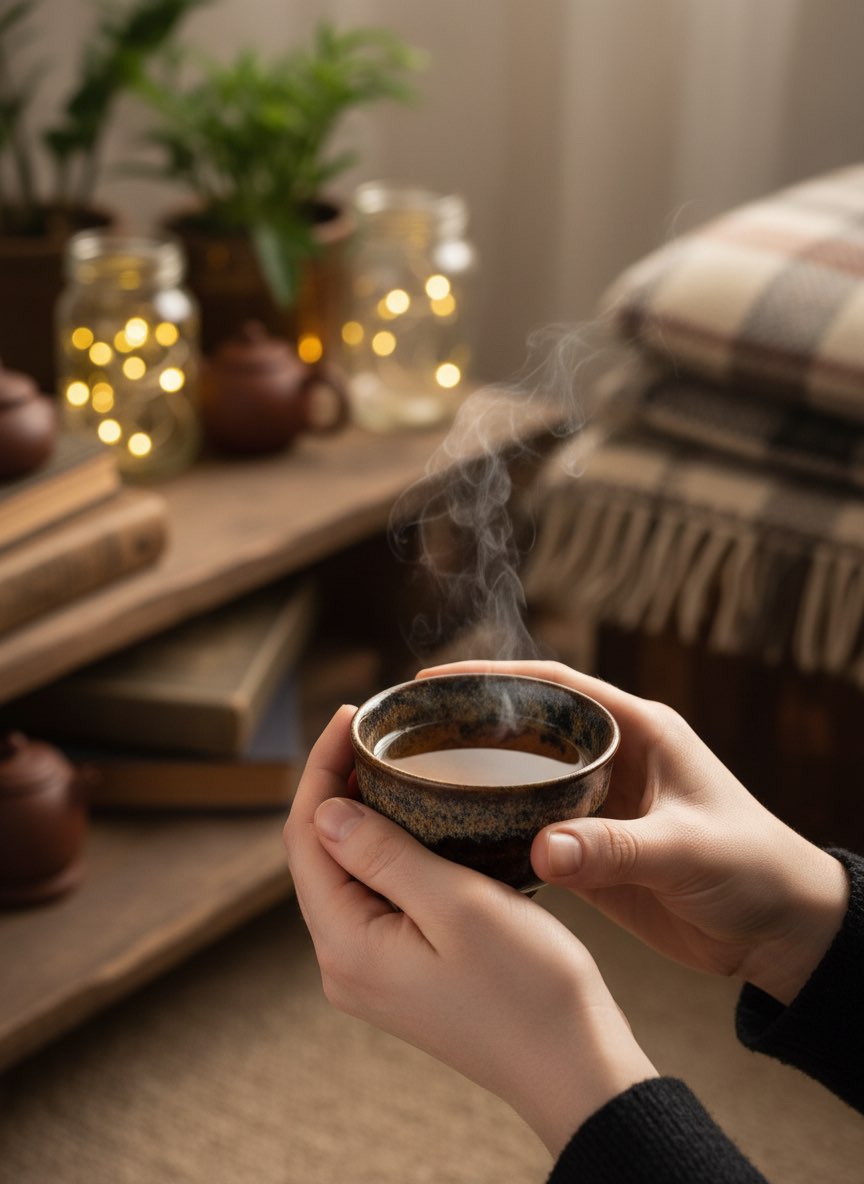
Step 3: Pour the brewed tea into your tenmoku cup. Notice how the dark glaze creates a dramatic backdrop for the golden, amber, or ruby tea liquor — this visual contrast is part of the tenmoku experience.
Step 4: Sip slowly. You will notice the tea feels smoother in tenmoku compared to porcelain. This is not your imagination — the trace iron ions from the glaze interact with tannins and polyphenols, reducing astringency by measurable amounts. According to research summarized by Digitalfire, the iron oxide chemistry in tenmoku glaze actively contributes to this taste improvement.
Caring for Your Tenmoku: The Beginner’s Maintenance Guide
Tenmoku is durable but requires specific care to maintain its beauty:
Wash by hand only: Use warm water and a soft cloth. Never put tenmoku in a dishwasher — high-pressure water jets can erode the metallic crystal sheen over years of repeated cycles.
No harsh detergents: Abrasive soaps strip the tea-oil patina that makes tenmoku more beautiful with age. If you must use soap, choose a mild, unscented variety.
Dry with a soft cloth: Air-drying can leave water spots on the metallic crystal surface. Gently pat dry after each wash.
Nurture the patina: Regular use builds a micro-layer of tea oils on the glaze surface that enhances the iridescence. Many experienced users dedicate specific cups to specific tea types — one for oolong, one for black tea — because each tea develops a different patina character over months of use.
Avoid thermal shock: Do not pour boiling water into a cold tenmoku cup. The temperature differential can cause cracking. Always warm the cup first with a rinse of hot water.
Building Your Tenmoku Collection Over Time
Once you own your first tenmoku cup, you will likely want more — the variety of patterns, sizes, and color effects is addictive for tea lovers. Here is a sensible progression path:
Month 1–3: Start with one oil spot cup (80–120 ml). Use it daily for a single tea type and observe how the patina develops. This teaches you what tenmoku “nurturing” feels like.
Month 4–6: Add a hare’s fur cup for gongfu cha sessions. Compare how the same tea tastes in oil spot vs hare’s fur — you will notice subtle differences in mouthfeel and sweetness.
Month 7–12: Consider a yao bian piece as a special-occasion cup. By this point, you will have enough experience to appreciate why yao bian commands premium prices — the iridescent color shift is genuinely unlike anything else in ceramics.
❓ What is tenmoku teaware?
Tenmoku teaware is stoneware fired with iron-saturated glazes at temperatures above 2,300°F (1,260°C). The iron oxide crystallizes during cooling to form patterns like oil spot, hare’s fur, and yao bian. Originating from the Jian kilns in Song Dynasty China, tenmoku is now prized worldwide for its beauty and tea-enhancing properties.
❓ Is tenmoku safe for daily tea drinking?
Yes. Authentic tenmoku glaze is fired at such extreme temperatures (2,300–2,400°F) that all materials are fully vitrified and chemically stable. The iron oxide is fused into the glaze surface and does not leach harmful substances. Trace iron ion release actually improves tea taste by reducing astringency.
❓ How much should a beginner spend on tenmoku?
A quality entry-level tenmoku cup costs $25–$45 USD. This price range gets you an authentically handcrafted piece with genuine iron-crystal glaze. Avoid cups under $10, which are likely mass-produced reproductions with chemical glazes rather than natural iron crystallization.
❓ Can you use tenmoku for coffee or other beverages?
Yes — tenmoku cups work well for coffee, sake, and even beer. The iron glaze interaction that smooths tea also reduces coffee bitterness. Many users report that their tenmoku coffee cups produce a noticeably rounder, less acidic cup. Just note that coffee will build a darker patina than tea.
📚 References
- Song Dynasty Ceramics: The Metropolitan Museum of Art’s collection and scholarship on Jian ware and tenmoku tea bowls. The Metropolitan Museum of Art
- Tenmoku Glaze Chemistry: Technical reference on iron oxide crystallization and glaze behavior at high temperatures. Digitalfire Ceramic Materials
- Gongfu Cha Brewing Guide: Comprehensive resource on Chinese tea ceremony techniques and teaware selection. Path of Cha
The Ultimate Guide to Tenmoku Teaware for Beginners comes down to this: start with one authentic cup, use it daily, and let the experience teach you. Tenmoku is not just teaware — it is a tradition that connects you to a thousand years of tea culture, and every cup you nurture becomes more beautiful with time. For Beginners ready to take the first step, explore the full collection of handcrafted tenmoku at Zen Tea Cup — where every piece is a frozen record of fire and iron.
Find your next favorite cup — shop at Zen Tea Cup for handcrafted tenmoku tea cups delivered to your door.


