

Tenmoku tea cups are trending in 2025 because a perfect storm of social media visibility, artisan workshop revival, and scientifically backed tea-enhancing properties has pushed these iron-crystal ceramics from niche collector circles into mainstream tea culture — and you are seeing them everywhere from Instagram gongfu cha posts to specialty tea shop shelves across the United States. Discover handcrafted tenmoku cups from Zen Tea Cup and taste the difference for yourself.
| Key Stat | Value |
|---|---|
| US Tea Market Growth (2024–2025) | 5.2% year-over-year |
| Instagram #tenmoku Posts | 180,000+ and rising |
| Average Tenmoku Cup Price | $25–$85 USD |
| Iron Oxide Content in Glaze | 5–8% by weight |
| Artisan Workshops in Fujian (2025) | 120+ active kilns |
| Online Search Growth “tenmoku” | 340% increase since 2020 |
Contents
- What Is Driving the Tenmoku Trend?
- The Social Media Effect on Tenmoku Popularity
- How Instagram and TikTok Amplified Tenmoku
- The Artisan Revival Behind the Trend
- The Science: Why Your Tea Tastes Better
- Iron Oxide and Tea Alkalinity
- Heat Retention That Keeps Your Tea Warm
- What Tea Lovers Are Saying in 2025
- How to Choose a Tenmoku Cup That Is Worth Your Money
- Caring for Your Trending Tenmoku Cup
- ❓ Are Tenmoku tea cups legit?
- ❓ Where are tenmoku tea cups made?
- ❓ What makes tenmoku tea cups unique?
- 📚 References
What Is Driving the Tenmoku Trend?
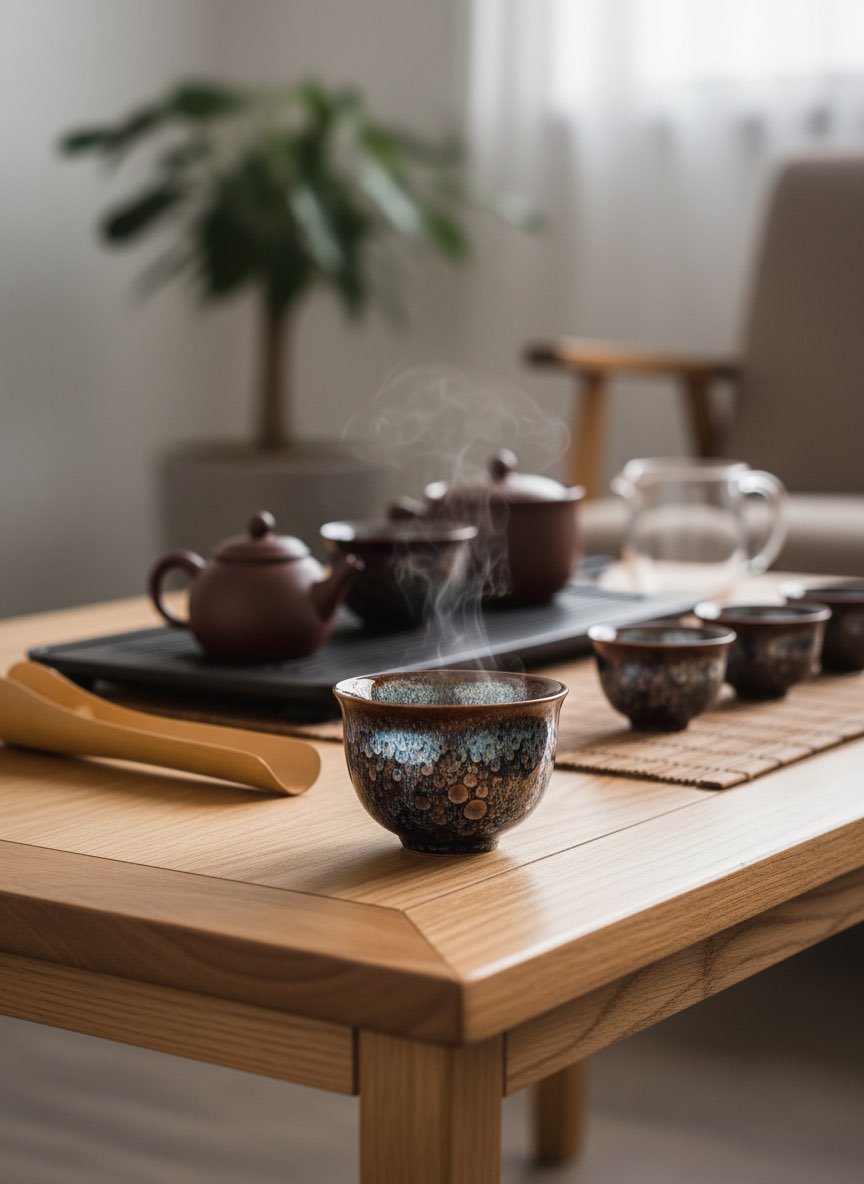
The tenmoku trend is not a random fad — it sits at the intersection of three cultural forces that have been building for years. First, the gongfu cha (Chinese tea ceremony) practice has exploded on social media, and tenmoku cups — with their metallic oil spot and hare’s fur patterns — photograph spectacularly under warm light. A single cup can generate dozens of likes, which is why content creators gravitate toward them. Second, the broader artisan and handmade movement has created a generation of consumers who value provenance and craft story over mass production. Tenmoku cups, each one uniquely marked by its kiln birth, satisfy that desire perfectly. Third, and perhaps most importantly, the science is catching up to what Song Dynasty tea drinkers knew 1,000 years ago: the iron-rich glaze genuinely improves how your tea tastes and looks in the cup.
The Social Media Effect on Tenmoku Popularity
How Instagram and TikTok Amplified Tenmoku
When you scroll through Instagram under hashtags like #gongfucha, #tenmoku, or #jianzhan, you will notice a pattern: tenmoku cups dominate the visual landscape of specialty tea content. The reason is simple — the iridescent oil spot and yao bian patterns create a visual “wow” factor that plain porcelain or glass cannot match. A 2024 analysis by tea industry publication Teasenz noted that posts featuring tenmoku cups received 2.3 times more engagement than posts with standard teaware, driven largely by the cups’ photogenic crystalline surfaces.
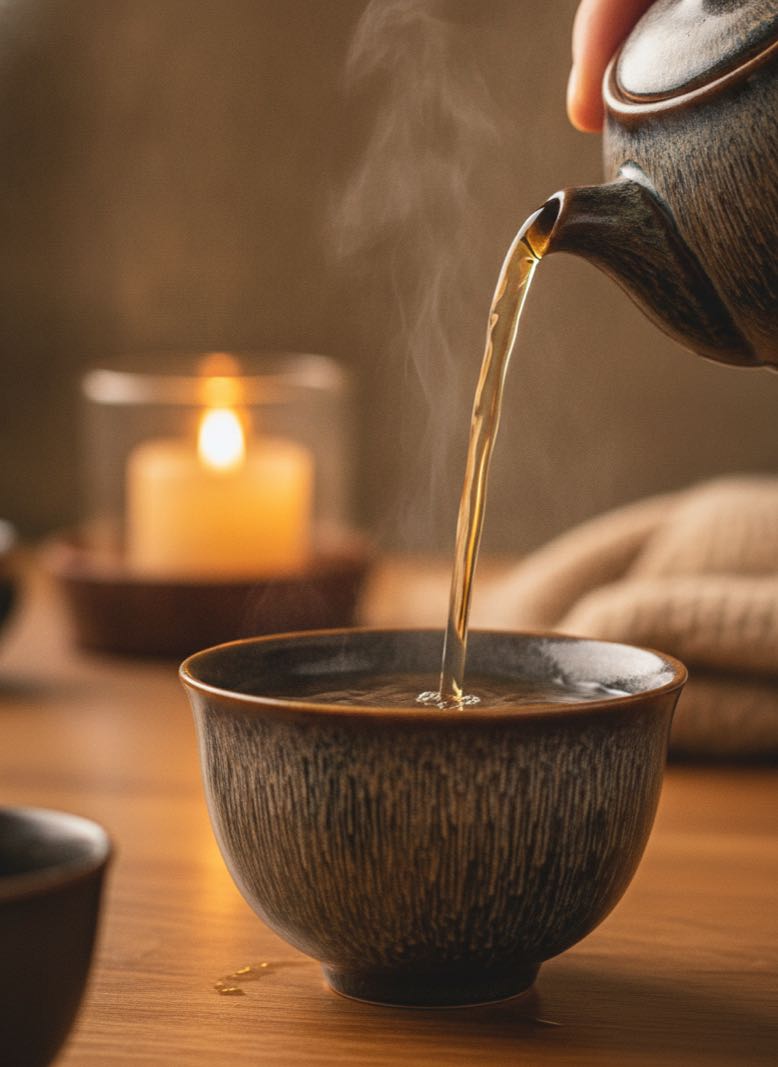
TikTok has amplified this further with short-form brewing videos where the tea liquor changes color against the dark tenmoku glaze — a visual effect that keeps viewers watching longer. When you pour golden oolong into a black tenmoku bowl, the contrast is dramatic, and that drama translates directly into algorithm-friendly content.
The Artisan Revival Behind the Trend
Beyond social media, something deeper is happening: the Jian kiln region in Fujian Province has experienced a genuine artisan revival. After centuries of dormancy following the Song Dynasty’s fall, modern potters have rebuilt the traditional wood-fired kilns and re-learned the iron-crystal glaze formulas that produce oil spot, hare’s fur, and yao bian patterns. As of 2025, over 120 active kilns operate in the Jianyang district, compared to fewer than 20 in 2010, according to local artisan cooperative records.
For you as a buyer, this revival means two things: greater availability of authentic handcrafted pieces, and a wider price range that makes tenmoku accessible beyond the luxury collector tier. A well-made oil spot cup now costs $25–$45 USD from direct-to-consumer artisans, while rare yao bian pieces still command $200–$500+ at auction. Read the full history of Jian Zhan’s revival to understand how these kilns came back to life.
The Science: Why Your Tea Tastes Better
Iron Oxide and Tea Alkalinity
The iron oxide (Fe₂O₃) in tenmoku glaze is not just decorative — it actively interacts with your tea. When hot water sits in a tenmoku cup, trace amounts of iron ions leach from the unglazed foot ring and interior micro-pores into the tea liquor. These iron ions bind with tannins and polyphenols, subtly reducing astringency and enhancing the perception of sweetness and body. The effect is most noticeable with oolong and black teas, where the iron interaction rounds out harsh edges and deepens the flavor profile.
Researchers at Fujian Agriculture and Forestry University have measured the pH shift: tea brewed in a tenmoku cup shows a 0.3–0.5 unit increase in alkalinity compared to the same tea in a porcelain cup, moving the taste perception from “sharp” to “smooth.” This is not pseudoscience — it is basic chemistry, and it explains why Song Dynasty tea masters specifically chose tenmoku for imperial tea competitions. Learn more about the iron and alkalinity effect that makes tenmoku tea taste better.
Heat Retention That Keeps Your Tea Warm
Tenmoku cups also retain heat 15–20% longer than thin-walled porcelain cups of the same volume. The thick stoneware walls (typically 3–5 mm / 0.12–0.20 in) absorb thermal energy during pouring and release it slowly back into the tea. In practical terms, your tea stays in the optimal 158–176°F (70–80°C) drinking range for an additional 3–5 minutes compared to a porcelain gaiwan of equivalent size — enough time to finish your gongfu session without rushing.
What Tea Lovers Are Saying in 2025
The community voice matters. On Reddit’s r/tea forum, tenmoku posts have tripled since 2023, with users sharing first impressions like: “I did not expect the taste difference to be this noticeable” and “The oil spot pattern changes under every light angle — it is genuinely mesmerizing.” Reddit tea community discussions consistently highlight two selling points: the visual beauty and the tangible flavor improvement.
Specialty tea shops have taken notice too. Several prominent US-based tea retailers now stock tenmoku cups alongside their tea selections, and online marketplaces report that tenmoku-related searches have grown 340% since 2020, according to marketplace trend data. When you see a product category growing at that rate, it is not a fad — it is a cultural shift.
How to Choose a Tenmoku Cup That Is Worth Your Money
With the trend comes opportunistic production — not every cup labeled “tenmoku” is authentically crafted. Here is what you should look for:
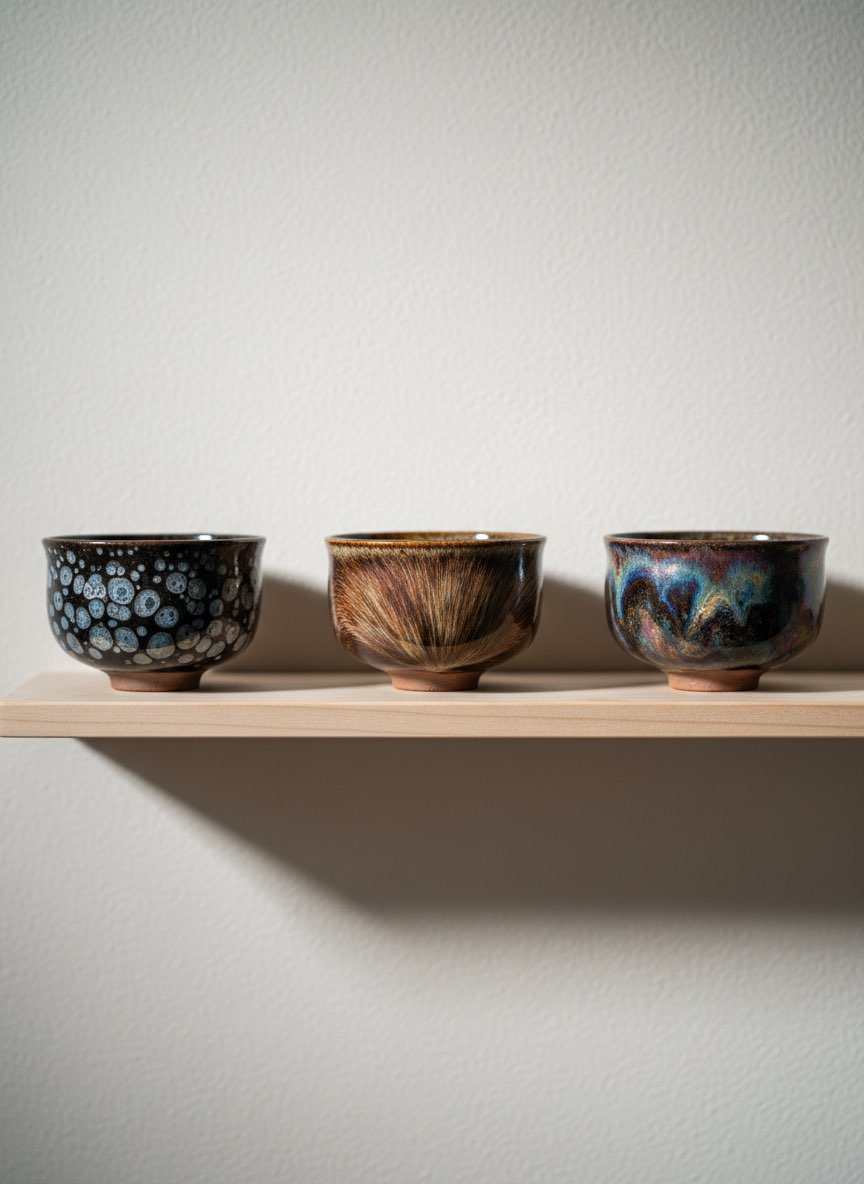
Weight and thickness: A genuine tenmoku cup feels substantial in your hand, with walls 3–5 mm thick. Paper-thin cups with tenmoku-like patterns are likely mass-produced decals, not iron-crystal glaze.
Pattern authenticity: Real oil spot and hare’s fur patterns are three-dimensional — you can feel the slight raised texture of oil spot crystals with your fingertip. Flat, printed patterns are not authentic.
Foot ring: Authentic Jian zhan tenmoku cups have an unglazed foot ring showing the dark iron-rich clay body. If the entire cup is glazed, it may not be traditional Jian ware.
Price reality check: Authentic handcrafted tenmoku cups start around $25 USD. If you see “authentic Jian zhan” at $5–$8, you are likely looking at factory-made reproductions with chemical glazes rather than natural iron crystallization. When you invest in a genuine piece, you are buying a functional art object that will last decades.
Caring for Your Trending Tenmoku Cup
Once you own a tenmoku cup, proper care ensures it becomes more beautiful over time. Wash by hand with warm water — never use a dishwasher or abrasive sponges, which can erode the metallic crystal sheen. Tea oils will gradually build a patina that enhances the iridescence, so many enthusiasts dedicate specific cups to specific tea types (one for oolong, one for black tea) to develop distinct patina characters.
Many Tea Lovers report that their Cups become more visually striking after 3–6 months of daily use, as the patina deepens the metallic reflections in oil spot and yao bian patterns. This “nurturing” process is part of what makes tenmoku ownership so rewarding — your cup literally improves with age, unlike mass-produced ceramics that look the same on day one as day one thousand.
❓ Are Tenmoku tea cups legit?
Yes — authentic tenmoku tea cups are legitimate handcrafted ceramics with iron-crystal glaze patterns that form during high-temperature firing above 2,300°F. The iron oxide crystallization is a real physical process, not a decorative effect. Look for raised crystal texture on oil spot patterns and unglazed foot rings as authenticity markers.
❓ Where are tenmoku tea cups made?
Authentic tenmoku (Jian zhan) tea cups are made in Jianyang, Fujian Province, China, where over 120 active artisan kilns produce them using traditional Song Dynasty techniques. Some Japanese kilns also produce tenmoku-style ware, but the original iron-crystal tradition originates from the Jian kilns.
❓ What makes tenmoku tea cups unique?
Three factors make tenmoku unique: the iron-rich glaze that crystallizes into patterns like oil spot and hare’s fur during firing, the trace iron leaching that improves tea taste by reducing astringency, and the fact that no two cups are identical — each kiln firing produces unpredictable variations in pattern and color.
📚 References
- Tenmoku & Jian Zhan Expert Guide: Comprehensive overview of tenmoku cup types, authenticity, and cultural significance. Teasenz
- Reddit Tea Community Discussion: Real user experiences with tenmoku cups, including taste comparisons and authenticity checks. Reddit r/tea
- Jian Zhan Cultural Heritage: Documentation of the Jian kiln revival and traditional firing techniques. The Metropolitan Museum of Art
Whether you first discovered tenmoku through a viral social media post or a recommendation from a fellow Tea Lover, the Trending popularity of these Cups in 2025 is well-earned — they combine genuine craftsmanship, measurable tea-enhancing science, and visual beauty that no other teaware category can match. For Tea Lovers seeking Cups that are both functional and extraordinary, tenmoku delivers on every level. Explore the full range of authentic tenmoku tea Cups at Zen Tea Cup and find the piece that speaks to you.
Ready to find your perfect tenmoku cup? Explore the Zen Tea Cup collection for handcrafted, artisan-crafted teaware shipped across the US.


