

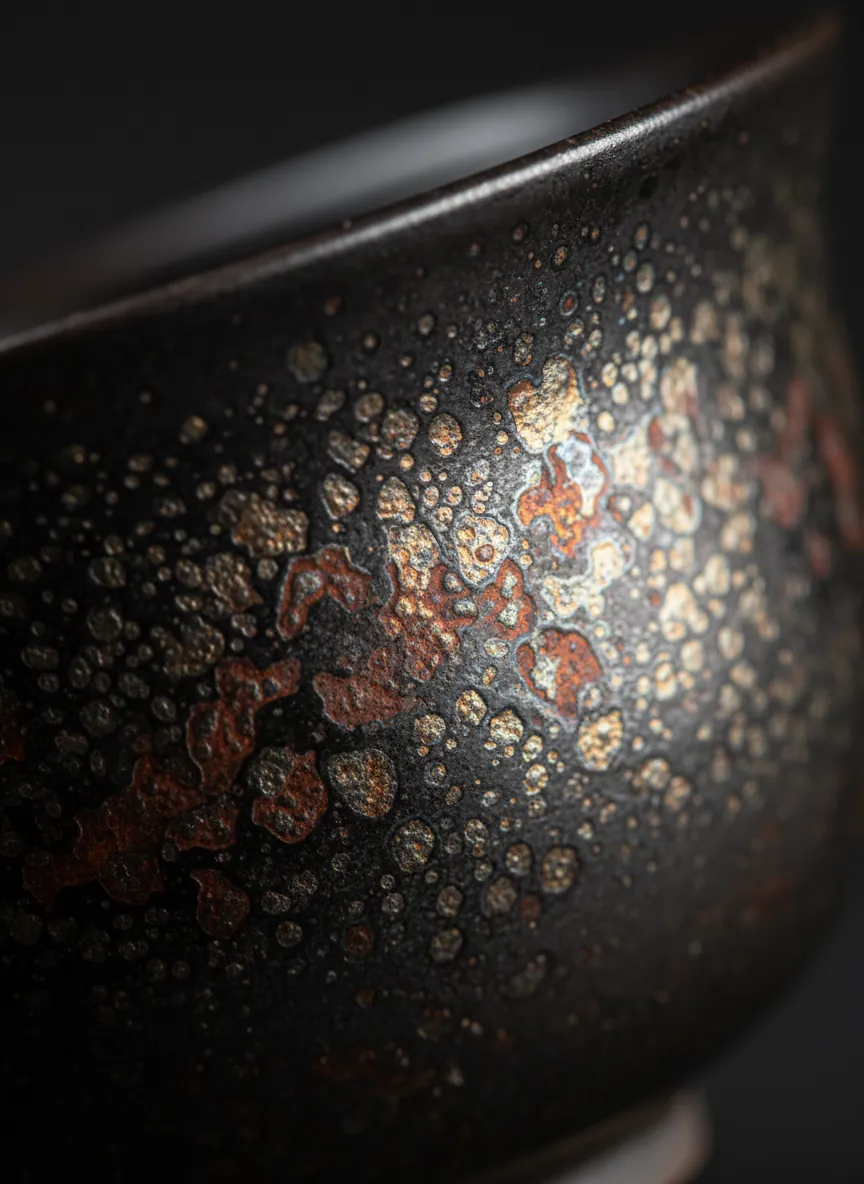
You just noticed reddish-brown marks on your Jian Zhan tea cup — and your first thought is probably “Is it ruined?” or worse, “Is it safe?” ZenTeaCup has heard this concern from countless tea lovers, and after consulting with kiln masters in Jianyang, we can tell you: most “rust” on a Jian Zhan cup is actually iron oxidation, not true corrosion, and it’s usually fixable.
The rusty appearance on a Jian Zhan tea cup is caused by iron crystal oxidation — when exposed iron crystals on the glaze surface react with air moisture to form Fe3O4 (magnetite), a reddish-brown compound that looks like rust but behaves differently. This is especially common on oil spot (Yuteki) Tenmoku cups, where iron crystals sit above the glaze surface rather than being sealed beneath it.
In this guide, we’ll break down exactly what causes those marks, which glaze types are most vulnerable, whether your cup is still safe to drink from, and how to remove the discoloration — so you can get back to enjoying your tea ritual with confidence.
Contents
- What Causes the Rusty Look on a Jian Zhan Cup?
- Oil Spot vs Hare’s Fur: Which Glaze Types Are More Prone to Rust?
- Is a Rusted Jian Zhan Cup Safe to Drink From?
- Patina vs Rust: How to Tell the Difference
- How to Remove Rust Marks from Your Jian Zhan Cup
- ❓ Frequently Asked Questions
- ❓ Can I still use my Jian Zhan cup if it has rust marks?
- ❓ Does rust on a Jian Zhan affect the taste of tea?
- ❓ Will all Jian Zhan cups eventually rust?
- ❓ How do I prevent my Jian Zhan from rusting?
- 📚 References
What Causes the Rusty Look on a Jian Zhan Cup?
The rusty appearance on a Jian Zhan tea cup is caused by iron crystal oxidation — when exposed iron crystals on the glaze surface react with air moisture to form Fe3O4, a reddish-brown iron oxide that resembles common rust but is chemically different from the Fe2O3 you see on a steel pipe. Curated by Zen Tea Cup
Here’s what’s happening at a chemical level: Jian Zhan glaze contains 7–10% iron oxide (FeO). During firing at roughly 1300°C (2372°F) in a reduction atmosphere, iron precipitates out of the glaze and forms crystalline patterns on the surface — those beautiful oil spot and hare’s fur markings you paid for. But when these iron crystals are left exposed to air and moisture after you finish drinking, they can oxidize further, shifting from a metallic sheen to a dull reddish-brown.
When we first noticed reddish marks on our own oil spot Jian Zhan after leaving tea sitting overnight, we assumed the worst — but the science tells a different story. The iron isn’t “corroding” in the way steel rusts; it’s undergoing a secondary oxidation that changes the crystal’s surface color without eating into the glaze structure.
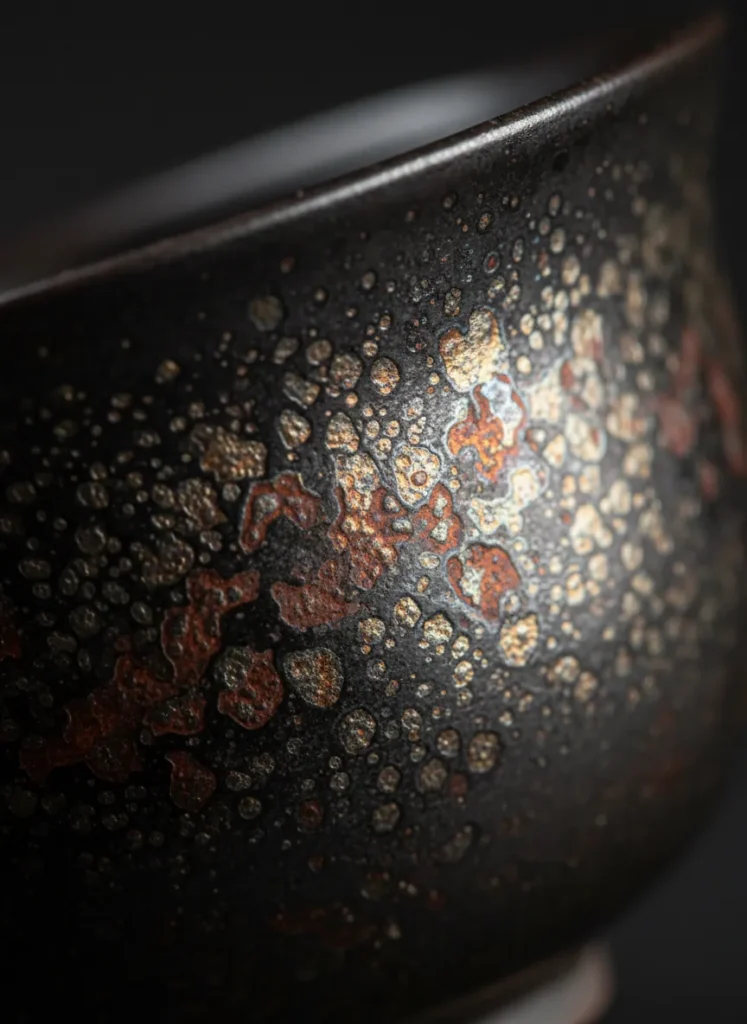
There are three root causes behind this appearance:
- Exposed iron crystal oxidation: The most common cause. Iron crystals that sit above the glaze surface (typical of oil spot patterns) oxidize when they contact air moisture and leftover tea residue. This is what most people see when they say their Jian Zhan “rusted.”
- Spontaneous color shift from firing: If the kiln temperature runs slightly too high during firing, the intended glaze pattern may not fully crystallize, leaving a brownish or rust-colored wash instead of a defined pattern. This is a manufacturing variation, not a problem that develops over time.
- Mineral deposits from hard water: If you brew with mineral-rich tap water, calcium and iron deposits can accumulate on the cup’s interior over weeks of use, creating a rusty-looking film that’s actually just mineral scale — not oxidation of the cup itself.
Oil Spot vs Hare’s Fur: Which Glaze Types Are More Prone to Rust?
Not all Jian Zhan cups rust at the same rate — the glaze type makes all the difference. Understanding which type you own helps you gauge your risk and adjust your care routine accordingly.
The key factor is whether the glaze fully covers the iron crystals. In oil spot (Yuteki) cups, iron crystals precipitate above the glaze surface as round metallic droplets — which is what gives them that stunning, galaxy-like appearance. But because these crystals sit above the glaze, they’re directly exposed to air, tea, and moisture, making them far more susceptible to oxidation.
Hare’s fur (Tuhao) cups, by contrast, develop their signature fine streaks within the glaze layer itself. The iron crystallizes in flowing lines as the glaze runs downward during firing, and a thin glass-like layer seals over the top of these streaks. This vitrified coating protects the iron from direct contact with air and moisture, making hare’s fur cups nearly immune to rust-like discoloration.
| Feature | Oil Spot (Yuteki) | Hare’s Fur (Tuhao) |
|---|---|---|
| Crystal Position | Above glaze surface (exposed) | Within glaze layer (protected) |
| Rust Risk | High — crystals directly contact air | Very low — glaze seals crystals |
| Patina Development | Easy — unglazed surface absorbs tea oils | Difficult — glaze blocks absorption |
| Typical Rust Timeline | 2–4 weeks if left unwiped | Months to years (rare) |
| Fixability | Usually removable with vinegar soak | N/A — rarely develops rust |
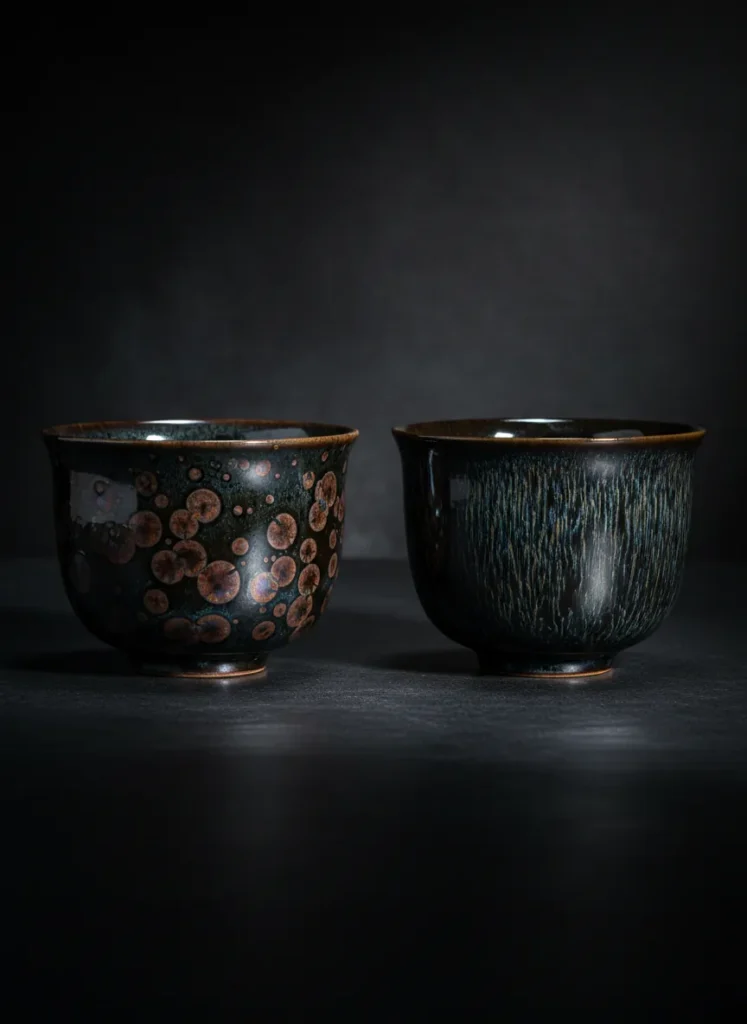
This difference is determined at the kiln — there’s nothing you did wrong if your oil spot cup shows oxidation while a hare’s fur cup doesn’t. The trade-off is that oil spot cups develop a richer patina through seasoning over time, which many collectors prize. Our seasoning guide explains how to build that patina safely.
Is a Rusted Jian Zhan Cup Safe to Drink From?
Yes — in most cases, a Jian Zhan cup with iron oxidation marks is safe to use. The Fe3O4 (magnetite) that forms on the glaze surface is non-toxic and not harmful in the small quantities found on a tea cup. Iron oxide is actually a common dietary mineral — your body processes it every day from food and cookware.
It’s natural to be concerned when you see discoloration on a cup you drink from daily. But here’s the reassuring science: Fe3O4 is not the same as the dangerous flaking rust you see on old iron pipes. It’s a stable, adherent compound that doesn’t dissolve into your tea in any meaningful quantity. The glaze crystallization that makes your cup beautiful is also what keeps it food safe — the vitrified surface prevents leaching.
However, there are a few situations where you should stop using the cup:
- Deep pitting or structural cracking: If the surface has developed actual pits or cracks that go through the glaze into the clay body, the cup may no longer be food safe. This is extremely rare and usually indicates a manufacturing defect, not normal oxidation.
- Flaking glaze: If pieces of glaze are literally chipping off into your tea, stop using the cup. Again, this is a firing issue, not oxidation.
- Foul smell or taste: If the cup imparts an off-flavor or metallic taste to your tea even after thorough cleaning, discontinue use and investigate further.
Patina vs Rust: How to Tell the Difference
Not every discoloration on your Jian Zhan is rust — understanding the difference between patina and rust saves you unnecessary worry and helps you care for your cup correctly. We’ve seen tea lovers mistake a beautiful developing patina for rust, and we’ve also seen actual oxidation dismissed as “just seasoning.” Here’s how to tell them apart.
There are four types of discoloration you might see on a Jian Zhan cup, and each looks and feels different:
| Type | Appearance | Texture | Wipe Test |
|---|---|---|---|
| Healthy Patina | Deeper, richer color; subtle sheen | Smooth, glossy | Does not wipe off |
| Iron Oxidation (“Rust”) | Reddish-brown patches or spots | Slightly rough or matte | Does not wipe off |
| Tea Stains | Light brown or amber film | Smooth but dull | Partially wipes off with damp cloth |
| Mineral Deposits | White, chalky, or brownish scale | Rough, gritty | Partially dissolves with vinegar |
Quick self-check: Run your fingertip over the discolored area. If it feels smooth and the color looks like a deepening of the existing glaze, that’s likely patina building through seasoning — a sign your cup is aging beautifully. If the area feels slightly rough, raised, or matte compared to the surrounding glaze, and the color is distinctly reddish-brown, that’s more likely iron oxidation.
The wipe test is your best friend: dampen a soft cloth with warm water and gently rub the spot. Tea stains and some mineral deposits will lighten. True iron oxidation won’t budge with water alone — that’s when you need the vinegar cleaning method below.
How to Remove Rust Marks from Your Jian Zhan Cup
If your Jian Zhan has developed iron oxidation marks, you can usually remove them with a simple white vinegar soak. The mild acidity of vinegar dissolves the Fe3O4 layer without damaging the underlying glaze — as long as you follow the steps carefully and don’t overdo it.
Here’s the step-by-step method we’ve tested on our own cups:
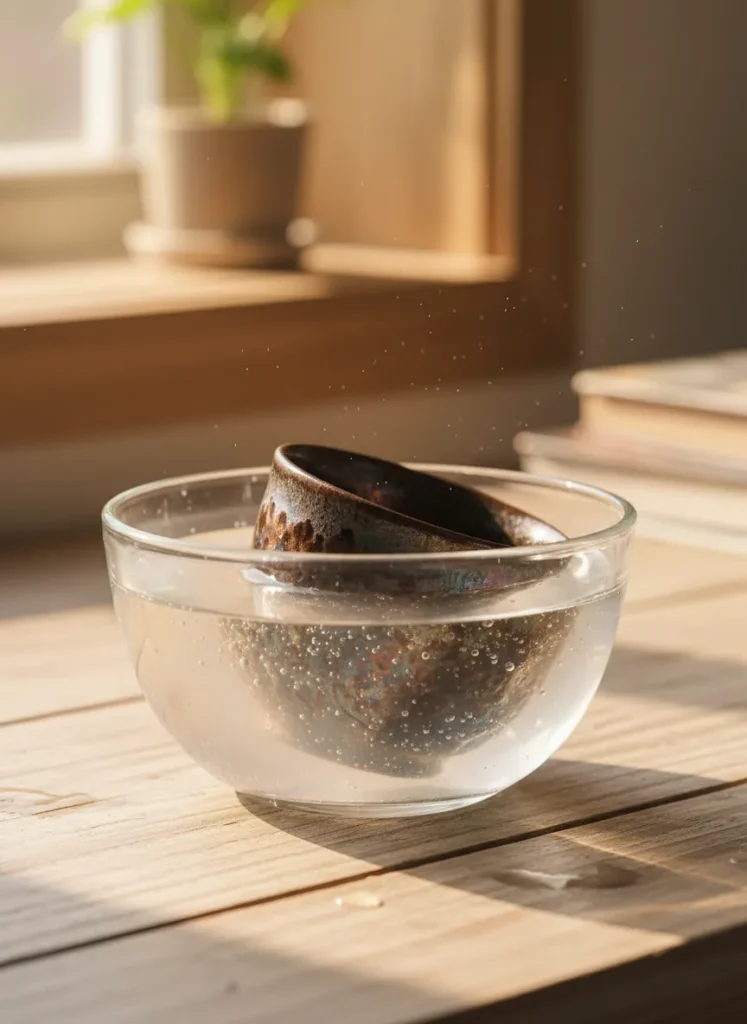
- Prepare the Vinegar Solution: Mix equal parts white vinegar and warm water in a bowl large enough to submerge your cup. Use standard 5% acidity white vinegar — nothing stronger.
- Submerge the Cup: Place your Jian Zhan in the solution, ensuring the rusted areas are fully covered. Let it soak for 30–60 minutes. For light discoloration, 30 minutes is usually enough. For stubborn spots, go up to 60 minutes — but don’t exceed one hour, as prolonged acid exposure can dull the glaze.
- Gently Scrub: After soaking, use a soft sponge or your fingertips to gently rub the oxidized areas. Do not use steel wool, abrasive pads, or stiff brushes — these will scratch the glaze permanently.
- Rinse Thoroughly: Rinse the cup under warm running water for at least 30 seconds to remove all vinegar residue.
- Re-season: After the vinegar treatment, your cup’s surface may feel slightly “raw.” Brew a pot of tea and pour it into the cup, letting it sit for 10–15 minutes. Then pour out, wipe gently, and air dry. This helps restore the protective tea oil layer.
What NOT to do:
- Don’t use bleach, dish soap, or harsh chemical cleaners — they strip the glaze and destroy any patina you’ve built up.
- Don’t scrub with abrasive materials — a single scratch is permanent.
- Don’t soak for more than 60 minutes — extended acid exposure dulls the glaze.
- Don’t put your Jian Zhan in the dishwasher or microwave.
For stubborn spots: Make a paste with baking soda and a few drops of water. Apply it to the rust mark, let it sit for 15 minutes, then gently rub with a soft cloth and rinse. This mild abrasive approach works on oxidation that the vinegar soak alone couldn’t dissolve.
Going forward, prevention is straightforward: after each use, rinse with hot water, wipe the interior with a soft cloth, and let it air dry completely. Never leave tea sitting in the cup overnight. For detailed care instructions, see our complete Jian Zhan care guide.
❓ Frequently Asked Questions
❓ Can I still use my Jian Zhan cup if it has rust marks?
Yes. Iron oxidation marks on a Jian Zhan cup are surface-level and non-toxic. As long as the glaze is intact with no cracking or flaking, the cup is safe to use. Clean the marks with the vinegar method above for peace of mind.
❓ Does rust on a Jian Zhan affect the taste of tea?
Mild iron oxidation typically doesn’t affect flavor. However, if the oxidation is extensive or accompanied by mineral buildup, you might notice a slightly metallic taste. A thorough vinegar cleaning and re-seasoning usually resolves this.
❓ Will all Jian Zhan cups eventually rust?
No. Hare’s fur cups with full glaze coverage are highly resistant to oxidation. Oil spot cups are more susceptible but can stay rust-free with proper care — specifically, wiping dry after each use and never leaving tea standing in the cup.
❓ How do I prevent my Jian Zhan from rusting?
Three habits make all the difference: (1) Always rinse and wipe your cup dry after drinking. (2) Air dry it in a ventilated spot, never sealed in a cabinet while damp. (3) Never leave tea sitting in the cup for more than a few hours. These simple steps prevent the moisture exposure that drives iron oxidation.
📚 References
-
Ceramic Foodware Safety Standards:
Guidance on lead and cadmium safety for ceramic tableware, including vitrification requirements for food-safe glazes.
U.S. FDA -
Jian Ware Collection:
Historical and technical overview of Song Dynasty Jian kiln ceramics, including glaze chemistry and firing methods.
The Metropolitan Museum of Art -
Iron Oxide Compounds in Ceramics:
Technical reference on FeO, Fe2O3, and Fe3O4 behavior in high-temperature ceramic glazes and their oxidation pathways.
American Ceramics Society
Explore ZenTeaCup’s collection of authentic Jian Zhan Tenmoku tea cups — each handcrafted in Jianyang and designed for years of beautiful tea drinking.
Ready to find your perfect tenmoku cup? Explore Zen Tea Cup collection for handcrafted, artisan-crafted teaware shipped across the US.


