

Contents
- Why Jian Zhan Size Matters More Than You Think
- Standard Jian Zhan Sizes Explained
- Small Cups (5-7 cm): The Tasting Size
- How Size Changes Your Tea Experience
- Aroma Concentration in Smaller Vessels
- Matching Cup Size to Tea Type
- Green and White Teas: Why Smaller Works Better
- ❓ What Size Tea Cup Should I Get?
- ❓ What Size Are Chinese Tea Cups?
- ❓ What Is the Normal Size of a Teacup?
- ❓ What Is Jian Zhan Tea Cup in Chinese?
- Jianyang Craftsmanship: What to Check Before You Choose
- 📚 References
Why Jian Zhan Size Matters More Than You Think
In the centuries-old Jianyang kiln tradition, if you have ever wondered why your tea tastes different in various cups, the answer might be simpler than you expect: size. Jian Zhan tea cups, the iconic tenmoku ware from Fujian, China, come in a range of sizes, and each one affects your tea experience in ways that go beyond aesthetics. From how long your tea stays warm to how the aroma develops in the cup, size is a practical decision that shapes every sip you take.
At Zen Tea Cup, we carry authentic Jian Zhan in every standard size, and we want to help you pick the one that fits your daily routine.
Standard Jian Zhan Sizes Explained
Small Cups (5-7 cm): The Tasting Size
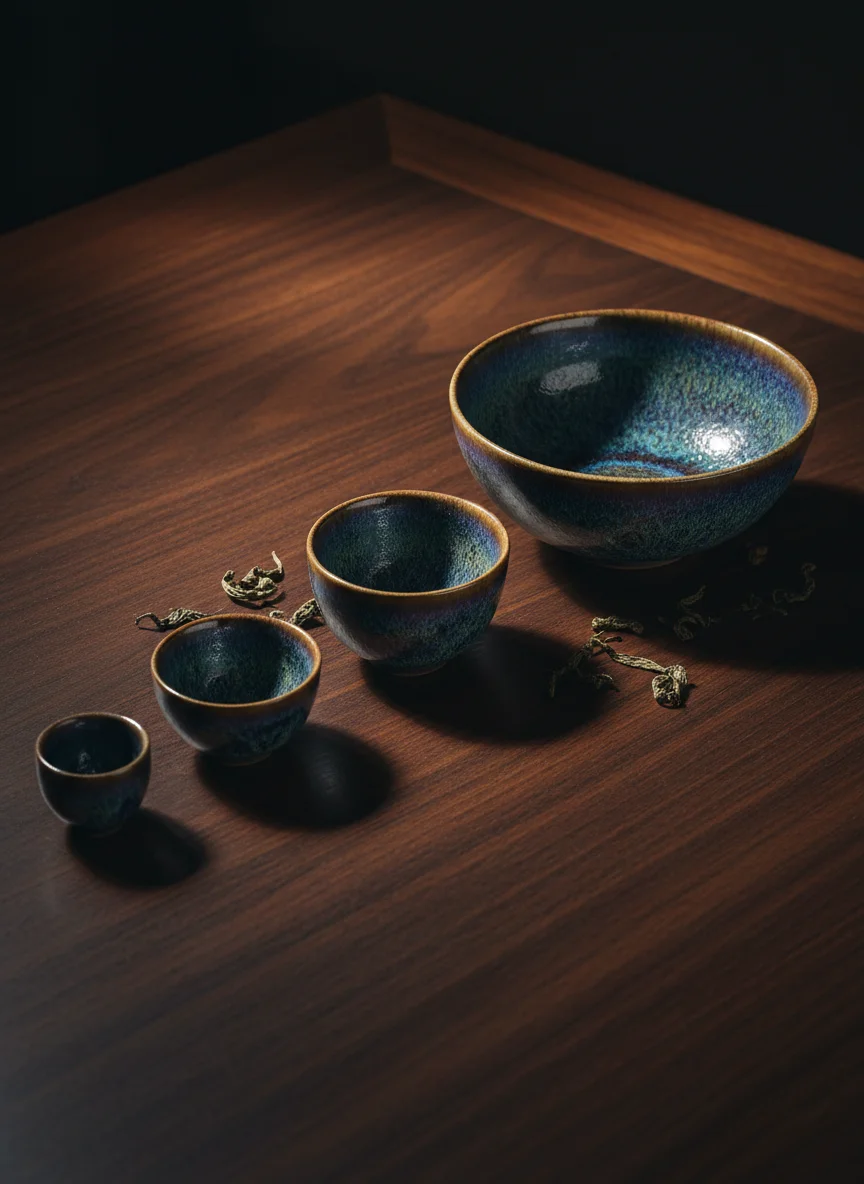
At Zen Tea Cup, we know that Jian Zhan cups are traditionally measured by their diameter in centimeters. The three most common sizes you will encounter are:
| Size Category | Diameter | Capacity | Best For |
|---|---|---|---|
| Small (4-6 cm) | 4-6 cm (1.6-2.4 in) | 30-60 ml (1-2 oz) | Tasting flights, gongfu tea |
| Medium (7-9 cm) | 7-9 cm (2.8-3.5 in) | 80-150 ml (2.7-5 oz) | Daily drinking, oolong |
| Large (10-12 cm) | 10-12 cm (3.9-4.7 in) | 180-300 ml (6-10 oz) | Matcha, sharing, display |
Small cups are the classic choice for gongfu cha, where you brew multiple short infusions and appreciate the subtle changes in flavor across steeps. Medium cups are the most versatile, striking a balance between portion control and aroma development. They work beautifully for everyday drinking, whether you are brewing oolong, black tea, or white tea. Large Jian Zhan bowls, sometimes called chawan, are ideal for whisked matcha or as statement display pieces that showcase the stunning glaze patterns on a wide interior surface.
It is worth noting that Jian Zhan cups tend to feel heavier than porcelain cups of the same size. The thick iron-rich clay walls, which can be 3-5 mm (about 0.12-0.20 in) thick, are part of what gives Jian Zhan its legendary heat retention. This means a 7 cm Jian Zhan may feel similar in the hand to a 9 cm porcelain cup in terms of weight, but the functional capacity will be noticeably smaller due to the thicker walls.
How Size Changes Your Tea Experience
Aroma Concentration in Smaller Vessels
The size of your Jian Zhan directly influences three key aspects of tea drinking that most people overlook until they compare cups side by side:
Temperature retention: Larger cups hold more liquid, which means the tea stays warmer longer. However, if you prefer to drink your tea at a slightly cooler temperature to appreciate delicate floral notes, a smaller cup forces you to finish the tea before it cools too much. According to tea researchers at Fujian Agriculture and Forestry University, Jian Zhan clay retains heat up to 15 percent longer than porcelain of the same thickness. In practice, a medium Jian Zhan keeps your tea in the ideal drinking range for about 8-12 minutes, compared to 5-7 minutes for a thin porcelain cup.
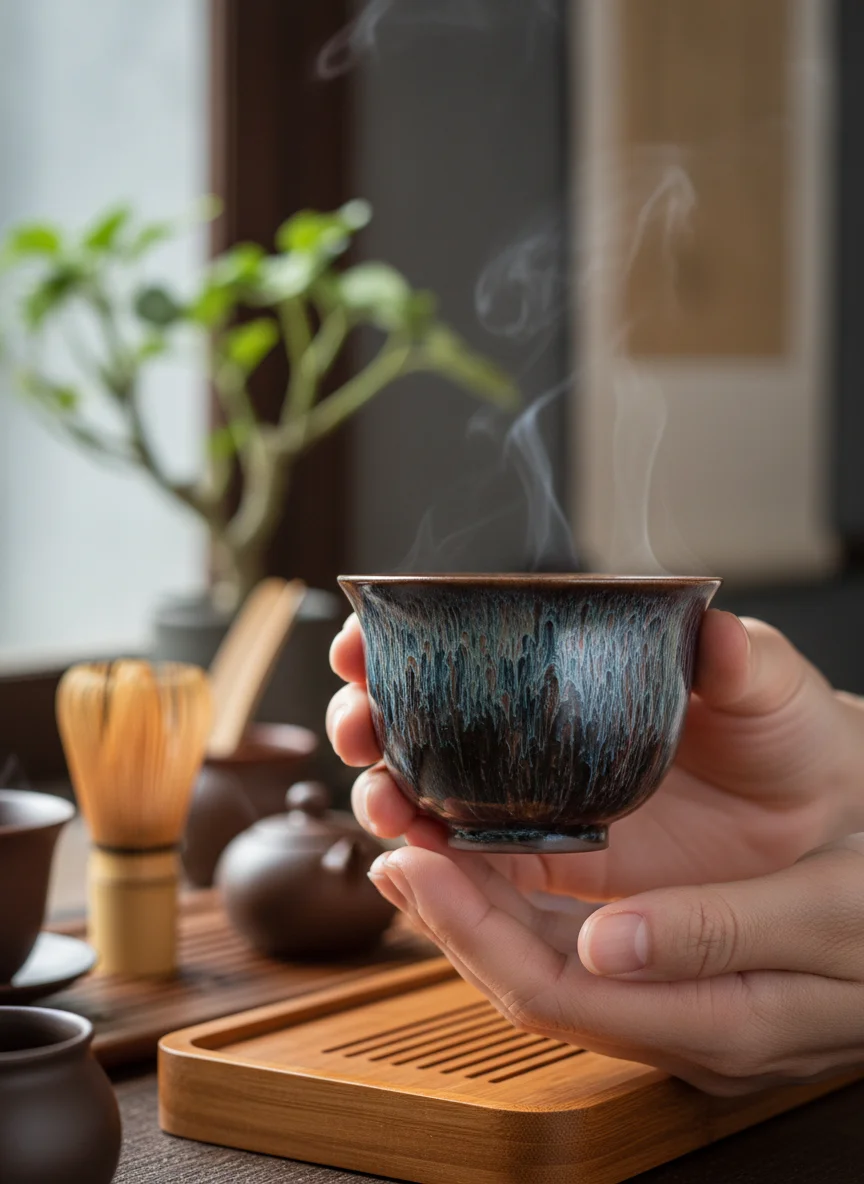
Aroma concentration: A smaller cup concentrates volatile aromatic compounds near the rim. This is why gongfu tea practitioners prefer small cups for high-aroma oolongs like Dancong or Tieguanyin. The narrow opening traps the fragrance, delivering it directly to your nose as you sip. A large bowl disperses the aroma across a wider surface, making it subtler but more layered, which some drinkers prefer for pu-erh and aged white teas.
Visual appreciation: The crystalline glaze patterns of Jian Zhan, such as hare fur and oil drop, are best appreciated in medium to large bowls where the interior surface is wide enough for the pattern to unfold. In a tiny cup, the glaze effect appears compressed and you miss the full visual impact. The famous partridge feather pattern, for instance, looks dramatically different in a 10 cm bowl versus a 5 cm cup.
Matching Cup Size to Tea Type
Green and White Teas: Why Smaller Works Better
Not all teas work well in all cup sizes. Here is a practical guide based on what experienced tea drinkers and gongfu practitioners prefer:
Green tea and white tea: Small to medium (4-8 cm). These delicate teas lose their nuance in a large bowl. A smaller cup keeps the portion small enough that you finish before the tea over-steeps and turns bitter. Silver needle white tea, for example, reveals its honeyed sweetness best in a 5-6 cm cup where the subtle aroma is not lost in a wide bowl.
Oolong tea: Small to medium (5-9 cm). Gongfu-style oolong sessions thrive in small Jian Zhan cups. The concentrated pour from a gaiwan into a small cup maximizes the aroma burst that oolong drinkers prize. For rolled oolongs like Tieguanyin or Da Hong Pao, a 5-6 cm cup is the sweet spot. For strip-style oolongs like Yancha or Dancong, you might prefer a 7-8 cm cup to appreciate the deeper flavor layers.
Black tea and pu-erh: Medium to large (8-12 cm). These robust teas can handle a bigger cup. The larger volume lets the tea breathe and release deeper flavor layers that would be cramped in a small cup. Aged sheng pu-erh particularly benefits from a wider bowl where the evolving aroma over multiple steeps can fill the space.
Matcha: Large (10-12 cm). The wide bowl shape is essential for whisking. A Song Dynasty diancha descendant, matcha preparation demands space for the chasen (bamboo whisk) to move freely without splashing. The deep bell shape of a Jian Zhan matcha bowl also helps contain the froth.
❓ What Size Tea Cup Should I Get?
If you are buying your first Jian Zhan, go with a medium cup (7-9 cm). It is the most versatile size that works for most tea types and brewing styles. You can use it for daily oolong sessions, casual black tea, and even small matcha portions. If you specifically drink gongfu oolong, choose small. If you drink matcha or want a display piece, choose large. Browse our full Jian Zhan collection to find the size that fits your tea habit.
❓ What Size Are Chinese Tea Cups?
Traditional Chinese tea cups range from 3 cm diameter tasting cups to 12 cm matcha bowls. The standard gongfu tea cup is 4-5 cm (about 1.5-2 inches) and holds roughly 30-50 ml (1-1.7 oz). Jian Zhan specifically tends toward the medium-to-large end because the thick walls and wide bell shape are part of its functional design. A typical 8 cm Jian Zhan holds about 100-120 ml, while a similarly sized porcelain cup might hold 130-150 ml due to the thinner walls.
❓ What Is the Normal Size of a Teacup?
A standard Western teacup holds about 150-180 ml (5-6 oz) and measures roughly 7-8 cm (2.8-3.1 inches) in diameter. Jian Zhan cups follow a similar range for their medium size, but the bowl shape makes them appear larger than a typical handleless cup. The key difference is the depth: Jian Zhan cups are deeper, which helps retain heat and concentrate aroma. If you are used to Western-style mugs, a medium Jian Zhan will feel like a natural transition, while a small one will feel more like an espresso cup.
❓ What Is Jian Zhan Tea Cup in Chinese?
In Chinese, Jian Zhan is written as 建盏, where 建 (Jian) refers to Jianyang in Fujian Province where the ware originates, and 盏 (zhan) means a small cup or bowl used for drinking. The term specifically refers to the black-glazed stoneware cups produced in Jianyang kilns since the Song Dynasty. In Japanese, the same ware is called tenmoku (天目), named after Mount Tianmu where Japanese monks first encountered these cups.
Jianyang Craftsmanship: What to Check Before You Choose
Before you commit to a Jian Zhan size, consider these practical factors that go beyond just the diameter measurement:
How many people do you usually serve? If it is just you, a small or medium cup is perfect. If you host tea sessions with friends, having a set of small cups for sharing is more practical than one large bowl. Most gongfu tea sets include 3-6 small cups that pair with a gaiwan or teapot.
Where will you store it? Large Jian Zhan bowls take up significantly more shelf space than you might expect. A 12 cm bowl can be 8-9 cm tall, which may not fit in a standard tea cabinet. Measure your storage space before ordering a large bowl.
Do you want to use it or display it? Some collectors buy large Jian Zhan purely for their stunning glaze patterns on a wide interior surface. If function matters more, a medium cup gives you the best balance of usability and visual appeal.
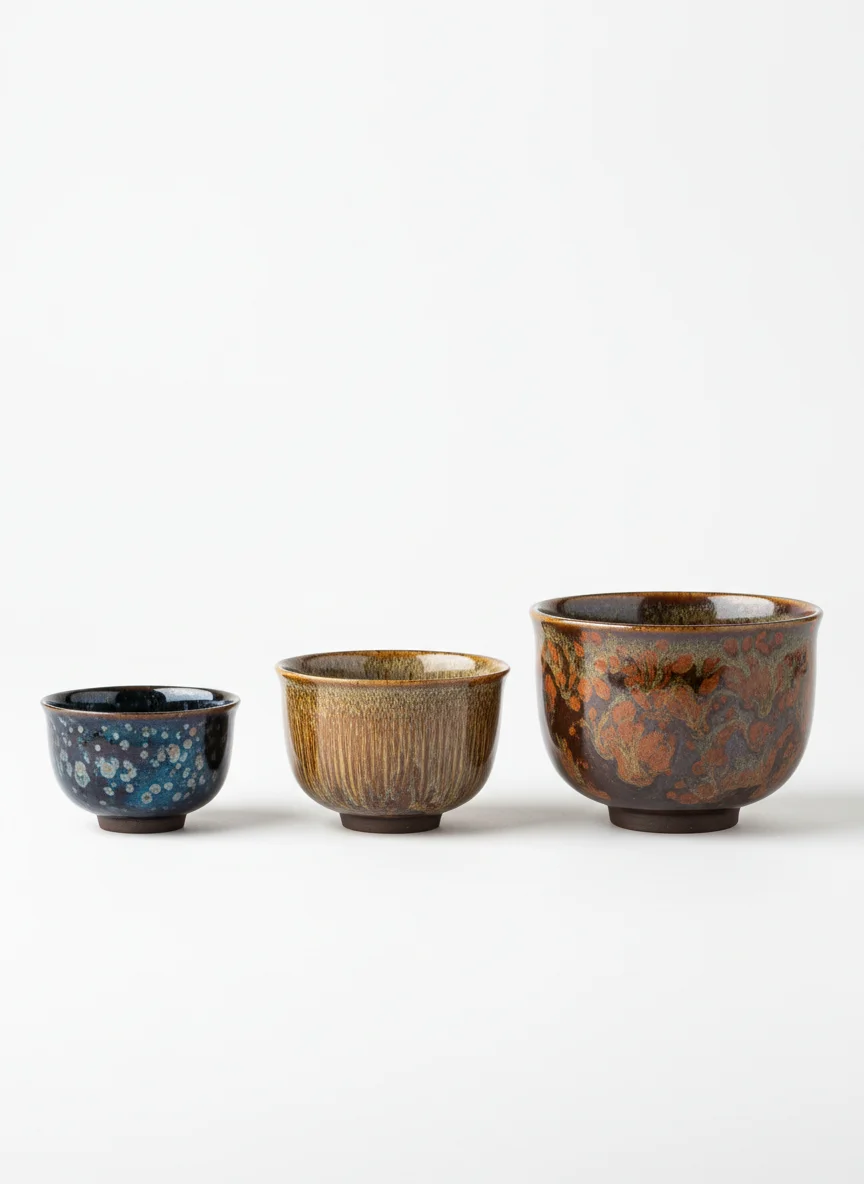
Check the rim thickness. A well-made Jian Zhan has a slightly thicker rim that feels comfortable against the lips. Very thin rims on small cups can chip easily during daily use, while overly thick rims on large bowls can feel clumsy. The best cups have a rim that tapers gently, thicker at the body and slightly thinner at the lip. This subtle design detail, perfected over centuries of Jianyang kiln tradition, makes a surprising difference in daily comfort.
Consider the foot ring. The foot ring (the small base that touches the table) should be wide enough for stability. Small cups with very narrow foot rings can wobble, which is annoying during a tea session. A stable base also prevents accidental spills when you set the cup down.
- Stability: A wide foot ring prevents wobbling and accidental spills during gongfu sessions
- Weight matters for daily use. A small Jian Zhan weighs about 40-60 grams, a medium one 80-120 grams, and a large bowl 150-250 grams. If you have wrist issues or plan long gongfu sessions with many cups, the weight adds up. Medium is usually the most comfortable for extended use.
Ready to find the Jian Zhan cup that fits your hand perfectly? Explore our handcrafted Jian Zhan collection and discover the size that transforms your tea ritual.
📚 References
-
Chinese Ceramics: From the Paleolithic Period through the Qing Dynasty:
Comprehensive overview of Chinese ceramic traditions including Jian ware.
The Metropolitan Museum of Art -
Jian Ware and Tea Culture:
Research on Song Dynasty tea vessels and their functional design.
Fujian Provincial Museum -
Tea and Health:
Overview of tea brewing parameters and vessel effects on flavor.
National Center for Biotechnology Information (NCBI)
Ready to find your perfect Jian Zhan? Explore our curated collection of authentic Jian Zhan tea cups at Zen Tea Cup and discover the size that matches your tea ritual. Whether you are a gongfu enthusiast looking for the perfect tasting cup or a matcha lover seeking the ideal whisking bowl, we have the right size waiting for you.


