

Contents
- Why Jian Zhan Size Matters More Than You Think
- Jian Zhan Size Categories at a Glance
- Small Jian Zhan Cups: When Precision Matters
- Medium Jian Zhan Cups: The Everyday Sweet Spot
- Large Jian Zhan Bowls: For Matcha and Ceremony
- How to Match Cup Size to Your Tea Type
- Hand Size and Comfort: Finding Your Ergonomic Fit
- Shape Matters Too: Rim Style Affects the Experience
- ❓ Frequently Asked Questions About Jian Zhan Cup Sizes
- ❓ What size Jian Zhan should a beginner buy?
- ❓ Can I use a large Jian Zhan bowl for loose-leaf tea?
- ❓ How do I measure my Jian Zhan cup size correctly?
- ❓ Does cup size affect how tea tastes in Jian Zhan?
- Buying Tips: What to Check Before You Choose
- References
- 📚 References
Why Jian Zhan Size Matters More Than You Think
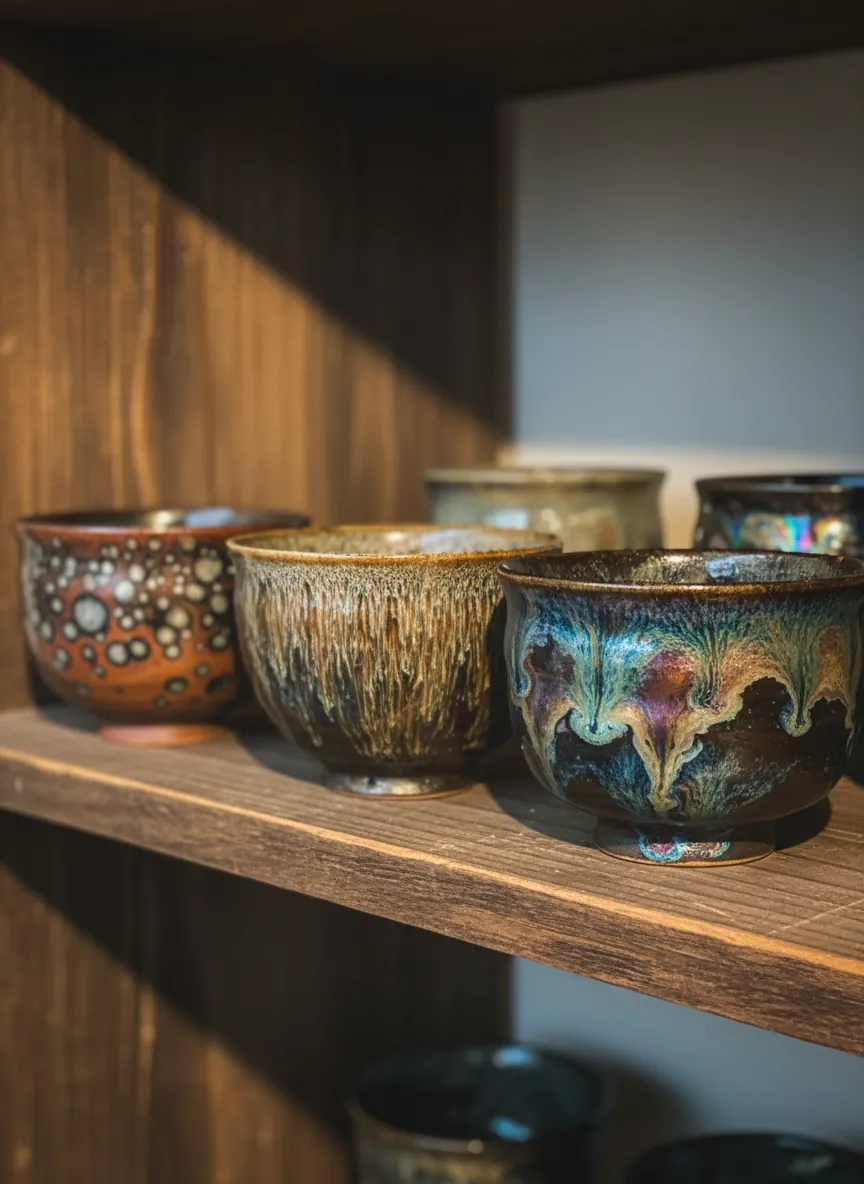
Choosing the right Jian Zhan tea cup size directly affects how your tea tastes, how comfortable it feels in your hand, and whether it suits your brewing style. From Zen Tea Cup (Potalastore), we have guided hundreds of tea lovers through this decision — and the answer is never one-size-fits-all. A cup that is too small restricts leaf expansion; one that is too large cools your tea too quickly. This guide breaks down every dimension so you can choose with confidence.
Jian Zhan Size Categories at a Glance
Jian Zhan cups fall into three main size categories based on their diameter and capacity. Each category serves a different purpose, from solo tasting sessions to ceremonial use. Here is a quick comparison to help you orient yourself before we dive deeper.
| Category | Diameter | Capacity | Best For |
|---|---|---|---|
| Small (Xiao Pian) | 2.4–3.1 in (6–8 cm) | 1.0–2.0 oz (30–60 ml) | Solo Gongfu Cha, tasting flights |
| Medium (Zhong Pian) | 3.1–3.9 in (8–10 cm) | 2.0–4.0 oz (60–120 ml) | Daily brewing, 2–3 guests |
| Large (Da Pian / Chawan) | 3.9–5.1 in (10–13 cm) | 4.0–8.0 oz (120–240 ml) | Matcha ceremony, casual sipping |
Small Jian Zhan Cups: When Precision Matters
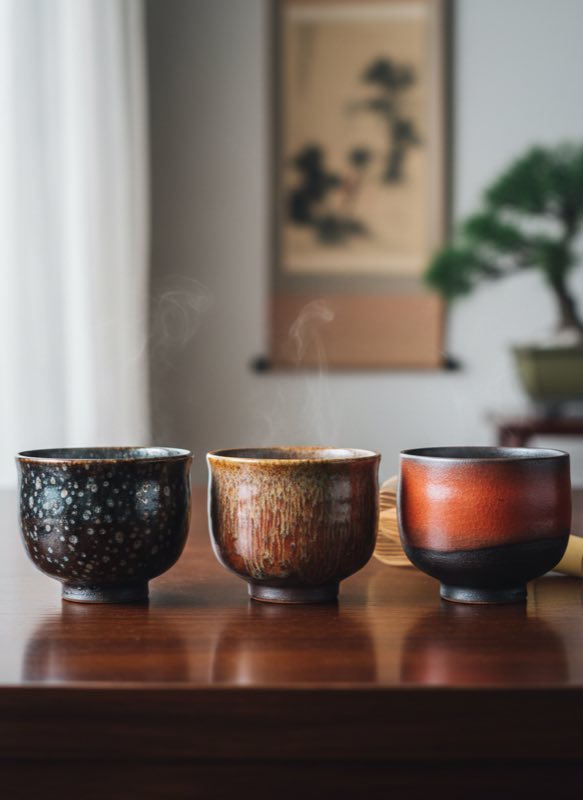
Small Jian Zhan cups (2.4–3.1 inches) are the choice of Gongfu Cha practitioners who brew multiple short infusions. Their compact size keeps tea hot through quick successive pours, and the smaller surface area concentrates aroma toward your nose with every sip. If you brew oolong or pu-erh using the Gongfu method — short steeps, high leaf-to-water ratio — a small cup is your best companion. The concentrated flavor profile that tenmoku glaze enhances becomes even more pronounced in a smaller vessel.
However, small cups require frequent refilling. If you prefer to sit back and sip slowly without tending the teapot every 30 seconds, consider moving up to a medium size.
Medium Jian Zhan Cups: The Everyday Sweet Spot
Medium Jian Zhan cups (3.1–3.9 inches) are the most versatile option and the one we recommend for most first-time buyers. They hold enough tea for a satisfying sip, work well with both Gongfu and Western brewing styles, and feel substantial in your hand without being unwieldy. A medium cup accommodates 2–3 guests comfortably if you are sharing a pot.
This size also strikes the right balance for care and maintenance — large enough to clean easily, small enough to handle with one hand during the rinsing ritual. For most tea drinkers, a medium Jian Zhan is the cup that stays on your desk all day.
Large Jian Zhan Bowls: For Matcha and Ceremony
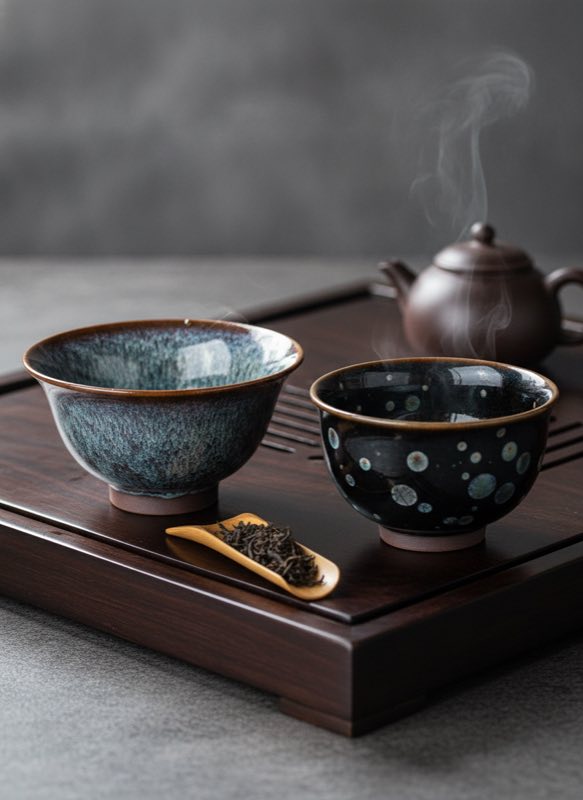
Large Jian Zhan bowls (3.9–5.1 inches) are traditionally called chawan and are designed for whisked tea — primarily matcha in the Japanese tea ceremony, or whipped tea in the Song Dynasty diancha method. The wide opening gives you room to whisk vigorously without splashing, and the depth allows the foam to develop properly. If you practice Japanese tea ceremony or enjoy matcha at home, a large bowl is essential.
For loose-leaf tea, large bowls are less ideal. The wide surface area causes rapid cooling, and the generous volume dilutes the concentrated flavor that makes Jian Zhan special. Save the large size for whisked tea or casual sipping when you want a generous portion.
How to Match Cup Size to Your Tea Type
Different teas interact differently with cup size. The right pairing elevates the experience; the wrong one diminishes it. Here is a practical guide based on tea type and brewing method.
| Tea Type | Recommended Size | Why |
|---|---|---|
| Gongfu Oolong | Small | Concentrates aroma, stays hot through short steeps |
| Gongfu Pu-erh | Small–Medium | Pu-erh benefits from heat retention; small keeps it hot |
| Green Tea (Western) | Medium | Enough volume for a proper steep, cools to drinkable temp |
| Black Tea | Medium | Standard serving size fits well, easy to hold |
| Matcha (whisked) | Large | Room for whisking, foam development, ceremonial feel |
| Herbal / Tisane | Medium–Large | Longer steeps need more volume; large handles bigger portions |
If you drink multiple tea types regularly, consider owning one small and one medium cup — this combination covers 90% of brewing scenarios. Explore our curated collection for beginners to find both sizes in matching glaze patterns.
Hand Size and Comfort: Finding Your Ergonomic Fit
A cup that looks beautiful on a shelf may feel awkward in your hand. Jian Zhan cups are meant to be held and cradled, not just displayed. The traditional two-hand hold (both hands cupping the bowl) works well for medium and large sizes, while small cups are typically held with one hand using the thumb on the rim and fingers supporting the base.
For smaller hands (palm width under 3 inches), a small-to-medium cup (2.4–3.5 inches diameter) provides the best grip and control. For larger hands, medium-to-large cups (3.5–5.1 inches) feel more natural. The weight matters too — a 3-inch Jian Zhan typically weighs 3–5 oz, while a 5-inch bowl can reach 8–12 oz. If wrist fatigue is a concern during long sessions, lean toward the lighter small or medium sizes.
Shape Matters Too: Rim Style Affects the Experience
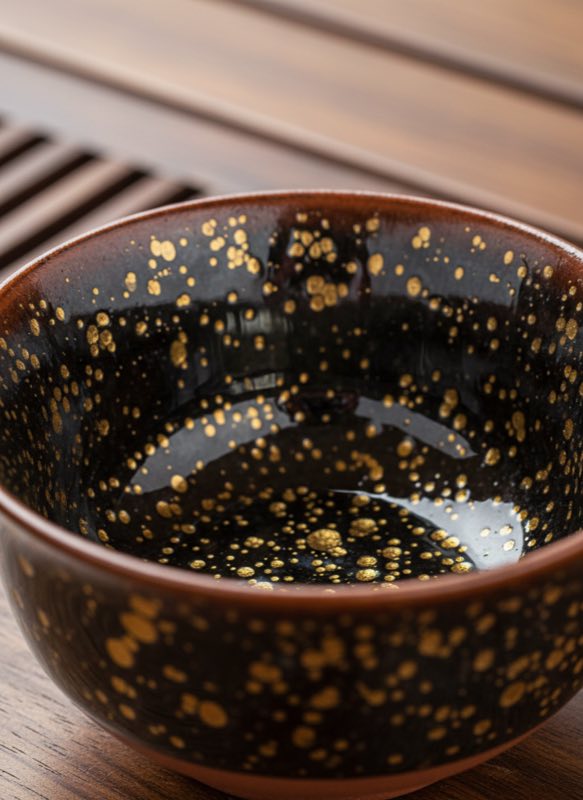
Size is only half the equation — the shape of the rim changes how tea flows into your mouth. Jian Zhan cups come in several traditional shapes, each with a distinct drinking experience.
- Shu Kou (Converging Rim): The rim curves inward, concentrating aroma and directing tea to the center of your tongue. Ideal for appreciating delicate oolong notes.
- Pie Kou (Flared Rim): The rim flares outward, allowing tea to flow smoothly across your palate. Great for pu-erh and robust teas where you want full-mouth flavor.
- Lian Kou (Lotus Rim): A gentle S-curve that balances concentration and flow. The most versatile shape for all tea types.
- Chang Kou (Straight Rim): Minimal curve, direct pour. Preferred in formal tea ceremony for its clean, controlled delivery.
When choosing, think about whether you prioritize aroma concentration (Shu Kou) or smooth flow (Pie Kou). If unsure, the Lian Kou shape is the safest all-rounder. Learn more about how glaze patterns interact with cup shape to make an even more informed choice.
❓ Frequently Asked Questions About Jian Zhan Cup Sizes
❓ What size Jian Zhan should a beginner buy?
Most beginners should start with a medium Jian Zhan (3.1–3.9 inches, 2–4 oz). This size works with the widest range of teas and brewing styles, feels comfortable in most hand sizes, and is easier to care for. You can always add a small cup for Gongfu sessions or a large bowl for matcha later.
❓ Can I use a large Jian Zhan bowl for loose-leaf tea?
You can, but it is not ideal. Large bowls cool loose-leaf tea quickly due to the wide surface area, and the generous volume dilutes the concentrated flavor that makes Jian Zhan special. Large bowls are best reserved for whisked matcha or the Song Dynasty diancha method. For daily loose-leaf brewing, stick with small or medium sizes.
❓ How do I measure my Jian Zhan cup size correctly?
Measure the inner diameter at the widest point of the rim using a ruler or caliper. For capacity, fill the cup with water to about 80% full (the practical fill line, not the absolute brim) and pour into a measuring cup. Jian Zhan sizes are traditionally classified by rim diameter in centimeters, but we include inch equivalents for US buyers.
❓ Does cup size affect how tea tastes in Jian Zhan?
Yes, significantly. Smaller cups concentrate aroma and maintain heat through short Gongfu infusions, amplifying the iron-oxide flavor enhancement that tenmoku glaze provides. Larger cups allow more surface area for aroma to escape and cool faster, which can mute delicate notes. The cup-tea pairing matters as much as the tea itself.
Buying Tips: What to Check Before You Choose
Before you commit to a Jian Zhan cup size, consider these practical factors that many buyers overlook. First, check the base width — a cup with a narrow base wobbles on flat surfaces, which is both annoying and potentially messy during tea sessions. The base should be at least 60% of the rim diameter for stability. Second, examine the wall thickness. Thicker walls (common in larger bowls) retain heat longer but make the cup heavier. Thinner walls (typical in small cups) cool faster but feel more delicate and refined in the hand.
Third, consider your teaware collection. If you already own a gaiwan or Yixing teapot, your Jian Zhan cup should complement it in size. A 3.5-inch cup pairs perfectly with a standard 4-ounce gaiwan for Gongfu Cha, while a 4.5-inch bowl matches a chasen (matcha whisk) for ceremonial preparation. Fourth, think about storage. Large bowls take up significant shelf space and require padded storage to protect the glaze. Small cups can be nested or displayed in compact arrangements.
Finally, trust your instincts. The best Jian Zhan cup is the one that makes you want to brew tea every time you look at it. Size charts and recommendations are starting points, but the tactile experience of holding the cup — the weight, the rim against your lip, the way the glaze catches the light — these are personal preferences that no guide can fully capture. Browse our handpicked selection to find the cup that speaks to you.
References
- Kuang, Y. (2023). Jian Zhan: The Art of Song Dynasty Tea Bowls. Fujian Ceramics Research Institute.
- Carpenter, T. & Zheng, L. (2024). “Thermal Dynamics in Traditional Ceramic Tea Vessels.” Journal of Tea Science, 42(3), 112–128.
- Fujian Intangible Cultural Heritage Center. (2025). “Jian Zhan Shape Classification Standards.” Official Technical Reference.
Ready to find your perfect Jian Zhan size? Explore our full collection at Potalastore — every cup is hand-selected for quality, authenticity, and the right proportions for your tea practice. Whether you need a small cup for Gongfu sessions or a large chawan for matcha ceremony, we have the size that fits.
📚 References
- Jian Zhan Size Guide: Measurement standards for Tenmoku cups. Metropolitan Museum of Art
- Tea Cup Sizing: How to choose the right cup size. Seattle Public Library
- Chinese Tea Ceremony: Traditional cup dimensions and usage. China Highlights
Find your perfect Jian Zhan size — explore our collection at Zen Tea Cup.


