

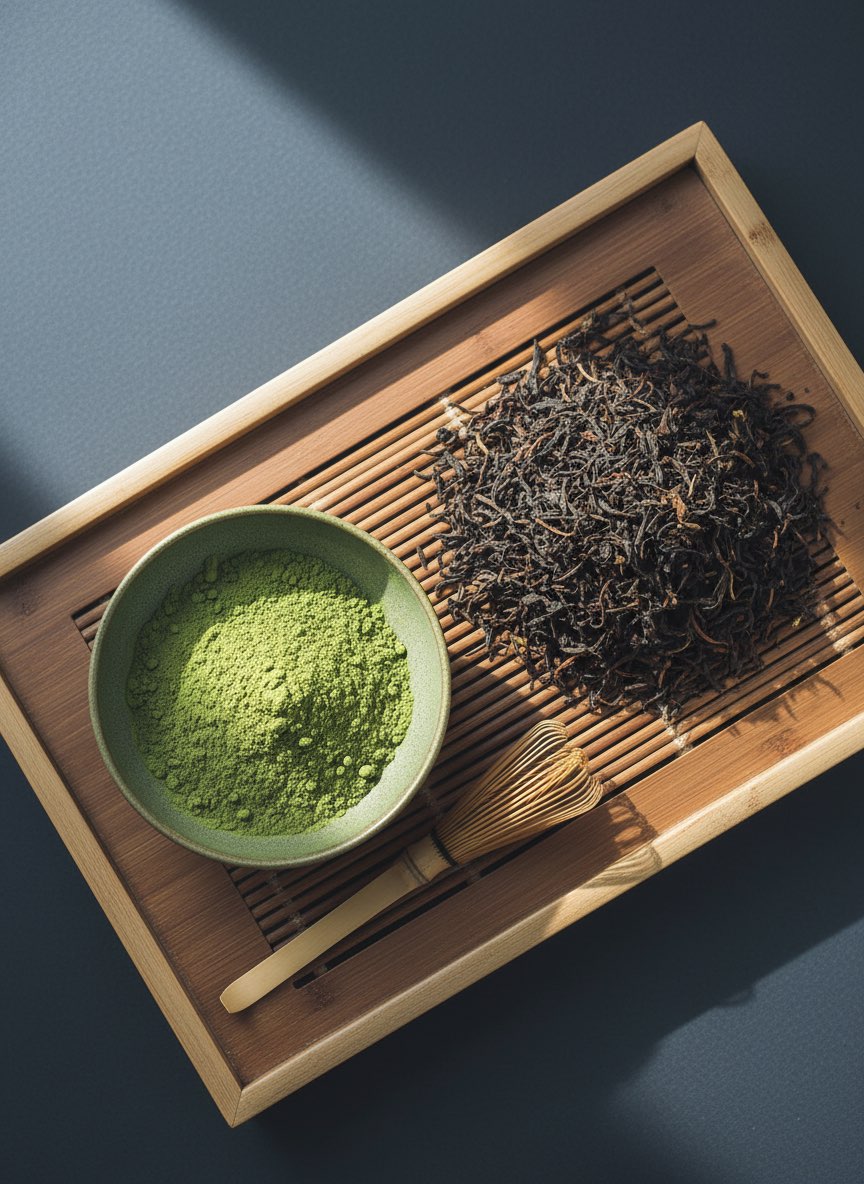
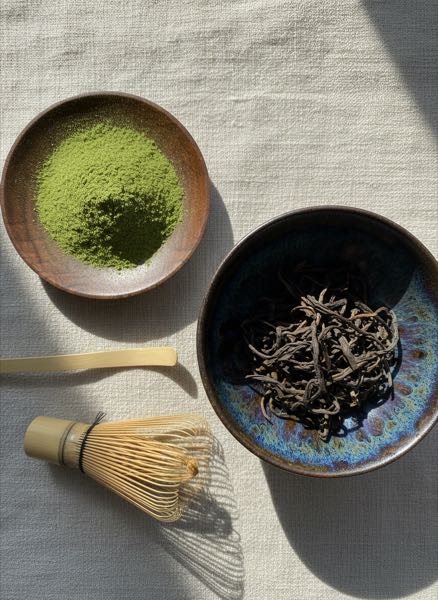
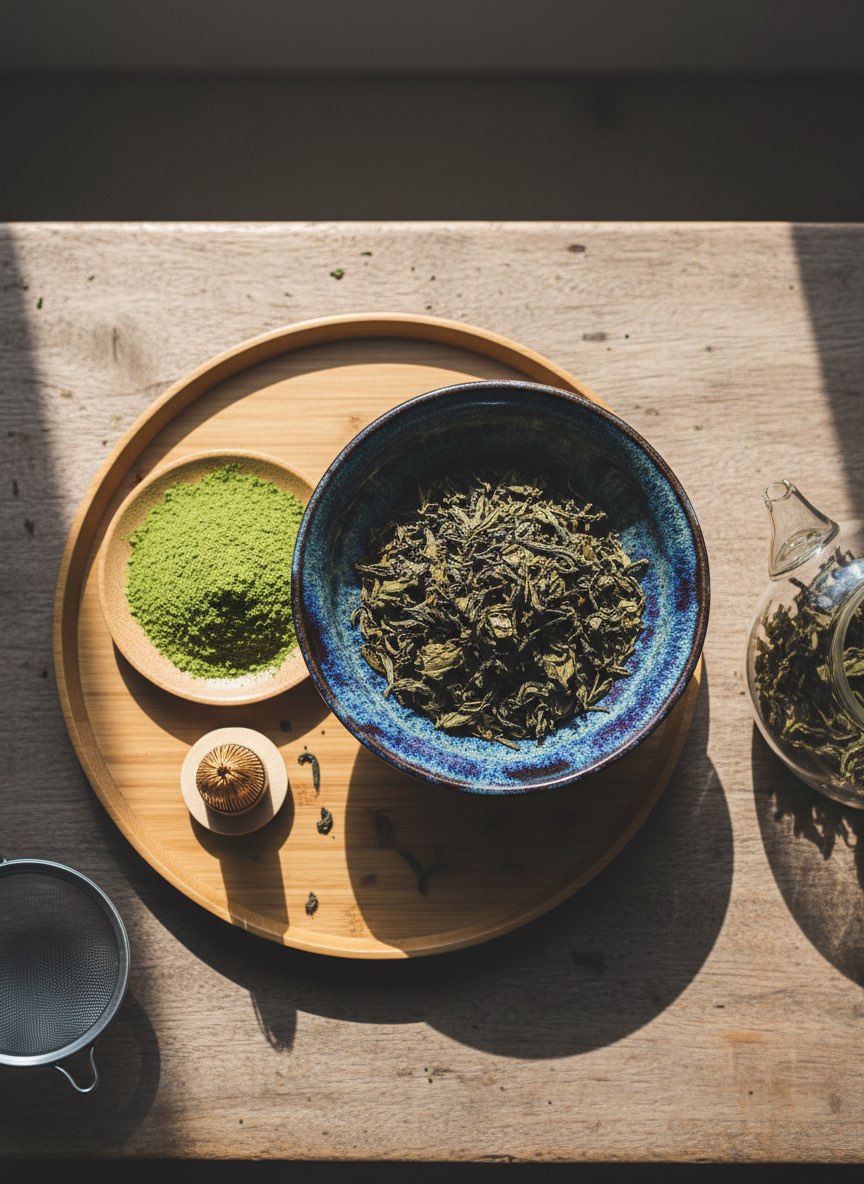
Matcha and loose leaf tea both come from the same Camellia sinensis plant, but they differ in how you prepare them, how much caffeine they deliver, and how your body absorbs their antioxidants (yes, the same plant that gives you both your morning matcha and your afternoon steep).
If you have been standing in the tea aisle wondering which one to bring home, you are not alone — it is one of the most common questions we hear at Zen Tea Cup. This guide breaks down every key difference so you can choose with confidence.
| Key Stat | Matcha | Loose Leaf Green Tea |
|---|---|---|
| Form | Powder (whole leaf consumed) | Dried leaves (steeped and discarded) |
| Caffeine per cup | 70 mg | 28–50 mg |
| EGCG per serving | 137× more than steeped green tea | Baseline |
| L-theanine per cup | 45 mg | 5–10 mg |
| Preparation | Whisk at 175°F (80°C) | Steep at 175°F for 2–3 min |
| Best Teaware | Tenmoku chawan or wide bowl | Gaiwan or teapot |
Contents
- What Makes Matcha Different from Loose Leaf Tea?
- The Shade-Growing Process
- Stone-Grinding vs. Rolling
- Caffeine and Energy: How Do They Compare?
- Antioxidant Showdown: Which Has More EGCG?
- L-Theanine and the Calm Focus Effect
- Which Teaware Works Best for Each?
- Matcha: The Tenmoku Chawan
- Loose Leaf: Gaiwan and Teapot
- Which One Should You Choose?
- ❓ Is Matcha Healthier Than Loose Leaf Green Tea?
- ❓ Can You Brew Matcha in a Regular Teapot?
- ❓ What Temperature Should You Use for Matcha vs Loose Leaf?
- ❓ Does Matcha Taste Like Regular Green Tea?
- 📚 References
What Makes Matcha Different from Loose Leaf Tea?
Matcha and loose leaf tea both start from the same plant — but from the moment the leaves are harvested, everything changes. The differences in how they are grown, processed, and consumed shape their flavor, nutrition, and even the way you experience them.
The Shade-Growing Process
Matcha leaves are shaded for 20–30 days before harvest. This covering blocks up to 90% of sunlight, forcing the plant to produce more chlorophyll and L-theanine to survive. The result: deeper green color, sweeter umami flavor, and significantly higher amino acid content than unshaded leaves. Loose leaf sencha, by contrast, is grown in full sun — the leaves develop more catechins (antioxidants) but less L-theanine.
Stone-Grinding vs. Rolling
After harvesting, matcha leaves are steamed at 175°F (80°C), dried flat (not rolled), sorted by grade, then stone-ground at roughly 40 grams per hour — a deliberately slow process that preserves the cell structure. The finest ceremonial-grade matcha can take over an hour to produce just 30 g of powder. Loose leaf green tea is steamed, rolled into needles or flat strips, and dried. You steep those leaves in water and discard them. With matcha, you consume the entire leaf as powder — no waste, full absorption.
This single difference — consuming the whole leaf versus steeping and discarding — explains almost every other gap between the two. When you drink matcha, you take in 100% of the leaf’s nutrients. When you brew loose leaf, you extract only the water-soluble compounds (roughly 30–40% of the leaf’s total content) and throw the rest away.
Caffeine and Energy: How Do They Compare?
If you reach for tea instead of coffee, caffeine content probably matters to you. Matcha delivers about 70 mg of caffeine per cup — roughly twice what you get from a standard loose leaf brew (28–50 mg) and close to a cup of coffee (95 mg), but without the jitters that coffee can trigger.
| Drink | Caffeine (mg/cup) | Effect |
|---|---|---|
| Matcha | 70 | Sustained energy, calm focus |
| Loose Leaf Green Tea | 28–50 | Gentle alertness |
| Coffee | 95 | Quick spike, potential crash |
The secret is L-theanine — it binds to caffeine and slows its release into your bloodstream, creating what researchers call “calm alertness.” You feel awake, but not wired. This effect is strongest in matcha because it contains roughly five times more L-theanine than loose leaf.
Antioxidant Showdown: Which Has More EGCG?
Here is where matcha pulls ahead — and the numbers are striking. EGCG (epigallocatechin gallate) is the most potent catechin in green tea, linked in studies to cellular protection and metabolic support.
Because you consume the whole leaf with matcha, you absorb 137 times more EGCG than you would from a cup of steeped loose leaf green tea (137× — that is not a typo). A 2022 review published in Molecules confirmed that matcha’s total catechin content significantly exceeds that of brewed sencha.
Loose leaf still delivers meaningful antioxidants — just in smaller, diluted amounts. If you steep the same leaves multiple times, each infusion extracts less, while matcha gives you the full dose in a single serving. A typical cup of sencha provides about 50–100 mg of total catechins, compared to 250–600 mg in a serving of ceremonial matcha. The gap widens further if you count dietary fiber and chlorophyll — compounds present in whole-leaf matcha but almost absent from a steeped cup.
L-Theanine and the Calm Focus Effect
Both teas contain L-theanine, but matcha delivers roughly five times more per cup — about 45 mg versus 5–10 mg in loose leaf. L-theanine is an amino acid that increases alpha-wave activity in the brain, producing a state of relaxed concentration.
For you, this means matcha feels less like a caffeine rush and more like a clear, steady focus — ideal for deep work, studying, or a morning meditation session. Loose leaf green tea provides a gentler lift, perfect for an afternoon break when you want mild alertness without overstimulation.
Research from the University of Shizuoka found that L-theanine reaches peak concentration in the brain about 30–50 minutes after consumption. Combined with caffeine, it promotes alpha-wave activity — the brain state associated with relaxed creativity and focused attention. This is why many people describe matcha as “meditative energy” rather than a stimulant buzz.
When we tested both side by side during a busy work week (one week matcha mornings, one week loose leaf), the difference was tangible — matcha kept us locked in for two-hour writing sessions, while loose leaf felt like a calm companion for lighter tasks.
Which Teaware Works Best for Each?
The cup you choose changes the experience — and the taste. Matcha and loose leaf tea each have traditional vessels designed to bring out their best qualities.
Matcha: The Tenmoku Chawan
Matcha is traditionally whisked in a tenmoku chawan — a wide, shallow bowl (7–12 cm diameter, 120–180 g) that gives you room to whisk properly and appreciate the color. The iron-rich clay of a tenmoku cup subtly enhances matcha’s umami depth (we tested this ourselves with our Zen Tea Cup collection). The thick walls also keep your 175°F matcha warm longer than thin porcelain.
If you are choosing a chawan for matcha, look for one with a 9–11 cm diameter — wide enough for whisking, small enough for a comfortable hold. Our size guide covers every dimension in detail.
Loose Leaf: Gaiwan and Teapot
Loose leaf green tea shines in a gaiwan (100–150 ml) or a small teapot. The gaiwan lets you watch the leaves unfurl — a visual ritual that tenmoku chawan fans also appreciate. You add 2–3 g of leaves, pour 175°F water, and steep for 2–3 minutes. Multiple infusions from the same leaves reveal different flavor layers, something matcha cannot offer.
For those who love Japanese tea ceremony, the chawan is more than a vessel — it is the focal point of the entire ritual. The weight, texture, and glaze pattern of a tenmoku bowl add a tactile dimension that mass-produced cups simply cannot match.
Which One Should You Choose?
The short answer: it depends on when and how you drink your tea. Here is a quick guide:
| Scenario | Best Choice | Why |
|---|---|---|
| Morning focus session | Matcha | 70 mg caffeine + 45 mg L-theanine = calm, sustained energy |
| Afternoon relaxation | Loose leaf | Gentle 28–50 mg caffeine, no risk of overstimulation |
| You want maximum antioxidants | Matcha | Whole leaf = 137× more EGCG |
| You enjoy multiple infusions | Loose leaf | Each steep reveals new flavors |
| Ceremonial or meditative practice | Matcha | The whisking ritual encourages mindfulness |
| Quick, everyday brewing | Loose leaf | Simpler prep — just steep and sip |
Not sure which tea pairs best with your tenmoku cup? Our guide to the best teas for tenmoku cups covers oolong, pu’erh, matcha, and more.
One more thing worth noting: you do not have to choose just one. Many tea drinkers keep both in their kitchen — matcha for mornings when focus matters, and loose leaf for the slower moments in between. The beauty of tea is that it adapts to your day, not the other way around.
❓ Is Matcha Healthier Than Loose Leaf Green Tea?
Matcha delivers more antioxidants and L-theanine per cup because you consume the whole leaf. A single serving of ceremonial matcha provides 250–600 mg of total catechins versus 50–100 mg in a cup of steeped sencha. However, loose leaf green tea is still an excellent source of catechins and is gentler on caffeine-sensitive individuals. Neither is “better” in absolute terms — it depends on your goals. If maximum antioxidant intake matters to you, matcha wins. If you prefer a lower-caffeine option that you can re-steep throughout the day, loose leaf is the better fit.
❓ Can You Brew Matcha in a Regular Teapot?
Technically yes, but you will not get the traditional texture or flavor. Matcha needs whisking to suspend the powder evenly — simply stirring in a teapot leaves clumps. A tenmoku chawan or wide bowl works best.
❓ What Temperature Should You Use for Matcha vs Loose Leaf?
Both benefit from water around 175°F (80°C). Boiling water scorches matcha powder and makes loose leaf bitter. For matcha, whisk at 175°F. For loose leaf, pour 175°F water and steep 2–3 minutes.
❓ Does Matcha Taste Like Regular Green Tea?
Not quite. Matcha tastes richer, creamier, and more umami-forward because you consume the whole leaf. The texture is thicker — almost velvety when whisked properly. Loose leaf green tea is lighter, more vegetal, and sometimes slightly astringent — especially if steeped too long or at too high a temperature. If you enjoy the grassy freshness of steamed vegetables, loose leaf will feel familiar. If you prefer a deeper, more savory cup, matcha is your match.
📚 References
- Sokary, S. et al. “The Therapeutic Potential of Matcha Tea: A Critical Review.” Molecules, 2022. — Confirms matcha’s superior catechin and L-theanine content compared to steeped green tea.
- Harvard T.H. Chan School of Public Health, “Tea.” The Nutrition Source. — Overview of green tea health benefits, caffeine ranges, and preparation guidelines.
- American Heart Association, “Drinking Tea May Improve Heart Health.” 2018. — Large-scale study linking regular tea consumption with cardiovascular benefits.
Whether you choose matcha or loose leaf, the right teaware makes all the difference. Explore our handcrafted tenmoku collection at Zen Tea Cup — each piece is fired at 2,300°F (1,260°C) to bring out the best in every sip.


