

The best teaware to pair with your tenmoku cup depends on how you brew: a Yixing clay teapot (120-200 ml) for gongfu oolong, a porcelain gaiwan (150 ml) for versatile daily brewing, or a bamboo chasen and chashaku for matcha ceremonies. From Zen Tea Cup‘s pairing guide, here is how to build a matching tea setup around your tenmoku.
| Key Stat | Value |
|---|---|
| Yixing teapot capacity | 120-200 ml |
| Gaiwan capacity | 150 ml |
| Fairness pitcher (gongdao bei) | 80-150 ml |
| Tea tray diameter | 25-40 cm |
| Chasen (whisk) tines | 80-100 prongs |
| Brewing temperature range | 175-205 F (80-96 C) |
Contents
- Three Tea Setup Archetypes for Tenmoku
- The Gongfu Setup: Teapot and Accessories
- The Gaiwan Setup: Versatile Daily Brewing
- Material matching: Why Clay Complements Iron Glaze
- Clay Teapots Enhance Body and Sweetness
- The Matcha Ceremony Setup
- Chasen and Chashaku Essentials
- The Tea Tray: Foundation of Every Setup
- Size and Material Guide
- Accessory Checklist by Brewing Style
- ❓ Can I use one tenmoku cup for both gongfu and matcha?
- ❓ Do I need a fairness pitcher with a gaiwan?
- ❓ What material should my tea tools be?
- Budget vs Premium: Matching Tenmoku with the Right Gear
- What to Buy First
- References
Three Tea Setup Archetypes for Tenmoku
Every tenmoku owner falls into one of three camps based on their primary brewing style. Identifying your camp tells you exactly which teaware pieces you need and which you can skip.
The Gongfu Setup: Teapot and Accessories
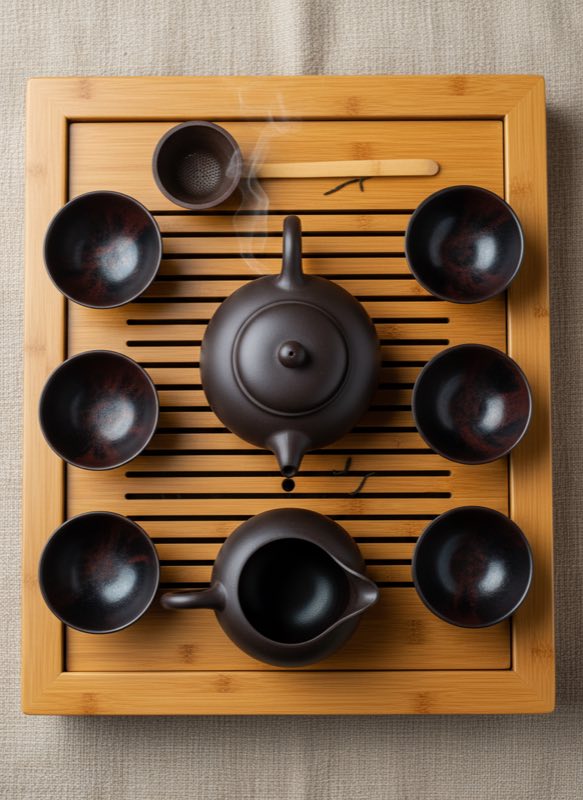
If you brew gongfu-style oolong or pu’er with short steep times of 15-30 seconds, your tenmoku cup pairs naturally with a small Yixing clay teapot in the 120-200 ml range. The teapot size matters because gongfu brewing uses a high leaf-to-water ratio (about 1 g per 15 ml), so a 150 ml pot produces roughly four pours into a standard 4 oz (120 ml) tenmoku. You also need a gongdao bei (fairness pitcher) of 80-150 ml to ensure every pour tastes consistent, and a tea tray of 25-40 cm diameter to catch waste water. The clay teapot seasons over time and develops a patina that complements the iron-rich glaze of your tenmoku—these two pieces improve together with use. The gongfu brewing guide at Zen Tea Cup covers the full pouring sequence.
The Gaiwan Setup: Versatile Daily Brewing
A porcelain gaiwan at 150 ml is the most versatile companion for your tenmoku if you switch between tea types. You can brew green, white, oolong, and black teas in a gaiwan without flavor crossover (unlike Yixing clay, which absorbs oils from previous sessions). The gaiwan’s wide lid lets you watch the leaves unfurl and judge the steep by color—then you pour into your tenmoku for drinking. This two-piece setup (gaiwan plus tenmoku) covers 90% of daily tea needs with minimal equipment. The gaiwan also doubles as a serving vessel when guests visit, letting you pour directly into multiple tenmoku cups without a separate fairness pitcher.
Material matching: Why Clay Complements Iron Glaze
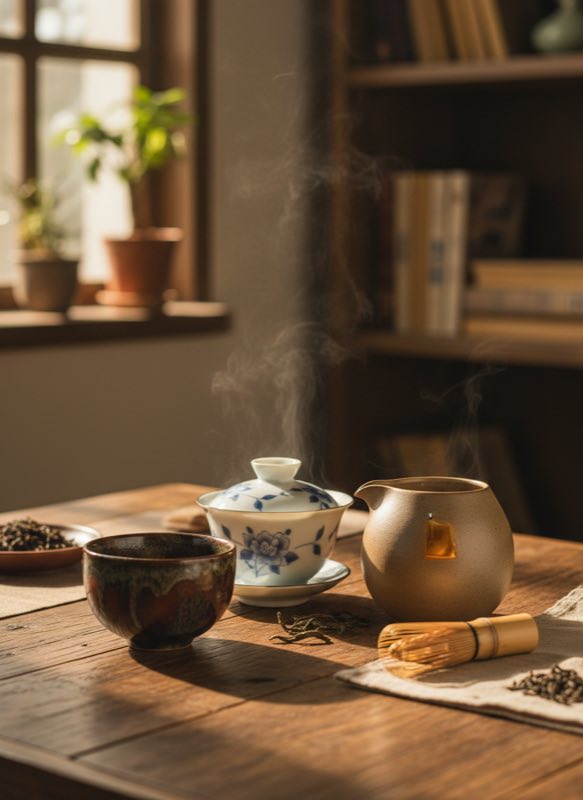
The reason Yixing clay pairs so well with tenmoku is not just aesthetic—it is chemical. Both materials are porous, iron-rich ceramics that interact with tea compounds during brewing. The Freer Gallery of Art documents how Song Dynasty tea practitioners specifically chose iron-glazed bowls alongside unglazed stoneware pots for this complementary effect.
Clay Teapots Enhance Body and Sweetness
Yixing clay absorbs bitter tannins from the tea while allowing aromatic oils to pass through into the liquor. When this softened, sweeter tea hits your tenmoku cup, the iron glaze further smooths the mouthfeel and adds a mineral depth that porcelain cannot replicate. This two-stage filtration effect is why experienced gongfu brewers rarely use glass or porcelain teapots with tenmoku—the pairing loses a layer of complexity. If you are on a budget, a 150 ml Yixing teapot in the $30-60 range provides 80% of the benefit of a premium $200+ piece.
The Matcha Ceremony Setup
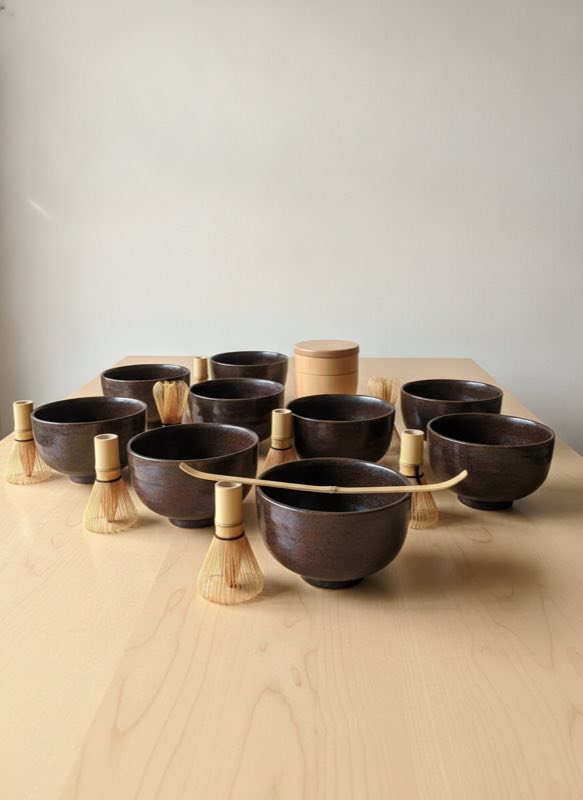
Matcha preparation requires entirely different teaware from gongfu brewing, and your tenmoku serves as the matching chawan (tea bowl) in this context. The essential pieces are a chasen (bamboo whisk with 80-100 prongs), a chashaku (bamboo scoop for measuring 2 g of powder), and a furui (tea sifter to remove clumps).
Chasen and Chashaku Essentials
Choose a chasen with 80-100 tines for usucha (thin matcha) or 32-48 tines for koicha (thick matcha). The finer tines create more micro-foam, which looks stunning against tenmoku’s dark glaze. A chashaku carved from a single piece of bamboo measures approximately 2 g per scoop—the standard serving size. If you use your tenmoku for both gongfu and matcha (switching between a 4 oz cup for oolong and a 6 oz bowl for matcha), store the chasen separately in a chasen holder to protect its delicate tines. A chasen holder also preserves the whisk’s shape between uses, extending its life from about six months to a full year with proper care. Rinse the chasen in warm water immediately after each use and let it dry completely before storing—never leave it soaking, as the bamboo tines will warp and separate over time. The best tenmoku for matcha guide explains which cup sizes and glaze patterns work best for whisking.
The Tea Tray: Foundation of Every Setup
No matter which brewing style you choose, a tea tray ties the setup together. It catches waste water during gongfu rinsing, provides a stable surface for your tenmoku and teaware, and visually frames the entire tea experience.
Size and Material Guide
For a single-cup setup, a 25-30 cm bamboo tray is sufficient. For hosting two to four guests with multiple tenmoku cups, choose a 35-40 cm tray with a drainage system. Bamboo and wood trays pair best aesthetically with tenmoku’s earthy tones. Avoid glass or metal trays, which create visual dissonance with the organic glaze patterns and feel out of place in a traditional tea setting. If you display your tenmoku collection when not in use, the tray doubles as a display surface, as described in our Jian Zhan display guide.
Accessory Checklist by Brewing Style
| Item | Gongfu | Gaiwan Daily | Matcha |
|---|---|---|---|
| Yixing teapot (120-200 ml) | Yes | No | No |
| Porcelain gaiwan (150 ml) | Optional | Yes | No |
| Gongdao bei (80-150 ml) | Yes | Optional | No |
| Chasen (80-100 tines) | No | No | Yes |
| Chashaku (bamboo scoop) | No | No | Yes |
| Tea tray (25-40 cm) | Yes | Recommended | Yes |
| Tea towel (linen) | Yes | Yes | Yes |
| Tenmoku cup (4 oz) | Yes | Yes | No |
| Tenmoku bowl (6 oz) | No | No | Yes |
❓ Can I use one tenmoku cup for both gongfu and matcha?
Technically yes, but it is not ideal. Gongfu brewing works best in a 3-4 oz cup, while matcha needs a 6 oz bowl with enough room for whisking. If you only own one tenmoku, a 4 oz cup can handle lighter matcha servings at 1-1.5 g of powder, but you will not get proper foam volume. The tenmoku size guide explains the trade-offs in detail.
❓ Do I need a fairness pitcher with a gaiwan?
Not necessarily. A gaiwan lets you pour directly into your tenmoku, and the wide spout distributes tea evenly for a single cup. You only need a gongdao bei when brewing for multiple people, where the first pour would be weaker than the last. For solo sessions, skip the pitcher and pour straight from gaiwan to tenmoku.
❓ What material should my tea tools be?
Bamboo for the chasen, chashaku, and tea scoop. Wood or bamboo for the tray. Linen or cotton for the tea towel. Clay for the teapot. Porcelain for the gaiwan and gongdao bei. Avoid plastic tools entirely—they conduct heat differently, alter the tea’s taste, and clash aesthetically with tenmoku’s natural character. The Metropolitan Museum of Art collection shows that traditional tea tool materials have remained largely unchanged for 800 years because they work.
Budget vs Premium: Matching Tenmoku with the Right Gear
Not every piece in your tenmoku setup needs to be expensive. The most impactful investment is the Yixing teapot if you brew gongfu-style, because it directly affects the tea’s taste. A $40-60 Yixing pot delivers 80% of the flavor benefit of a $200 pot—the clay body does the heavy lifting, not the maker’s stamp. Save your budget for the tenmoku cup itself, where glaze quality and firing method make a tangible difference you can see and taste every session.
The gaiwan, fairness pitcher, and tea tray are functional pieces where mid-range quality works perfectly. A $15 porcelain gaiwan brews tea identically to a $60 artisan gaiwan because porcelain is non-reactive. The tea tray’s job is catching water; a $25 bamboo tray does this as well as a $150 hardwood version. Invest the money you save into a second tenmoku cup instead—having a small cup for gongfu and a large bowl for matcha transforms your tea practice more than any accessory upgrade.
What to Buy First
Start with two items: a 4 oz tenmoku cup and either a gaiwan or a small Yixing teapot. These three pieces let you brew any tea and drink it properly. Add the matcha tools only when you are ready to commit to matcha preparation, since the whisking technique takes practice to master—the chasen alone costs $15-30 and requires careful maintenance. The tea tray is a nice-to-have but not essential for solo sessions; a large plate or folded towel works temporarily until you are ready for a dedicated tea tray.
References
- Freer Gallery of Art: Song Dynasty Tea Vessels and Material Science. Smithsonian
- Metropolitan Museum of Art: Traditional Tea Tool Materials Across Centuries. The Met
- Victoria and Albert Museum: Ceramic Pairing in East Asian Tea Culture. V and A Museum
Ready to complete your setup? Browse the tenmoku pairing guide at Zen Tea Cup for curated recommendations.
Ready to find your perfect tenmoku cup? Explore Zen Tea Cup collection for handcrafted, artisan-crafted teaware shipped across the US.


